

Ancient Egyptian Juvenile Crocodile Mummy | X-Ray Verified Sobek Votive | Circa 664 BC–100 AD
- Prix habituel
- $10,000.00
- Prix soldé
- $10,000.00
- Prix habituel
Impossible de charger la disponibilité du service de retrait


Ancient Egyptian Juvenile Crocodile Mummy | X-Ray Verified Sobek Votive | Circa 664 BC–100 AD
Description
Plus
Moins
Historical Context & Origin
Region: Egypt
Material: Linen wrappings and organic remains
Period: Late Period to Early Roman Period, circa 664 BC–100 AD
Description
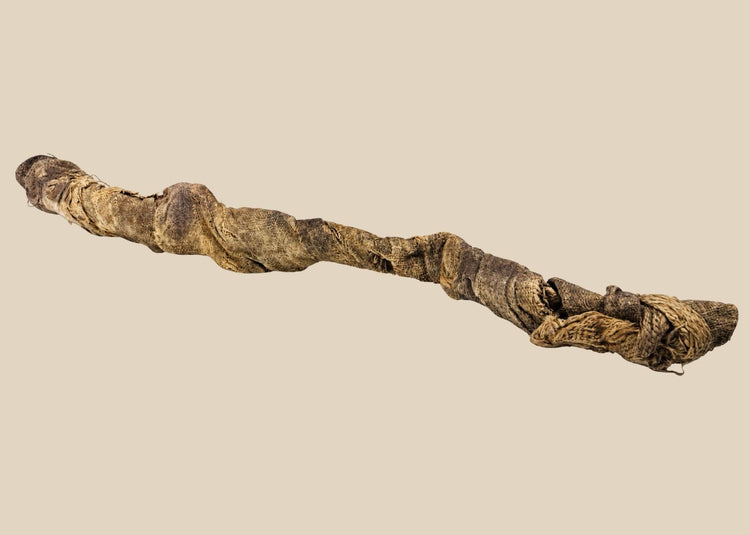
An exceptional ancient Egyptian mummified juvenile crocodile created as a sacred votive offering associated with Sobek, the powerful crocodile deity connected with the Nile, fertility, protection, and royal strength.
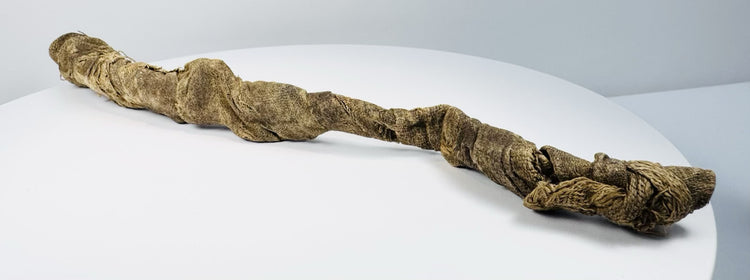
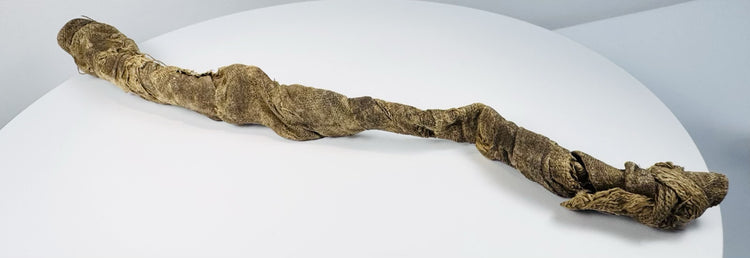
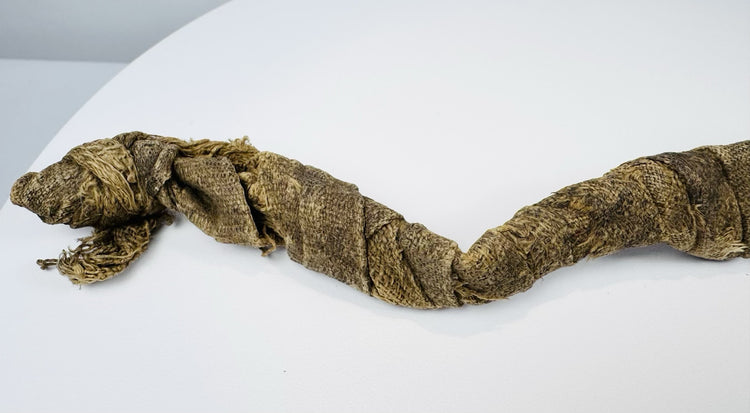
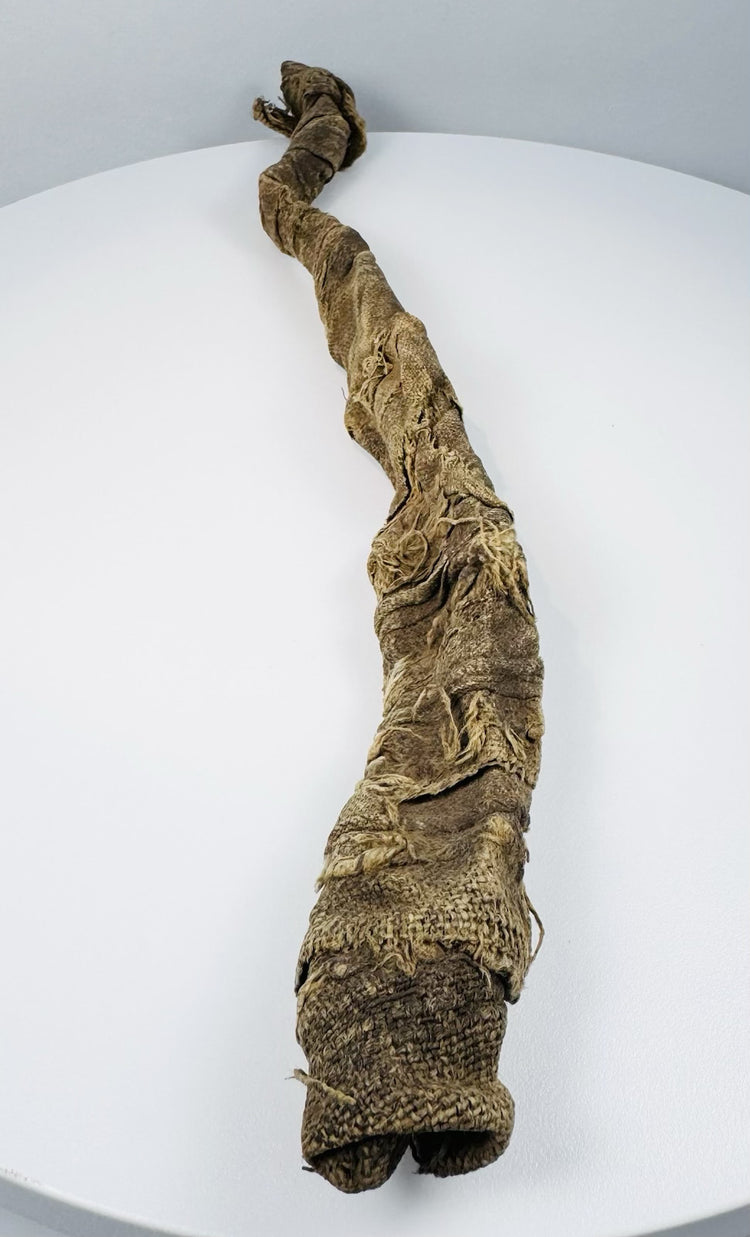
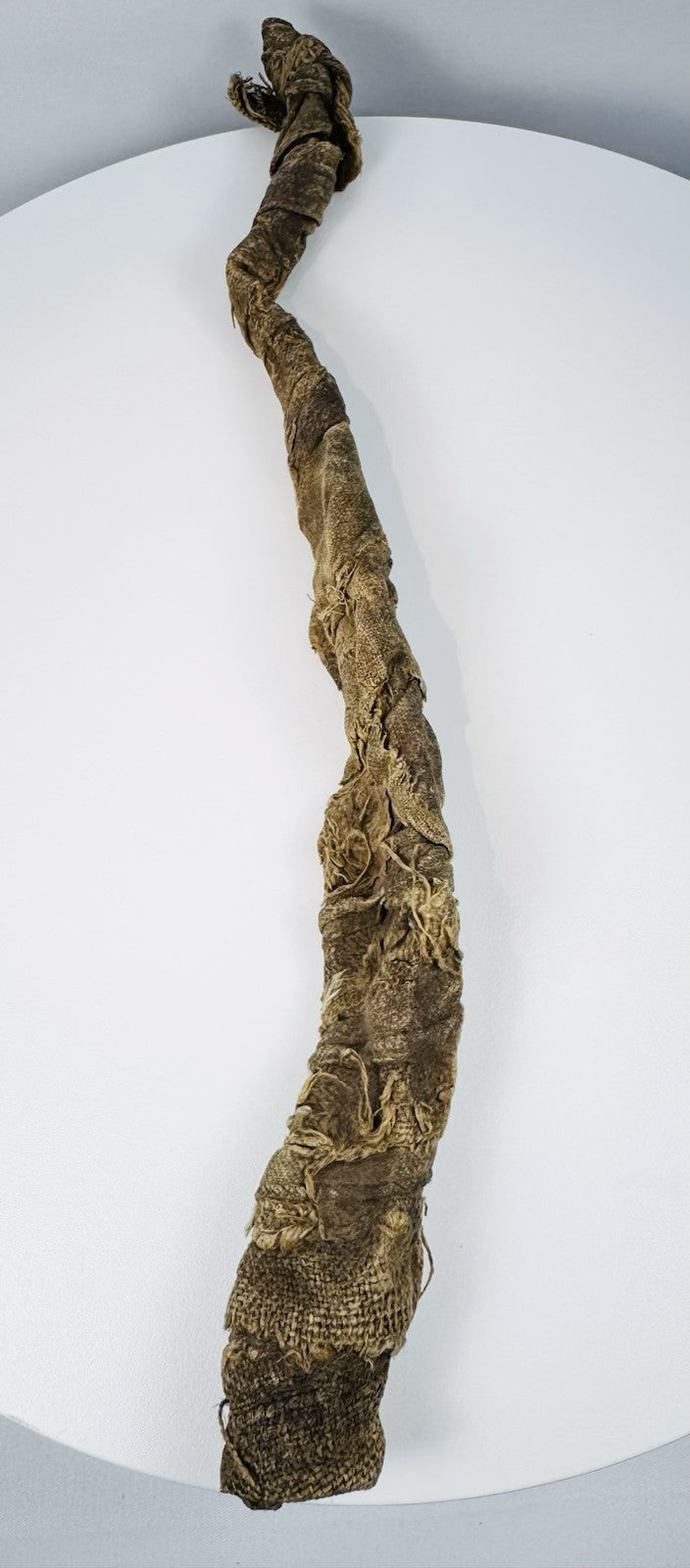
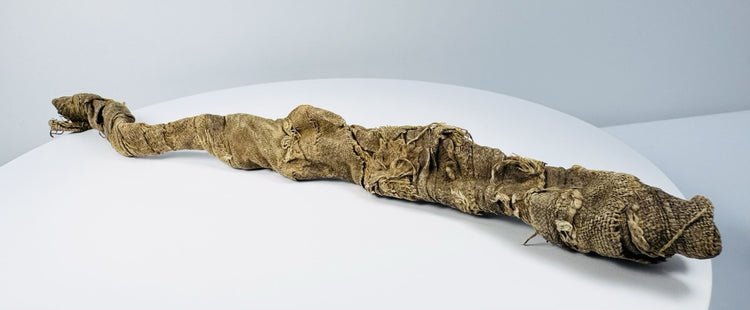
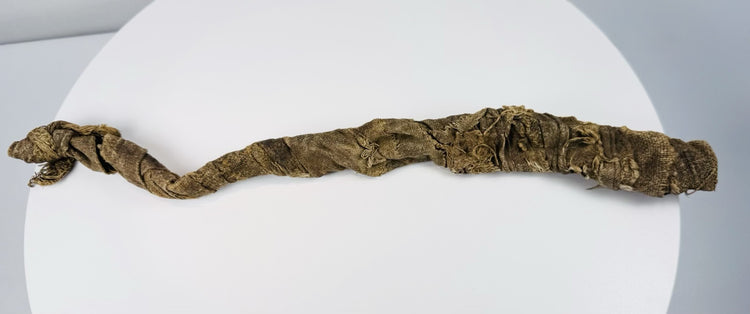
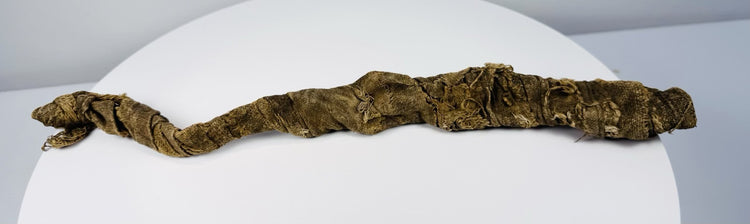
Dating from the Late Period through the Early Roman Period, circa 664 BC–100 AD, this remarkable specimen preserves the elongated form of a juvenile crocodile beneath extensive layers of ancient linen. Its gently curving body creates a distinctive sinuous profile, while the broader forward section is formed from overlapping and folded textile bands that give the mummy a particularly sculptural appearance.
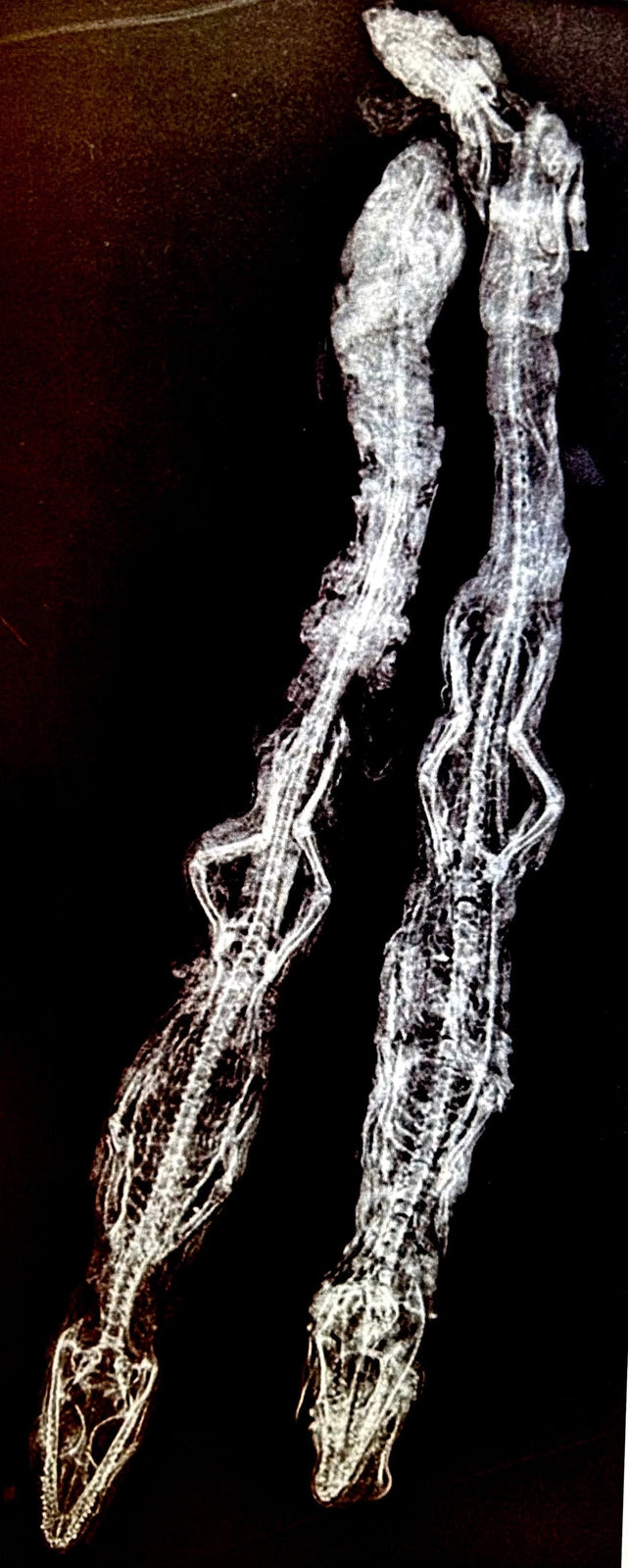
This specimen originally formed part of a matched pair of ancient Egyptian crocodile mummies and was X-ray examined together with its companion. The radiograph, included in the photo gallery, clearly reveals the crocodilian skeletons preserved within both wrapped specimens, providing important confirmation of their internal contents and authentic votive construction.
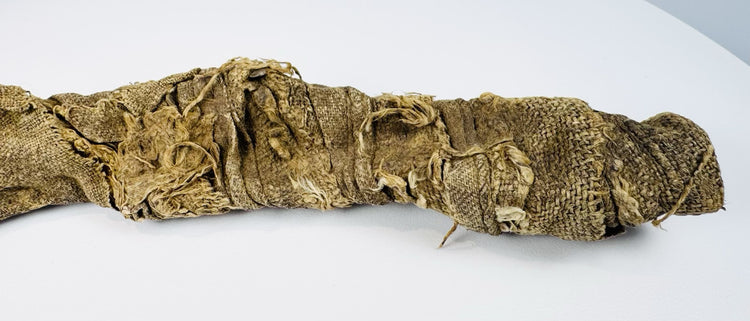
The surviving textile wrapping varies noticeably along the length of the mummy. Areas of closely woven linen alternate with heavier folds, overlapping bands, exposed fibres, cords, and irregular layered sections. This complex construction demonstrates how ancient Egyptian embalmers shaped and secured the exterior of animal mummies while preserving the recognizable form of the sacred creature within.
Although closely related to its companion mummy in age, material, provenance, and ritual purpose, this example has its own distinctive silhouette and wrapping configuration. The pronounced curvature of the body and individually arranged textile folds give the piece a noticeably different physical character from the other specimen in the pair.
Features
- Authentic ancient Egyptian mummified juvenile crocodile
- Sacred votive offering associated with the worship of Sobek
- X-ray verified with confirmed internal crocodile skeleton
- Radiograph documents both specimens from the original matched pair
- Distinctive elongated and naturally curving mummiform silhouette
- Extensive surviving ancient linen wrappings
- Layered and folded textile construction throughout the body
- Closely woven linen, cords, exposed fibres, and overlapping bands preserved throughout
- Individual wrapping configuration distinct from its companion mummy
- Originally one of a matched pair of Egyptian crocodile votive mummies
- Natural brown, ochre, and earthen coloration developed through considerable age
- Rare surviving example of ancient Egyptian animal-mummification practice
- Accompanied by a Certificate of Authenticity with comparative analysis to museum examples
Cultural Significance
Crocodiles occupied a powerful and complex position within ancient Egyptian religion. Their formidable presence along the Nile inspired both fear and reverence, qualities embodied by the god Sobek. Commonly represented either as a crocodile or as a human figure with a crocodile head, Sobek was associated with the fertility and life-giving waters of the Nile as well as strength, protection, and royal authority.
Animal mummification became an important element of temple-based religious practice in ancient Egypt, particularly during the Late and Ptolemaic periods. Devotees could dedicate mummified animals associated with particular deities as sacred offerings intended to express devotion, seek divine favour, or communicate a prayer to the god.
Juvenile crocodiles were among the animals prepared as votive offerings for Sobek and were deposited at religious centres associated with his worship. These mummies provide direct material evidence of the relationship between animal cults, pilgrimage, temple activity, and personal religious devotion in ancient Egypt.
The extensive surviving linen construction of this example is particularly evocative. Rather than surviving solely as skeletal remains, the animal retains the intentionally shaped form created during the ancient mummification process, preserving evidence of both the physical specimen and the ritual preparation surrounding it.
Condition
Ancient archaeological condition with extensive age-related wear to the linen wrappings.
The textile surface exhibits expected discoloration, fraying, loose fibres, abrasions, compression, irregular folds, localized losses, and areas where individual layers of wrapping have separated or become exposed. Despite these age-related changes, the overall mummiform structure remains substantially intact and retains its distinctive elongated and curved form.
Variation in texture and coloration throughout the linen is consistent with the considerable age and organic construction of the piece.
The specimen has been X-ray examined, confirming the crocodilian skeletal remains preserved within the linen wrappings. The radiograph showing both examples from the original matched pair is included in the photo gallery.
Dimensions (Approximate)
Length: 11.5 in
Age (Approximate)
1,900–2,700 years old
Provenance
Private California, USA collection. Formerly part of the distinguished collection of Sir William Whitfield CBE (1920–2019), the renowned British architect celebrated for his contributions to classical architecture, historic preservation, and urban design. Acquired by Sir William Whitfield during the early 1940s and retained within his collection for decades. Following his estate, the piece was offered through Dreweatts, Auctioneers & Valuers (est. 1759), Newbury, United Kingdom, in The Collection of Sir William Whitfield CBE | Part One, 10 March 2020, Lot 140.
Learn More
View the companion specimen from the original matched pair, the Ancient Egyptian Juvenile Crocodile Mummy
From Our Blog: What X-Rays Reveal Inside Ancient Egyptian Animal Mummies
Learn more about ancient Egyptian crocodile mummies through the UC Berkeley Anthropology Department
Explore the study of ancient Egyptian crocodile mummies through National Geographic
Description
Historical Context & Origin
Region: Egypt
Material: Linen wrappings and organic remains
Period: Late Period to Early Roman Period, circa 664 BC–100 AD
Description
An exceptional ancient Egyptian mummified juvenile crocodile created as a sacred votive offering associated with Sobek, the powerful crocodile deity connected with the Nile, fertility, protection, and royal strength.
Dating from the Late Period through the Early Roman Period, circa 664 BC–100 AD, this remarkable specimen preserves the elongated form of a juvenile crocodile beneath extensive layers of ancient linen. Its gently curving body creates a distinctive sinuous profile, while the broader forward section is formed from overlapping and folded textile bands that give the mummy a particularly sculptural appearance.
This specimen originally formed part of a matched pair of ancient Egyptian crocodile mummies and was X-ray examined together with its companion. The radiograph, included in the photo gallery, clearly reveals the crocodilian skeletons preserved within both wrapped specimens, providing important confirmation of their internal contents and authentic votive construction.
The surviving textile wrapping varies noticeably along the length of the mummy. Areas of closely woven linen alternate with heavier folds, overlapping bands, exposed fibres, cords, and irregular layered sections. This complex construction demonstrates how ancient Egyptian embalmers shaped and secured the exterior of animal mummies while preserving the recognizable form of the sacred creature within.
Although closely related to its companion mummy in age, material, provenance, and ritual purpose, this example has its own distinctive silhouette and wrapping configuration. The pronounced curvature of the body and individually arranged textile folds give the piece a noticeably different physical character from the other specimen in the pair.
Features
- Authentic ancient Egyptian mummified juvenile crocodile
- Sacred votive offering associated with the worship of Sobek
- X-ray verified with confirmed internal crocodile skeleton
- Radiograph documents both specimens from the original matched pair
- Distinctive elongated and naturally curving mummiform silhouette
- Extensive surviving ancient linen wrappings
- Layered and folded textile construction throughout the body
- Closely woven linen, cords, exposed fibres, and overlapping bands preserved throughout
- Individual wrapping configuration distinct from its companion mummy
- Originally one of a matched pair of Egyptian crocodile votive mummies
- Natural brown, ochre, and earthen coloration developed through considerable age
- Rare surviving example of ancient Egyptian animal-mummification practice
- Accompanied by a Certificate of Authenticity with comparative analysis to museum examples
Cultural Significance
Crocodiles occupied a powerful and complex position within ancient Egyptian religion. Their formidable presence along the Nile inspired both fear and reverence, qualities embodied by the god Sobek. Commonly represented either as a crocodile or as a human figure with a crocodile head, Sobek was associated with the fertility and life-giving waters of the Nile as well as strength, protection, and royal authority.
Animal mummification became an important element of temple-based religious practice in ancient Egypt, particularly during the Late and Ptolemaic periods. Devotees could dedicate mummified animals associated with particular deities as sacred offerings intended to express devotion, seek divine favour, or communicate a prayer to the god.
Juvenile crocodiles were among the animals prepared as votive offerings for Sobek and were deposited at religious centres associated with his worship. These mummies provide direct material evidence of the relationship between animal cults, pilgrimage, temple activity, and personal religious devotion in ancient Egypt.
The extensive surviving linen construction of this example is particularly evocative. Rather than surviving solely as skeletal remains, the animal retains the intentionally shaped form created during the ancient mummification process, preserving evidence of both the physical specimen and the ritual preparation surrounding it.
Condition
Ancient archaeological condition with extensive age-related wear to the linen wrappings.
The textile surface exhibits expected discoloration, fraying, loose fibres, abrasions, compression, irregular folds, localized losses, and areas where individual layers of wrapping have separated or become exposed. Despite these age-related changes, the overall mummiform structure remains substantially intact and retains its distinctive elongated and curved form.
Variation in texture and coloration throughout the linen is consistent with the considerable age and organic construction of the piece.
The specimen has been X-ray examined, confirming the crocodilian skeletal remains preserved within the linen wrappings. The radiograph showing both examples from the original matched pair is included in the photo gallery.
Dimensions (Approximate)
Length: 11.5 in
Age (Approximate)
1,900–2,700 years old
Provenance
Private California, USA collection. Formerly part of the distinguished collection of Sir William Whitfield CBE (1920–2019), the renowned British architect celebrated for his contributions to classical architecture, historic preservation, and urban design. Acquired by Sir William Whitfield during the early 1940s and retained within his collection for decades. Following his estate, the piece was offered through Dreweatts, Auctioneers & Valuers (est. 1759), Newbury, United Kingdom, in The Collection of Sir William Whitfield CBE | Part One, 10 March 2020, Lot 140.
Learn More
View the companion specimen from the original matched pair, the Ancient Egyptian Juvenile Crocodile Mummy
From Our Blog: What X-Rays Reveal Inside Ancient Egyptian Animal Mummies
Learn more about ancient Egyptian crocodile mummies through the UC Berkeley Anthropology Department
Explore the study of ancient Egyptian crocodile mummies through National Geographic
Vous aimerez peut-être aussi
