



Ancient Egyptian Soapstone Eye of Horus (Wedjat) Amulet | Framed Display | Late Period, Circa 663–304 BCE
- Prix habituel
- $600.00
- Prix soldé
- $600.00
- Prix habituel
Impossible de charger la disponibilité du service de retrait



Ancient Egyptian Soapstone Eye of Horus (Wedjat) Amulet | Framed Display | Late Period, Circa 663–304 BCE
Description
Plus
Moins
Historical Context & Origin
Region: Ancient Egypt
Material: Carved soapstone (steatite), as identified on the accompanying display label, mounted within a decorative glazed frame with printed Egyptian artwork and informational plaque
Period: Late Period to Early Ptolemaic Period, circa 663–304 BCE
Description
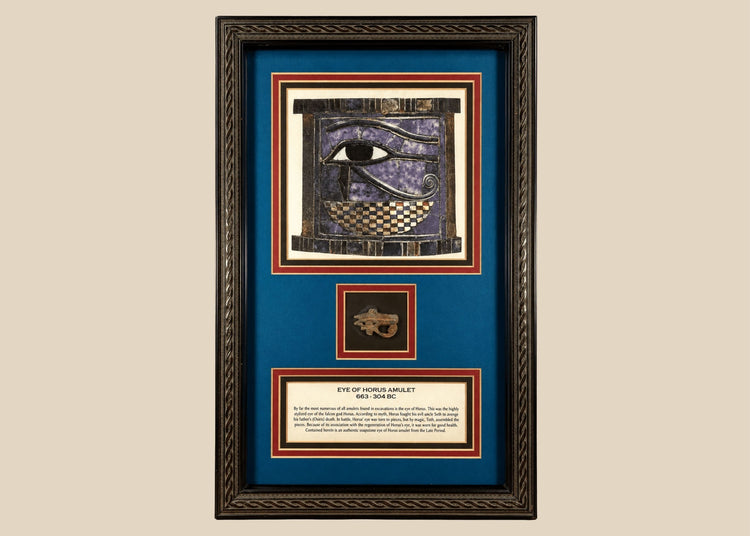
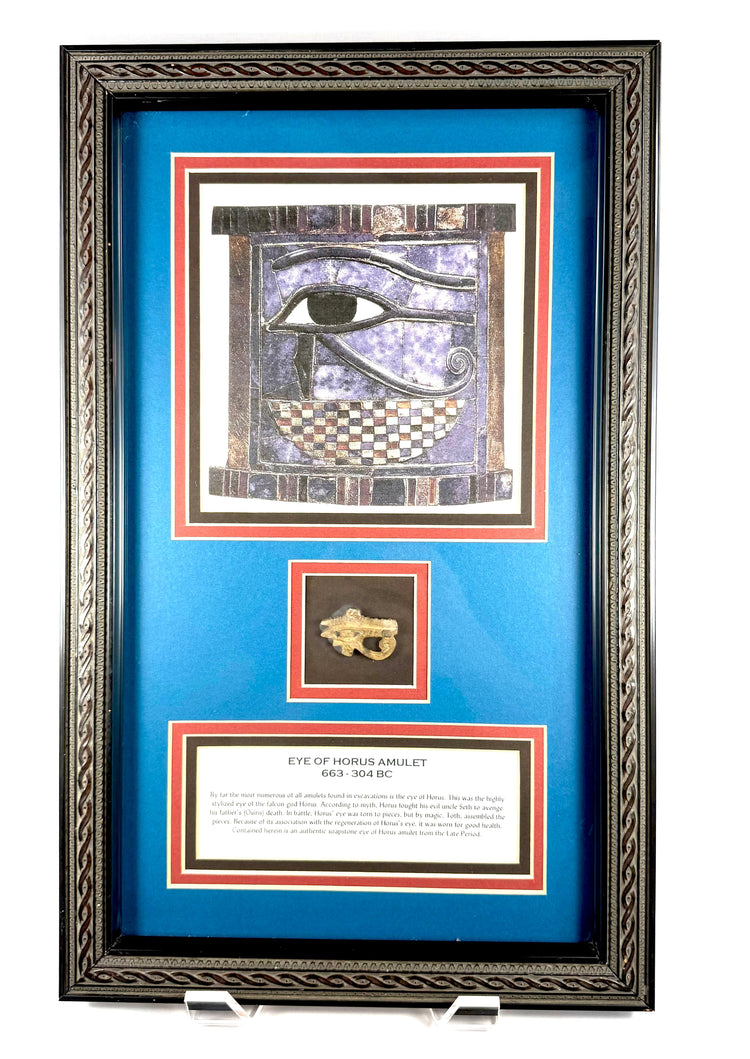
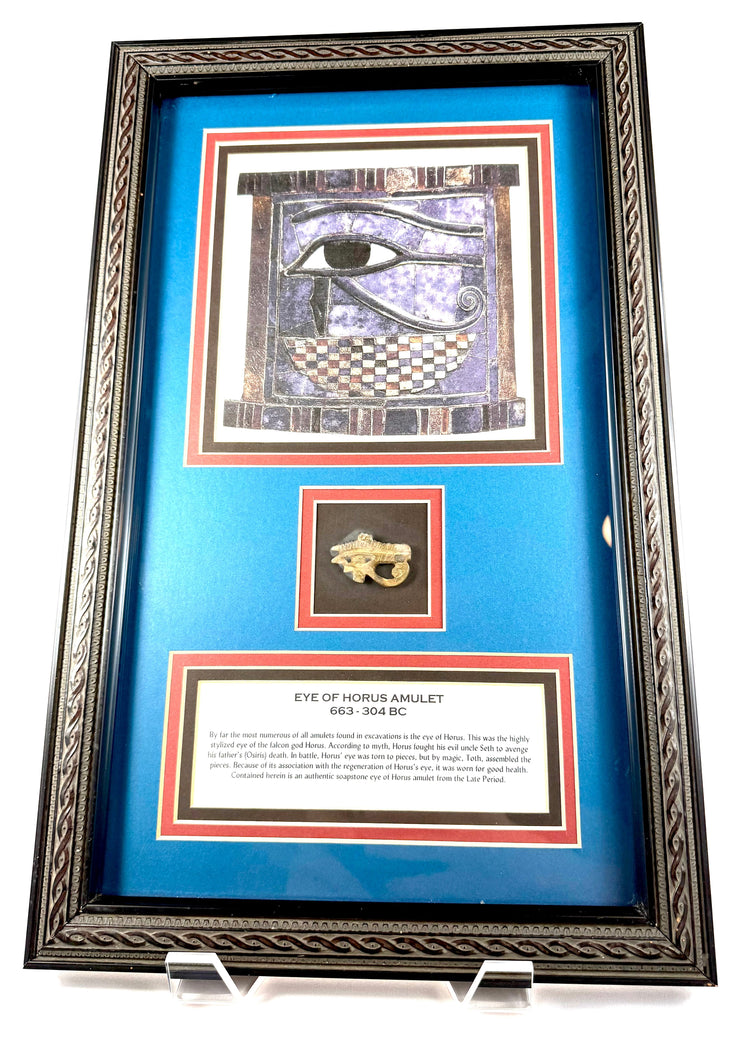
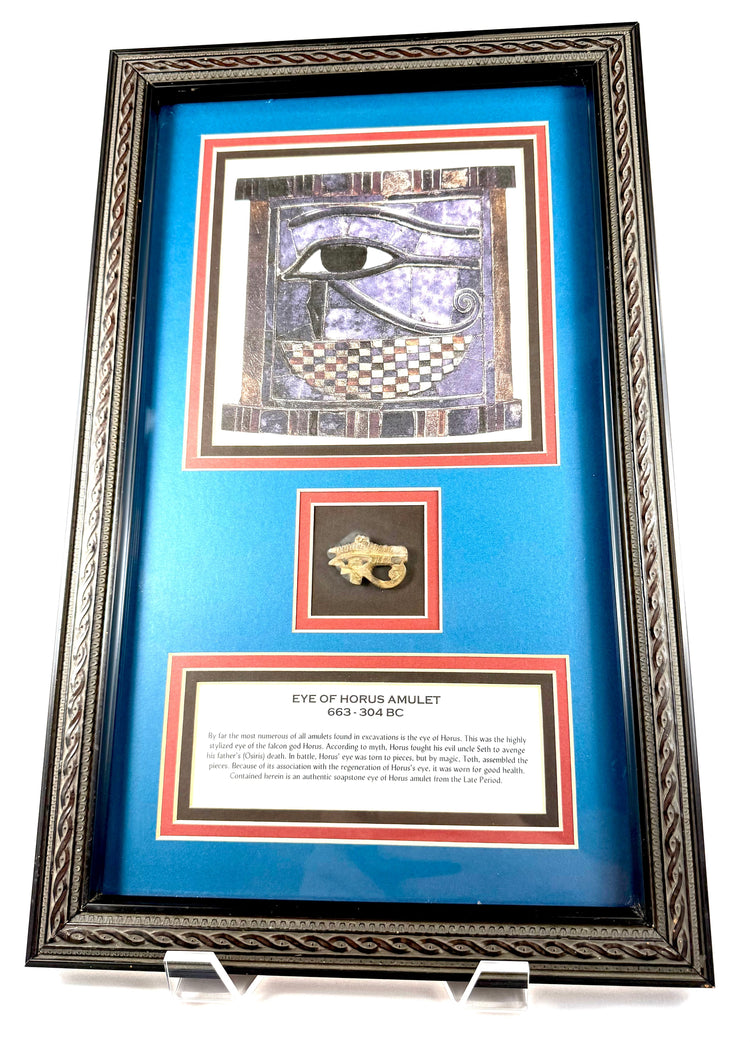
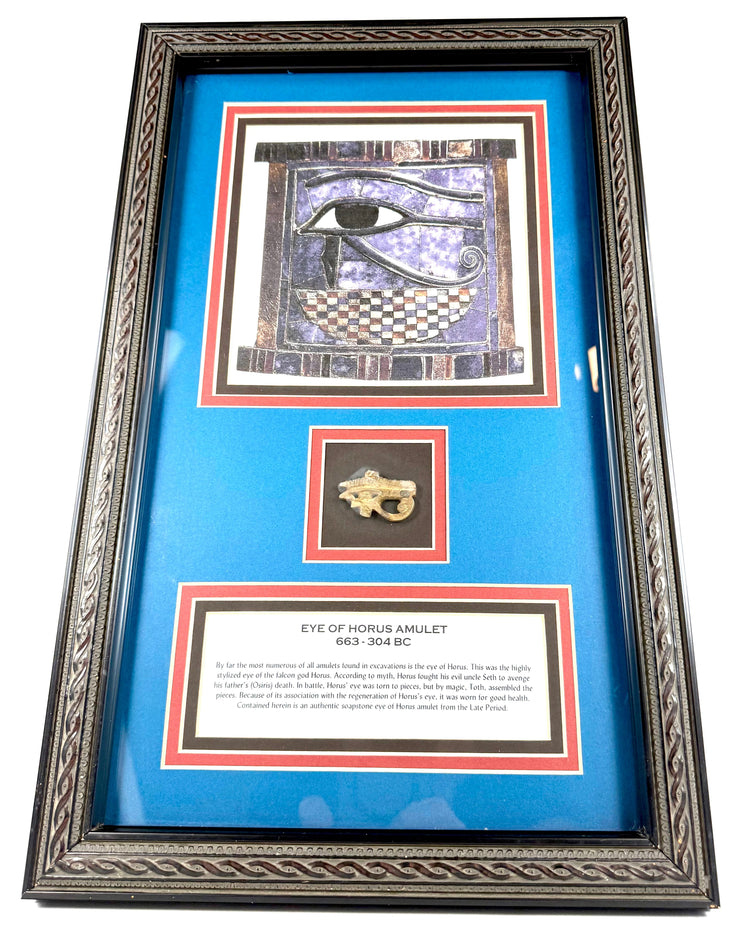
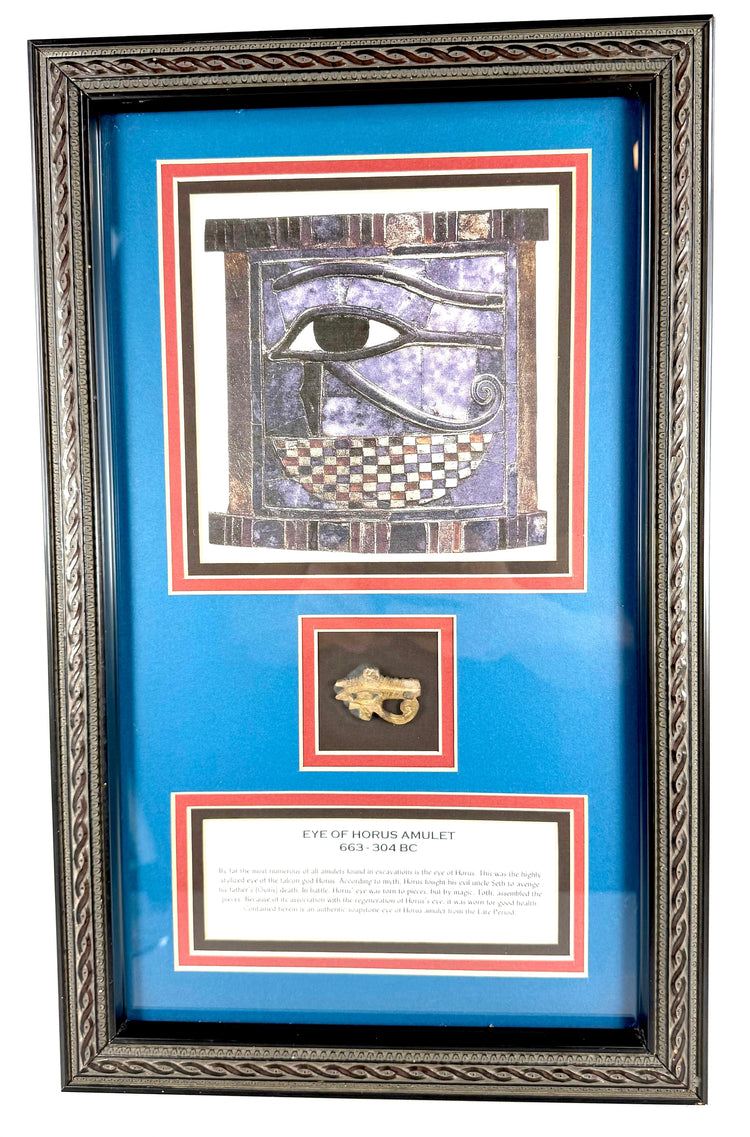
An attractive framed presentation featuring an ancient Egyptian Eye of Horus amulet, traditionally known as the Wedjat or Udjat eye, one of the most recognizable and spiritually significant protective symbols of ancient Egyptian civilization. Dating to the Late Period to Early Ptolemaic Period, circa 663–304 BCE, the small carved stone amulet is displayed within an elaborate decorative arrangement combining Egyptian religious iconography, historical information, and carefully coordinated presentation materials.
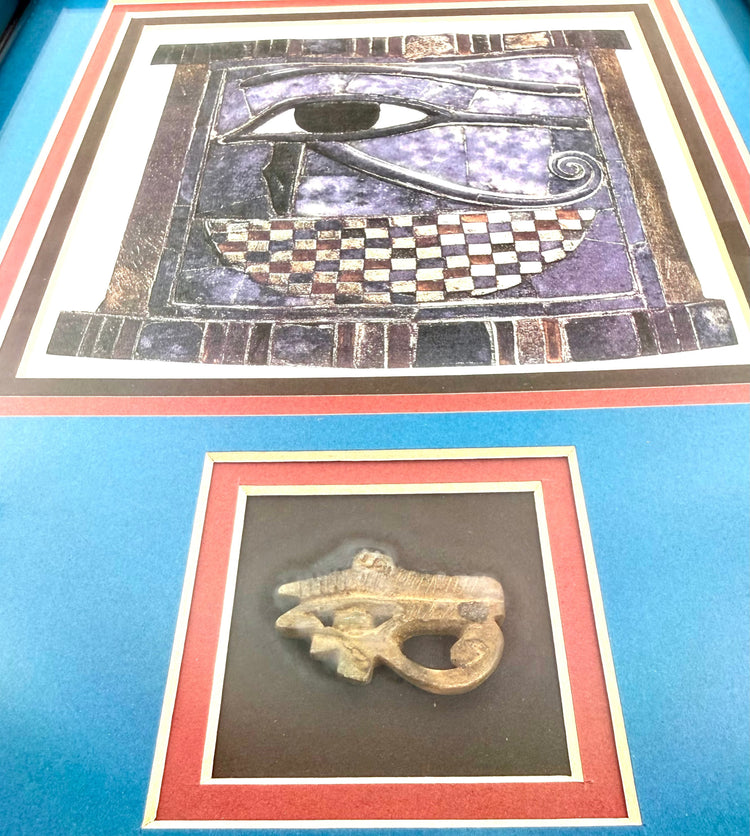
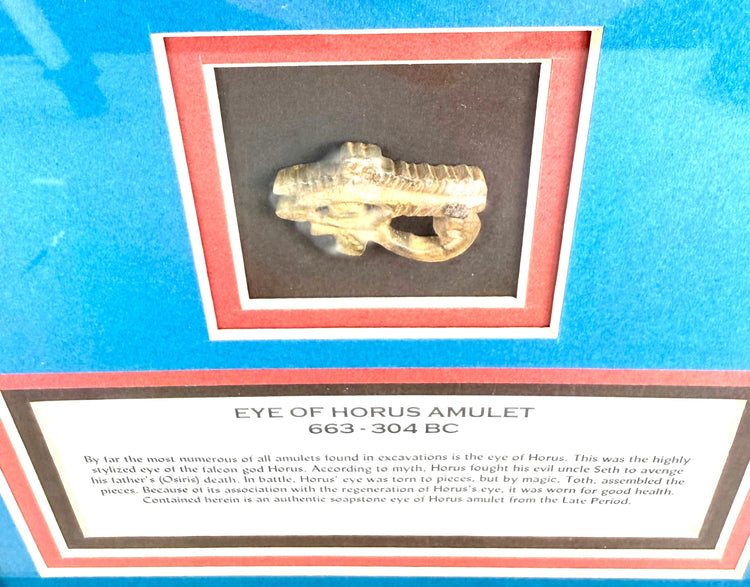
The central artifact is a small, sculpted Eye of Horus amulet, identified on the accompanying plaque as being fashioned from soapstone (steatite). Its distinctive form incorporates the stylized eye, prominent brow, extended cosmetic markings, and an openwork curved element characteristic of traditional Wedjat representations. The surface displays subdued brown, grey, and earthy tones, with visible carved detailing, surface irregularities, and areas of wear.
Above the artifact is a large, richly coloured illustration of the Eye of Horus, displaying the ancient Egyptian symbol against a deep blue-purple background. The artwork features the characteristic falcon-inspired eye, elongated eyebrow, sweeping curved marking, and decorative geometric elements associated with Egyptian visual traditions.
Below the amulet, a printed historical plaque identifies the object as an "Eye of Horus Amulet" dating to 663–304 BCE. The accompanying explanation describes the mythology surrounding Horus, his struggle against Seth, and the restoration of his injured eye through the divine intervention of Thoth. It further explains the amulet's traditional association with protection, regeneration, and good health.
The entire presentation is professionally arranged against a rich blue background, with burgundy, black, and gold-coloured matting surrounding the individual display elements. An ornate black frame with repeating carved-style decorative patterns completes the composition, creating an attractive presentation suitable for a private antiquities collection, study, library, or historical display.
Features
- Ancient Egyptian Eye of Horus amulet dating to circa 663–304 BCE
- Identified as carved soapstone (steatite) on the accompanying historical display plaque
- Distinctive openwork design incorporating the eye, eyebrow, and traditional curved markings
- Wedjat symbolism traditionally associated with divine protection, healing, restoration, and regeneration
- Large decorative illustration of the Eye of Horus against a deep blue-purple background
- Historical presentation plaque explaining the symbolism and mythology of the artifact
- Ornate black frame with burgundy, black, and gold-coloured decorative matting
- Protective glazing enclosing the mounted amulet and accompanying artwork
- Hanging wire and attachment hardware fitted to the reverse for wall display
Cultural Significance
The Eye of Horus was among the most widely recognized protective amulets in ancient Egypt, remaining an important religious symbol across many centuries of Egyptian history. Known to the ancient Egyptians as the Wedjat, meaning the restored or sound eye, the symbol represented the mythological recovery of the god Horus following his conflict with Seth, the deity associated with disorder and chaos.
According to Egyptian religious tradition, Seth injured Horus's eye during their struggle over the succession of Osiris. The god Thoth subsequently restored the eye, transforming it into a powerful symbol of healing, renewal, completeness, and divine protection. This restoration gave the Wedjat its profound religious significance, representing the triumph of restoration over destruction and the preservation of cosmic order.
Ancient Egyptians wore Eye of Horus amulets during their lifetimes as protective charms against illness, misfortune, and harmful influences. Similar amulets were also placed among funerary wrappings and burial equipment, where they were intended to safeguard the deceased and assist in spiritual regeneration.
The symbol's distinctive appearance combines elements of the human eye with the markings of a falcon, reflecting Horus's association with this powerful bird of prey. Its recognizable form became one of the defining images of Egyptian religious art.
During the Late Period, Egyptian artisans produced protective amulets in various materials, including faience, stone, and glazed compositions. Such objects continued longstanding religious traditions and reflected the enduring importance of personal protection and divine intervention in Egyptian society.
The present example is particularly engaging because of its historical presentation. By displaying the carved amulet alongside an enlarged illustration and explanatory plaque, the arrangement provides a visual connection between a small personal religious object and the broader mythological traditions from which its symbolic significance originated.
Condition
The carved amulet displays visible surface wear, irregularities, softened details, areas of discolouration, and minor apparent losses consistent with its aged appearance. The original carved features remain recognizable, including the stylized eye, extended brow, and openwork curved element. The stone exhibits earthy brown and grey tones with darker localized surface deposits and fine surface marks.
The surrounding framed presentation is in good overall decorative condition, with minor surface wear and handling marks to the frame consistent with previous display and storage. The blue background, decorative matting, printed Egyptian illustration, and historical plaque remain present and visually attractive. Minor reflections and superficial marks are visible on the protective glazing.
The amulet remains enclosed within the existing frame and has not been removed for a separate physical examination.
Dimensions (Approximate)
Overall framed display:
Height: 17 in
Width: 10.5 in
Depth: 1 in
Age (Approximate)
2,300–2,700 years old
Provenance
Formerly part of a private collection in Indianapolis, Indiana, United States, assembled by a collector with a diverse interest in historical artifacts, antiquities, and objects representing various ancient civilizations and cultural traditions.
Learn More
Discover a comparable Late Period Wedjat Eye amulet in the collection of The Metropolitan Museum of Art
Explore our Collection of Ancient Egyptian Mummies & Artifacts
Description
Historical Context & Origin
Region: Ancient Egypt
Material: Carved soapstone (steatite), as identified on the accompanying display label, mounted within a decorative glazed frame with printed Egyptian artwork and informational plaque
Period: Late Period to Early Ptolemaic Period, circa 663–304 BCE
Description
An attractive framed presentation featuring an ancient Egyptian Eye of Horus amulet, traditionally known as the Wedjat or Udjat eye, one of the most recognizable and spiritually significant protective symbols of ancient Egyptian civilization. Dating to the Late Period to Early Ptolemaic Period, circa 663–304 BCE, the small carved stone amulet is displayed within an elaborate decorative arrangement combining Egyptian religious iconography, historical information, and carefully coordinated presentation materials.
The central artifact is a small, sculpted Eye of Horus amulet, identified on the accompanying plaque as being fashioned from soapstone (steatite). Its distinctive form incorporates the stylized eye, prominent brow, extended cosmetic markings, and an openwork curved element characteristic of traditional Wedjat representations. The surface displays subdued brown, grey, and earthy tones, with visible carved detailing, surface irregularities, and areas of wear.
Above the artifact is a large, richly coloured illustration of the Eye of Horus, displaying the ancient Egyptian symbol against a deep blue-purple background. The artwork features the characteristic falcon-inspired eye, elongated eyebrow, sweeping curved marking, and decorative geometric elements associated with Egyptian visual traditions.
Below the amulet, a printed historical plaque identifies the object as an "Eye of Horus Amulet" dating to 663–304 BCE. The accompanying explanation describes the mythology surrounding Horus, his struggle against Seth, and the restoration of his injured eye through the divine intervention of Thoth. It further explains the amulet's traditional association with protection, regeneration, and good health.
The entire presentation is professionally arranged against a rich blue background, with burgundy, black, and gold-coloured matting surrounding the individual display elements. An ornate black frame with repeating carved-style decorative patterns completes the composition, creating an attractive presentation suitable for a private antiquities collection, study, library, or historical display.
Features
- Ancient Egyptian Eye of Horus amulet dating to circa 663–304 BCE
- Identified as carved soapstone (steatite) on the accompanying historical display plaque
- Distinctive openwork design incorporating the eye, eyebrow, and traditional curved markings
- Wedjat symbolism traditionally associated with divine protection, healing, restoration, and regeneration
- Large decorative illustration of the Eye of Horus against a deep blue-purple background
- Historical presentation plaque explaining the symbolism and mythology of the artifact
- Ornate black frame with burgundy, black, and gold-coloured decorative matting
- Protective glazing enclosing the mounted amulet and accompanying artwork
- Hanging wire and attachment hardware fitted to the reverse for wall display
Cultural Significance
The Eye of Horus was among the most widely recognized protective amulets in ancient Egypt, remaining an important religious symbol across many centuries of Egyptian history. Known to the ancient Egyptians as the Wedjat, meaning the restored or sound eye, the symbol represented the mythological recovery of the god Horus following his conflict with Seth, the deity associated with disorder and chaos.
According to Egyptian religious tradition, Seth injured Horus's eye during their struggle over the succession of Osiris. The god Thoth subsequently restored the eye, transforming it into a powerful symbol of healing, renewal, completeness, and divine protection. This restoration gave the Wedjat its profound religious significance, representing the triumph of restoration over destruction and the preservation of cosmic order.
Ancient Egyptians wore Eye of Horus amulets during their lifetimes as protective charms against illness, misfortune, and harmful influences. Similar amulets were also placed among funerary wrappings and burial equipment, where they were intended to safeguard the deceased and assist in spiritual regeneration.
The symbol's distinctive appearance combines elements of the human eye with the markings of a falcon, reflecting Horus's association with this powerful bird of prey. Its recognizable form became one of the defining images of Egyptian religious art.
During the Late Period, Egyptian artisans produced protective amulets in various materials, including faience, stone, and glazed compositions. Such objects continued longstanding religious traditions and reflected the enduring importance of personal protection and divine intervention in Egyptian society.
The present example is particularly engaging because of its historical presentation. By displaying the carved amulet alongside an enlarged illustration and explanatory plaque, the arrangement provides a visual connection between a small personal religious object and the broader mythological traditions from which its symbolic significance originated.
Condition
The carved amulet displays visible surface wear, irregularities, softened details, areas of discolouration, and minor apparent losses consistent with its aged appearance. The original carved features remain recognizable, including the stylized eye, extended brow, and openwork curved element. The stone exhibits earthy brown and grey tones with darker localized surface deposits and fine surface marks.
The surrounding framed presentation is in good overall decorative condition, with minor surface wear and handling marks to the frame consistent with previous display and storage. The blue background, decorative matting, printed Egyptian illustration, and historical plaque remain present and visually attractive. Minor reflections and superficial marks are visible on the protective glazing.
The amulet remains enclosed within the existing frame and has not been removed for a separate physical examination.
Dimensions (Approximate)
Overall framed display:
Height: 17 in
Width: 10.5 in
Depth: 1 in
Age (Approximate)
2,300–2,700 years old
Provenance
Formerly part of a private collection in Indianapolis, Indiana, United States, assembled by a collector with a diverse interest in historical artifacts, antiquities, and objects representing various ancient civilizations and cultural traditions.
Learn More
Discover a comparable Late Period Wedjat Eye amulet in the collection of The Metropolitan Museum of Art
Explore our Collection of Ancient Egyptian Mummies & Artifacts
Vous aimerez peut-être aussi
