



Ancient Egyptian Blue-Green Faience Ushabti with Painted Hieroglyphs | 21st–22nd Dynasties | Circa 1070–715 BCE
- Prix habituel
- $1,500.00
- Prix soldé
- $1,500.00
- Prix habituel
Impossible de charger la disponibilité du service de retrait


Ancient Egyptian Blue-Green Faience Ushabti with Painted Hieroglyphs | 21st–22nd Dynasties | Circa 1070–715 BCE
Description
Plus
Moins
Historical Context & Origin
Region: Ancient Egypt
Material: Blue-green glazed faience with black-painted details
Period: Third Intermediate Period, 21st–22nd Dynasties, circa 1070–715 BCE
This ancient Egyptian ushabti dates to the Third Intermediate Period, a time when funerary traditions remained deeply rooted in longstanding Egyptian religious beliefs. During the 21st and 22nd Dynasties, ushabtis continued to be placed in tombs as magical servants intended to undertake labour on behalf of the deceased in the afterlife.
Faience was especially well suited to funerary objects because its blue-green colouring was associated with regeneration, fertility, rebirth, and the life-giving waters of the Nile. These symbolic associations made the material particularly appropriate for objects intended to accompany the deceased into the afterlife.
Description
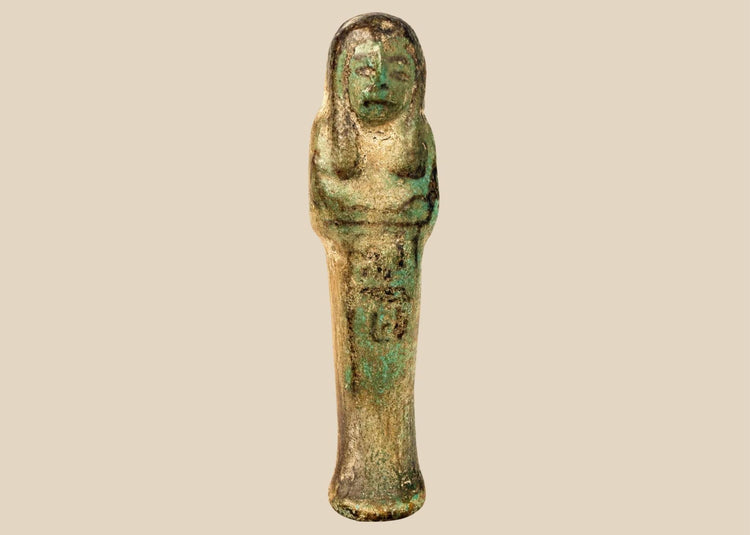
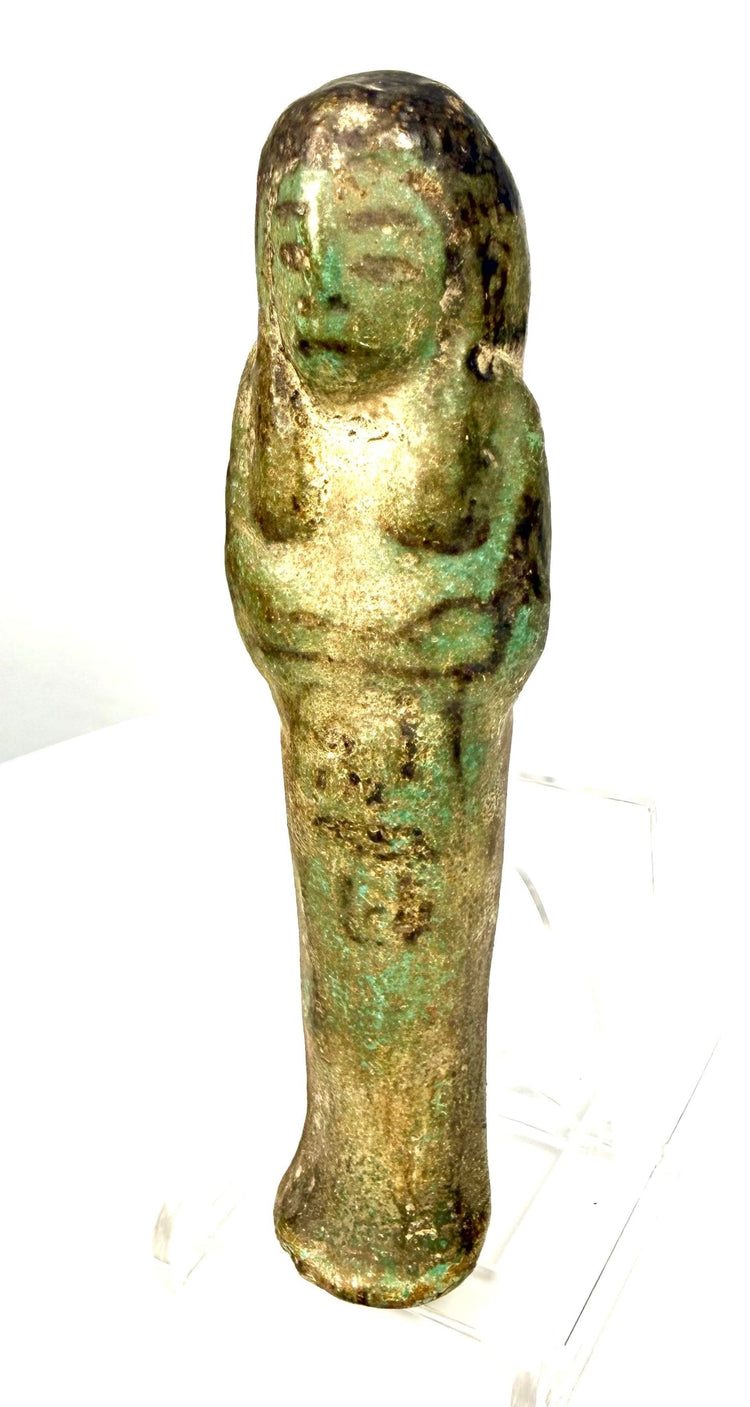
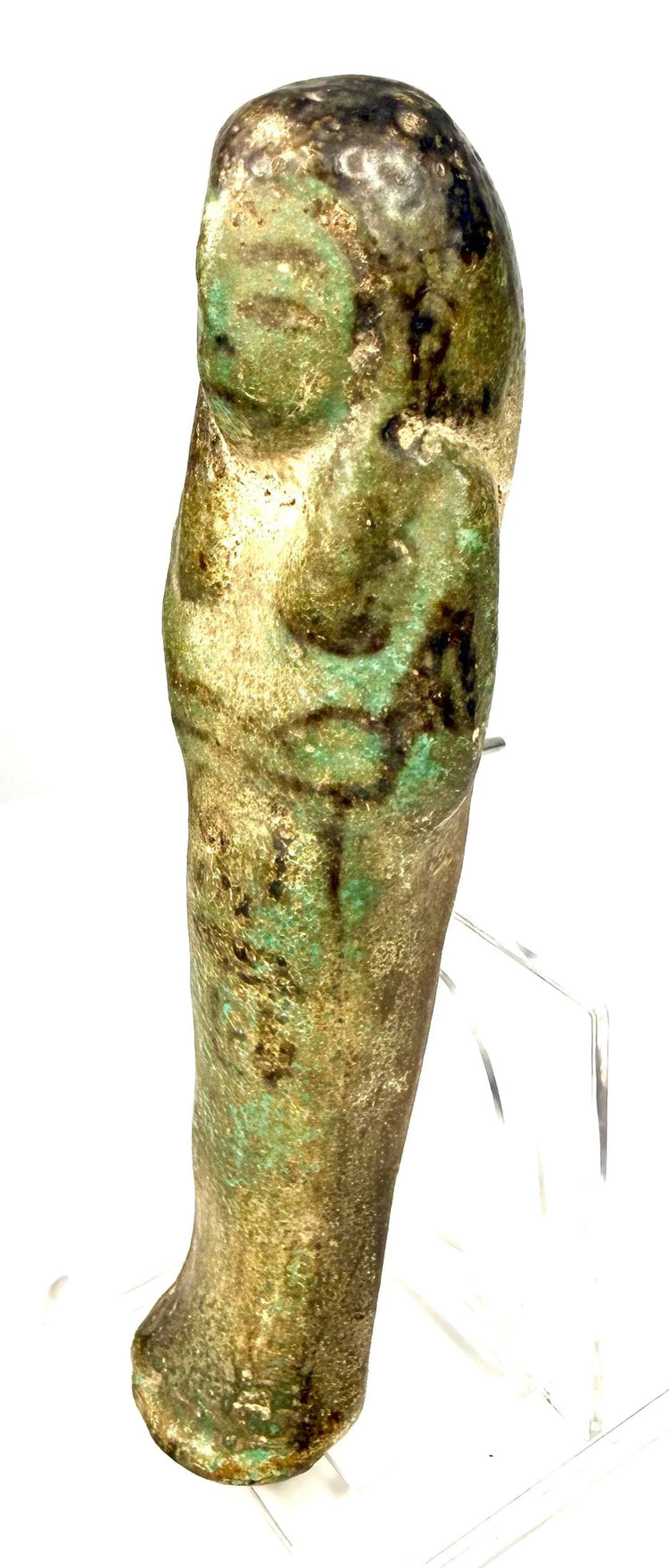
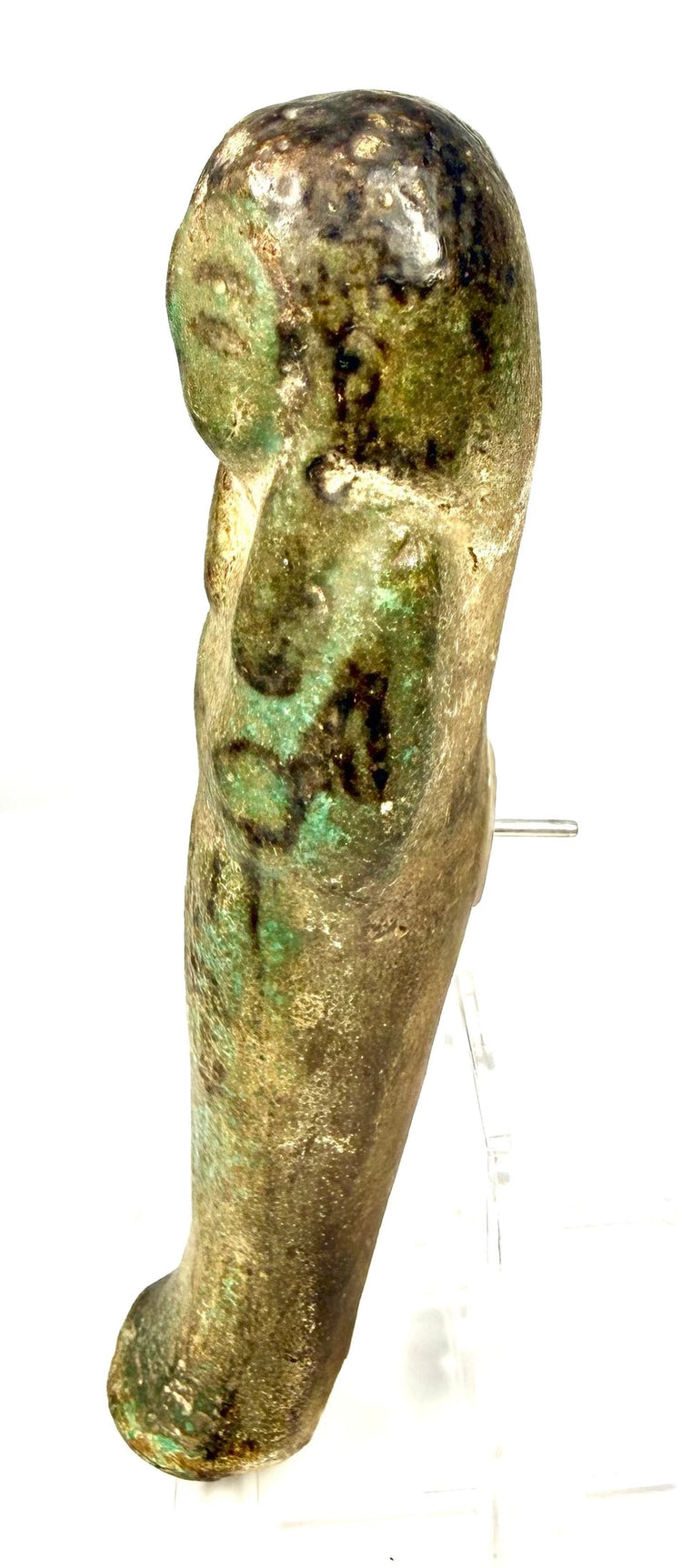
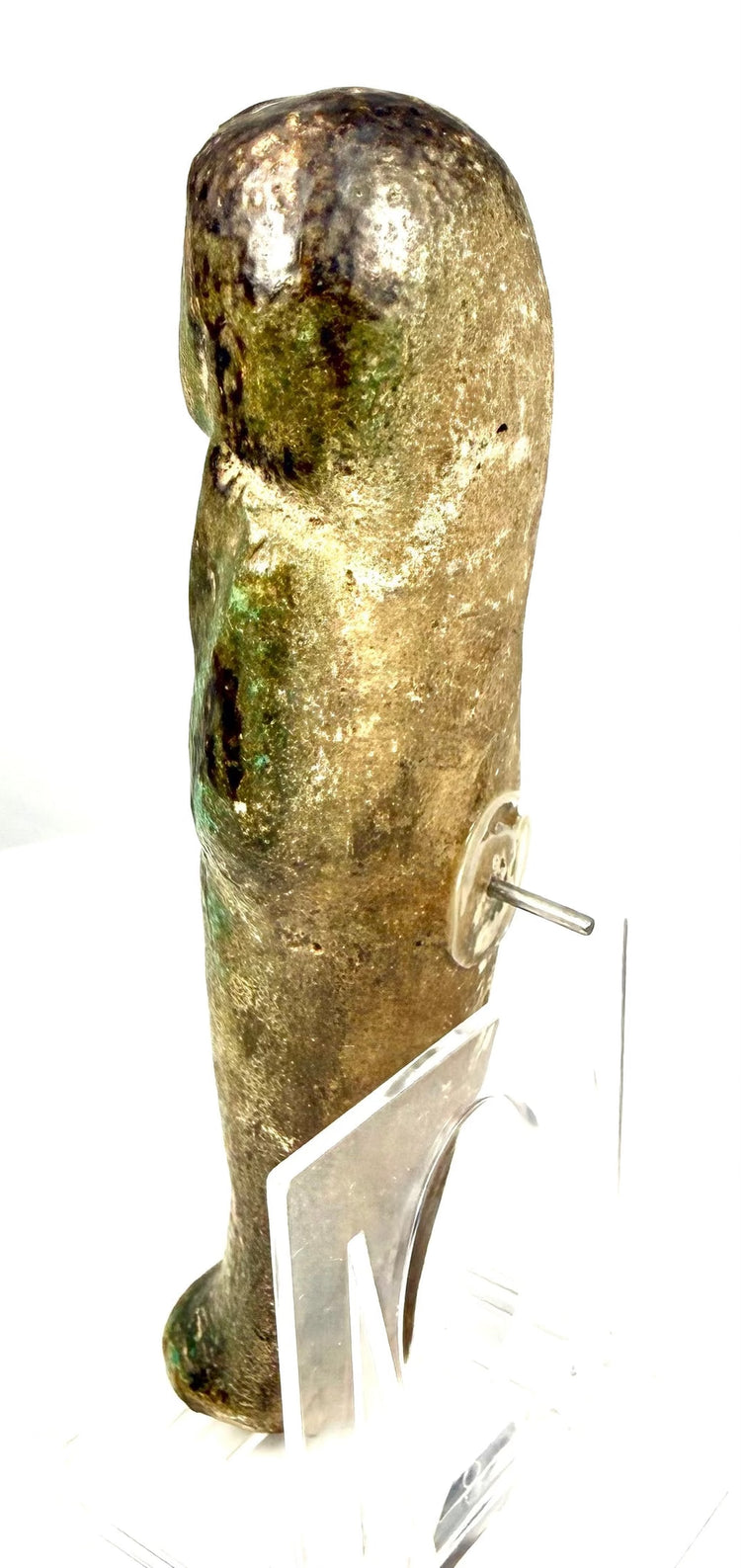
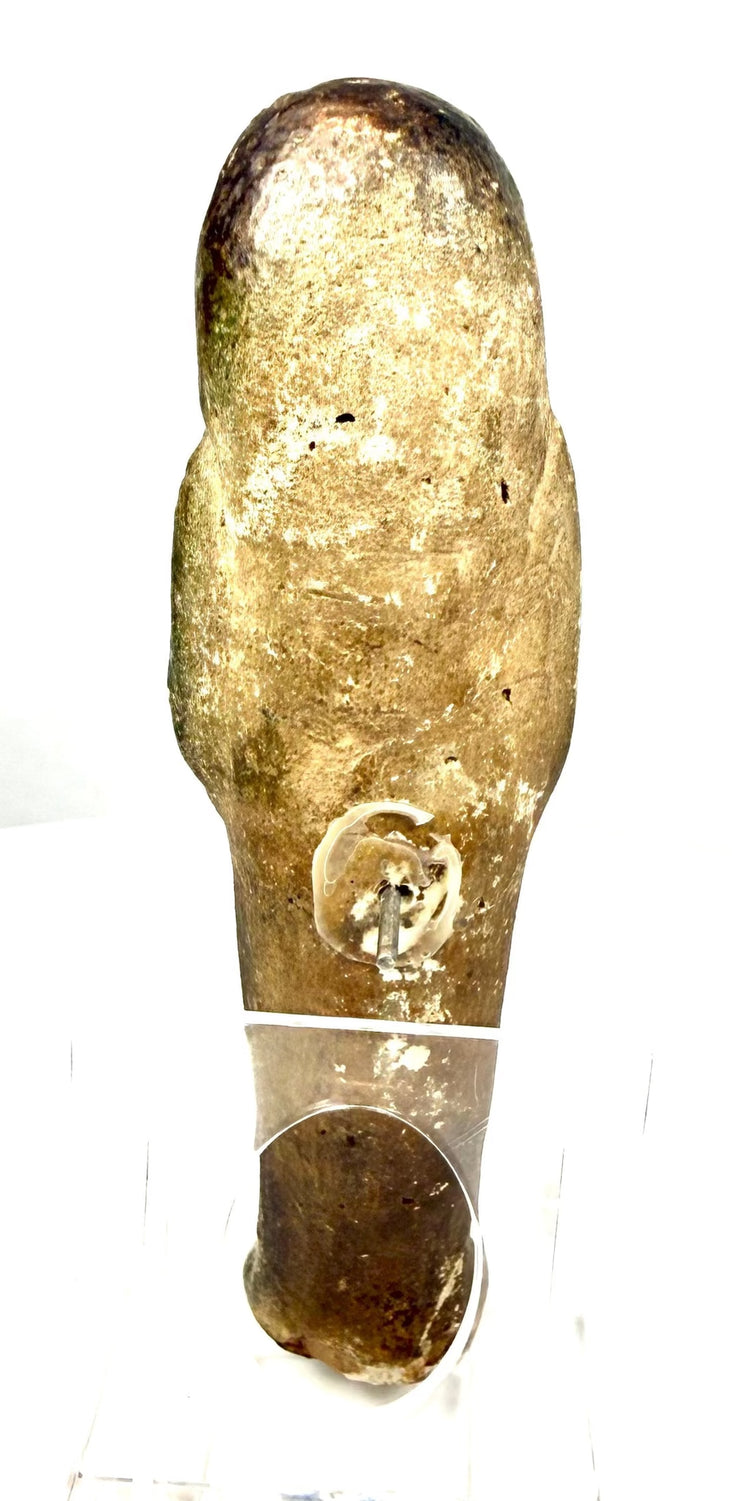
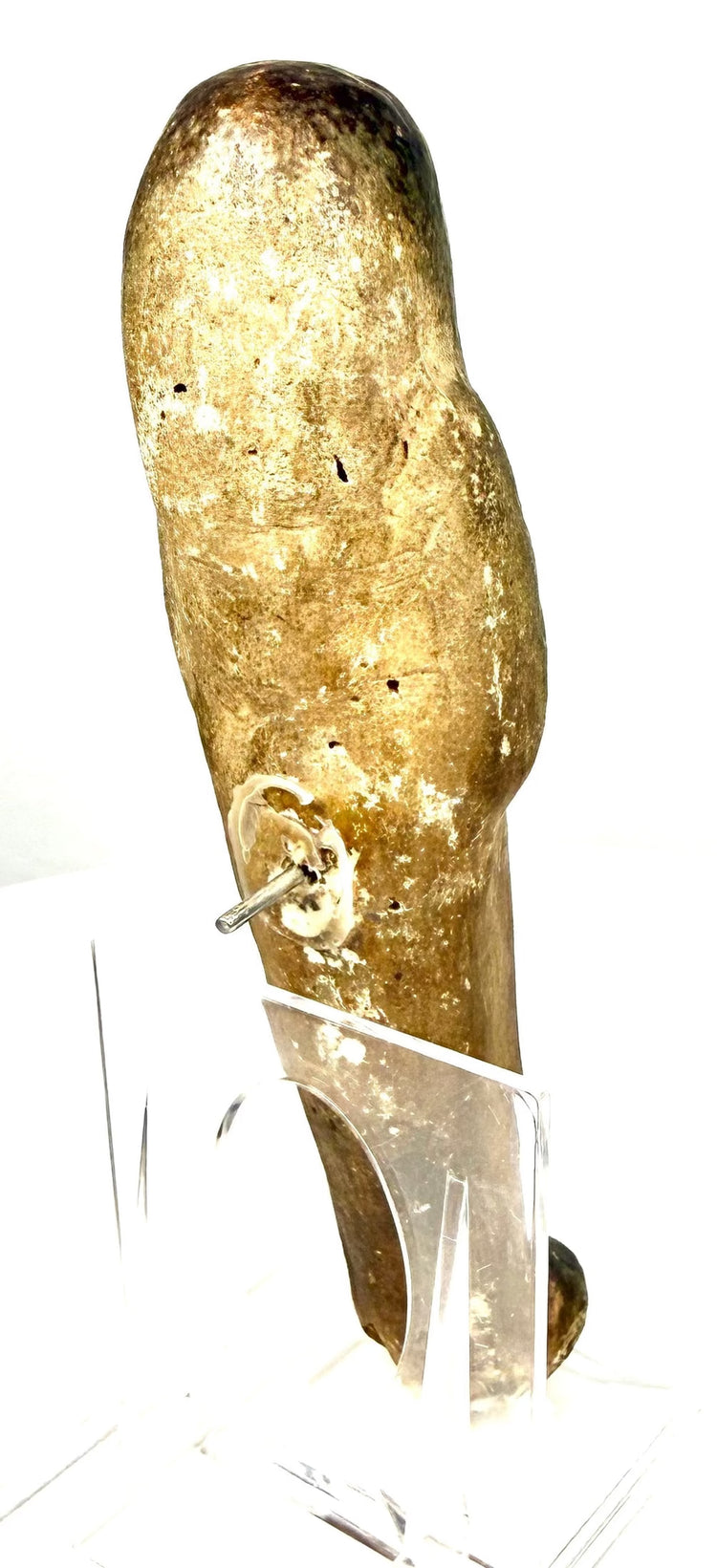
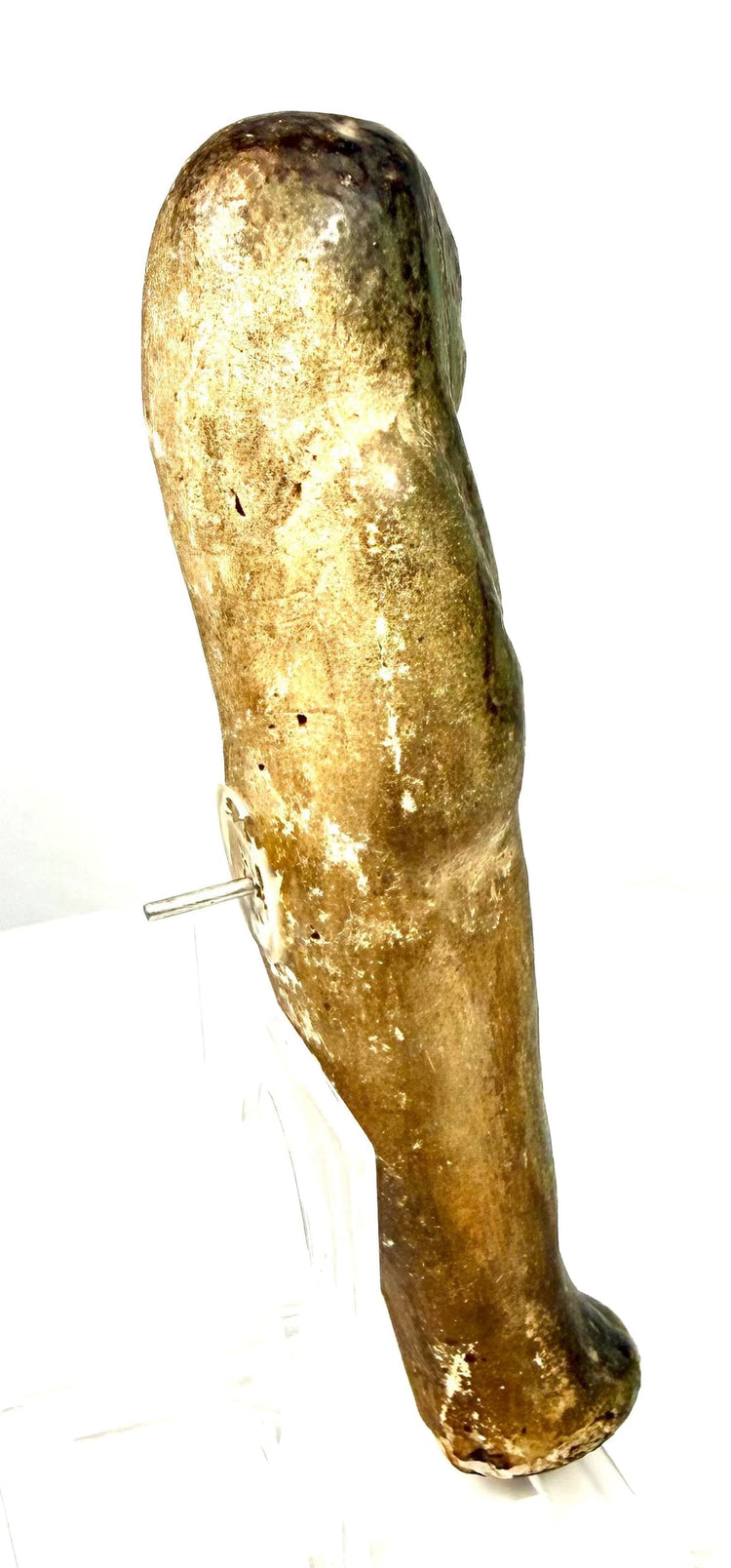
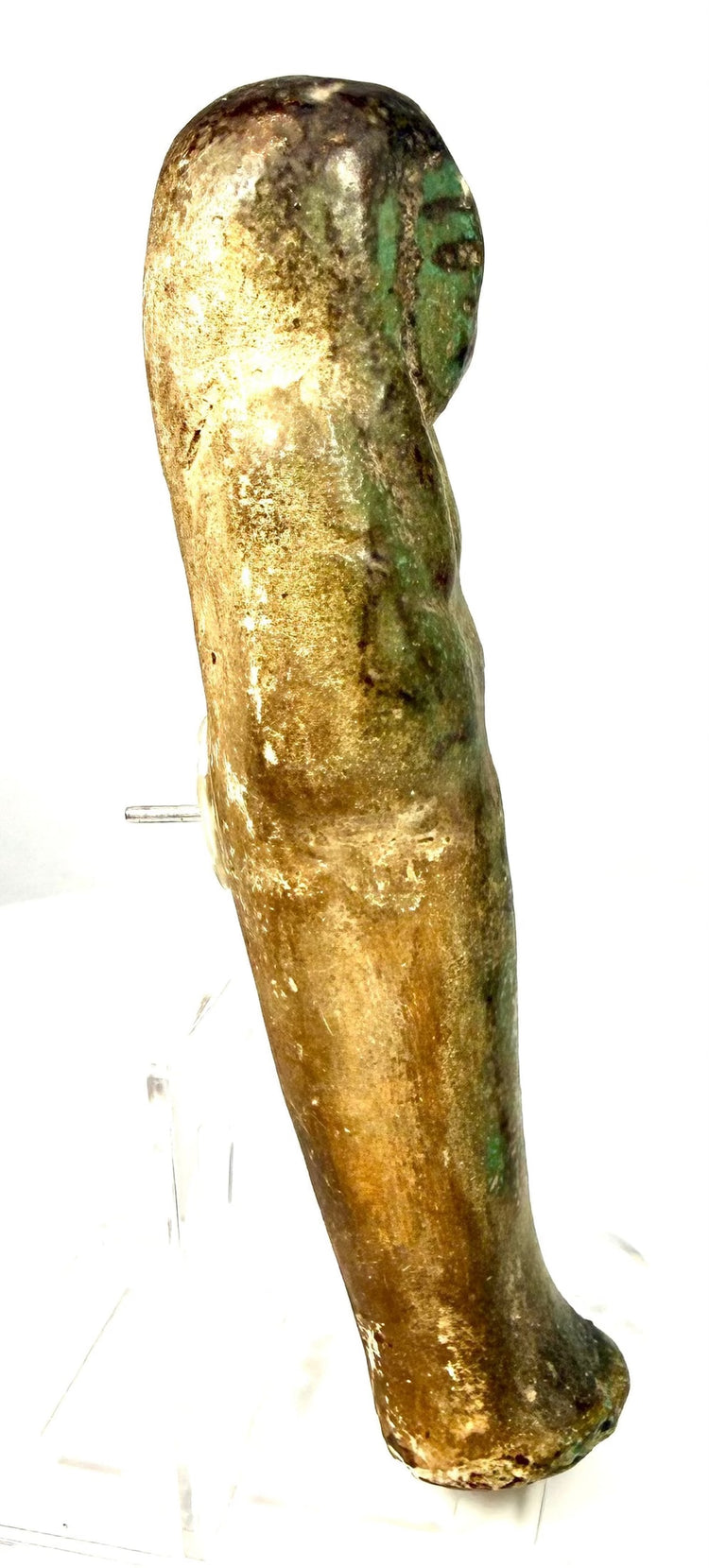
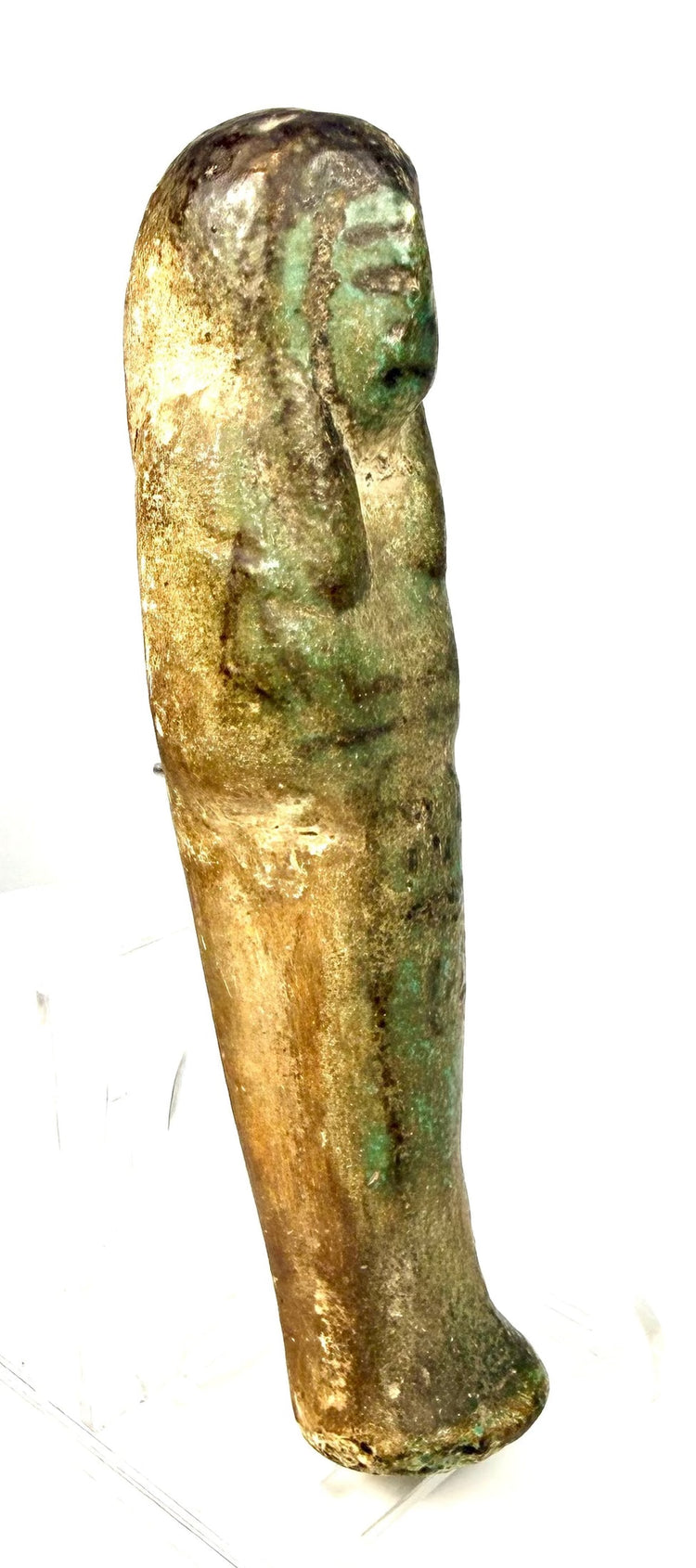
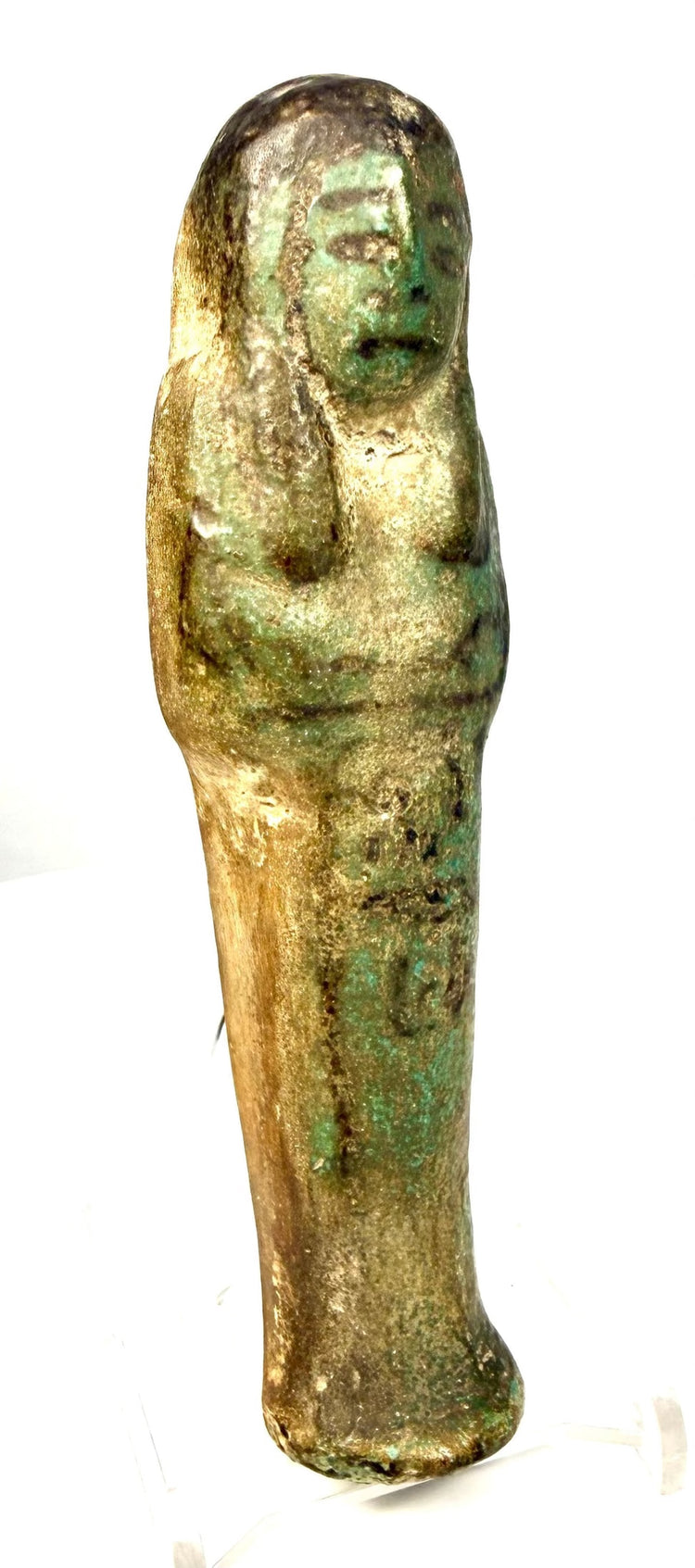
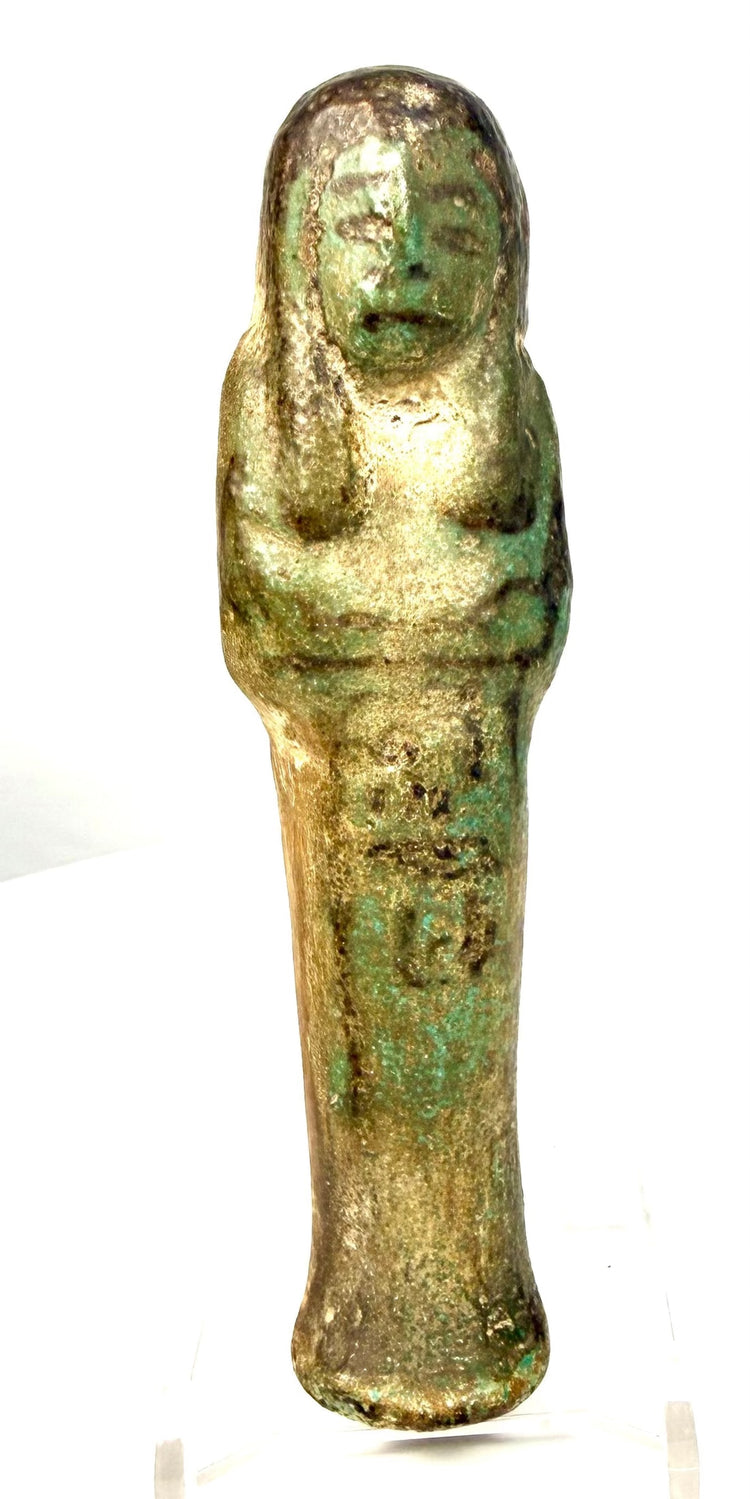
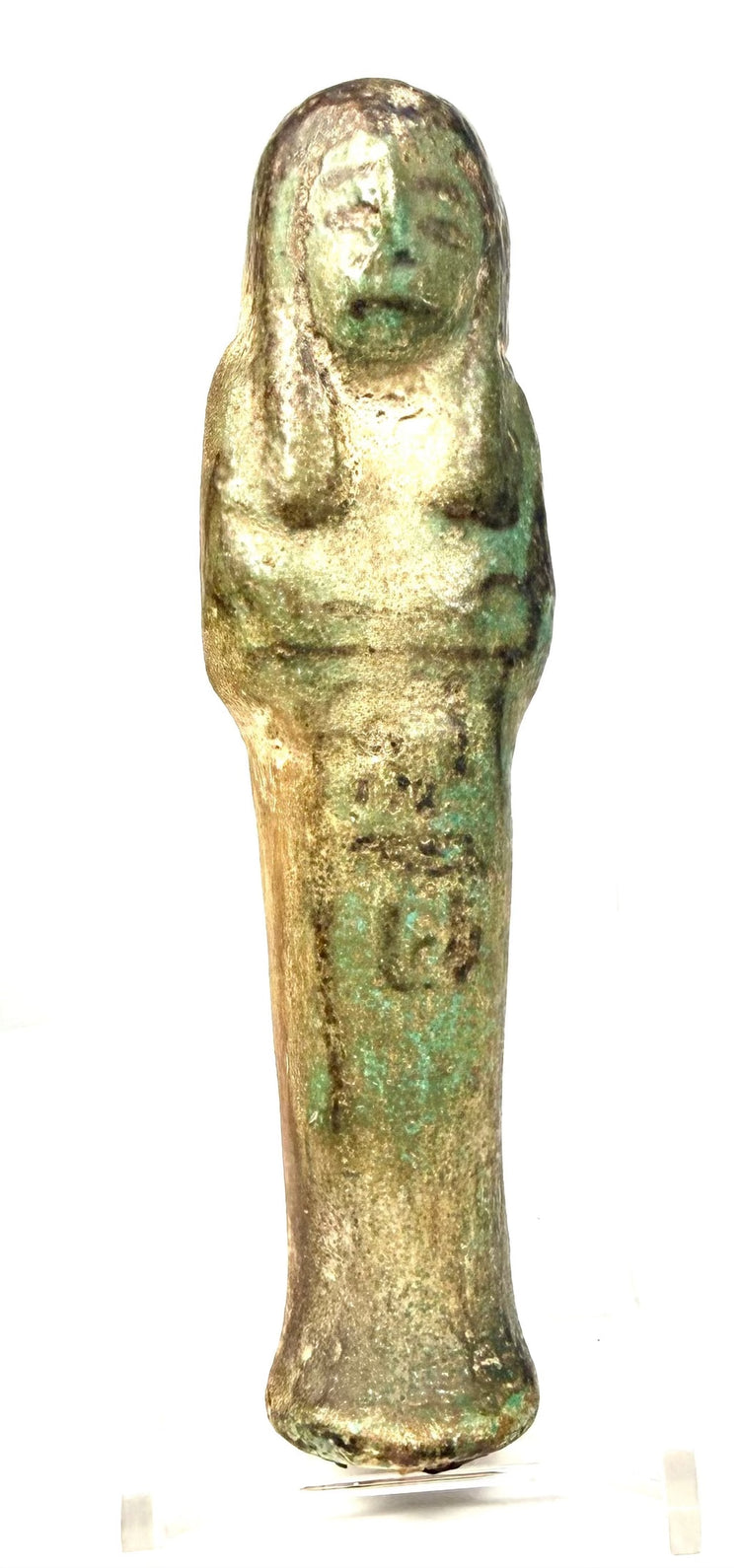
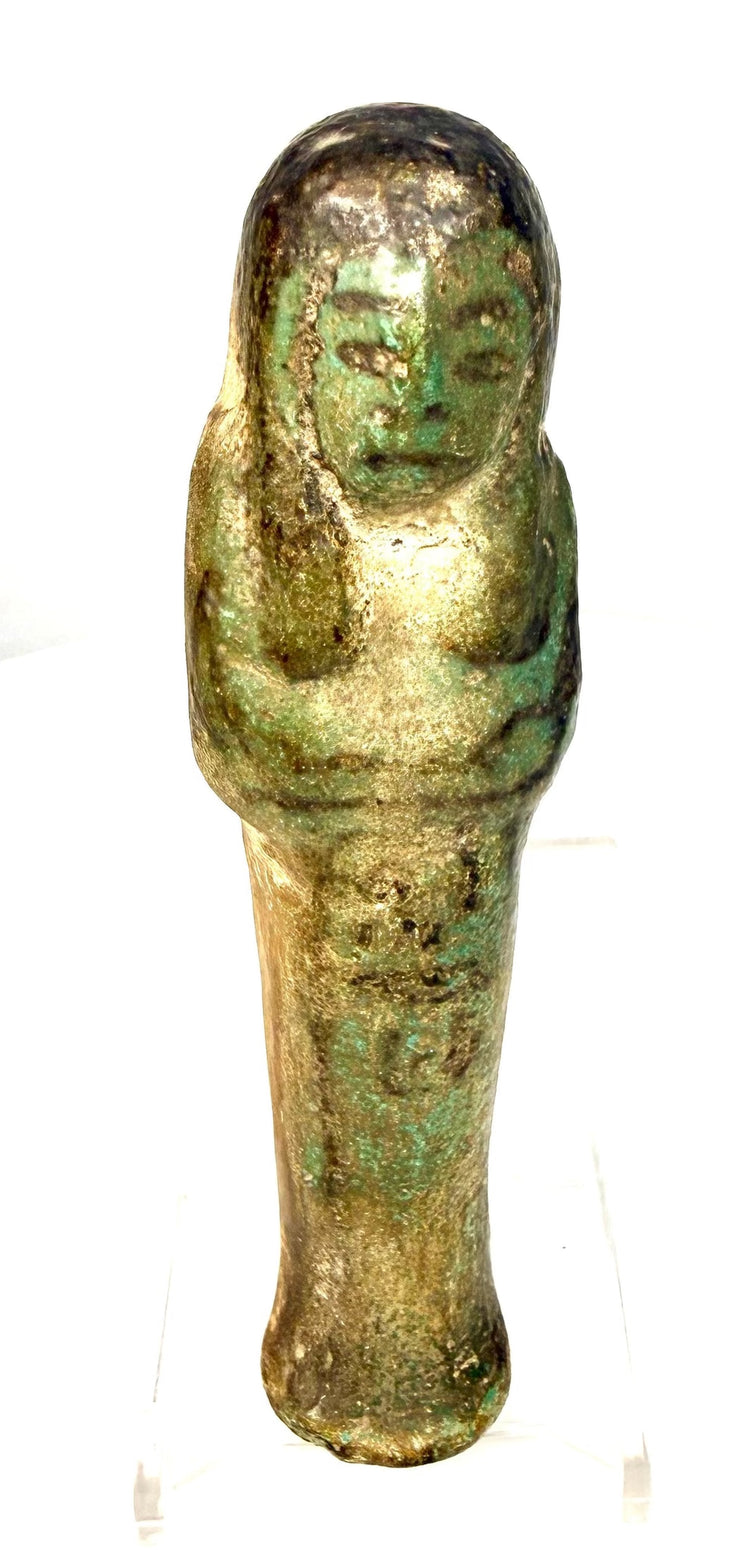
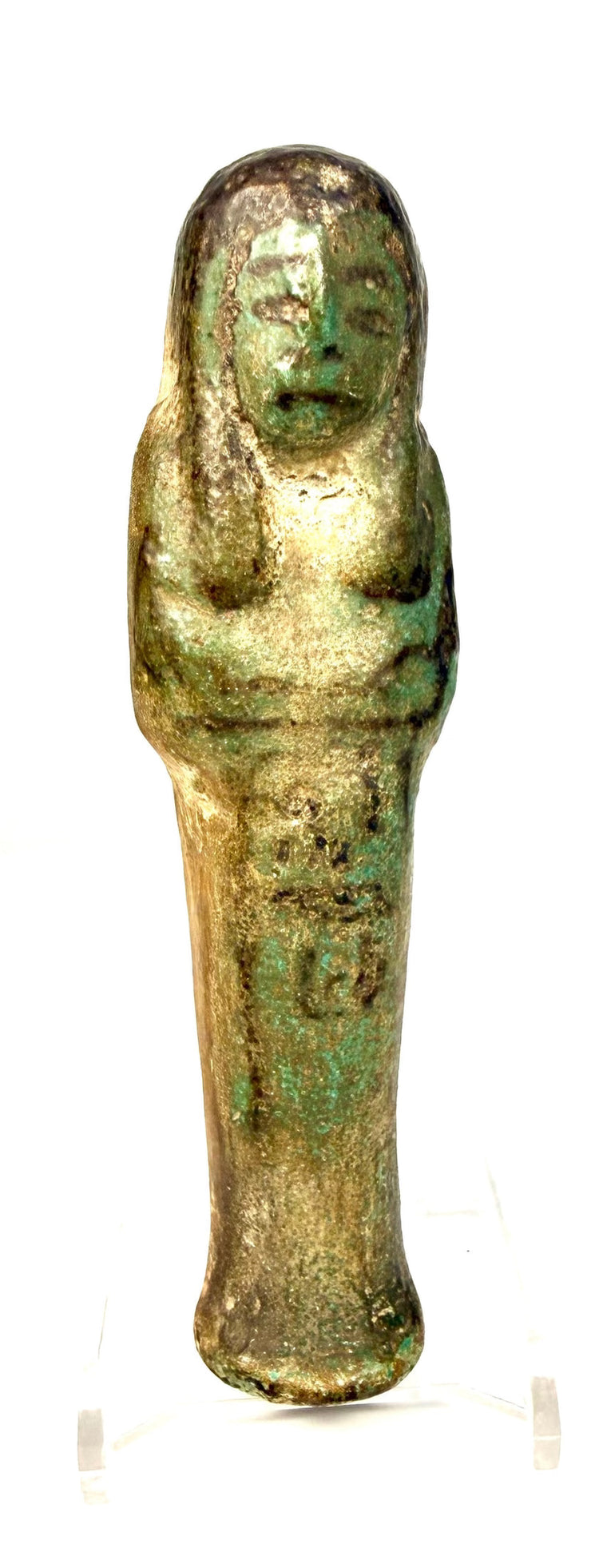
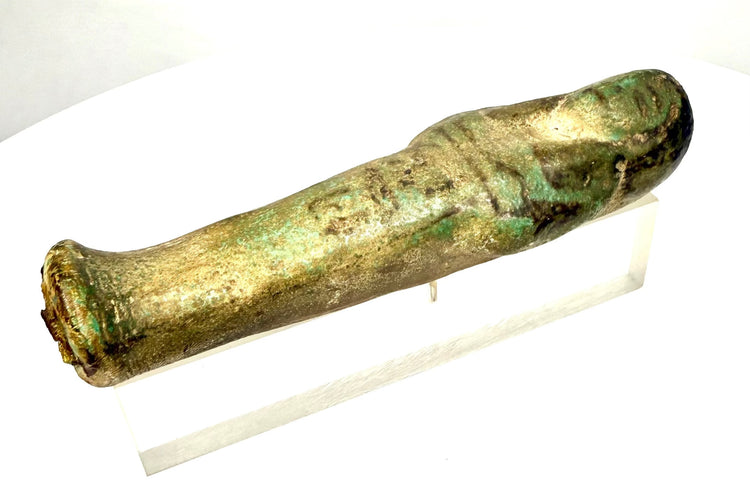
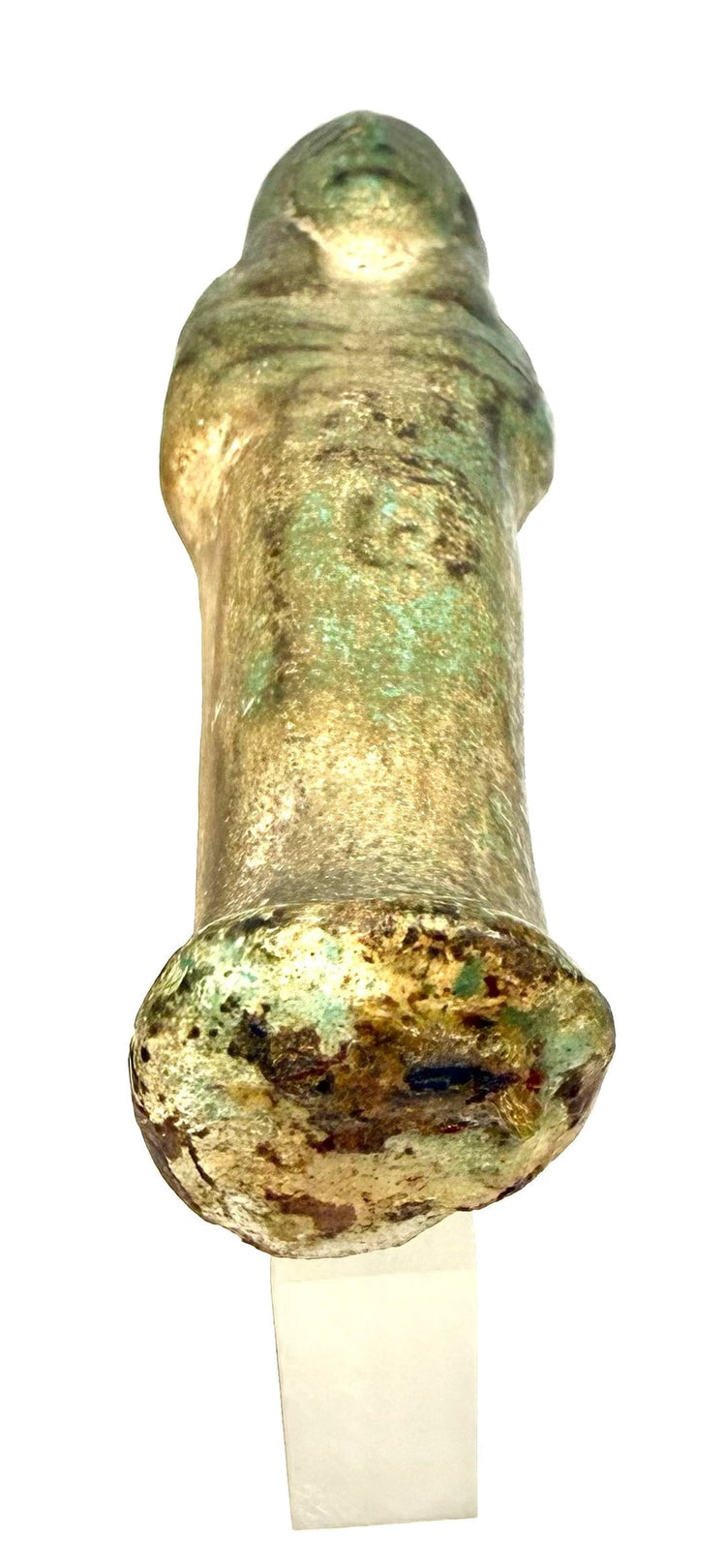
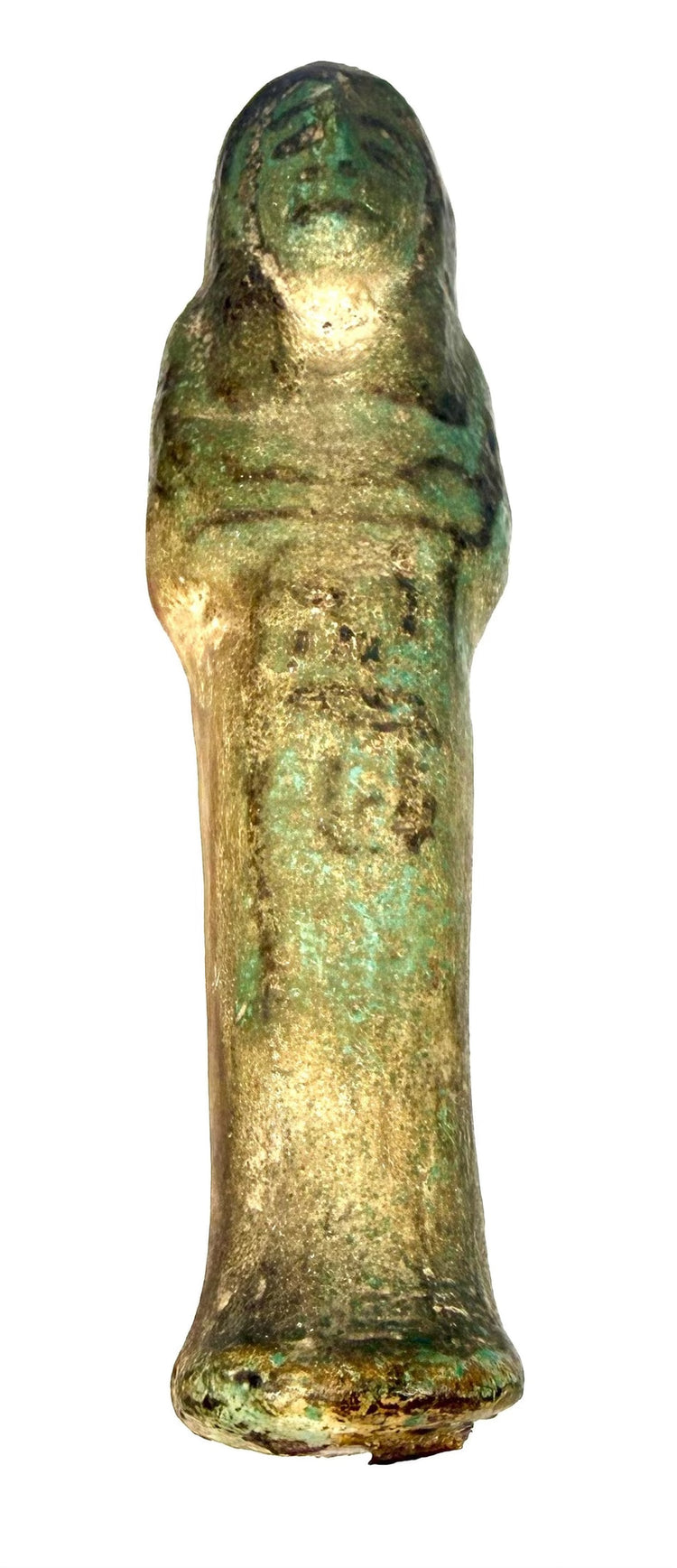
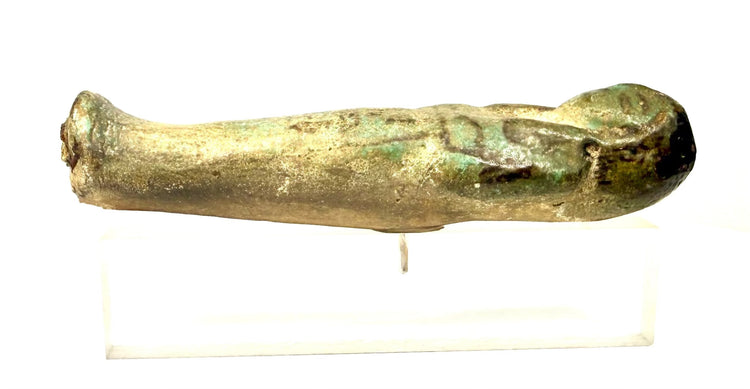
This slender Egyptian faience ushabti depicts a standing mummiform figure with the arms crossed over the chest and an elongated body terminating in a slightly projecting foot.
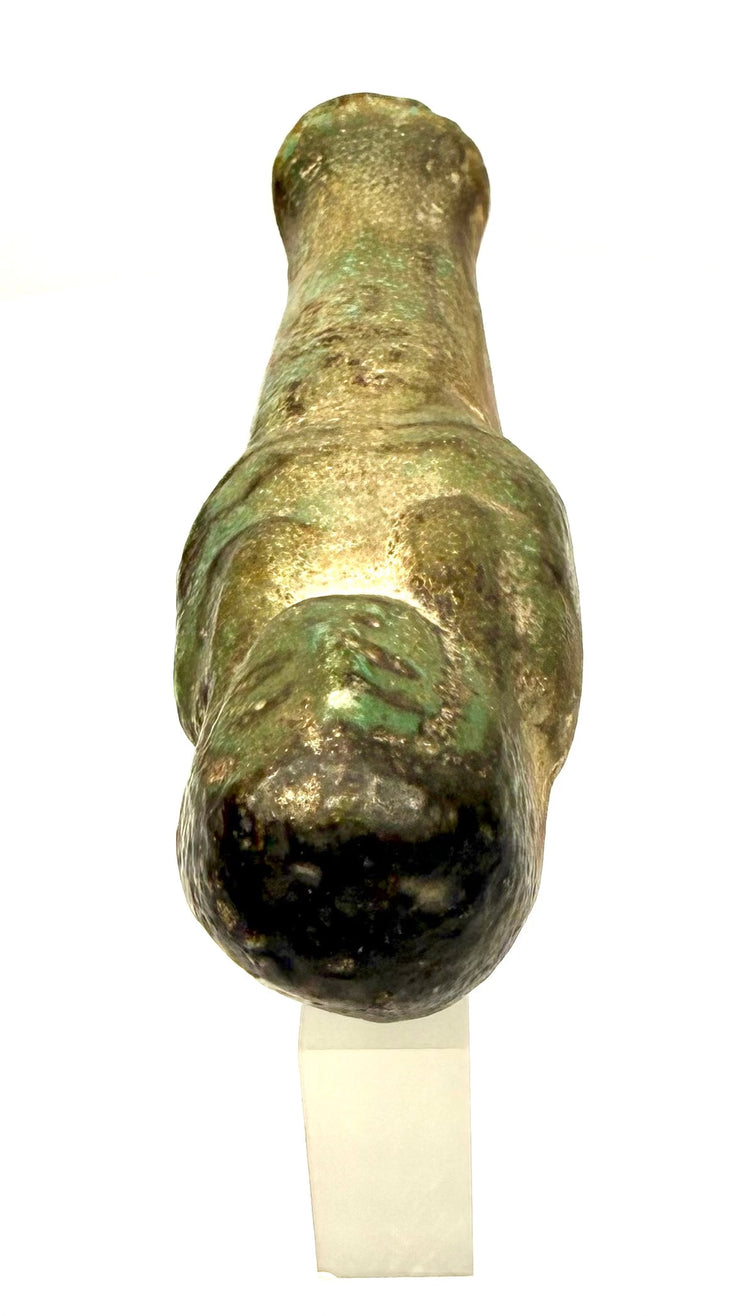
The figure wears a rounded tripartite wig, with long frontal lappets extending down over the shoulders and upper chest. The face retains modelled features including the nose and mouth, while surviving black-painted decoration emphasizes the eyes, brows, facial details, wig, arms, and portions of the body.
Areas of turquoise and blue-green glaze remain visible throughout the figure, contrasting with naturally aged beige and brown surface deposits and areas of glaze loss. A partially preserved vertical column of black-painted hieroglyphic signs extends down the front of the lower body. While the inscription remains visibly discernible in places, it is incomplete and has not been attributed to a specific named individual.
The combination of mummiform form, blue-green faience, black-painted detailing, and vertical inscription is consistent with funerary ushabti production of Egypt’s Third Intermediate Period.
Features
- Blue-green glazed faience construction
- Mummiform body with crossed arms
- Rounded tripartite wig
- Black-painted facial details
- Black-painted arm and body details
- Partial vertical hieroglyphic inscription
- Surviving turquoise-green glaze
- Elongated body with slightly projecting foot
- Third Intermediate Period funerary figure
Cultural Significance
Ushabtis, also known as shabtis or shawabtis, were small funerary figures placed in Egyptian tombs to act as substitute workers for the deceased in the afterlife. Egyptian religious belief held that the deceased could be summoned to perform agricultural or other labour in the Field of Reeds, and ushabtis were intended to answer that summons in their place.
Many examples were inscribed with the name or title of the deceased, or with portions of what is commonly known as the shabti spell, derived from Chapter 6 of the Book of the Dead. This spell instructed the figure to respond when called upon to undertake work in the afterlife.
By the Third Intermediate Period, large numbers of ushabtis could be included within a single burial, reflecting both the continued importance of funerary magic and the increasingly standardized production of these figures.
Condition
The figure remains substantially intact with its recognizable mummiform shape, crossed arms, tripartite wig, facial features, and surviving inscription.
The surface shows age-related wear, abrasions, pitting, deposits, discolouration, and areas of glaze and pigment loss. Blue-green glaze remains visible across portions of the face, torso, and lower body. Black-painted decorative elements and portions of the hieroglyphic inscription remain discernible.
Minor irregularities and small losses are visible around the lower foot area, consistent with age and archaeological history.
Dimensions (Approximate)
Height: 5 inches
Width: 1.5 inches
Depth: 1.25 inches
Age (Approximate)
2,700–3,100 years old
Provenance
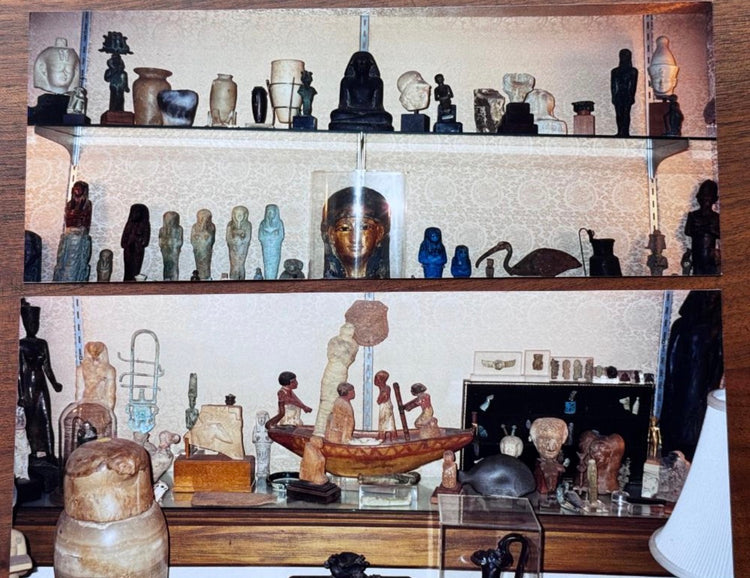
From the collection of Dr. Bruce L. Ralston, Tuxedo Park, New York, USA. Dr. Ralston was a private collector who assembled a substantial collection of antiquities during the 1960s and 1970s, with particular holdings in Egyptian, Roman, and Middle Eastern material.
A period photograph from Dr. Bruce L. Ralston’s collection, believed to date to approximately the late 1970s to 1980s, provides important visual documentation of the piece within his collection. The artifact can be clearly identified near the centre of the photograph, positioned directly beneath the large Egyptian boat model among other antiquities displayed in Dr. Ralston’s home collection. It is the last photo uploaded.
Subsequently handled by Tremont Auctions, Sudbury, Massachusetts, a full-service auction house specializing in fine art, antiques, Asian works of art, antiquities, and jewelry.
Learn More
Explore the history and funerary purpose of ancient Egyptian shabtis through University College London.
Browse our collection of Ancient Egyptian Mummies & Artifacts to discover more objects reflecting the spiritual beliefs, burial customs, and artistic traditions of ancient Egypt.
Description
Historical Context & Origin
Region: Ancient Egypt
Material: Blue-green glazed faience with black-painted details
Period: Third Intermediate Period, 21st–22nd Dynasties, circa 1070–715 BCE
This ancient Egyptian ushabti dates to the Third Intermediate Period, a time when funerary traditions remained deeply rooted in longstanding Egyptian religious beliefs. During the 21st and 22nd Dynasties, ushabtis continued to be placed in tombs as magical servants intended to undertake labour on behalf of the deceased in the afterlife.
Faience was especially well suited to funerary objects because its blue-green colouring was associated with regeneration, fertility, rebirth, and the life-giving waters of the Nile. These symbolic associations made the material particularly appropriate for objects intended to accompany the deceased into the afterlife.
Description
This slender Egyptian faience ushabti depicts a standing mummiform figure with the arms crossed over the chest and an elongated body terminating in a slightly projecting foot.
The figure wears a rounded tripartite wig, with long frontal lappets extending down over the shoulders and upper chest. The face retains modelled features including the nose and mouth, while surviving black-painted decoration emphasizes the eyes, brows, facial details, wig, arms, and portions of the body.
Areas of turquoise and blue-green glaze remain visible throughout the figure, contrasting with naturally aged beige and brown surface deposits and areas of glaze loss. A partially preserved vertical column of black-painted hieroglyphic signs extends down the front of the lower body. While the inscription remains visibly discernible in places, it is incomplete and has not been attributed to a specific named individual.
The combination of mummiform form, blue-green faience, black-painted detailing, and vertical inscription is consistent with funerary ushabti production of Egypt’s Third Intermediate Period.
Features
- Blue-green glazed faience construction
- Mummiform body with crossed arms
- Rounded tripartite wig
- Black-painted facial details
- Black-painted arm and body details
- Partial vertical hieroglyphic inscription
- Surviving turquoise-green glaze
- Elongated body with slightly projecting foot
- Third Intermediate Period funerary figure
Cultural Significance
Ushabtis, also known as shabtis or shawabtis, were small funerary figures placed in Egyptian tombs to act as substitute workers for the deceased in the afterlife. Egyptian religious belief held that the deceased could be summoned to perform agricultural or other labour in the Field of Reeds, and ushabtis were intended to answer that summons in their place.
Many examples were inscribed with the name or title of the deceased, or with portions of what is commonly known as the shabti spell, derived from Chapter 6 of the Book of the Dead. This spell instructed the figure to respond when called upon to undertake work in the afterlife.
By the Third Intermediate Period, large numbers of ushabtis could be included within a single burial, reflecting both the continued importance of funerary magic and the increasingly standardized production of these figures.
Condition
The figure remains substantially intact with its recognizable mummiform shape, crossed arms, tripartite wig, facial features, and surviving inscription.
The surface shows age-related wear, abrasions, pitting, deposits, discolouration, and areas of glaze and pigment loss. Blue-green glaze remains visible across portions of the face, torso, and lower body. Black-painted decorative elements and portions of the hieroglyphic inscription remain discernible.
Minor irregularities and small losses are visible around the lower foot area, consistent with age and archaeological history.
Dimensions (Approximate)
Height: 5 inches
Width: 1.5 inches
Depth: 1.25 inches
Age (Approximate)
2,700–3,100 years old
Provenance
From the collection of Dr. Bruce L. Ralston, Tuxedo Park, New York, USA. Dr. Ralston was a private collector who assembled a substantial collection of antiquities during the 1960s and 1970s, with particular holdings in Egyptian, Roman, and Middle Eastern material.
A period photograph from Dr. Bruce L. Ralston’s collection, believed to date to approximately the late 1970s to 1980s, provides important visual documentation of the piece within his collection. The artifact can be clearly identified near the centre of the photograph, positioned directly beneath the large Egyptian boat model among other antiquities displayed in Dr. Ralston’s home collection. It is the last photo uploaded.
Subsequently handled by Tremont Auctions, Sudbury, Massachusetts, a full-service auction house specializing in fine art, antiques, Asian works of art, antiquities, and jewelry.
Learn More
Explore the history and funerary purpose of ancient Egyptian shabtis through University College London.
Browse our collection of Ancient Egyptian Mummies & Artifacts to discover more objects reflecting the spiritual beliefs, burial customs, and artistic traditions of ancient Egypt.
Vous aimerez peut-être aussi
