



Ancient Egyptian Stuccoed Mud-and-Straw Funerary Face Fragment | Ptolemaic–Early Roman Period | Circa 100 BCE–100 CE
- Prix habituel
- $1,495.00
- Prix soldé
- $1,495.00
- Prix habituel
Impossible de charger la disponibilité du service de retrait


Ancient Egyptian Stuccoed Mud-and-Straw Funerary Face Fragment | Ptolemaic–Early Roman Period | Circa 100 BCE–100 CE
Description
Plus
Moins
Historical Context & Origin
Region: Egypt, likely Upper Egypt
Material: Mud and plant-fibre/straw composite with surviving stucco/gesso surface
Period: Late Ptolemaic to Early Roman Period, circa 100 BCE–100 CE
Description
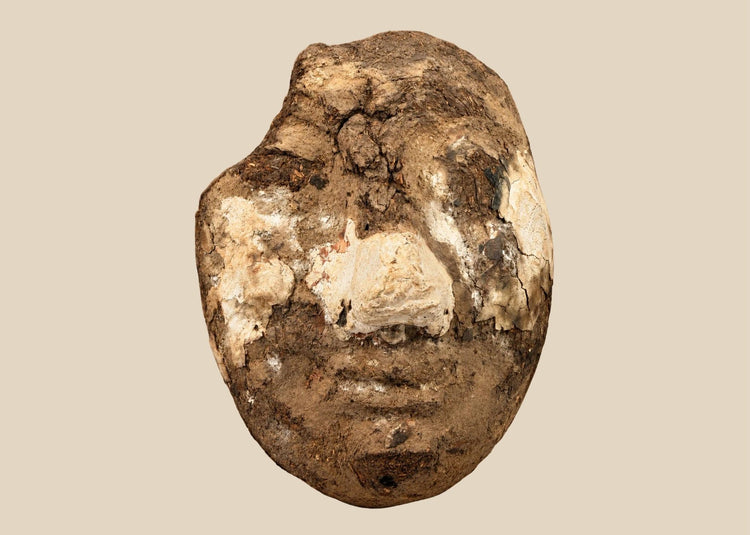
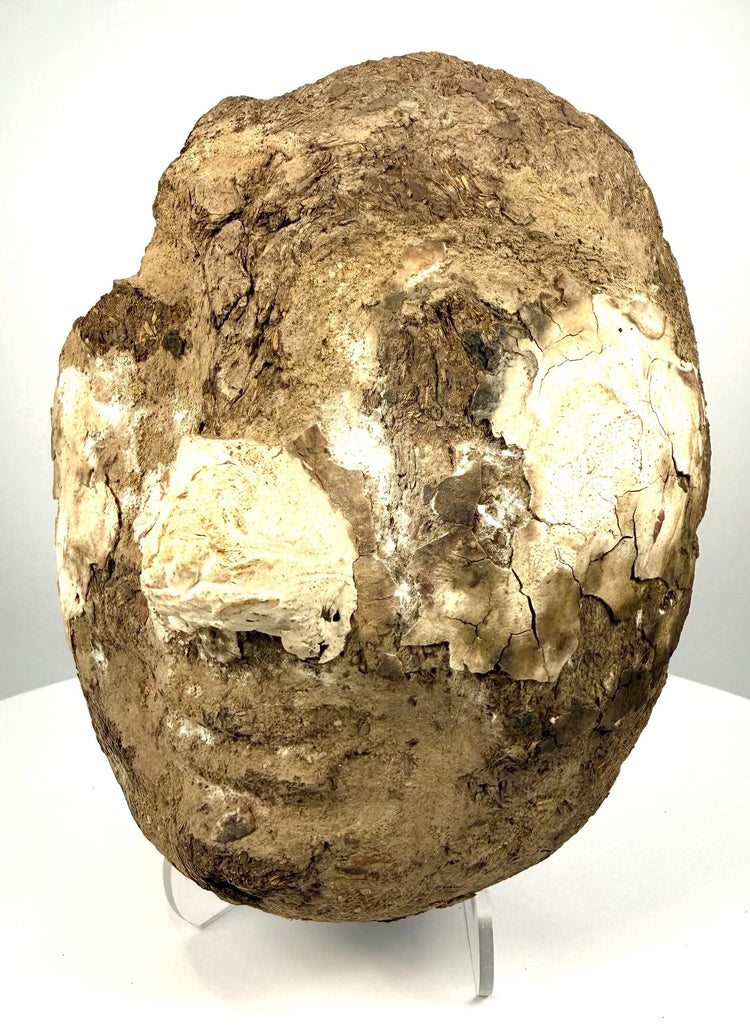
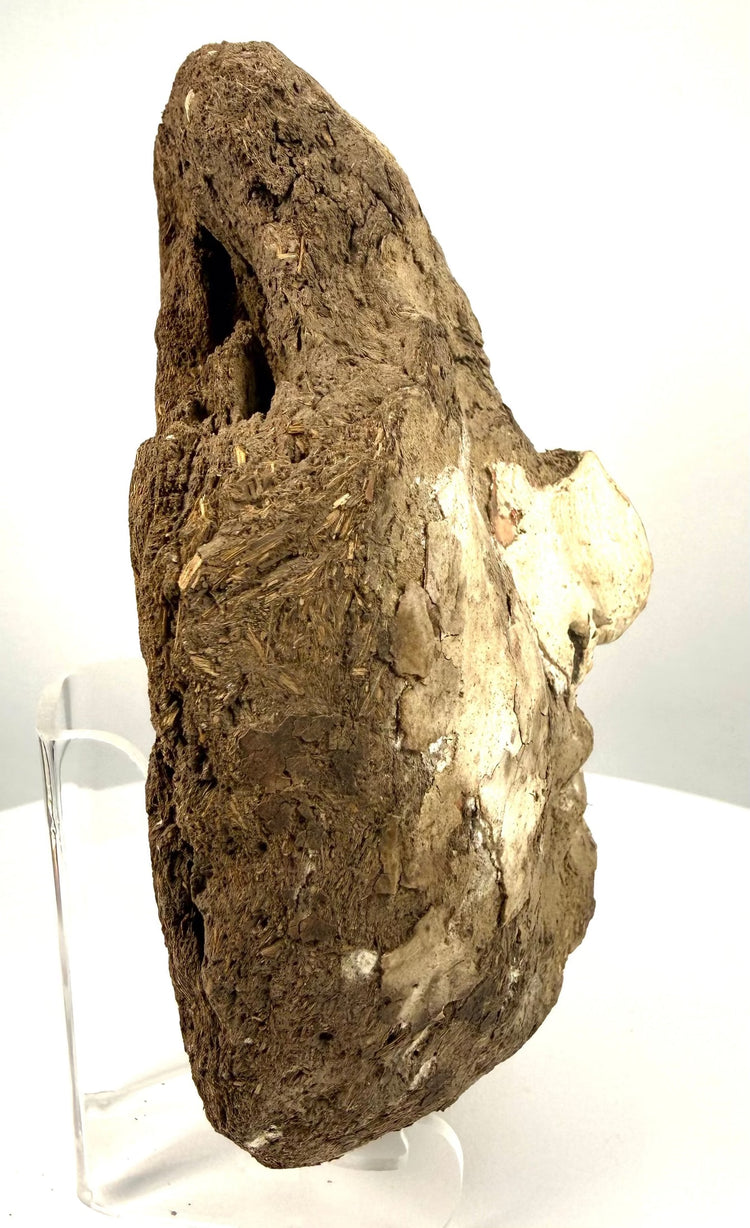
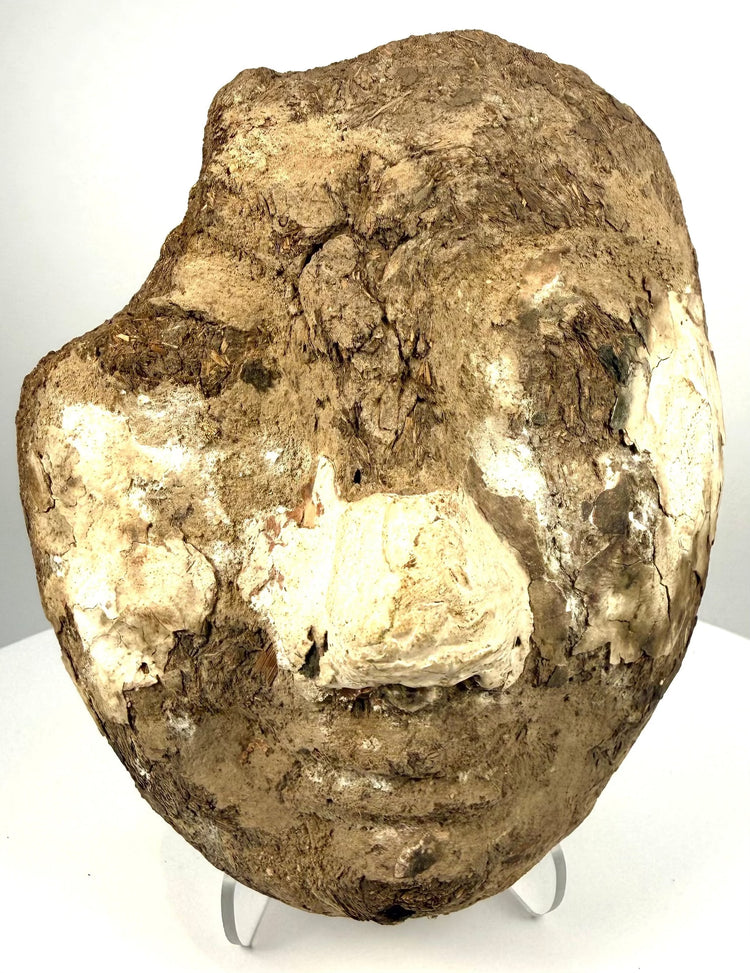
This unusual ancient Egyptian funerary face is formed from a coarse mud-and-vegetable-fibre matrix over which areas of finer pale stucco or gesso were applied to model and finish the facial features. Based on its construction, the piece is most plausibly associated with the distinctive funerary traditions of late Ptolemaic and early Roman Egypt, particularly those documented at Akhmim (ancient Panopolis) in Upper Egypt.
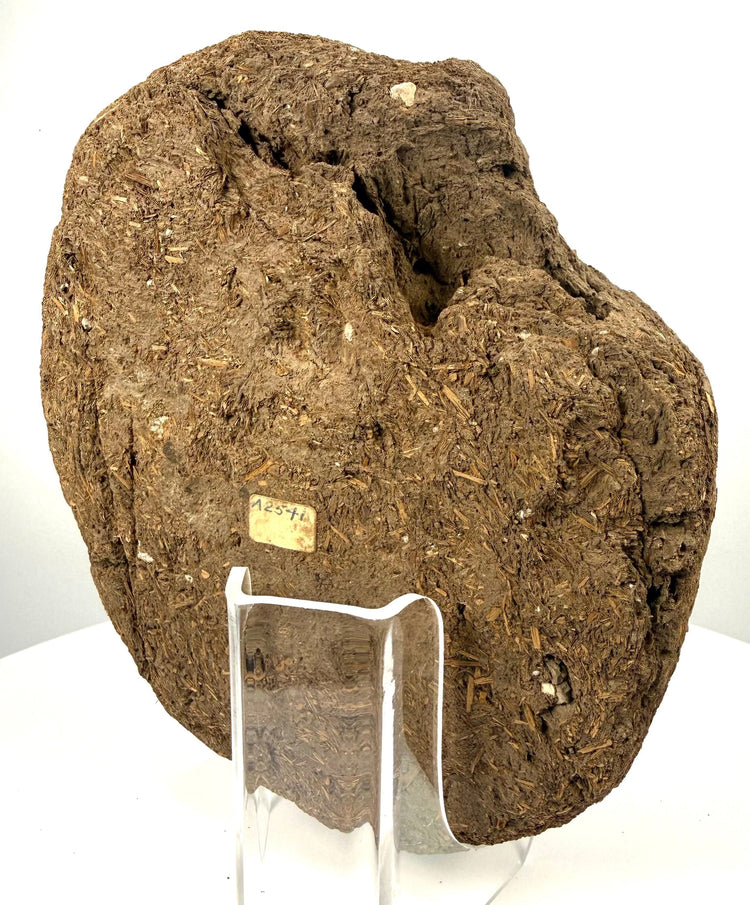
Because the present object is thick and substantially composed of mud and fibre rather than thin hollow cartonnage, it may be more accurately understood as a facial element or surviving face fragment from an anthropoid funerary coffin, rather than a conventional lightweight mummy mask.
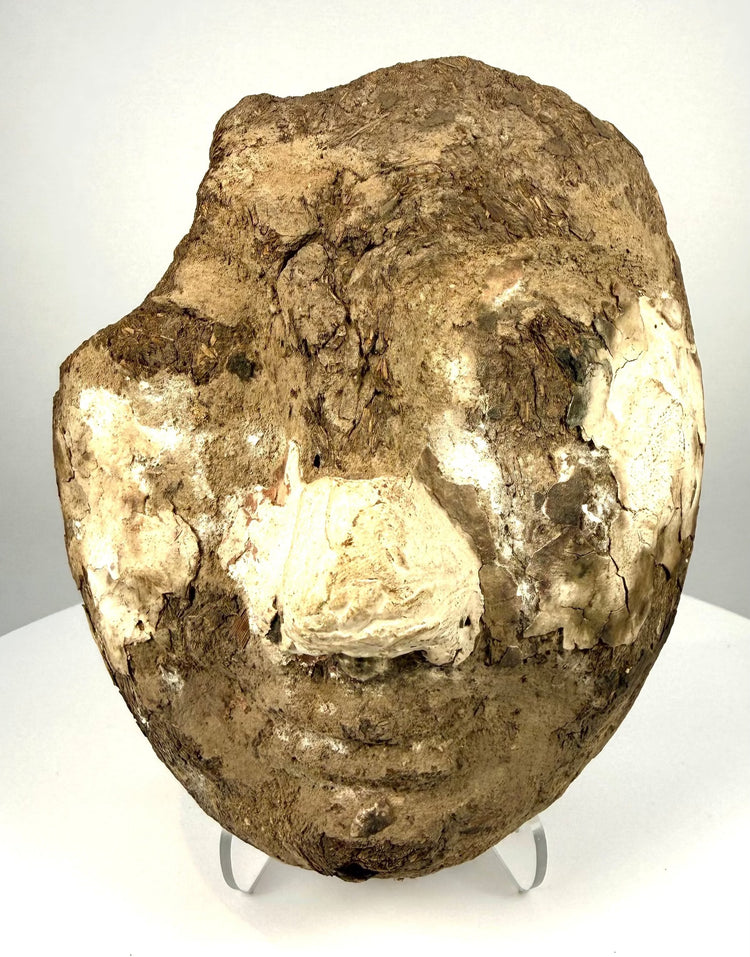
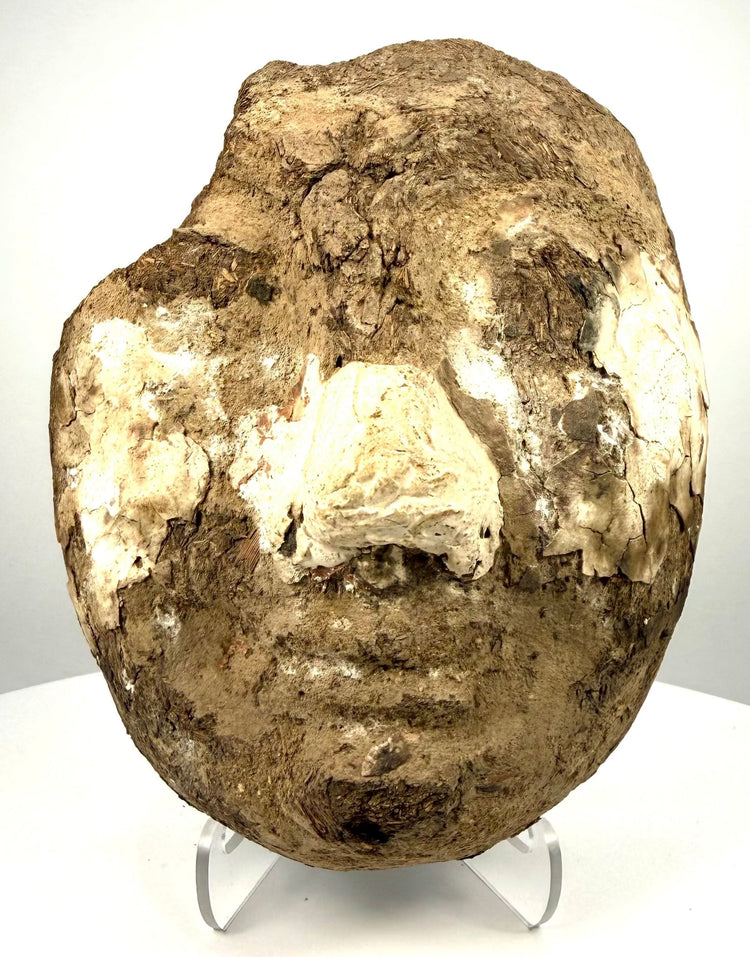
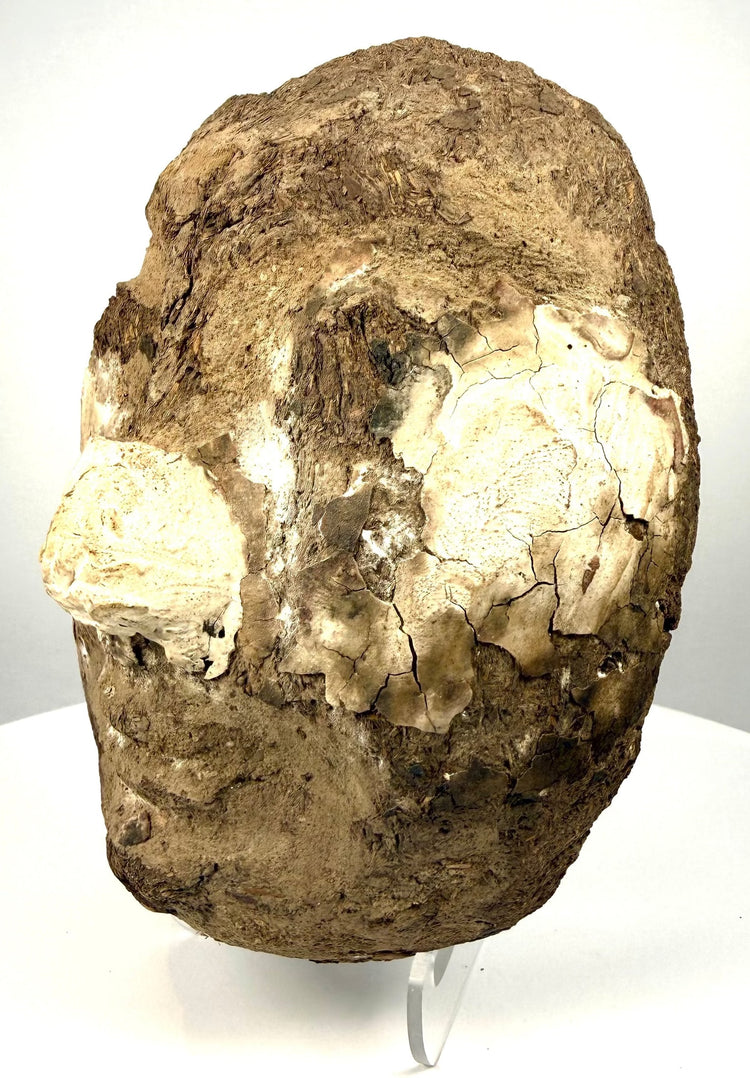
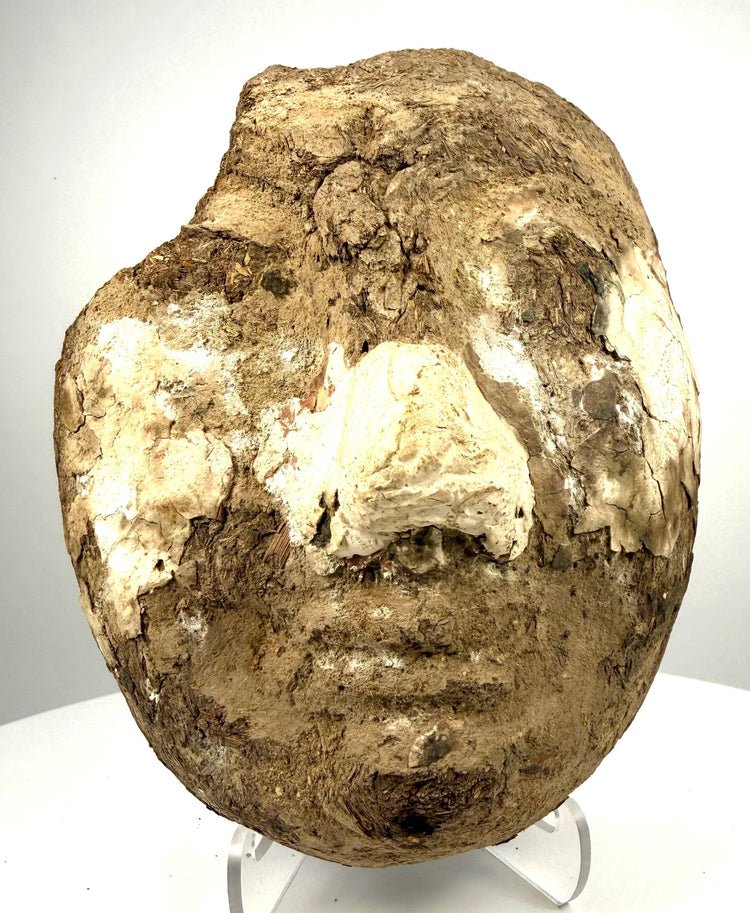
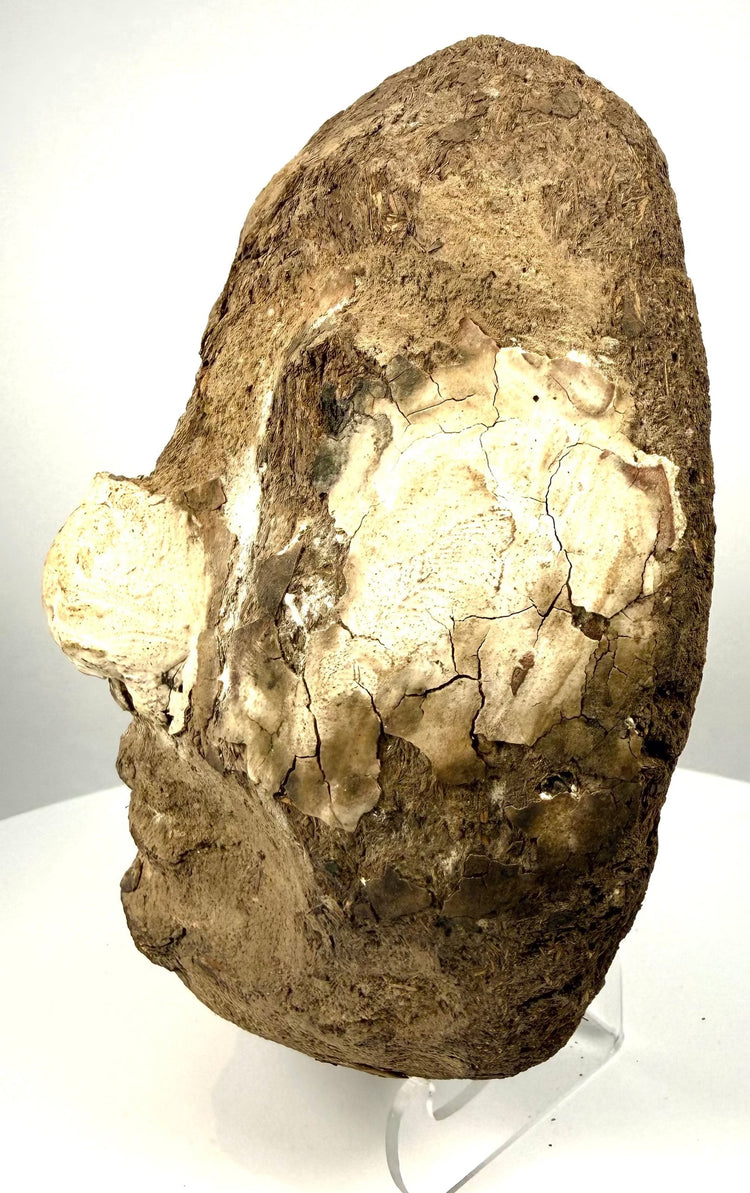
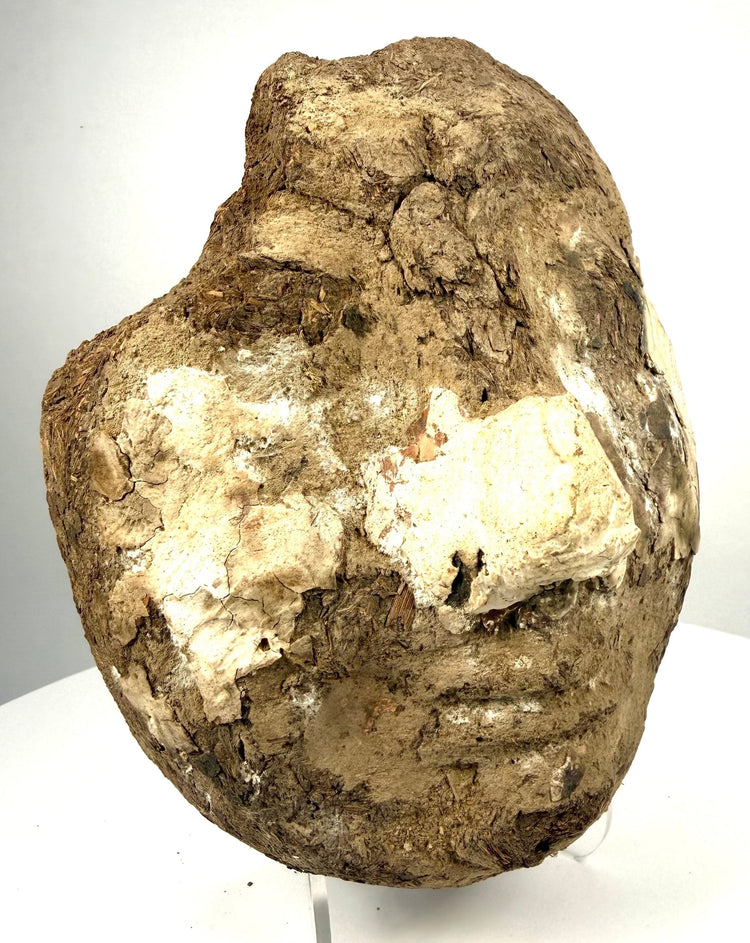
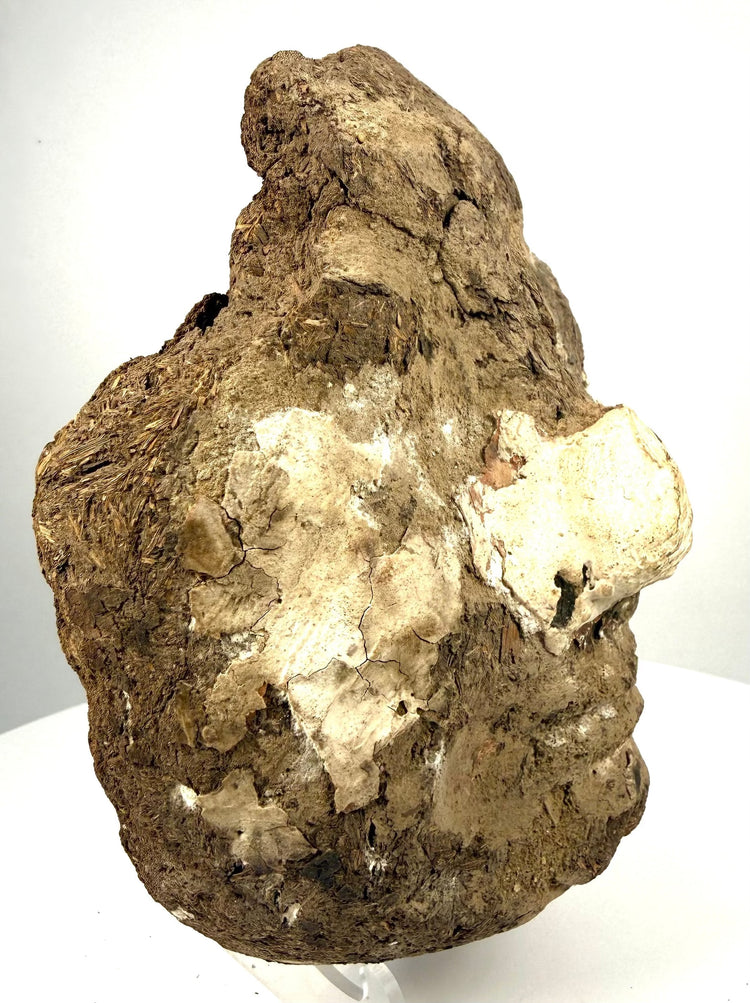
The face is broadly oval and strongly modelled, with a prominent projecting nose forming the most substantial surviving facial feature. The mouth remains visible below, defined by a shallow horizontal line, while the positions of the eyes and brows are still discernible beneath areas of weathered surface material.
Large patches of the original pale stucco or gesso finishing layer survive around the nose and across portions of both cheeks and eye areas. These remnants provide an important indication of how dramatically different the piece would originally have appeared: the coarse brown structural material would once have been substantially concealed beneath a smoother prepared surface that could subsequently be painted or otherwise decorated.
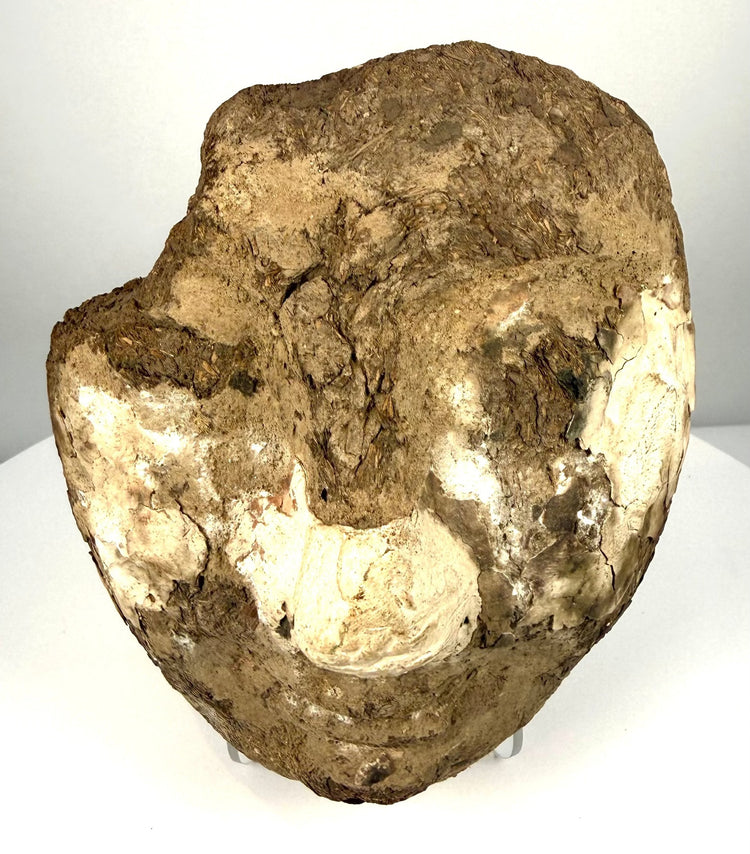
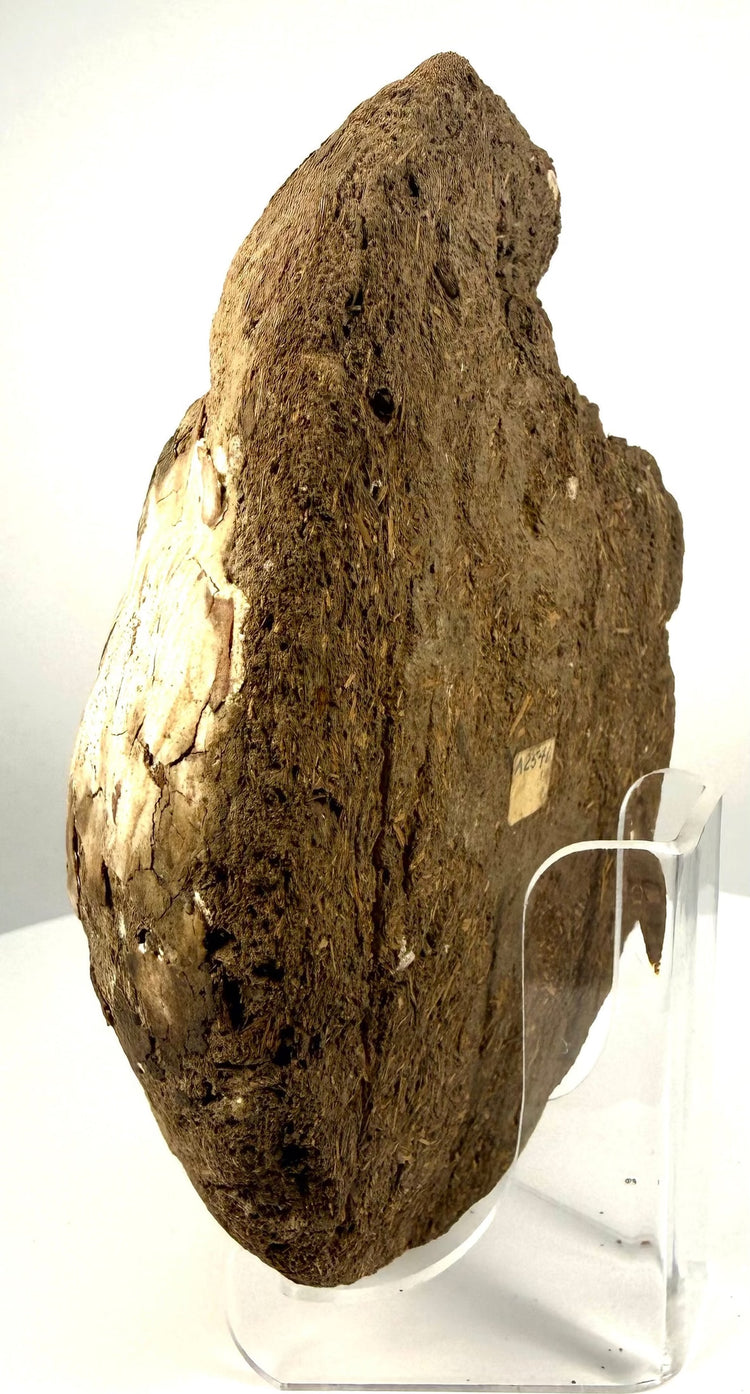
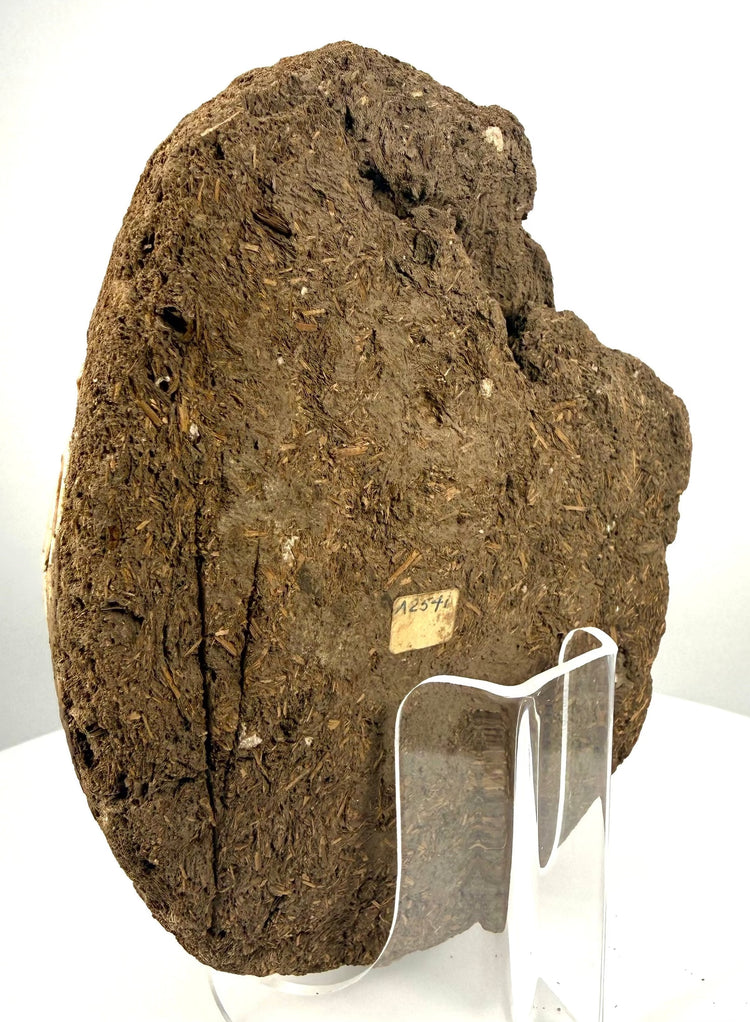
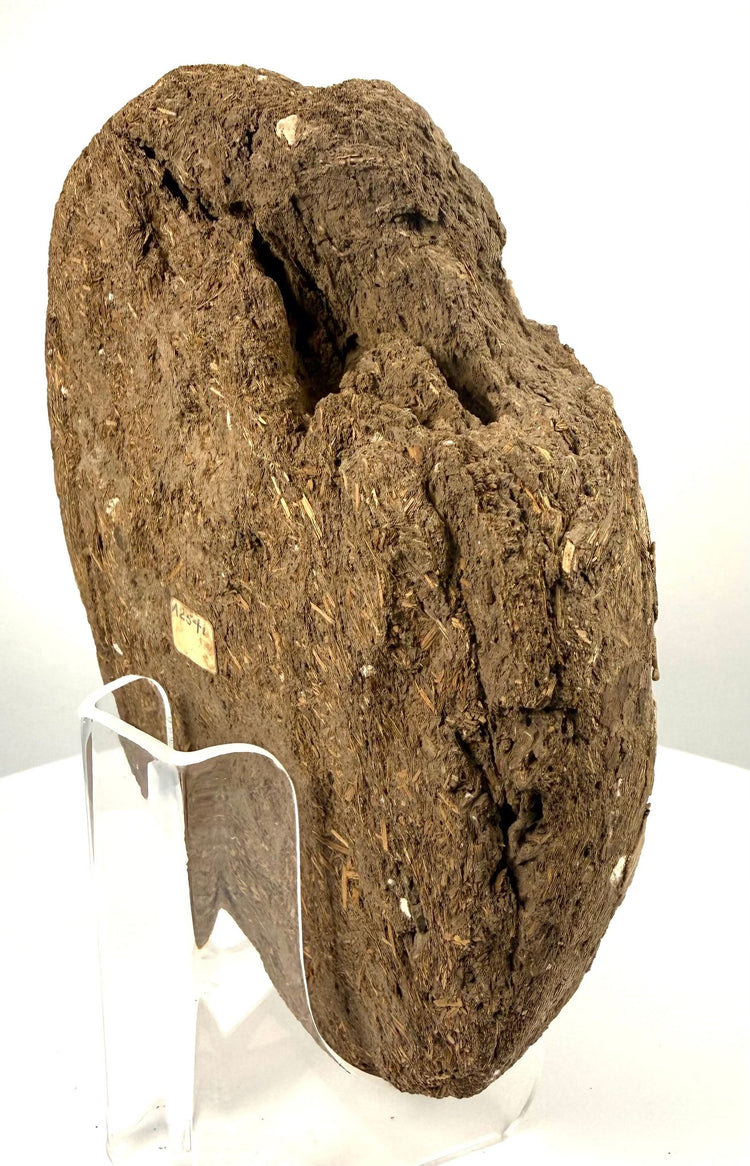
Where the surface has been lost, the object's construction is exceptionally visible. The underlying body contains abundant chopped straw or other plant fibres incorporated into a dense earthen matrix, a technique closely paralleled by funerary objects produced at Akhmim around the transition from Ptolemaic to Roman rule. A related funerary mask in The Metropolitan Museum of Art is likewise described as being manufactured from mud and straw.
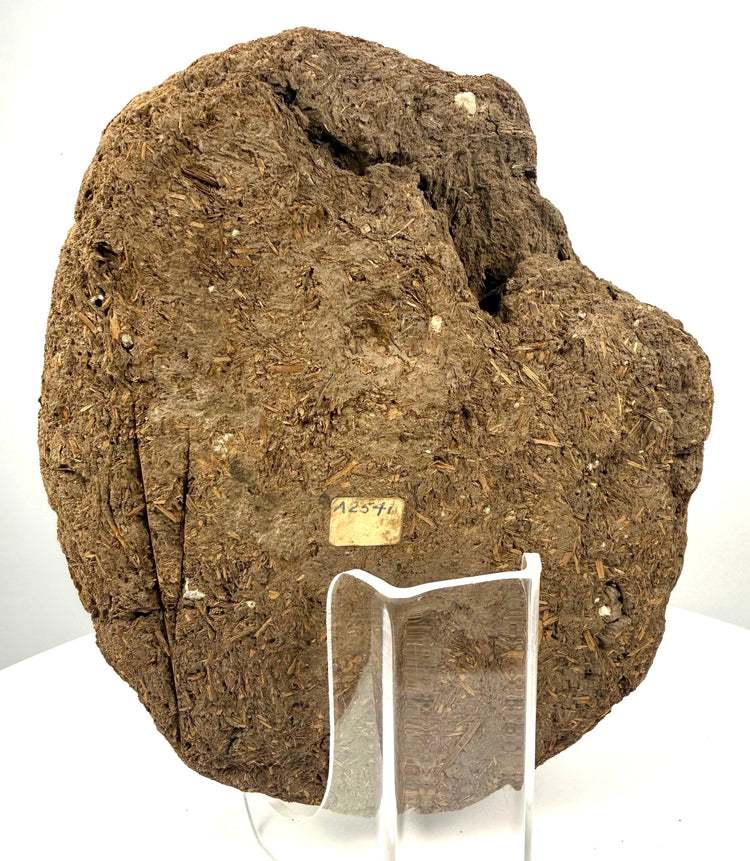
The sides and reverse expose the coarse fibrous structure particularly clearly. This provides a fascinating opportunity to view not merely the exterior appearance of an Egyptian funerary object but also its ancient manufacturing technology.
An old collection or accession label remains affixed to the reverse, adding another layer to the object's collecting history.
Features
- Likely late Ptolemaic to early Roman period
- Thick mud-and-straw or plant-fibre construction
- Surviving pale stucco/gesso facial surface
- Strongly projecting modelled nose
- Visible eye, cheek and mouth definition
- Extensive exposed ancient plant-fibre matrix
- Original surface preserved in scattered areas
- Deep age-related cracking and losses
- Substantial three-dimensional construction
- Strong parallels with funerary material from Akhmim, Egypt
Cultural Significance
The preservation of the individual's face was one of the most enduring themes in ancient Egyptian funerary practice. Funerary masks and anthropoid coffins provided the deceased with a recognizable and idealized human form, helping establish an enduring identity within the transformed state of the afterlife.
During the Ptolemaic and Roman periods, centuries-old Egyptian traditions continued while new regional styles and manufacturing techniques developed. In Middle and Upper Egypt, masks and coffin faces could be created from plaster, cartonnage, plant fibres and, in certain distinctive workshops, mud mixed with straw.
Akhmim is particularly important in this respect. Research has identified a group of anthropoid coffins from the region modelled from a mud-and-straw mixture and finished with plaster, textiles, pigments and sometimes gilding.
The present piece is especially compelling because deterioration has exposed much of its internal construction. The visible straw and mud provide a tangible view of an ancient manufacturing method normally concealed beneath the completed decorative surface.
Condition
Ancient fragmentary condition with extensive age-related deterioration and surface loss, as visible in the photographs.
Large portions of the original stucco or gesso facial surface are absent, exposing the underlying mud-and-plant-fibre matrix. Surviving areas of pale surface preparation remain particularly prominent around the nose, cheeks and eye regions.
There are numerous cracks, fissures, losses, abrasions and areas of old erosion throughout. The nose remains prominently preserved but also exhibits wear and losses. The edges and reverse are irregular and expose substantial quantities of the ancient fibrous structural material.
An old accession or collection label remains attached to the reverse.
All visible wear, losses and irregularities are consistent with the object's considerable age and archaeological character and have been retained without cosmetic alteration.
Dimensions (Approximate)
Height: 6.25 inches
Width: 5 inches
Depth: 3 inches
Age (Approximate)
1,925–2,125 years old
Provenance
From the collection of Dr. Bruce L. Ralston, Tuxedo Park, New York, USA. Dr. Ralston was a private collector who assembled a substantial collection of antiquities during the 1960s and 1970s, with particular holdings in Egyptian, Roman, and Middle Eastern material.
Subsequently handled by Tremont Auctions, Sudbury, Massachusetts, a full-service auction house specializing in fine art, antiques, Asian works of art, antiquities, and jewelry.
Learn More
Explore a comparable ancient Egyptian mud-and-straw funerary mask in The Metropolitan Museum of Art.
Browse our collection of Ancient Egyptian Mummies & Artifacts.
Description
Historical Context & Origin
Region: Egypt, likely Upper Egypt
Material: Mud and plant-fibre/straw composite with surviving stucco/gesso surface
Period: Late Ptolemaic to Early Roman Period, circa 100 BCE–100 CE
Description
This unusual ancient Egyptian funerary face is formed from a coarse mud-and-vegetable-fibre matrix over which areas of finer pale stucco or gesso were applied to model and finish the facial features. Based on its construction, the piece is most plausibly associated with the distinctive funerary traditions of late Ptolemaic and early Roman Egypt, particularly those documented at Akhmim (ancient Panopolis) in Upper Egypt.
Because the present object is thick and substantially composed of mud and fibre rather than thin hollow cartonnage, it may be more accurately understood as a facial element or surviving face fragment from an anthropoid funerary coffin, rather than a conventional lightweight mummy mask.
The face is broadly oval and strongly modelled, with a prominent projecting nose forming the most substantial surviving facial feature. The mouth remains visible below, defined by a shallow horizontal line, while the positions of the eyes and brows are still discernible beneath areas of weathered surface material.
Large patches of the original pale stucco or gesso finishing layer survive around the nose and across portions of both cheeks and eye areas. These remnants provide an important indication of how dramatically different the piece would originally have appeared: the coarse brown structural material would once have been substantially concealed beneath a smoother prepared surface that could subsequently be painted or otherwise decorated.
Where the surface has been lost, the object's construction is exceptionally visible. The underlying body contains abundant chopped straw or other plant fibres incorporated into a dense earthen matrix, a technique closely paralleled by funerary objects produced at Akhmim around the transition from Ptolemaic to Roman rule. A related funerary mask in The Metropolitan Museum of Art is likewise described as being manufactured from mud and straw.
The sides and reverse expose the coarse fibrous structure particularly clearly. This provides a fascinating opportunity to view not merely the exterior appearance of an Egyptian funerary object but also its ancient manufacturing technology.
An old collection or accession label remains affixed to the reverse, adding another layer to the object's collecting history.
Features
- Likely late Ptolemaic to early Roman period
- Thick mud-and-straw or plant-fibre construction
- Surviving pale stucco/gesso facial surface
- Strongly projecting modelled nose
- Visible eye, cheek and mouth definition
- Extensive exposed ancient plant-fibre matrix
- Original surface preserved in scattered areas
- Deep age-related cracking and losses
- Substantial three-dimensional construction
- Strong parallels with funerary material from Akhmim, Egypt
Cultural Significance
The preservation of the individual's face was one of the most enduring themes in ancient Egyptian funerary practice. Funerary masks and anthropoid coffins provided the deceased with a recognizable and idealized human form, helping establish an enduring identity within the transformed state of the afterlife.
During the Ptolemaic and Roman periods, centuries-old Egyptian traditions continued while new regional styles and manufacturing techniques developed. In Middle and Upper Egypt, masks and coffin faces could be created from plaster, cartonnage, plant fibres and, in certain distinctive workshops, mud mixed with straw.
Akhmim is particularly important in this respect. Research has identified a group of anthropoid coffins from the region modelled from a mud-and-straw mixture and finished with plaster, textiles, pigments and sometimes gilding.
The present piece is especially compelling because deterioration has exposed much of its internal construction. The visible straw and mud provide a tangible view of an ancient manufacturing method normally concealed beneath the completed decorative surface.
Condition
Ancient fragmentary condition with extensive age-related deterioration and surface loss, as visible in the photographs.
Large portions of the original stucco or gesso facial surface are absent, exposing the underlying mud-and-plant-fibre matrix. Surviving areas of pale surface preparation remain particularly prominent around the nose, cheeks and eye regions.
There are numerous cracks, fissures, losses, abrasions and areas of old erosion throughout. The nose remains prominently preserved but also exhibits wear and losses. The edges and reverse are irregular and expose substantial quantities of the ancient fibrous structural material.
An old accession or collection label remains attached to the reverse.
All visible wear, losses and irregularities are consistent with the object's considerable age and archaeological character and have been retained without cosmetic alteration.
Dimensions (Approximate)
Height: 6.25 inches
Width: 5 inches
Depth: 3 inches
Age (Approximate)
1,925–2,125 years old
Provenance
From the collection of Dr. Bruce L. Ralston, Tuxedo Park, New York, USA. Dr. Ralston was a private collector who assembled a substantial collection of antiquities during the 1960s and 1970s, with particular holdings in Egyptian, Roman, and Middle Eastern material.
Subsequently handled by Tremont Auctions, Sudbury, Massachusetts, a full-service auction house specializing in fine art, antiques, Asian works of art, antiquities, and jewelry.
Learn More
Explore a comparable ancient Egyptian mud-and-straw funerary mask in The Metropolitan Museum of Art.
Browse our collection of Ancient Egyptian Mummies & Artifacts.
Vous aimerez peut-être aussi
