



Ancient Egyptian Limestone Ushabti Figure | New Kingdom–Third Intermediate Period | Circa 1550–664 BCE
- Prix habituel
- $900.00
- Prix soldé
- $900.00
- Prix habituel
Impossible de charger la disponibilité du service de retrait


Ancient Egyptian Limestone Ushabti Figure | New Kingdom–Third Intermediate Period | Circa 1550–664 BCE
Description
Plus
Moins
Historical Context & Origin
Region: Egypt
Material: Limestone, modern acrylic display stand
Period: Attributed to the New Kingdom–Third Intermediate Period, circa 1550–664 BCE
Description
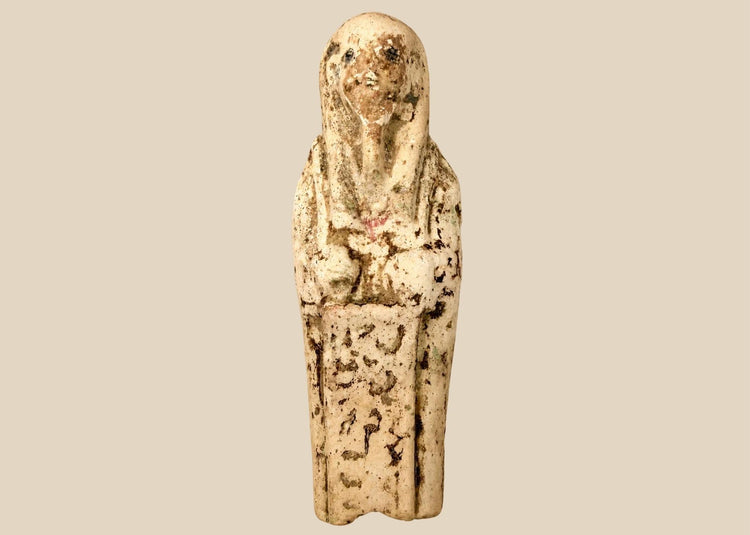
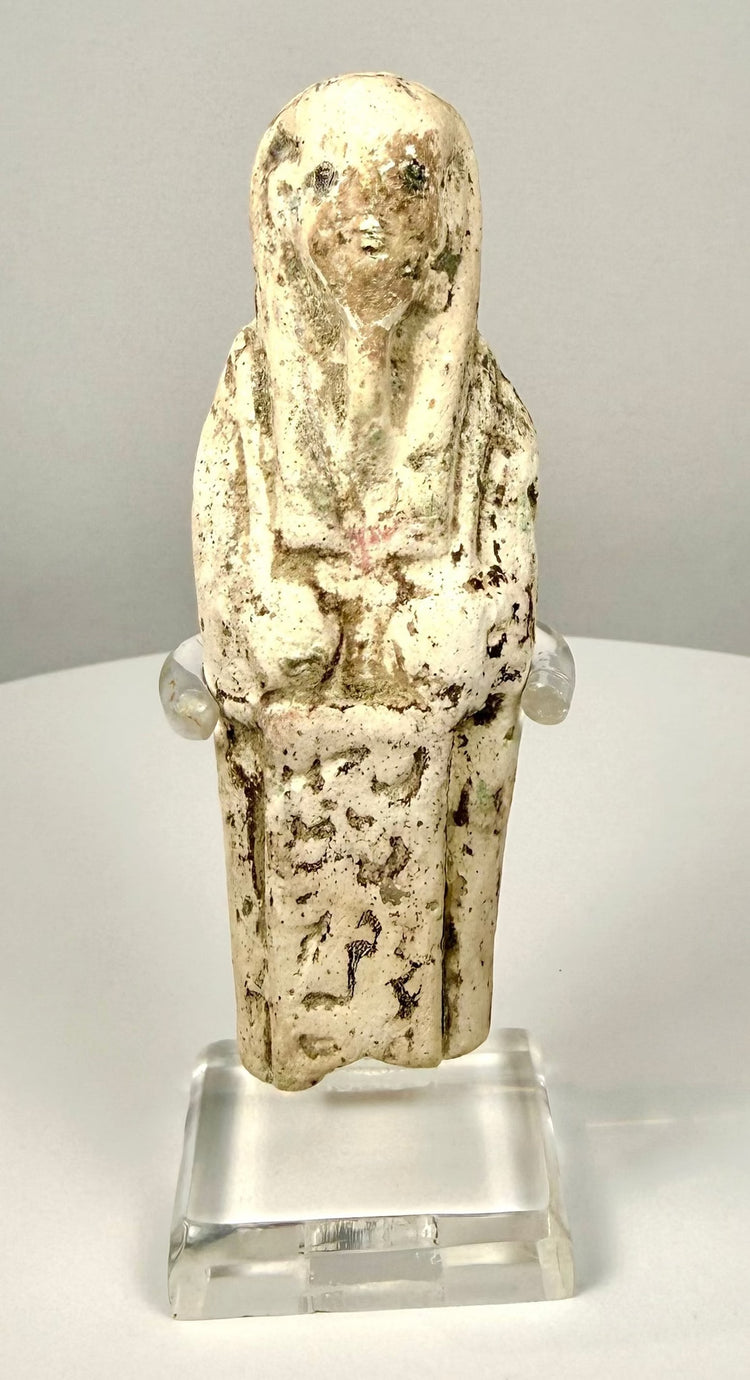
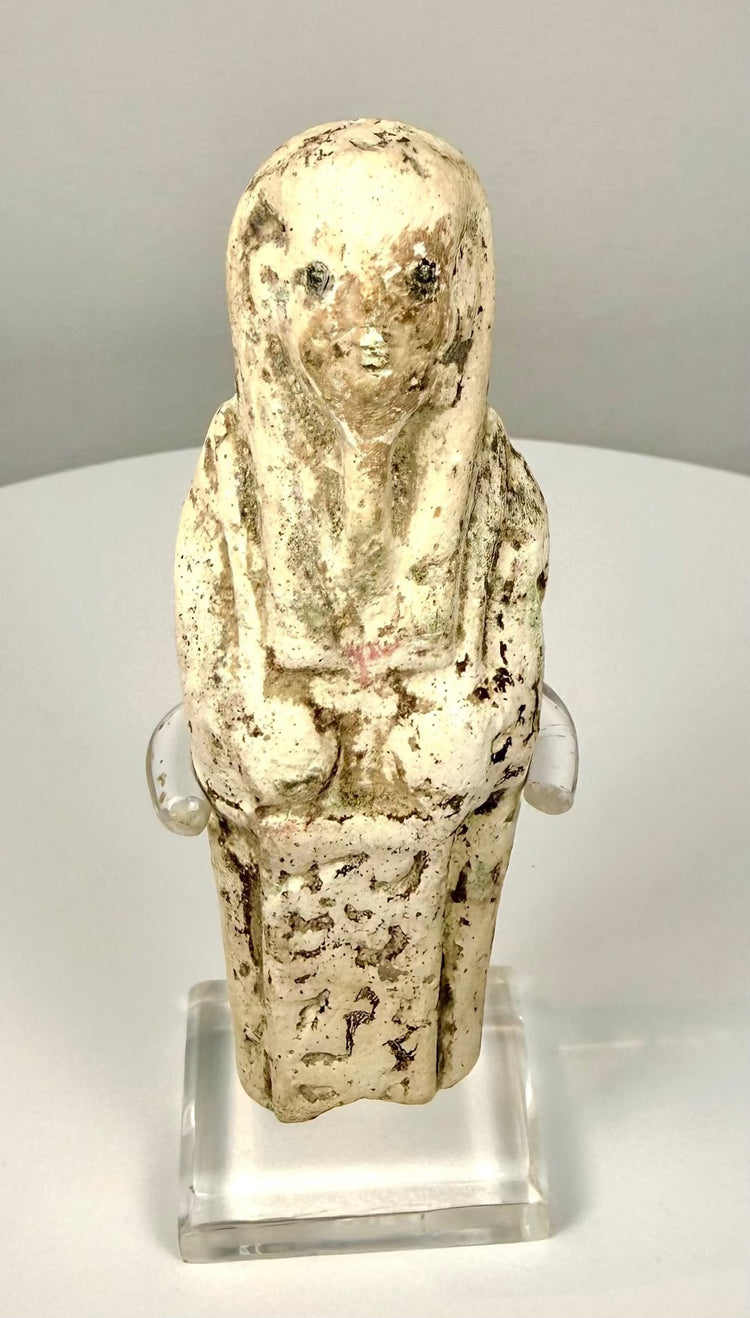
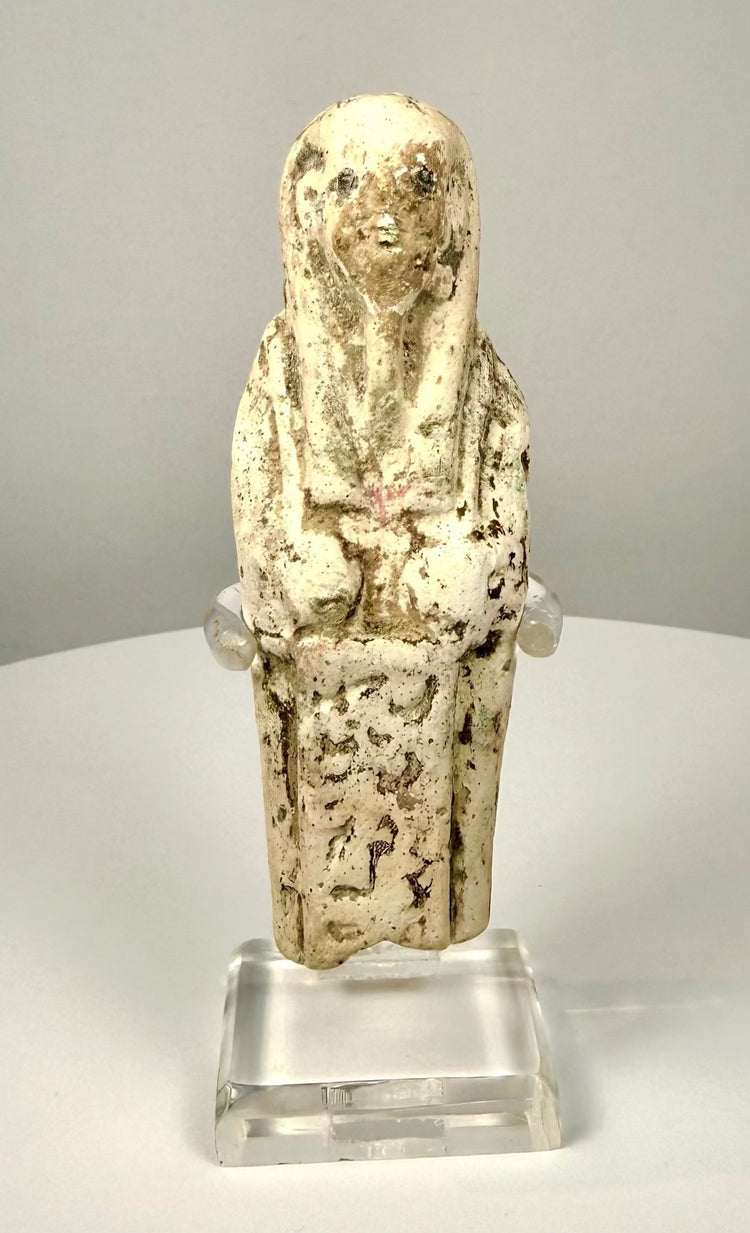
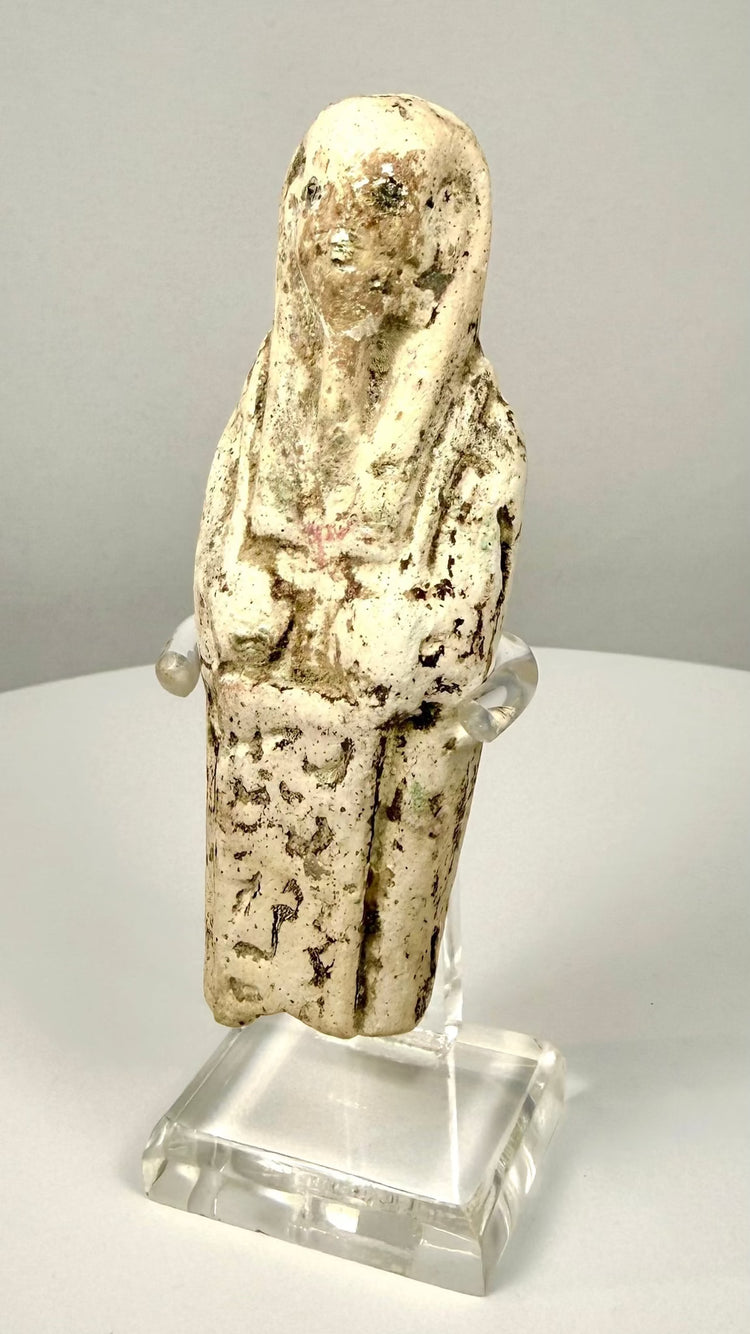
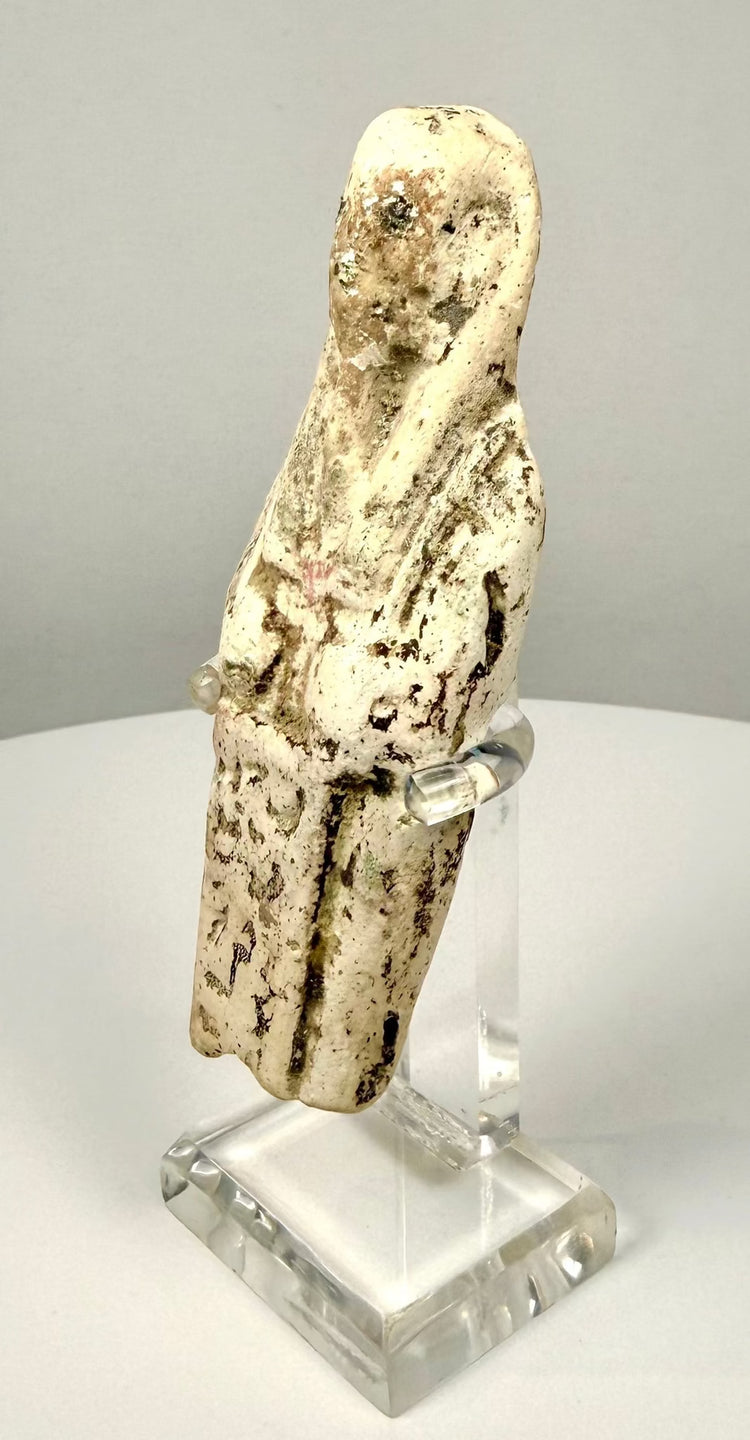
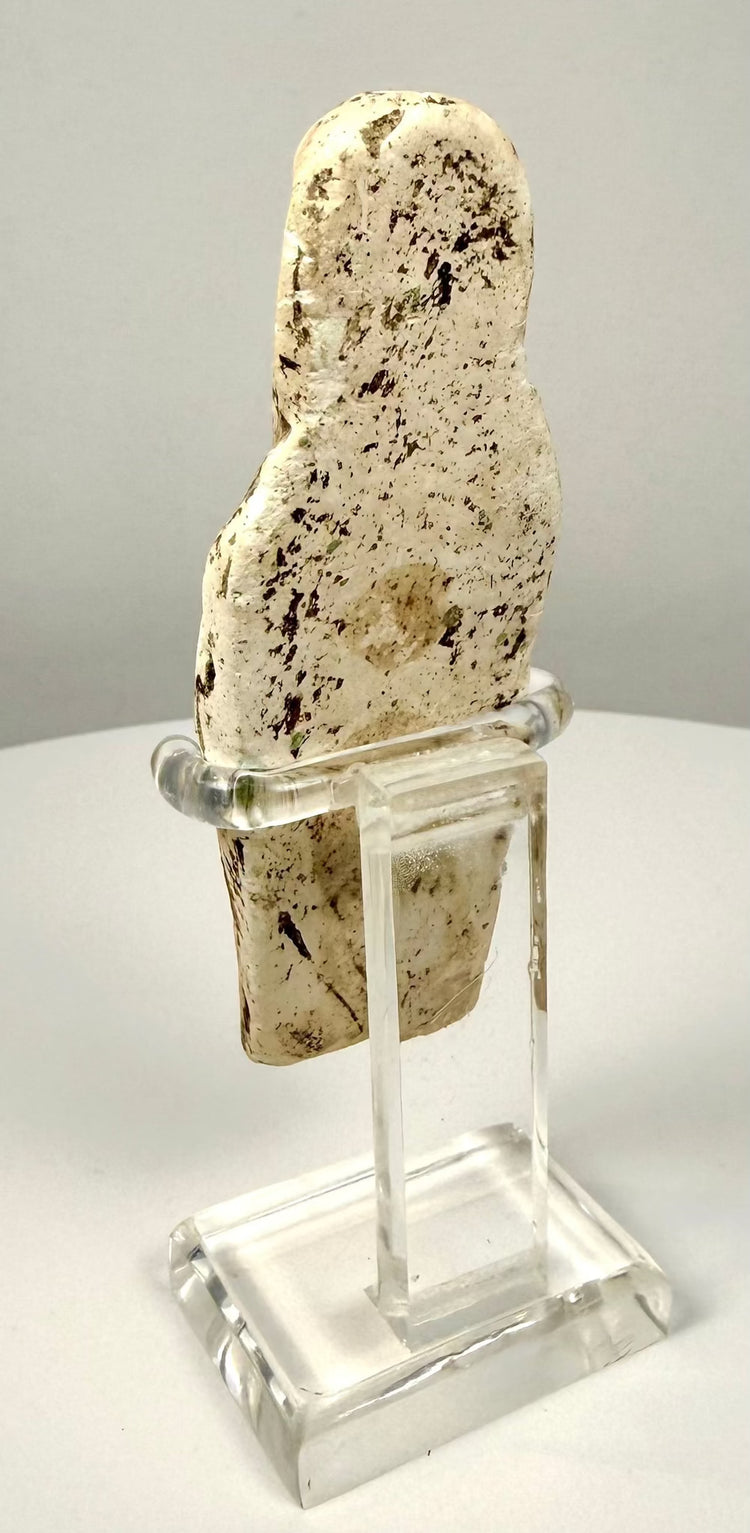
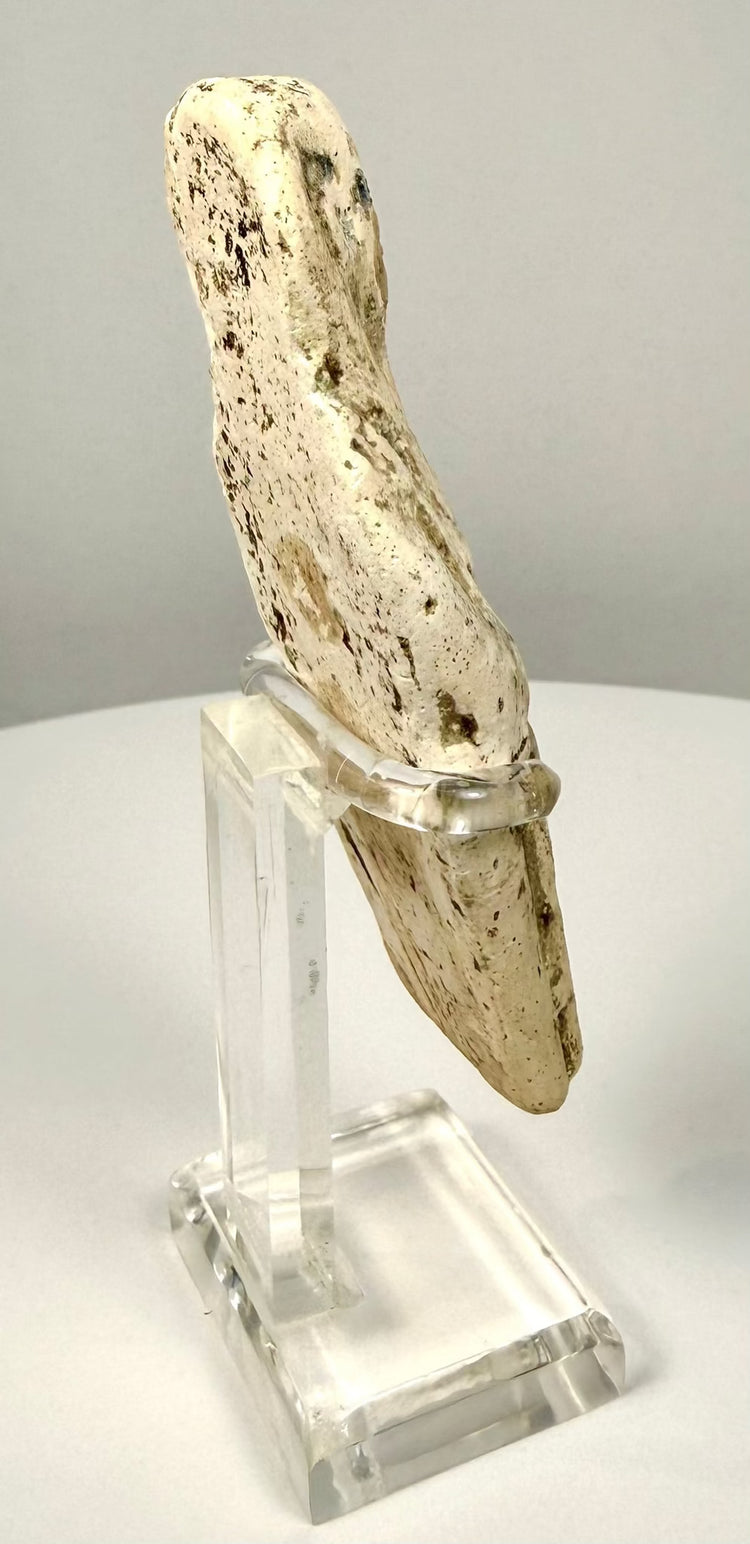
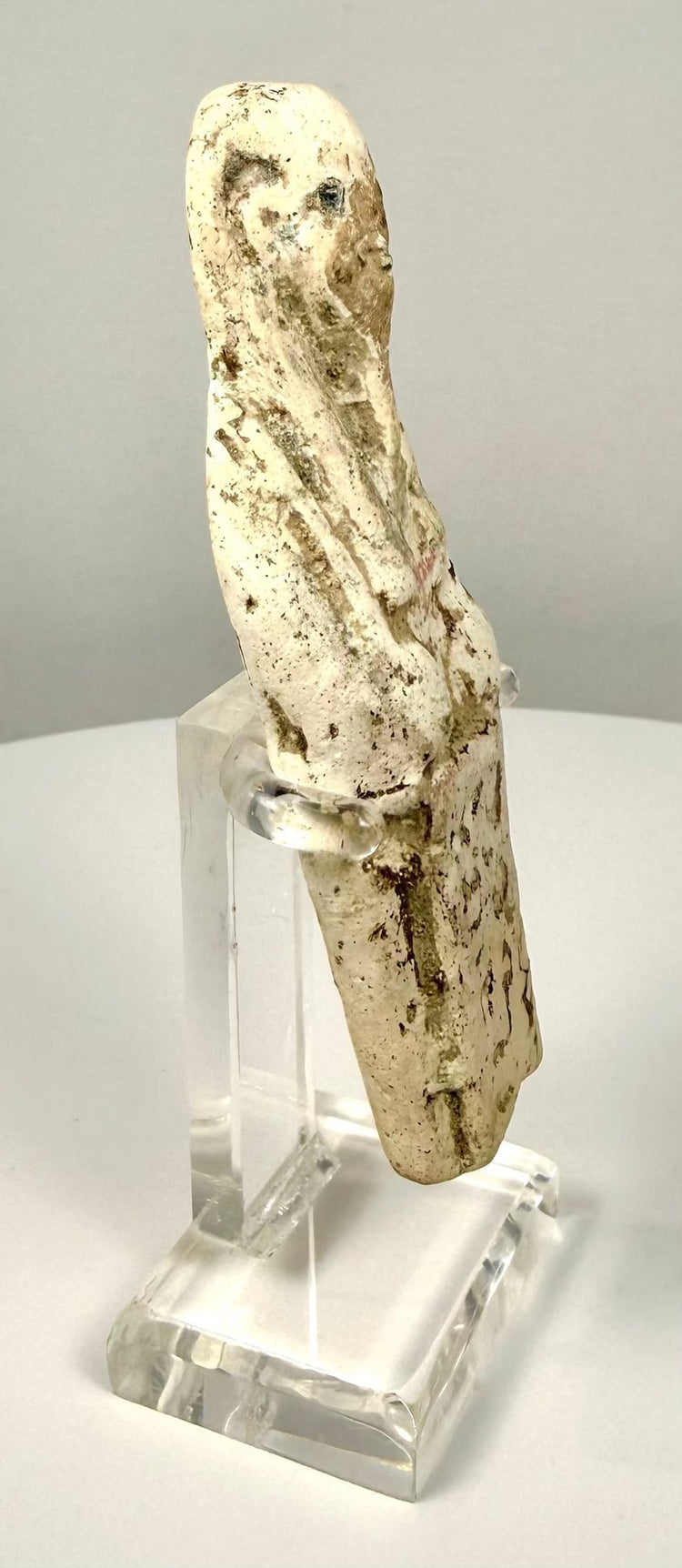
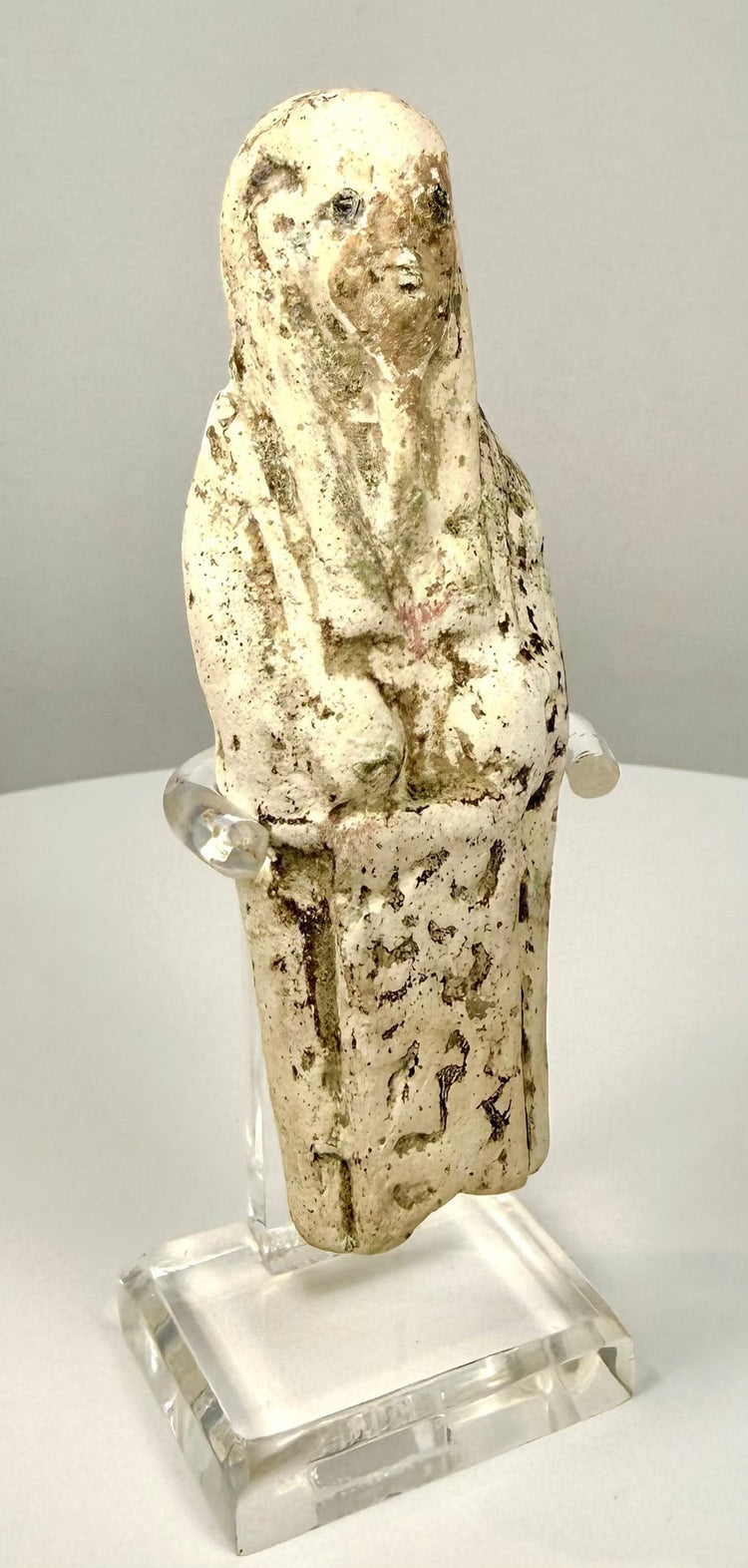
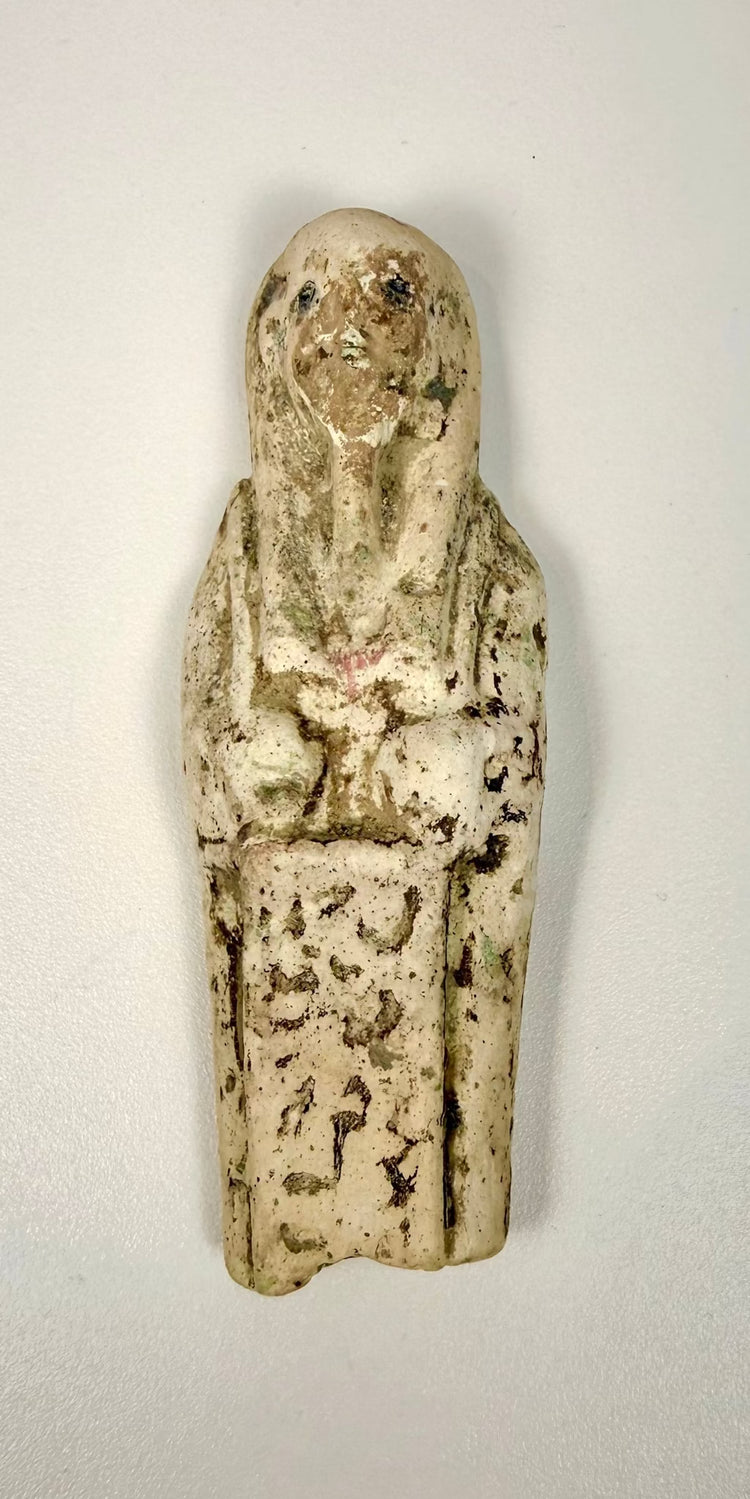
This Egyptian ushabti figure depicts a standing human form in the traditional mummiform pose, with the body represented as enveloped in a close-fitting funerary shroud. A long tripartite wig frames the face and extends over the shoulders, while the arms are folded across the front of the body, with the hands prominently modelled beneath the wig.
The lower front bears a bordered inscription panel containing worn hieroglyphic signs. Although the surviving markings remain a distinctive feature, their precise wording and the identity of the intended owner have not been established. The figure’s pale cream surface is interrupted by irregular brown and darker areas, with wear softening the facial features and carved details.
Features
- Traditional mummiform ushabti figure, representing an Egyptian funerary attendant
- Limestone attribution recorded in the accompanying auction description
- Long tripartite wig framing the face and extending over the shoulders
- Folded arms with prominently modelled hands
- Bordered frontal panel with surviving, partially worn hieroglyphic signs
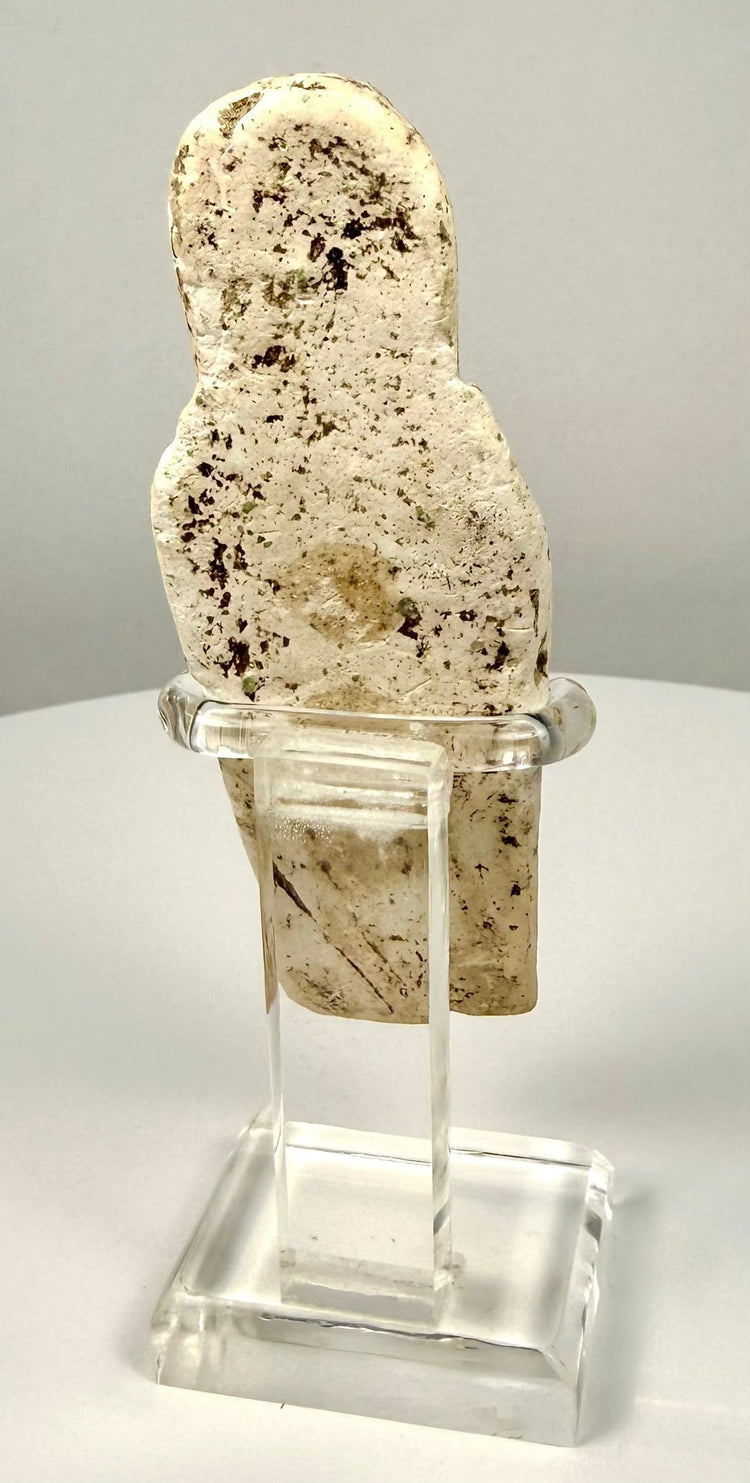
- Pale cream surface with varied darker coloration and visible surface wear
- Modern clear acrylic display stand included
Cultural Significance
Ushabtis, also known as shabtis, formed part of ancient Egyptian funerary equipment. They were intended to undertake work on behalf of the deceased in the afterlife, including agricultural tasks such as cultivating fields and maintaining irrigation. Their purpose is expressed in the shabti spell, commonly known as Chapter 6 of the Book of the Dead, which calls upon the figure to respond when its owner is summoned to work.
These figures offer insight into an Egyptian understanding of the afterlife in which practical obligations continued beyond death. Examples were made from stone, wood and faience, and their use developed over centuries. During the New Kingdom and Third Intermediate Period, funerary assemblages could include increasingly large groups of these attendants.
Condition
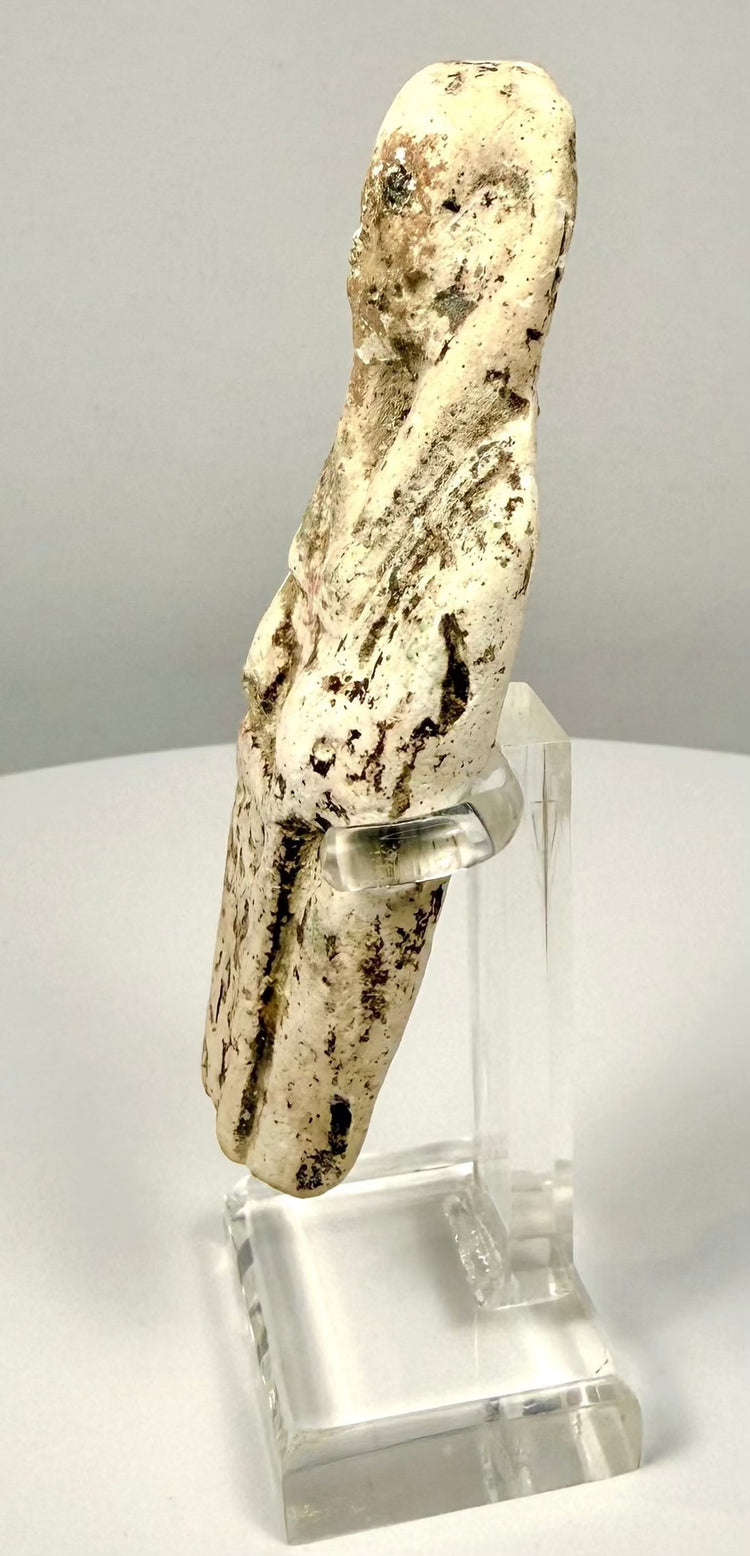
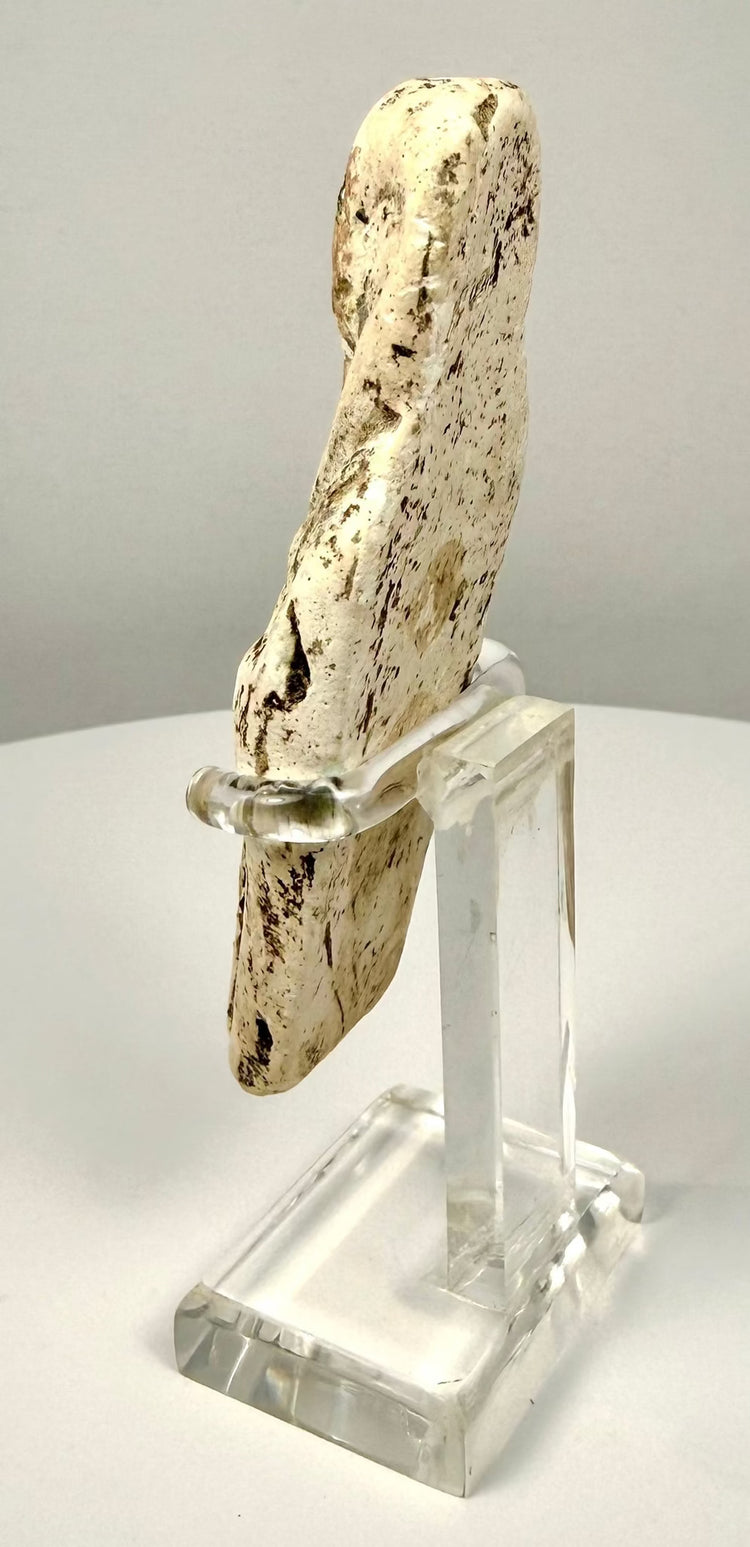
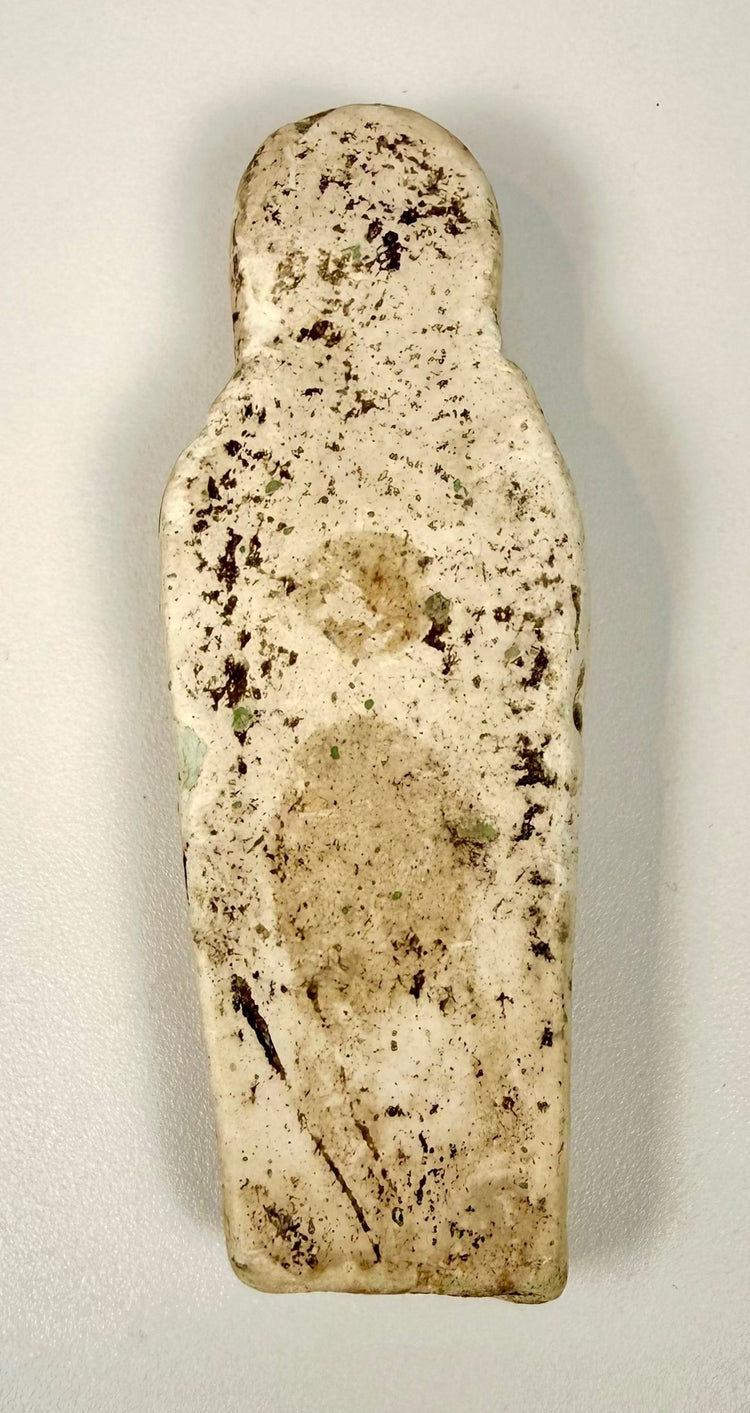
The figure retains its overall form, with visible surface abrasion, small pits, localized losses and uneven coloration. Wear is particularly apparent around the face, projecting details and inscription panel, where some features and signs have become indistinct. The lower edge is irregular, and a label remnant survives on the reverse. The acrylic stand shows light handling marks.
Dimensions (Approximate)
Height: 4.75 in
Width: 1.5 in
Depth: 1.25 in
Age (Approximate)
2,700–3,600 years old
Provenance
From a private collection in Sarasota, Florida, USA, subsequently handled by Akiba Galleries, Dania Beach, Florida. Akiba Galleries is a family-owned auction house handling fine art, antiques, jewellery, and decorative objects for an international clientele.
Learn More
Explore a limestone shabti with a tripartite wig and folded arms at the Royal Ontario Museum.
Browse our collection of Ancient Egyptian Mummies & Artifacts to discover more objects reflecting the funerary traditions and spiritual beliefs of ancient Egypt.
Description
Historical Context & Origin
Region: Egypt
Material: Limestone, modern acrylic display stand
Period: Attributed to the New Kingdom–Third Intermediate Period, circa 1550–664 BCE
Description
This Egyptian ushabti figure depicts a standing human form in the traditional mummiform pose, with the body represented as enveloped in a close-fitting funerary shroud. A long tripartite wig frames the face and extends over the shoulders, while the arms are folded across the front of the body, with the hands prominently modelled beneath the wig.
The lower front bears a bordered inscription panel containing worn hieroglyphic signs. Although the surviving markings remain a distinctive feature, their precise wording and the identity of the intended owner have not been established. The figure’s pale cream surface is interrupted by irregular brown and darker areas, with wear softening the facial features and carved details.
Features
- Traditional mummiform ushabti figure, representing an Egyptian funerary attendant
- Limestone attribution recorded in the accompanying auction description
- Long tripartite wig framing the face and extending over the shoulders
- Folded arms with prominently modelled hands
- Bordered frontal panel with surviving, partially worn hieroglyphic signs
- Pale cream surface with varied darker coloration and visible surface wear
- Modern clear acrylic display stand included
Cultural Significance
Ushabtis, also known as shabtis, formed part of ancient Egyptian funerary equipment. They were intended to undertake work on behalf of the deceased in the afterlife, including agricultural tasks such as cultivating fields and maintaining irrigation. Their purpose is expressed in the shabti spell, commonly known as Chapter 6 of the Book of the Dead, which calls upon the figure to respond when its owner is summoned to work.
These figures offer insight into an Egyptian understanding of the afterlife in which practical obligations continued beyond death. Examples were made from stone, wood and faience, and their use developed over centuries. During the New Kingdom and Third Intermediate Period, funerary assemblages could include increasingly large groups of these attendants.
Condition
The figure retains its overall form, with visible surface abrasion, small pits, localized losses and uneven coloration. Wear is particularly apparent around the face, projecting details and inscription panel, where some features and signs have become indistinct. The lower edge is irregular, and a label remnant survives on the reverse. The acrylic stand shows light handling marks.
Dimensions (Approximate)
Height: 4.75 in
Width: 1.5 in
Depth: 1.25 in
Age (Approximate)
2,700–3,600 years old
Provenance
From a private collection in Sarasota, Florida, USA, subsequently handled by Akiba Galleries, Dania Beach, Florida. Akiba Galleries is a family-owned auction house handling fine art, antiques, jewellery, and decorative objects for an international clientele.
Learn More
Explore a limestone shabti with a tripartite wig and folded arms at the Royal Ontario Museum.
Browse our collection of Ancient Egyptian Mummies & Artifacts to discover more objects reflecting the funerary traditions and spiritual beliefs of ancient Egypt.
Vous aimerez peut-être aussi
