

Ancient Egyptian Faience Sekhmet Pendant Holding a Protective Wadjet Eye | Late Period | Circa 664 – 332 BCE
- Prix habituel
- $600.00
- Prix soldé
- $600.00
- Prix habituel
Impossible de charger la disponibilité du service de retrait


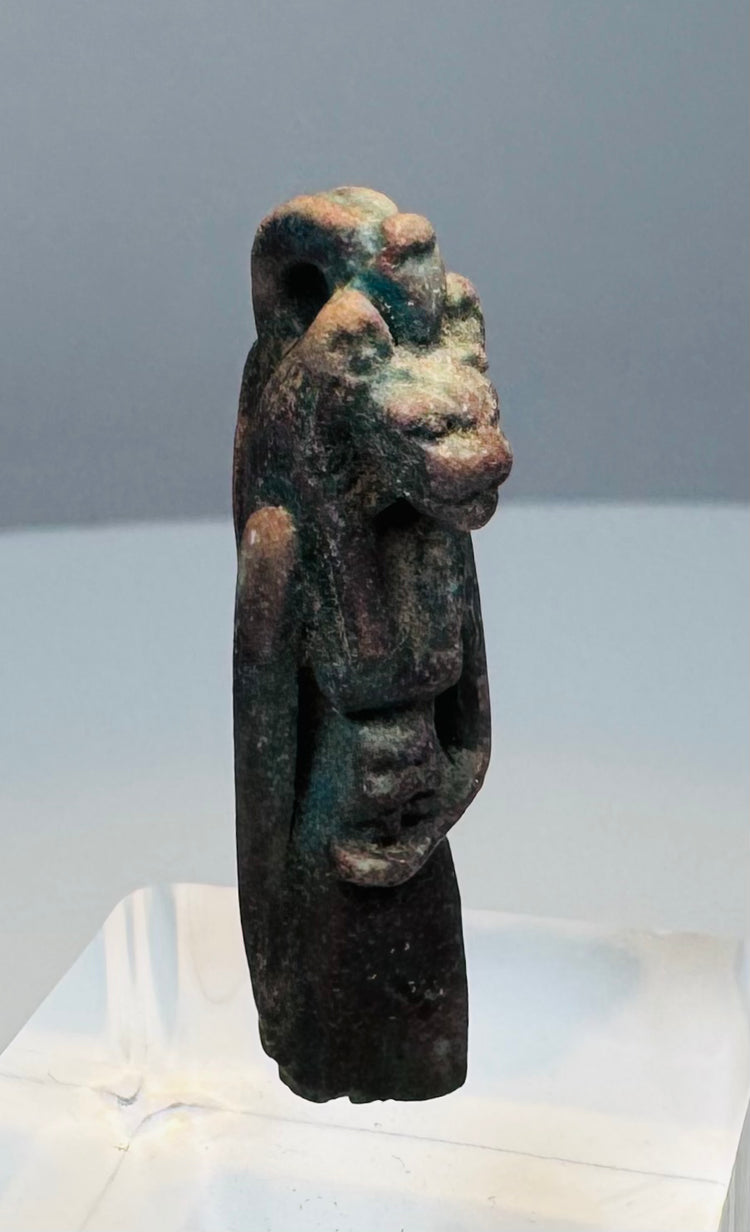
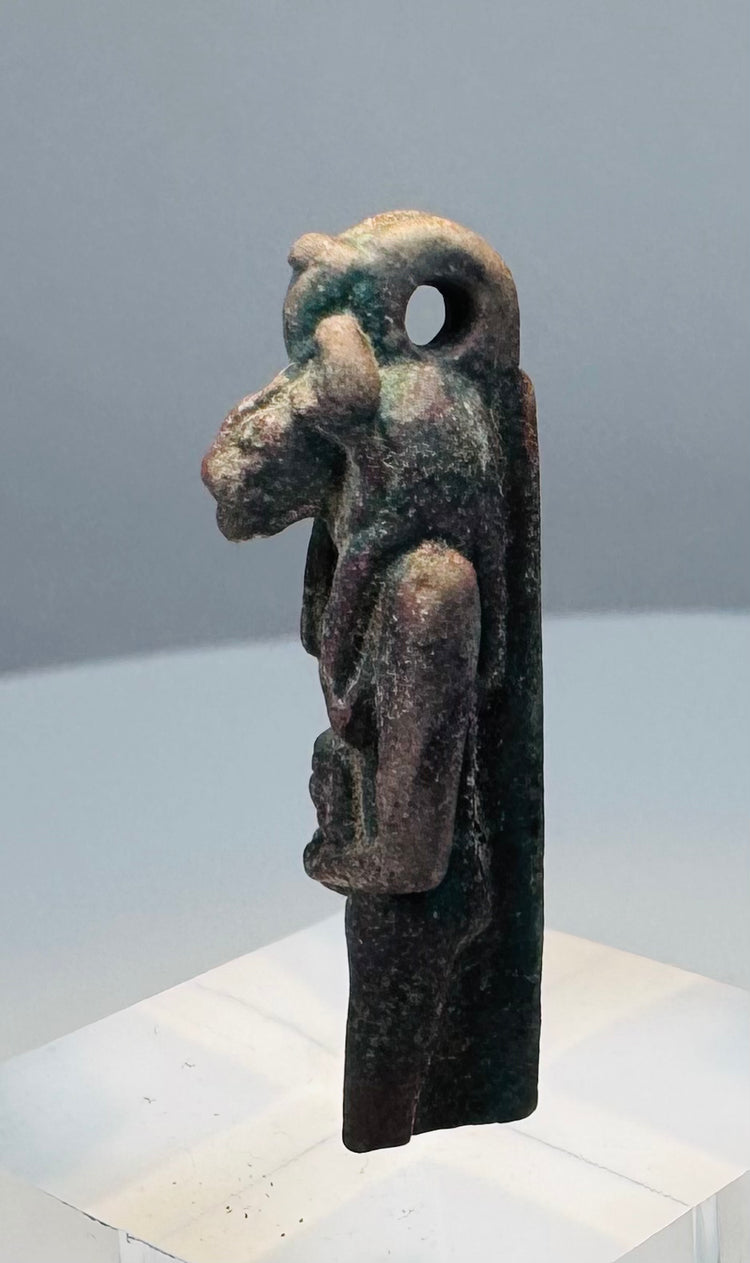
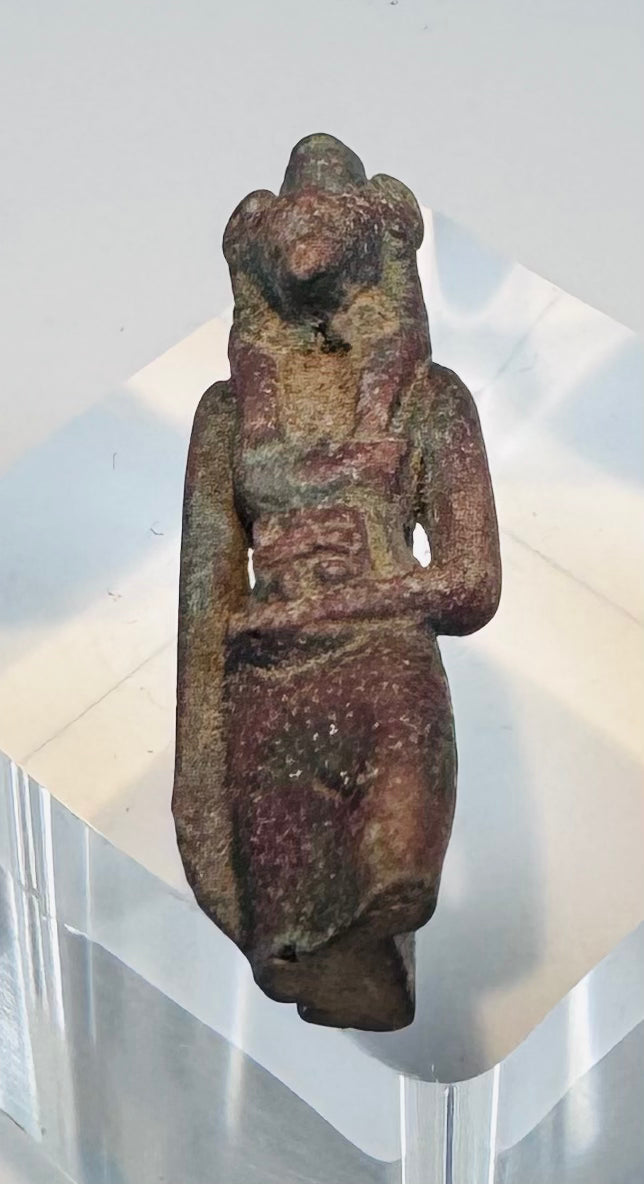
Ancient Egyptian Faience Sekhmet Pendant Holding a Protective Wadjet Eye | Late Period | Circa 664 – 332 BCE
Description
Plus
Moins
Historical Context & Origin
Region: Ancient Egypt, North Africa
Material: Mold-formed Egyptian faience with dark brown, burgundy, and nearly black surface coloration and mineral deposits
Period: Late Period, circa 664–332 BCE
Description
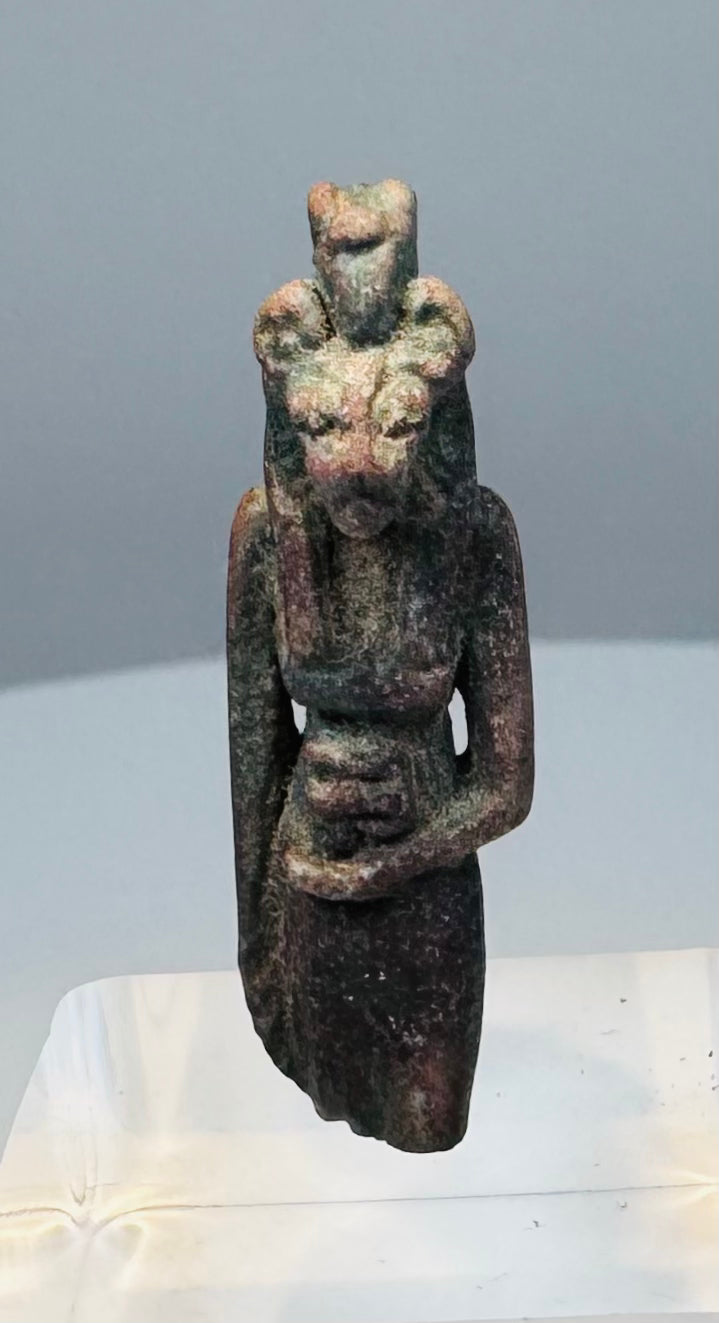
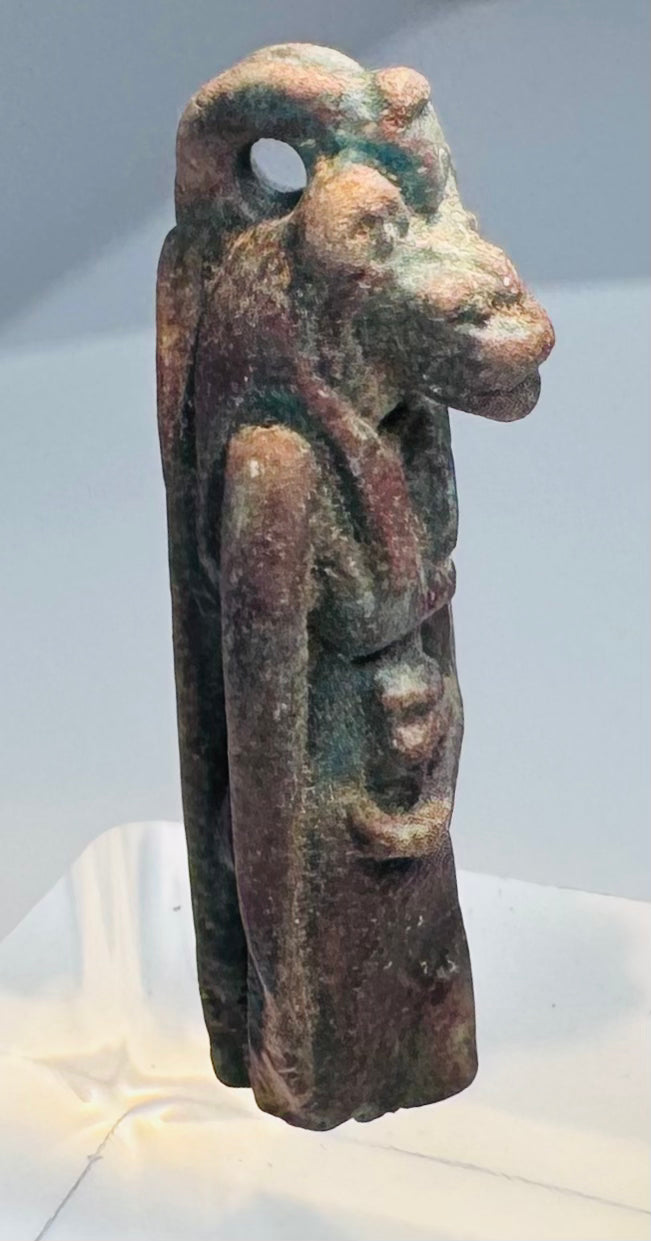
An ancient Egyptian faience amulet representing a lioness-headed protective goddess, most plausibly Sekhmet, although an identification as Bastet or another closely related feline deity cannot be entirely excluded.
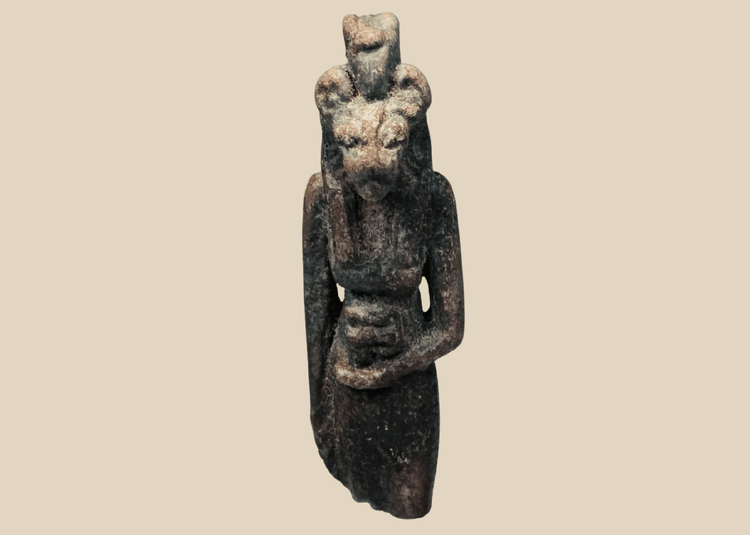
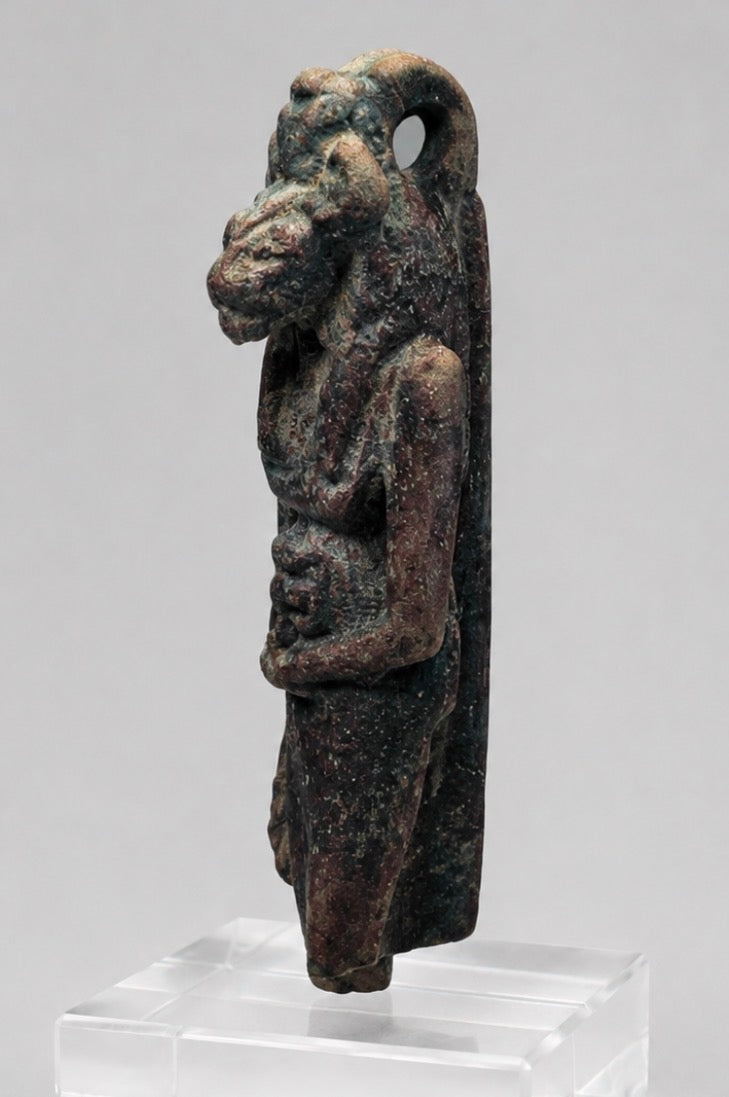
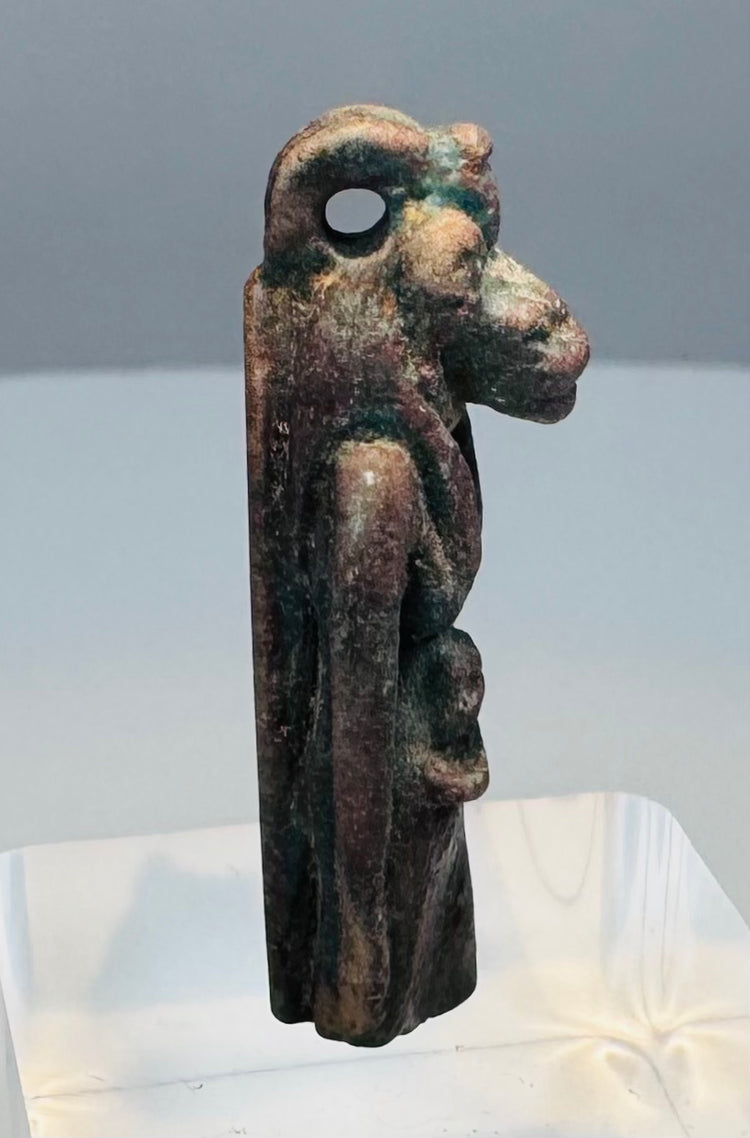
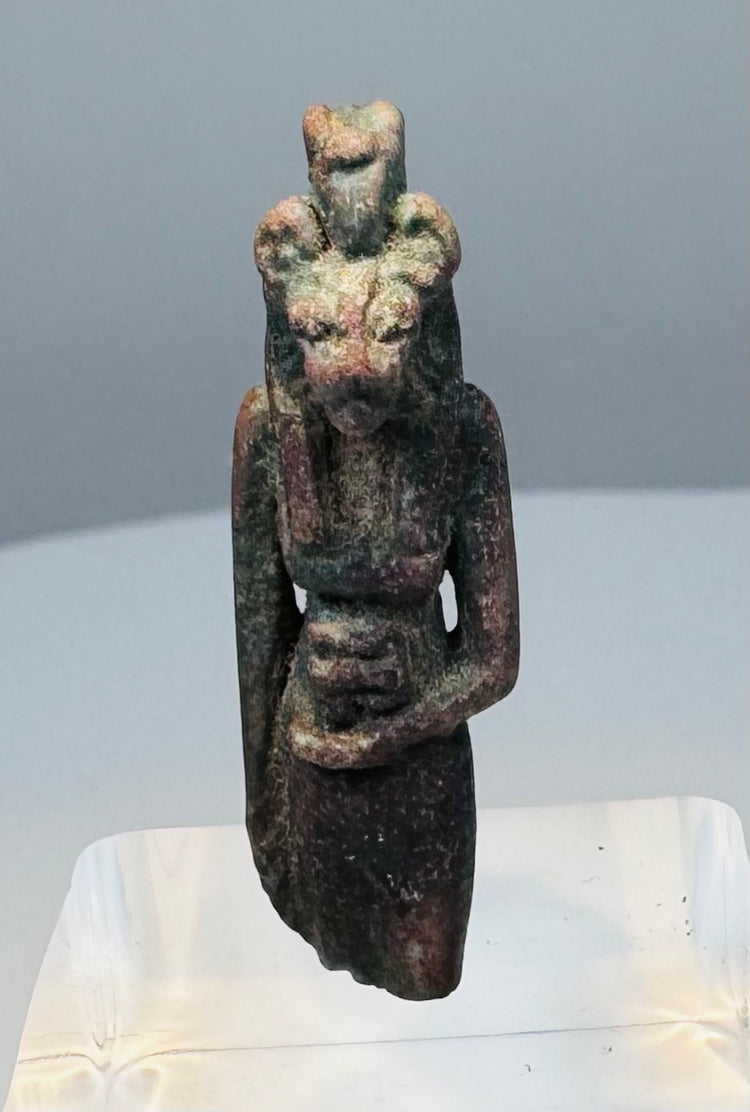
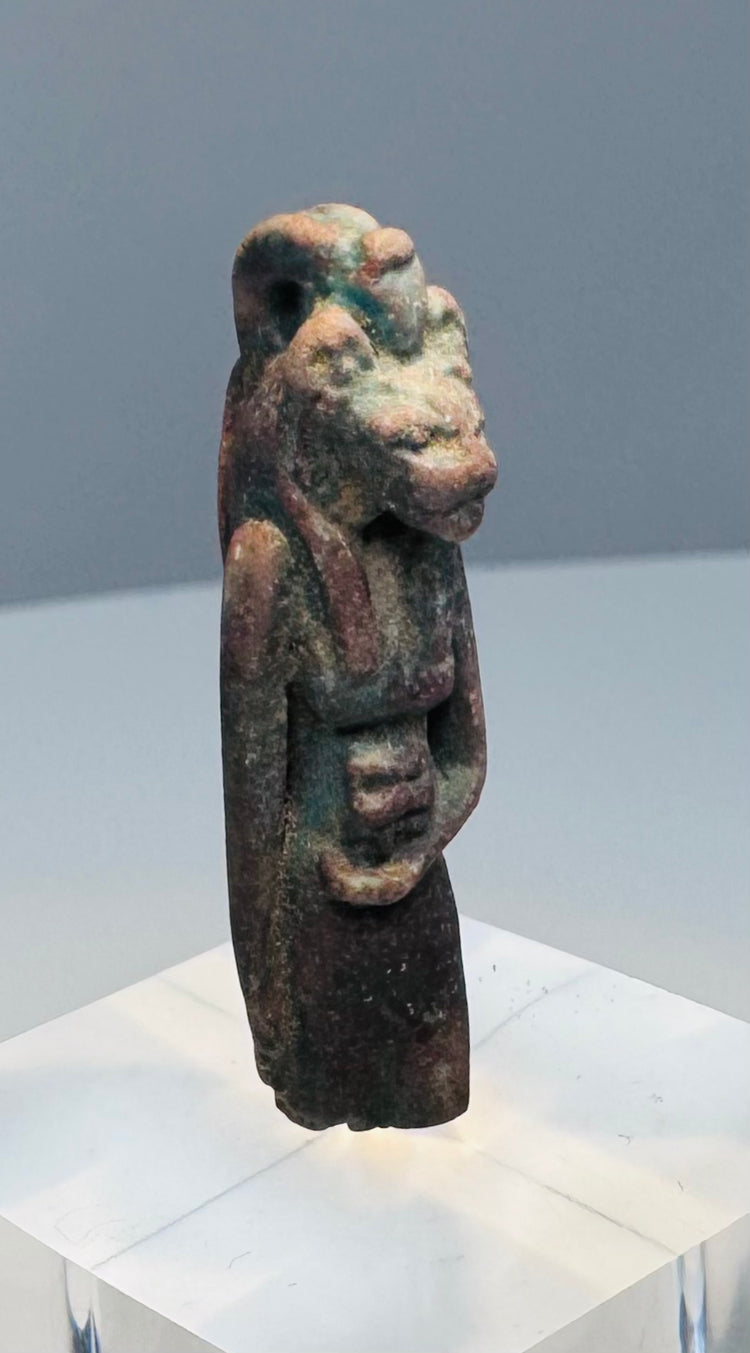
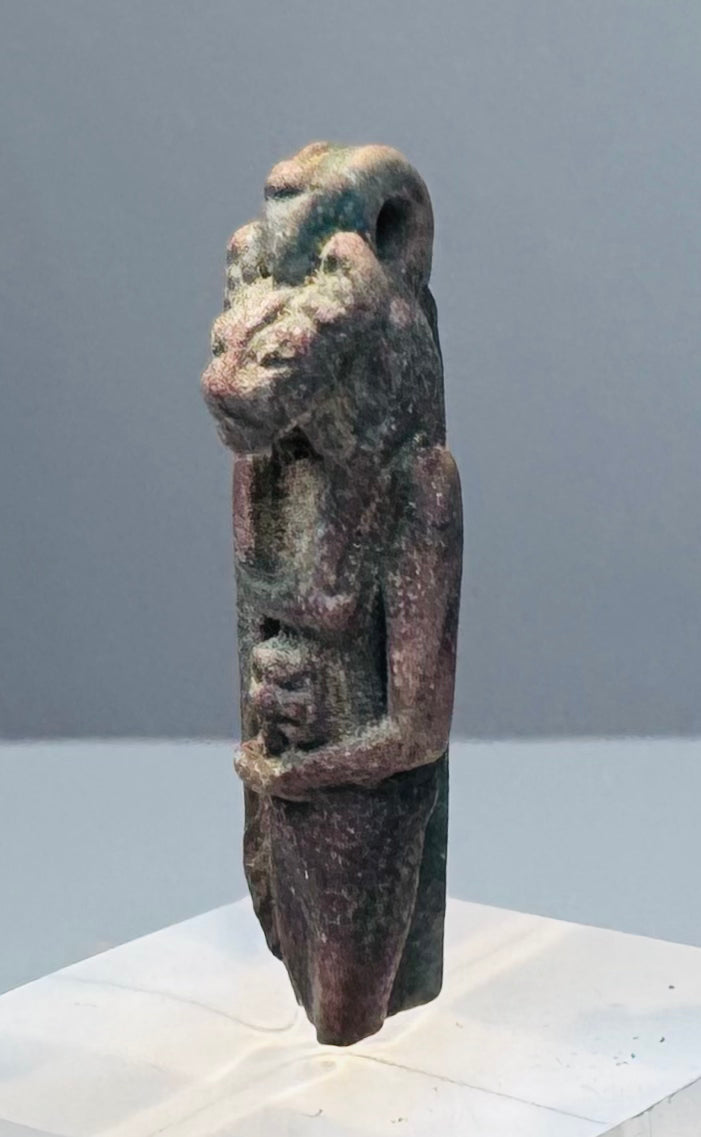
The goddess is shown standing in an elongated frontal pose with the head of a lioness and the body of a woman. Her feline features include a broad projecting muzzle, rounded ears, recessed eyes, and a small raised element above the forehead that may represent a stylized uraeus or surviving portion of a headdress.
One arm descends vertically alongside the body, while the opposite arm bends inward across the abdomen. The bent hand supports a small rectangular or oval emblem marked with horizontal relief. This attribute was interpreted in the original cataloguing as a possible wadjet eye, one of ancient Egypt’s most important symbols of protection, healing, restoration, and regeneration.
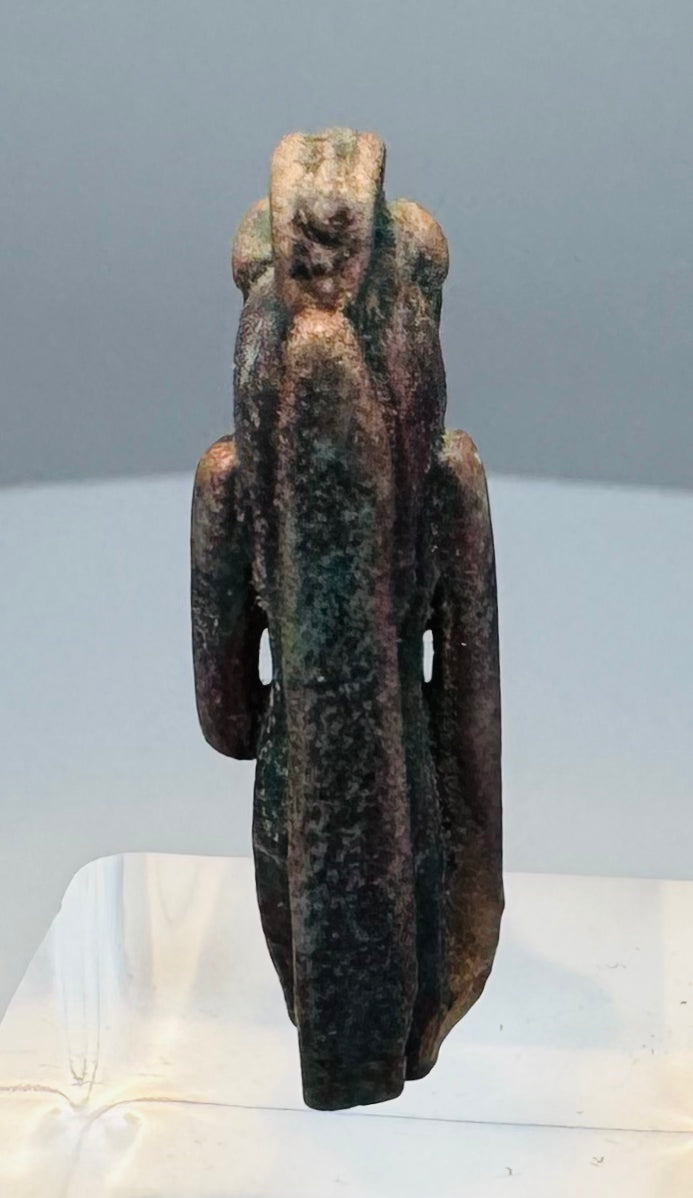
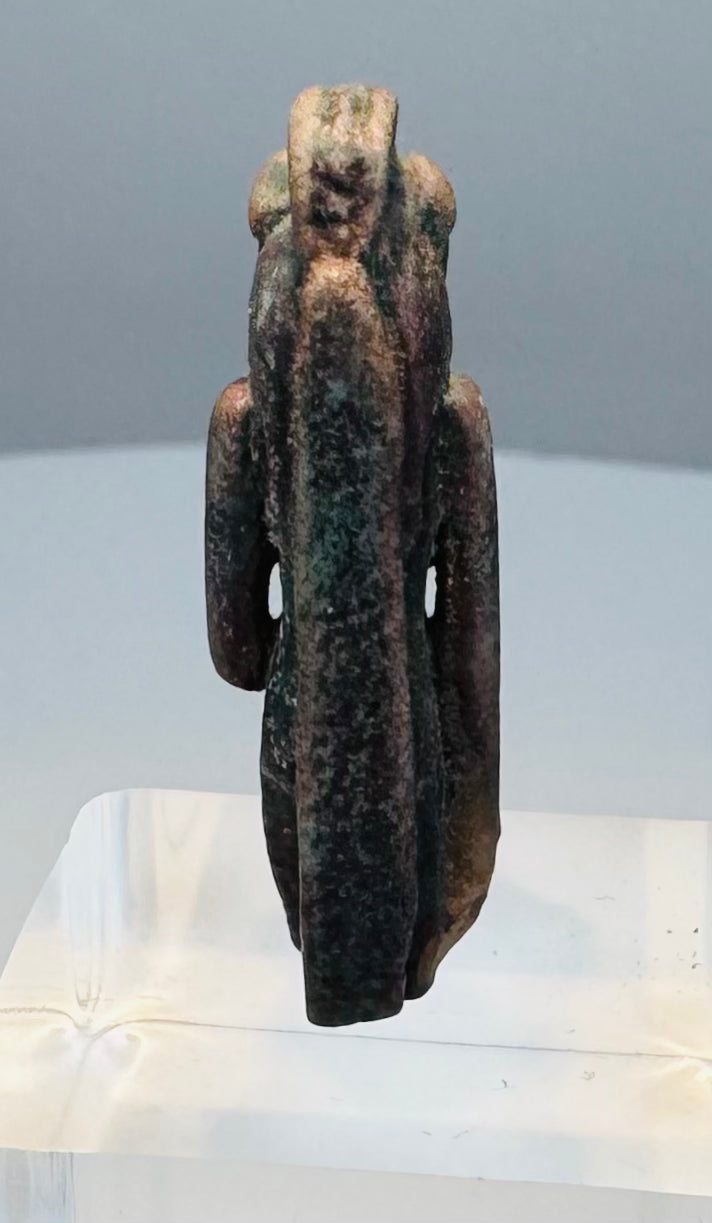
An exceptionally prominent suspension loop rises behind the head and remains fully open. This integral loop allowed the figure to be worn as a pendant, suspended from a cord, or sewn into funerary wrappings. Its comparatively robust construction suggests that the amulet was created for practical use rather than functioning solely as a miniature votive figure.
The surface is dominated by deep brown, muted burgundy, and nearly black tones, with localized pale tan, cream, and faint greenish mineral deposits. Any original glaze is now substantially worn or altered, producing the richly mottled surface visible today. These tones likely reflect a combination of the original glaze, firing conditions, prolonged burial, mineral deposits, and natural alteration over approximately two and a half millennia.
Features
- Ancient Egyptian mold-formed faience construction
- Lioness-headed protective goddess
- Most plausibly identified as Sekhmet
- Possible alternative identification as Bastet or a related feline deity
- Elongated frontal standing pose
- Broad projecting feline muzzle and rounded ears
- Possible surviving uraeus or headdress element
- Bent arm holding a possible wadjet-eye emblem
- Exceptionally prominent integral suspension loop
- Rear supporting pillar
- Deep brown, burgundy, and nearly black surface coloration
- Pale mineral deposits and burial encrustation
- Substantial evidence of ancient wear and use
Historical & Cultural Significance
Sekhmet, whose name may be translated as “The Powerful One,” was among ancient Egypt’s most formidable deities. She embodied the fierce heat of the sun and was associated with warfare, royal authority, protection, healing, and the prevention of disease.
Although Sekhmet could unleash destructive forces against the enemies of Egypt, she was equally capable of turning that power toward defence and restoration. Her priests became closely associated with healing practices, while amulets bearing her image were carried to guard their owners against illness, danger, and hostile supernatural forces.
Bastet shared aspects of this protective feline imagery. Although she became increasingly associated with the domestic cat, music, fertility, motherhood, and household protection, earlier representations could retain a more imposing lioness-headed form. Small amulets without identifying inscriptions can therefore be difficult to assign conclusively to one particular feline goddess.
If the emblem held by this figure represents a wadjet eye, its presence would have reinforced the amulet’s protective purpose. The restored Eye of Horus symbolized healing, completeness, regeneration, and the restoration of cosmic order.
Such amulets were worn by the living and placed with the deceased. In a funerary context, the divine lioness defended the body and helped ensure the owner’s protection and renewal in the afterlife.
Condition
Fair to good ancient condition. The uppermost portion of the headdress or solar element is broken and incomplete, with an old loss visible above the head. Additional old chipping and loss are present along the lower front and side of the figure, particularly at the lower left edge of the garment and base, creating an irregular silhouette.
The surface exhibits extensive age-related wear, abrasions, pitting, mineral deposits, encrustation, and areas of discoloration consistent with burial and considerable antiquity. Despite these losses, the lioness-headed face, arms, held protective emblem, elongated garment, rear pillar, and large suspension loop remain identifiable. The suspension loop is preserved and remains open. Please review all photographs carefully for a complete understanding of the condition.
Dimensions (Approximate)
Height: 1.4 in
Age (Approximate)
2,350–2,690 years old
Provenance
Part of the J. M. Collection, a private, family-held collection based in Fountain Hills, Arizona, USA. This amulet was acquired by the collector’s mother in 1992 and remained within the family until the collection’s later dispersal.
It was subsequently handled by Artemis Fine Arts of Louisville, Colorado, an established dealer and auction house specializing in ancient, ethnographic, and fine art since 1993.
Subsequently acquired by a well-known private collection in Toronto, Ontario, Canada.
Learn More
Discover a closely comparable Egyptian faience Sekhmet amulet with a lioness head, bent arm, and horizontal suspension perforation in the collection of the Fleming Museum of Art
Explore our Collection of Ancient Egyptian Mummies & Artifacts
Description
Historical Context & Origin
Region: Ancient Egypt, North Africa
Material: Mold-formed Egyptian faience with dark brown, burgundy, and nearly black surface coloration and mineral deposits
Period: Late Period, circa 664–332 BCE
Description
An ancient Egyptian faience amulet representing a lioness-headed protective goddess, most plausibly Sekhmet, although an identification as Bastet or another closely related feline deity cannot be entirely excluded.
The goddess is shown standing in an elongated frontal pose with the head of a lioness and the body of a woman. Her feline features include a broad projecting muzzle, rounded ears, recessed eyes, and a small raised element above the forehead that may represent a stylized uraeus or surviving portion of a headdress.
One arm descends vertically alongside the body, while the opposite arm bends inward across the abdomen. The bent hand supports a small rectangular or oval emblem marked with horizontal relief. This attribute was interpreted in the original cataloguing as a possible wadjet eye, one of ancient Egypt’s most important symbols of protection, healing, restoration, and regeneration.
An exceptionally prominent suspension loop rises behind the head and remains fully open. This integral loop allowed the figure to be worn as a pendant, suspended from a cord, or sewn into funerary wrappings. Its comparatively robust construction suggests that the amulet was created for practical use rather than functioning solely as a miniature votive figure.
The surface is dominated by deep brown, muted burgundy, and nearly black tones, with localized pale tan, cream, and faint greenish mineral deposits. Any original glaze is now substantially worn or altered, producing the richly mottled surface visible today. These tones likely reflect a combination of the original glaze, firing conditions, prolonged burial, mineral deposits, and natural alteration over approximately two and a half millennia.
Features
- Ancient Egyptian mold-formed faience construction
- Lioness-headed protective goddess
- Most plausibly identified as Sekhmet
- Possible alternative identification as Bastet or a related feline deity
- Elongated frontal standing pose
- Broad projecting feline muzzle and rounded ears
- Possible surviving uraeus or headdress element
- Bent arm holding a possible wadjet-eye emblem
- Exceptionally prominent integral suspension loop
- Rear supporting pillar
- Deep brown, burgundy, and nearly black surface coloration
- Pale mineral deposits and burial encrustation
- Substantial evidence of ancient wear and use
Historical & Cultural Significance
Sekhmet, whose name may be translated as “The Powerful One,” was among ancient Egypt’s most formidable deities. She embodied the fierce heat of the sun and was associated with warfare, royal authority, protection, healing, and the prevention of disease.
Although Sekhmet could unleash destructive forces against the enemies of Egypt, she was equally capable of turning that power toward defence and restoration. Her priests became closely associated with healing practices, while amulets bearing her image were carried to guard their owners against illness, danger, and hostile supernatural forces.
Bastet shared aspects of this protective feline imagery. Although she became increasingly associated with the domestic cat, music, fertility, motherhood, and household protection, earlier representations could retain a more imposing lioness-headed form. Small amulets without identifying inscriptions can therefore be difficult to assign conclusively to one particular feline goddess.
If the emblem held by this figure represents a wadjet eye, its presence would have reinforced the amulet’s protective purpose. The restored Eye of Horus symbolized healing, completeness, regeneration, and the restoration of cosmic order.
Such amulets were worn by the living and placed with the deceased. In a funerary context, the divine lioness defended the body and helped ensure the owner’s protection and renewal in the afterlife.
Condition
Fair to good ancient condition. The uppermost portion of the headdress or solar element is broken and incomplete, with an old loss visible above the head. Additional old chipping and loss are present along the lower front and side of the figure, particularly at the lower left edge of the garment and base, creating an irregular silhouette.
The surface exhibits extensive age-related wear, abrasions, pitting, mineral deposits, encrustation, and areas of discoloration consistent with burial and considerable antiquity. Despite these losses, the lioness-headed face, arms, held protective emblem, elongated garment, rear pillar, and large suspension loop remain identifiable. The suspension loop is preserved and remains open. Please review all photographs carefully for a complete understanding of the condition.
Dimensions (Approximate)
Height: 1.4 in
Age (Approximate)
2,350–2,690 years old
Provenance
Part of the J. M. Collection, a private, family-held collection based in Fountain Hills, Arizona, USA. This amulet was acquired by the collector’s mother in 1992 and remained within the family until the collection’s later dispersal.
It was subsequently handled by Artemis Fine Arts of Louisville, Colorado, an established dealer and auction house specializing in ancient, ethnographic, and fine art since 1993.
Subsequently acquired by a well-known private collection in Toronto, Ontario, Canada.
Learn More
Discover a closely comparable Egyptian faience Sekhmet amulet with a lioness head, bent arm, and horizontal suspension perforation in the collection of the Fleming Museum of Art
Explore our Collection of Ancient Egyptian Mummies & Artifacts
Vous aimerez peut-être aussi
