

Pointes de projectiles en fer de l'Europe antique | Période romaine tardive au Moyen Âge | Circa IIIe-XIVe siècle
- Prix habituel
- $250.00
- Prix soldé
- $250.00
- Prix habituel
Impossible de charger la disponibilité du service de retrait


Pointes de projectiles en fer de l'Europe antique | Période romaine tardive au Moyen Âge | Circa IIIe-XIVe siècle
Description
Plus
Moins
Contexte historique et origine
Région : Europe
Matériau : Fer forgé à la main
Période : Fin de l'époque romaine jusqu'à la période médiévale, environ du 3e au 14e siècle de notre ère
Description
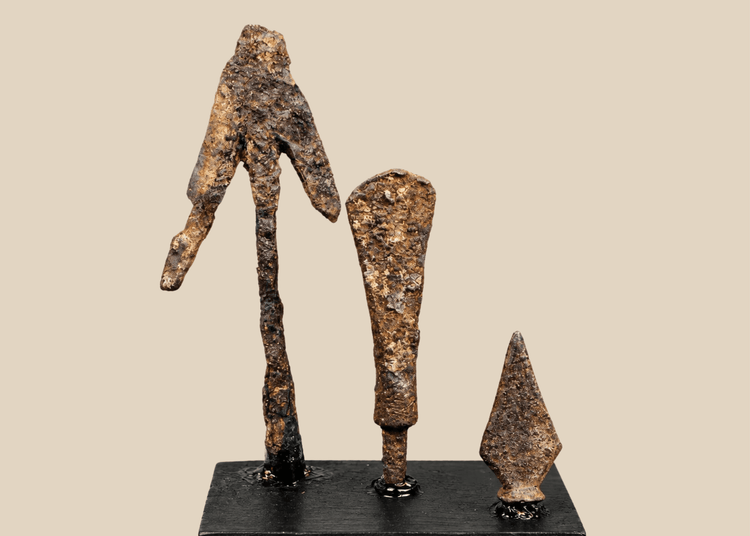
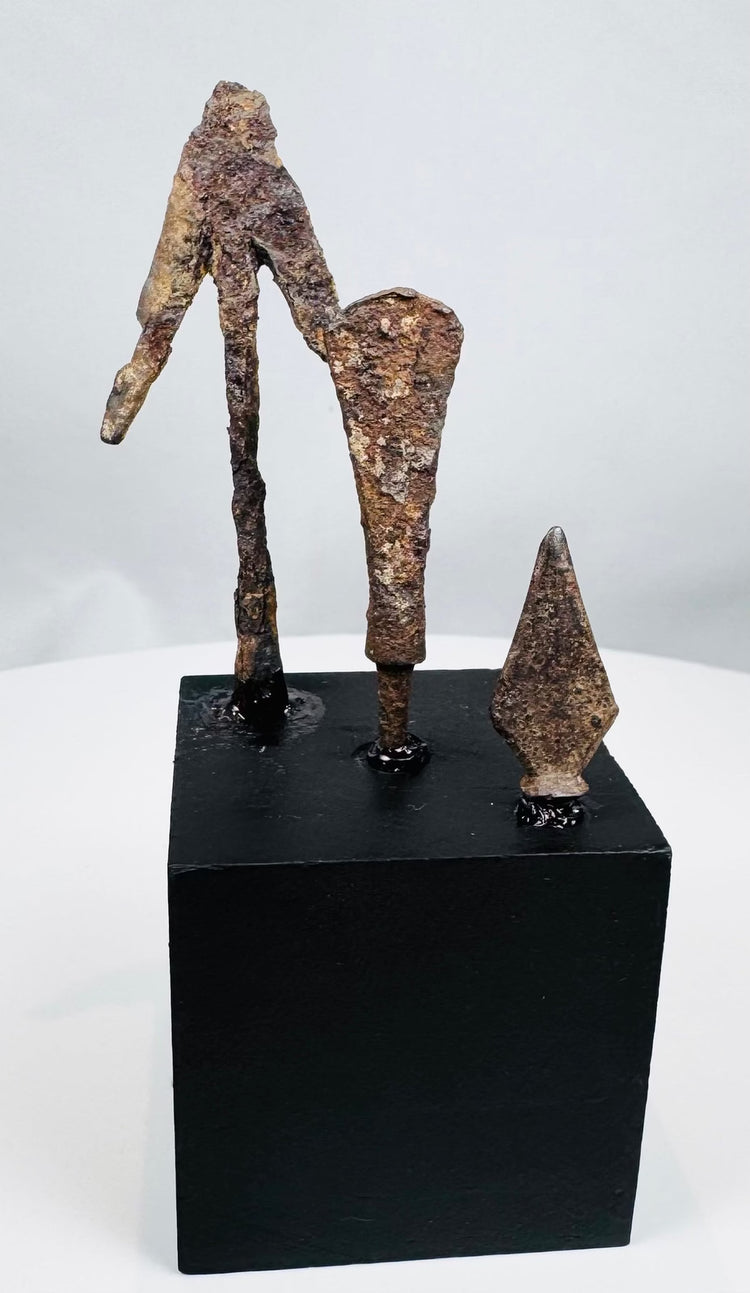
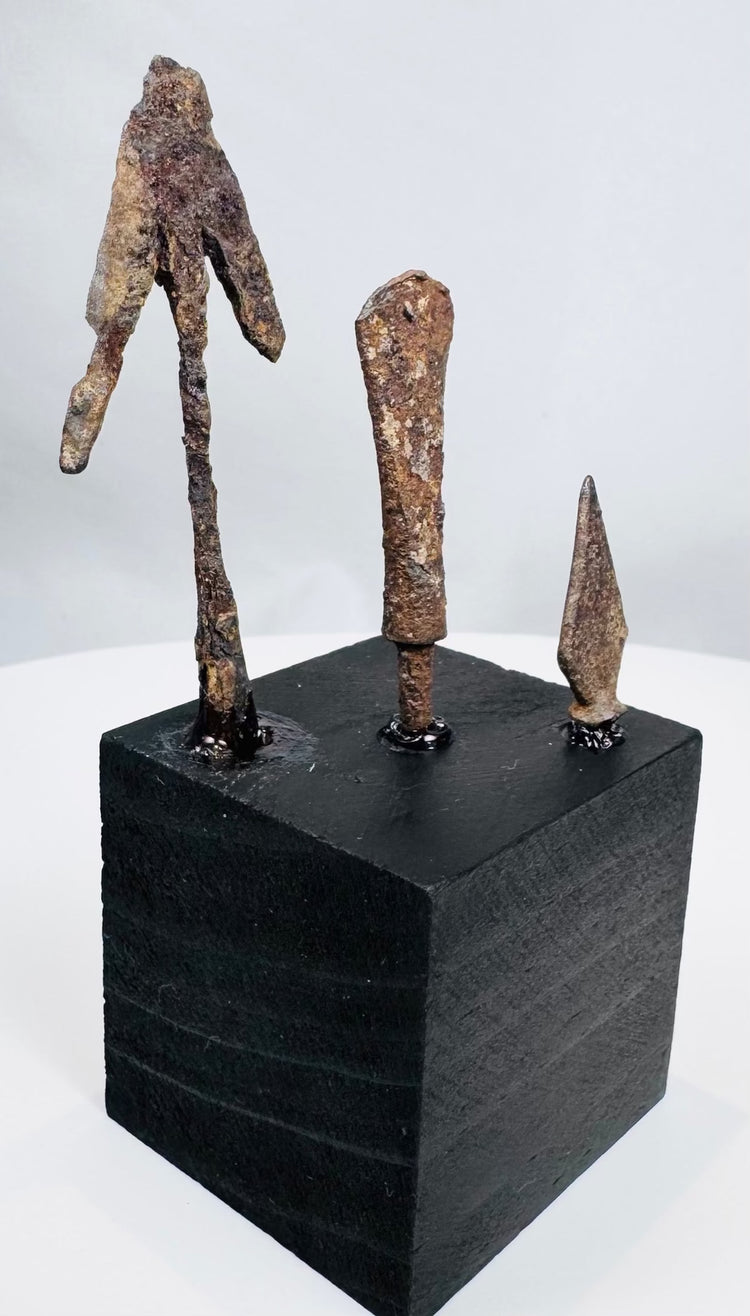
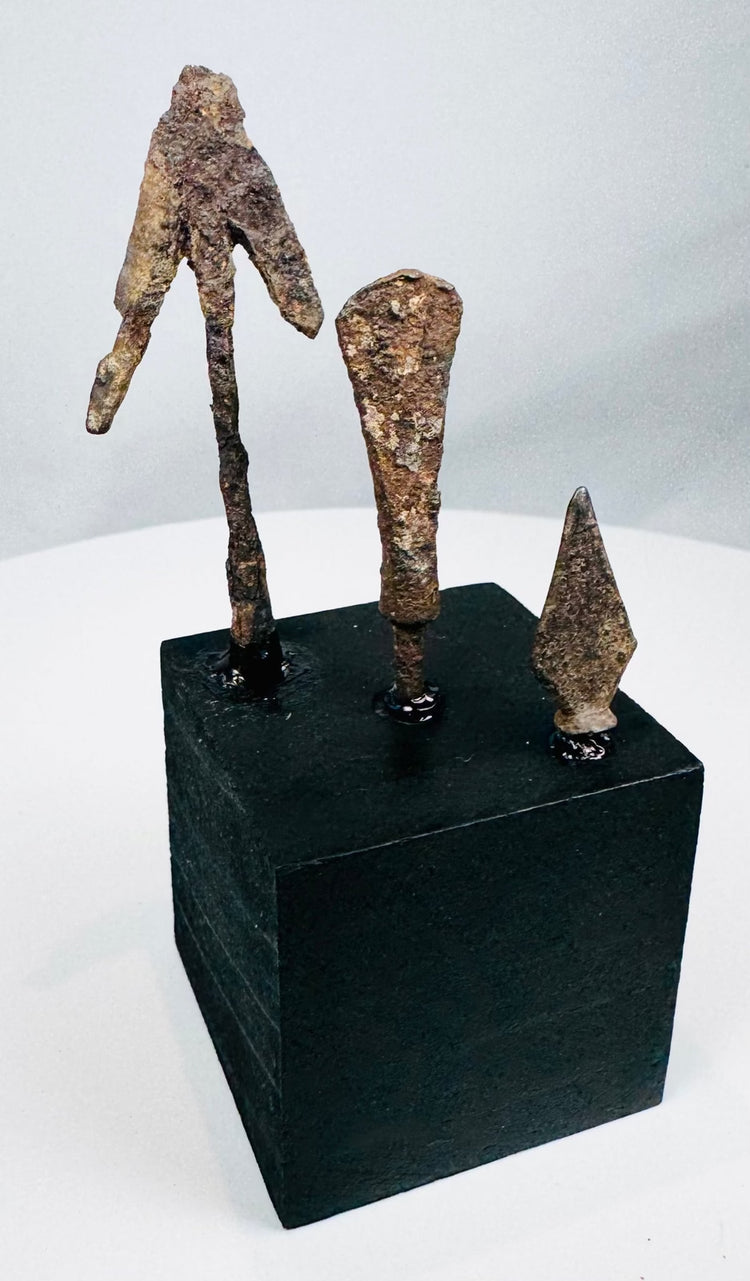
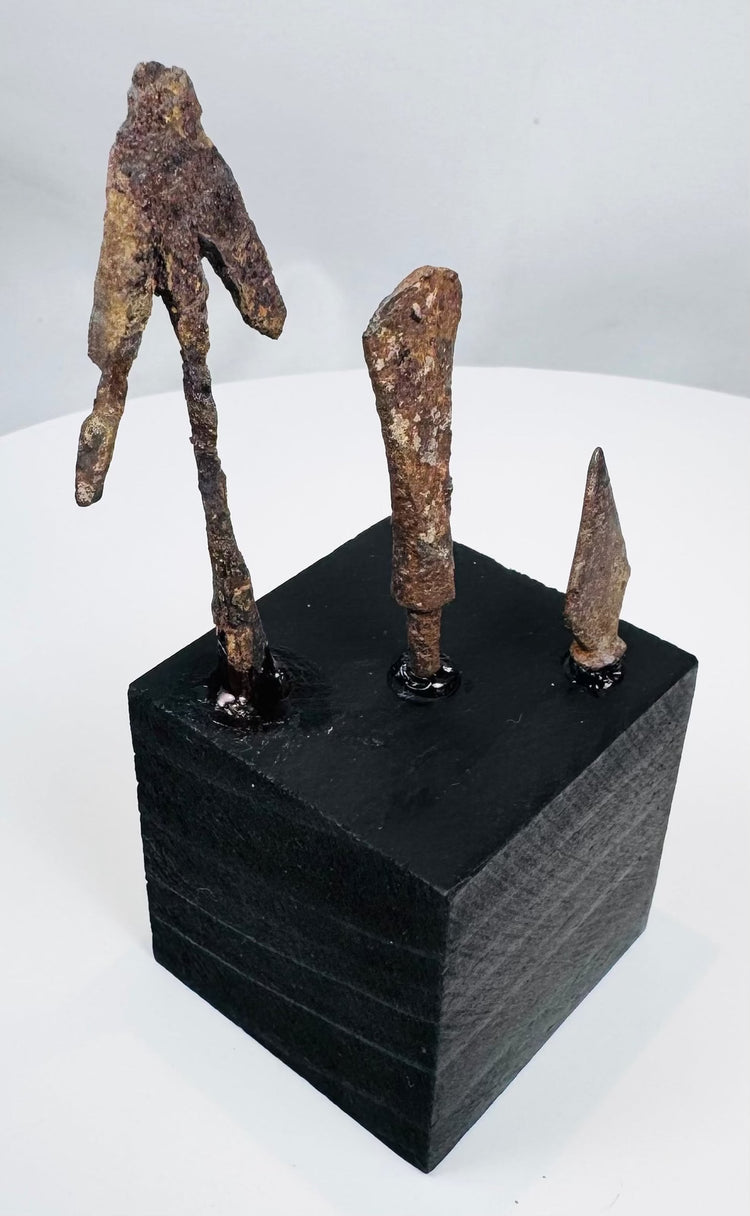
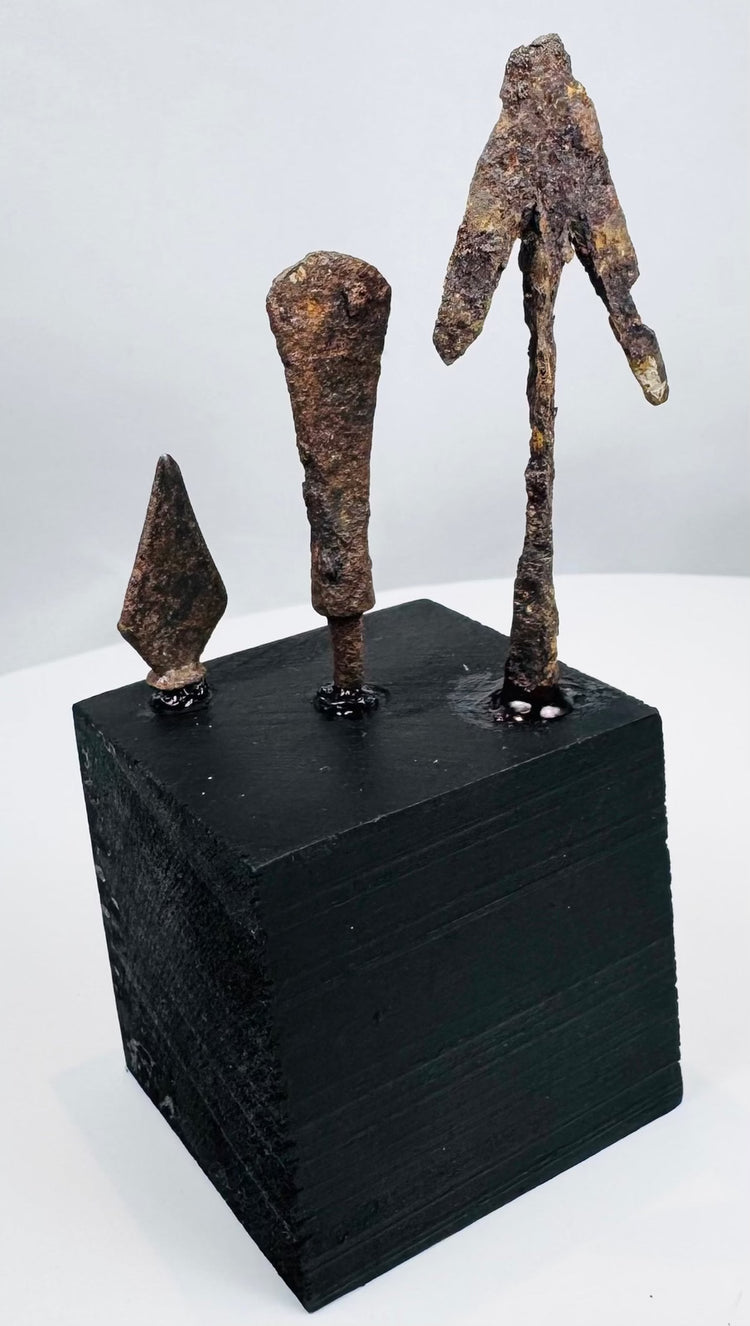
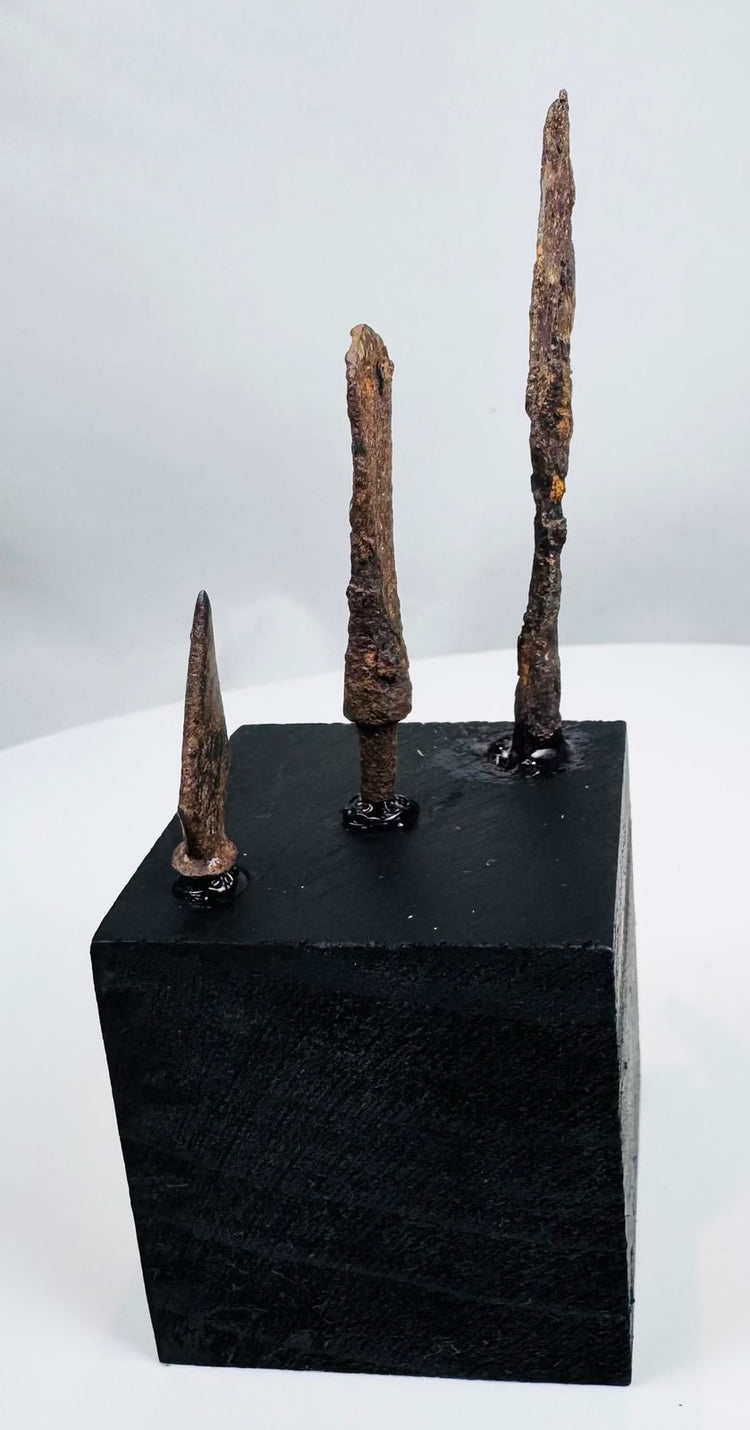
Ce groupe de trois pointes de projectile en fer anciennes et médiévales représente une sélection variée d'instruments militaires et de chasse forgés à la main, datant en gros de la fin de la période romaine à la période médiévale. L'ensemble comprend deux formes compactes et pointues et un exemple plus grand, fourchu ou barbelé, chacun monté individuellement sur un socle de présentation moderne en bois noir.
Le plus petit exemple est formé d'une lame étroite et allongée en forme de losange s'amincissant jusqu'à une pointe acérée. Ses proportions compactes et son profil central fort sont cohérents avec une pointe de flèche en fer ou un projectile léger destiné à pénétrer les vêtements, le cuir ou des cibles légèrement protégées.
L'exemple central a un corps plus large et allongé avec un profil supérieur arrondi ou usé et une soie étroite s'étendant en dessous. Une forte minéralisation et la corrosion superficielle masquent une grande partie de sa forme originale, mais la forme restante suggère une pointe de flèche, une tête de carreau ou une petite pointe de javelot substantielle. L'utilisation de soies permettait d'insérer des têtes en fer de ce type dans des hampes en bois préparées et de les fixer avec une ligature ou un adhésif.
Le plus grand objet est une tête de projectile en fer fourchue ou barbelée inhabituelle, composée d'une longue soie étroite sous une large section supérieure divisée en plusieurs bras saillants. Ses éléments latéraux prononcés ont pu être destinés à augmenter la gravité d'une blessure, à résister à un retrait facile ou à servir un but de chasse spécialisé. Étant donné que la corrosion étendue et la perte de métal ont altéré son contour original, sa classification typologique précise reste incertaine.
Les pointes de flèches en fer et les pointes de projectile connexes ont été produites sous de nombreuses formes tout au long des mondes romain et médiéval. Des pointes de flèches en fer triangulaires à soie sont documentées dans des contextes romano-britanniques, tandis que les formes à soie et à douille ont continué à être utilisées tout au long des périodes médiévales anciennes et tardives.
Caractéristiques
- Individuellement forgés à la main en fer
- Inclut des formes étroites en losange et des formes plus larges à soie
- Tête de projectile fourchue ou barbelée inhabituelle
- Oxydation ancienne et incrustation minérale étendues
- Soies survivantes initialement destinées à être fixées à des hampes en bois
- Associées à la guerre, à la chasse et au tir à l'arc historiques
- Montés ensemble sur un socle de présentation moderne en bois noir
- Anciennement détenues dans des collections européennes établies
Signification culturelle
Les armes de jet ont joué un rôle central dans la guerre, la chasse et la défense personnelle romaines et médiévales. Les archers et les arbalétriers pouvaient engager des cibles à distance, perturber les formations, défendre des positions fortifiées et soutenir les forces montées ou d'infanterie. La forme exacte d'une pointe de flèche était souvent influencée par son but prévu, les pointes étroites étant adaptées à la pénétration et les formes plus larges ou barbelées étant destinées à causer des dommages tissulaires plus importants ou à rester logées dans la cible.
Pendant la période romaine, les pointes de flèches en fer ont été produites sous de nombreuses formes triangulaires, en feuille, pyramidales, barbelées, à douille et à soie. Ces traditions ont continué et évolué tout au long de la période des migrations, de l'âge viking et des siècles médiévaux ultérieurs à mesure que l'équipement militaire et les armures changeaient.
État
Les trois pointes de projectile restent stables dans un état archéologique fortement oxydé. Chacune présente une rouille étendue, une incrustation minérale, des piqûres, un écaillage superficiel, des bords irréguliers et des pertes par rapport aux profils forgés originaux. L'exemple fourchu le plus grand est fragmentaire et a subi un amincissement, une déformation et une perte de métal considérables. La pointe centrale a une section supérieure fortement arrondie et obscurcie, tandis que la plus petite conserve le contour pointu le plus clair.
Les objets ont été fixés de manière permanente à un socle de présentation moderne en bois noir avec un matériau de montage visible. Le socle présente des rayures mineures, des marques de manipulation et des irrégularités de surface.
Dimensions (approximatives)
Hauteur totale de l'affichage : 4,5 po
Âge (approximatif)
De 625 à 1 725 ans
Provenance
Anciennement offert sur le marché de l'art allemand dans les années 2000, où le groupe est entré dans le commerce des antiquités européennes modernes.
Acquis par la suite auprès d'un collectionneur de l'Union européenne résidant à Londres, en Angleterre, qui possédait une collection privée d'artefacts anciens et médiévaux.
Conservé ensuite dans la collection privée d'un gentleman du Surrey, au Royaume-Uni.
En savoir plus
Voir une pointe de projectile en fer ancienne apparentée dans la collection du Metropolitan Museum of Art
Découvrez notre collection d'artefacts romains et grecs et de reliques anciennes
Description
Contexte historique et origine
Région : Europe
Matériau : Fer forgé à la main
Période : Fin de l'époque romaine jusqu'à la période médiévale, environ du 3e au 14e siècle de notre ère
Description
Ce groupe de trois pointes de projectile en fer anciennes et médiévales représente une sélection variée d'instruments militaires et de chasse forgés à la main, datant en gros de la fin de la période romaine à la période médiévale. L'ensemble comprend deux formes compactes et pointues et un exemple plus grand, fourchu ou barbelé, chacun monté individuellement sur un socle de présentation moderne en bois noir.
Le plus petit exemple est formé d'une lame étroite et allongée en forme de losange s'amincissant jusqu'à une pointe acérée. Ses proportions compactes et son profil central fort sont cohérents avec une pointe de flèche en fer ou un projectile léger destiné à pénétrer les vêtements, le cuir ou des cibles légèrement protégées.
L'exemple central a un corps plus large et allongé avec un profil supérieur arrondi ou usé et une soie étroite s'étendant en dessous. Une forte minéralisation et la corrosion superficielle masquent une grande partie de sa forme originale, mais la forme restante suggère une pointe de flèche, une tête de carreau ou une petite pointe de javelot substantielle. L'utilisation de soies permettait d'insérer des têtes en fer de ce type dans des hampes en bois préparées et de les fixer avec une ligature ou un adhésif.
Le plus grand objet est une tête de projectile en fer fourchue ou barbelée inhabituelle, composée d'une longue soie étroite sous une large section supérieure divisée en plusieurs bras saillants. Ses éléments latéraux prononcés ont pu être destinés à augmenter la gravité d'une blessure, à résister à un retrait facile ou à servir un but de chasse spécialisé. Étant donné que la corrosion étendue et la perte de métal ont altéré son contour original, sa classification typologique précise reste incertaine.
Les pointes de flèches en fer et les pointes de projectile connexes ont été produites sous de nombreuses formes tout au long des mondes romain et médiéval. Des pointes de flèches en fer triangulaires à soie sont documentées dans des contextes romano-britanniques, tandis que les formes à soie et à douille ont continué à être utilisées tout au long des périodes médiévales anciennes et tardives.
Caractéristiques
- Individuellement forgés à la main en fer
- Inclut des formes étroites en losange et des formes plus larges à soie
- Tête de projectile fourchue ou barbelée inhabituelle
- Oxydation ancienne et incrustation minérale étendues
- Soies survivantes initialement destinées à être fixées à des hampes en bois
- Associées à la guerre, à la chasse et au tir à l'arc historiques
- Montés ensemble sur un socle de présentation moderne en bois noir
- Anciennement détenues dans des collections européennes établies
Signification culturelle
Les armes de jet ont joué un rôle central dans la guerre, la chasse et la défense personnelle romaines et médiévales. Les archers et les arbalétriers pouvaient engager des cibles à distance, perturber les formations, défendre des positions fortifiées et soutenir les forces montées ou d'infanterie. La forme exacte d'une pointe de flèche était souvent influencée par son but prévu, les pointes étroites étant adaptées à la pénétration et les formes plus larges ou barbelées étant destinées à causer des dommages tissulaires plus importants ou à rester logées dans la cible.
Pendant la période romaine, les pointes de flèches en fer ont été produites sous de nombreuses formes triangulaires, en feuille, pyramidales, barbelées, à douille et à soie. Ces traditions ont continué et évolué tout au long de la période des migrations, de l'âge viking et des siècles médiévaux ultérieurs à mesure que l'équipement militaire et les armures changeaient.
État
Les trois pointes de projectile restent stables dans un état archéologique fortement oxydé. Chacune présente une rouille étendue, une incrustation minérale, des piqûres, un écaillage superficiel, des bords irréguliers et des pertes par rapport aux profils forgés originaux. L'exemple fourchu le plus grand est fragmentaire et a subi un amincissement, une déformation et une perte de métal considérables. La pointe centrale a une section supérieure fortement arrondie et obscurcie, tandis que la plus petite conserve le contour pointu le plus clair.
Les objets ont été fixés de manière permanente à un socle de présentation moderne en bois noir avec un matériau de montage visible. Le socle présente des rayures mineures, des marques de manipulation et des irrégularités de surface.
Dimensions (approximatives)
Hauteur totale de l'affichage : 4,5 po
Âge (approximatif)
De 625 à 1 725 ans
Provenance
Anciennement offert sur le marché de l'art allemand dans les années 2000, où le groupe est entré dans le commerce des antiquités européennes modernes.
Acquis par la suite auprès d'un collectionneur de l'Union européenne résidant à Londres, en Angleterre, qui possédait une collection privée d'artefacts anciens et médiévaux.
Conservé ensuite dans la collection privée d'un gentleman du Surrey, au Royaume-Uni.
En savoir plus
Voir une pointe de projectile en fer ancienne apparentée dans la collection du Metropolitan Museum of Art
Découvrez notre collection d'artefacts romains et grecs et de reliques anciennes
Vous aimerez peut-être aussi
