

Figurine de cavalier et cheval en terre cuite de Béotie, Grèce antique | Provenance détaillée | Circa 700-500 avant J.-C.
- Prix habituel
- $3,000.00
- Prix soldé
- $3,000.00
- Prix habituel
Impossible de charger la disponibilité du service de retrait



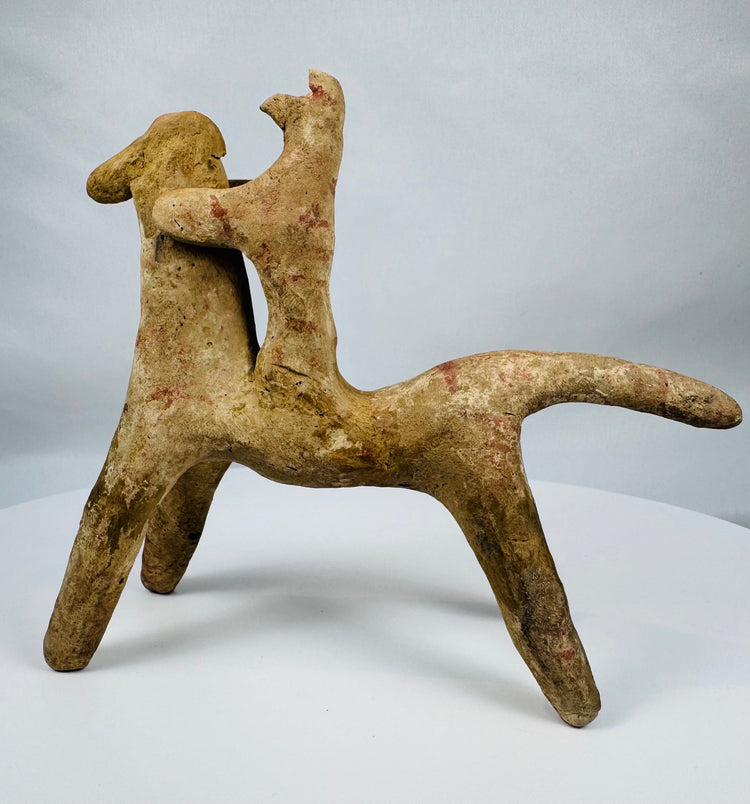


Figurine de cavalier et cheval en terre cuite de Béotie, Grèce antique | Provenance détaillée | Circa 700-500 avant J.-C.
Description
Plus
Moins
Contexte historique et origine
Région : Béotie, Grèce antique
Matériau : Terre cuite modelée à la main avec des traces de pigment rouge
Période : Période géométrique tardive à archaïque ancienne, vers 700–500 avant notre ère
Description
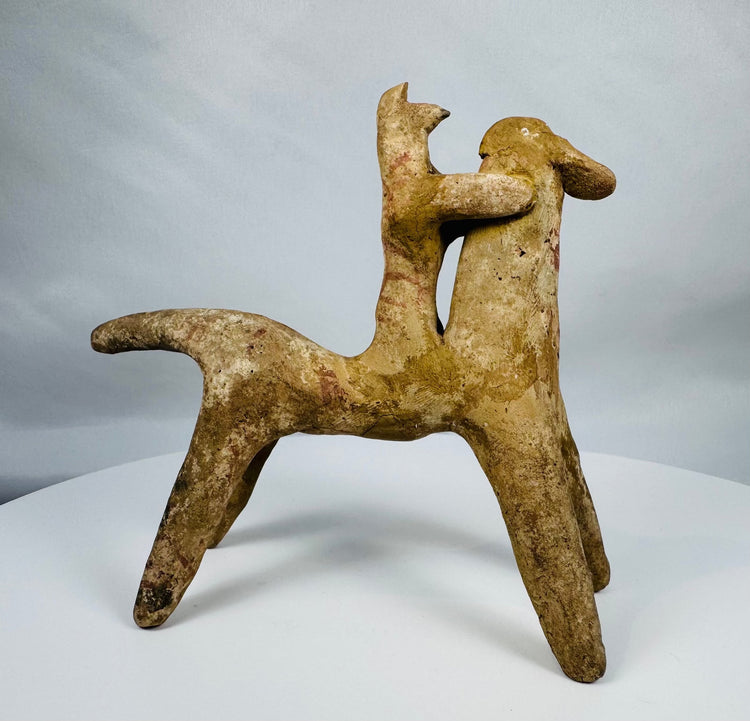
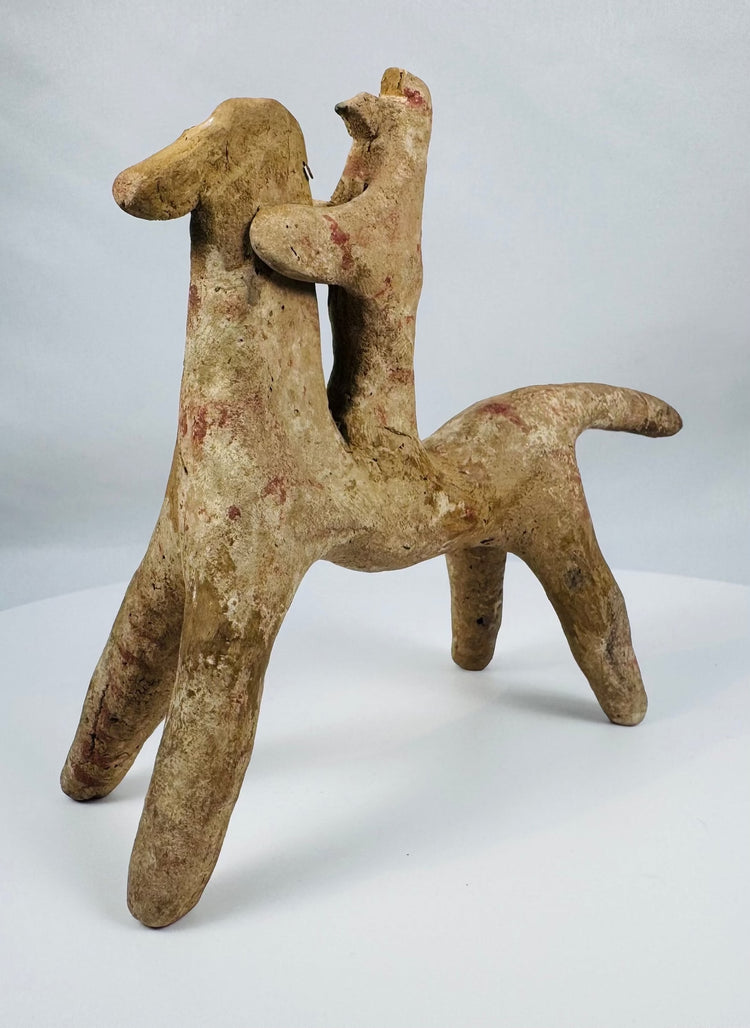
Cette ancienne figurine grecque en terre cuite représentant un cheval et son cavalier provient de Béotie, une région réputée pour sa production prolifique de sculptures votives équestres stylisées pendant les périodes géométrique et archaïque ancienne. Les figurines de cheval et de cavalier comme celle-ci étaient couramment dédiées dans les sanctuaires, déposées comme offrandes funéraires ou présentées comme symboles de statut, de richesse et d'identité aristocratique.
La sculpture représente un cavalier assis à califourchon sur un cheval, rendu de manière très abstraite et expressive, caractéristique des ateliers de terre cuite béotiens. Les bras du cavalier s'étendent pour saisir de chaque côté le cou ou la crinière du cheval, tandis que le cheval et le cavalier sont tous deux simplifiés en élégantes formes géométriques. Les pattes allongées, le cou arqué et la queue projetée du cheval créent une silhouette dynamique qui illustre les conventions artistiques de la sculpture figurative grecque primitive.
Des traces de pigment rouge original sont encore visibles sur certaines parties de la surface, témoignant de la décoration peinte qui rehaussait autrefois la figurine. La pièce présente d'importantes concrétions minérales, des altérations et une patine d'enfouissement cohérentes avec son ancienneté considérable. Des exemples de figurines votives similaires de cheval et de cavalier sont représentés dans les grandes collections muséales et sont considérés comme des précurseurs importants de la sculpture naturaliste des périodes archaïque et classique grecques.
Condition
Bon état ancien général. Usure de surface, dépôts minéraux, restes de pigments, imperfections de cuisson et altérations liées à l'âge sur l'ensemble. Pertes et abrasions mineures cohérentes avec l'âge et la récupération archéologique. Se présente bien avec une forme sculpturale forte et de belles surfaces anciennes.
Dimensions (approximatives)
Hauteur : 13,34 cm
Largeur : 13,97 cm
Longueur : 5,72 cm
Âge (approximatif)
2 500–2 700 ans
Provenance
Acheté à la boutique Roussos Antiques, Athènes, Grèce, le 19 septembre 1980. Accompagné du reçu d'achat original, de la documentation d'exportation et d'une photographie d'époque originale montrant la pièce dans la collection peu après son acquisition.
Par la suite conservé dans une collection privée du Minnesota, États-Unis, pendant plus de quatre décennies.
En savoir plus
Découvrez l'importance des figurines votives de cheval et de cavalier de la Grèce antique grâce au département des classiques de l'Université du Colorado à Boulder
Consultez notre collection d'artefacts romains et grecs anciens
Description
Contexte historique et origine
Région : Béotie, Grèce antique
Matériau : Terre cuite modelée à la main avec des traces de pigment rouge
Période : Période géométrique tardive à archaïque ancienne, vers 700–500 avant notre ère
Description
Cette ancienne figurine grecque en terre cuite représentant un cheval et son cavalier provient de Béotie, une région réputée pour sa production prolifique de sculptures votives équestres stylisées pendant les périodes géométrique et archaïque ancienne. Les figurines de cheval et de cavalier comme celle-ci étaient couramment dédiées dans les sanctuaires, déposées comme offrandes funéraires ou présentées comme symboles de statut, de richesse et d'identité aristocratique.
La sculpture représente un cavalier assis à califourchon sur un cheval, rendu de manière très abstraite et expressive, caractéristique des ateliers de terre cuite béotiens. Les bras du cavalier s'étendent pour saisir de chaque côté le cou ou la crinière du cheval, tandis que le cheval et le cavalier sont tous deux simplifiés en élégantes formes géométriques. Les pattes allongées, le cou arqué et la queue projetée du cheval créent une silhouette dynamique qui illustre les conventions artistiques de la sculpture figurative grecque primitive.
Des traces de pigment rouge original sont encore visibles sur certaines parties de la surface, témoignant de la décoration peinte qui rehaussait autrefois la figurine. La pièce présente d'importantes concrétions minérales, des altérations et une patine d'enfouissement cohérentes avec son ancienneté considérable. Des exemples de figurines votives similaires de cheval et de cavalier sont représentés dans les grandes collections muséales et sont considérés comme des précurseurs importants de la sculpture naturaliste des périodes archaïque et classique grecques.
Condition
Bon état ancien général. Usure de surface, dépôts minéraux, restes de pigments, imperfections de cuisson et altérations liées à l'âge sur l'ensemble. Pertes et abrasions mineures cohérentes avec l'âge et la récupération archéologique. Se présente bien avec une forme sculpturale forte et de belles surfaces anciennes.
Dimensions (approximatives)
Hauteur : 13,34 cm
Largeur : 13,97 cm
Longueur : 5,72 cm
Âge (approximatif)
2 500–2 700 ans
Provenance
Acheté à la boutique Roussos Antiques, Athènes, Grèce, le 19 septembre 1980. Accompagné du reçu d'achat original, de la documentation d'exportation et d'une photographie d'époque originale montrant la pièce dans la collection peu après son acquisition.
Par la suite conservé dans une collection privée du Minnesota, États-Unis, pendant plus de quatre décennies.
En savoir plus
Découvrez l'importance des figurines votives de cheval et de cavalier de la Grèce antique grâce au département des classiques de l'Université du Colorado à Boulder
Consultez notre collection d'artefacts romains et grecs anciens
Vous aimerez peut-être aussi
