



Ancient Greek Terracotta Votive Protome Bust | Late Archaic–Classical | Circa 550 – 400 BCE
- Prix habituel
- $1,000.00
- Prix soldé
- $1,000.00
- Prix habituel
Impossible de charger la disponibilité du service de retrait


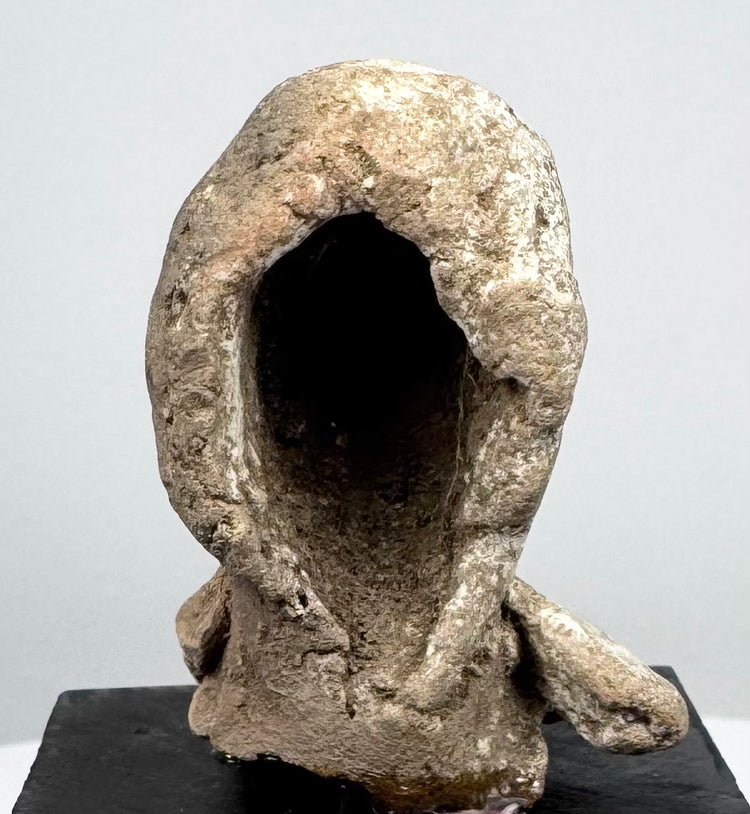

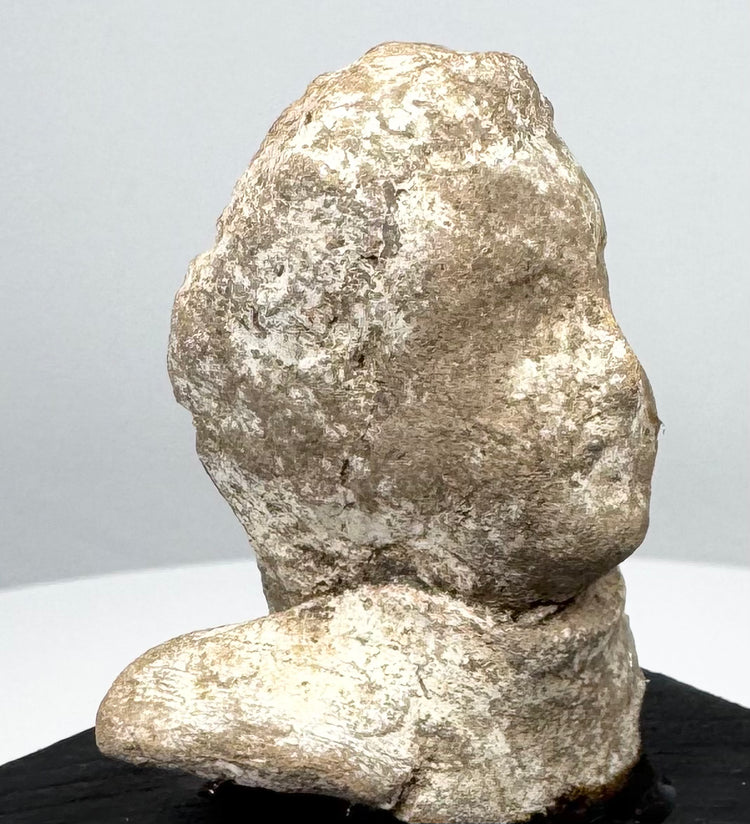

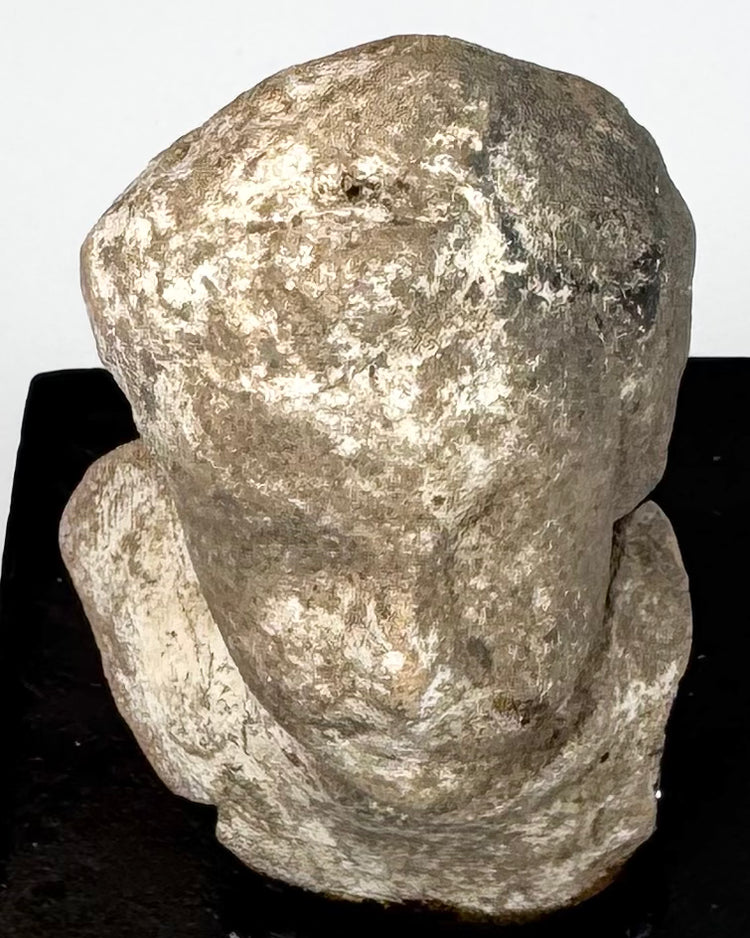
Ancient Greek Terracotta Votive Protome Bust | Late Archaic–Classical | Circa 550 – 400 BCE
Description
Plus
Moins
Historical Context & Origin
Region: Greek world, likely East Greek or mainland Greek tradition
Material: Mold-made terracotta with traces of pale surface coating or slip
Period: Late Archaic–Classical Period, circa 550–400 BCE
Description
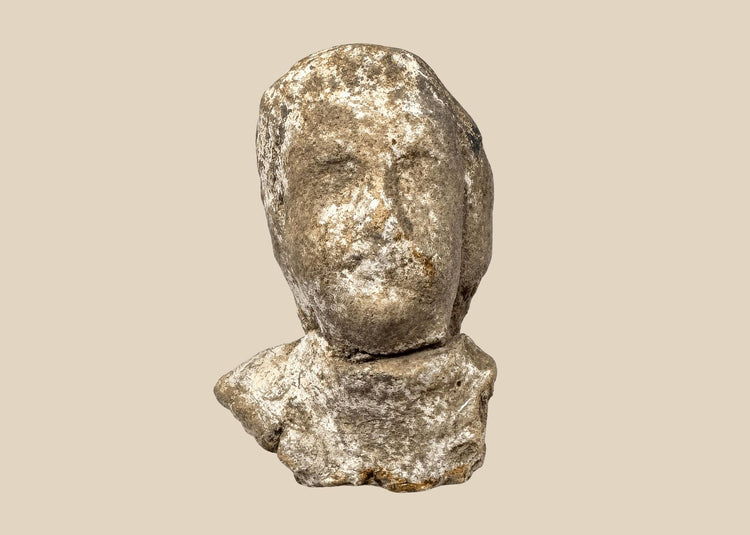
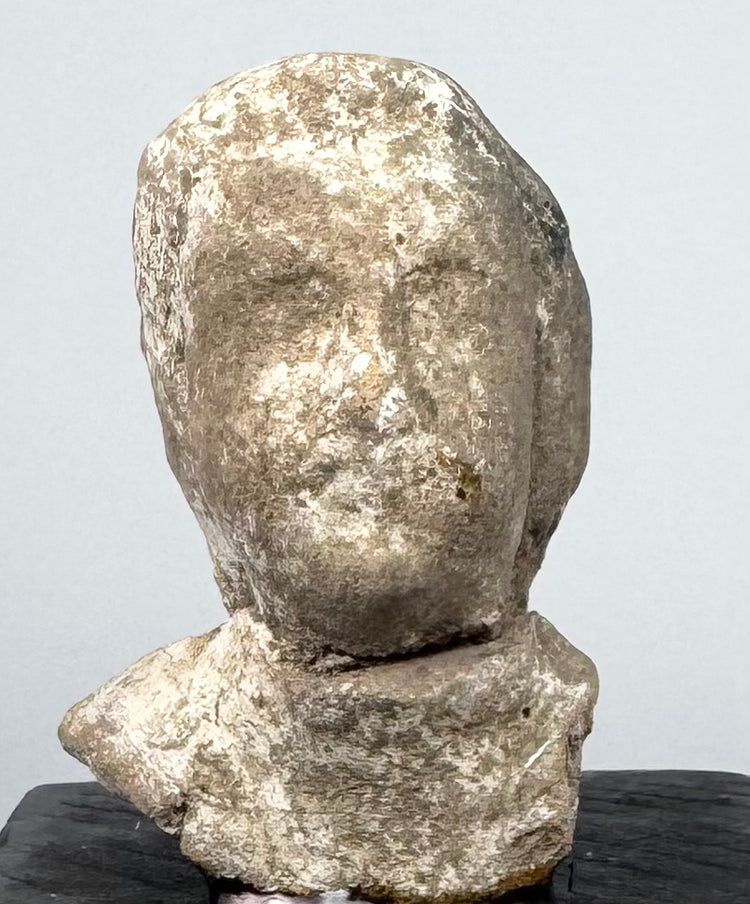
A compact ancient terracotta protome depicting a stylized human bust with an elongated oval face, narrow neck, and broadly projecting shoulders. The facial modelling has been substantially softened through age and surface wear, but the principal features remain visible, including recessed eyes, a projecting nose, closed mouth, rounded chin, and the general contour of the head.
The lower section expands into a simplified bust or upper torso, with projecting forms at either side that may represent shoulders, drapery, hair, or elements of a veil. Protomes of this broad tradition were especially associated with female imagery, although the extensive weathering of the present example makes a definitive identification of gender or represented deity inappropriate.
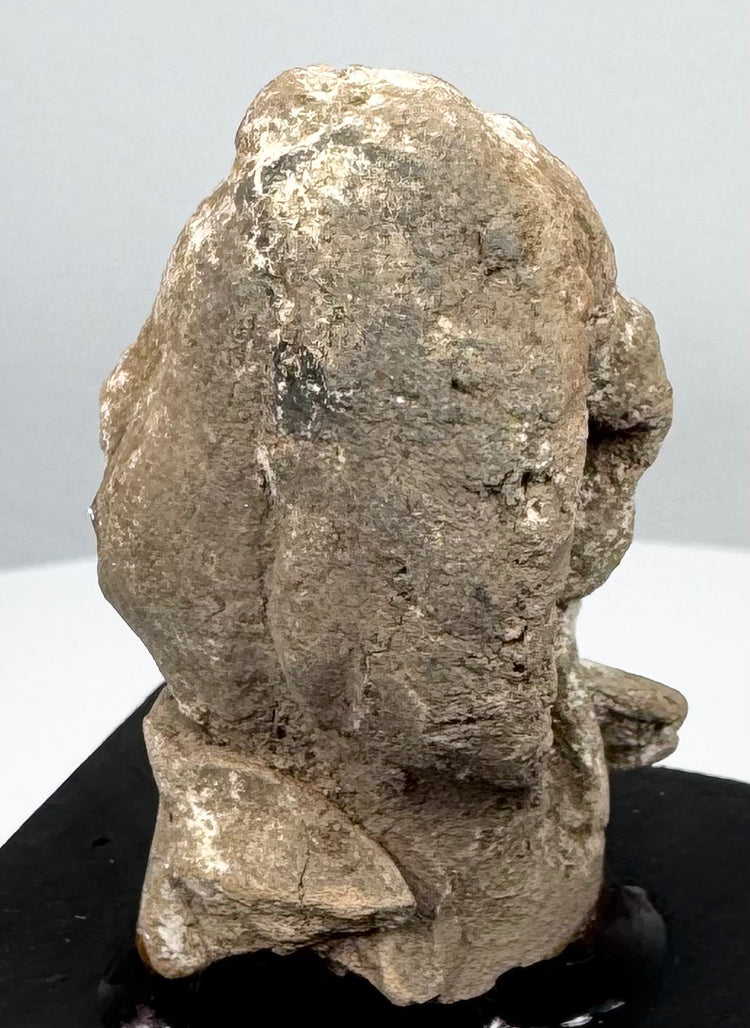
Most significant diagnostically is the large intentionally open and concave reverse. Rather than being the accidental loss of the back of a complete statuette, this construction corresponds closely with ancient mold-made protomes that were produced as hollow or backless objects. The Metropolitan Museum records a Greek, probably Boeotian example of almost identical height—3 7/8 in—as “moldmade, hollow” and specifically “backless.”
The pale grey-beige exterior also displays extensive whitish deposits or remnants of a coating. Greek terracotta protomes were frequently finished with a white slip or dressing over the fired clay before painted details were applied; comparable examples in the British Museum retain surviving white coating over reddish or grey-cored terracotta fabric.
Features
- Ancient mold-made terracotta construction
- Hollow, completely open reverse characteristic of protome manufacture
- Frontal human head and upper-bust composition
- Long oval facial form with surviving eyes, nose, mouth, and chin
- Broad shoulder or drapery projections
- Pale surface with areas suggestive of surviving ancient slip or mineral accretion
- Heavy surface weathering consistent with archaeological material
- Compact scale closely paralleling known Greek votive protomes
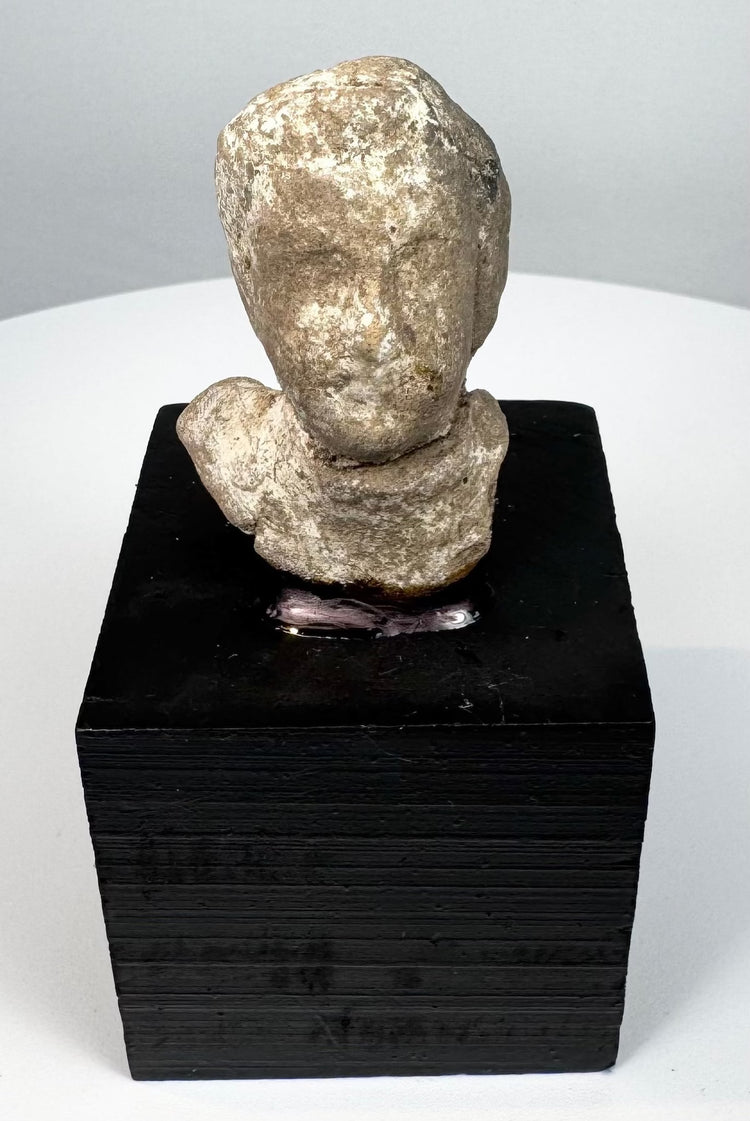
- Mounted on a modern black display base
Cultural Significance
The word protome is used for a partial figure, typically comprising the head and upper body. In Greek religious practice, terracotta protomes could be inexpensive but symbolically meaningful votive offerings. Numerous examples have been recovered from sanctuaries and tombs, particularly across East Greece and the Aegean. The British Museum notes that the form first became established in East Greece around the middle of the 6th century BCE before spreading more widely through Greece and southern Italy.
Their imagery often occupies a fascinating boundary between mortal devotee and deity. Some examples clearly represent goddesses through attributes such as the polos, veil, jewellery, or objects held in the hands, while others may have served as generalized representations of worshippers. The severe age-related wear on this example has removed most attributes that might once have allowed a more specific identification.
Condition
Ancient archaeological condition with extensive age-related surface wear, abrasion, encrustation, discoloration, small losses, and softening of the original molded detail. Facial features remain recognizable despite substantial erosion. The large hollow opening on the reverse is consistent with the original backless construction of a protome rather than necessarily representing later damage.
Areas of pale surface material may represent surviving slip, burial accretion, or a combination of both. Minor losses and irregularities are present around the margins and shoulder area. Currently affixed to a modern black display base.
Dimensions (Approximate)
Height: 4 in
Width: 2 in
Depth: 2 in
Age (Approximate)
2,425–2,575 years old
Provenance
Formerly held in a private collection in Boston, Massachusetts, USA.
Learn More
Discover a documented Greek mold-made, hollow and backless terracotta protome at The Metropolitan Museum of Art
Explore our Collection of Roman & Greek Artifacts & Ancient Relics
Description
Historical Context & Origin
Region: Greek world, likely East Greek or mainland Greek tradition
Material: Mold-made terracotta with traces of pale surface coating or slip
Period: Late Archaic–Classical Period, circa 550–400 BCE
Description
A compact ancient terracotta protome depicting a stylized human bust with an elongated oval face, narrow neck, and broadly projecting shoulders. The facial modelling has been substantially softened through age and surface wear, but the principal features remain visible, including recessed eyes, a projecting nose, closed mouth, rounded chin, and the general contour of the head.
The lower section expands into a simplified bust or upper torso, with projecting forms at either side that may represent shoulders, drapery, hair, or elements of a veil. Protomes of this broad tradition were especially associated with female imagery, although the extensive weathering of the present example makes a definitive identification of gender or represented deity inappropriate.
Most significant diagnostically is the large intentionally open and concave reverse. Rather than being the accidental loss of the back of a complete statuette, this construction corresponds closely with ancient mold-made protomes that were produced as hollow or backless objects. The Metropolitan Museum records a Greek, probably Boeotian example of almost identical height—3 7/8 in—as “moldmade, hollow” and specifically “backless.”
The pale grey-beige exterior also displays extensive whitish deposits or remnants of a coating. Greek terracotta protomes were frequently finished with a white slip or dressing over the fired clay before painted details were applied; comparable examples in the British Museum retain surviving white coating over reddish or grey-cored terracotta fabric.
Features
- Ancient mold-made terracotta construction
- Hollow, completely open reverse characteristic of protome manufacture
- Frontal human head and upper-bust composition
- Long oval facial form with surviving eyes, nose, mouth, and chin
- Broad shoulder or drapery projections
- Pale surface with areas suggestive of surviving ancient slip or mineral accretion
- Heavy surface weathering consistent with archaeological material
- Compact scale closely paralleling known Greek votive protomes
- Mounted on a modern black display base
Cultural Significance
The word protome is used for a partial figure, typically comprising the head and upper body. In Greek religious practice, terracotta protomes could be inexpensive but symbolically meaningful votive offerings. Numerous examples have been recovered from sanctuaries and tombs, particularly across East Greece and the Aegean. The British Museum notes that the form first became established in East Greece around the middle of the 6th century BCE before spreading more widely through Greece and southern Italy.
Their imagery often occupies a fascinating boundary between mortal devotee and deity. Some examples clearly represent goddesses through attributes such as the polos, veil, jewellery, or objects held in the hands, while others may have served as generalized representations of worshippers. The severe age-related wear on this example has removed most attributes that might once have allowed a more specific identification.
Condition
Ancient archaeological condition with extensive age-related surface wear, abrasion, encrustation, discoloration, small losses, and softening of the original molded detail. Facial features remain recognizable despite substantial erosion. The large hollow opening on the reverse is consistent with the original backless construction of a protome rather than necessarily representing later damage.
Areas of pale surface material may represent surviving slip, burial accretion, or a combination of both. Minor losses and irregularities are present around the margins and shoulder area. Currently affixed to a modern black display base.
Dimensions (Approximate)
Height: 4 in
Width: 2 in
Depth: 2 in
Age (Approximate)
2,425–2,575 years old
Provenance
Formerly held in a private collection in Boston, Massachusetts, USA.
Learn More
Discover a documented Greek mold-made, hollow and backless terracotta protome at The Metropolitan Museum of Art
Explore our Collection of Roman & Greek Artifacts & Ancient Relics
Vous aimerez peut-être aussi
