



Fragment de tête mésopotamienne en terre cuite | Période d'Isin-Larsa à l'Ancien Babylonien | Vers 2000 – 1500 av. J.-C.
- Prix habituel
- $1,000.00
- Prix soldé
- $1,000.00
- Prix habituel
Impossible de charger la disponibilité du service de retrait


Fragment de tête mésopotamienne en terre cuite | Période d'Isin-Larsa à l'Ancien Babylonien | Vers 2000 – 1500 av. J.-C.
Description
Plus
Moins
Contexte historique et origine
Région : Ancienne Mésopotamie / Proche-Orient
Matériau : Poterie / terre cuite
Période : Période Isin-Larsa à l'Ancien Babylonien, environ 2000–1500 av. J.-C.
Description
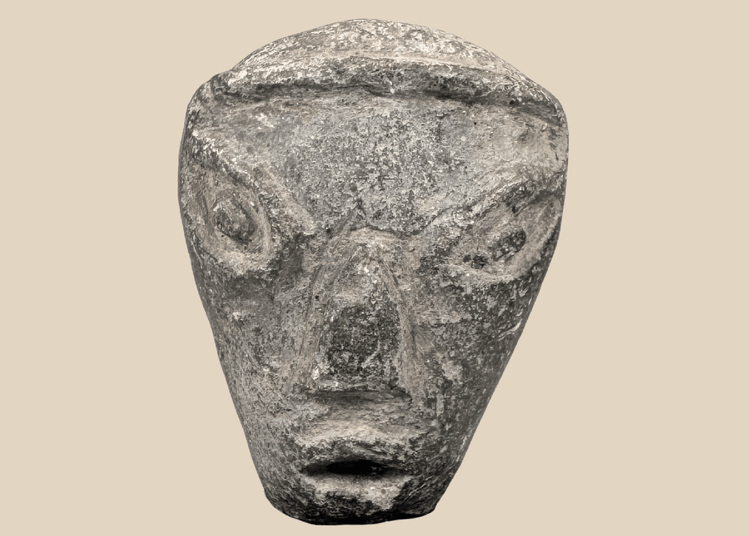
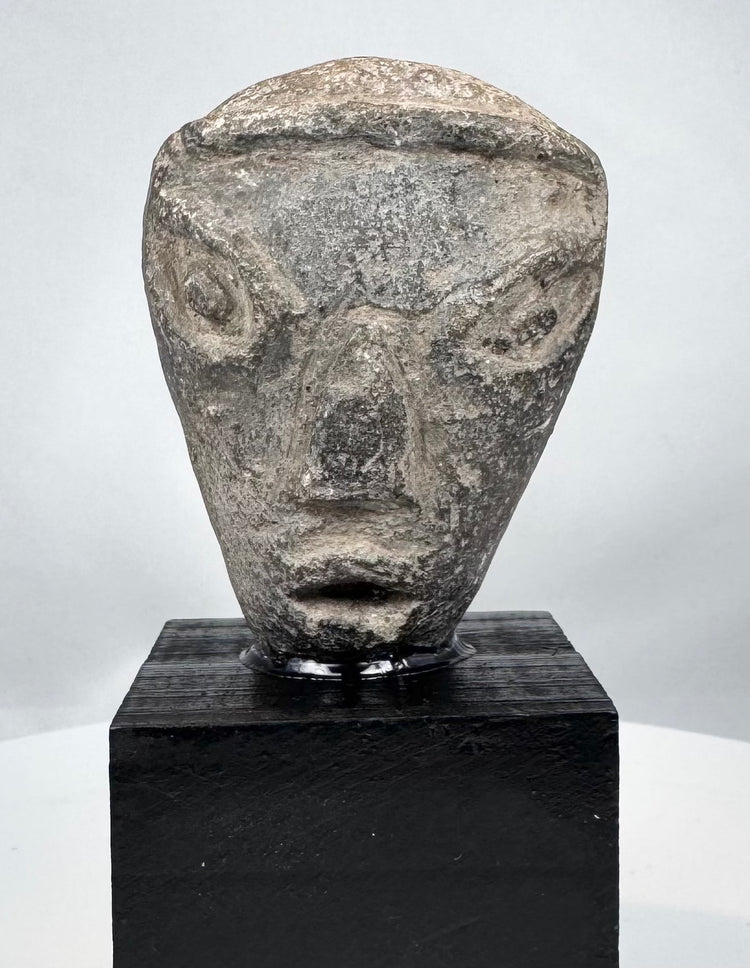
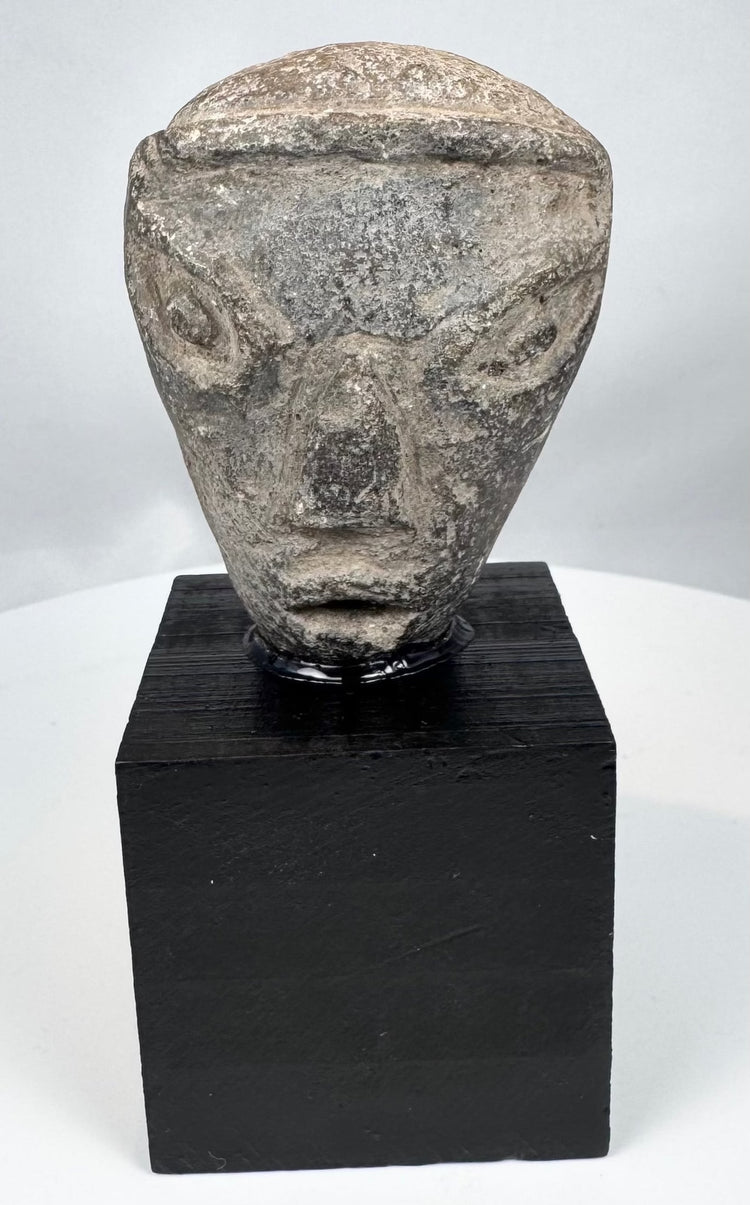
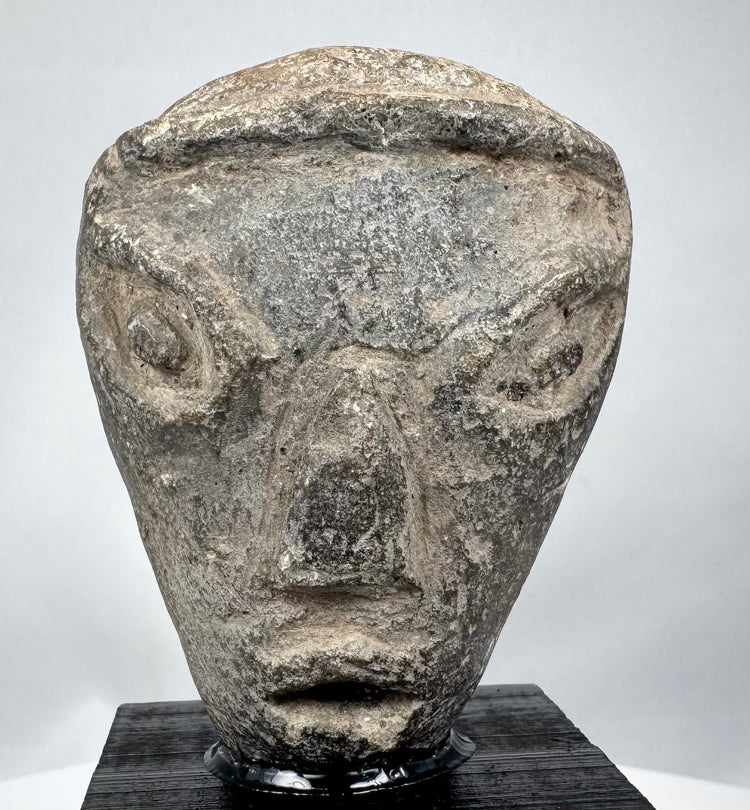
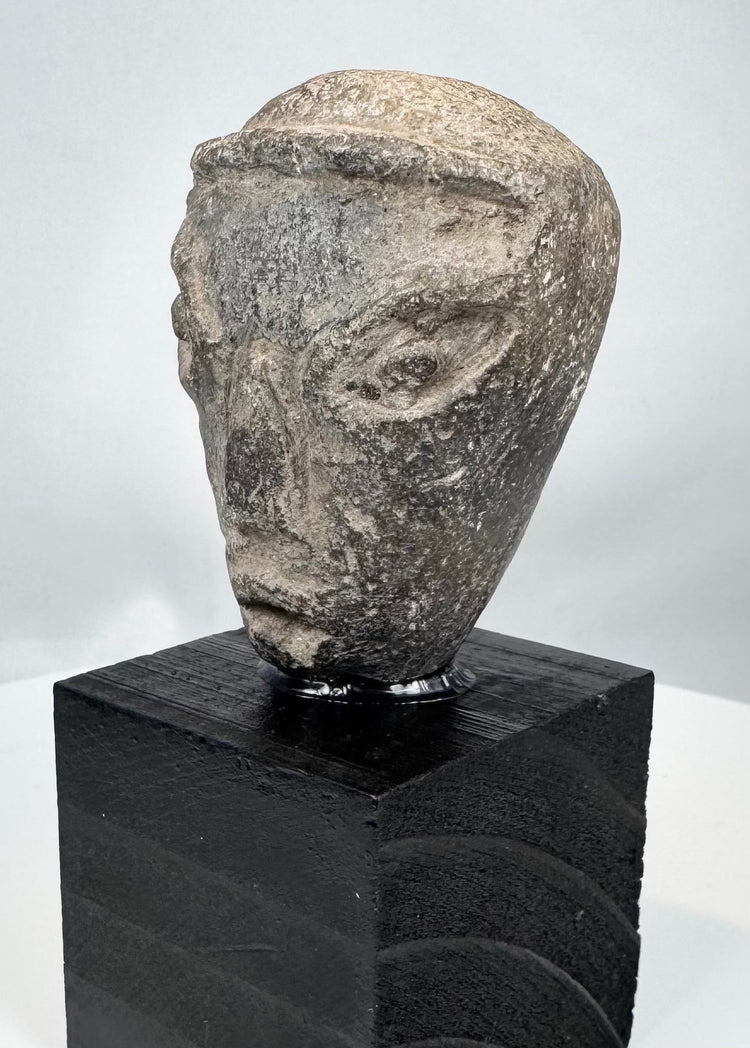
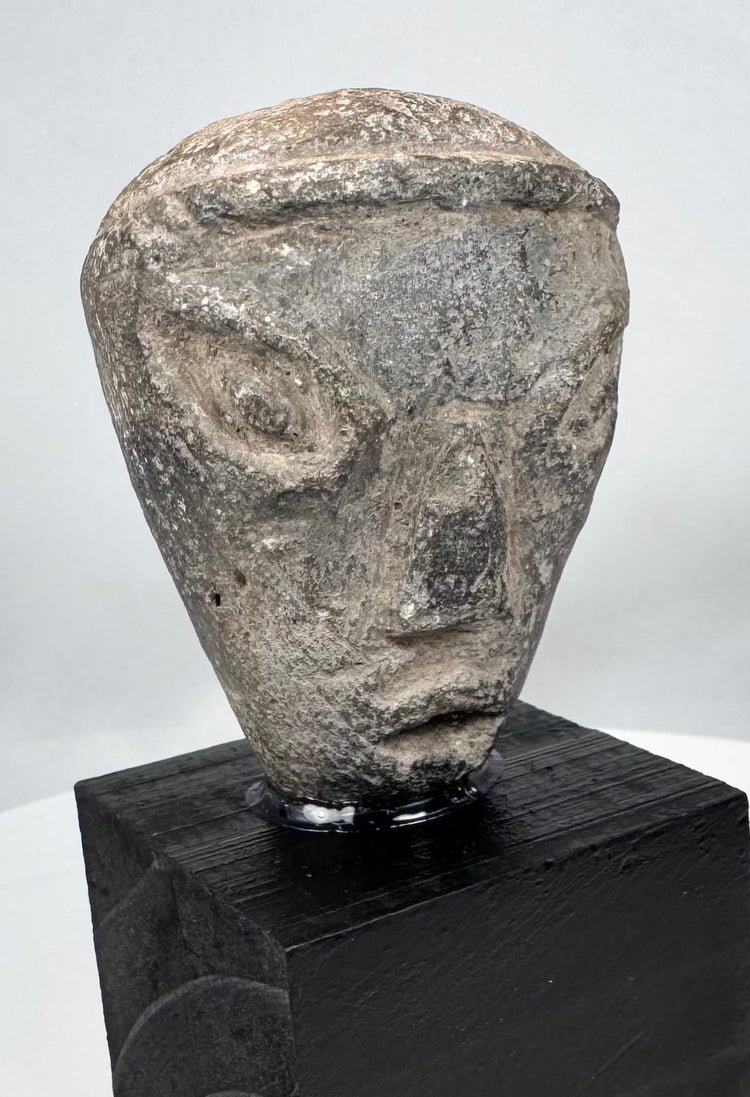
Une tête de poterie mésopotamienne ancienne inhabituelle représentant une figure jeune stylisée, modelée avec un visage allongé, des yeux proéminents en forme d'amande, un long nez angulaire, une petite bouche en creux et un front large.
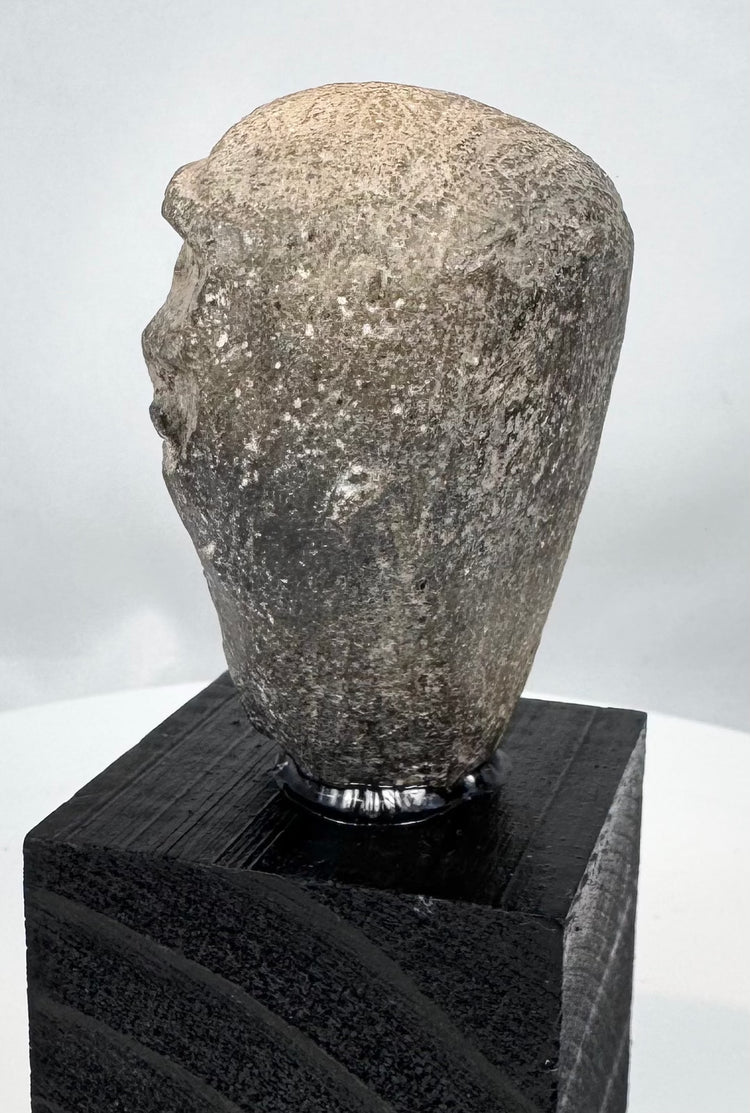
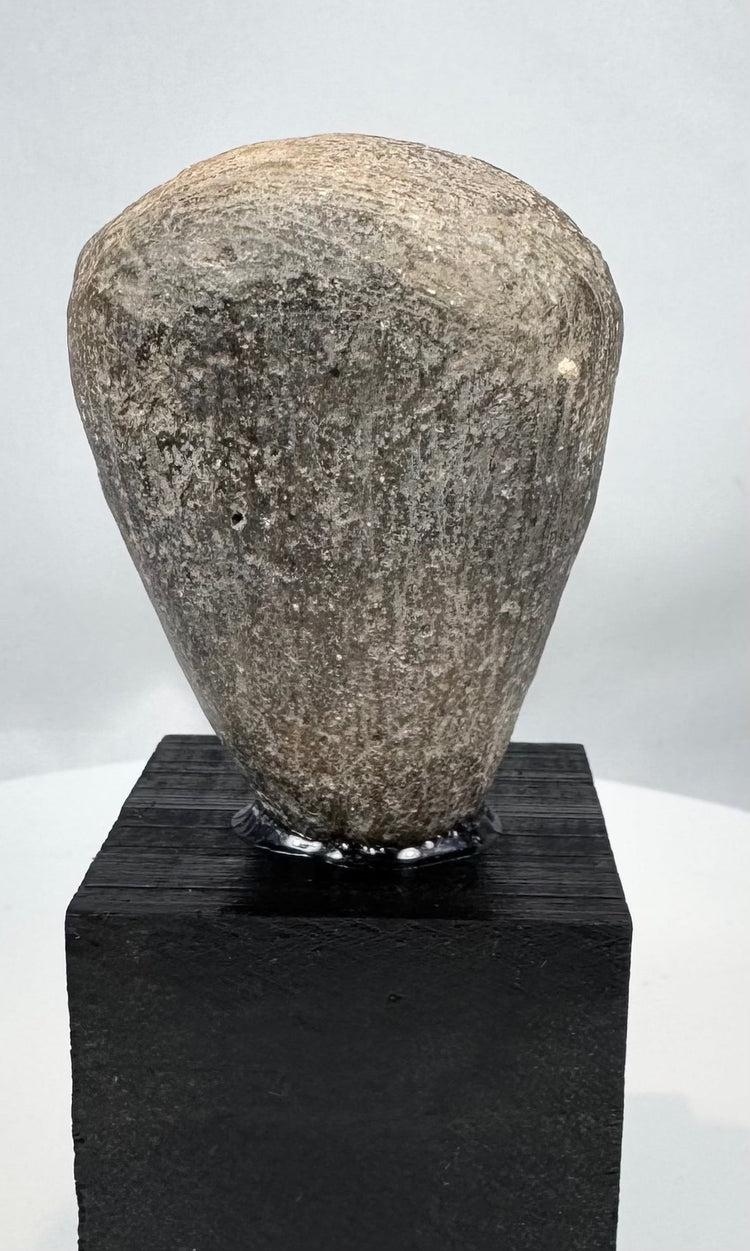
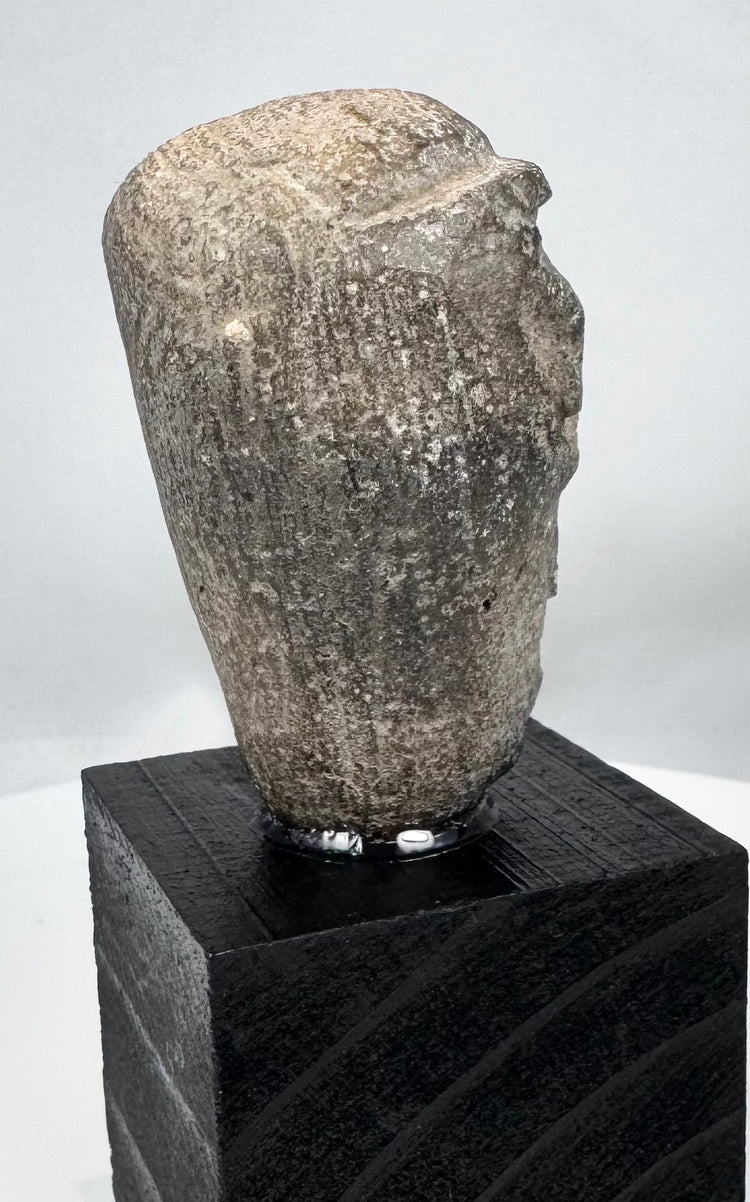
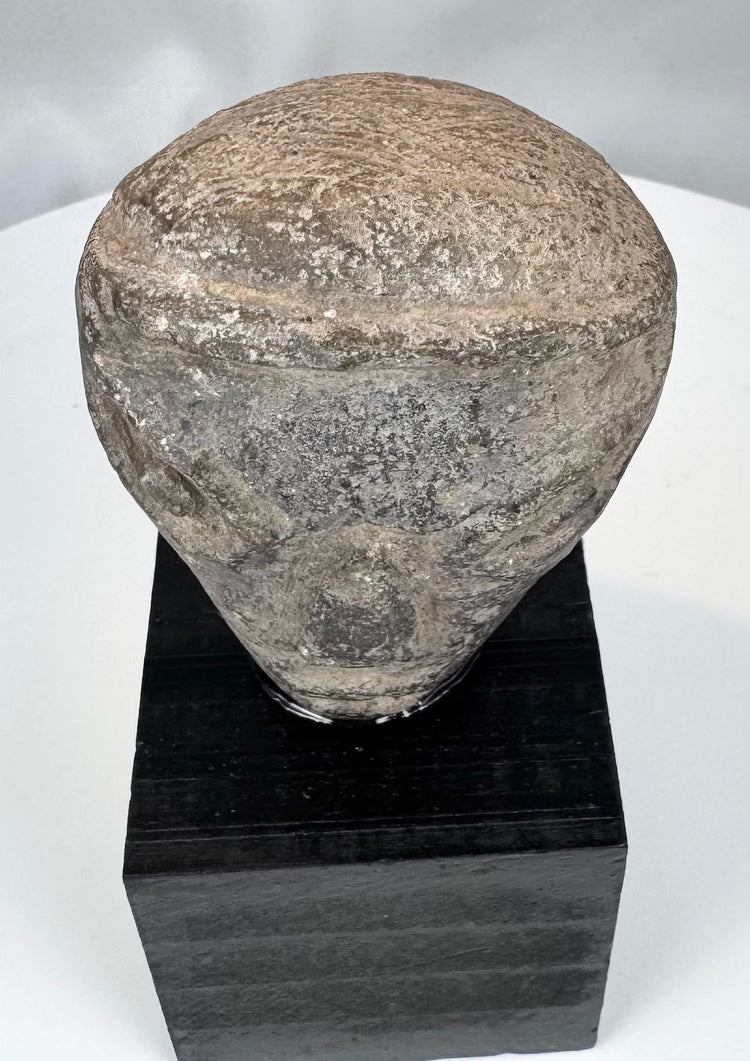
Le traitement facial frappant est très géométrique. Des sourcils lourds descendent vers l'arête du nez, encadrant les yeux profondément dessinés et créant une expression intense, presque masquée. Une bande horizontale en relief s'étend sur le haut du front sous la couronne arrondie de la tête, tandis que l'envers a été laissé comparativement uni.
La sculpture subsiste indépendamment de toute figure plus grande, élément architectural ou objet auquel elle aurait pu appartenir à l'origine. Ses proportions compactes et ses traits fortement abstraits en font un exemple intrigant de représentation figurée du Proche-Orient ancien.
La pièce est montée sur un socle de présentation noir sur mesure, permettant au fragment ancien d'être présenté comme un objet sculptural autonome.
Caractéristiques
- Tête en poterie ancienne représentant une figure juvénile
- Yeux distinctifs en forme d'amande
- Sourcils angulaires fortement définis
- Long nez proéminent et bouche en creux
- Bande en relief sur le haut du front
- Traitement facial stylisé et géométrique caractéristique
- Altération de surface et dépôts minéraux anciens étendus
Signification culturelle et historique
La Mésopotamie a englobé une succession de civilisations qui ont prospéré entre et autour des fleuves Tigre et Euphrate, notamment les Sumériens, les Akkadiens, les Babyloniens et les Assyriens. Des représentations figurées en argile ont été produites dans toute la région à des fins religieuses, votives, funéraires, domestiques et décoratives.
Les têtes et visages humains pouvaient être rendus avec une variation stylistique considérable selon la période, la région et la fonction. Des caractéristiques telles que des yeux agrandis ou accentués sont particulièrement familières dans le vocabulaire visuel plus large du Proche-Orient ancien, bien que l'absence d'un contexte de fouille documenté rende une attribution culturelle plus précise pour l'exemple actuel difficile.
L'objet est donc présenté de manière conservatrice comme Mésopotamien / Proche-Orient ancien, plutôt que de l'attribuer à une civilisation particulière sans documentation archéologique à l'appui.
État
État fragmentaire ancien avec une usure de surface étendue, des intempéries, des incrustations, des abrasions, des piqûres et des pertes conformes à un âge considérable. Les traits du visage restent facilement discernables malgré la surface altérée. Le revers n'est pas décoré et présente une altération de surface similaire liée à l'âge.
Monté sur un socle de présentation moderne sur mesure. Veuillez vous référer aux photographies pour l'état complet.
Dimensions (approximatives)
12,06 x 5,08 x 5,08 cm
Âge (approximatif)
Environ 2000–1500 av. J.-C. — environ 3 500–4 000 ans
Provenance
Provenant d'une collection privée de la ville de New York spécialisée dans les antiquités mésopotamiennes.
Ultérieurement traitée par la galerie Palmyra Heritage Gallery, New York, États-Unis, 2026. La galerie Palmyra Heritage est un négociant new-yorkais spécialisé dans les monnaies et antiquités anciennes. Selon la galerie, elle opère à New York depuis 1995 et traite du matériel provenant des cultures égyptienne, grecque, romaine, byzantine, précolombienne, islamique et autres cultures anciennes.
En savoir plus
Description
Contexte historique et origine
Région : Ancienne Mésopotamie / Proche-Orient
Matériau : Poterie / terre cuite
Période : Période Isin-Larsa à l'Ancien Babylonien, environ 2000–1500 av. J.-C.
Description
Une tête de poterie mésopotamienne ancienne inhabituelle représentant une figure jeune stylisée, modelée avec un visage allongé, des yeux proéminents en forme d'amande, un long nez angulaire, une petite bouche en creux et un front large.
Le traitement facial frappant est très géométrique. Des sourcils lourds descendent vers l'arête du nez, encadrant les yeux profondément dessinés et créant une expression intense, presque masquée. Une bande horizontale en relief s'étend sur le haut du front sous la couronne arrondie de la tête, tandis que l'envers a été laissé comparativement uni.
La sculpture subsiste indépendamment de toute figure plus grande, élément architectural ou objet auquel elle aurait pu appartenir à l'origine. Ses proportions compactes et ses traits fortement abstraits en font un exemple intrigant de représentation figurée du Proche-Orient ancien.
La pièce est montée sur un socle de présentation noir sur mesure, permettant au fragment ancien d'être présenté comme un objet sculptural autonome.
Caractéristiques
- Tête en poterie ancienne représentant une figure juvénile
- Yeux distinctifs en forme d'amande
- Sourcils angulaires fortement définis
- Long nez proéminent et bouche en creux
- Bande en relief sur le haut du front
- Traitement facial stylisé et géométrique caractéristique
- Altération de surface et dépôts minéraux anciens étendus
Signification culturelle et historique
La Mésopotamie a englobé une succession de civilisations qui ont prospéré entre et autour des fleuves Tigre et Euphrate, notamment les Sumériens, les Akkadiens, les Babyloniens et les Assyriens. Des représentations figurées en argile ont été produites dans toute la région à des fins religieuses, votives, funéraires, domestiques et décoratives.
Les têtes et visages humains pouvaient être rendus avec une variation stylistique considérable selon la période, la région et la fonction. Des caractéristiques telles que des yeux agrandis ou accentués sont particulièrement familières dans le vocabulaire visuel plus large du Proche-Orient ancien, bien que l'absence d'un contexte de fouille documenté rende une attribution culturelle plus précise pour l'exemple actuel difficile.
L'objet est donc présenté de manière conservatrice comme Mésopotamien / Proche-Orient ancien, plutôt que de l'attribuer à une civilisation particulière sans documentation archéologique à l'appui.
État
État fragmentaire ancien avec une usure de surface étendue, des intempéries, des incrustations, des abrasions, des piqûres et des pertes conformes à un âge considérable. Les traits du visage restent facilement discernables malgré la surface altérée. Le revers n'est pas décoré et présente une altération de surface similaire liée à l'âge.
Monté sur un socle de présentation moderne sur mesure. Veuillez vous référer aux photographies pour l'état complet.
Dimensions (approximatives)
12,06 x 5,08 x 5,08 cm
Âge (approximatif)
Environ 2000–1500 av. J.-C. — environ 3 500–4 000 ans
Provenance
Provenant d'une collection privée de la ville de New York spécialisée dans les antiquités mésopotamiennes.
Ultérieurement traitée par la galerie Palmyra Heritage Gallery, New York, États-Unis, 2026. La galerie Palmyra Heritage est un négociant new-yorkais spécialisé dans les monnaies et antiquités anciennes. Selon la galerie, elle opère à New York depuis 1995 et traite du matériel provenant des cultures égyptienne, grecque, romaine, byzantine, précolombienne, islamique et autres cultures anciennes.
En savoir plus
Vous aimerez peut-être aussi
