



Ancient Roman Bronze Coin Collection (12) | Roman Imperial Period | Circa 2nd–4th Century CE | Uncleaned
- Prix habituel
- $200.00
- Prix soldé
- $200.00
- Prix habituel
Impossible de charger la disponibilité du service de retrait




Ancient Roman Bronze Coin Collection (12) | Roman Imperial Period | Circa 2nd–4th Century CE | Uncleaned
Description
Plus
Moins
Historical Context & Origin
Region: Roman Empire, various imperial territories and mints
Material: Copper alloy (bronze), with naturally developed patination and surface deposits
Period: Roman Imperial Period, attributed circa 2nd–4th Century CE
Description
An intriguing collection of twelve assorted ancient Roman bronze coins, representing the extensive monetary traditions of the Roman Empire. Dating broadly to the Roman Imperial Period, these coins offer a tangible connection to the political, economic, and cultural history of one of antiquity's most influential civilizations.
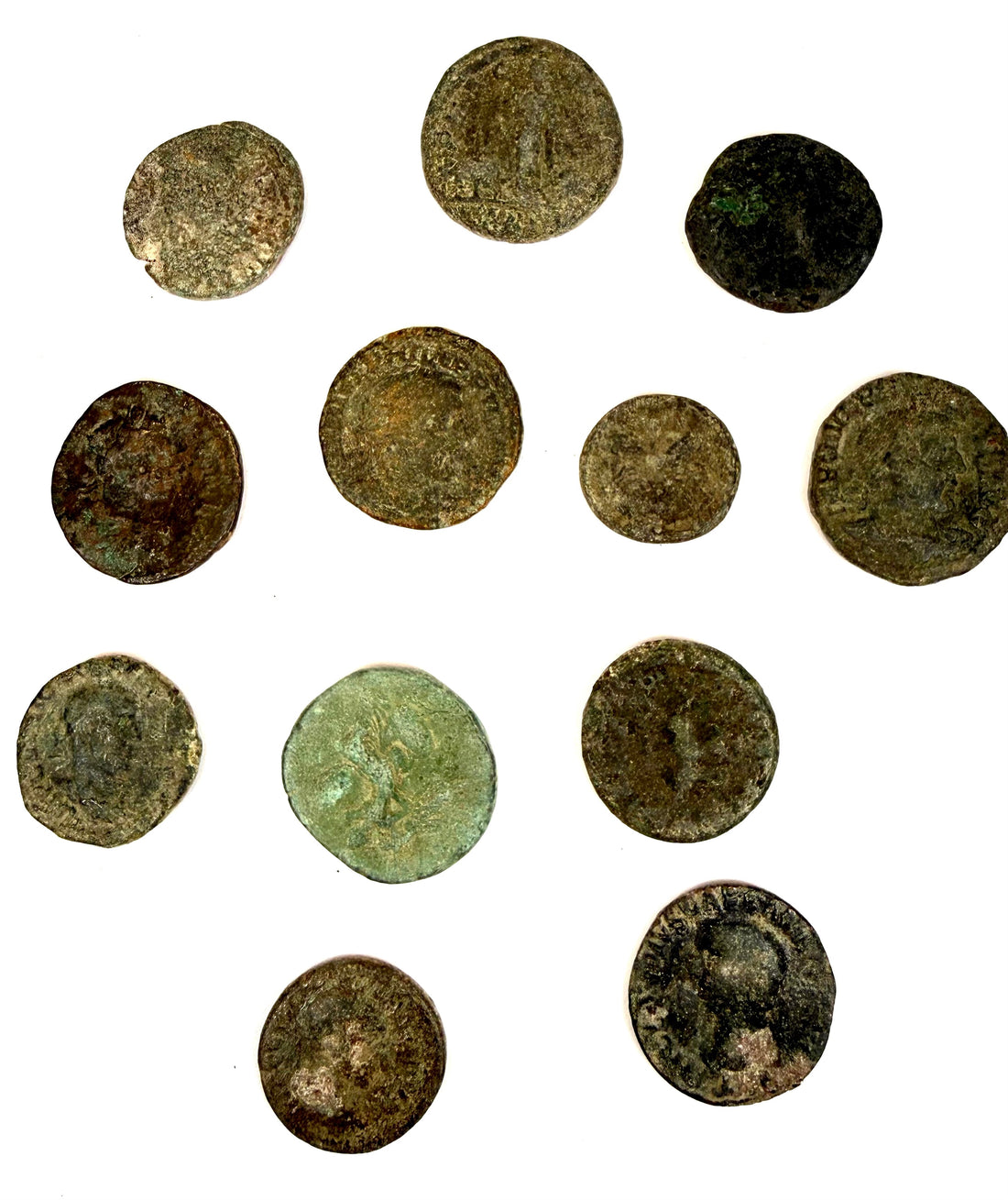
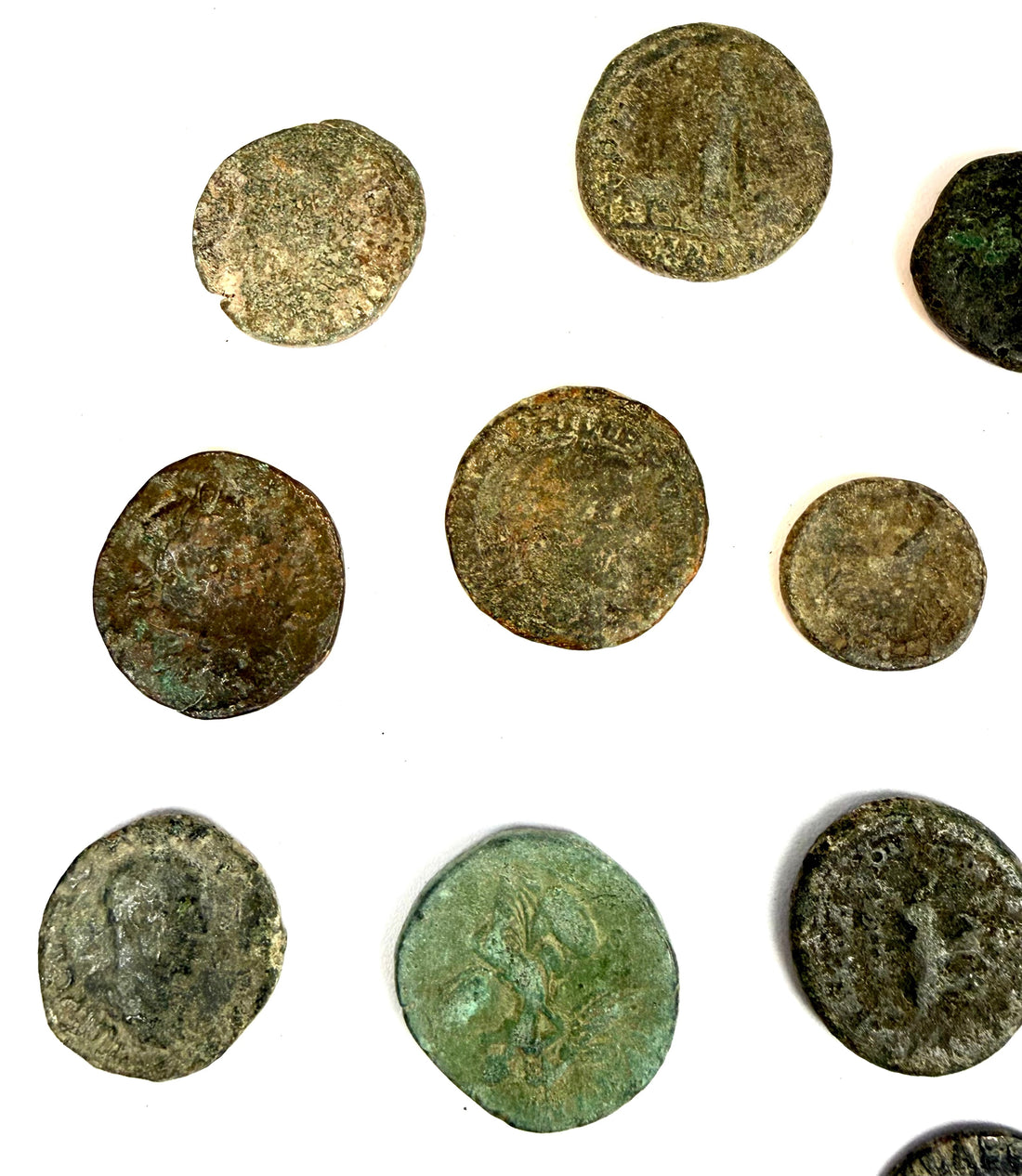
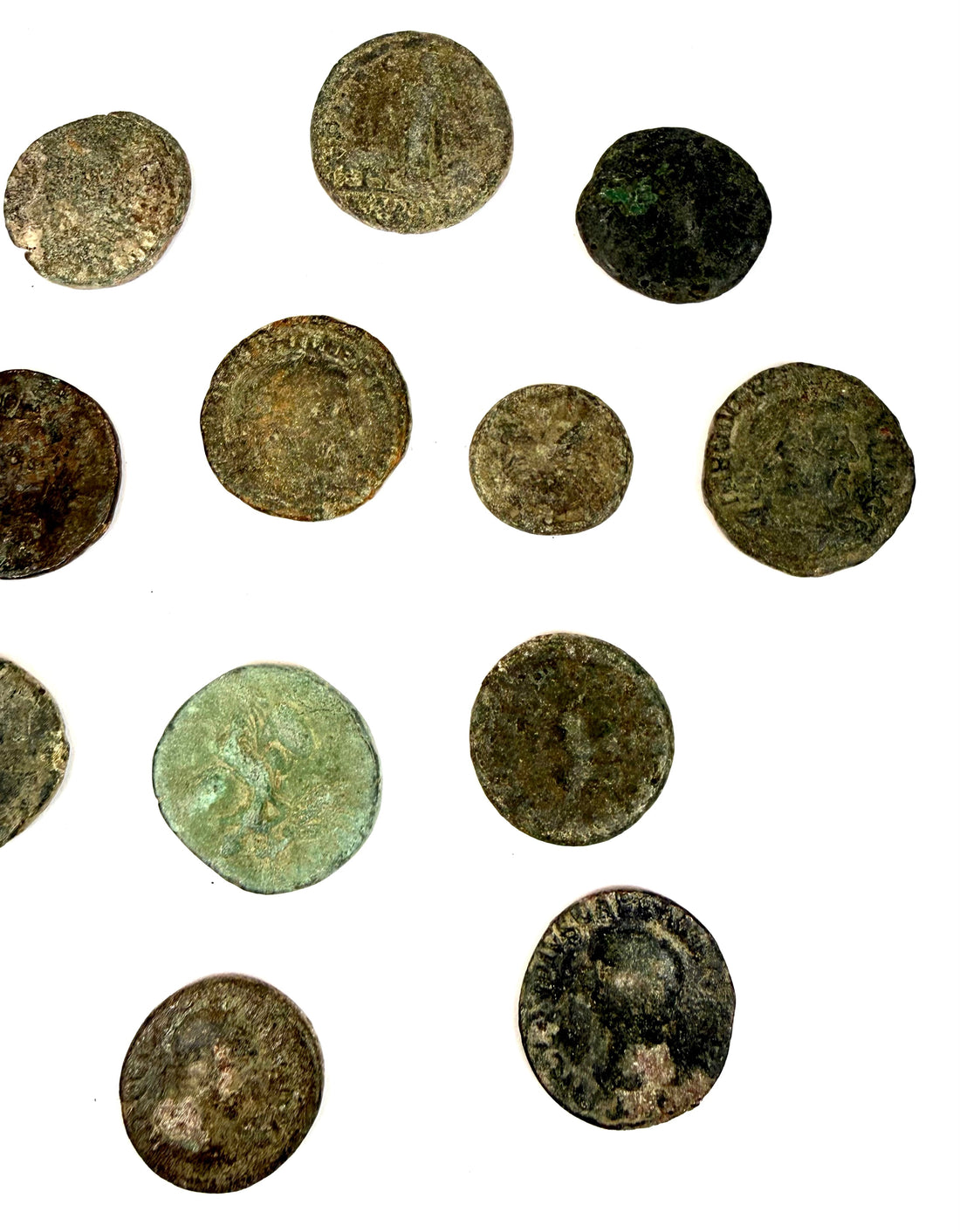
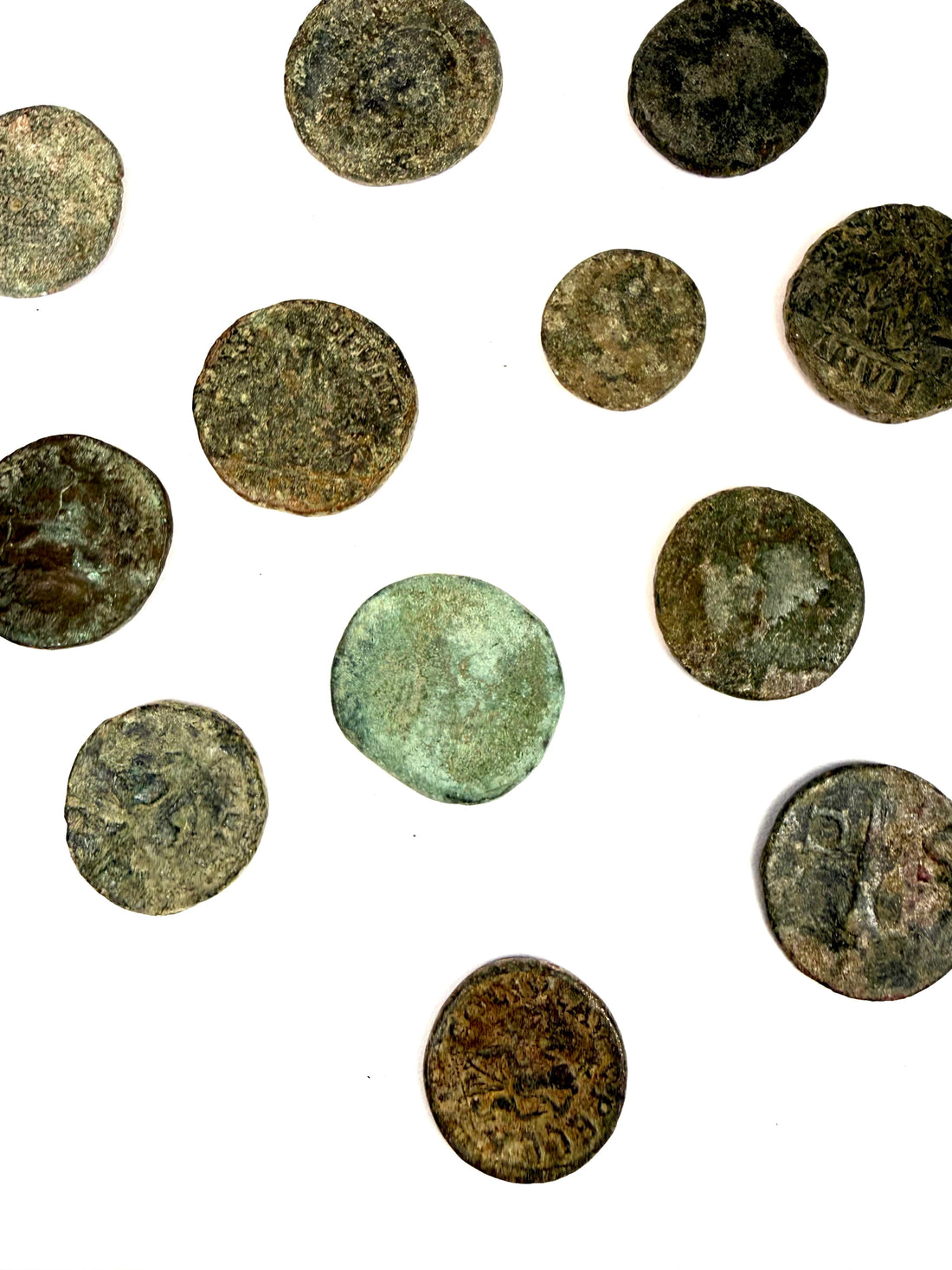
The collection consists of twelve individual copper-alloy coins displaying varying sizes, thicknesses, surface characteristics, and states of preservation. Several retain partially distinguishable portraits of Roman imperial figures, accompanied by remnants of Latin inscriptions and circular legends. Others exhibit traces of reverse imagery, including standing figures, personifications, and symbols associated with Roman imperial coinage.
Particularly appealing is the assortment of naturally developed patinas, ranging from deep olive-green and verdigris to earthy brown, dark bronze, and nearly black. The irregular surfaces, mineral deposits, and varying degrees of oxidation give each coin a distinctive appearance reflecting its individual history.
The coins remain in an uncleaned, ungraded condition, with substantial surface deposits obscuring portions of their original designs. While several pieces exhibit identifiable Roman-style portraiture and inscriptions, others remain largely concealed beneath patination and corrosion. Their precise emperors, denominations, minting locations, and individual dates have not been conclusively established.
Offered together as a complete twelve-piece collection, this assortment is particularly suitable for collectors of ancient numismatics, Roman history enthusiasts, and those interested in studying original coin surfaces and ancient monetary systems.
Features
- Collection of twelve assorted ancient Roman bronze coins
- Attributed to the Roman Imperial Period, circa 2nd–4th Century CE
- Copper-alloy construction with varying sizes, thicknesses, and irregular circular forms
- Several examples preserving traces of Roman imperial portraiture
- Partial Latin inscriptions and surrounding legends visible on selected pieces
- Remnants of reverse imagery and symbolic designs
- Naturally developed green, brown, olive, and dark bronze patination
- Significant surface deposits, oxidation, and mineral encrustation
- Preserved in uncleaned and ungraded condition
- Individual imperial rulers, denominations, and minting locations remain unattributed
- Offered together as a complete twelve-piece collection
Cultural Significance
Coinage played an essential role in the administration, economy, and political identity of the Roman Empire. Roman bronze coins circulated throughout imperial territories, facilitating everyday commercial transactions and providing a standardized means of exchange across communities connected by Roman trade, infrastructure, and governance.
Beyond their monetary function, Roman coins served as important instruments of imperial communication. The obverse commonly featured the portrait of the reigning emperor or another member of the imperial household, accompanied by inscriptions proclaiming official names and titles. These portraits helped communicate imperial authority across an empire encompassing diverse languages, cultures, and populations.
Reverse designs frequently depicted deities, personifications, military victories, architectural achievements, and representations of prosperity or political stability. Such imagery reinforced the ideological messages promoted by successive emperors and provided a powerful visual language recognizable throughout Roman society.
During the later Roman Imperial Period, changes in economic policy, military expenditure, and imperial administration contributed to significant developments in copper-alloy coinage. Coins continued to be produced in large numbers, with evolving denominations, designs, and minting practices reflecting the changing priorities of the Roman state.
Condition
Ancient condition, with extensive age-associated wear, patination, oxidation, and surface deposits throughout the collection.
All twelve coins are presented in an uncleaned condition, exhibiting varying degrees of mineral encrustation, corrosion, discoloration, and surface irregularities. Several retain recognizable portraits, partial inscriptions, and traces of original imagery, while others have significantly obscured or heavily worn surfaces.
Colouration varies between green, olive, brown, and dark bronze, with localized verdigris and mineral deposits. Some coins exhibit irregular edges, minor losses, pitting, and areas of surface deterioration.
The coins have not been individually graded or conclusively attributed to specific emperors or mints. Their present condition is reflected in the accompanying photographs.
Dimensions (Approximate)
Assorted sizes and thicknesses
Twelve individual coins of varying diameters
Age (Approximate)
1,600–1,900 years old
Provenance
Formerly held in a private numismatic collection in Brooklyn, New York, USA.
Learn More
Discover an ancient Roman bronze coin from the Imperial Period at The Metropolitan Museum of Art
Explore Our Collection of Roman & Greek Artifacts
Description
Historical Context & Origin
Region: Roman Empire, various imperial territories and mints
Material: Copper alloy (bronze), with naturally developed patination and surface deposits
Period: Roman Imperial Period, attributed circa 2nd–4th Century CE
Description
An intriguing collection of twelve assorted ancient Roman bronze coins, representing the extensive monetary traditions of the Roman Empire. Dating broadly to the Roman Imperial Period, these coins offer a tangible connection to the political, economic, and cultural history of one of antiquity's most influential civilizations.
The collection consists of twelve individual copper-alloy coins displaying varying sizes, thicknesses, surface characteristics, and states of preservation. Several retain partially distinguishable portraits of Roman imperial figures, accompanied by remnants of Latin inscriptions and circular legends. Others exhibit traces of reverse imagery, including standing figures, personifications, and symbols associated with Roman imperial coinage.
Particularly appealing is the assortment of naturally developed patinas, ranging from deep olive-green and verdigris to earthy brown, dark bronze, and nearly black. The irregular surfaces, mineral deposits, and varying degrees of oxidation give each coin a distinctive appearance reflecting its individual history.
The coins remain in an uncleaned, ungraded condition, with substantial surface deposits obscuring portions of their original designs. While several pieces exhibit identifiable Roman-style portraiture and inscriptions, others remain largely concealed beneath patination and corrosion. Their precise emperors, denominations, minting locations, and individual dates have not been conclusively established.
Offered together as a complete twelve-piece collection, this assortment is particularly suitable for collectors of ancient numismatics, Roman history enthusiasts, and those interested in studying original coin surfaces and ancient monetary systems.
Features
- Collection of twelve assorted ancient Roman bronze coins
- Attributed to the Roman Imperial Period, circa 2nd–4th Century CE
- Copper-alloy construction with varying sizes, thicknesses, and irregular circular forms
- Several examples preserving traces of Roman imperial portraiture
- Partial Latin inscriptions and surrounding legends visible on selected pieces
- Remnants of reverse imagery and symbolic designs
- Naturally developed green, brown, olive, and dark bronze patination
- Significant surface deposits, oxidation, and mineral encrustation
- Preserved in uncleaned and ungraded condition
- Individual imperial rulers, denominations, and minting locations remain unattributed
- Offered together as a complete twelve-piece collection
Cultural Significance
Coinage played an essential role in the administration, economy, and political identity of the Roman Empire. Roman bronze coins circulated throughout imperial territories, facilitating everyday commercial transactions and providing a standardized means of exchange across communities connected by Roman trade, infrastructure, and governance.
Beyond their monetary function, Roman coins served as important instruments of imperial communication. The obverse commonly featured the portrait of the reigning emperor or another member of the imperial household, accompanied by inscriptions proclaiming official names and titles. These portraits helped communicate imperial authority across an empire encompassing diverse languages, cultures, and populations.
Reverse designs frequently depicted deities, personifications, military victories, architectural achievements, and representations of prosperity or political stability. Such imagery reinforced the ideological messages promoted by successive emperors and provided a powerful visual language recognizable throughout Roman society.
During the later Roman Imperial Period, changes in economic policy, military expenditure, and imperial administration contributed to significant developments in copper-alloy coinage. Coins continued to be produced in large numbers, with evolving denominations, designs, and minting practices reflecting the changing priorities of the Roman state.
Condition
Ancient condition, with extensive age-associated wear, patination, oxidation, and surface deposits throughout the collection.
All twelve coins are presented in an uncleaned condition, exhibiting varying degrees of mineral encrustation, corrosion, discoloration, and surface irregularities. Several retain recognizable portraits, partial inscriptions, and traces of original imagery, while others have significantly obscured or heavily worn surfaces.
Colouration varies between green, olive, brown, and dark bronze, with localized verdigris and mineral deposits. Some coins exhibit irregular edges, minor losses, pitting, and areas of surface deterioration.
The coins have not been individually graded or conclusively attributed to specific emperors or mints. Their present condition is reflected in the accompanying photographs.
Dimensions (Approximate)
Assorted sizes and thicknesses
Twelve individual coins of varying diameters
Age (Approximate)
1,600–1,900 years old
Provenance
Formerly held in a private numismatic collection in Brooklyn, New York, USA.
Learn More
Discover an ancient Roman bronze coin from the Imperial Period at The Metropolitan Museum of Art
Explore Our Collection of Roman & Greek Artifacts
Vous aimerez peut-être aussi
