



Ancient Roman Bronze Finger Ring with Broad Oval Bezel | Eastern Mediterranean | Circa 2nd–3rd Century CE
- Prix habituel
- $250.00
- Prix soldé
- $250.00
- Prix habituel
Impossible de charger la disponibilité du service de retrait



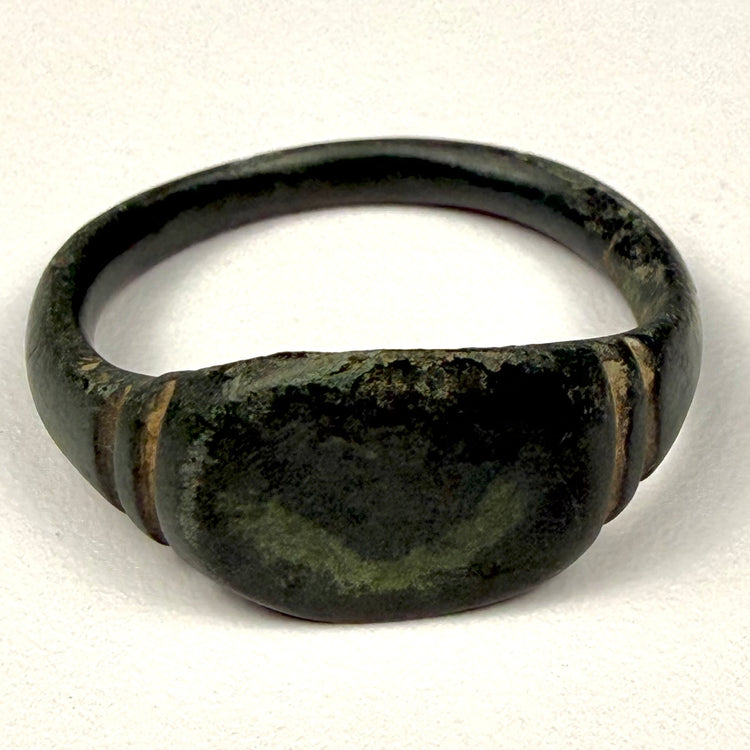
Ancient Roman Bronze Finger Ring with Broad Oval Bezel | Eastern Mediterranean | Circa 2nd–3rd Century CE
Description
Plus
Moins
Historical Context & Origin
Region: Eastern Mediterranean
Material: Bronze (copper alloy)
Period: Roman Imperial Period, circa 2nd–3rd century CE
Description
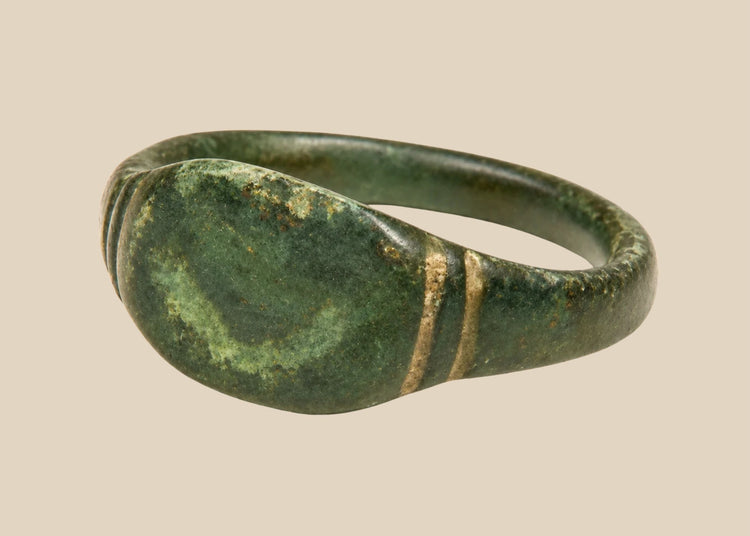
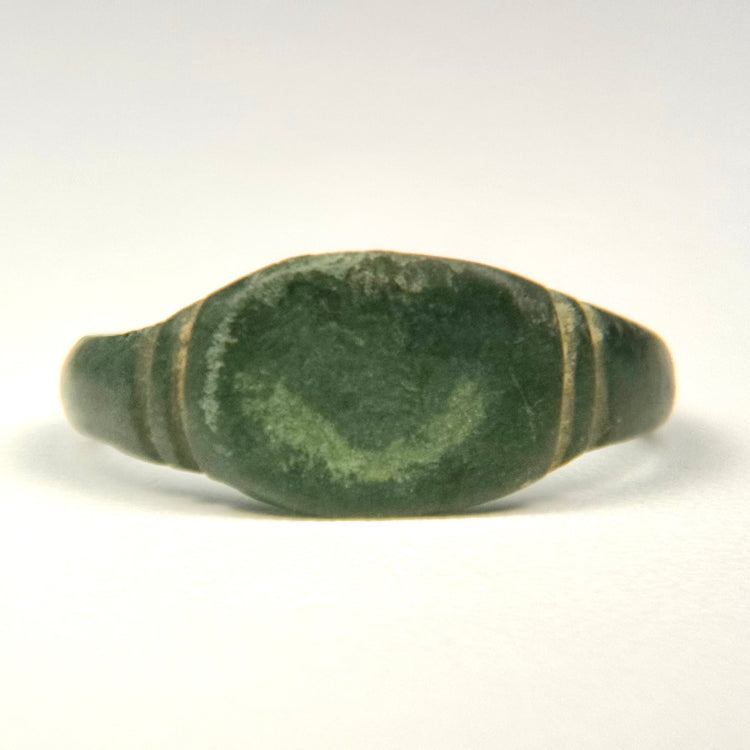
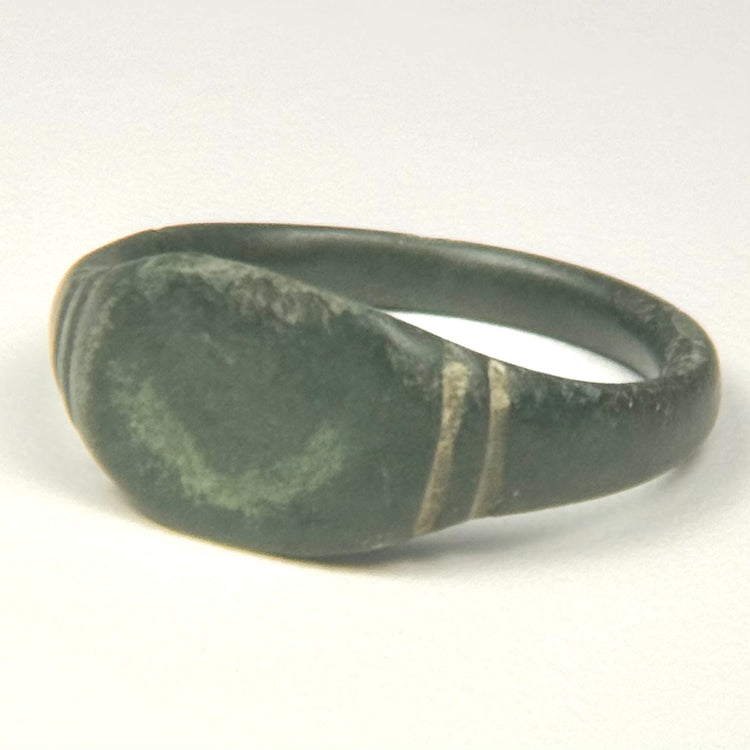
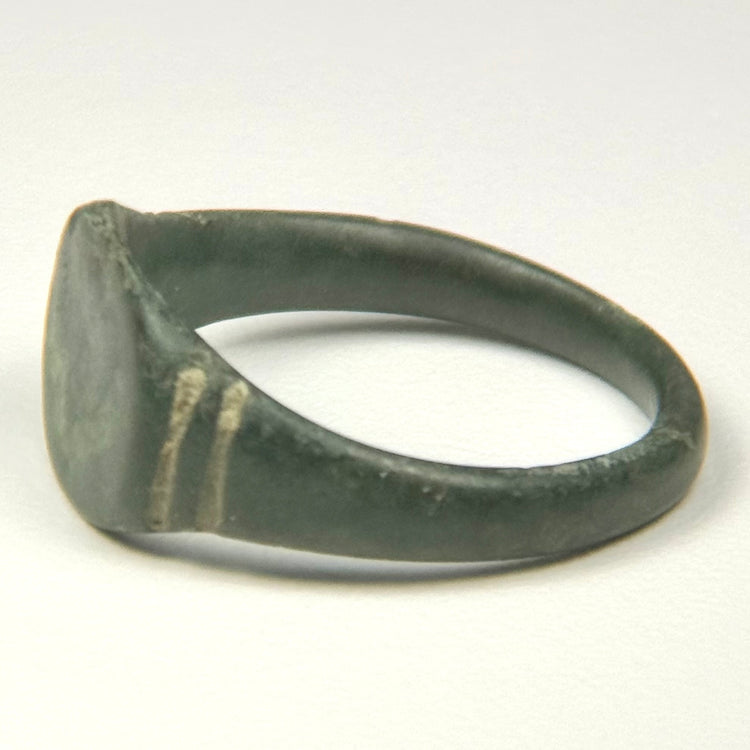
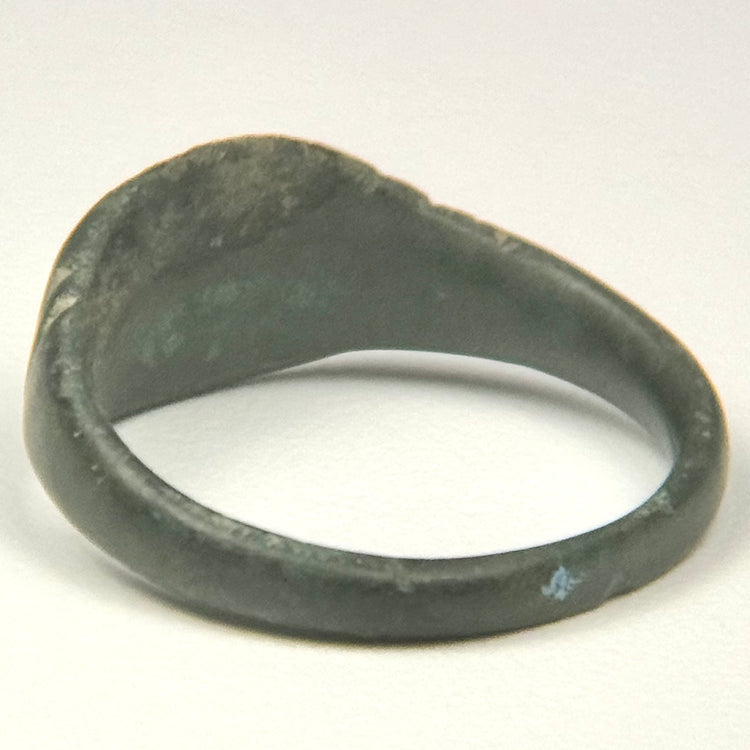
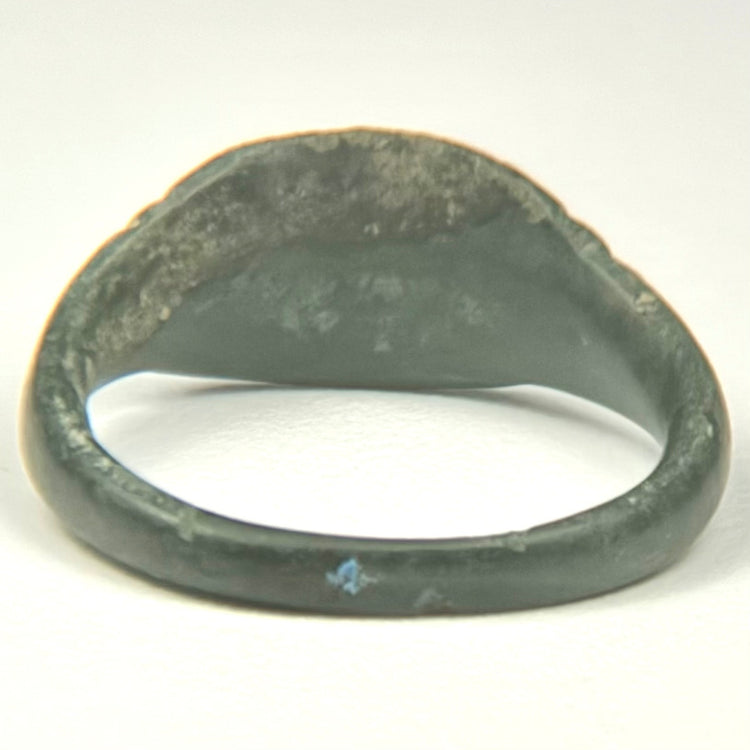
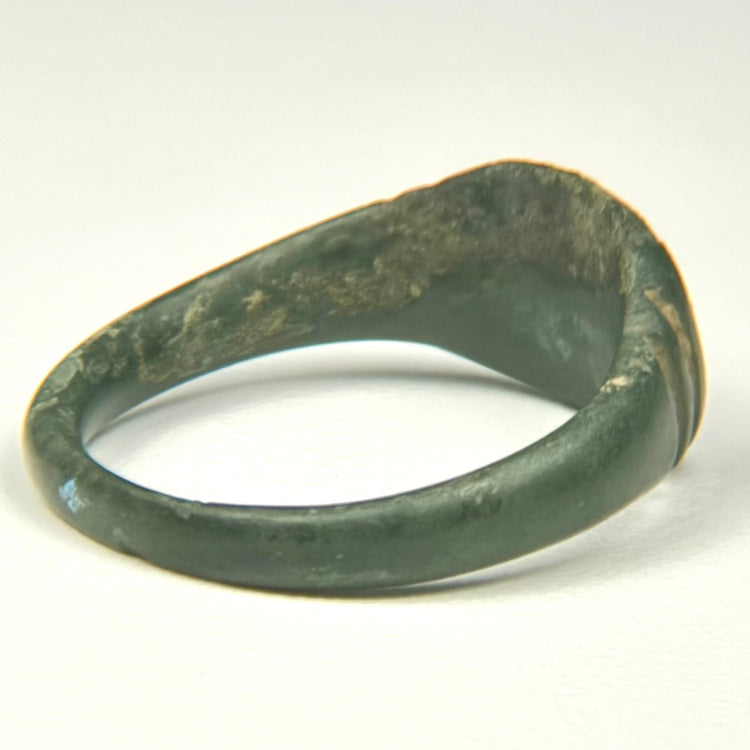
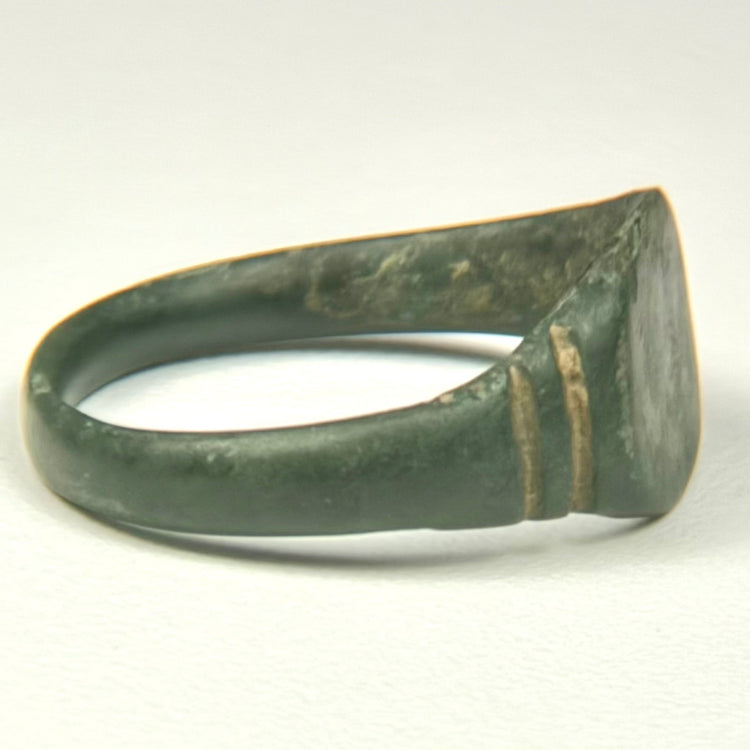
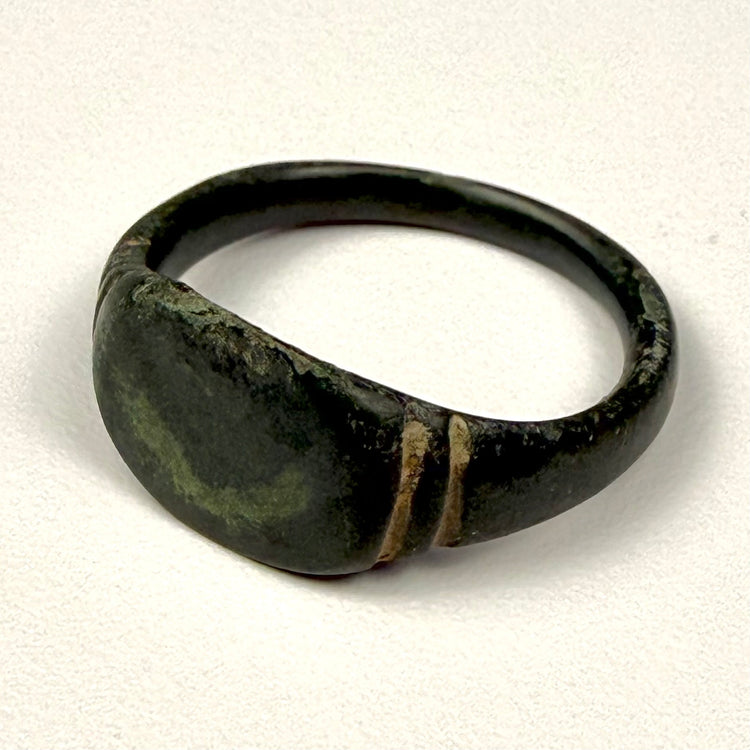
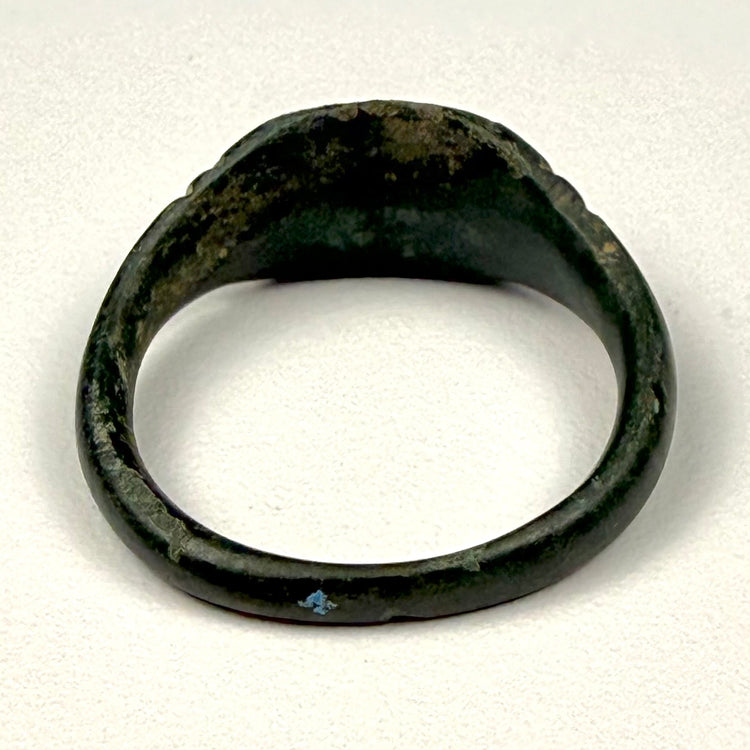
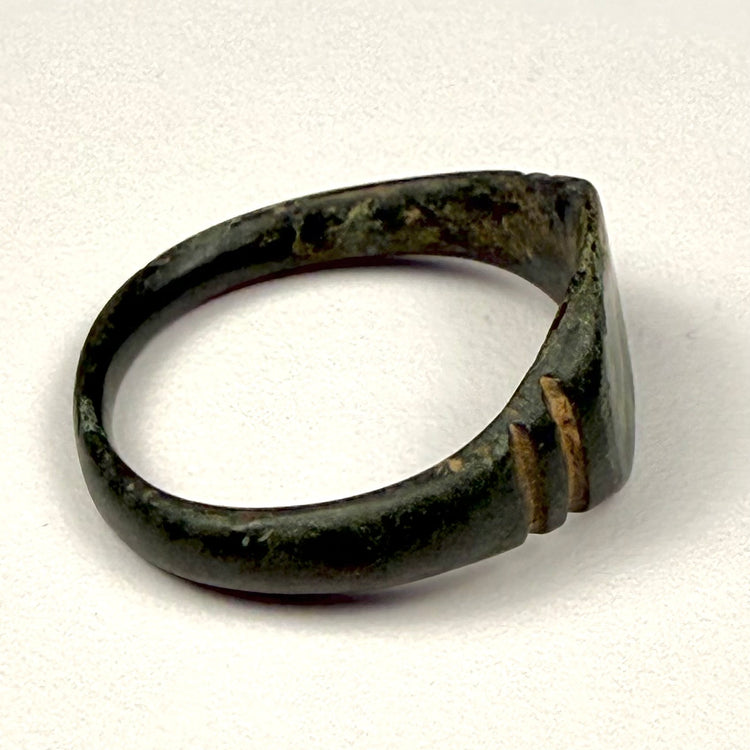
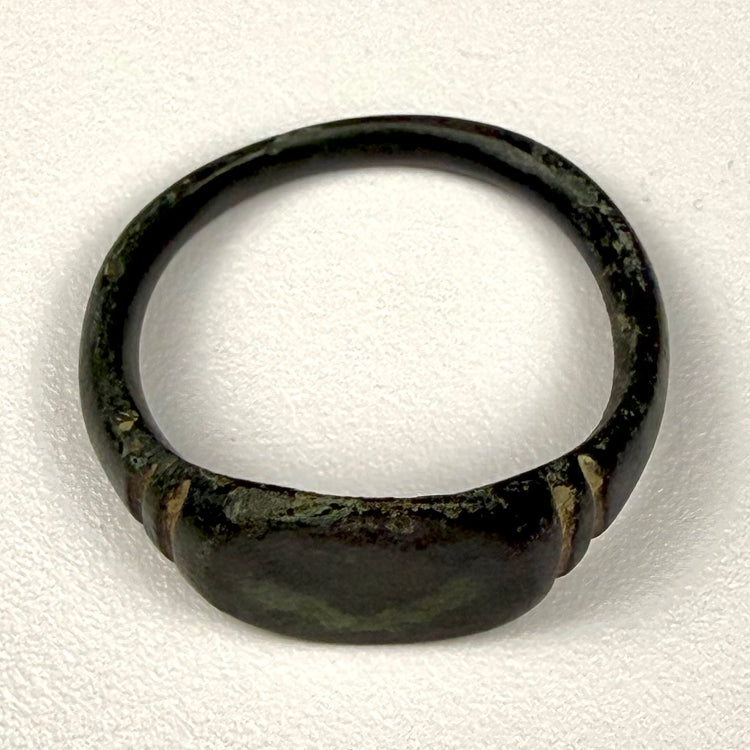
A substantial ancient Roman bronze finger ring distinguished by a broad oval bezel, gently expanding shoulders, and a solid rounded hoop. The form is characteristic of Roman Imperial bronze rings in which the hoop gradually widens toward an integral bezel, creating a prominent upper surface while retaining a durable and practical construction.
The shoulders are decorated with two parallel transverse grooves on either side of the bezel, providing a restrained architectural division between the broad face and the narrower hoop. The recessed grooves now display lighter earthy bronze tones that contrast with the surrounding dark green patinated surface.
The bezel is broad and predominantly plain, with extensive wear and mineralization consistent with considerable age. A curved area of lighter green patina is visible across the lower portion of the bezel. While this coloration creates a crescent-like appearance, the photographs do not provide sufficient evidence to identify it securely as an intentionally engraved symbol, and it is more conservatively understood as natural variation in the ancient patina.
The bronze surface has developed a deep olive-green to nearly black patina with lighter green mineral deposits, scattered earthen encrustation, and localized exposed bronze coloration. The combination of its heavy construction, expanding shoulders, broad bezel, and incised decoration is consistent with Roman finger-ring traditions of the Imperial period.
Features
- Broad oval integral bezel
- Paired transverse incised grooves decorating both shoulders
- Solid one-piece cast bronze construction
- Rounded hoop gradually widening toward the bezel
- Deep olive-green to nearly black archaeological patina
- Lighter green mineralization and natural surface deposits
- Complete and substantial surviving ring form
Cultural Significance
Finger rings were widely worn throughout the Roman world and served as highly personal objects of adornment. Examples were produced in gold, silver, iron, bronze, and other copper alloys, making rings accessible across a wide range of social and economic levels.
Broad-bezel rings such as this example reflect the Roman preference for emphasizing the upper surface of the ring. Some bezels carried engraved symbols, inscriptions, portraits, or devices that could function as personal identifiers or seals, while others were left relatively plain and served primarily as durable personal ornaments. The restrained shoulder decoration and substantial cast form of this ring provide a tangible example of everyday Roman metalwork and personal adornment.
Condition
Good ancient condition consistent with age and archaeological burial. The ring remains complete and structurally intact with extensive dark olive-green and black patination, lighter green mineralization, surface pitting, oxidation, and scattered earthen deposits. The paired shoulder grooves remain clearly visible. The bezel shows considerable wear and presently displays no securely identifiable inscription or engraved device. A small localized blue-green mineral accretion is visible on the outer hoop.
Dimensions (Approximate)
Ring Size: US 9
Age (Approximate)
1,700–1,900 years old
Provenance
Acquired in London during the 1970s. The artifact later entered the collection of Dr. Arnold Saslow, a noted numismatist and antiquarian who handled ancient coins, antiquities, and other historic objects over several decades, and was associated with Ye Olde Curiosity Shoppe in New Jersey. It was subsequently handled by Artemis Fine Arts, a U.S.-based gallery specializing in ancient, Classical, Pre-Columbian, and ethnographic art.
Learn More
Explore Roman finger rings in the collection of the British Museum
Browse our collection of Roman & Greek artifacts
Description
Historical Context & Origin
Region: Eastern Mediterranean
Material: Bronze (copper alloy)
Period: Roman Imperial Period, circa 2nd–3rd century CE
Description
A substantial ancient Roman bronze finger ring distinguished by a broad oval bezel, gently expanding shoulders, and a solid rounded hoop. The form is characteristic of Roman Imperial bronze rings in which the hoop gradually widens toward an integral bezel, creating a prominent upper surface while retaining a durable and practical construction.
The shoulders are decorated with two parallel transverse grooves on either side of the bezel, providing a restrained architectural division between the broad face and the narrower hoop. The recessed grooves now display lighter earthy bronze tones that contrast with the surrounding dark green patinated surface.
The bezel is broad and predominantly plain, with extensive wear and mineralization consistent with considerable age. A curved area of lighter green patina is visible across the lower portion of the bezel. While this coloration creates a crescent-like appearance, the photographs do not provide sufficient evidence to identify it securely as an intentionally engraved symbol, and it is more conservatively understood as natural variation in the ancient patina.
The bronze surface has developed a deep olive-green to nearly black patina with lighter green mineral deposits, scattered earthen encrustation, and localized exposed bronze coloration. The combination of its heavy construction, expanding shoulders, broad bezel, and incised decoration is consistent with Roman finger-ring traditions of the Imperial period.
Features
- Broad oval integral bezel
- Paired transverse incised grooves decorating both shoulders
- Solid one-piece cast bronze construction
- Rounded hoop gradually widening toward the bezel
- Deep olive-green to nearly black archaeological patina
- Lighter green mineralization and natural surface deposits
- Complete and substantial surviving ring form
Cultural Significance
Finger rings were widely worn throughout the Roman world and served as highly personal objects of adornment. Examples were produced in gold, silver, iron, bronze, and other copper alloys, making rings accessible across a wide range of social and economic levels.
Broad-bezel rings such as this example reflect the Roman preference for emphasizing the upper surface of the ring. Some bezels carried engraved symbols, inscriptions, portraits, or devices that could function as personal identifiers or seals, while others were left relatively plain and served primarily as durable personal ornaments. The restrained shoulder decoration and substantial cast form of this ring provide a tangible example of everyday Roman metalwork and personal adornment.
Condition
Good ancient condition consistent with age and archaeological burial. The ring remains complete and structurally intact with extensive dark olive-green and black patination, lighter green mineralization, surface pitting, oxidation, and scattered earthen deposits. The paired shoulder grooves remain clearly visible. The bezel shows considerable wear and presently displays no securely identifiable inscription or engraved device. A small localized blue-green mineral accretion is visible on the outer hoop.
Dimensions (Approximate)
Ring Size: US 9
Age (Approximate)
1,700–1,900 years old
Provenance
Acquired in London during the 1970s. The artifact later entered the collection of Dr. Arnold Saslow, a noted numismatist and antiquarian who handled ancient coins, antiquities, and other historic objects over several decades, and was associated with Ye Olde Curiosity Shoppe in New Jersey. It was subsequently handled by Artemis Fine Arts, a U.S.-based gallery specializing in ancient, Classical, Pre-Columbian, and ethnographic art.
Learn More
Explore Roman finger rings in the collection of the British Museum
Browse our collection of Roman & Greek artifacts
Vous aimerez peut-être aussi
