

Ancient Roman Bronze Finger Ring with Blue Glass Cabochon | Circa 2nd–4th Century CE
- Prix habituel
- $325.00
- Prix soldé
- $325.00
- Prix habituel
Impossible de charger la disponibilité du service de retrait



Ancient Roman Bronze Finger Ring with Blue Glass Cabochon | Circa 2nd–4th Century CE
Description
Plus
Moins
Historical Context & Origin
Region: Roman Empire
Material: Bronze (copper alloy) with deep blue glass or glass-paste cabochon
Period: Roman Imperial to Late Roman Period, circa 2nd–4th century CE
Description
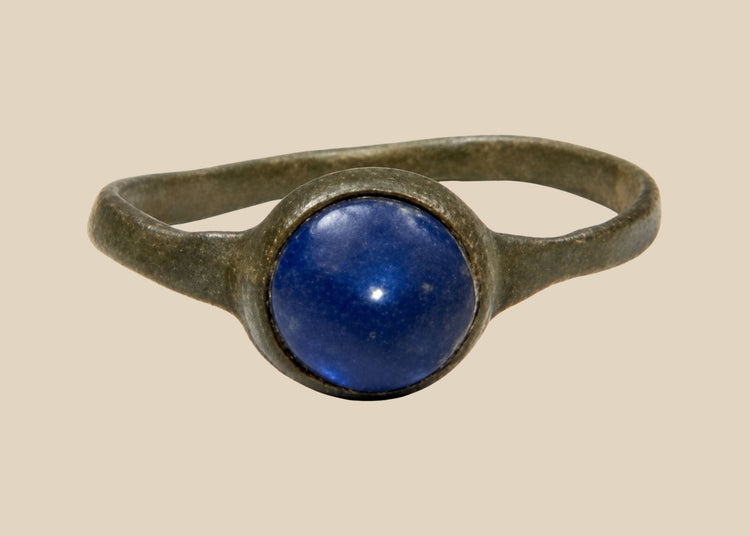
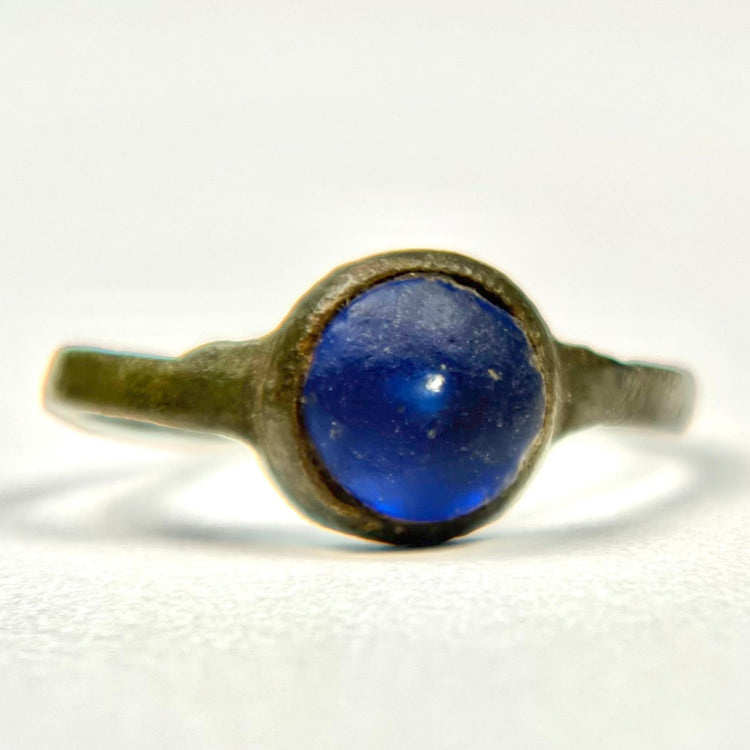
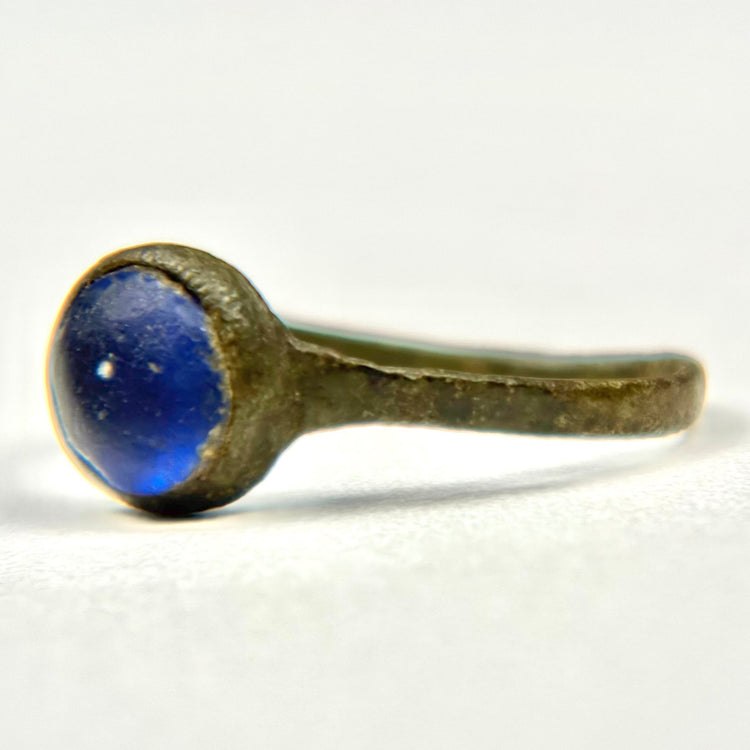
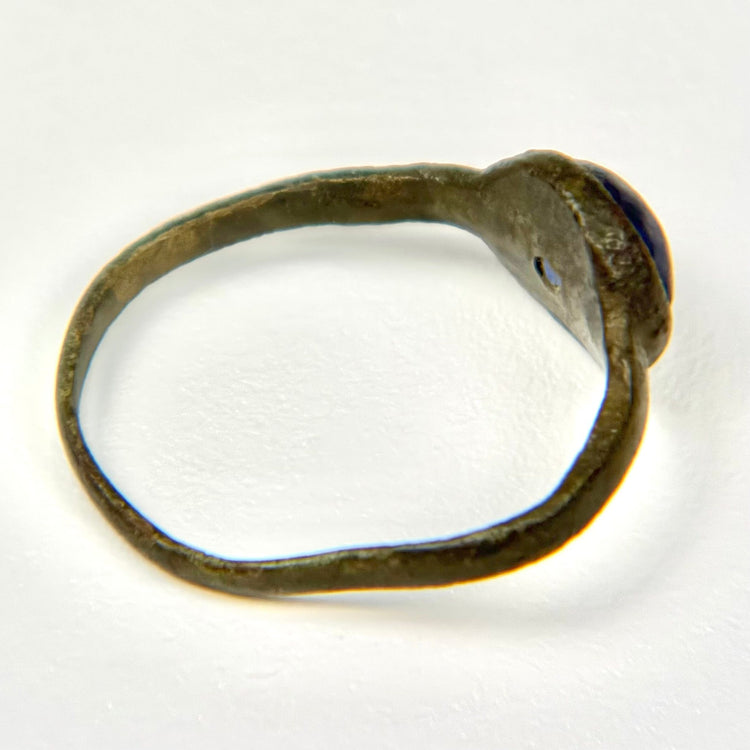
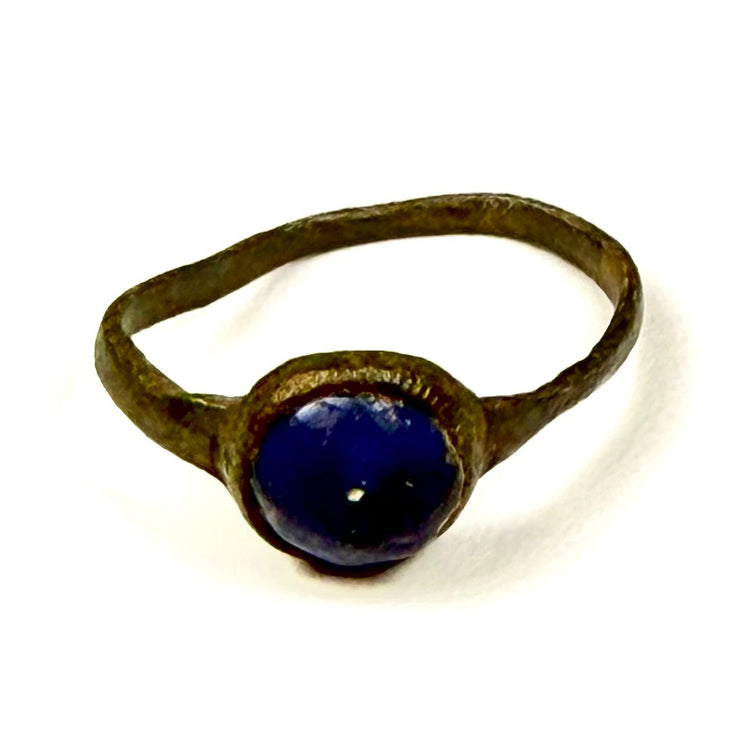
A finely proportioned Ancient Roman bronze finger ring centered by a striking deep blue domed cabochon, likely fashioned from glass or glass paste. The ring combines a slender continuous hoop with subtly widening shoulders that rise into a circular bezel, creating a simple but visually distinctive form characteristic of personal jewelry worn throughout the Roman world.
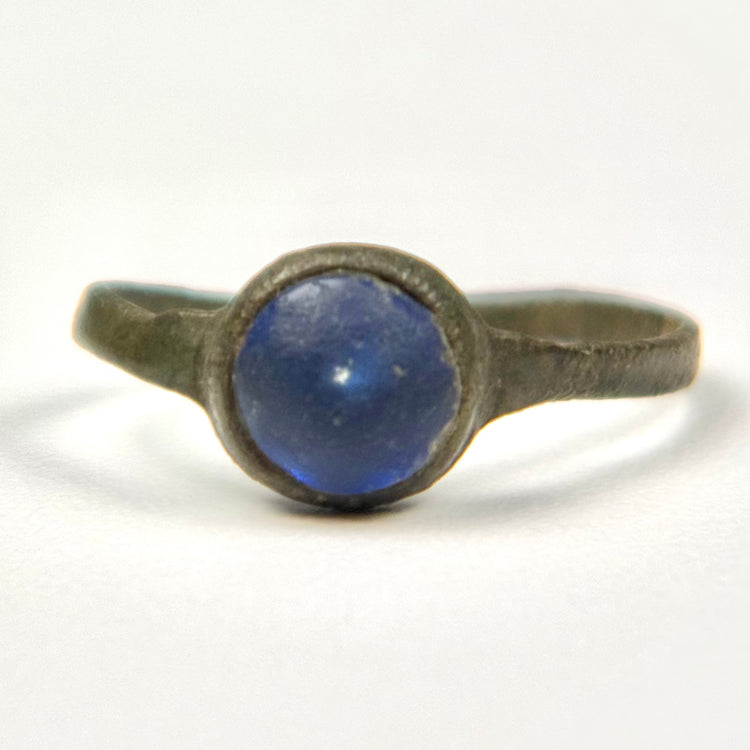
The bezel is formed as a raised circular setting with a narrow surrounding rim that securely embraces the rounded blue insert. The cabochon has a smooth convex profile and retains a rich cobalt-blue appearance that becomes brighter and more translucent where light passes through its thinner areas. Fine surface wear, minute irregularities, and subtle clouding are visible across the insert, consistent with age and long-term handling.
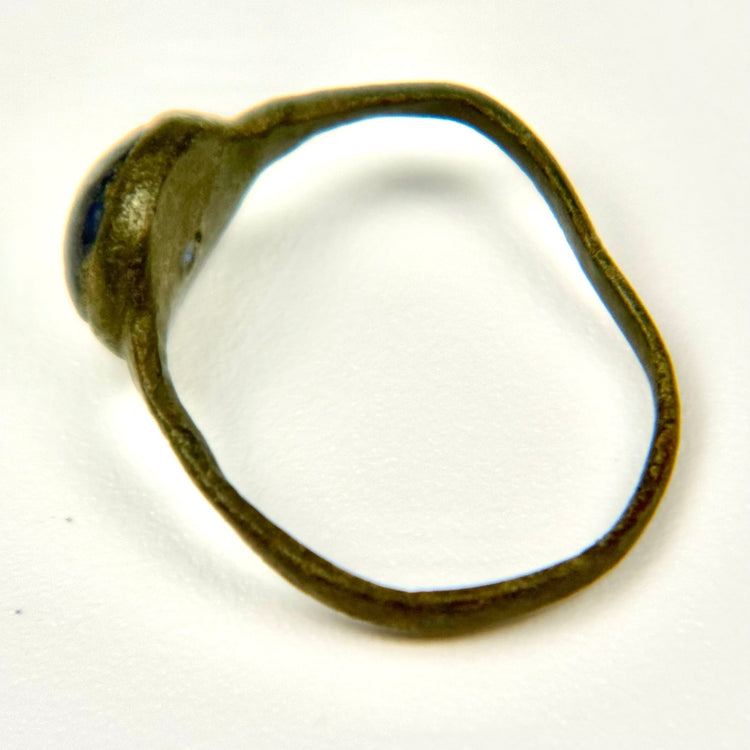
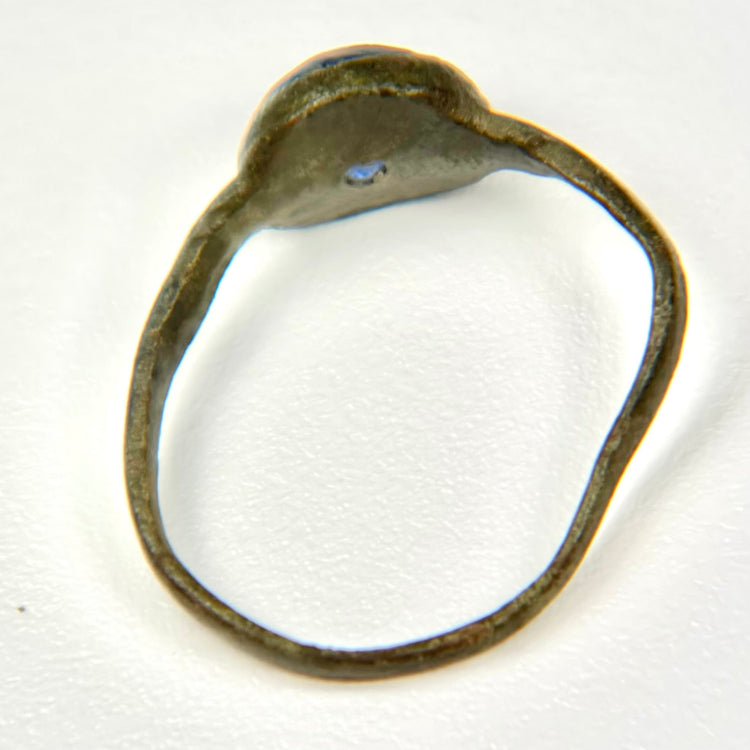
An especially interesting construction detail is visible beneath the bezel, where a small aperture opens toward the reverse of the blue insert. Open or partially open-backed settings could permit light to reach translucent materials while also forming part of the original method used to seat or secure an inset within the bezel.
The bronze hoop is narrow and slightly irregular in profile, with gentle asymmetry and minor variation in thickness consistent with individually produced ancient metalwork. Its dark olive-brown surface retains areas of green oxidation and age-related patination, contrasting strongly with the vivid blue centerpiece.
Features
- Deep cobalt-blue insert, likely ancient glass or glass paste
- Smooth rounded cabochon with high domed profile
- Raised circular cup-style bezel with surrounding retaining rim
- Small opening visible beneath the bezel and blue insert
- Slender bronze hoop widening gently toward the shoulders
- Attractive dark olive, brown, and green archaeological patina
- Natural asymmetry and surface wear associated with age and manufacture
- Strong visual contrast between the aged bronze and vivid blue setting
Cultural Significance
Finger rings were among the most widely worn forms of personal ornament in the Roman world and ranged from elaborate precious-metal examples to more accessible rings produced in bronze and other copper alloys. Rings could communicate personal taste, social identity, affiliation, wealth, or simply serve as decorative jewelry.
Glass played an important role in Roman jewelry because skilled glassmakers could reproduce intense colors associated with more costly natural gemstones. Deep blue glass was particularly visually effective, allowing jewelers to create striking insets and ring stones while working with materials available to a much broader portion of Roman society.
This example is particularly appealing because the blue insert remains seated within its circular bronze setting, allowing the original contrast between metal and colored ornament to remain visually legible after many centuries.
Condition
Good ancient condition consistent with age and archaeological preservation. The bronze hoop remains complete with natural unevenness, surface wear, oxidation, and areas of olive-brown and green patination. The circular bezel remains intact and retains its blue cabochon securely within the setting. The blue insert displays fine scratches, light surface clouding, small marks, and minor age-related irregularities. A small aperture is visible beneath the bezel.
Dimensions (Approximate)
Ring Size: US 6
Age (Approximate)
1,625–1,925 years old
Provenance
Acquired in London during the 1970s. The artifact later entered the collection of Dr. Arnold Saslow, a noted numismatist and antiquarian who handled ancient coins, antiquities, and other historic objects over several decades, and was associated with Ye Olde Curiosity Shoppe in New Jersey. It was subsequently handled by Artemis Fine Arts, a U.S.-based gallery specializing in ancient, Classical, Pre-Columbian, and ethnographic art.
Learn More
Discover a comparable Late Roman bronze and glass finger ring in the collection of the British Museum
Browse our collection of ancient rings and historic jewelry
Description
Historical Context & Origin
Region: Roman Empire
Material: Bronze (copper alloy) with deep blue glass or glass-paste cabochon
Period: Roman Imperial to Late Roman Period, circa 2nd–4th century CE
Description
A finely proportioned Ancient Roman bronze finger ring centered by a striking deep blue domed cabochon, likely fashioned from glass or glass paste. The ring combines a slender continuous hoop with subtly widening shoulders that rise into a circular bezel, creating a simple but visually distinctive form characteristic of personal jewelry worn throughout the Roman world.
The bezel is formed as a raised circular setting with a narrow surrounding rim that securely embraces the rounded blue insert. The cabochon has a smooth convex profile and retains a rich cobalt-blue appearance that becomes brighter and more translucent where light passes through its thinner areas. Fine surface wear, minute irregularities, and subtle clouding are visible across the insert, consistent with age and long-term handling.
An especially interesting construction detail is visible beneath the bezel, where a small aperture opens toward the reverse of the blue insert. Open or partially open-backed settings could permit light to reach translucent materials while also forming part of the original method used to seat or secure an inset within the bezel.
The bronze hoop is narrow and slightly irregular in profile, with gentle asymmetry and minor variation in thickness consistent with individually produced ancient metalwork. Its dark olive-brown surface retains areas of green oxidation and age-related patination, contrasting strongly with the vivid blue centerpiece.
Features
- Deep cobalt-blue insert, likely ancient glass or glass paste
- Smooth rounded cabochon with high domed profile
- Raised circular cup-style bezel with surrounding retaining rim
- Small opening visible beneath the bezel and blue insert
- Slender bronze hoop widening gently toward the shoulders
- Attractive dark olive, brown, and green archaeological patina
- Natural asymmetry and surface wear associated with age and manufacture
- Strong visual contrast between the aged bronze and vivid blue setting
Cultural Significance
Finger rings were among the most widely worn forms of personal ornament in the Roman world and ranged from elaborate precious-metal examples to more accessible rings produced in bronze and other copper alloys. Rings could communicate personal taste, social identity, affiliation, wealth, or simply serve as decorative jewelry.
Glass played an important role in Roman jewelry because skilled glassmakers could reproduce intense colors associated with more costly natural gemstones. Deep blue glass was particularly visually effective, allowing jewelers to create striking insets and ring stones while working with materials available to a much broader portion of Roman society.
This example is particularly appealing because the blue insert remains seated within its circular bronze setting, allowing the original contrast between metal and colored ornament to remain visually legible after many centuries.
Condition
Good ancient condition consistent with age and archaeological preservation. The bronze hoop remains complete with natural unevenness, surface wear, oxidation, and areas of olive-brown and green patination. The circular bezel remains intact and retains its blue cabochon securely within the setting. The blue insert displays fine scratches, light surface clouding, small marks, and minor age-related irregularities. A small aperture is visible beneath the bezel.
Dimensions (Approximate)
Ring Size: US 6
Age (Approximate)
1,625–1,925 years old
Provenance
Acquired in London during the 1970s. The artifact later entered the collection of Dr. Arnold Saslow, a noted numismatist and antiquarian who handled ancient coins, antiquities, and other historic objects over several decades, and was associated with Ye Olde Curiosity Shoppe in New Jersey. It was subsequently handled by Artemis Fine Arts, a U.S.-based gallery specializing in ancient, Classical, Pre-Columbian, and ethnographic art.
Learn More
Discover a comparable Late Roman bronze and glass finger ring in the collection of the British Museum
Browse our collection of ancient rings and historic jewelry
Vous aimerez peut-être aussi
