

Louche simpulum romaine en bronze à long manche | Période impériale | Vers le 1er – 3e siècle de notre ère
- Prix habituel
- $500.00
- Prix soldé
- $500.00
- Prix habituel
Impossible de charger la disponibilité du service de retrait


Louche simpulum romaine en bronze à long manche | Période impériale | Vers le 1er – 3e siècle de notre ère
Description
Plus
Moins
Contexte historique et origine
Région : Empire romain, région méditerranéenne
Matériau : Alliage de bronze ou de cuivre avec patine bleu-vert et concrétions minérales
Période : Période impériale romaine, environ du 1er au 3ème siècle de notre ère
Description
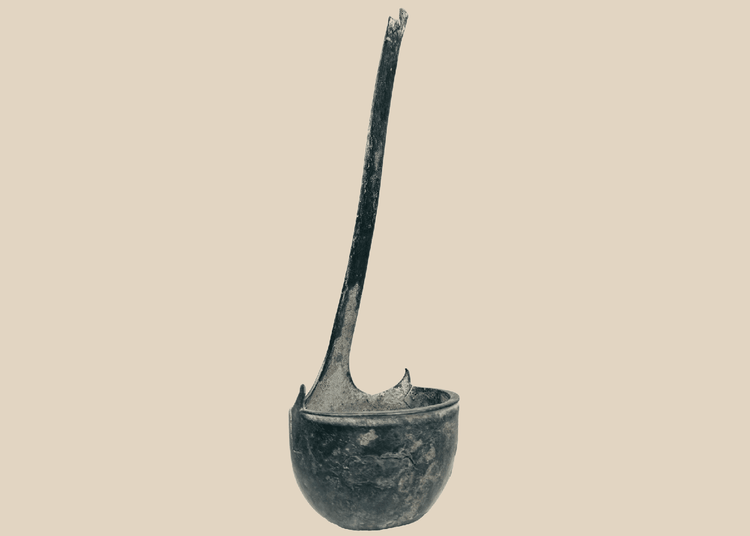
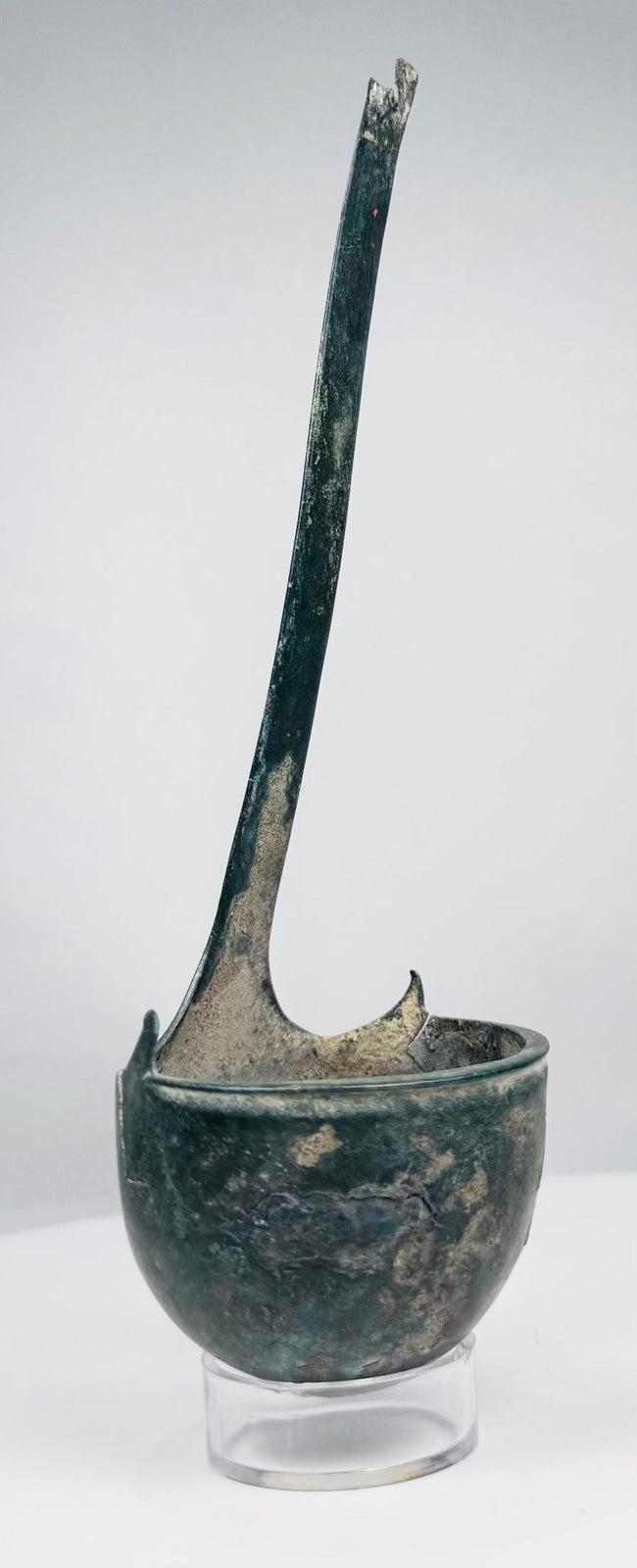
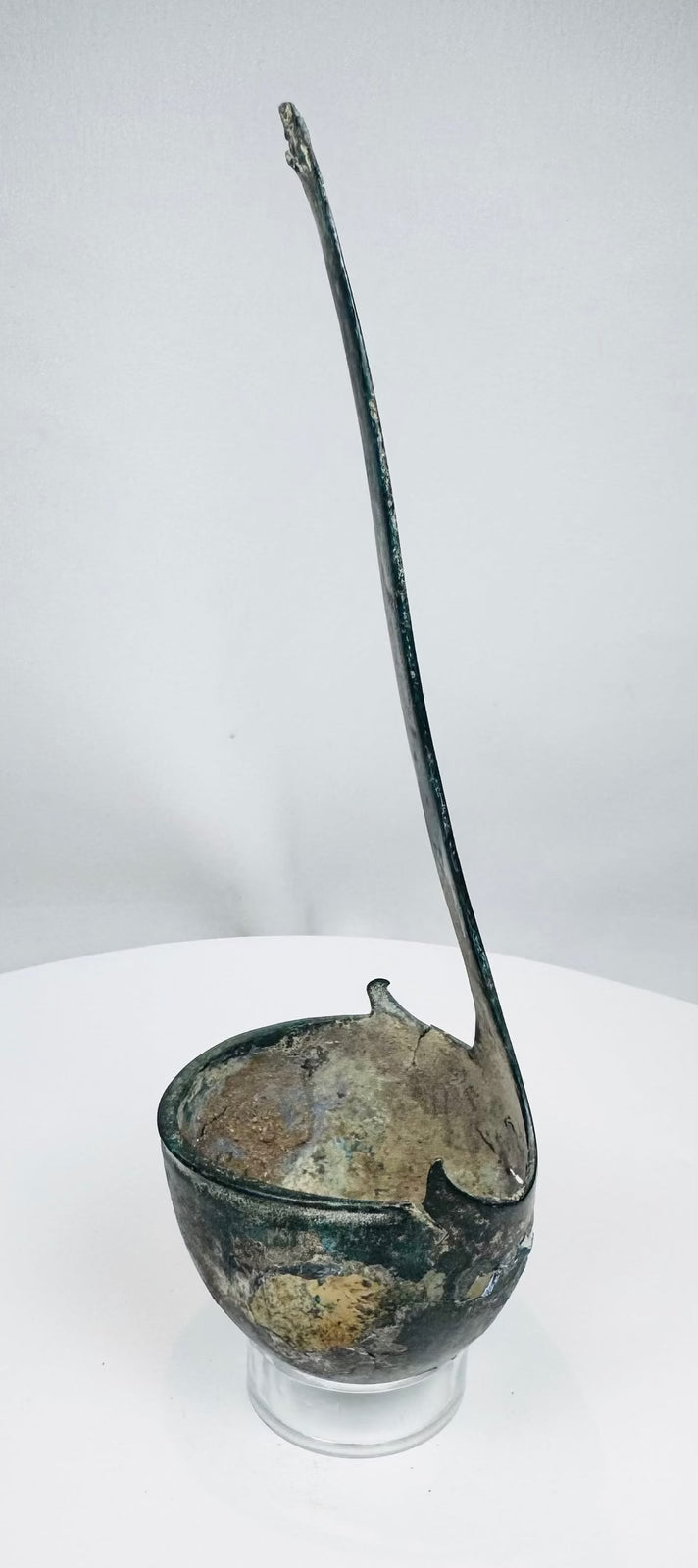
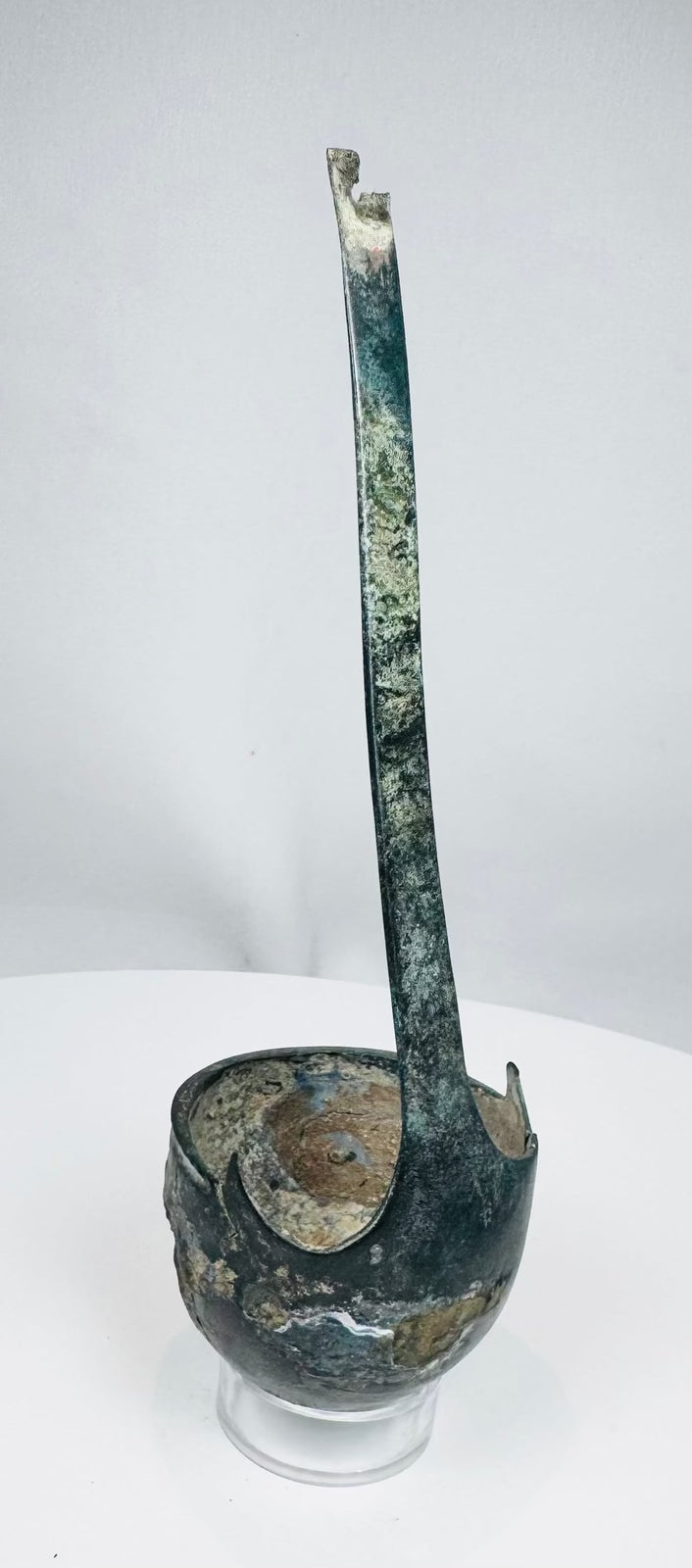
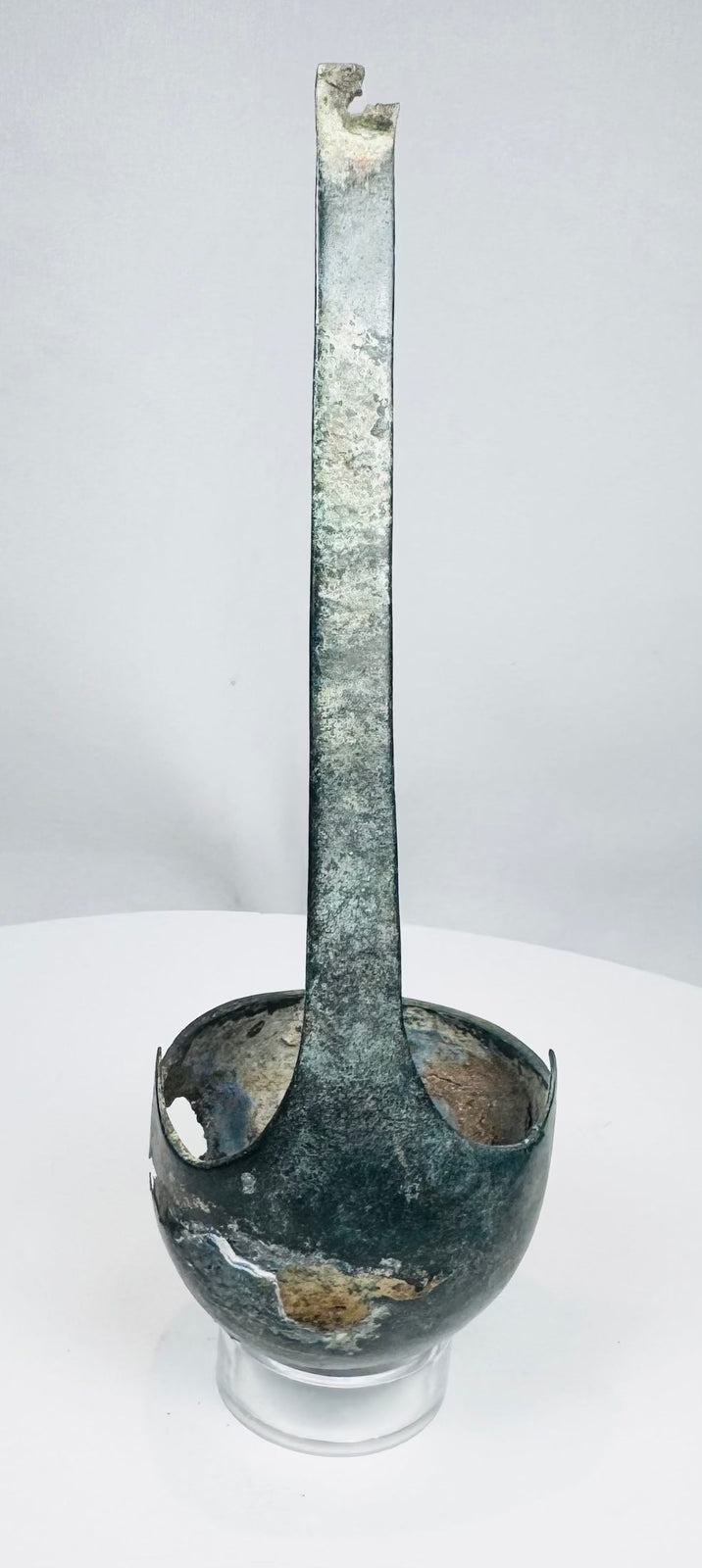
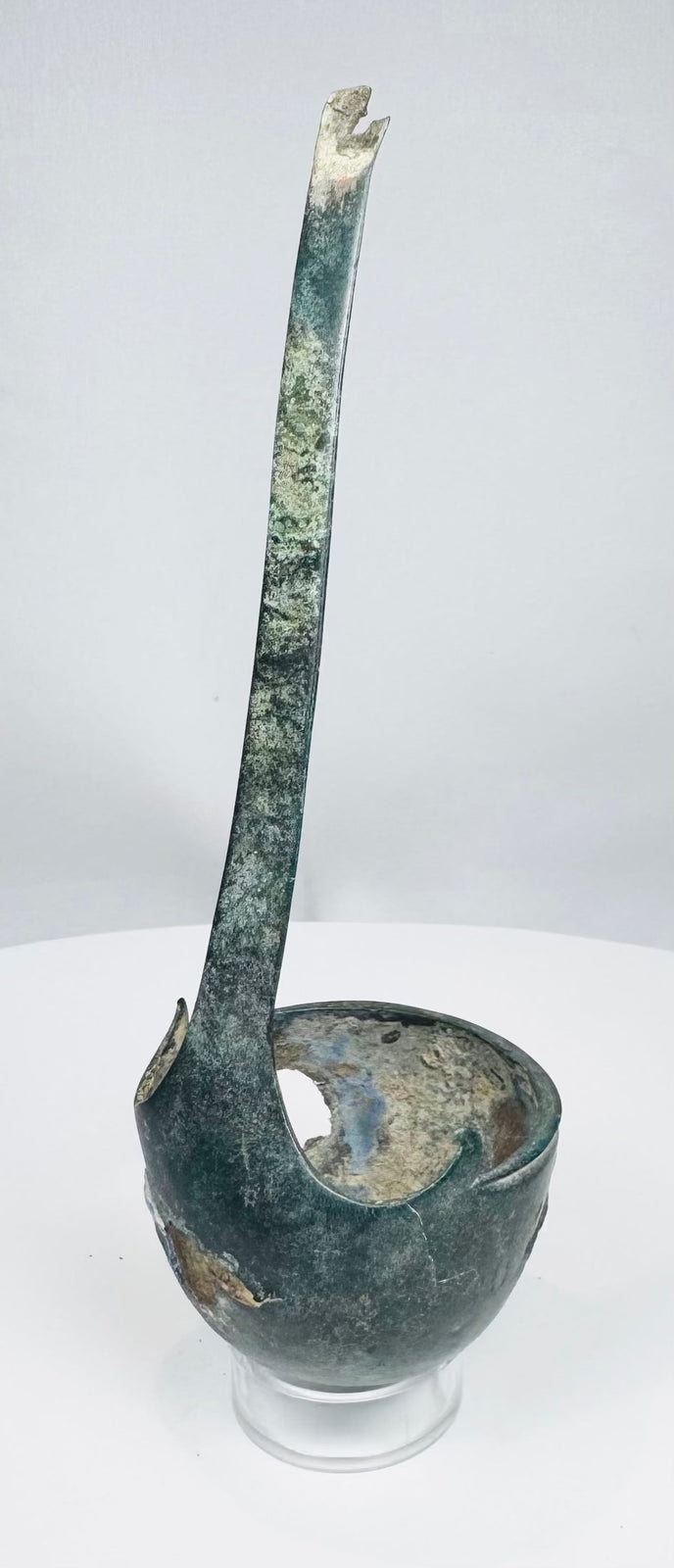
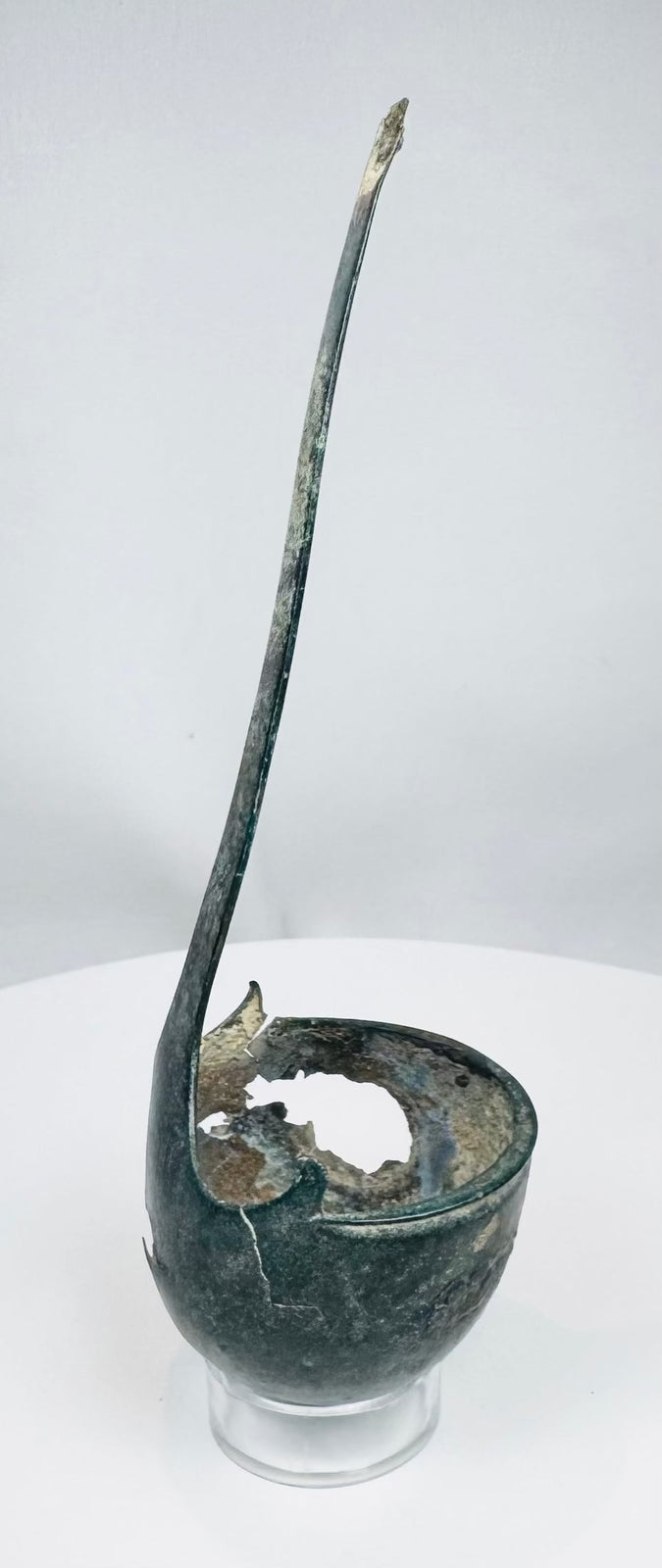
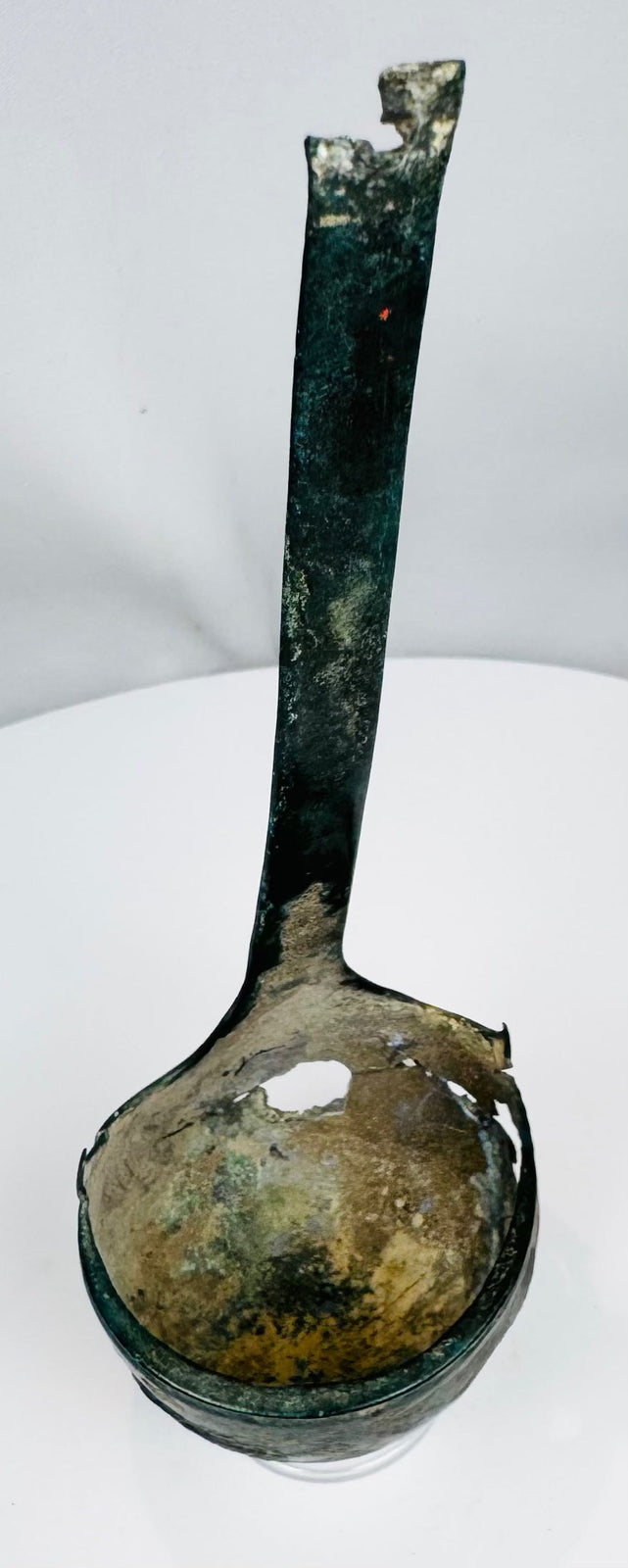
Cette ancienne louche romaine en bronze, traditionnellement connue sous le nom de simpulum, présente un bol hémisphérique profond surmonté d'un manche exceptionnellement long, légèrement incurvé et de section plate.
Le bol arrondi était façonné avec un bord défini et un intérieur profond, adapté pour recueillir et transférer de relativement petites quantités de liquide.
À l'arrière du bol s'élève une large plaque d'attache triangulaire qui se prolonge en douceur dans le manche étroit et allongé. Deux protubérances en forme d'éperon, incurvées vers le haut, flanquent la base du manche, ajoutant un profil décoratif distinctif au récipient.
Le manche s'étend verticalement au-dessus du bol avec une silhouette légèrement incurvée et une section transversale rectangulaire aplatie. Son extrémité supérieure est incomplète.
L'extrémité originale a pu comporter une ouverture de suspension, une boucle ou un élément décoratif, mais cette partie a subi une perte significative, ancienne ou ultérieure, et sa configuration originale ne peut plus être déterminée avec certitude.
Les louches romaines étaient fabriquées sous de nombreuses formes, allant des récipients de service à manche court aux exemples à manche long destinés à atteindre des récipients plus profonds. Les simpula romains comparables présentent fréquemment des bols profonds ou arrondis et des manches allongés.
La surface présente une patine vert foncé et bleu-vert variée avec des zones d'incrustation minérale pâle, de métal exposé et d'incrustation archéologique. Ces variations de surface naturelles soulignent l'âge considérable de l'objet et son caractère excavé.
Caractéristiques
- Bol hémisphérique profond
- Long manche de section plate
- Large attache de manche triangulaire
- Deux saillies en forme d'éperon ou de volute le long du bord
- Patine archéologique bleu-vert foncé
- Vastes incrustations minérales et d'enfouissement
- Extrémité supérieure du manche incomplète
- Forme d'ustensile domestique ou cérémoniel romain
Signification culturelle
Le simpulum était un ustensile familier dans la vie domestique, culinaire et religieuse romaine. Lors des banquets romains, les louches étaient utilisées pour transférer des quantités mesurées de vin dans les récipients à boire, en particulier après que le vin avait été mélangé à de l'eau.
Les simpula étaient également associés aux libations religieuses et aux cérémonies sacerdotales romaines. Leur forme reconnaissable est apparue aux côtés d'autres instruments rituels dans l'art et la monnaie romains, démontrant que la forme avait à la fois des associations pratiques et cérémonielles.
Il n'est pas possible de déterminer si cette louche particulière servait principalement dans un cadre domestique, culinaire ou rituel. Néanmoins, son bol profond et son long manche l'auraient rendue particulièrement utile pour prélever du vin, de l'huile ou un autre liquide dans un récipient comparativement profond.
État
La louche subsiste dans un état archéologique substantiellement fragmentaire.
Le bol conserve une grande partie de sa forme hémisphérique originale mais présente une corrosion étendue, un amincissement, des fissures, des pertes de bord et une grande perforation irrégulière sur un côté de l'intérieur.
D'autres petits trous, pertes de surface, bosses et zones de délaminage sont visibles dans tout le bol.
Le long manche reste substantiellement préservé mais présente des courbures, une usure des bords, une corrosion, des incrustations minérales et des pertes dispersées.
L'extrémité supérieure est cassée et incomplète, le trou de suspension original ou l'extrémité décorative n'étant plus entièrement préservée.
Les saillies relevées à côté du manche restent visibles, bien que les deux présentent de l'usure et des pertes mineures. Toute la surface présente une patine bleu-vert étendue, des incrustations pâles, une oxydation, des abrasions et des zones exposées compatibles avec un enfouissement prolongé.
Dimensions (approximatives)
Hauteur totale : 16,5 cm
Diamètre du bol : 5 cm
Âge (approximatif)
1 700 – 2 000 ans
Provenance
Anciennement dans la collection de Jack Guevrekian, Manhasset, New York, un numismate et collectionneur new-yorkais renommé, particulièrement intéressé par la numismatique arménienne, les antiquités et les matériaux anciens. Guevrekian a constitué une vaste collection sur plusieurs décennies, dont une partie importante a été publiquement proposée sous le nom de The Jack Guevrekian Collection par la Numismatic & Antiquarian Service Corporation of America à New York en 1977.
Par la suite détenue dans une collection privée de la ville de New York.
Plus tard traitée par la Howard S. Rose Gallery / Arte Primitivo à New York, une galerie spécialisée et une maison de vente aux enchères de longue date traitant des antiquités et des œuvres d'art précolombiennes, classiques, égyptiennes, asiatiques et ethnographiques. La galerie a organisé des ventes aux enchères spécialisées, des expositions et des ventes privées depuis ses locaux de New York.
Par la suite traitée par Artemis Fine Arts / Artemis Gallery, un spécialiste des antiquités, de l'art ancien, du matériel ethnographique et des beaux-arts basé au Colorado, actif dans le domaine depuis 1993.
Puis est entrée dans une collection privée à Toronto, Ontario, Canada.
En savoir plus
Voir un simpulum romain en bronze apparenté dans la collection de The Metropolitan Museum of Art
Explorez notre Collection d'artefacts romains et grecs et de reliques antiques
Description
Contexte historique et origine
Région : Empire romain, région méditerranéenne
Matériau : Alliage de bronze ou de cuivre avec patine bleu-vert et concrétions minérales
Période : Période impériale romaine, environ du 1er au 3ème siècle de notre ère
Description
Cette ancienne louche romaine en bronze, traditionnellement connue sous le nom de simpulum, présente un bol hémisphérique profond surmonté d'un manche exceptionnellement long, légèrement incurvé et de section plate.
Le bol arrondi était façonné avec un bord défini et un intérieur profond, adapté pour recueillir et transférer de relativement petites quantités de liquide.
À l'arrière du bol s'élève une large plaque d'attache triangulaire qui se prolonge en douceur dans le manche étroit et allongé. Deux protubérances en forme d'éperon, incurvées vers le haut, flanquent la base du manche, ajoutant un profil décoratif distinctif au récipient.
Le manche s'étend verticalement au-dessus du bol avec une silhouette légèrement incurvée et une section transversale rectangulaire aplatie. Son extrémité supérieure est incomplète.
L'extrémité originale a pu comporter une ouverture de suspension, une boucle ou un élément décoratif, mais cette partie a subi une perte significative, ancienne ou ultérieure, et sa configuration originale ne peut plus être déterminée avec certitude.
Les louches romaines étaient fabriquées sous de nombreuses formes, allant des récipients de service à manche court aux exemples à manche long destinés à atteindre des récipients plus profonds. Les simpula romains comparables présentent fréquemment des bols profonds ou arrondis et des manches allongés.
La surface présente une patine vert foncé et bleu-vert variée avec des zones d'incrustation minérale pâle, de métal exposé et d'incrustation archéologique. Ces variations de surface naturelles soulignent l'âge considérable de l'objet et son caractère excavé.
Caractéristiques
- Bol hémisphérique profond
- Long manche de section plate
- Large attache de manche triangulaire
- Deux saillies en forme d'éperon ou de volute le long du bord
- Patine archéologique bleu-vert foncé
- Vastes incrustations minérales et d'enfouissement
- Extrémité supérieure du manche incomplète
- Forme d'ustensile domestique ou cérémoniel romain
Signification culturelle
Le simpulum était un ustensile familier dans la vie domestique, culinaire et religieuse romaine. Lors des banquets romains, les louches étaient utilisées pour transférer des quantités mesurées de vin dans les récipients à boire, en particulier après que le vin avait été mélangé à de l'eau.
Les simpula étaient également associés aux libations religieuses et aux cérémonies sacerdotales romaines. Leur forme reconnaissable est apparue aux côtés d'autres instruments rituels dans l'art et la monnaie romains, démontrant que la forme avait à la fois des associations pratiques et cérémonielles.
Il n'est pas possible de déterminer si cette louche particulière servait principalement dans un cadre domestique, culinaire ou rituel. Néanmoins, son bol profond et son long manche l'auraient rendue particulièrement utile pour prélever du vin, de l'huile ou un autre liquide dans un récipient comparativement profond.
État
La louche subsiste dans un état archéologique substantiellement fragmentaire.
Le bol conserve une grande partie de sa forme hémisphérique originale mais présente une corrosion étendue, un amincissement, des fissures, des pertes de bord et une grande perforation irrégulière sur un côté de l'intérieur.
D'autres petits trous, pertes de surface, bosses et zones de délaminage sont visibles dans tout le bol.
Le long manche reste substantiellement préservé mais présente des courbures, une usure des bords, une corrosion, des incrustations minérales et des pertes dispersées.
L'extrémité supérieure est cassée et incomplète, le trou de suspension original ou l'extrémité décorative n'étant plus entièrement préservée.
Les saillies relevées à côté du manche restent visibles, bien que les deux présentent de l'usure et des pertes mineures. Toute la surface présente une patine bleu-vert étendue, des incrustations pâles, une oxydation, des abrasions et des zones exposées compatibles avec un enfouissement prolongé.
Dimensions (approximatives)
Hauteur totale : 16,5 cm
Diamètre du bol : 5 cm
Âge (approximatif)
1 700 – 2 000 ans
Provenance
Anciennement dans la collection de Jack Guevrekian, Manhasset, New York, un numismate et collectionneur new-yorkais renommé, particulièrement intéressé par la numismatique arménienne, les antiquités et les matériaux anciens. Guevrekian a constitué une vaste collection sur plusieurs décennies, dont une partie importante a été publiquement proposée sous le nom de The Jack Guevrekian Collection par la Numismatic & Antiquarian Service Corporation of America à New York en 1977.
Par la suite détenue dans une collection privée de la ville de New York.
Plus tard traitée par la Howard S. Rose Gallery / Arte Primitivo à New York, une galerie spécialisée et une maison de vente aux enchères de longue date traitant des antiquités et des œuvres d'art précolombiennes, classiques, égyptiennes, asiatiques et ethnographiques. La galerie a organisé des ventes aux enchères spécialisées, des expositions et des ventes privées depuis ses locaux de New York.
Par la suite traitée par Artemis Fine Arts / Artemis Gallery, un spécialiste des antiquités, de l'art ancien, du matériel ethnographique et des beaux-arts basé au Colorado, actif dans le domaine depuis 1993.
Puis est entrée dans une collection privée à Toronto, Ontario, Canada.
En savoir plus
Voir un simpulum romain en bronze apparenté dans la collection de The Metropolitan Museum of Art
Explorez notre Collection d'artefacts romains et grecs et de reliques antiques
Vous aimerez peut-être aussi
