

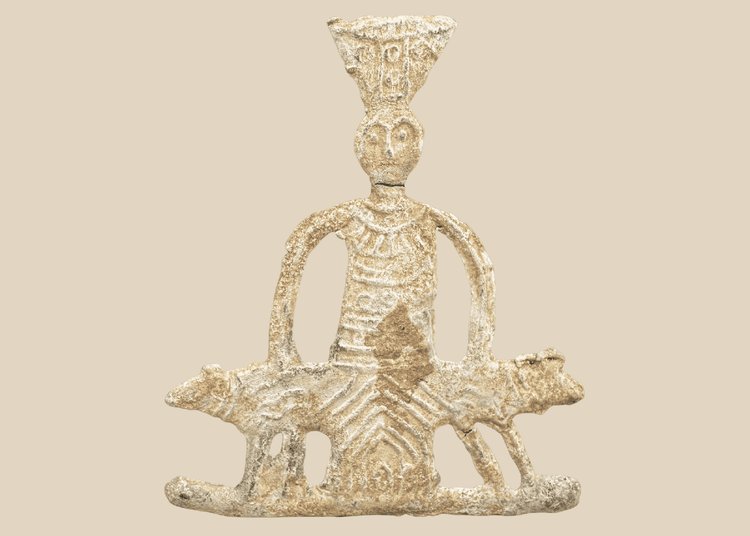
Plaque votive romaine antique en plomb de Jupiter Héliopolitain avec deux taureaux sacrés | Syrie romaine | Circa 1er – 3e siècle de notre ère
- Prix habituel
- $400.00
- Prix soldé
- $400.00
- Prix habituel
Impossible de charger la disponibilité du service de retrait


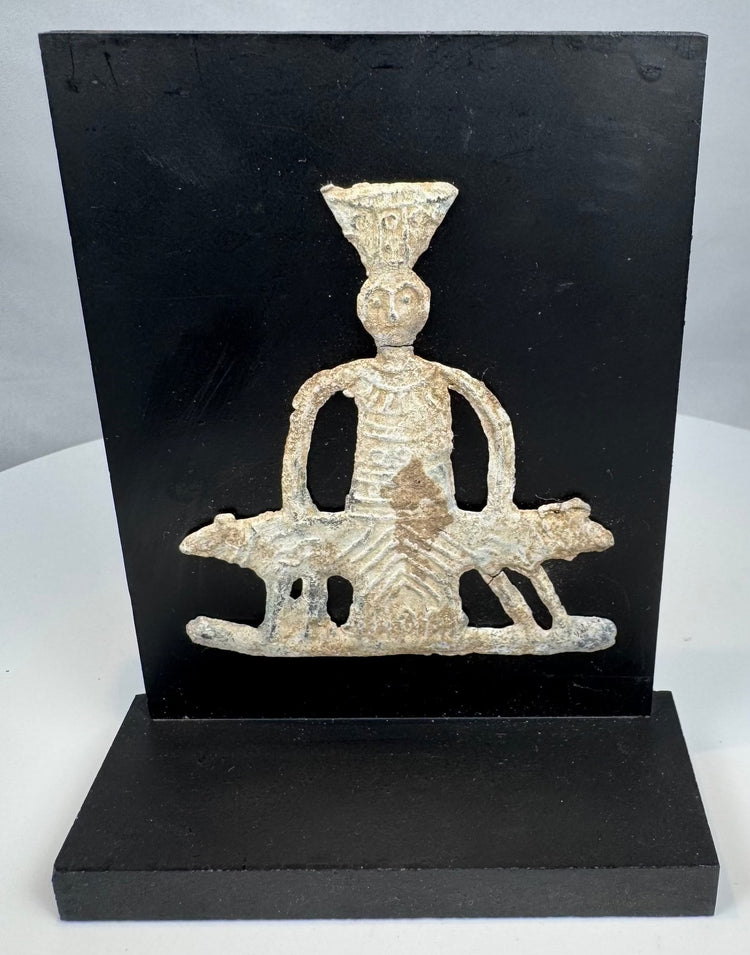
Plaque votive romaine antique en plomb de Jupiter Héliopolitain avec deux taureaux sacrés | Syrie romaine | Circa 1er – 3e siècle de notre ère
Description
Plus
Moins
Contexte historique et origine
Région : Syrie romaine, associée à Héliopolis-Baalbek, dans l'actuel Liban
Matériau : Plomb moulé ou alliage riche en plomb avec concrétions minérales, monté sur un socle d'exposition moderne en bois peint
Période : Période impériale romaine, vers le 1er-3e siècle de notre ère
Description
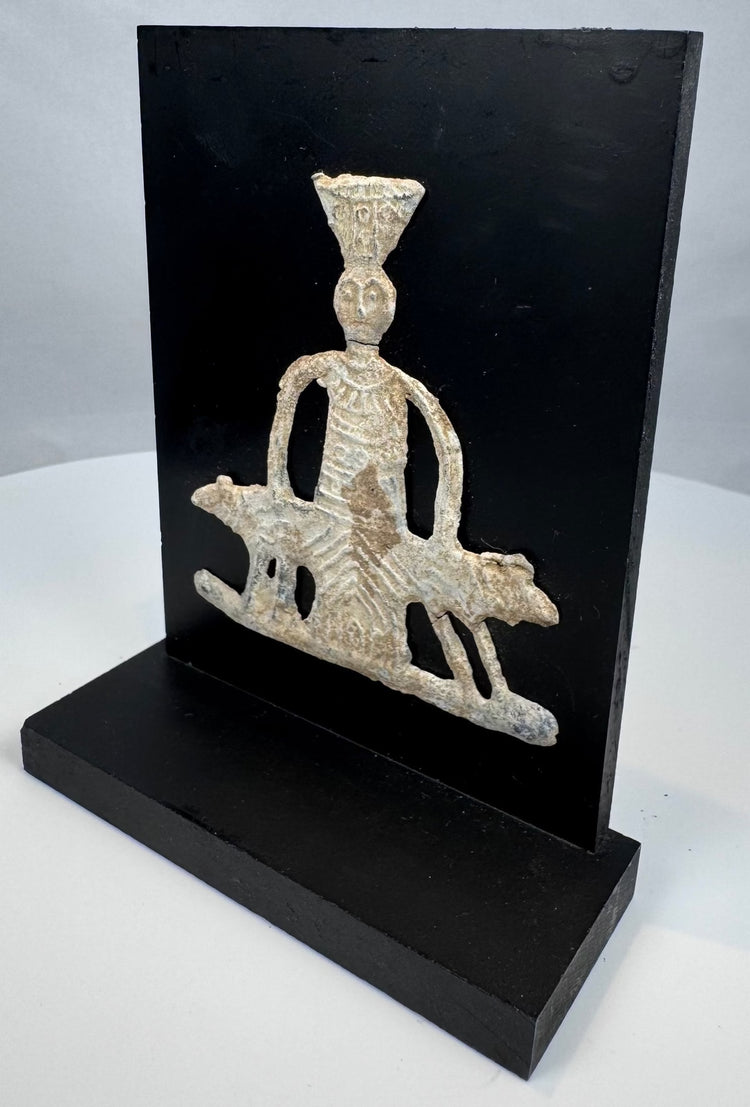
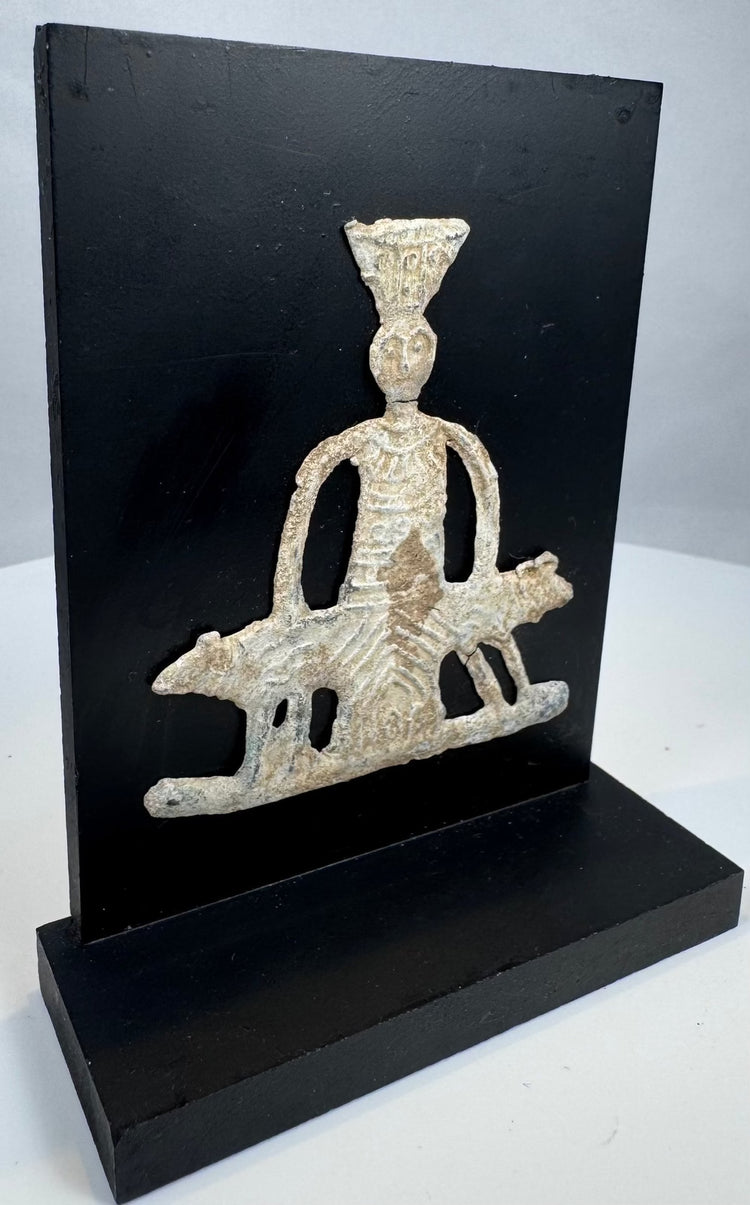
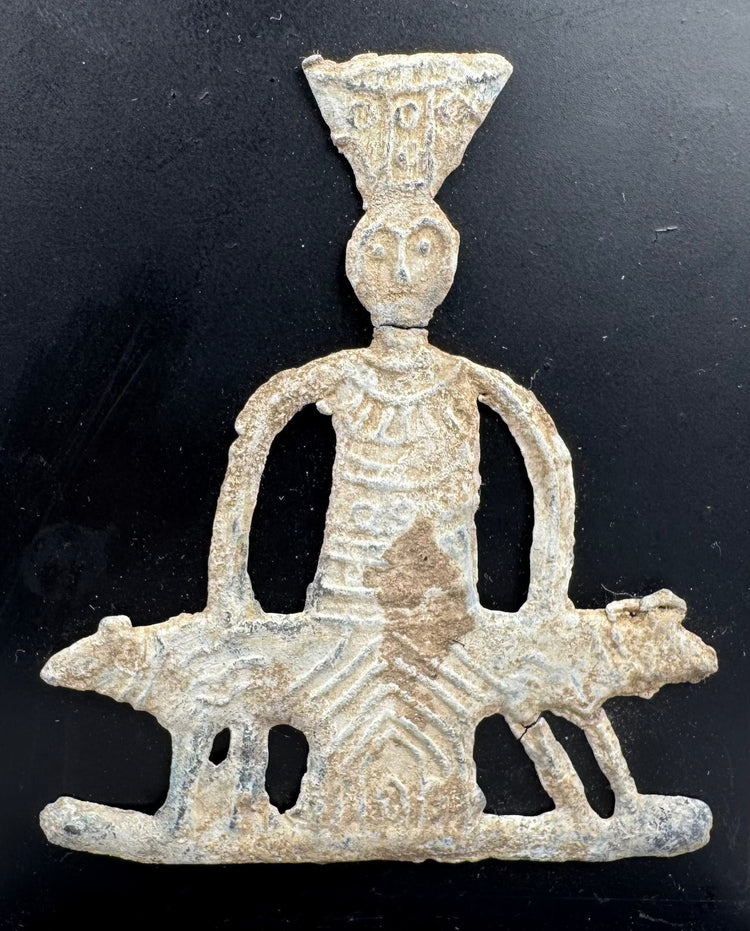
Cette ancienne plaque votive romaine représente Jupiter Héliopolitain, la principale divinité vénérée à Héliopolis, la ville antique aujourd'hui connue sous le nom de Baalbek au Liban.
La divinité est présentée frontalement dans une composition très stylisée et symétrique, placée au-dessus de deux taureaux sacrés représentés de profil.
Jupiter est représenté avec un corps allongé enveloppé dans un vêtement cérémonial ajusté appelé ependytes. Des lignes incisées horizontales et en chevrons décorent le torse et le vêtement inférieur, suggérant des textiles superposés, des divisions de type armure ou des registres symboliques traditionnellement associés à l'image cultuelle héliopolitaine.
Les longs bras incurvés de la figure descendent vers le dos des animaux de chaque côté, créant une composition ajourée. Les taureaux sont orientés vers l'extérieur dans des directions opposées et se tiennent sur une longue ligne de sol horizontale.
Leurs corps, têtes, pattes et queues sont rendus en bas-relief simplifié, soulignant leur rôle symbolique plutôt que le réalisme anatomique.
Au-dessus du visage arrondi se trouve une haute coiffe ou kalathos, s'élargissant vers le haut et décorée d'un visage ou d'un masque stylisé supplémentaire. Le visage principal est rendu avec de grands yeux en amande, un nez étroit et une petite bouche.
La coiffe exceptionnellement haute à double registre renforce le caractère surnaturel et cérémonial de la divinité.
Un motif géométrique en forme de sanctuaire apparaît sous la figure, entre les deux taureaux. Cela peut représenter une façade architecturale stylisée, un piédestal sacré ou une base décorative.
Jupiter Héliopolitain était couramment représenté au-dessus d'un support décoré et accompagné de deux taureaux en marche. Dans les figures votives en plomb bidimensionnelles, les animaux étaient souvent représentés de profil afin que leurs formes puissent être rendues plus clairement.
La plaque est montée sur un panneau vertical peint en noir, soutenu par une base rectangulaire en bois.
Caractéristiques
- Divinité frontale centrale flanquée de deux taureaux sacrés
- Grand kalathos ou coiffe cérémoniale
- Visage ou masque stylisé supplémentaire dans la coiffe
- Vêtement ajusté de type ependytes
- Décoration incisée horizontale et en chevrons
- Construction ajourée moulée
- Motif architectural ou piédestal stylisé sous la divinité
- Surface archéologique gris pâle avec dépôts minéraux
- Monté sur un socle d'exposition moderne en bois noir
Signification culturelle
Jupiter Héliopolitain était la divinité dominante d'Héliopolis-Baalbek romaine, un important centre de pèlerinage et religieux dans le Proche-Orient romain.
L'image cultuelle combinait les traditions religieuses romaines, grecques et syriennes locales, présentant Jupiter comme une divinité cosmique, agraire, de l'orage, de la fertilité et oraculaire. Son imagerie caractéristique comprenait le kalathos, le vêtement cérémonial, le fouet, le grain, les foudres, les symboles célestes et deux taureaux sacrés.
Les taureaux relient la divinité aux traditions locales du Proche-Orient en matière d'orage et de fertilité. Ils accompagnent constamment Jupiter dans les reliefs, autels, statuettes et figures votives en plomb subsistants, marchant généralement à ses côtés ou sous lui.
Les figures votives en plomb semblent avoir joué un rôle dans le pèlerinage personnel et la pratique dévotionnelle. Des exemples similaires ont été associés à des sources sacrées et à des dépôts de sanctuaires, où les pèlerins laissaient des ex-votos liés à Jupiter Héliopolitain.
Baalbek a conservé son rôle religieux majeur pendant la période romaine, lorsque le sanctuaire de Jupiter Héliopolitain a attiré un grand nombre de pèlerins et est devenu l'un des complexes de temples monumentaux les plus célèbres du monde romain antique.
État
La plaque est substantiellement intacte, avec l'usure archéologique attendue.
La surface présente une oxydation pâle étendue, des dépôts minéraux, des concrétions terreuses, une décoloration, des piqûres, des abrasions et des pertes de la surface d'origine.
Plusieurs bords sont irréguliers, avec de petits éclats et des zones de perte autour de la coiffe, des taureaux, de la ligne de sol et des sections ajourées.
Une fissure ou une séparation visible est présente près des pattes antérieures du taureau sur la droite du spectateur. Des fissures plus petites, des irrégularités de moulage, des zones affaiblies et des pertes sont visibles partout.
Les détails fins du visage, des vêtements, des animaux et des registres décoratifs restent identifiables malgré une usure considérable de la surface.
La plaque semble être fixée en permanence au panneau d'affichage moderne en bois. Son revers et les zones de montage cachées n'ont donc pas été inspectés.
Le support peint en noir présente de légères rayures, de la poussière et des traces de manipulation.
Dimensions (approximatives)
Hauteur totale montée : 12,06 cm
Largeur totale : 9,14 cm
Profondeur totale : 3,81 cm
Âge (approximatif)
1 700–2 000 ans
Provenance
Faisait autrefois partie d'une collection privée d'antiquités et d'objets archéologiques de Brooklyn, New York, États-Unis, constituée au fil des ans avec un intérêt particulier pour la culture matérielle ancienne.
En savoir plus
Apprenez-en davantage sur Jupiter Héliopolitain et les figures votives romaines en plomb apparentées conservées par l'American University of Beirut Archaeological Museum
Explorez notre collection d'artefacts romains et grecs et de reliques antiques
Description
Contexte historique et origine
Région : Syrie romaine, associée à Héliopolis-Baalbek, dans l'actuel Liban
Matériau : Plomb moulé ou alliage riche en plomb avec concrétions minérales, monté sur un socle d'exposition moderne en bois peint
Période : Période impériale romaine, vers le 1er-3e siècle de notre ère
Description
Cette ancienne plaque votive romaine représente Jupiter Héliopolitain, la principale divinité vénérée à Héliopolis, la ville antique aujourd'hui connue sous le nom de Baalbek au Liban.
La divinité est présentée frontalement dans une composition très stylisée et symétrique, placée au-dessus de deux taureaux sacrés représentés de profil.
Jupiter est représenté avec un corps allongé enveloppé dans un vêtement cérémonial ajusté appelé ependytes. Des lignes incisées horizontales et en chevrons décorent le torse et le vêtement inférieur, suggérant des textiles superposés, des divisions de type armure ou des registres symboliques traditionnellement associés à l'image cultuelle héliopolitaine.
Les longs bras incurvés de la figure descendent vers le dos des animaux de chaque côté, créant une composition ajourée. Les taureaux sont orientés vers l'extérieur dans des directions opposées et se tiennent sur une longue ligne de sol horizontale.
Leurs corps, têtes, pattes et queues sont rendus en bas-relief simplifié, soulignant leur rôle symbolique plutôt que le réalisme anatomique.
Au-dessus du visage arrondi se trouve une haute coiffe ou kalathos, s'élargissant vers le haut et décorée d'un visage ou d'un masque stylisé supplémentaire. Le visage principal est rendu avec de grands yeux en amande, un nez étroit et une petite bouche.
La coiffe exceptionnellement haute à double registre renforce le caractère surnaturel et cérémonial de la divinité.
Un motif géométrique en forme de sanctuaire apparaît sous la figure, entre les deux taureaux. Cela peut représenter une façade architecturale stylisée, un piédestal sacré ou une base décorative.
Jupiter Héliopolitain était couramment représenté au-dessus d'un support décoré et accompagné de deux taureaux en marche. Dans les figures votives en plomb bidimensionnelles, les animaux étaient souvent représentés de profil afin que leurs formes puissent être rendues plus clairement.
La plaque est montée sur un panneau vertical peint en noir, soutenu par une base rectangulaire en bois.
Caractéristiques
- Divinité frontale centrale flanquée de deux taureaux sacrés
- Grand kalathos ou coiffe cérémoniale
- Visage ou masque stylisé supplémentaire dans la coiffe
- Vêtement ajusté de type ependytes
- Décoration incisée horizontale et en chevrons
- Construction ajourée moulée
- Motif architectural ou piédestal stylisé sous la divinité
- Surface archéologique gris pâle avec dépôts minéraux
- Monté sur un socle d'exposition moderne en bois noir
Signification culturelle
Jupiter Héliopolitain était la divinité dominante d'Héliopolis-Baalbek romaine, un important centre de pèlerinage et religieux dans le Proche-Orient romain.
L'image cultuelle combinait les traditions religieuses romaines, grecques et syriennes locales, présentant Jupiter comme une divinité cosmique, agraire, de l'orage, de la fertilité et oraculaire. Son imagerie caractéristique comprenait le kalathos, le vêtement cérémonial, le fouet, le grain, les foudres, les symboles célestes et deux taureaux sacrés.
Les taureaux relient la divinité aux traditions locales du Proche-Orient en matière d'orage et de fertilité. Ils accompagnent constamment Jupiter dans les reliefs, autels, statuettes et figures votives en plomb subsistants, marchant généralement à ses côtés ou sous lui.
Les figures votives en plomb semblent avoir joué un rôle dans le pèlerinage personnel et la pratique dévotionnelle. Des exemples similaires ont été associés à des sources sacrées et à des dépôts de sanctuaires, où les pèlerins laissaient des ex-votos liés à Jupiter Héliopolitain.
Baalbek a conservé son rôle religieux majeur pendant la période romaine, lorsque le sanctuaire de Jupiter Héliopolitain a attiré un grand nombre de pèlerins et est devenu l'un des complexes de temples monumentaux les plus célèbres du monde romain antique.
État
La plaque est substantiellement intacte, avec l'usure archéologique attendue.
La surface présente une oxydation pâle étendue, des dépôts minéraux, des concrétions terreuses, une décoloration, des piqûres, des abrasions et des pertes de la surface d'origine.
Plusieurs bords sont irréguliers, avec de petits éclats et des zones de perte autour de la coiffe, des taureaux, de la ligne de sol et des sections ajourées.
Une fissure ou une séparation visible est présente près des pattes antérieures du taureau sur la droite du spectateur. Des fissures plus petites, des irrégularités de moulage, des zones affaiblies et des pertes sont visibles partout.
Les détails fins du visage, des vêtements, des animaux et des registres décoratifs restent identifiables malgré une usure considérable de la surface.
La plaque semble être fixée en permanence au panneau d'affichage moderne en bois. Son revers et les zones de montage cachées n'ont donc pas été inspectés.
Le support peint en noir présente de légères rayures, de la poussière et des traces de manipulation.
Dimensions (approximatives)
Hauteur totale montée : 12,06 cm
Largeur totale : 9,14 cm
Profondeur totale : 3,81 cm
Âge (approximatif)
1 700–2 000 ans
Provenance
Faisait autrefois partie d'une collection privée d'antiquités et d'objets archéologiques de Brooklyn, New York, États-Unis, constituée au fil des ans avec un intérêt particulier pour la culture matérielle ancienne.
En savoir plus
Apprenez-en davantage sur Jupiter Héliopolitain et les figures votives romaines en plomb apparentées conservées par l'American University of Beirut Archaeological Museum
Explorez notre collection d'artefacts romains et grecs et de reliques antiques
Vous aimerez peut-être aussi
