



Ancient Roman Terracotta Spouted Pouring Vessel | Mediterranean Pottery Jug | Circa 1st–4th Century CE
- Prix habituel
- $500.00
- Prix soldé
- $500.00
- Prix habituel
Impossible de charger la disponibilité du service de retrait





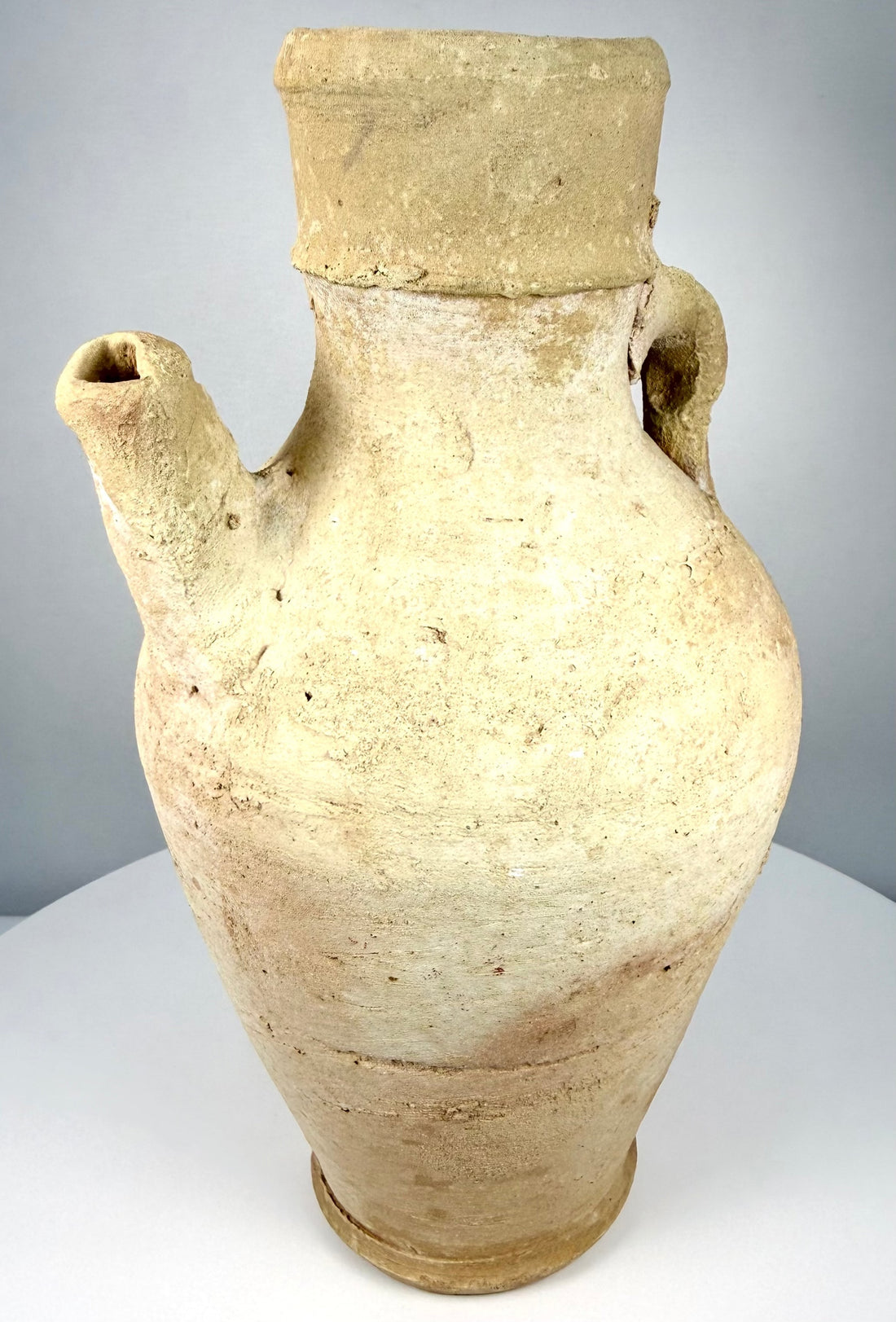
Ancient Roman Terracotta Spouted Pouring Vessel | Mediterranean Pottery Jug | Circa 1st–4th Century CE
Description
Plus
Moins
Historical Context & Origin
Region: Eastern Mediterranean, precise origin undetermined
Material: Terracotta, buff-coloured fired earthenware with surface deposits and natural mineral discolouration
Period: Roman Imperial to Late Roman Period, circa 1st–4th Century CE (traditional attribution)
Description
This substantial Eastern Mediterranean terracotta pouring vessel features a rounded ovoid body, elongated cylindrical neck, single applied loop handle, and distinctive upward-projecting tubular spout. Traditionally attributed to the Roman Imperial to Late Roman period, the vessel reflects a broader tradition of functional ceramic forms developed throughout the ancient Mediterranean world for storing, handling, and dispensing liquids.
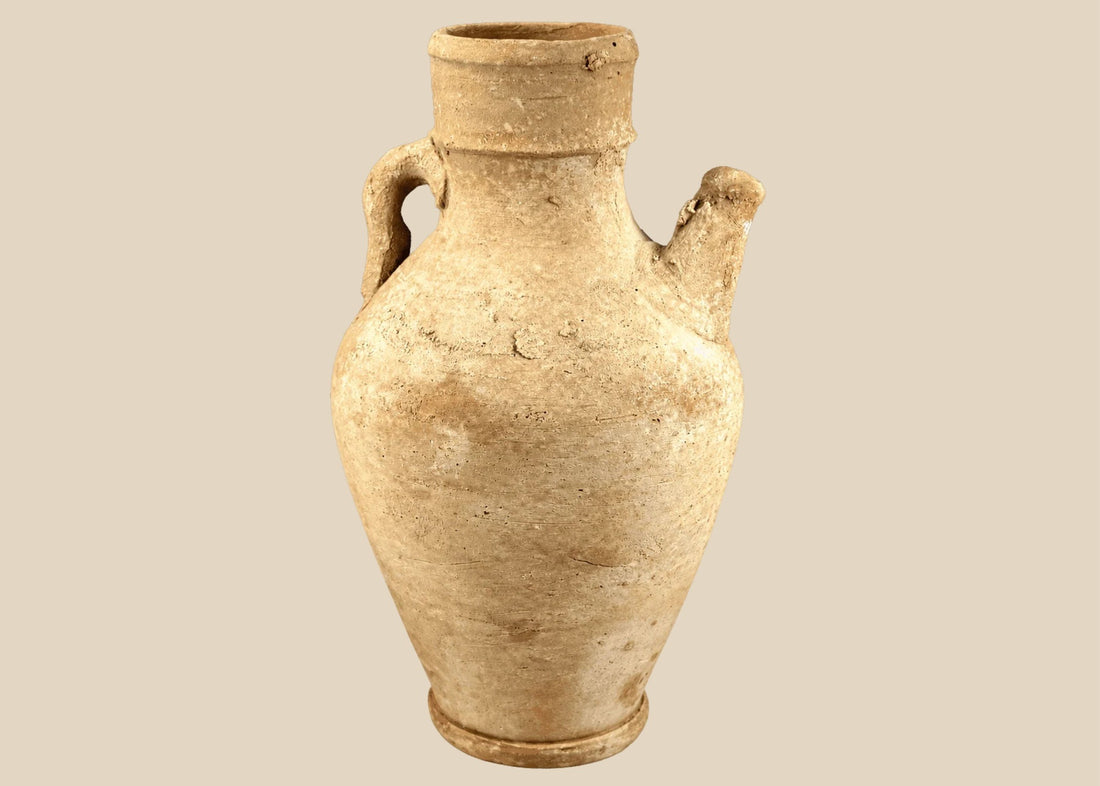
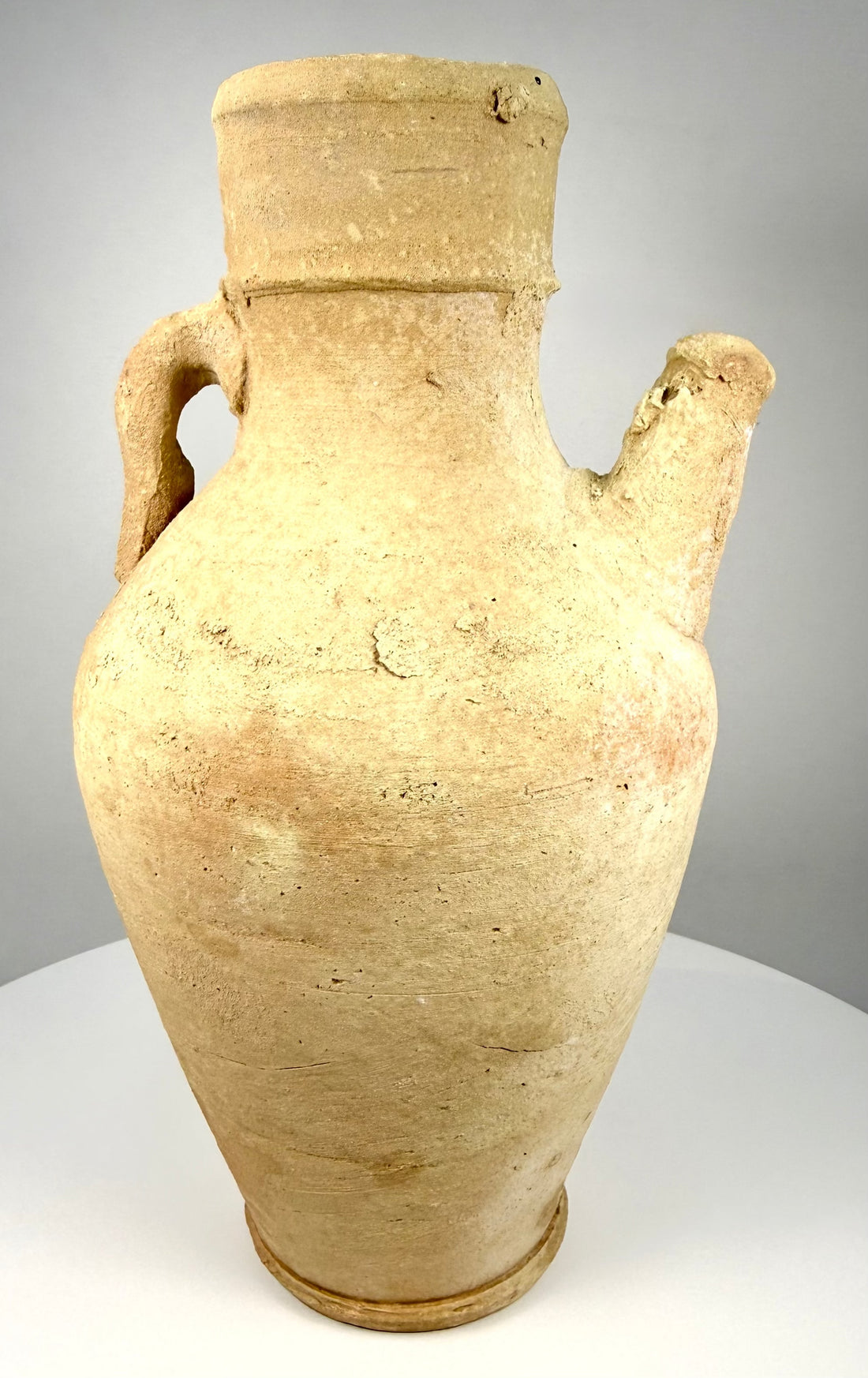
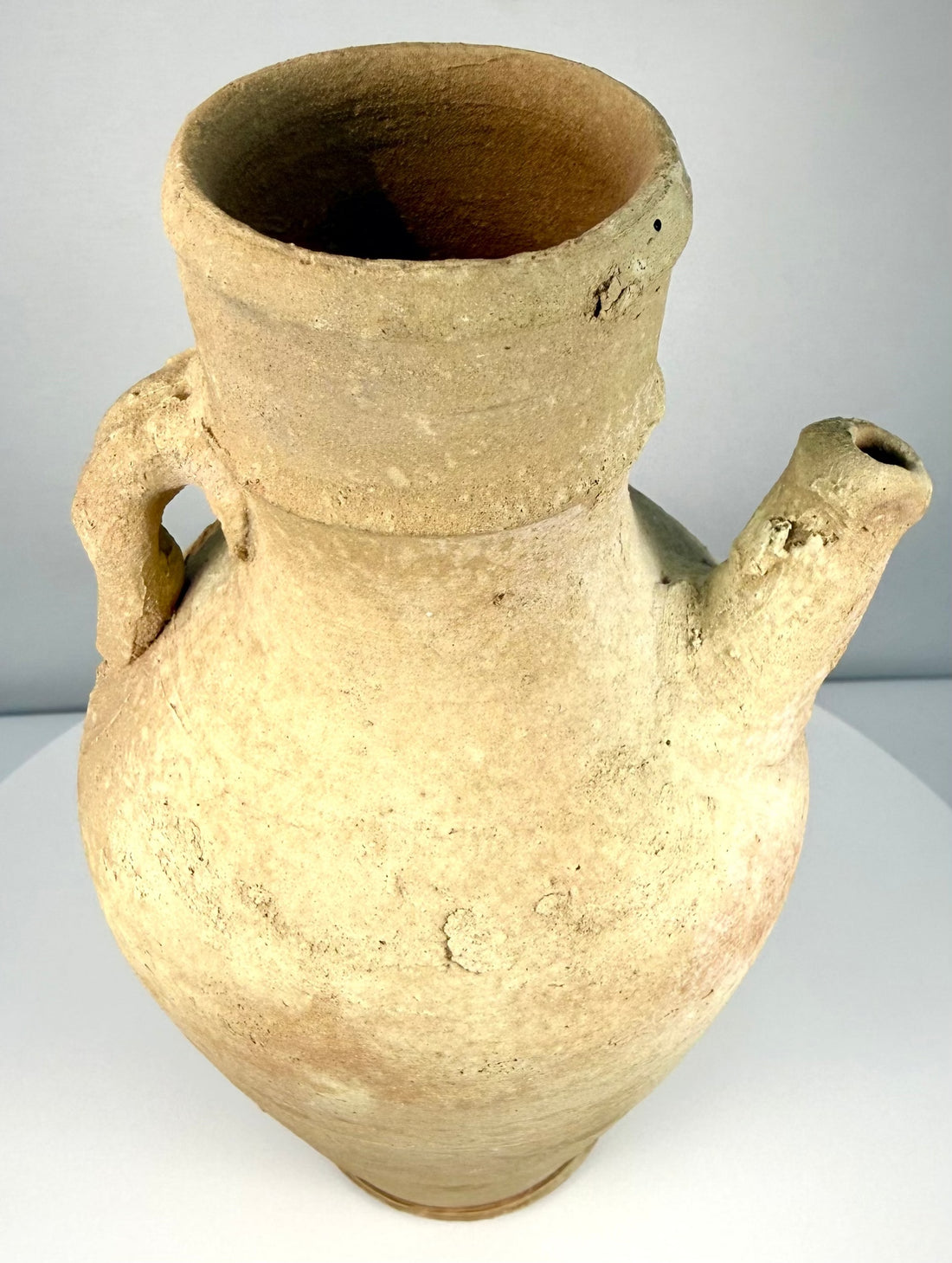
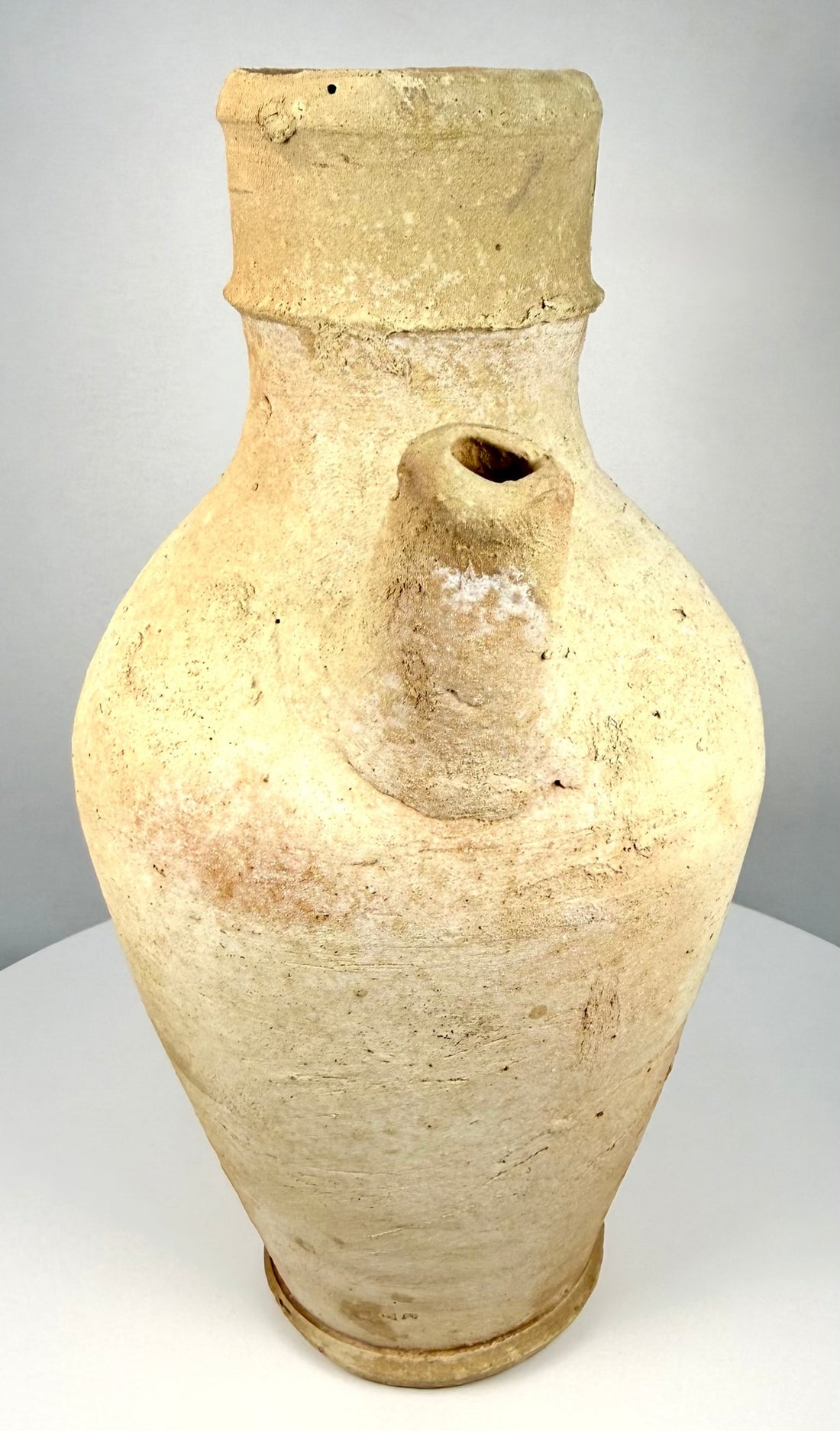
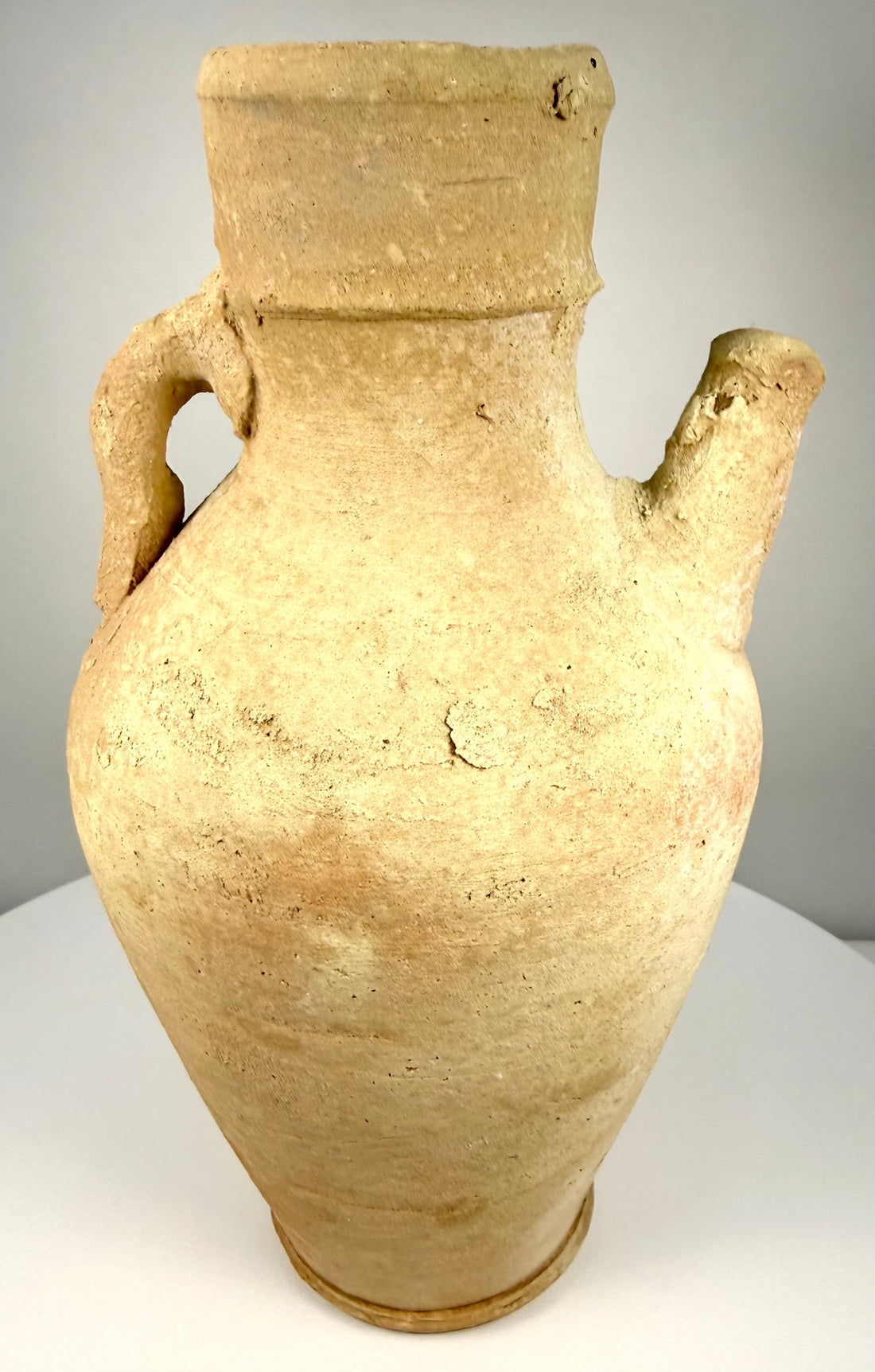
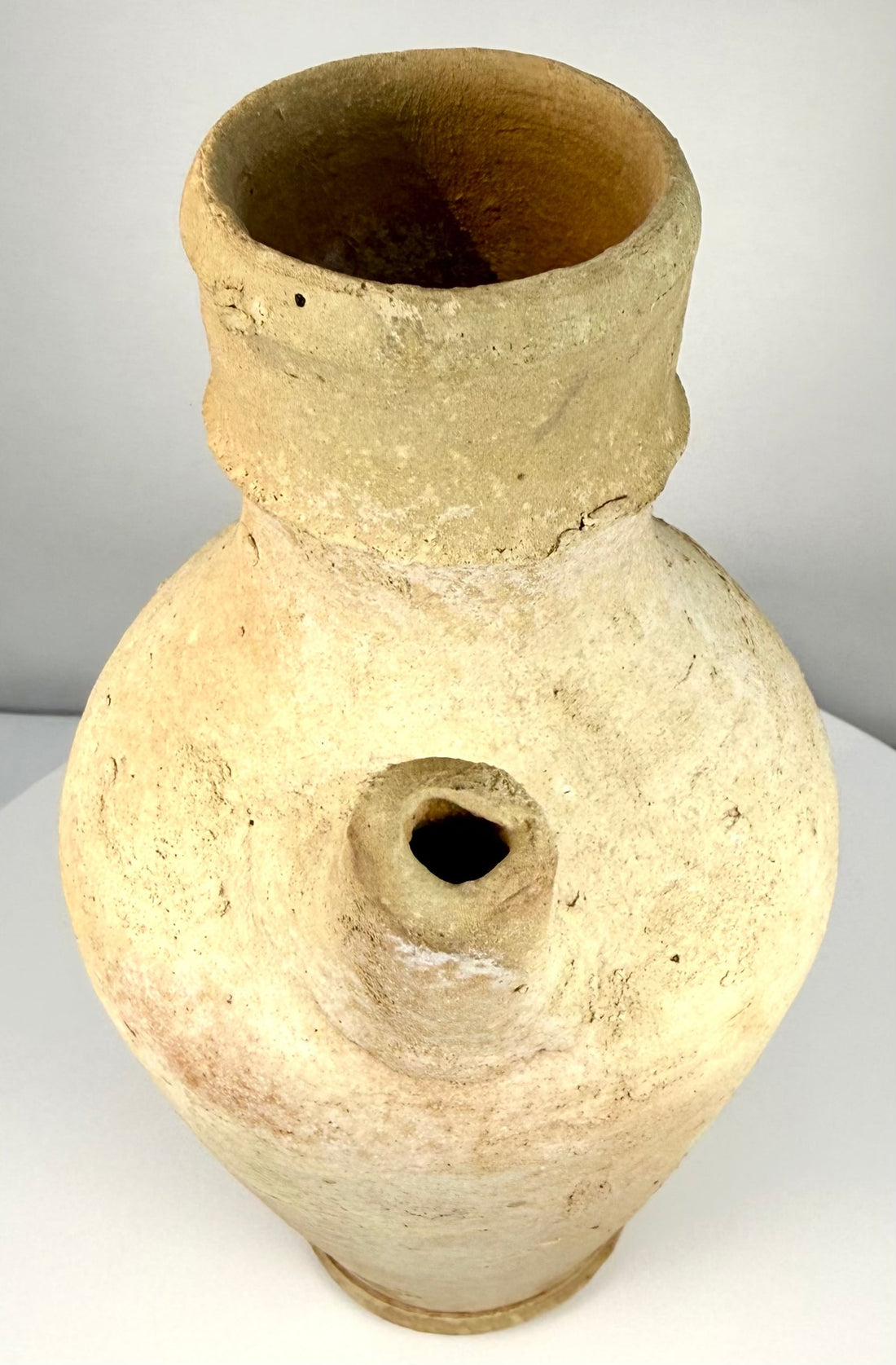
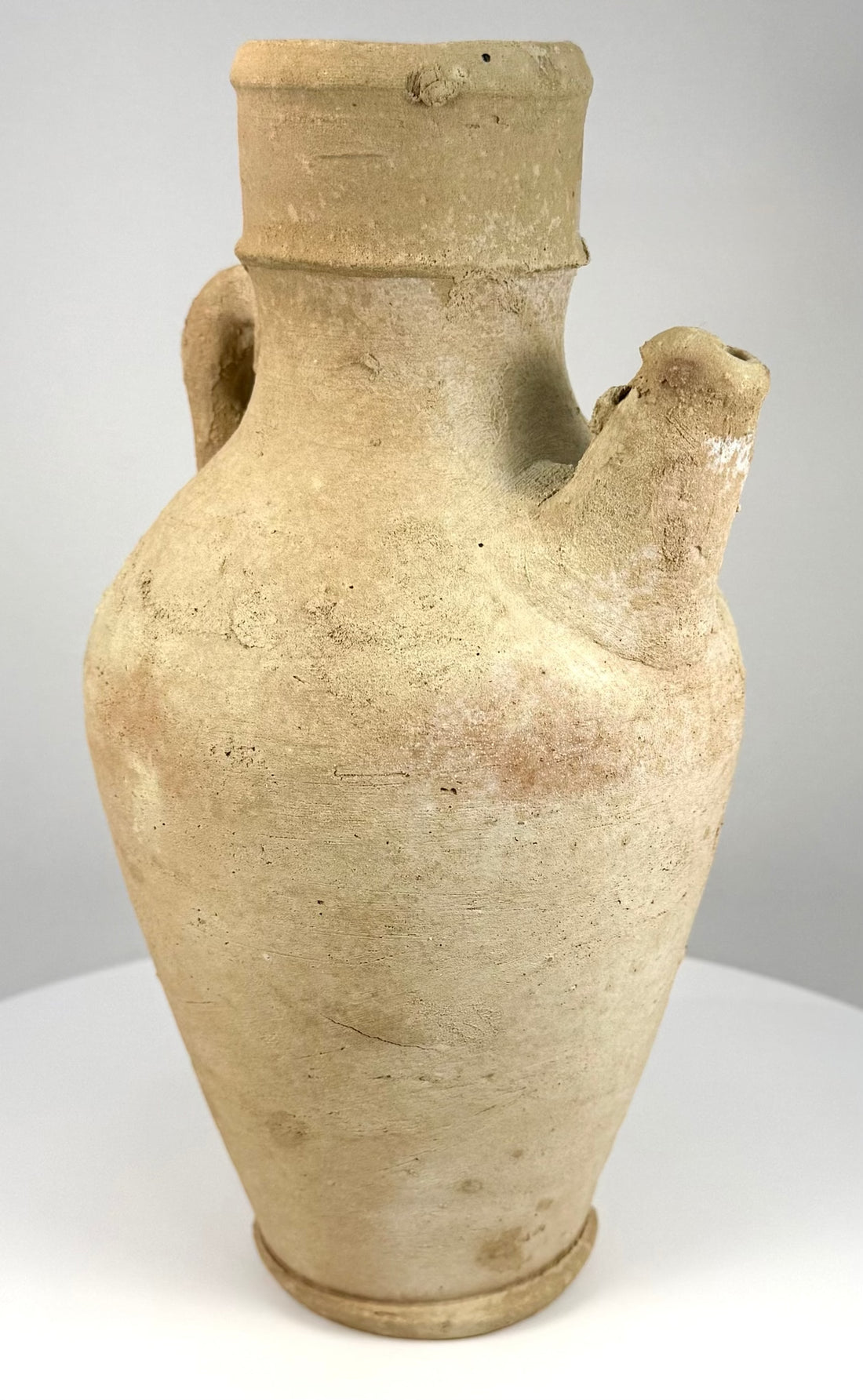
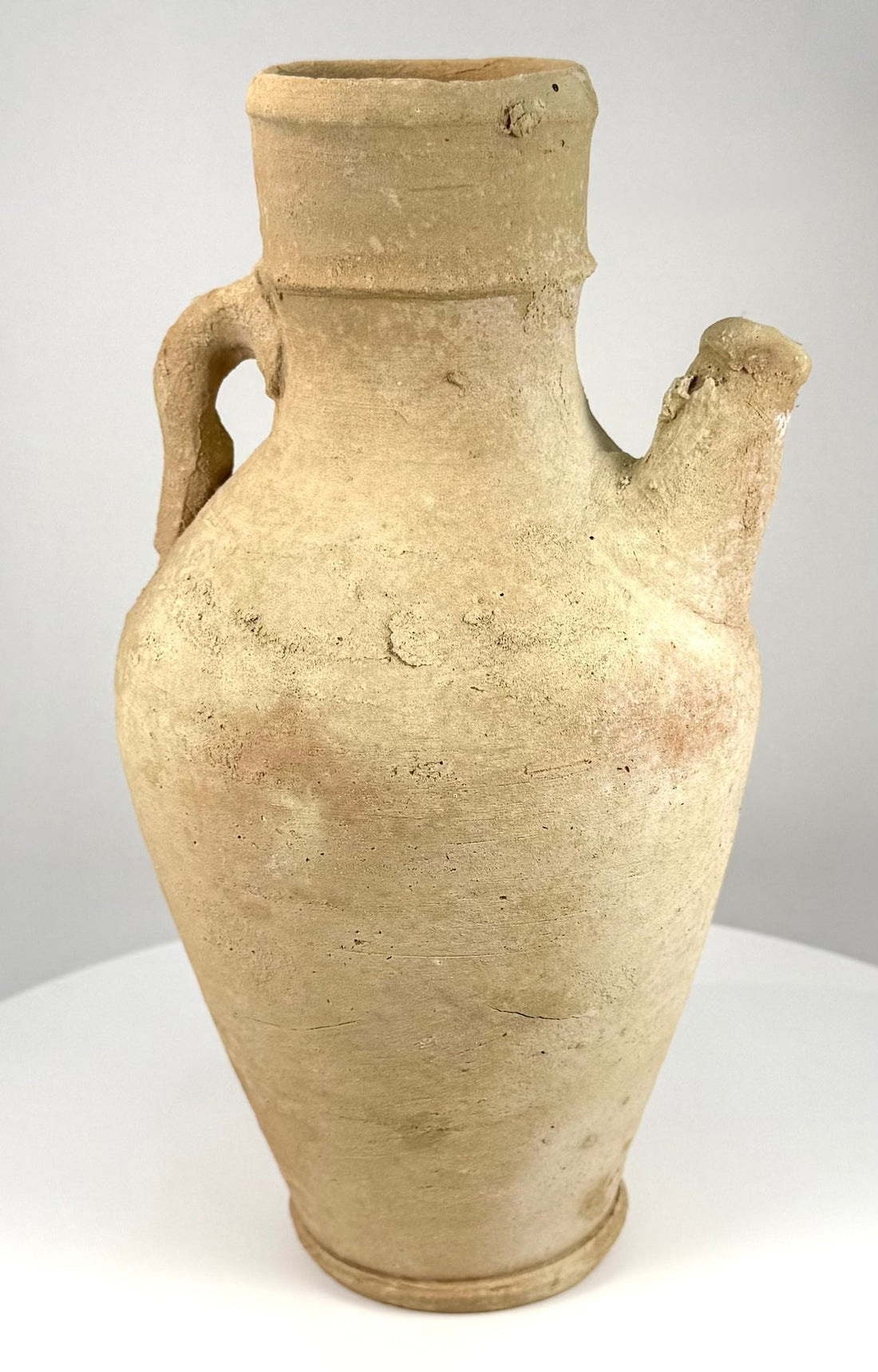
The vessel exhibits a broad, gently rounded shoulder transitioning into a tapered lower body and defined circular foot. Its tall cylindrical neck terminates in a thickened, slightly outward-projecting rim, with a narrow raised band encircling the lower neck. A substantial tubular spout projects upward from the shoulder at an outward angle, terminating in a worn, irregular opening. Positioned opposite the spout is a thick applied loop handle extending between the upper shoulder and neck, with visible variations in the clay surrounding its attachment points.
Fashioned from pale beige to sandy-cream earthenware, the vessel displays subtle ochre and reddish-brown discolouration, fine horizontal surface striations, and scattered mineral-like deposits. The underside retains a defined circular foot with visible concentric manufacturing marks. Its predominantly undecorated surface emphasizes the practical character of the design, while the distinctive combination of a tall neck, separately formed spout, and substantial handle gives the vessel an elegant and recognizable profile.
Features
- Rounded ovoid body with broad shoulders and gently tapering lower section
- Tall cylindrical neck with thickened, slightly projecting upper rim
- Distinctive upward-angled tubular pouring spout attached to the upper shoulder
- Single substantial applied loop handle positioned opposite the spout
- Narrow raised band encircling the lower portion of the neck
- Pale beige and sandy-cream terracotta with natural ochre and reddish-brown discolouration
- Fine horizontal surface striations visible across portions of the body
- Defined circular foot with concentric manufacturing marks on the underside
- Areas of surface weathering, minor pitting, and mineral-like accretions
- Predominantly undecorated construction emphasizing traditional utilitarian pottery design
Cultural Significance
Ceramic vessels were essential objects of daily life throughout the ancient Mediterranean, providing practical and durable containers for storing, transporting, preparing, and serving various commodities. During the Roman period, workshops across Italy, North Africa, Cyprus, the Levant, and other Mediterranean territories produced an extensive range of domestic and commercial pottery, reflecting established regional manufacturing traditions and changing household requirements.
Side-spouted vessels represent an interesting category of ancient ceramic technology. Their distinctive construction incorporated a projecting tubular outlet alongside a separate neck opening, allowing liquids to be directed through a relatively narrow spout. The accompanying handle provided a practical means of lifting and controlling the vessel during use. Comparable forms are documented in the ceramic traditions of ancient Cyprus and the wider Eastern Mediterranean, with similar functional arrangements appearing across different historical periods.
Unlike elaborate painted or ceremonial pottery, undecorated utilitarian vessels provide valuable insight into everyday craftsmanship, ceramic production, and domestic practices. The combination of a rounded body, raised neck, applied handle, and projecting spout illustrates how ancient potters adapted familiar ceramic forms to accommodate practical requirements. The survival of such objects contributes to our understanding of material culture and the development of functional pottery throughout the ancient Mediterranean world.
Condition
The vessel displays visible surface wear, irregularities, and areas of discolouration consistent with its previously reported antiquity. The terracotta body retains its overall form, including the tall neck, projecting tubular spout, applied loop handle, rounded shoulder, and circular foot. The surface exhibits scattered abrasions, minor pitting, patches of accretion, small chips, and localized areas of darker brown and reddish staining. Fine horizontal manufacturing marks remain visible across portions of the body. Several fine surface cracks and fissures are present, particularly around the upper shoulder, neck junction, and portions of the main body. The handle attachment areas display additional irregularities and surface wear, while minor losses and roughness are visible around the spout and upper rim. The interior exhibits a darker natural earthenware colour, and the underside retains visible concentric marks and accumulated surface deposits.
Dimensions (Approximate)
Height: 9 in
Widest Body Diameter: 4.5 in
Age (Approximate)
1,600–2,000 years old
Provenance
Formerly handled by Gallery Elder, Ottawa, Ontario, Canada, an established Canadian gallery specializing in antiques, historical artifacts, decorative arts, fine art, and collectible objects representing a broad range of historical periods and cultural traditions.
Subsequently acquired into a private collection in Ottawa, Ontario, Canada, where the vessel was preserved alongside other historical and archaeological objects representing different civilizations and periods.
Learn More
Explore a comparable Roman Cypriot terracotta strainer jug dating to the 1st century CE, featuring a handle and projecting spout, through The Metropolitan Museum of Art
Discover additional ancient Mediterranean pottery, historical vessels, and ceramic artifacts in our Ceramics & Pottery Collection
Description
Historical Context & Origin
Region: Eastern Mediterranean, precise origin undetermined
Material: Terracotta, buff-coloured fired earthenware with surface deposits and natural mineral discolouration
Period: Roman Imperial to Late Roman Period, circa 1st–4th Century CE (traditional attribution)
Description
This substantial Eastern Mediterranean terracotta pouring vessel features a rounded ovoid body, elongated cylindrical neck, single applied loop handle, and distinctive upward-projecting tubular spout. Traditionally attributed to the Roman Imperial to Late Roman period, the vessel reflects a broader tradition of functional ceramic forms developed throughout the ancient Mediterranean world for storing, handling, and dispensing liquids.
The vessel exhibits a broad, gently rounded shoulder transitioning into a tapered lower body and defined circular foot. Its tall cylindrical neck terminates in a thickened, slightly outward-projecting rim, with a narrow raised band encircling the lower neck. A substantial tubular spout projects upward from the shoulder at an outward angle, terminating in a worn, irregular opening. Positioned opposite the spout is a thick applied loop handle extending between the upper shoulder and neck, with visible variations in the clay surrounding its attachment points.
Fashioned from pale beige to sandy-cream earthenware, the vessel displays subtle ochre and reddish-brown discolouration, fine horizontal surface striations, and scattered mineral-like deposits. The underside retains a defined circular foot with visible concentric manufacturing marks. Its predominantly undecorated surface emphasizes the practical character of the design, while the distinctive combination of a tall neck, separately formed spout, and substantial handle gives the vessel an elegant and recognizable profile.
Features
- Rounded ovoid body with broad shoulders and gently tapering lower section
- Tall cylindrical neck with thickened, slightly projecting upper rim
- Distinctive upward-angled tubular pouring spout attached to the upper shoulder
- Single substantial applied loop handle positioned opposite the spout
- Narrow raised band encircling the lower portion of the neck
- Pale beige and sandy-cream terracotta with natural ochre and reddish-brown discolouration
- Fine horizontal surface striations visible across portions of the body
- Defined circular foot with concentric manufacturing marks on the underside
- Areas of surface weathering, minor pitting, and mineral-like accretions
- Predominantly undecorated construction emphasizing traditional utilitarian pottery design
Cultural Significance
Ceramic vessels were essential objects of daily life throughout the ancient Mediterranean, providing practical and durable containers for storing, transporting, preparing, and serving various commodities. During the Roman period, workshops across Italy, North Africa, Cyprus, the Levant, and other Mediterranean territories produced an extensive range of domestic and commercial pottery, reflecting established regional manufacturing traditions and changing household requirements.
Side-spouted vessels represent an interesting category of ancient ceramic technology. Their distinctive construction incorporated a projecting tubular outlet alongside a separate neck opening, allowing liquids to be directed through a relatively narrow spout. The accompanying handle provided a practical means of lifting and controlling the vessel during use. Comparable forms are documented in the ceramic traditions of ancient Cyprus and the wider Eastern Mediterranean, with similar functional arrangements appearing across different historical periods.
Unlike elaborate painted or ceremonial pottery, undecorated utilitarian vessels provide valuable insight into everyday craftsmanship, ceramic production, and domestic practices. The combination of a rounded body, raised neck, applied handle, and projecting spout illustrates how ancient potters adapted familiar ceramic forms to accommodate practical requirements. The survival of such objects contributes to our understanding of material culture and the development of functional pottery throughout the ancient Mediterranean world.
Condition
The vessel displays visible surface wear, irregularities, and areas of discolouration consistent with its previously reported antiquity. The terracotta body retains its overall form, including the tall neck, projecting tubular spout, applied loop handle, rounded shoulder, and circular foot. The surface exhibits scattered abrasions, minor pitting, patches of accretion, small chips, and localized areas of darker brown and reddish staining. Fine horizontal manufacturing marks remain visible across portions of the body. Several fine surface cracks and fissures are present, particularly around the upper shoulder, neck junction, and portions of the main body. The handle attachment areas display additional irregularities and surface wear, while minor losses and roughness are visible around the spout and upper rim. The interior exhibits a darker natural earthenware colour, and the underside retains visible concentric marks and accumulated surface deposits.
Dimensions (Approximate)
Height: 9 in
Widest Body Diameter: 4.5 in
Age (Approximate)
1,600–2,000 years old
Provenance
Formerly handled by Gallery Elder, Ottawa, Ontario, Canada, an established Canadian gallery specializing in antiques, historical artifacts, decorative arts, fine art, and collectible objects representing a broad range of historical periods and cultural traditions.
Subsequently acquired into a private collection in Ottawa, Ontario, Canada, where the vessel was preserved alongside other historical and archaeological objects representing different civilizations and periods.
Learn More
Explore a comparable Roman Cypriot terracotta strainer jug dating to the 1st century CE, featuring a handle and projecting spout, through The Metropolitan Museum of Art
Discover additional ancient Mediterranean pottery, historical vessels, and ceramic artifacts in our Ceramics & Pottery Collection
Vous aimerez peut-être aussi
