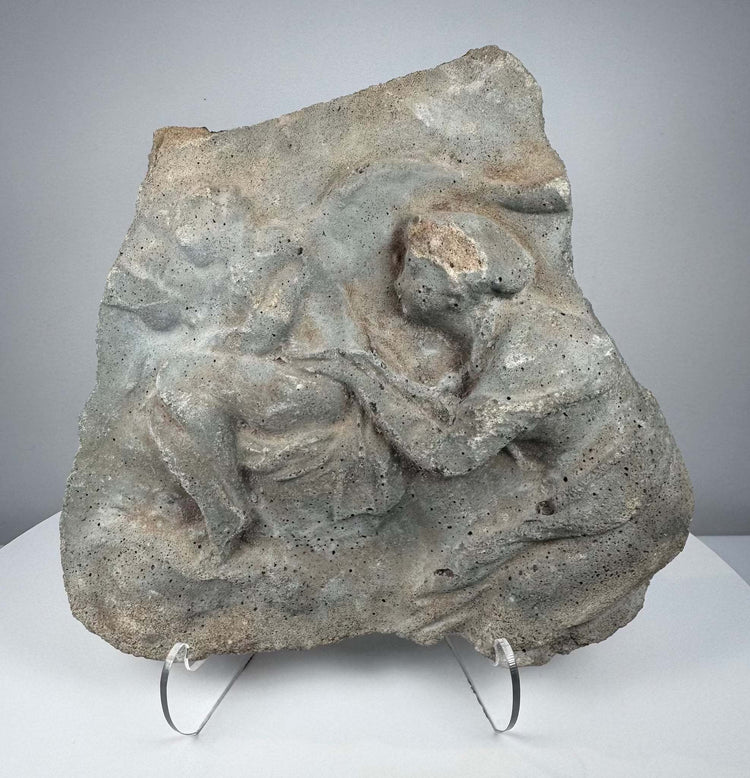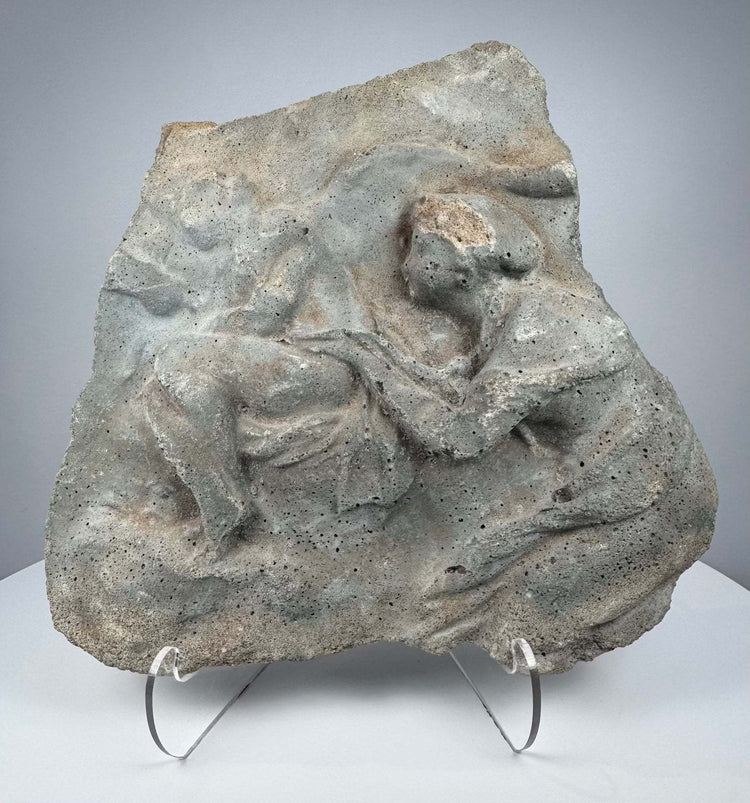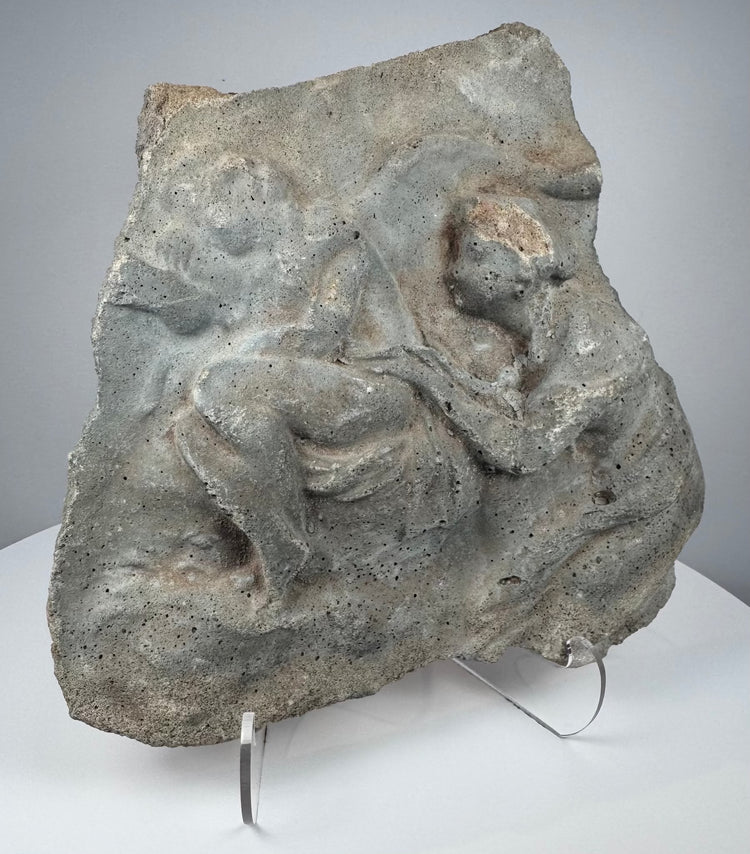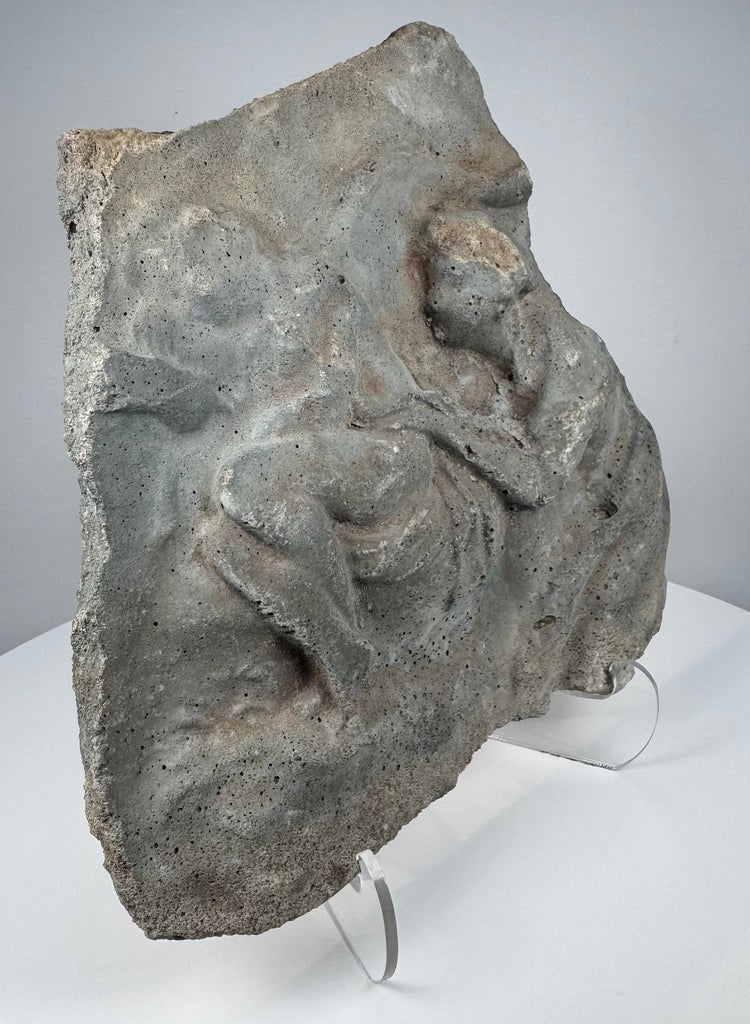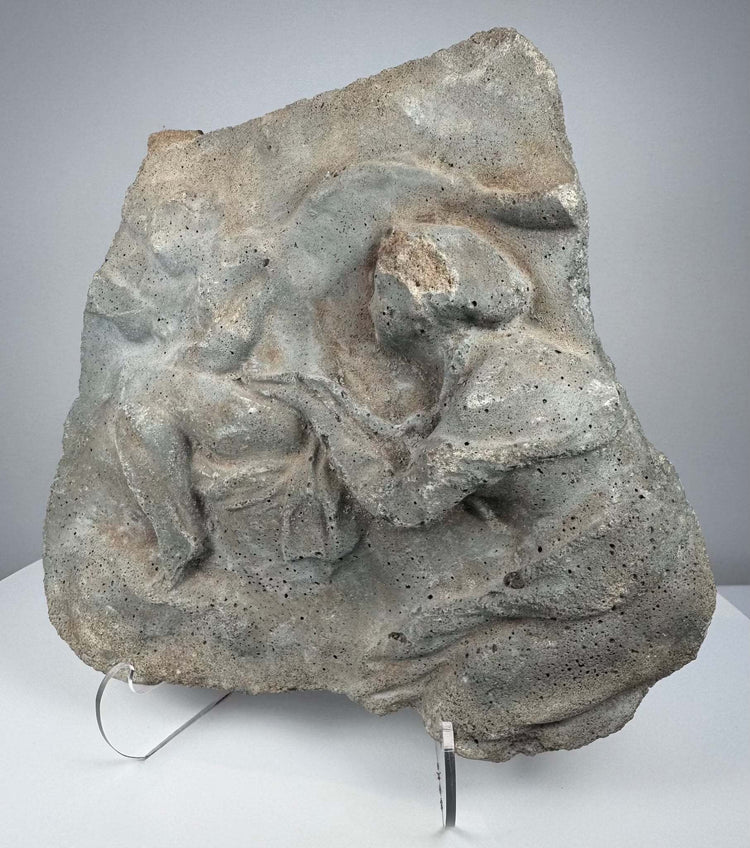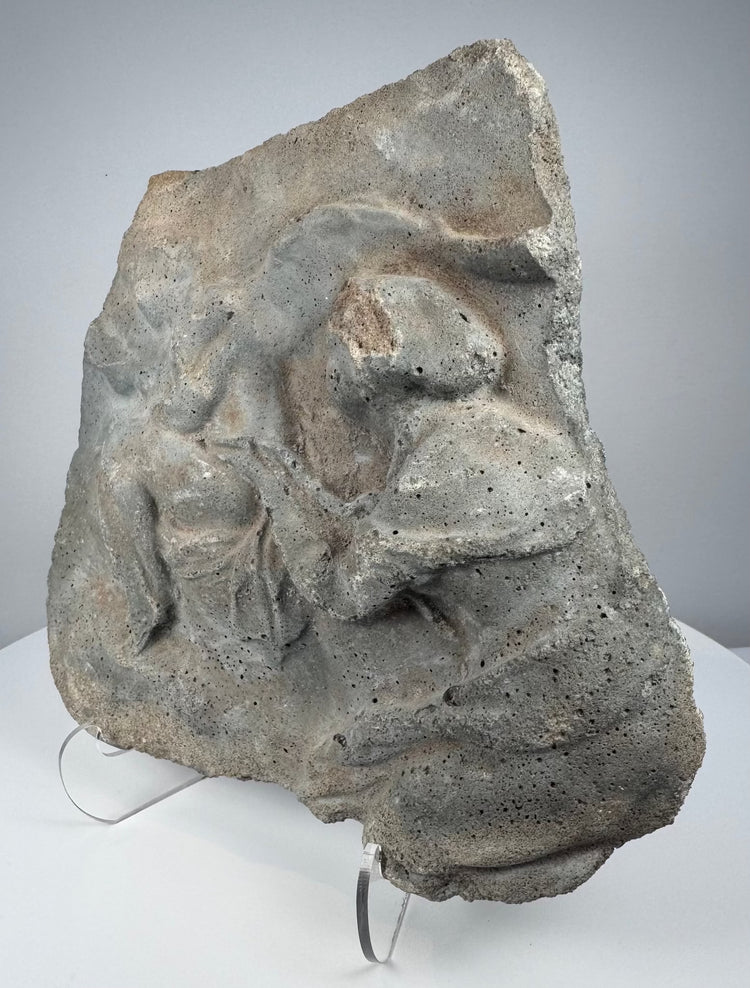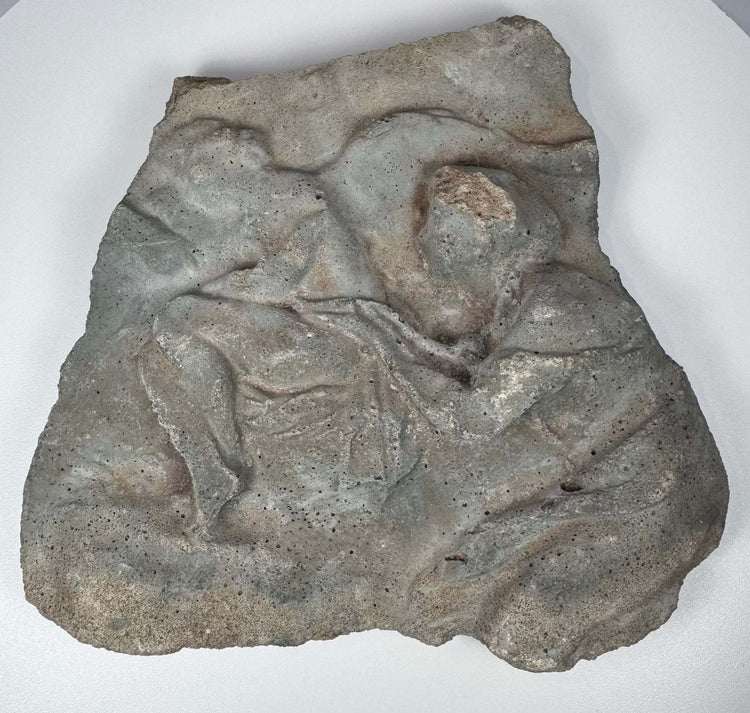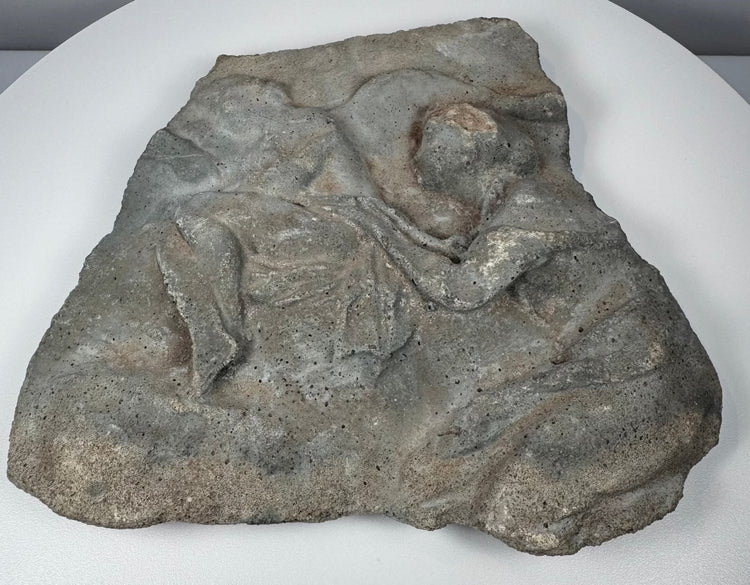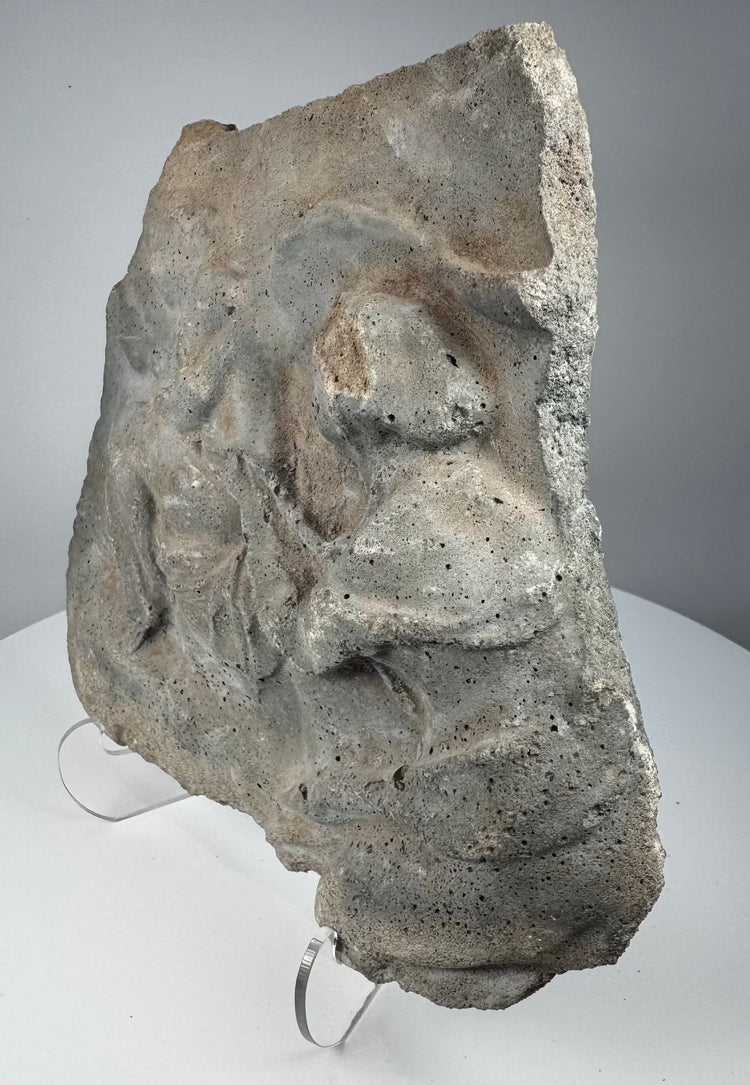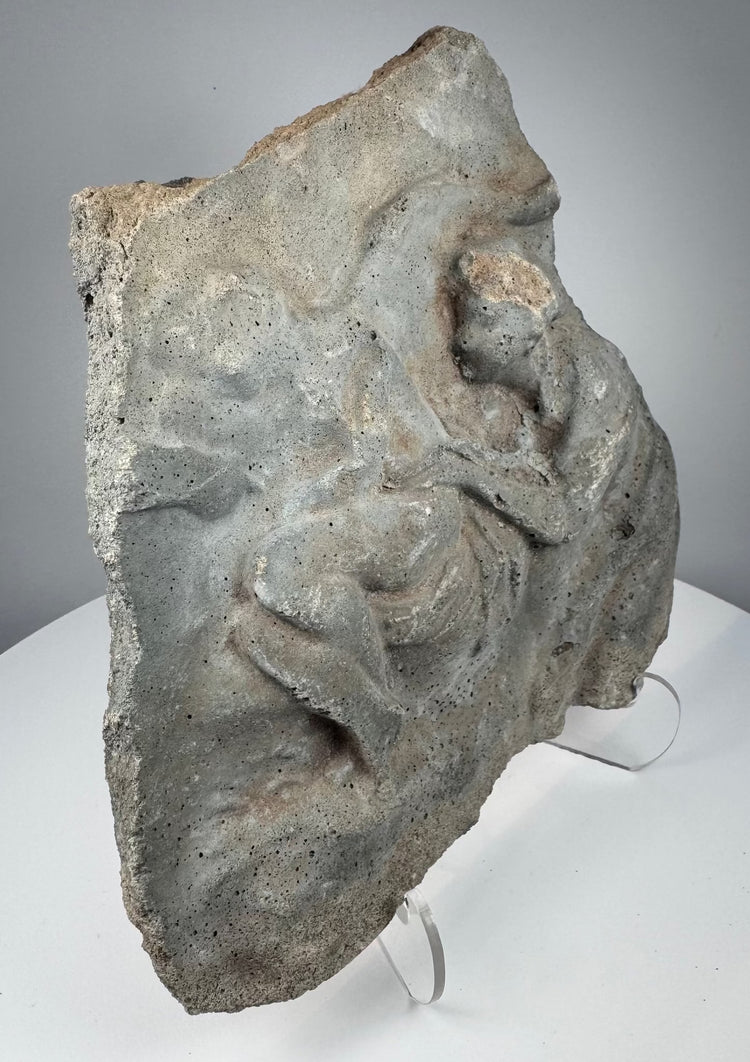

Fragment de bas-relief en calcaire classique | Deux figures humaines sculptées | Méditerranéen ou Proche-Orient | Circa 500 av. J.-C.–500 apr. J.-C.

Historique de provenance et de propriété

Anciennement détenu dans une collection privée à Branford, Connecticut, États-Unis, comprenant une collection d'artefacts européens.

Prix habituel
$1,500.00
Prix soldé
$1,500.00
Prix habituel
Frais de port calculés à la caisse.

This is a one-of-a-kind historical object. Once sold, this exact piece will not be restocked.

Questions before acquiring? Additional photographs, condition details, documentation, shipping information or a private viewing are available upon request.
Ancient carved limestone relief fragment from the Mediterranean or Near East, Classical Period (circa 500 BCE–500 CE). Features two expressive human figures, likely part of a larger mythological or commemorative scene. Weathered surface and patina reflect centuries of age and Classical artistic traditions.
Rotating presentation of ancient Roman figural relief fragment carved in volcanic tuff, showing weathered Classical figures and porous stone texture
Roman volcanic tuff relief fragment with weathered Classical figures and ancient stone patina
Ancient Roman carved stone relief depicting two Classical figures in deeply weathered volcanic tuff
Classical Roman figural relief fragment with surviving drapery and sculptural details carved in volcanic tuff
Ancient Roman volcanic stone carving with eroded figural composition, porous surface and mineral deposits
Roman relief fragment in gray volcanic tuff showing weathered human figures and naturally pitted stone surface
Ancient Classical relief sculpture carved from porous volcanic tuff with heavily weathered figural decoration
Roman volcanic tuff fragment with raised figural carving, irregular ancient-style edges and aged surface deposits
Ancient Roman stone relief showing surviving Classical figures, carved drapery and extensive surface weathering
Carved Roman volcanic tuff relief fragment displaying porous stone grain, sculptural erosion and mineral encrustation
Reverse of Roman volcanic tuff relief fragment showing rough uncarved surface, porous stone texture and mineral deposits
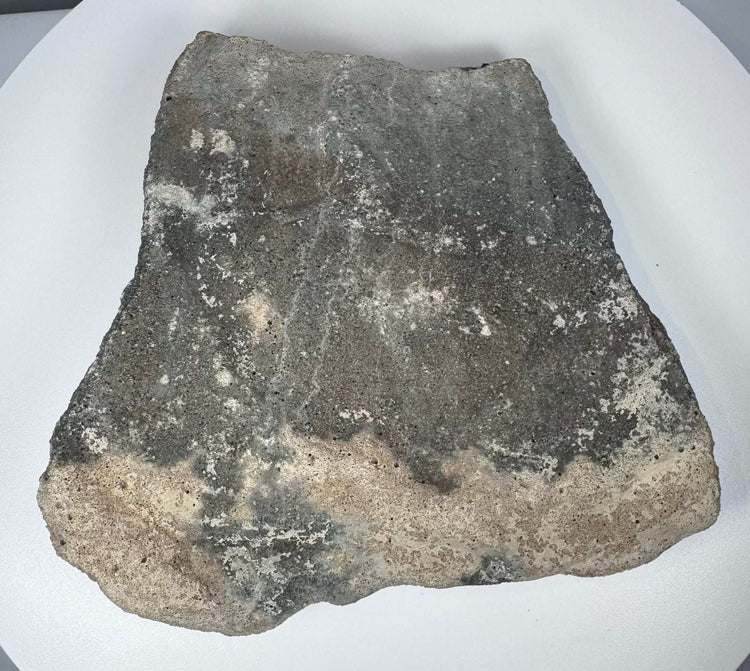
Ancient Roman figural stone fragment with weathered relief carving and gray volcanic tuff surface, circa 1st century BCE–2nd century CE
  • Ancient carved limestone relief fragment from the Mediterranean or Near East, Classical Period (circa 500 BCE–500 CE). Features two expressive human figures, likely part of a larger mythological or commemorative scene. Weathered surface and patina reflect centuries of age and Classical artistic traditions.
  • Rotating presentation of ancient Roman figural relief fragment carved in volcanic tuff, showing weathered Classical figures and porous stone texture
  • Roman volcanic tuff relief fragment with weathered Classical figures and ancient stone patina
  • Ancient Roman carved stone relief depicting two Classical figures in deeply weathered volcanic tuff
  • Classical Roman figural relief fragment with surviving drapery and sculptural details carved in volcanic tuff
  • Ancient Roman volcanic stone carving with eroded figural composition, porous surface and mineral deposits
  • Roman relief fragment in gray volcanic tuff showing weathered human figures and naturally pitted stone surface
  • Ancient Classical relief sculpture carved from porous volcanic tuff with heavily weathered figural decoration
  • Roman volcanic tuff fragment with raised figural carving, irregular ancient-style edges and aged surface deposits
  • Ancient Roman stone relief showing surviving Classical figures, carved drapery and extensive surface weathering
  • Carved Roman volcanic tuff relief fragment displaying porous stone grain, sculptural erosion and mineral encrustation
  • Reverse of Roman volcanic tuff relief fragment showing rough uncarved surface, porous stone texture and mineral deposits
  • Ancient Roman figural stone fragment with weathered relief carving and gray volcanic tuff surface, circa 1st century BCE–2nd century CE
Ancient carved limestone relief fragment from the Mediterranean or Near East, Classical Period (circa 500 BCE–500 CE). Features two expressive human figures, likely part of a larger mythological or commemorative scene. Weathered surface and patina reflect centuries of age and Classical artistic traditions.
Rotating presentation of ancient Roman figural relief fragment carved in volcanic tuff, showing weathered Classical figures and porous stone texture
Roman volcanic tuff relief fragment with weathered Classical figures and ancient stone patina
Ancient Roman carved stone relief depicting two Classical figures in deeply weathered volcanic tuff
Classical Roman figural relief fragment with surviving drapery and sculptural details carved in volcanic tuff
Ancient Roman volcanic stone carving with eroded figural composition, porous surface and mineral deposits
Roman relief fragment in gray volcanic tuff showing weathered human figures and naturally pitted stone surface
Ancient Classical relief sculpture carved from porous volcanic tuff with heavily weathered figural decoration
Roman volcanic tuff fragment with raised figural carving, irregular ancient-style edges and aged surface deposits
Ancient Roman stone relief showing surviving Classical figures, carved drapery and extensive surface weathering
Carved Roman volcanic tuff relief fragment displaying porous stone grain, sculptural erosion and mineral encrustation
Reverse of Roman volcanic tuff relief fragment showing rough uncarved surface, porous stone texture and mineral deposits
Ancient Roman figural stone fragment with weathered relief carving and gray volcanic tuff surface, circa 1st century BCE–2nd century CE
Authenticity and secure checkout guarantee

Fragment de bas-relief en calcaire classique | Deux figures humaines sculptées | Méditerranéen ou Proche-Orient | Circa 500 av. J.-C.–500 apr. J.-C.

Description

Contexte historique et origine

Région : Méditerranée ou Proche-Orient
Matériau : Calcaire sculpté
Période : Période classique, vers 500 av. J.-C. – 500 apr. J.-C.

Description

Ce fragment d’un ancien relief en pierre sculptée présente deux figures humaines réalisées avec des détails à la fois doux et expressifs. Les figures, délicatement sculptées avec une émotion visible, suggèrent que le relief faisait autrefois partie d’une scène narrative plus vaste, possiblement de nature mythologique ou commémorative. Son style raffiné reflète les traditions narratives des civilisations classiques méditerranéennes et du Proche-Orient.

Caractéristiques

- Représentation de deux figures humaines sculptées avec des détails expressifs

- Surface patinée avec des dépôts minéraux provenant de siècles de vieillissement

- Faisait probablement partie d’une composition architecturale ou narrative plus grande

- Taille compacte, adaptée à l’exposition tout en conservant son impact historique

Signification culturelle

Les reliefs en pierre étaient essentiels à l’identité artistique et culturelle des civilisations classiques. Ils étaient souvent intégrés dans des temples, des tombeaux ou des espaces publics, remplissant des fonctions à la fois décoratives et symboliques. Ce fragment se connecte directement aux traditions narratives du monde antique, où l’imagerie sculptée racontait des histoires de dieux, de héros et d’événements historiques importants.

État

Le relief est en bon état de conservation ancien, avec une patine et une altération de surface conformes à une exposition prolongée et à l’âge. Les légers éclats et l’usure n’altèrent pas la lisibilité des figures, ajoutant plutôt à son authenticité et à son caractère historique.

Dimensions (approximatives)

Hauteur : 19 cm
Largeur : 17,8 cm

Âge (approximatif)

1 525 – 2 525 ans

Provenance

Anciennement détenue dans une collection privée à Branford, Connecticut, États-Unis, comprenant une collection d’artefacts européens.

En savoir plus

Voir un relief en calcaire similaire au Metropolitan Museum of Art

Découvrez d’autres fragments de calcaire dans notre collection : Fragment hiéroglyphique en calcaire égyptien sculpté, VIIe siècle av. J.-C. et Fragment de couvercle de jarre canope en calcaire d’Imsety, vers 1550–1070 av. J.-C.

Description

Contexte historique et origine

Région : Méditerranée ou Proche-Orient
Matériau : Calcaire sculpté
Période : Période classique, vers 500 av. J.-C. – 500 apr. J.-C.

Description

Ce fragment d’un ancien relief en pierre sculptée présente deux figures humaines réalisées avec des détails à la fois doux et expressifs. Les figures, délicatement sculptées avec une émotion visible, suggèrent que le relief faisait autrefois partie d’une scène narrative plus vaste, possiblement de nature mythologique ou commémorative. Son style raffiné reflète les traditions narratives des civilisations classiques méditerranéennes et du Proche-Orient.

Caractéristiques

- Représentation de deux figures humaines sculptées avec des détails expressifs

- Surface patinée avec des dépôts minéraux provenant de siècles de vieillissement

- Faisait probablement partie d’une composition architecturale ou narrative plus grande

- Taille compacte, adaptée à l’exposition tout en conservant son impact historique

Signification culturelle

Les reliefs en pierre étaient essentiels à l’identité artistique et culturelle des civilisations classiques. Ils étaient souvent intégrés dans des temples, des tombeaux ou des espaces publics, remplissant des fonctions à la fois décoratives et symboliques. Ce fragment se connecte directement aux traditions narratives du monde antique, où l’imagerie sculptée racontait des histoires de dieux, de héros et d’événements historiques importants.

État

Le relief est en bon état de conservation ancien, avec une patine et une altération de surface conformes à une exposition prolongée et à l’âge. Les légers éclats et l’usure n’altèrent pas la lisibilité des figures, ajoutant plutôt à son authenticité et à son caractère historique.

Dimensions (approximatives)

Hauteur : 19 cm
Largeur : 17,8 cm

Âge (approximatif)

1 525 – 2 525 ans

Provenance

Anciennement détenue dans une collection privée à Branford, Connecticut, États-Unis, comprenant une collection d’artefacts européens.

En savoir plus

Voir un relief en calcaire similaire au Metropolitan Museum of Art

Découvrez d’autres fragments de calcaire dans notre collection : Fragment hiéroglyphique en calcaire égyptien sculpté, VIIe siècle av. J.-C. et Fragment de couvercle de jarre canope en calcaire d’Imsety, vers 1550–1070 av. J.-C.

Vous aimerez peut-être aussi