
Crâne anatomique ancien | Véritable spécimen humain sur support en bois | Circa XIXe siècle
- Prix habituel
- $2,000.00
- Prix soldé
- $2,000.00
- Prix habituel
Impossible de charger la disponibilité du service de retrait


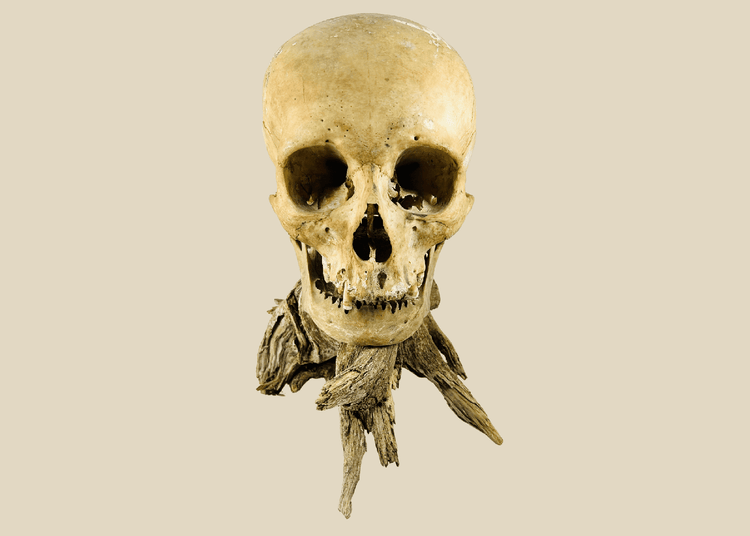
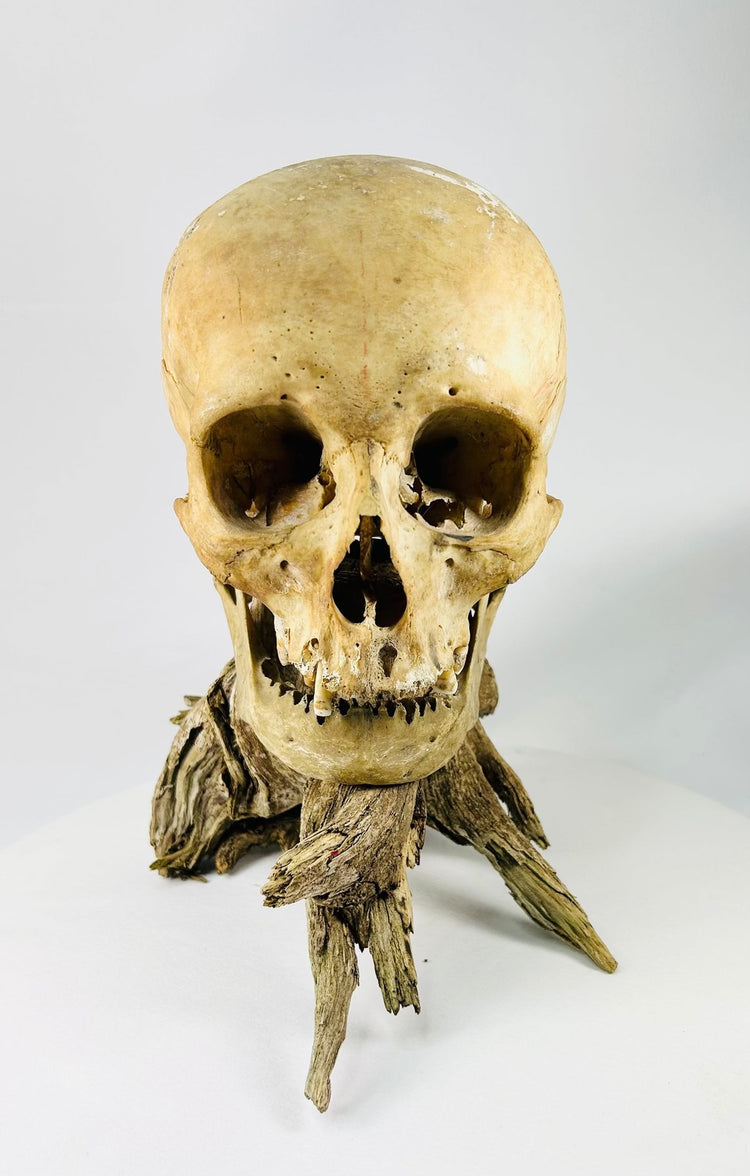
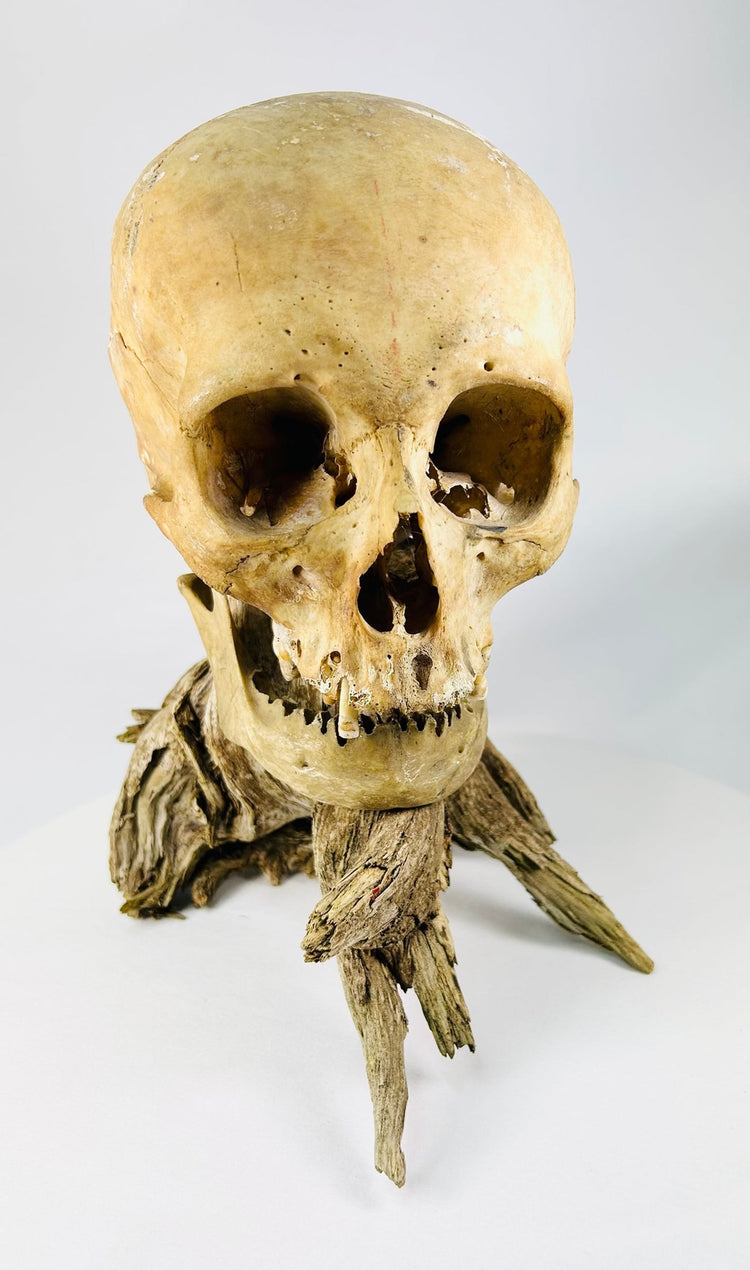
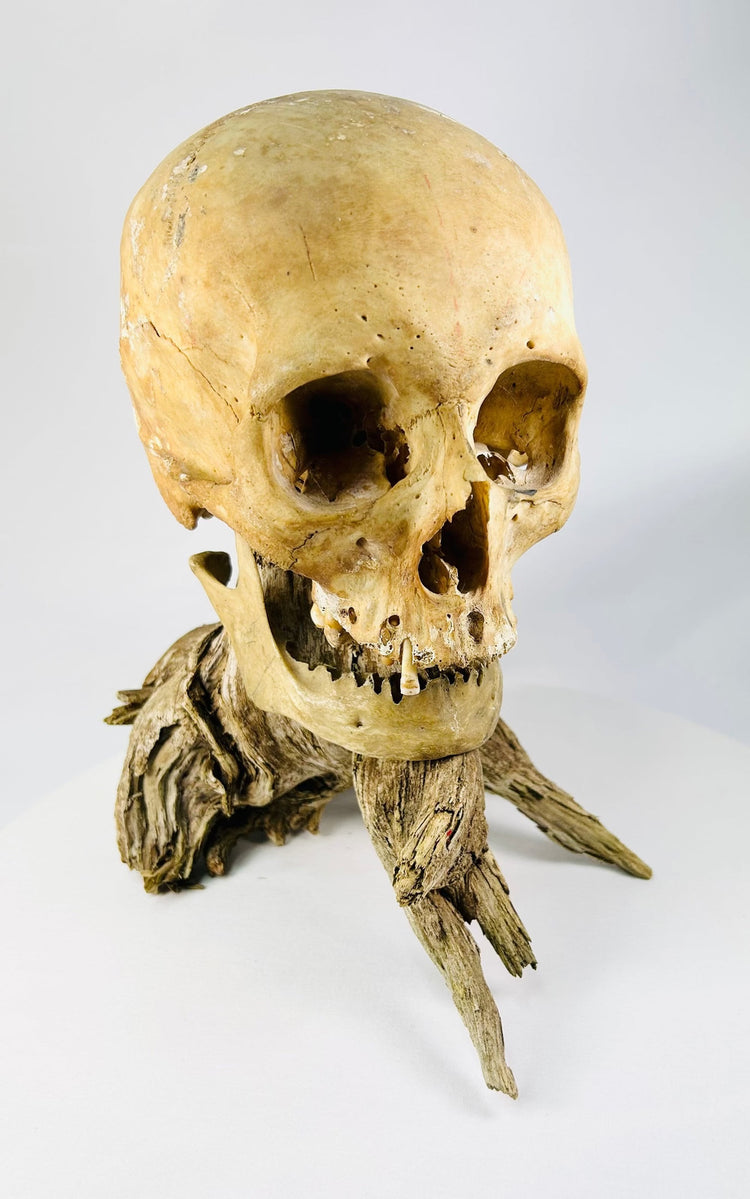
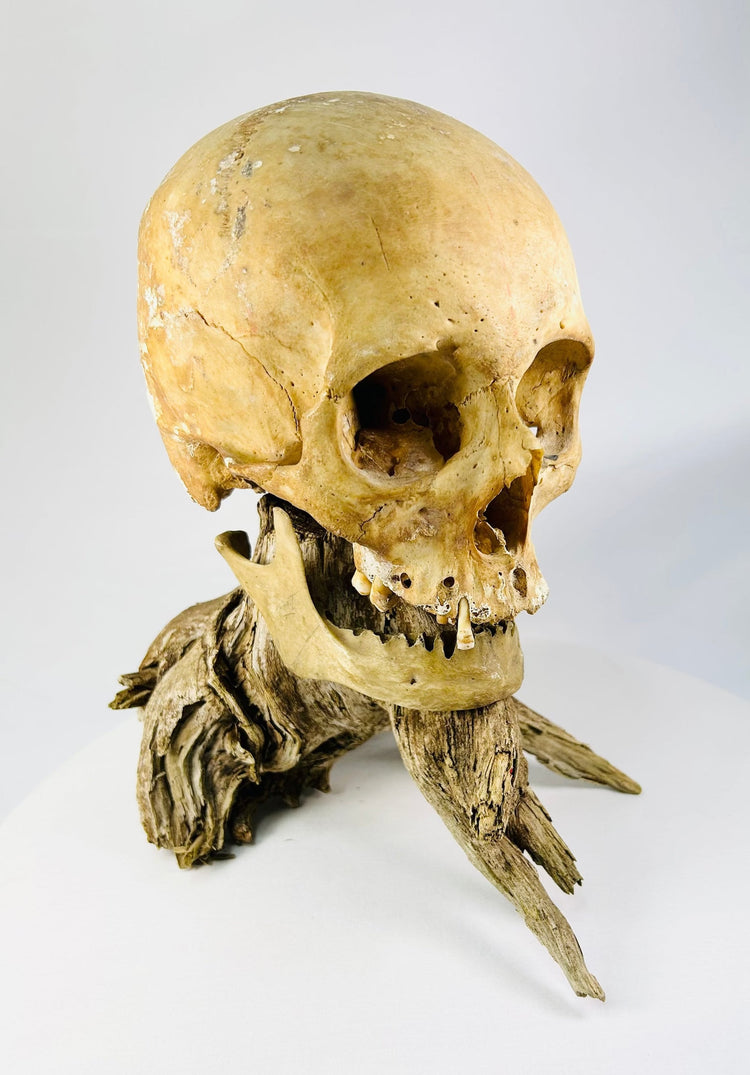
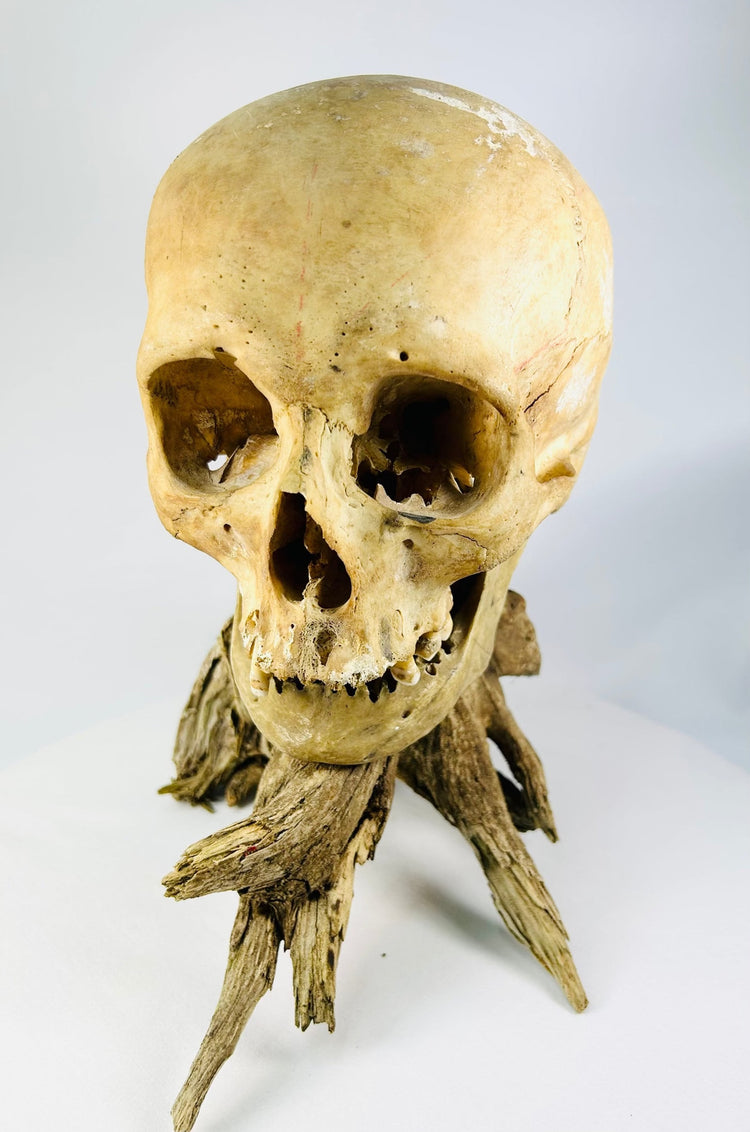
Crâne anatomique ancien | Véritable spécimen humain sur support en bois | Circa XIXe siècle
Description
Plus
Moins
Contexte historique et origine
Région : Europe ou Amérique du Nord
Matériau : Os humain, bois flotté naturel
Période : Fin du XIXe-début du XXe siècle
Description
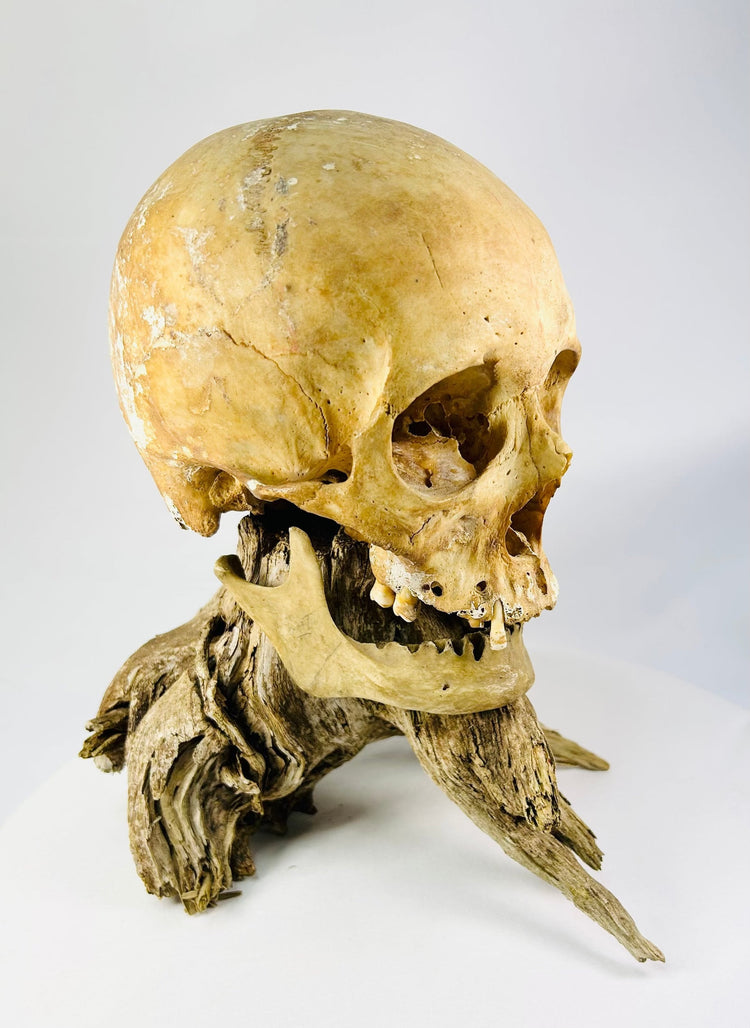
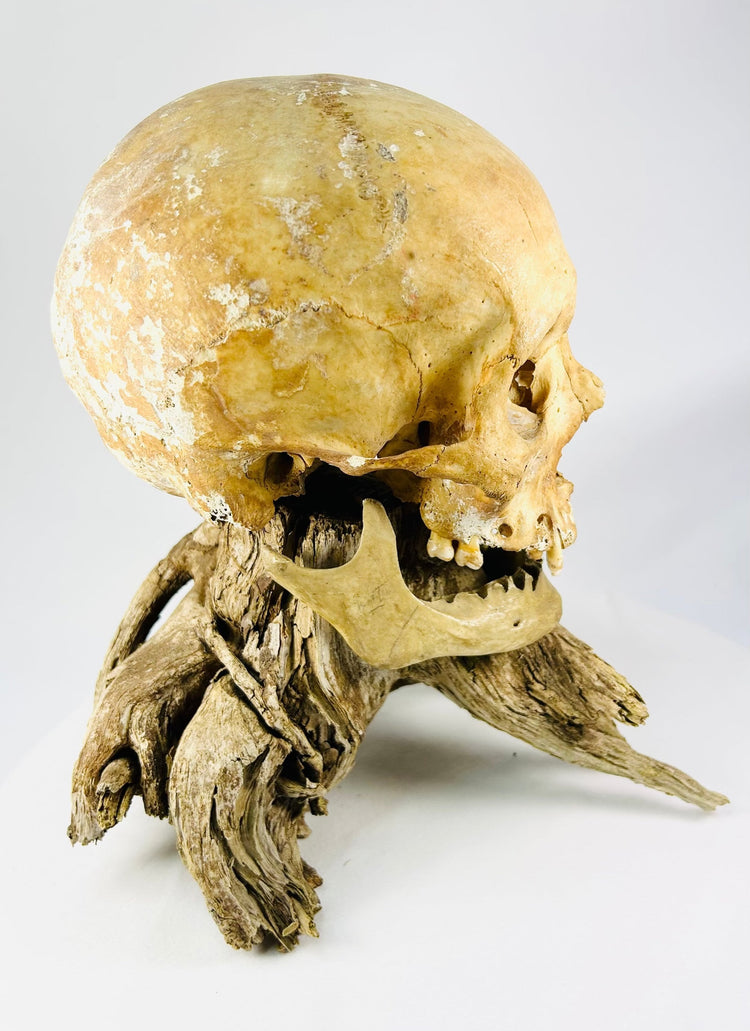
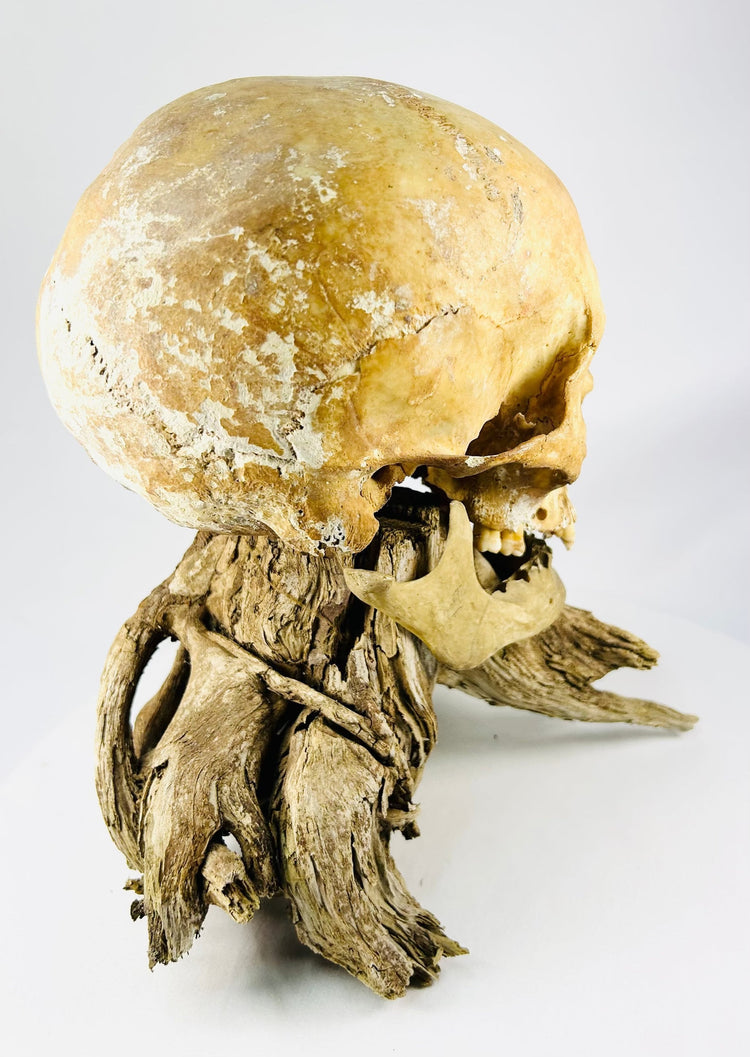
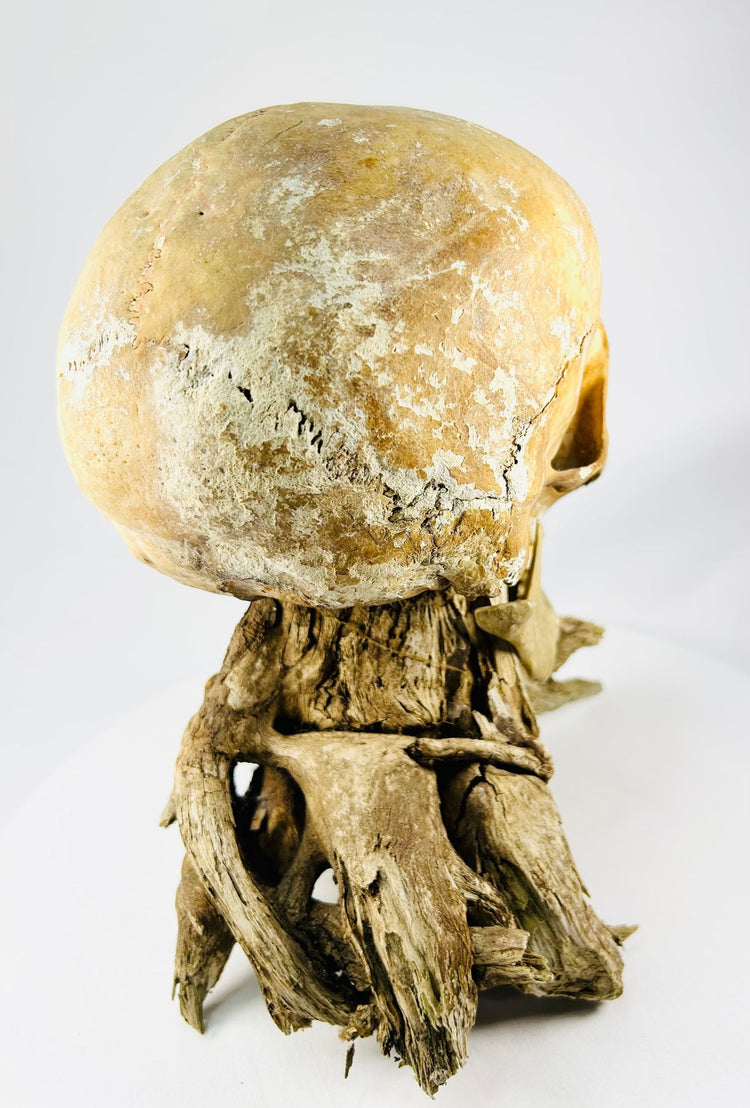
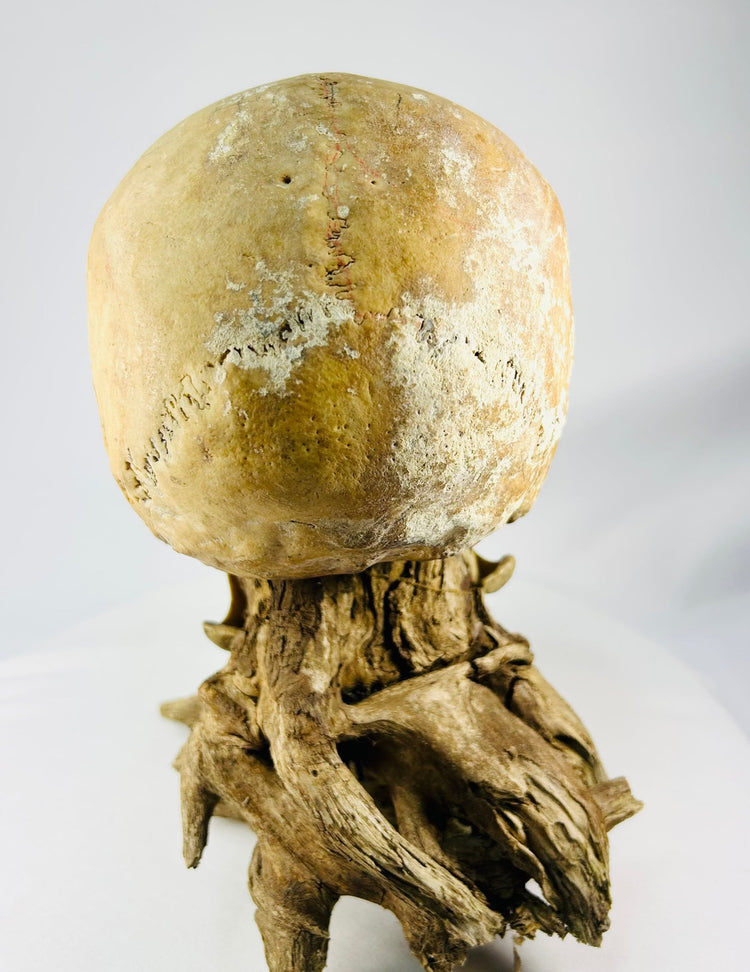
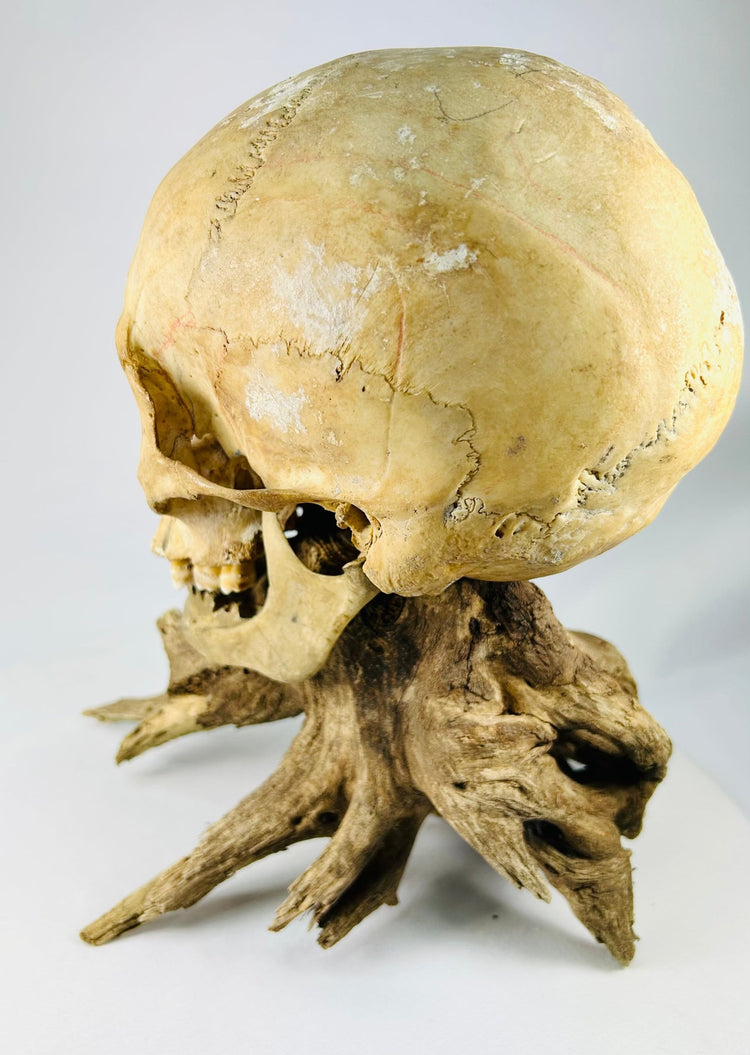
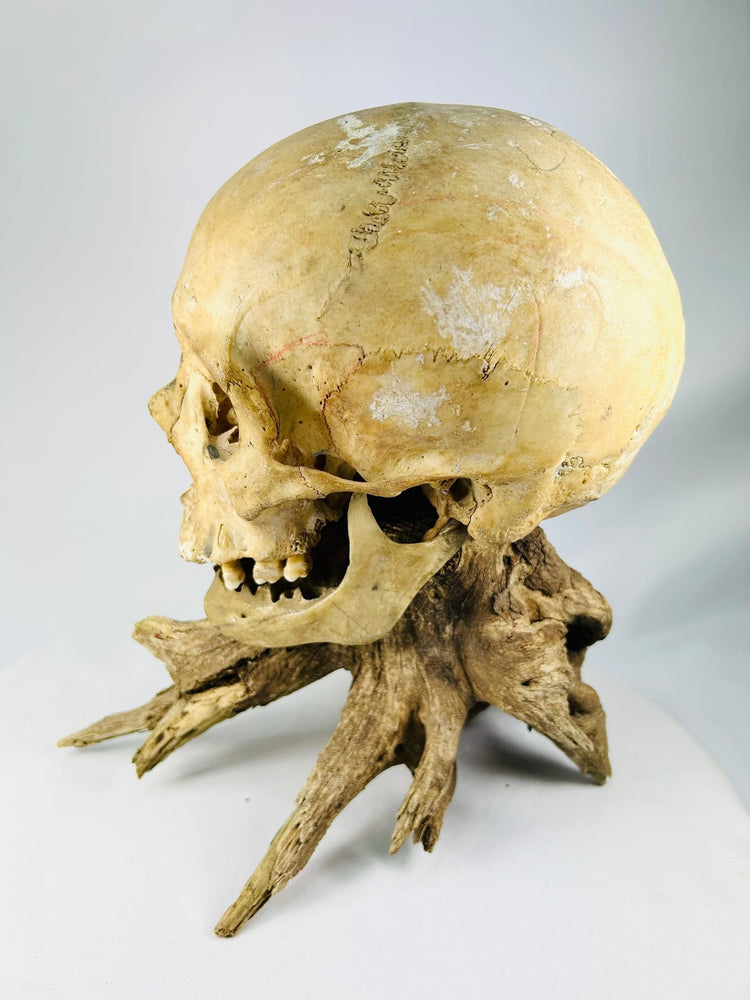
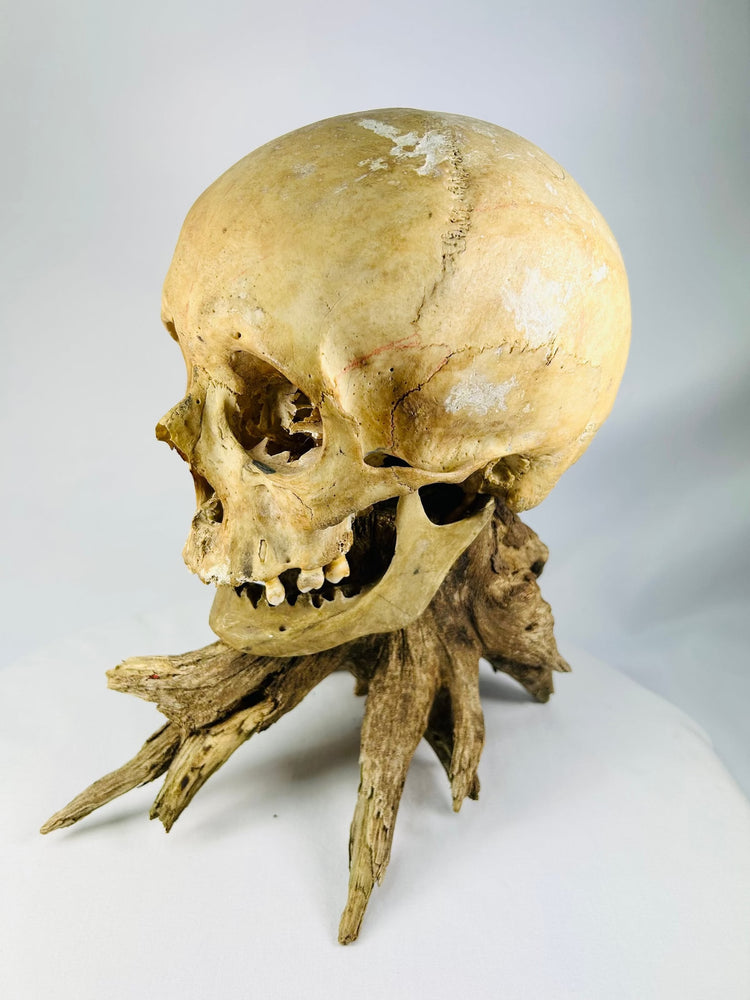
Un rare et authentique crâne humain ancien, monté sur une base en bois flotté organique pour la stabilité et l'affichage. Ce spécimen macabre mais scientifiquement significatif témoigne de la fascination durable pour l'anatomie et la mortalité aux XIXe et début XXe siècles, une période où les spécimens médicaux, les études phrénologiques et les expositions de cabinets de curiosités étaient à l'apogée de leur popularité.
Caractéristiques
- Conservation remarquable avec coloration naturelle et sutures crâniennes intactes
- Dentition partielle avec mâchoire inférieure présente et articulée
- Monté sur une base en bois flotté naturellement patiné pour la stabilité et une présentation esthétique
- Évoque l'atmosphère des premiers musées d'anatomie et des collections médicales privées
Signification culturelle
Au XIXe siècle, les crânes humains étaient fréquemment utilisés dans les universités de médecine, les hôpitaux universitaires et les collections anatomiques privées comme outils essentiels pour l'enseignement et la recherche. Aujourd'hui, ces spécimens sont considérés comme de puissants artefacts qui franchissent la frontière entre la science, l'art et l'histoire humaine, un rappel durable de la quête de l'humanité pour comprendre le corps et l'âme.
État
Bien conservé avec une usure liée à l'âge attendue, des fissures naturelles mineures et une patine conforme au temps. La base en bois présente une patine stable et une intégrité structurelle.
Dimensions (Approximatives)
Hauteur : 25,4 cm
Largeur : 15,2 cm
Âge (Approximatif)
100 à 150 ans
Provenance
Faisait autrefois partie d'une collection privée à Selborne, Hampshire, Royaume-Uni, où le spécimen était conservé parmi des matériaux historiques, anatomiques et d'histoire naturelle. Il a ensuite rejoint une collection privée à Toronto, Ontario, Canada, dont les intérêts incluaient les spécimens médicaux anciens, les curiosités scientifiques et les objets associés à l'histoire de l'étude anatomique.
En savoir plus
Lire la suite sur les spécimens médicaux humains : L'histoire fascinante des squelettes médicaux
Voir d'autres spécimens médicaux : Main squelettique et Pied squelettique
Description
Contexte historique et origine
Région : Europe ou Amérique du Nord
Matériau : Os humain, bois flotté naturel
Période : Fin du XIXe-début du XXe siècle
Description
Un rare et authentique crâne humain ancien, monté sur une base en bois flotté organique pour la stabilité et l'affichage. Ce spécimen macabre mais scientifiquement significatif témoigne de la fascination durable pour l'anatomie et la mortalité aux XIXe et début XXe siècles, une période où les spécimens médicaux, les études phrénologiques et les expositions de cabinets de curiosités étaient à l'apogée de leur popularité.
Caractéristiques
- Conservation remarquable avec coloration naturelle et sutures crâniennes intactes
- Dentition partielle avec mâchoire inférieure présente et articulée
- Monté sur une base en bois flotté naturellement patiné pour la stabilité et une présentation esthétique
- Évoque l'atmosphère des premiers musées d'anatomie et des collections médicales privées
Signification culturelle
Au XIXe siècle, les crânes humains étaient fréquemment utilisés dans les universités de médecine, les hôpitaux universitaires et les collections anatomiques privées comme outils essentiels pour l'enseignement et la recherche. Aujourd'hui, ces spécimens sont considérés comme de puissants artefacts qui franchissent la frontière entre la science, l'art et l'histoire humaine, un rappel durable de la quête de l'humanité pour comprendre le corps et l'âme.
État
Bien conservé avec une usure liée à l'âge attendue, des fissures naturelles mineures et une patine conforme au temps. La base en bois présente une patine stable et une intégrité structurelle.
Dimensions (Approximatives)
Hauteur : 25,4 cm
Largeur : 15,2 cm
Âge (Approximatif)
100 à 150 ans
Provenance
Faisait autrefois partie d'une collection privée à Selborne, Hampshire, Royaume-Uni, où le spécimen était conservé parmi des matériaux historiques, anatomiques et d'histoire naturelle. Il a ensuite rejoint une collection privée à Toronto, Ontario, Canada, dont les intérêts incluaient les spécimens médicaux anciens, les curiosités scientifiques et les objets associés à l'histoire de l'étude anatomique.
En savoir plus
Lire la suite sur les spécimens médicaux humains : L'histoire fascinante des squelettes médicaux
Voir d'autres spécimens médicaux : Main squelettique et Pied squelettique
Vous aimerez peut-être aussi
