


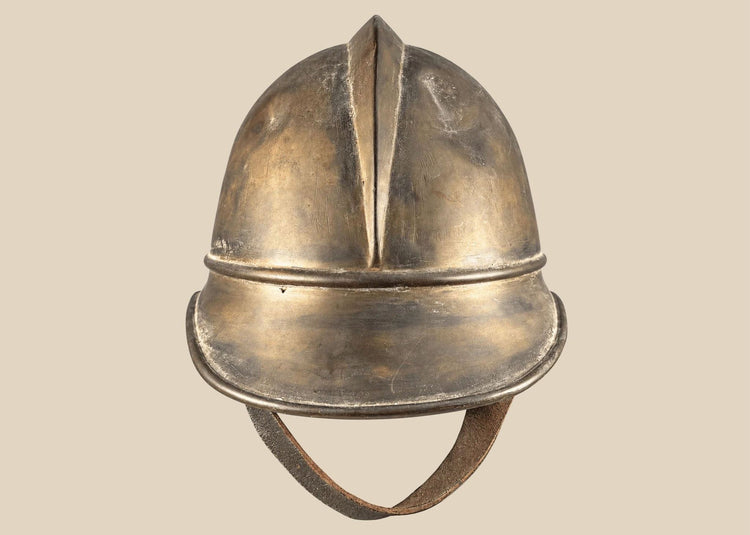
Antique Bavarian German Brass Firefighter Helmet with Leather Liner | Circa 1908–1934
- Prix habituel
- $700.00
- Prix soldé
- $700.00
- Prix habituel
Impossible de charger la disponibilité du service de retrait


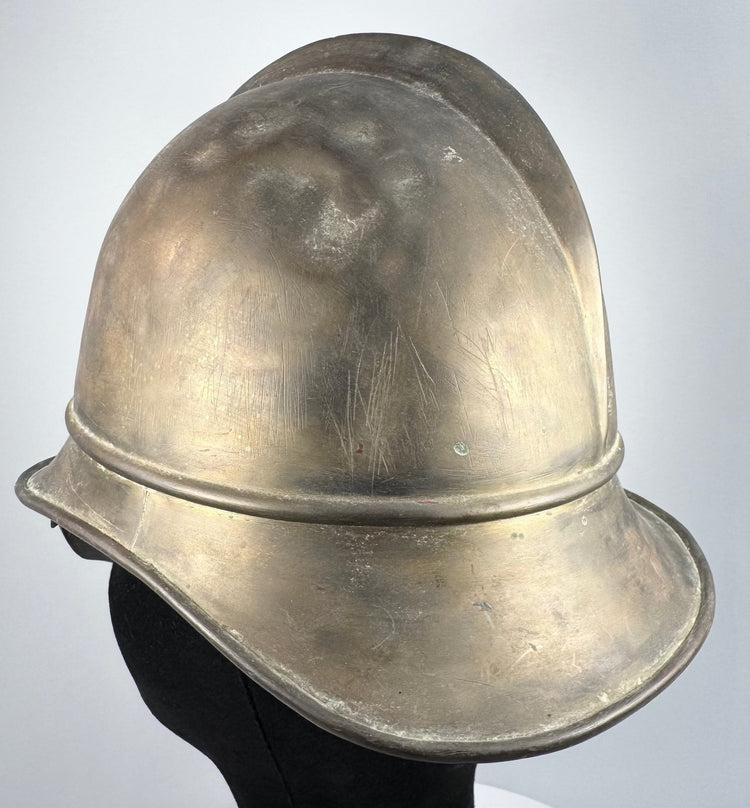
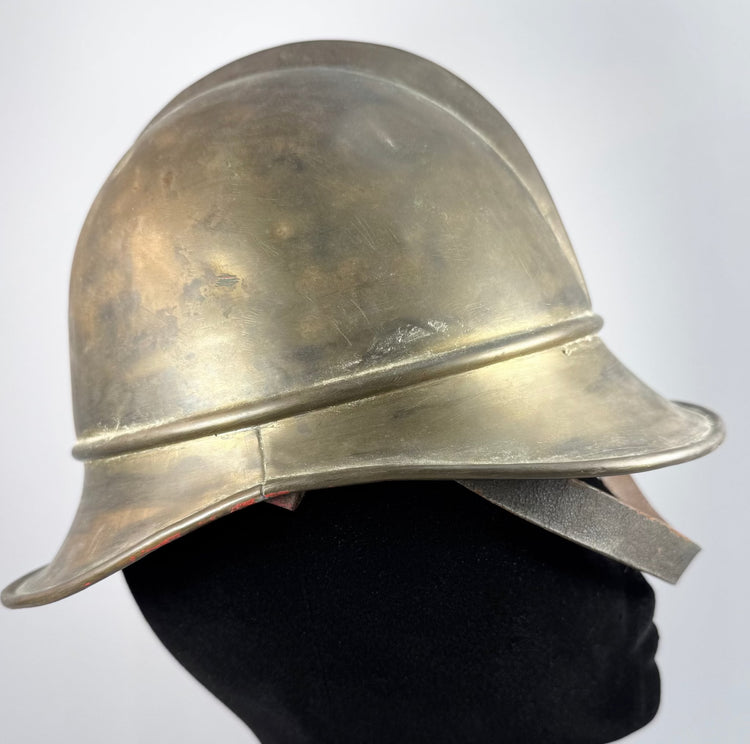
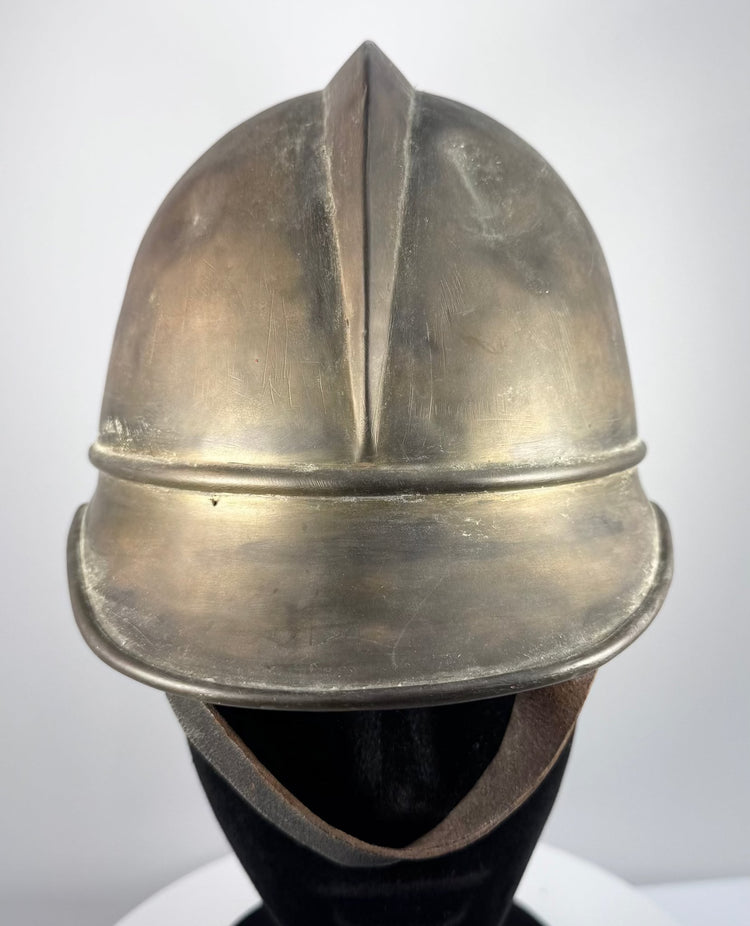
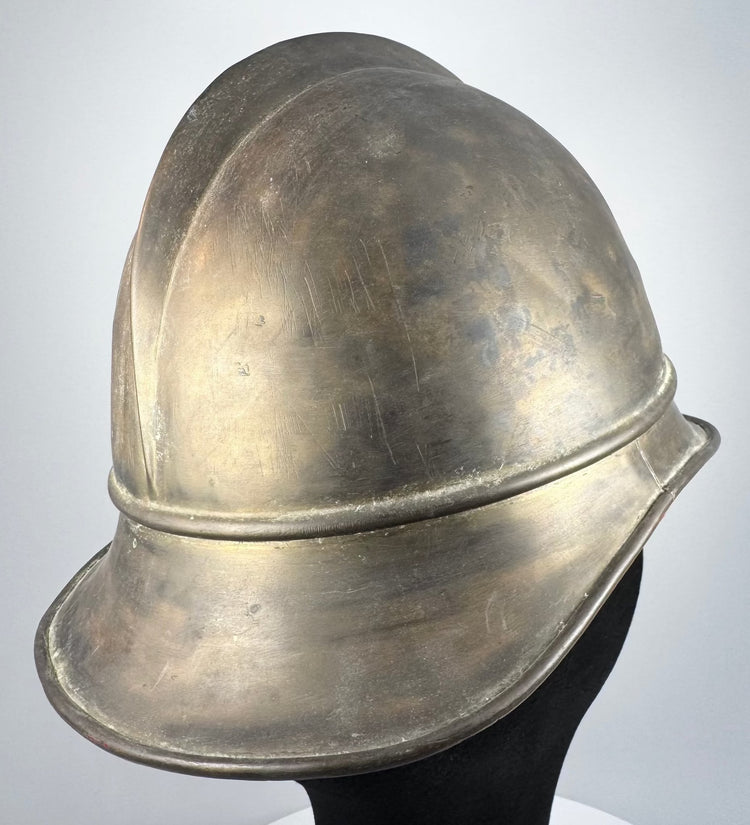
Antique Bavarian German Brass Firefighter Helmet with Leather Liner | Circa 1908–1934
Description
Plus
Moins
Historical Context & Origin
Region: Bavaria, Germany, likely Wiggensbach
Material: Brass, leather, metal fittings, remnants of interior paint
Period: Early 20th century, circa 1908–1934
Description
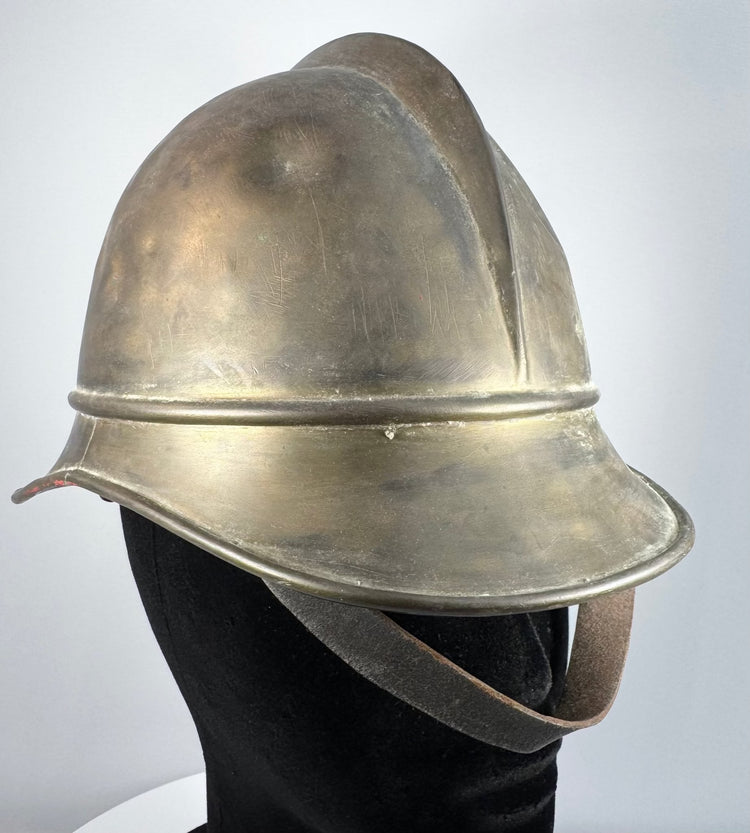
This antique brass helmet is a German firefighter’s helmet, or Feuerwehrhelm, of a form associated particularly with Bavarian fire brigades during the early decades of the 20th century. Its construction is consistent with brass firefighting helmets used in Bavaria from the early 1900s into the interwar period, before traditional brass and leather helmet forms were progressively replaced by later standardized designs.
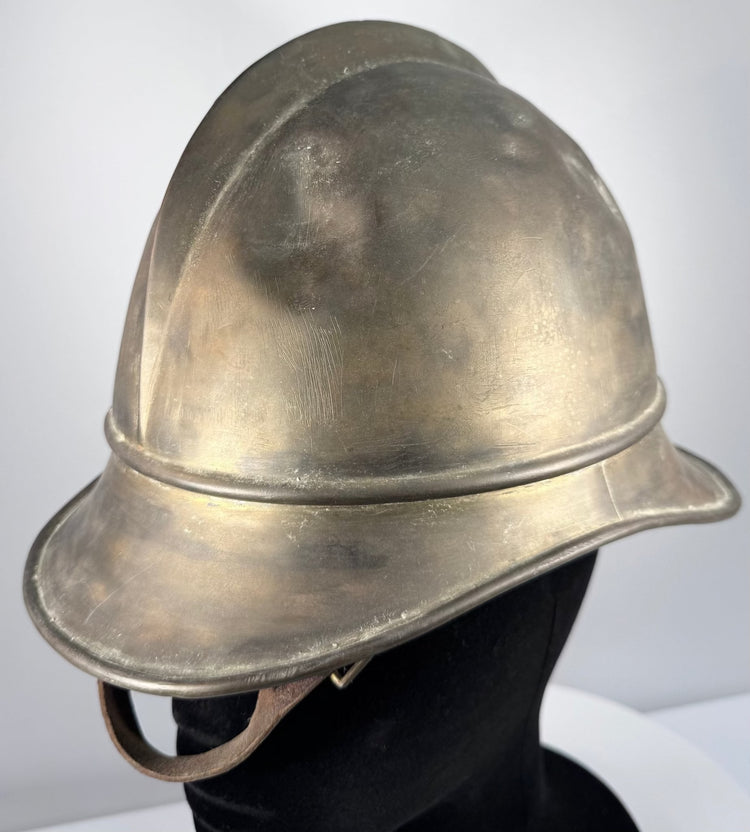
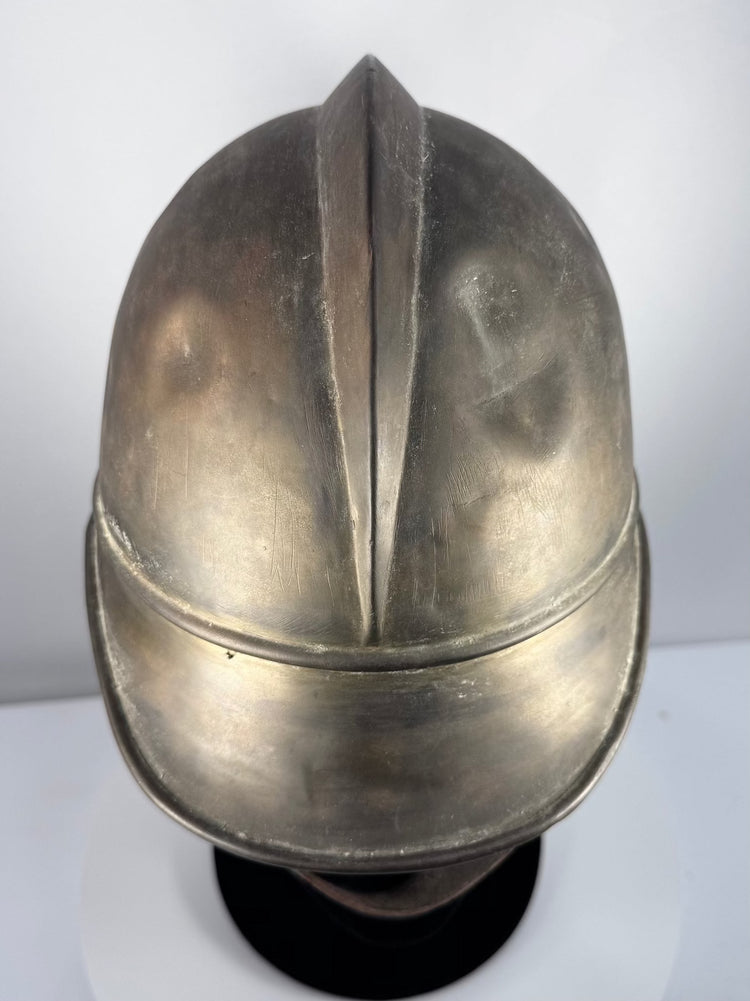
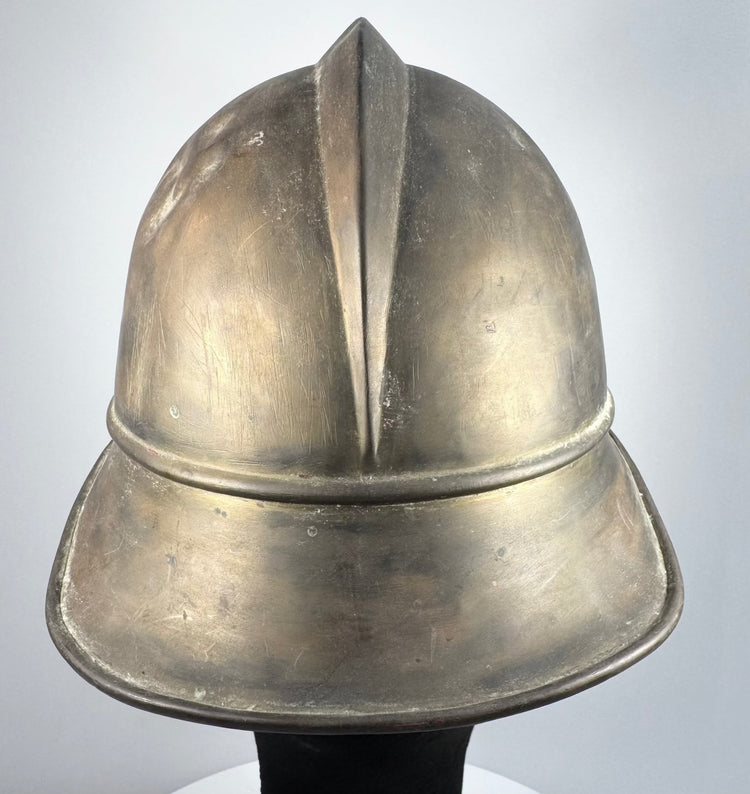
The helmet is formed from a substantial brass shell with a rounded crown and distinctive raised longitudinal comb incorporated into the upper shell. A broad projecting front brim and extended rear neck guard create the characteristic protective silhouette of early German firefighting headgear. A raised molding encircles the lower portion of the crown, providing additional definition and reinforcement to the overall form.
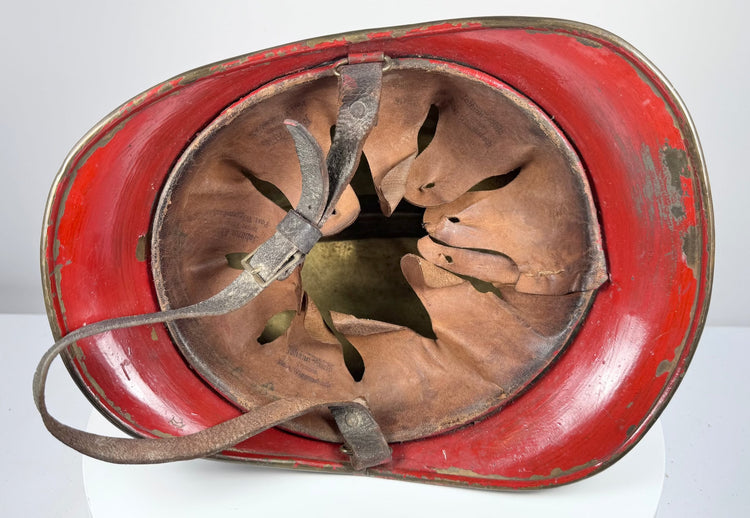
The interior retains much of its original brown leather segmented finger liner, arranged around a continuous internal band. The individual leather sections were designed to conform around the wearer’s head while creating separation between the head and the metal shell. The leather chinstrap also survives together with its metal buckle and attachment hardware.
The underside of the brim and interior perimeter retain remnants of a distinctive red-painted finish. The paint is heavily worn and abraded in areas, exposing the underlying metal and reflecting extensive age and service use.
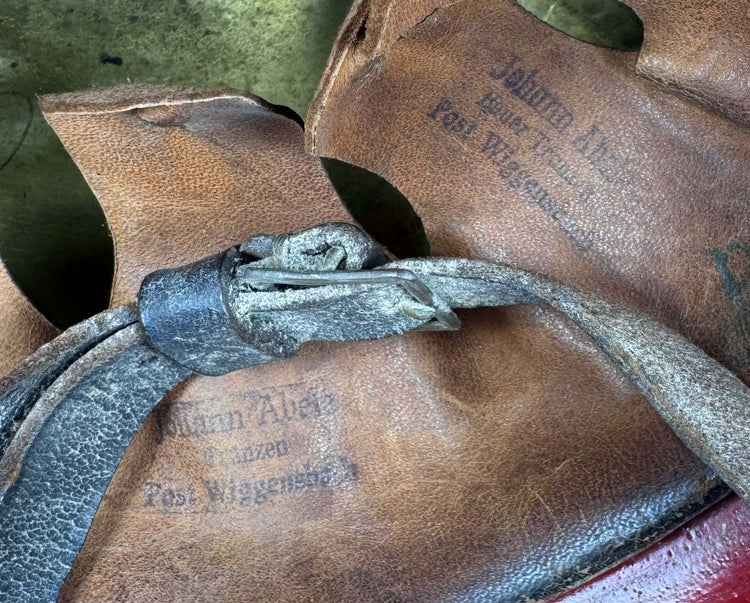
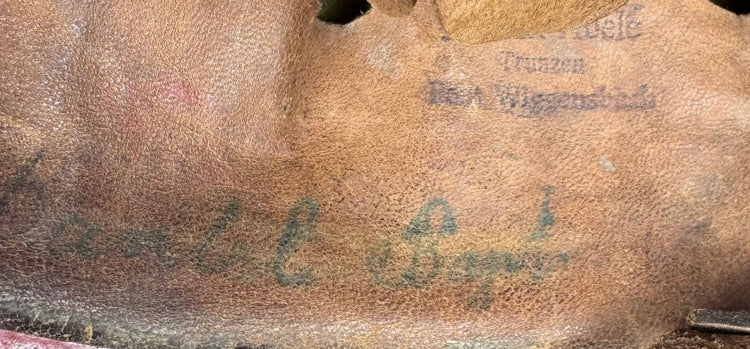
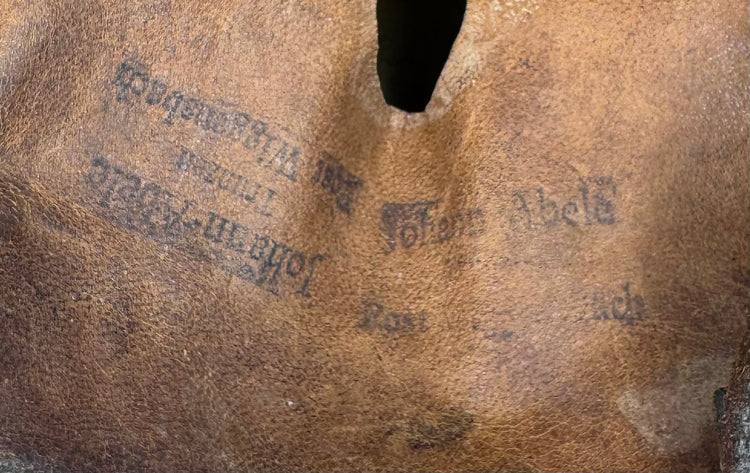
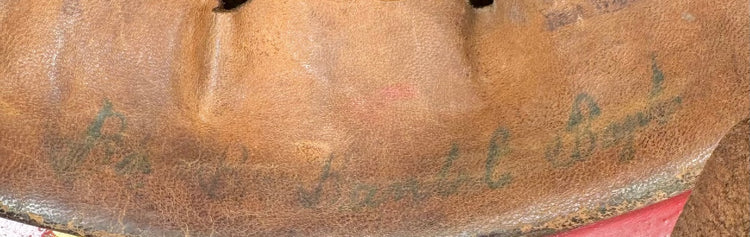
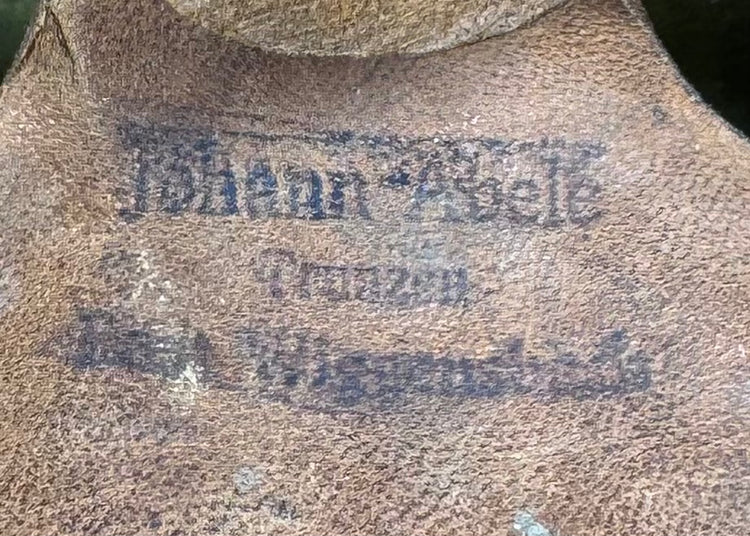
Particularly noteworthy are the surviving faded markings on the interior leather. A previously observed marking appears to include the name “Johann Abele” together with “Wiggensbach,” providing a possible direct association with Wiggensbach in Bavaria, Germany. These markings may represent an original owner, firefighter, issue designation, or other period identification rather than necessarily indicating the manufacturer.
The helmet is presently without an applied frontal municipal or brigade emblem. Whether additional insignia was originally fitted cannot be determined with certainty from its present configuration. Its relatively undecorated exterior emphasizes the distinctive brass shell construction and practical character of the piece.
Features
- Bavarian German firefighter’s helmet (Feuerwehrhelm)
- Substantial formed brass shell
- Distinctive raised longitudinal comb
- Broad projecting front brim
- Extended rear neck guard
- Raised molding around the lower crown
- Original period segmented leather finger liner substantially retained
- Leather chinstrap with metal buckle and attachment fittings
- Remnants of historic red-painted interior finish
- Faded interior name and locality markings
- Possible association with Wiggensbach, Bavaria
- Naturally aged brass surface with historic wear and patina
- Early 20th-century German firefighting construction
Cultural Significance
Volunteer fire brigades became important civic institutions throughout Germany during the second half of the 19th century and into the early 20th century. In towns and rural communities, organized volunteer brigades provided increasingly structured fire protection while developing their own distinctive uniforms, equipment, insignia, and local traditions.
Bavaria maintained an extensive network of volunteer fire brigades, and helmets formed an important part of both practical firefighting equipment and civic uniform. Brass helmets combined functional protection with a highly recognizable appearance and remained in use before later standardized steel helmet designs became more widespread.
The possible association with Wiggensbach adds further local historical interest to this example. The surviving leather liner, chinstrap, painted interior, and period markings preserve evidence of the helmet’s working life and distinguish it from an empty decorative helmet shell.
Condition
Good antique condition consistent with significant age and genuine service use.
The brass exterior exhibits surface scratches, rubbing, tarnishing, oxidation, scattered minor marks, small dents, and areas of discoloration consistent with age and handling. The surface retains an attractive naturally aged patina.
The historic red-painted interior finish displays extensive rubbing, abrasions, scratches, and areas of paint loss.
The leather liner is substantially preserved but exhibits considerable age-related drying, cracking, tears, deformation, and losses to several of the individual liner fingers. The leather chinstrap remains present with its buckle and fittings and shows expected wear, dryness, discoloration, and oxidation to the associated metal components.
Interior ink and identification markings remain visible but are faded and partially difficult to decipher.
Dimensions (Approximate)
Length: 10.5 in
Width: 7.75 in
Height: 7.75 in
Age (Approximate)
92–118 years old
Provenance
Formerly held in a private collection in Boston, Massachusetts, USA.
Learn More
View historic brass firefighter helmets in the collection of the Feuerwehrmuseum Roding-Stadt
Explore our Historical Warfare & Exploration Collection
Description
Historical Context & Origin
Region: Bavaria, Germany, likely Wiggensbach
Material: Brass, leather, metal fittings, remnants of interior paint
Period: Early 20th century, circa 1908–1934
Description
This antique brass helmet is a German firefighter’s helmet, or Feuerwehrhelm, of a form associated particularly with Bavarian fire brigades during the early decades of the 20th century. Its construction is consistent with brass firefighting helmets used in Bavaria from the early 1900s into the interwar period, before traditional brass and leather helmet forms were progressively replaced by later standardized designs.
The helmet is formed from a substantial brass shell with a rounded crown and distinctive raised longitudinal comb incorporated into the upper shell. A broad projecting front brim and extended rear neck guard create the characteristic protective silhouette of early German firefighting headgear. A raised molding encircles the lower portion of the crown, providing additional definition and reinforcement to the overall form.
The interior retains much of its original brown leather segmented finger liner, arranged around a continuous internal band. The individual leather sections were designed to conform around the wearer’s head while creating separation between the head and the metal shell. The leather chinstrap also survives together with its metal buckle and attachment hardware.
The underside of the brim and interior perimeter retain remnants of a distinctive red-painted finish. The paint is heavily worn and abraded in areas, exposing the underlying metal and reflecting extensive age and service use.
Particularly noteworthy are the surviving faded markings on the interior leather. A previously observed marking appears to include the name “Johann Abele” together with “Wiggensbach,” providing a possible direct association with Wiggensbach in Bavaria, Germany. These markings may represent an original owner, firefighter, issue designation, or other period identification rather than necessarily indicating the manufacturer.
The helmet is presently without an applied frontal municipal or brigade emblem. Whether additional insignia was originally fitted cannot be determined with certainty from its present configuration. Its relatively undecorated exterior emphasizes the distinctive brass shell construction and practical character of the piece.
Features
- Bavarian German firefighter’s helmet (Feuerwehrhelm)
- Substantial formed brass shell
- Distinctive raised longitudinal comb
- Broad projecting front brim
- Extended rear neck guard
- Raised molding around the lower crown
- Original period segmented leather finger liner substantially retained
- Leather chinstrap with metal buckle and attachment fittings
- Remnants of historic red-painted interior finish
- Faded interior name and locality markings
- Possible association with Wiggensbach, Bavaria
- Naturally aged brass surface with historic wear and patina
- Early 20th-century German firefighting construction
Cultural Significance
Volunteer fire brigades became important civic institutions throughout Germany during the second half of the 19th century and into the early 20th century. In towns and rural communities, organized volunteer brigades provided increasingly structured fire protection while developing their own distinctive uniforms, equipment, insignia, and local traditions.
Bavaria maintained an extensive network of volunteer fire brigades, and helmets formed an important part of both practical firefighting equipment and civic uniform. Brass helmets combined functional protection with a highly recognizable appearance and remained in use before later standardized steel helmet designs became more widespread.
The possible association with Wiggensbach adds further local historical interest to this example. The surviving leather liner, chinstrap, painted interior, and period markings preserve evidence of the helmet’s working life and distinguish it from an empty decorative helmet shell.
Condition
Good antique condition consistent with significant age and genuine service use.
The brass exterior exhibits surface scratches, rubbing, tarnishing, oxidation, scattered minor marks, small dents, and areas of discoloration consistent with age and handling. The surface retains an attractive naturally aged patina.
The historic red-painted interior finish displays extensive rubbing, abrasions, scratches, and areas of paint loss.
The leather liner is substantially preserved but exhibits considerable age-related drying, cracking, tears, deformation, and losses to several of the individual liner fingers. The leather chinstrap remains present with its buckle and fittings and shows expected wear, dryness, discoloration, and oxidation to the associated metal components.
Interior ink and identification markings remain visible but are faded and partially difficult to decipher.
Dimensions (Approximate)
Length: 10.5 in
Width: 7.75 in
Height: 7.75 in
Age (Approximate)
92–118 years old
Provenance
Formerly held in a private collection in Boston, Massachusetts, USA.
Learn More
View historic brass firefighter helmets in the collection of the Feuerwehrmuseum Roding-Stadt
Explore our Historical Warfare & Exploration Collection
Vous aimerez peut-être aussi
