


Antique Chinese Pottery Palanquin & Nobleman Tomb Figurine | Qing Dynasty | Circa 19th Century
- Prix habituel
- $1,250.00
- Prix soldé
- $1,250.00
- Prix habituel
Impossible de charger la disponibilité du service de retrait






Antique Chinese Pottery Palanquin & Nobleman Tomb Figurine | Qing Dynasty | Circa 19th Century
Description
Plus
Moins
Historical Context & Origin
Region: China, East Asia
Material: Polychrome-painted earthenware (terracotta pottery)
Period: Qing Dynasty, circa 19th Century
Description
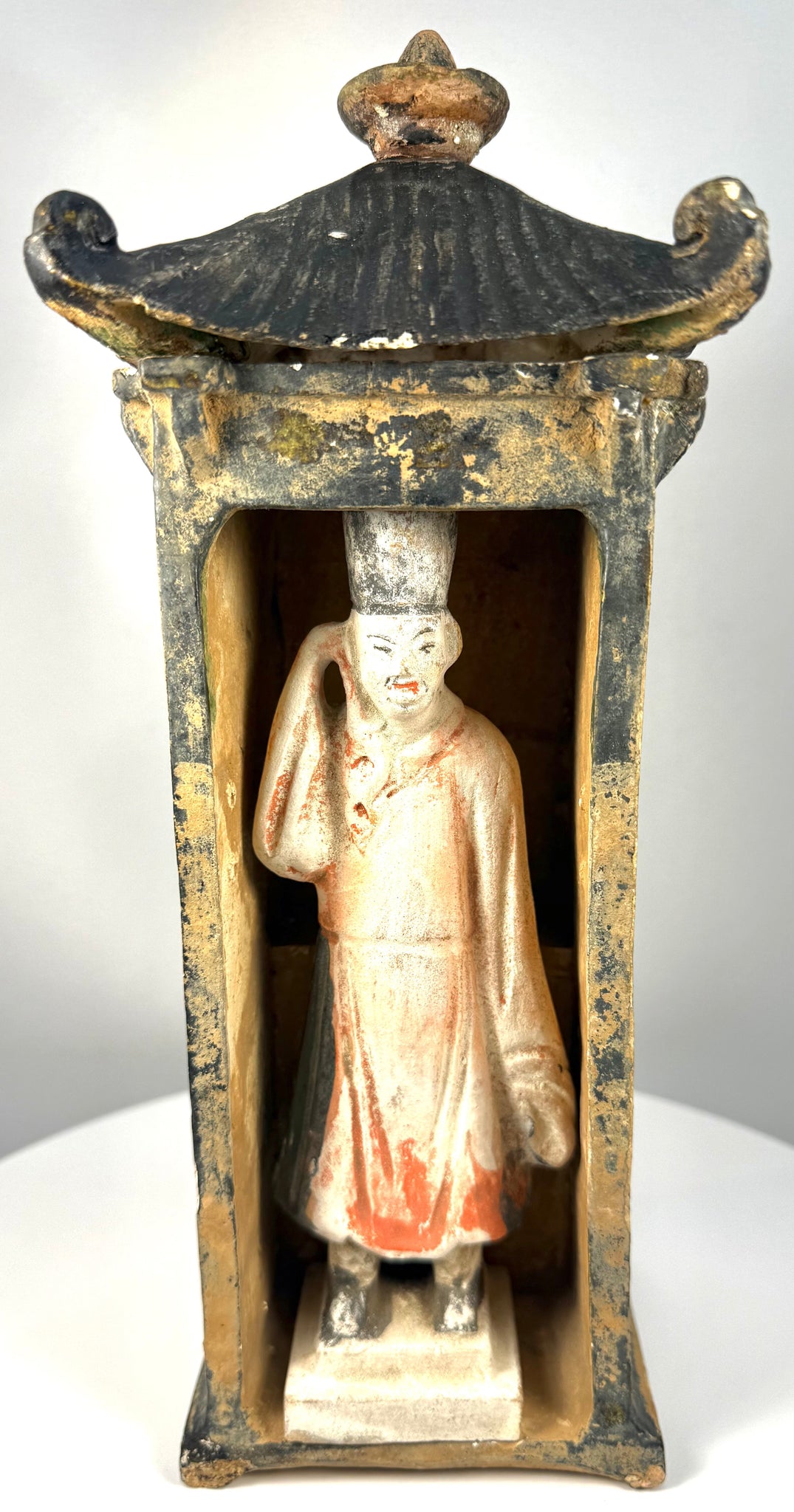
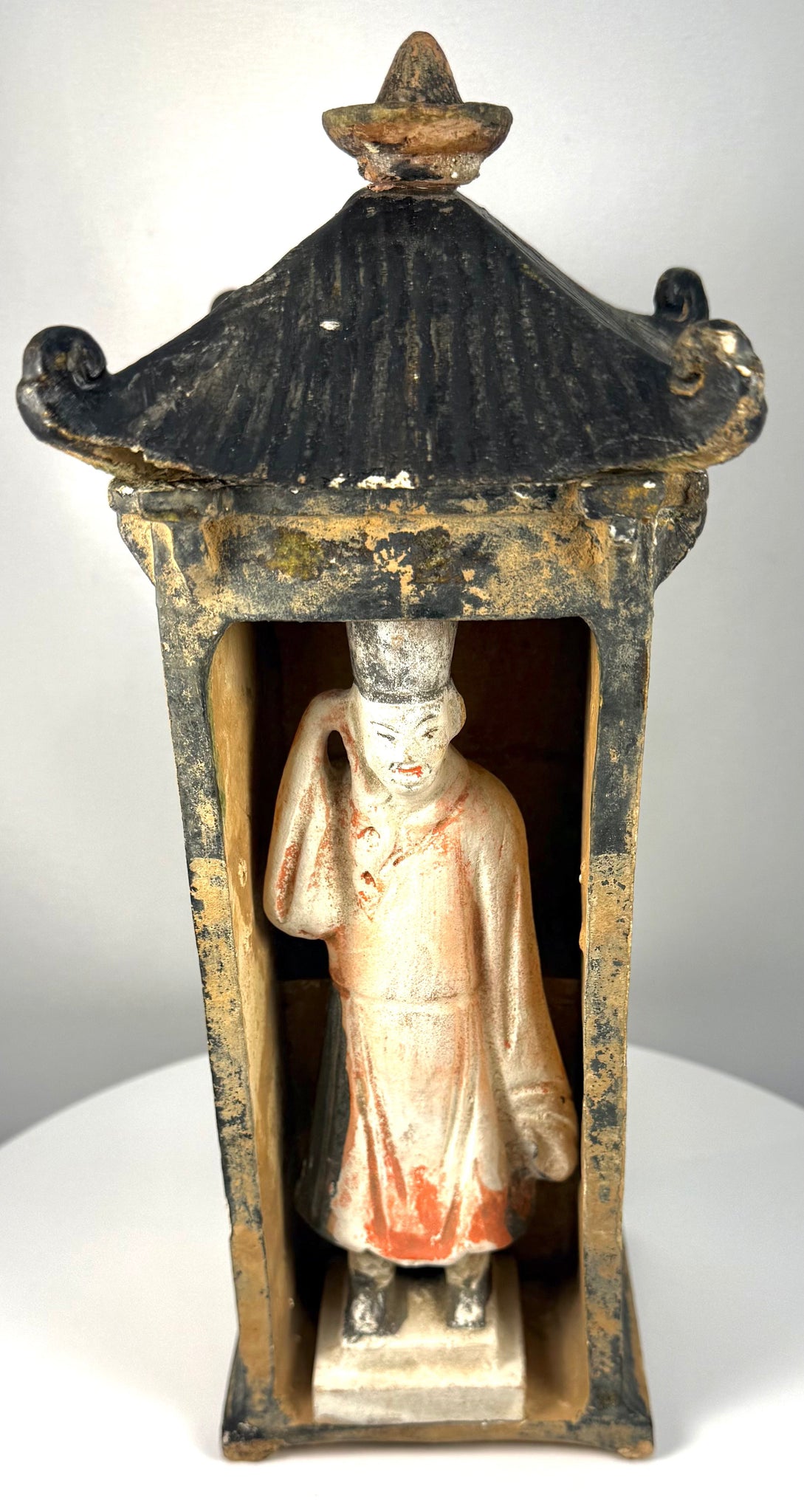
A distinctive antique Chinese pottery funerary ensemble featuring a miniature architectural palanquin accompanied by a separately modelled standing male figure, traditionally identified as a nobleman or attendant. Dating to the Qing Dynasty, circa 19th century, this sculptural composition reflects the enduring influence of Chinese miniature architectural models, ceremonial representations, and funerary pottery traditions.
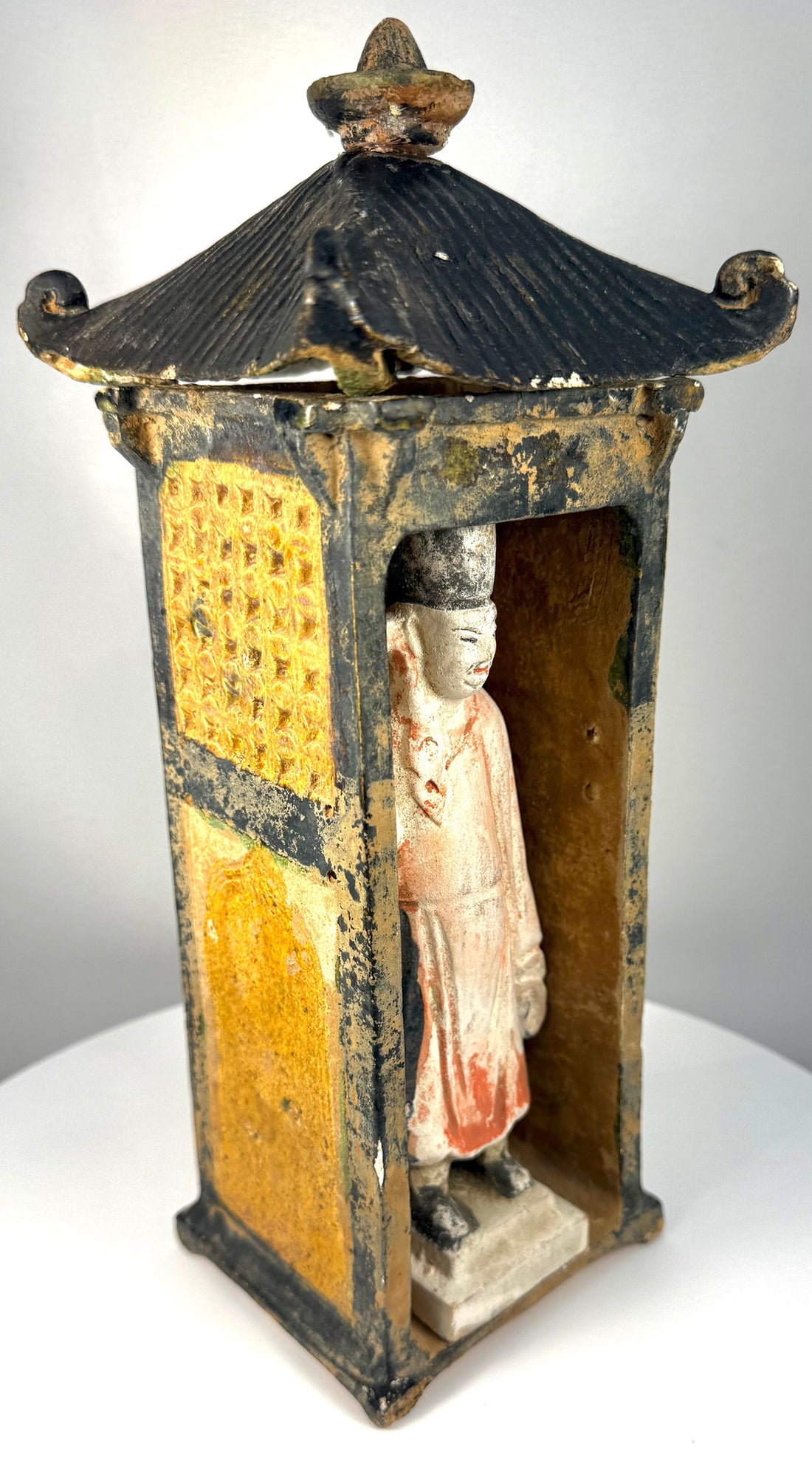
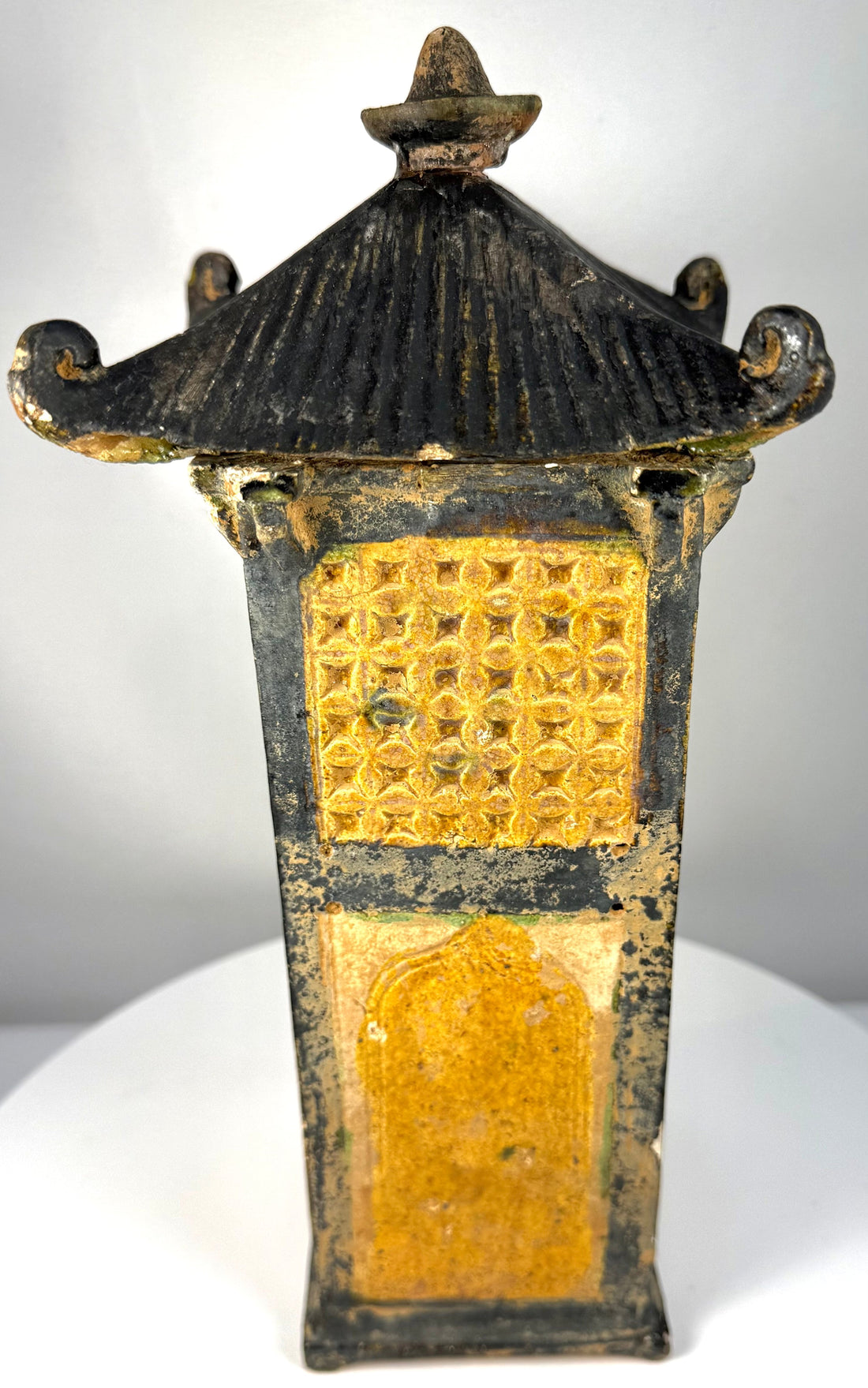
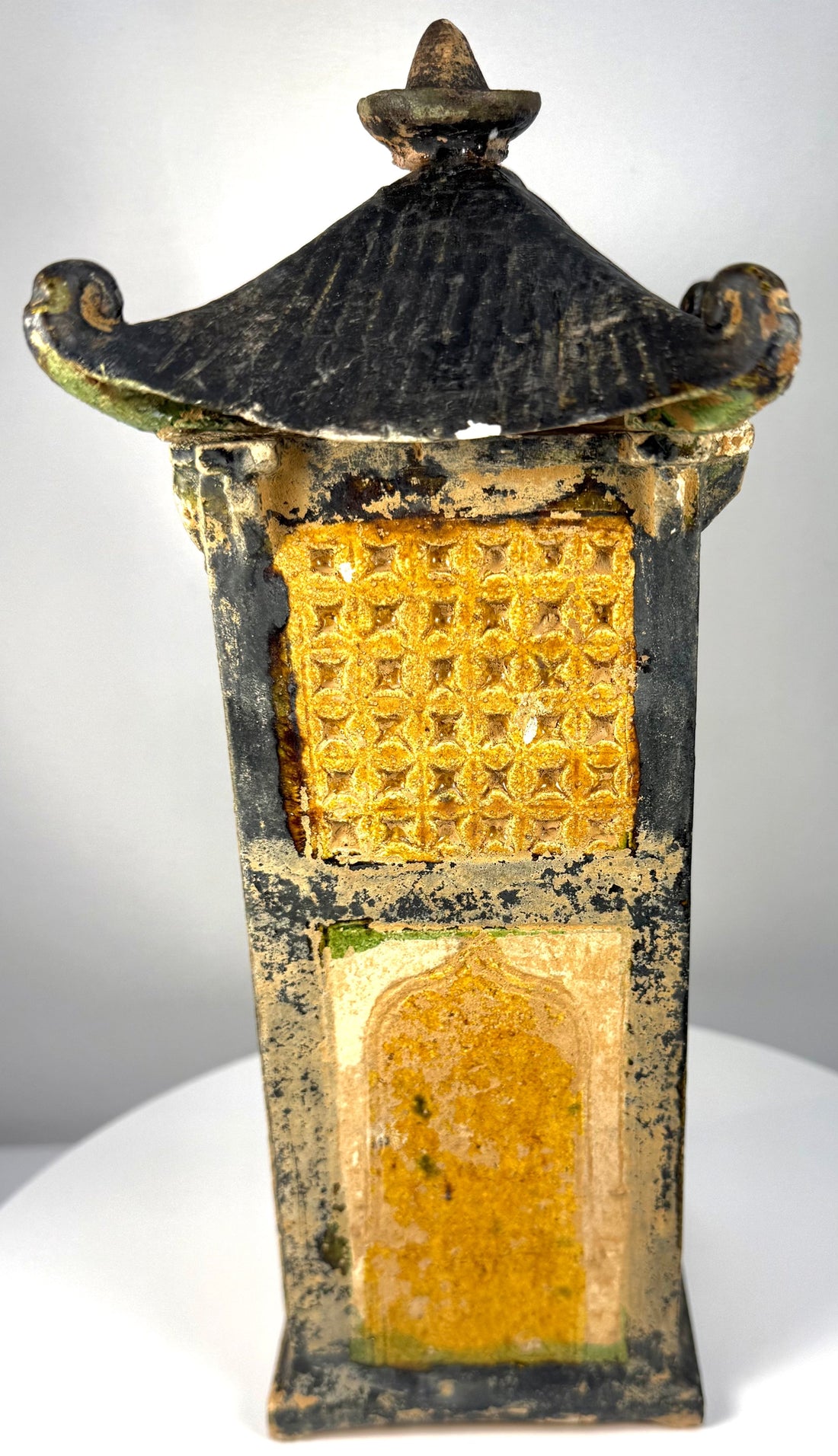
The rectangular palanquin features an elaborate removable pagoda-style roof with deeply moulded ridges, gracefully upturned corners, and a prominent ornamental finial rising from its centre. The roof displays a broad, gently curved silhouette, with each corner curling upward to create a distinctive architectural profile.
The architectural enclosure is constructed with a rectangular body and an open frontal chamber designed to accommodate the accompanying figure. Its surrounding walls feature decorative architectural details, including moulded latticework and recessed arched panels, recalling traditional Chinese building forms.
The exterior retains extensive traces of black and ochre polychrome decoration, with areas of exposed earthenware visible beneath the weathered painted surfaces. The contrast between the dark architectural structure and the lighter figure creates a visually striking composition.
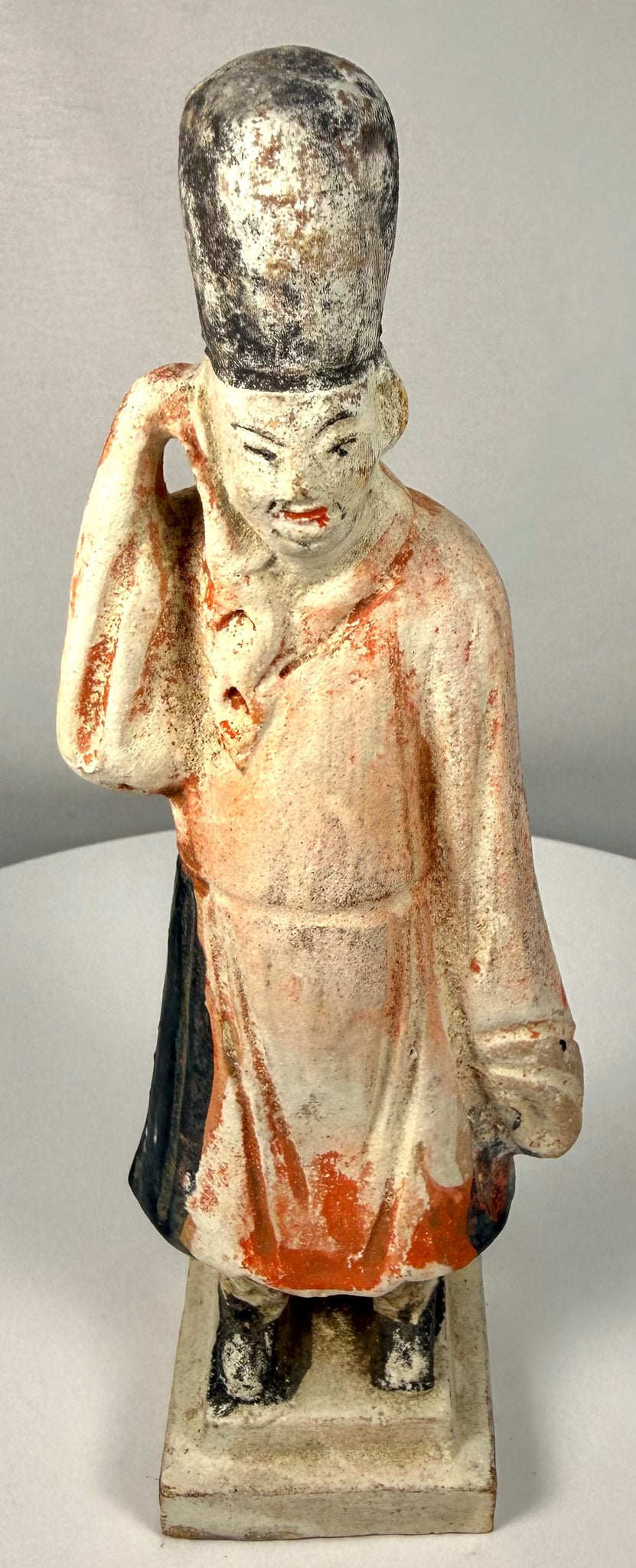
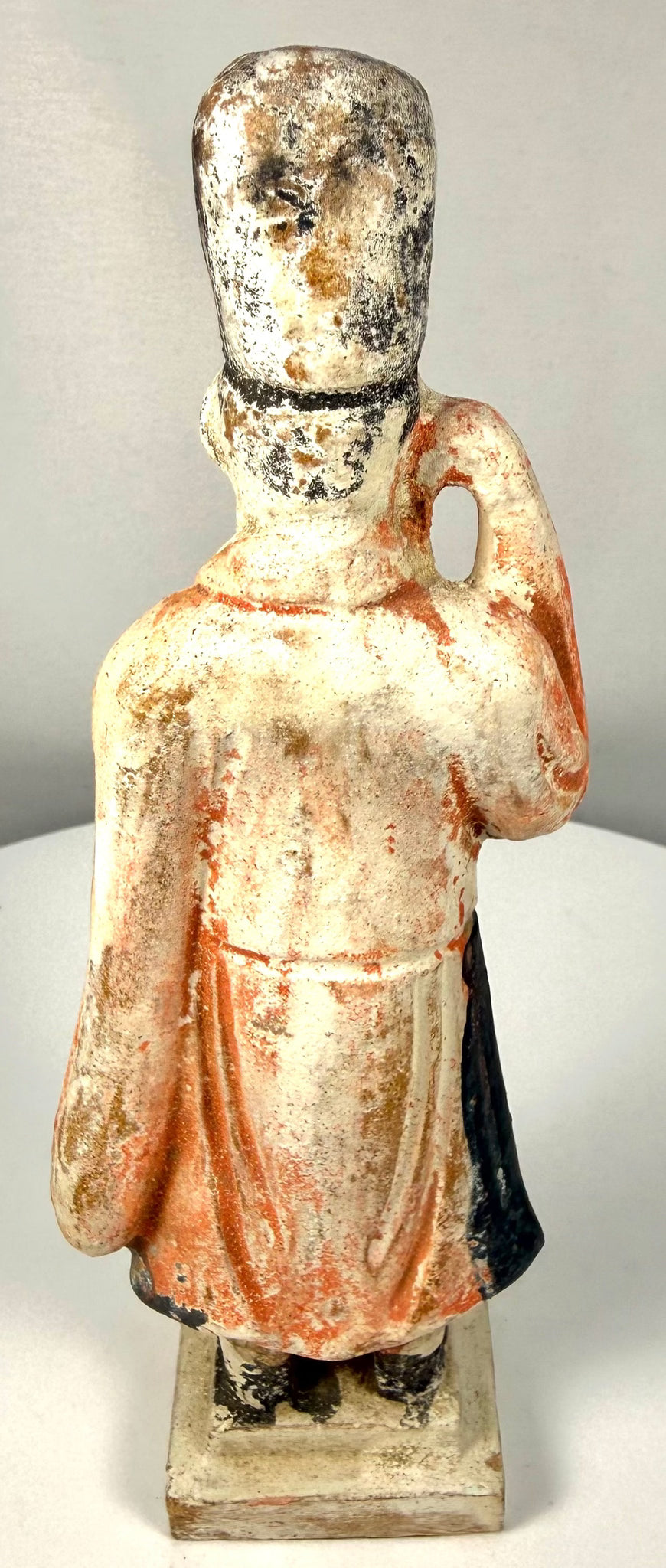
The separately modelled male figure stands upon a rectangular pedestal and wears a long, flowing traditional robe with broad sleeves and a distinctive tall black headdress. The garment falls in soft, vertical folds toward the base, with surviving red-orange pigmentation emphasizing the lower portion of the robe.
The figure's facial features are delicately modelled, including narrow eyes, defined eyebrows, a prominent nose, and small lips retaining traces of red pigment. Its restrained expression and upright posture reflect the formal presentation commonly encountered in traditional Chinese figurative sculpture.
One arm is raised toward the shoulder, while the other extends downward beside the body. This asymmetrical arrangement introduces movement to the otherwise frontal composition and gives the figure a distinctive ceremonial appearance.
Remnants of cream, red-orange, black, and ochre pigmentation survive across the figure, particularly around the face, garments, headdress, and pedestal. The painted decoration highlights the original sculptural details despite areas of surface wear and pigment loss.
The removable roof allows the architectural enclosure and accompanying figure to be displayed together or examined separately. When positioned inside the chamber, the standing figure creates a miniature representation of an individual within an elaborate traditional Chinese architectural setting.
The ensemble incorporates the decorative characteristics of Chinese architectural pottery, including its ornamental roof, moulded exterior panels, polychrome surfaces, and formally dressed human figure.
Its compact scale, surviving painted decoration, and distinctive architectural composition make it an interesting example of Qing Dynasty pottery craftsmanship inspired by the longstanding traditions of Chinese ceremonial and funerary representations.
Features
- Miniature Chinese architectural palanquin accompanied by a separately modelled male figure
- Removable pagoda-style roof with gracefully upturned corners and ornamental central finial
- Deeply moulded roof ridges with surviving black and ochre decoration
- Open-front rectangular enclosure featuring decorative latticework and recessed arched panels
- Standing male figure wearing a flowing traditional robe with broad sleeves and a tall black headdress
- Distinctive ceremonial pose with one arm raised toward the shoulder
- Surviving red-orange, cream, black, and ochre polychrome decoration
- Separately modelled figure supported by a rectangular pedestal, allowing independent display
Cultural Significance
Chinese funerary pottery has a rich artistic history extending across more than two thousand years. Miniature architectural structures, human figures, animals, household furnishings, and ceremonial objects formed an important part of traditional Chinese material culture, reflecting ideas concerning social identity, status, and the continuation of earthly life beyond death.
Such representations were historically associated with the tradition of mingqi, meaning objects placed in tombs to symbolically provide for the deceased in the afterlife. These miniature objects could reproduce elements of everyday life, including buildings, furniture, transportation, servants, animals, and other possessions.
Architectural pottery models held particular significance within this tradition. Representations of houses, towers, courtyards, and ceremonial structures provide valuable insight into the architectural forms and social practices of historical Chinese communities.
Palanquins, also known as sedan chairs, were important forms of personal transportation in traditional China. Often associated with officials, wealthy individuals, and ceremonial occasions, these conveyances reflected distinctions in social rank and public presentation.
Miniature ceramic palanquins were incorporated into Chinese funerary art, particularly during the Ming Dynasty (1368–1644), when elaborate burial ensembles could include attendants, musicians, horses, architectural structures, and ceremonial vehicles.
These objects represented aspects of the material world familiar to the deceased and reflected the desire to preserve comfort, dignity, and social standing beyond earthly life.
Examples of Ming Dynasty funerary pottery are preserved in major museum collections, including the University of Michigan Museum of Art, where a glazed earthenware sedan chair illustrates the architectural and ceremonial characteristics associated with Chinese funerary models.
The tradition of creating miniature architectural and figural representations continued to influence Chinese decorative craftsmanship during subsequent centuries, including the Qing Dynasty (1644–1912).
The accompanying male figure reflects the importance of traditional clothing, posture, and headwear in Chinese figurative representation. Tall official-style headdresses and formal robes were frequently employed to distinguish figures associated with elevated social standing, ceremonial roles, or administrative positions.
Polychrome decoration further contributed to the visual character of Chinese architectural and figurative pottery. The use of contrasting pigments emphasized sculptural details, architectural ornamentation, and the distinctive garments worn by human subjects.
The present ensemble reflects these established artistic traditions through its elaborate miniature architectural form, removable pagoda-style roof, standing male figure, and surviving black, ochre, cream, and red-orange pigmentation.
Its design illustrates the enduring relationship between traditional Chinese architecture, ceremonial representation, and the artistic production of miniature pottery figures during the Qing Dynasty.
Condition
The ensemble displays visible surface wear, scattered abrasions, minor chips, and areas of polychrome loss throughout the architectural enclosure and accompanying figure.
The palanquin retains its distinctive rectangular construction, removable pagoda-style roof, ornamental finial, and moulded architectural details. The black and ochre painted surfaces exhibit rubbing, fading, localized discoloration, and areas of exposed earthenware.
The roof displays surface wear along its moulded ridges, upturned corners, and ornamental finial. An older repair to the interior of the roof was noted in the previous auction catalogue.
Additional abrasions and localized pigment losses are visible along the architectural edges, corners, recessed panels, and interior chamber.
The separately modelled male figure retains its upright form, tall headdress, flowing robes, and rectangular pedestal. Surviving red-orange, cream, and black pigmentation remains visible across the garments, face, and headwear.
The figure displays scattered abrasions, softened decorative details, minor surface irregularities, and areas of pigment loss, particularly around the projecting arm, garment folds, and lower extremities.
The removable roof and separate standing figure remain present, allowing the ensemble to be displayed in its assembled architectural arrangement.
Dimensions (Approximate)
Palanquin:
Height: 11.5 in
Base Length: 3 in
Depth: 3.25 in
Figurine:
Height: 7.5 in
Width: 2.5 in
Depth: 2 in
Age (Approximate)
125–225 years old
Provenance
Previously handled and offered by Akiba Galleries, Dania Beach, Florida, United States. Akiba Galleries is an established American auction house specializing in fine art, antiques, decorative arts, and collectible objects from international markets.
Learn More
Explore a comparable Ming Dynasty earthenware sedan chair illustrating traditional Chinese funerary pottery and architectural craftsmanship in the collection of The University of Michigan Museum of Art
Discover more historical Chinese pottery, figurative sculptures, and architectural models in our Ceramics & Pottery Collection
Description
Historical Context & Origin
Region: China, East Asia
Material: Polychrome-painted earthenware (terracotta pottery)
Period: Qing Dynasty, circa 19th Century
Description
A distinctive antique Chinese pottery funerary ensemble featuring a miniature architectural palanquin accompanied by a separately modelled standing male figure, traditionally identified as a nobleman or attendant. Dating to the Qing Dynasty, circa 19th century, this sculptural composition reflects the enduring influence of Chinese miniature architectural models, ceremonial representations, and funerary pottery traditions.
The rectangular palanquin features an elaborate removable pagoda-style roof with deeply moulded ridges, gracefully upturned corners, and a prominent ornamental finial rising from its centre. The roof displays a broad, gently curved silhouette, with each corner curling upward to create a distinctive architectural profile.
The architectural enclosure is constructed with a rectangular body and an open frontal chamber designed to accommodate the accompanying figure. Its surrounding walls feature decorative architectural details, including moulded latticework and recessed arched panels, recalling traditional Chinese building forms.
The exterior retains extensive traces of black and ochre polychrome decoration, with areas of exposed earthenware visible beneath the weathered painted surfaces. The contrast between the dark architectural structure and the lighter figure creates a visually striking composition.
The separately modelled male figure stands upon a rectangular pedestal and wears a long, flowing traditional robe with broad sleeves and a distinctive tall black headdress. The garment falls in soft, vertical folds toward the base, with surviving red-orange pigmentation emphasizing the lower portion of the robe.
The figure's facial features are delicately modelled, including narrow eyes, defined eyebrows, a prominent nose, and small lips retaining traces of red pigment. Its restrained expression and upright posture reflect the formal presentation commonly encountered in traditional Chinese figurative sculpture.
One arm is raised toward the shoulder, while the other extends downward beside the body. This asymmetrical arrangement introduces movement to the otherwise frontal composition and gives the figure a distinctive ceremonial appearance.
Remnants of cream, red-orange, black, and ochre pigmentation survive across the figure, particularly around the face, garments, headdress, and pedestal. The painted decoration highlights the original sculptural details despite areas of surface wear and pigment loss.
The removable roof allows the architectural enclosure and accompanying figure to be displayed together or examined separately. When positioned inside the chamber, the standing figure creates a miniature representation of an individual within an elaborate traditional Chinese architectural setting.
The ensemble incorporates the decorative characteristics of Chinese architectural pottery, including its ornamental roof, moulded exterior panels, polychrome surfaces, and formally dressed human figure.
Its compact scale, surviving painted decoration, and distinctive architectural composition make it an interesting example of Qing Dynasty pottery craftsmanship inspired by the longstanding traditions of Chinese ceremonial and funerary representations.
Features
- Miniature Chinese architectural palanquin accompanied by a separately modelled male figure
- Removable pagoda-style roof with gracefully upturned corners and ornamental central finial
- Deeply moulded roof ridges with surviving black and ochre decoration
- Open-front rectangular enclosure featuring decorative latticework and recessed arched panels
- Standing male figure wearing a flowing traditional robe with broad sleeves and a tall black headdress
- Distinctive ceremonial pose with one arm raised toward the shoulder
- Surviving red-orange, cream, black, and ochre polychrome decoration
- Separately modelled figure supported by a rectangular pedestal, allowing independent display
Cultural Significance
Chinese funerary pottery has a rich artistic history extending across more than two thousand years. Miniature architectural structures, human figures, animals, household furnishings, and ceremonial objects formed an important part of traditional Chinese material culture, reflecting ideas concerning social identity, status, and the continuation of earthly life beyond death.
Such representations were historically associated with the tradition of mingqi, meaning objects placed in tombs to symbolically provide for the deceased in the afterlife. These miniature objects could reproduce elements of everyday life, including buildings, furniture, transportation, servants, animals, and other possessions.
Architectural pottery models held particular significance within this tradition. Representations of houses, towers, courtyards, and ceremonial structures provide valuable insight into the architectural forms and social practices of historical Chinese communities.
Palanquins, also known as sedan chairs, were important forms of personal transportation in traditional China. Often associated with officials, wealthy individuals, and ceremonial occasions, these conveyances reflected distinctions in social rank and public presentation.
Miniature ceramic palanquins were incorporated into Chinese funerary art, particularly during the Ming Dynasty (1368–1644), when elaborate burial ensembles could include attendants, musicians, horses, architectural structures, and ceremonial vehicles.
These objects represented aspects of the material world familiar to the deceased and reflected the desire to preserve comfort, dignity, and social standing beyond earthly life.
Examples of Ming Dynasty funerary pottery are preserved in major museum collections, including the University of Michigan Museum of Art, where a glazed earthenware sedan chair illustrates the architectural and ceremonial characteristics associated with Chinese funerary models.
The tradition of creating miniature architectural and figural representations continued to influence Chinese decorative craftsmanship during subsequent centuries, including the Qing Dynasty (1644–1912).
The accompanying male figure reflects the importance of traditional clothing, posture, and headwear in Chinese figurative representation. Tall official-style headdresses and formal robes were frequently employed to distinguish figures associated with elevated social standing, ceremonial roles, or administrative positions.
Polychrome decoration further contributed to the visual character of Chinese architectural and figurative pottery. The use of contrasting pigments emphasized sculptural details, architectural ornamentation, and the distinctive garments worn by human subjects.
The present ensemble reflects these established artistic traditions through its elaborate miniature architectural form, removable pagoda-style roof, standing male figure, and surviving black, ochre, cream, and red-orange pigmentation.
Its design illustrates the enduring relationship between traditional Chinese architecture, ceremonial representation, and the artistic production of miniature pottery figures during the Qing Dynasty.
Condition
The ensemble displays visible surface wear, scattered abrasions, minor chips, and areas of polychrome loss throughout the architectural enclosure and accompanying figure.
The palanquin retains its distinctive rectangular construction, removable pagoda-style roof, ornamental finial, and moulded architectural details. The black and ochre painted surfaces exhibit rubbing, fading, localized discoloration, and areas of exposed earthenware.
The roof displays surface wear along its moulded ridges, upturned corners, and ornamental finial. An older repair to the interior of the roof was noted in the previous auction catalogue.
Additional abrasions and localized pigment losses are visible along the architectural edges, corners, recessed panels, and interior chamber.
The separately modelled male figure retains its upright form, tall headdress, flowing robes, and rectangular pedestal. Surviving red-orange, cream, and black pigmentation remains visible across the garments, face, and headwear.
The figure displays scattered abrasions, softened decorative details, minor surface irregularities, and areas of pigment loss, particularly around the projecting arm, garment folds, and lower extremities.
The removable roof and separate standing figure remain present, allowing the ensemble to be displayed in its assembled architectural arrangement.
Dimensions (Approximate)
Palanquin:
Height: 11.5 in
Base Length: 3 in
Depth: 3.25 in
Figurine:
Height: 7.5 in
Width: 2.5 in
Depth: 2 in
Age (Approximate)
125–225 years old
Provenance
Previously handled and offered by Akiba Galleries, Dania Beach, Florida, United States. Akiba Galleries is an established American auction house specializing in fine art, antiques, decorative arts, and collectible objects from international markets.
Learn More
Explore a comparable Ming Dynasty earthenware sedan chair illustrating traditional Chinese funerary pottery and architectural craftsmanship in the collection of The University of Michigan Museum of Art
Discover more historical Chinese pottery, figurative sculptures, and architectural models in our Ceramics & Pottery Collection
Vous aimerez peut-être aussi
