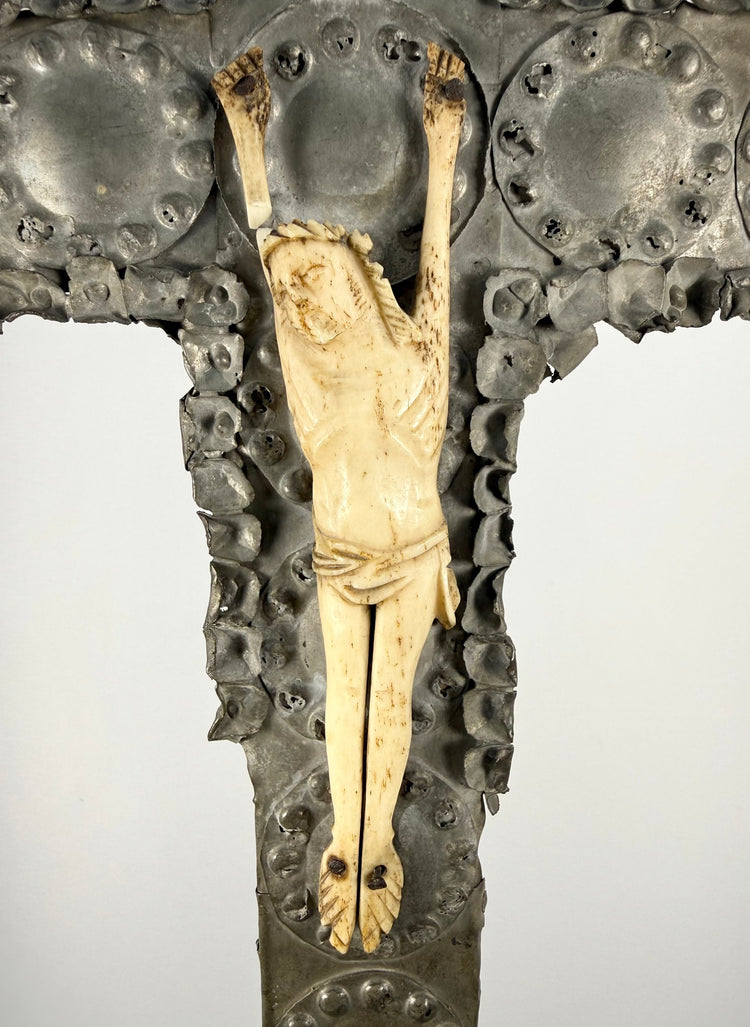
Crucifix ancien sculpté à la main avec figurine en os | Circa XVIIIe-XIXe siècle

Historique de provenance et de propriété

Auparavant détenue pendant de nombreuses années dans une collection privée de Main Line à Philadelphie, Pennsylvanie, États-Unis. Acquise par la suite par un collectionneur privé à Pineville, Pennsylvanie, États-Unis, en 2025.

Prix habituel
$1,500.00
Prix soldé
$1,500.00
Prix habituel
Frais de port calculés à la caisse.

This is a one-of-a-kind historical object. Once sold, this exact piece will not be restocked.

Questions before acquiring? Additional photographs, condition details, documentation, shipping information or a private viewing are available upon request.
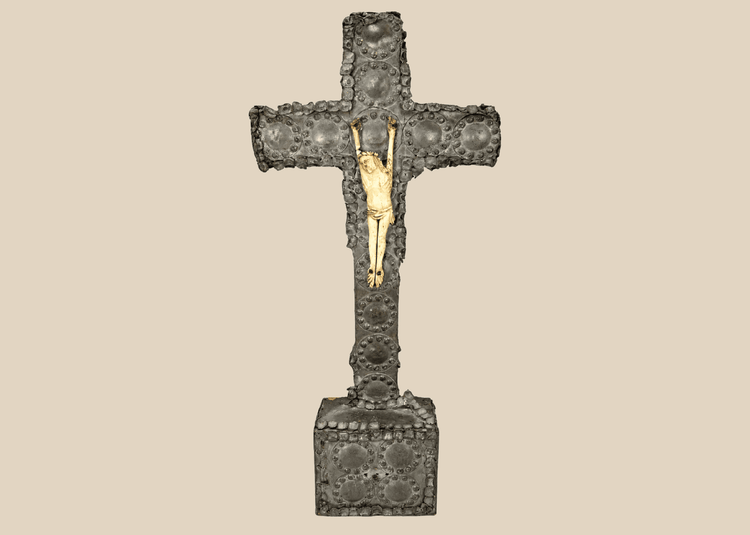
Antique crucifix — direct frontal view highlighting detailed casting and aged patina.
Video showcasing an 18th–19th century Spanish Colonial crucifix featuring hand-hammered tin repoussé decoration, a carved bone figure of Christ, aged wooden construction, and a square display base.
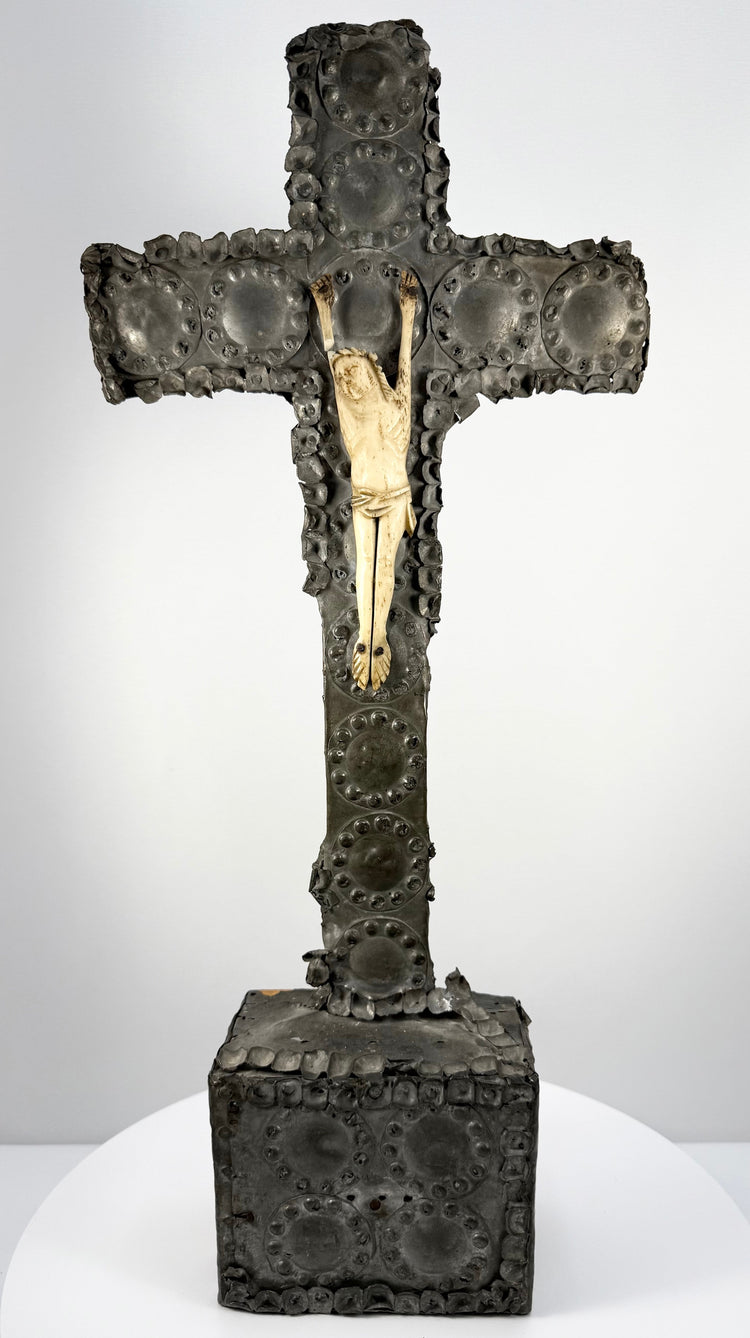
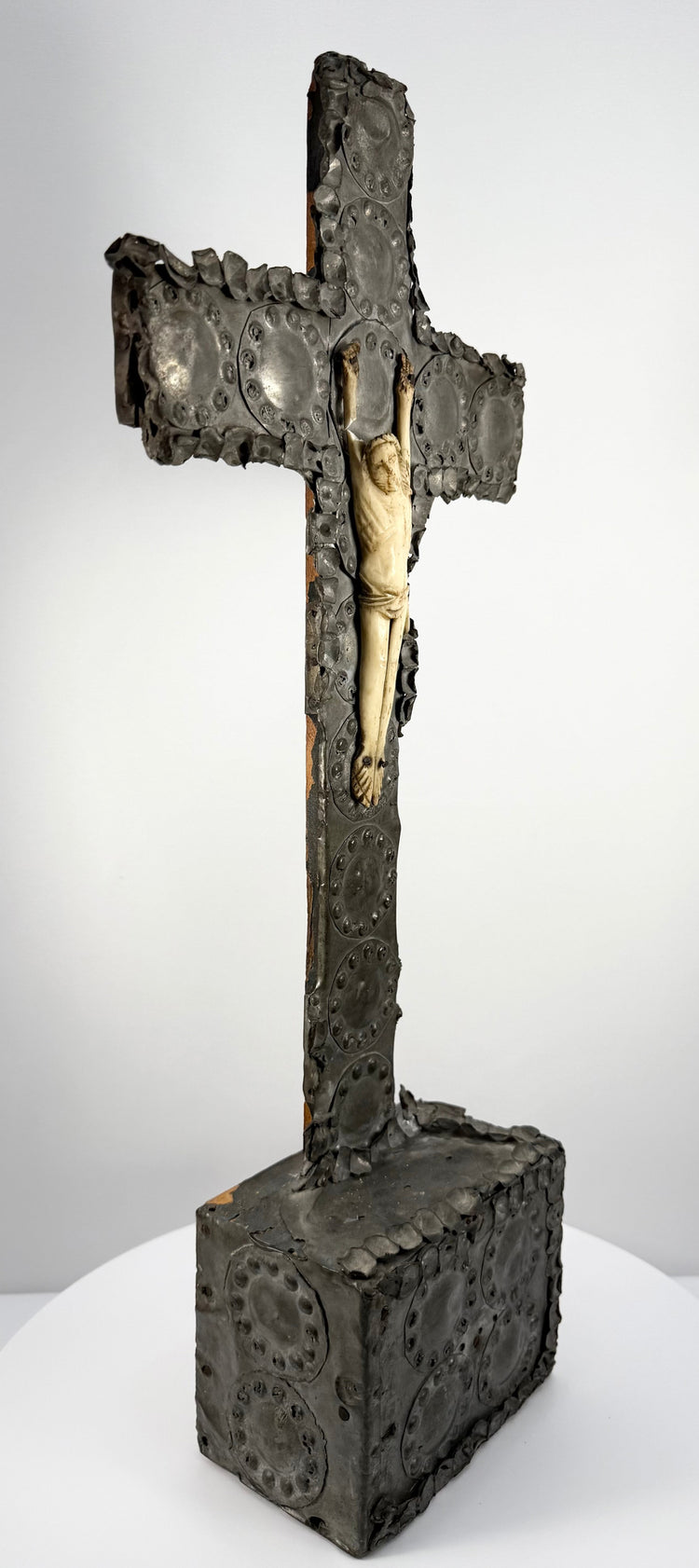
Frontal view of cream bone corpus attached to dark tin-sheathed cross
Antique Spanish Colonial wooden crucifix adorned with decorative tin metalwork and traditional Christian religious symbolism.
Standing antique crucifix with textured tin surface and pale carved bone figure
18th–19th century Spanish Colonial crucifix with hand-hammered tin repoussé, aged wooden construction, and natural oxidation.
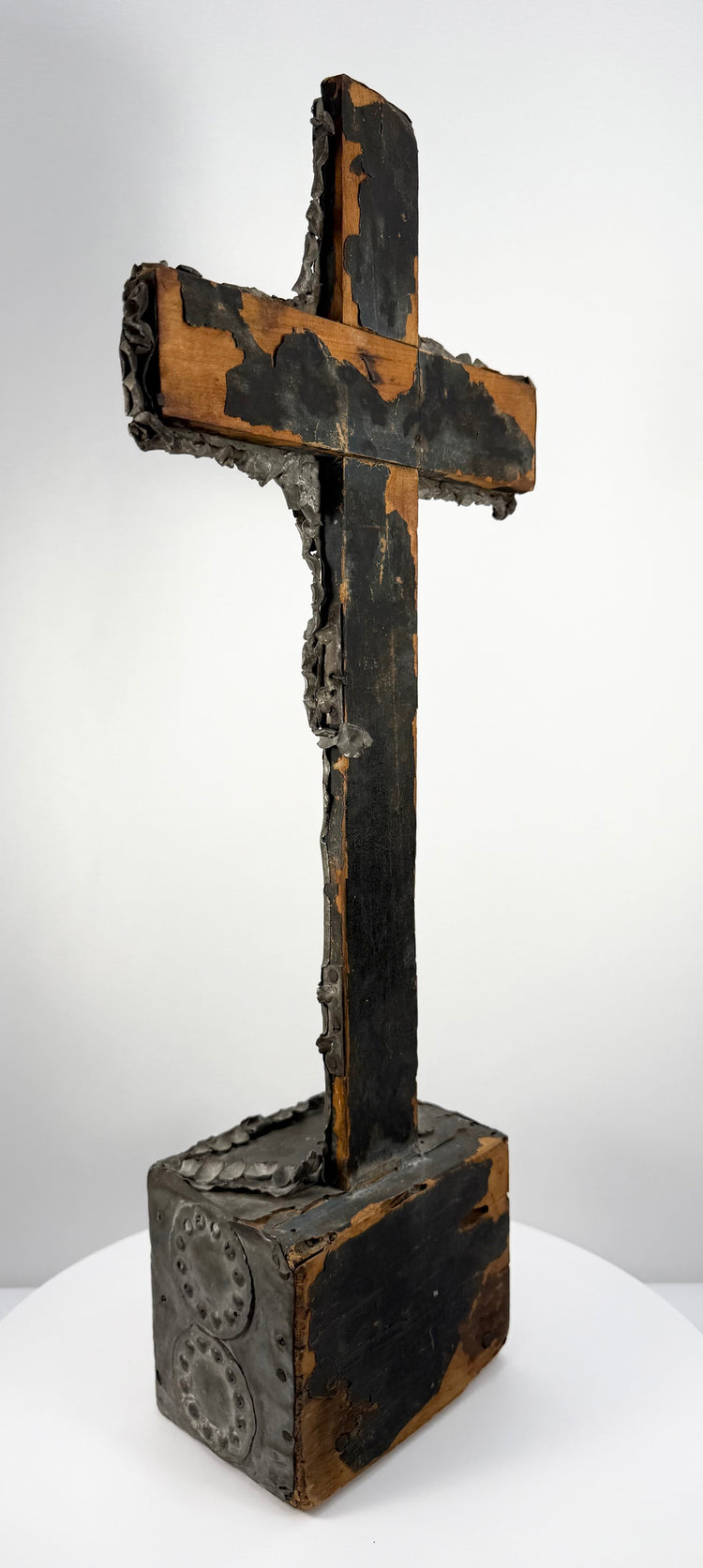
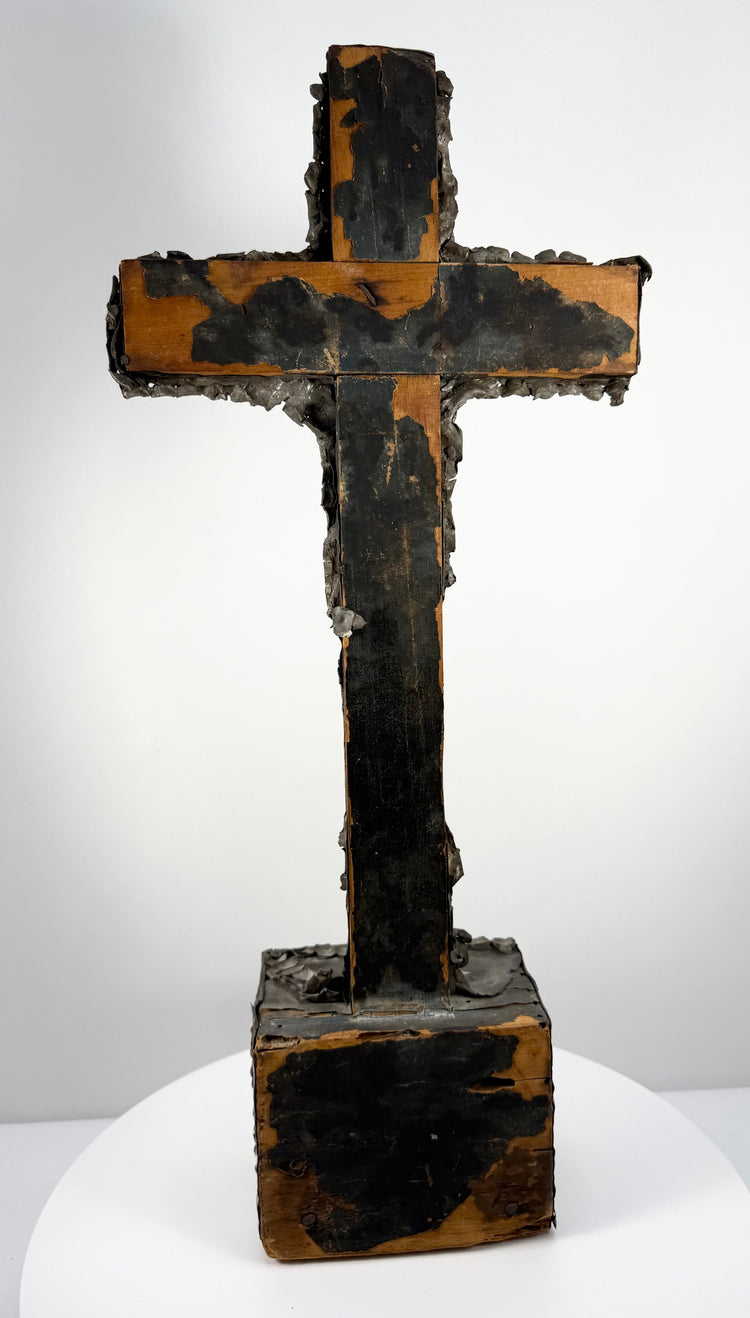
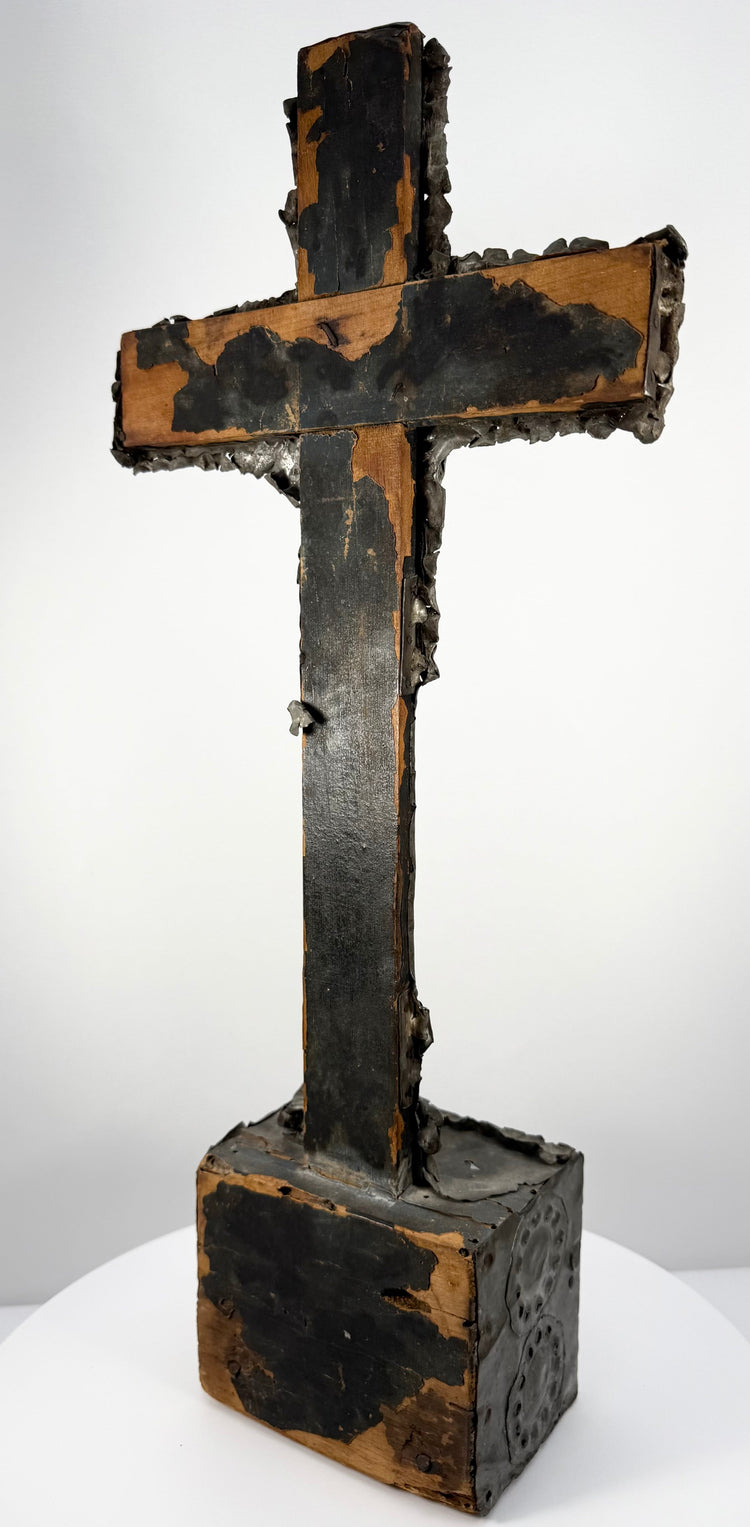
Rear view showing raw wood grain and worn black coating on antique cross back
Back view revealing exposed light brown wood grain where tin has detached
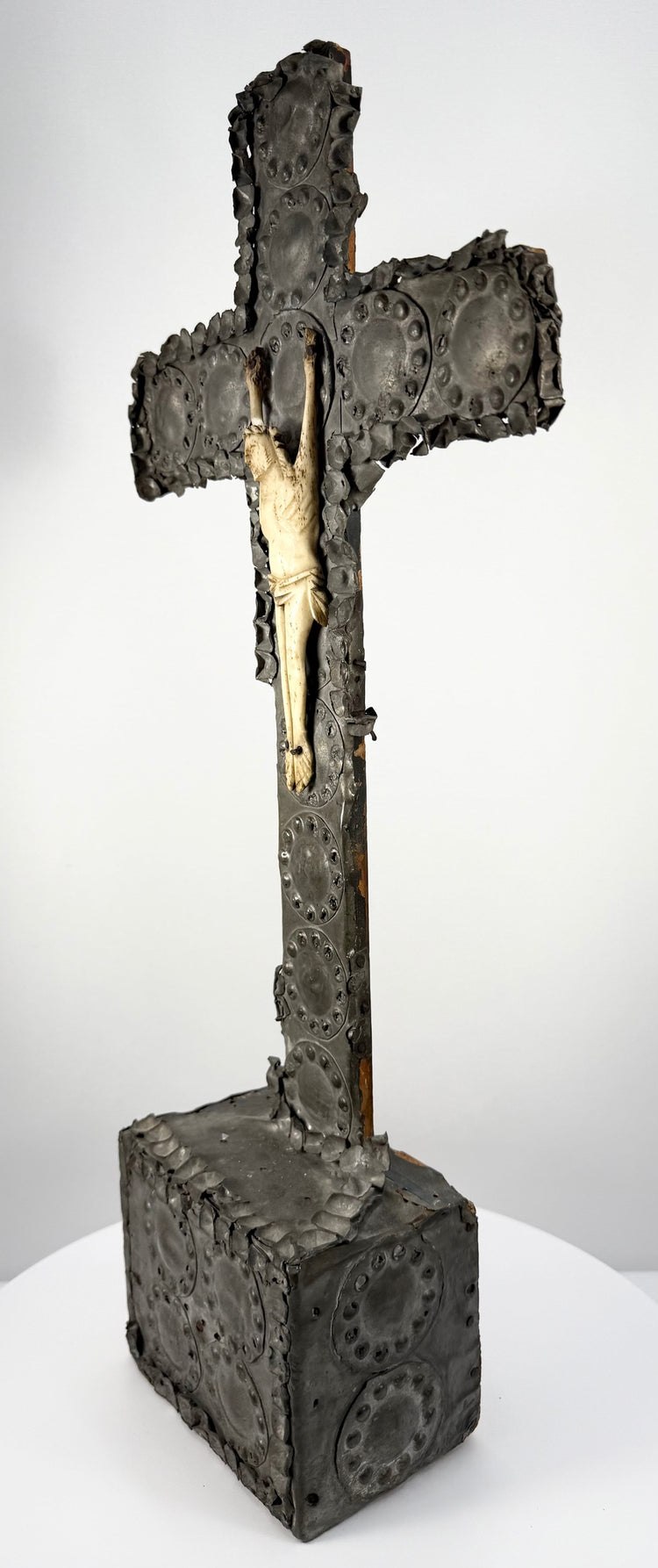
Side profile highlighting thickness of wooden structure and tin relief details
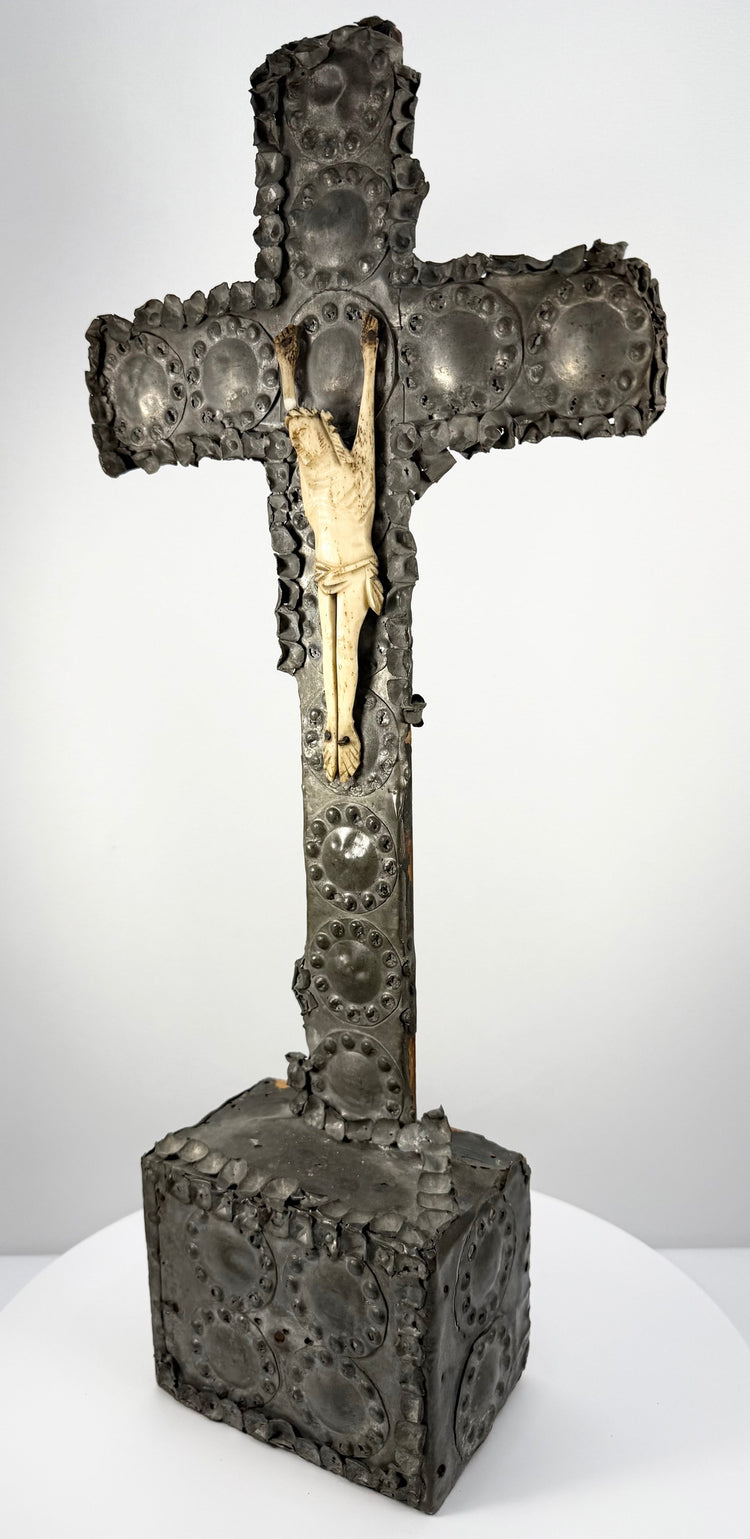
Three-quarter view of hand-carved wood and tin colonial crucifix on pedestal
Antique Spanish Colonial crucifix with bone corpus and tin repoussé rosettes
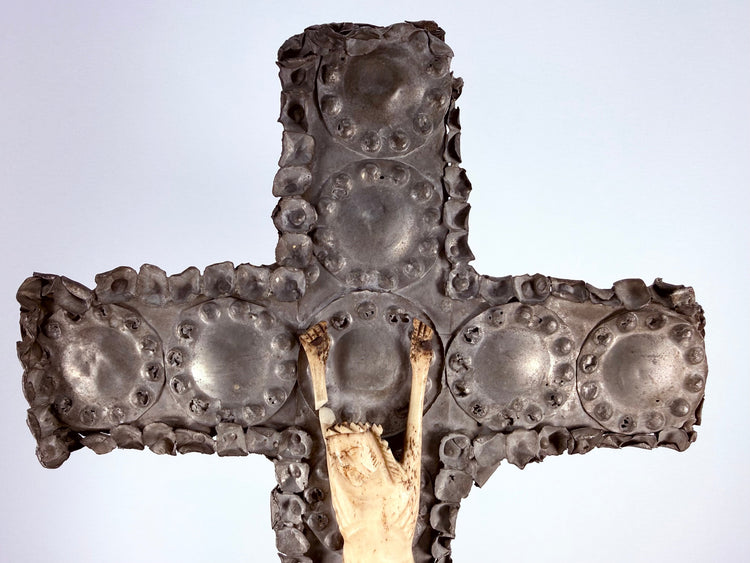
Close-up of embossed tin medallions and upper bone figure on antique cross
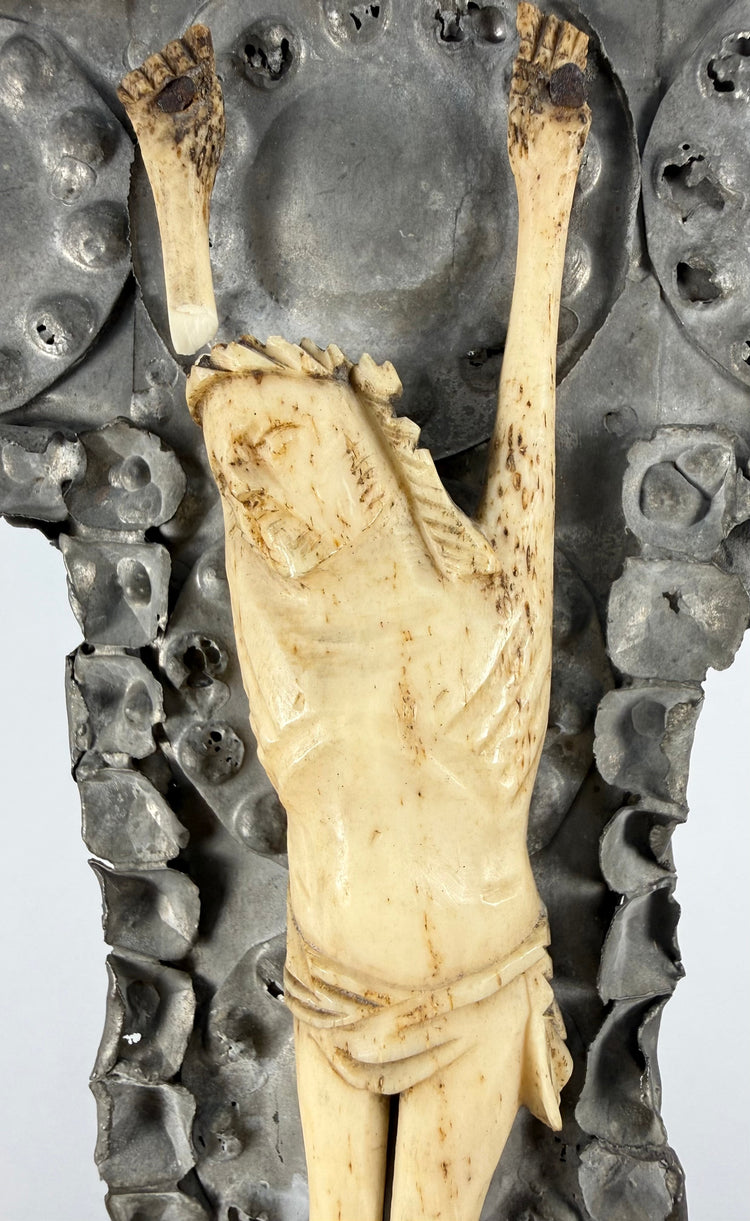
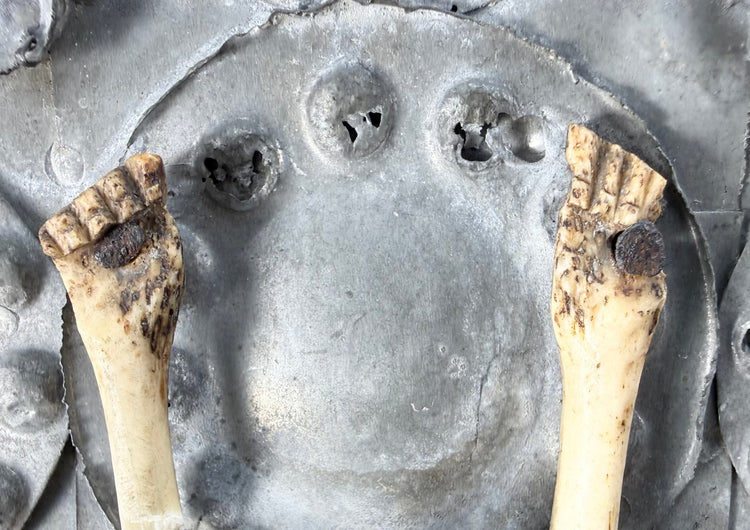
Detail of carved bone Christ torso and dark nail heads securing arms to cross
Antique wooden crucifix from the Spanish Colonial period featuring a carved bone Christ figure with damage to the right arm.
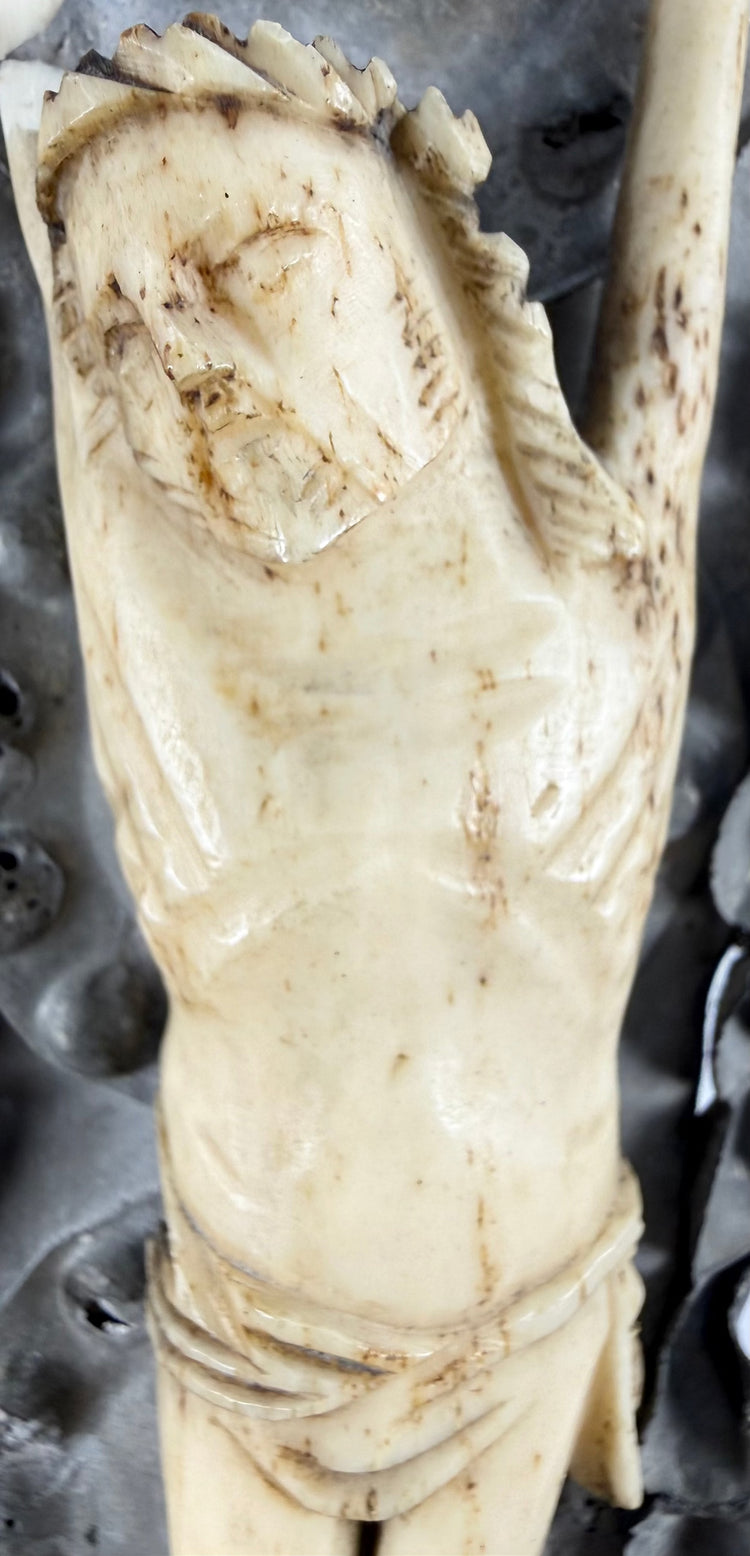
Macro detail of weathered bone head, facial features, and wrapped loincloth
Historic Spanish Colonial standing crucifix with repoussé tin decoration, natural patination, and a square wooden pedestal.
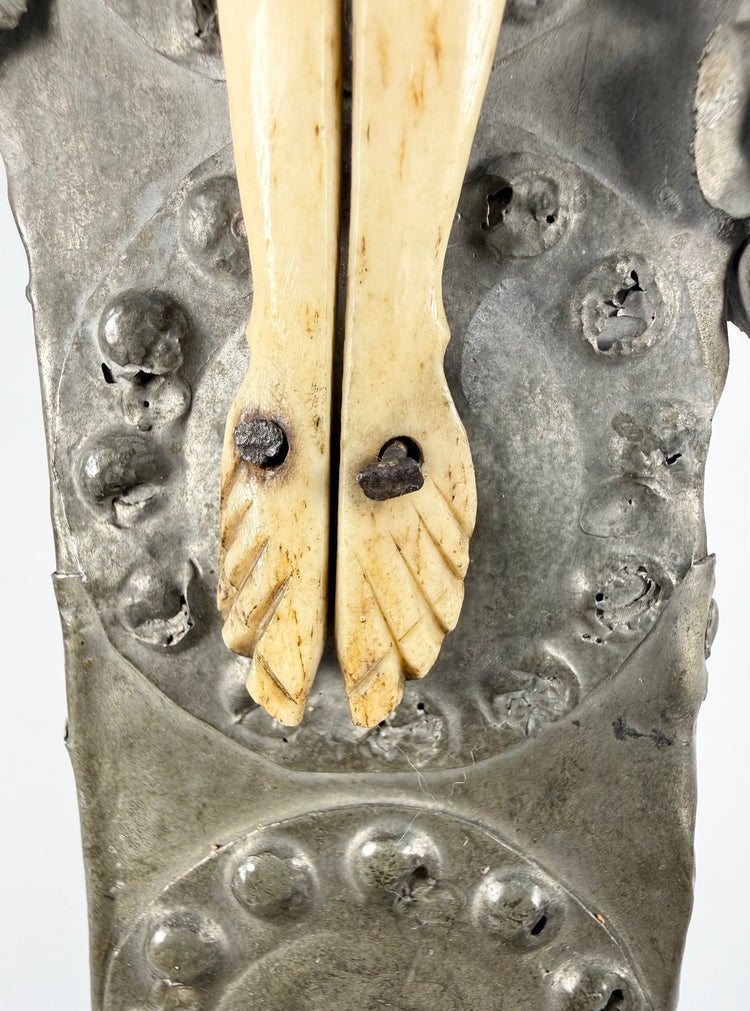
Macro shot of bone figure feet and metal fasteners on tin repoussé panel
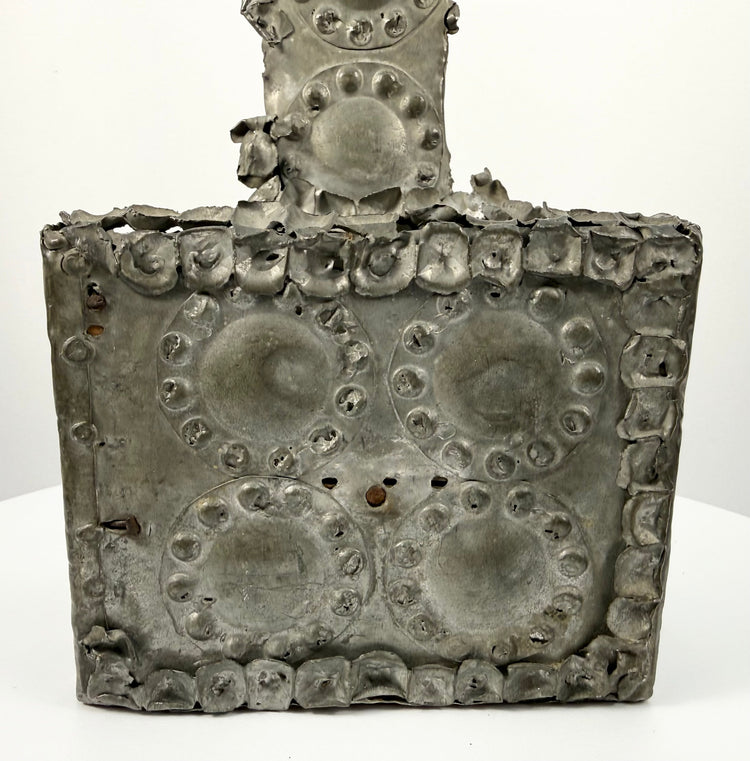
Close-up of square base with hammered tin circular motifs and scalloped edge
Video of 18th–19th century Spanish Colonial bone crucifix — antique hand-carved wooden cross with tin repousse and bone Corpus Christi figure, rare devotional artifact from Relic and Rarity
  • Antique crucifix — direct frontal view highlighting detailed casting and aged patina.
  • Video showcasing an 18th–19th century Spanish Colonial crucifix featuring hand-hammered tin repoussé decoration, a carved bone figure of Christ, aged wooden construction, and a square display base.
  • Frontal view of cream bone corpus attached to dark tin-sheathed cross
  • Antique Spanish Colonial wooden crucifix adorned with decorative tin metalwork and traditional Christian religious symbolism.
  • Standing antique crucifix with textured tin surface and pale carved bone figure
  • 18th–19th century Spanish Colonial crucifix with hand-hammered tin repoussé, aged wooden construction, and natural oxidation.
  • Rear view showing raw wood grain and worn black coating on antique cross back
  • Back view revealing exposed light brown wood grain where tin has detached
  • Side profile highlighting thickness of wooden structure and tin relief details
  • Three-quarter view of hand-carved wood and tin colonial crucifix on pedestal
  • Antique Spanish Colonial crucifix with bone corpus and tin repoussé rosettes
  • Close-up of embossed tin medallions and upper bone figure on antique cross
  • Detail of carved bone Christ torso and dark nail heads securing arms to cross
  • Antique wooden crucifix from the Spanish Colonial period featuring a carved bone Christ figure with damage to the right arm.
  • Macro detail of weathered bone head, facial features, and wrapped loincloth
  • Historic Spanish Colonial standing crucifix with repoussé tin decoration, natural patination, and a square wooden pedestal.
  • Macro shot of bone figure feet and metal fasteners on tin repoussé panel
  • Close-up of square base with hammered tin circular motifs and scalloped edge
  • Video of 18th–19th century Spanish Colonial bone crucifix — antique hand-carved wooden cross with tin repousse and bone Corpus Christi figure, rare devotional artifact from Relic and Rarity
Antique crucifix — direct frontal view highlighting detailed casting and aged patina.
Video showcasing an 18th–19th century Spanish Colonial crucifix featuring hand-hammered tin repoussé decoration, a carved bone figure of Christ, aged wooden construction, and a square display base.
Frontal view of cream bone corpus attached to dark tin-sheathed cross
Antique Spanish Colonial wooden crucifix adorned with decorative tin metalwork and traditional Christian religious symbolism.
Standing antique crucifix with textured tin surface and pale carved bone figure
18th–19th century Spanish Colonial crucifix with hand-hammered tin repoussé, aged wooden construction, and natural oxidation.
Rear view showing raw wood grain and worn black coating on antique cross back
Back view revealing exposed light brown wood grain where tin has detached
Side profile highlighting thickness of wooden structure and tin relief details
Three-quarter view of hand-carved wood and tin colonial crucifix on pedestal
Antique Spanish Colonial crucifix with bone corpus and tin repoussé rosettes
Close-up of embossed tin medallions and upper bone figure on antique cross
Detail of carved bone Christ torso and dark nail heads securing arms to cross
Antique wooden crucifix from the Spanish Colonial period featuring a carved bone Christ figure with damage to the right arm.
Macro detail of weathered bone head, facial features, and wrapped loincloth
Historic Spanish Colonial standing crucifix with repoussé tin decoration, natural patination, and a square wooden pedestal.
Macro shot of bone figure feet and metal fasteners on tin repoussé panel
Close-up of square base with hammered tin circular motifs and scalloped edge
Video of 18th–19th century Spanish Colonial bone crucifix — antique hand-carved wooden cross with tin repousse and bone Corpus Christi figure, rare devotional artifact from Relic and Rarity
Authenticity and secure checkout guarantee

Crucifix ancien sculpté à la main avec figurine en os | Circa XVIIIe-XIXe siècle

Description

Contexte historique et origine

Région : Territoires coloniaux espagnols (Mexique, Pérou ou Philippines)
Matériau : Bois sculpté à la main, étain repoussé et os (figure du Corpus Christi)
Période : Environ XVIIIe-XIXe siècle

Description

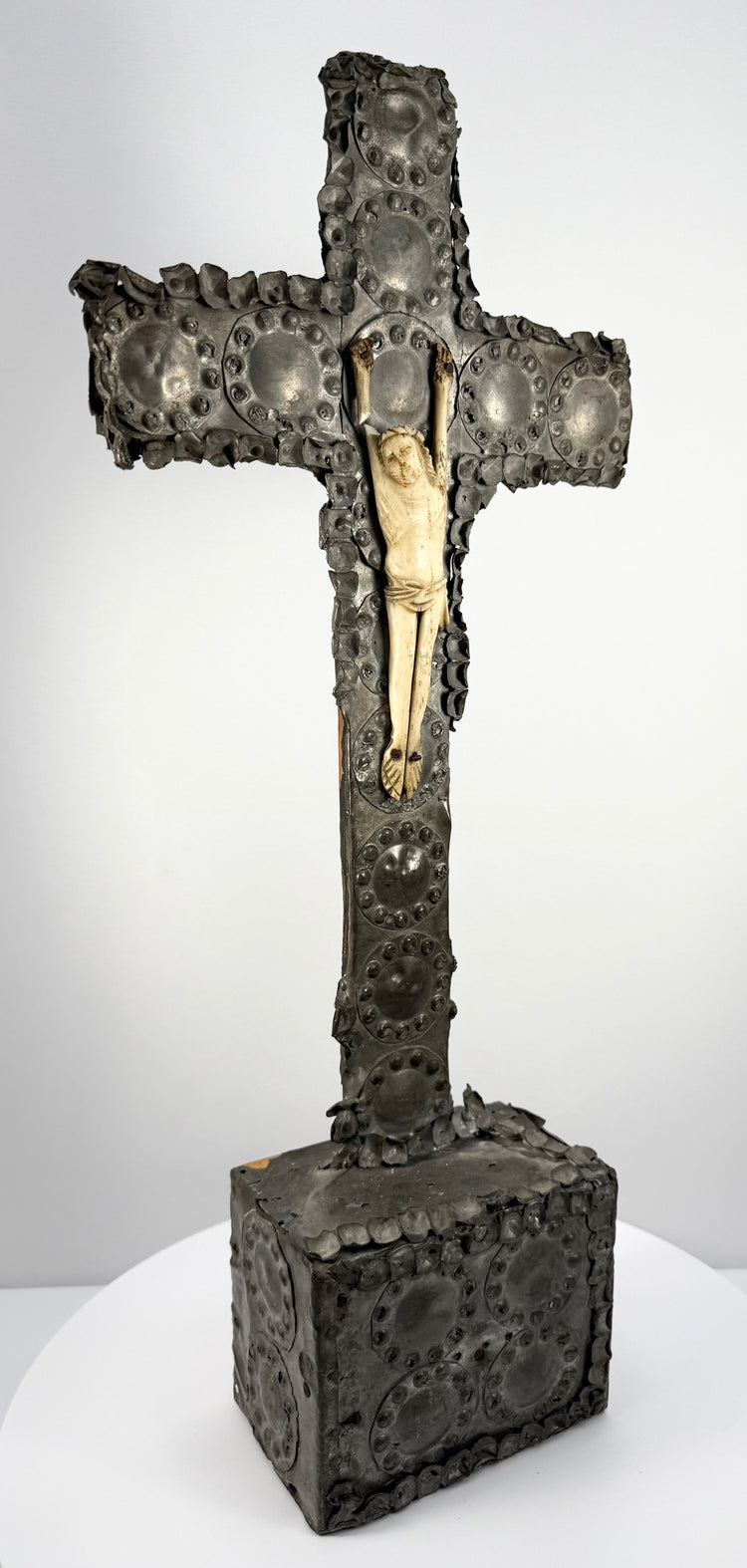
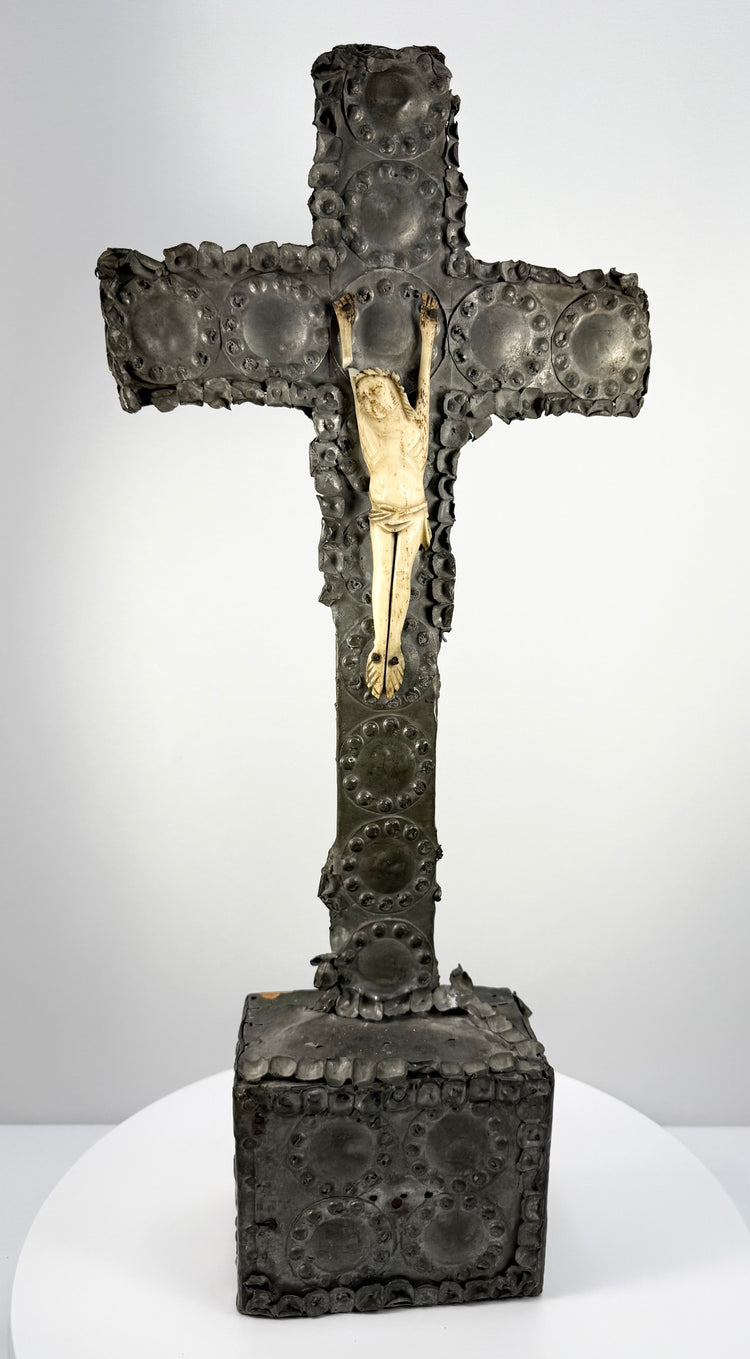
Un crucifix colonial espagnol évocateur, fabriqué en bois recouvert d'étain repoussé martelé à la main, avec une délicate figure du Christ sculptée en os. Le revêtement en étain présente des motifs circulaires et des rosettes en relief, symbolisant l'éclat divin et l'éternité. Le revers révèle la structure en bois brut avec des restes de peinture ancienne et d'oxydation, témoignant de son âge dévotionnel. Mesurant 18 pouces de haut, cette pièce reflète le puissant art religieux de la période coloniale.

Caractéristiques

- Décoration en étain repoussé avec des motifs circulaires en relief

- Corpus en os sculpté à la main avec une anatomie détaillée

- Patine foncée d'origine avec des traces d'âge et d'oxydation

- Monté sur une base en bois carrée pour la stabilité

- Conserve une présence dévotionnelle authentique et une esthétique coloniale

Signification culturelle

Les crucifix de ce type étaient au centre du culte colonial espagnol, présents dans les églises de mission, les monastères et les maisons privées à travers le Nouveau Monde. La combinaison de l'iconographie chrétienne européenne et de l'artisanat adapté localement témoigne du mélange des cultures qui a défini l'art sacré de l'Empire espagnol. L'étain était souvent utilisé comme substitut de l'argent dans les régions éloignées, offrant une surface dévotionnelle abordable mais visuellement saisissante.

État

Bon état général avec usure liée à l'âge attendue, oxydation de surface et pertes mineures. Rupture et perte notables du bras droit de la figure du Christ ; sinon structurellement solide avec une présentation stable. La pièce conserve ses surfaces vieillies d'origine et son intégrité dévotionnelle.

Dimensions (approximatives) 

Hauteur : 18 po 
Largeur : 8 po
Profondeur : 3 po 

Âge (approximatif) 

125-325 ans

Provenance 

Anciennement détenu pendant de nombreuses années dans une collection privée sur la Main Line de Philadelphie, Pennsylvanie, États-Unis. Acquis ensuite par un collectionneur privé à Pineville, Pennsylvanie, États-Unis, en 2025.

En savoir plus

Découvrez la signification du Crucifix dans la tradition catholique Le Crucifix expliqué

Parcourez les croix et crucifix historiques de notre collection Croix et crucifix anciens

Description

Contexte historique et origine

Région : Territoires coloniaux espagnols (Mexique, Pérou ou Philippines)
Matériau : Bois sculpté à la main, étain repoussé et os (figure du Corpus Christi)
Période : Environ XVIIIe-XIXe siècle

Description

Un crucifix colonial espagnol évocateur, fabriqué en bois recouvert d'étain repoussé martelé à la main, avec une délicate figure du Christ sculptée en os. Le revêtement en étain présente des motifs circulaires et des rosettes en relief, symbolisant l'éclat divin et l'éternité. Le revers révèle la structure en bois brut avec des restes de peinture ancienne et d'oxydation, témoignant de son âge dévotionnel. Mesurant 18 pouces de haut, cette pièce reflète le puissant art religieux de la période coloniale.

Caractéristiques

- Décoration en étain repoussé avec des motifs circulaires en relief

- Corpus en os sculpté à la main avec une anatomie détaillée

- Patine foncée d'origine avec des traces d'âge et d'oxydation

- Monté sur une base en bois carrée pour la stabilité

- Conserve une présence dévotionnelle authentique et une esthétique coloniale

Signification culturelle

Les crucifix de ce type étaient au centre du culte colonial espagnol, présents dans les églises de mission, les monastères et les maisons privées à travers le Nouveau Monde. La combinaison de l'iconographie chrétienne européenne et de l'artisanat adapté localement témoigne du mélange des cultures qui a défini l'art sacré de l'Empire espagnol. L'étain était souvent utilisé comme substitut de l'argent dans les régions éloignées, offrant une surface dévotionnelle abordable mais visuellement saisissante.

État

Bon état général avec usure liée à l'âge attendue, oxydation de surface et pertes mineures. Rupture et perte notables du bras droit de la figure du Christ ; sinon structurellement solide avec une présentation stable. La pièce conserve ses surfaces vieillies d'origine et son intégrité dévotionnelle.

Dimensions (approximatives) 

Hauteur : 18 po 
Largeur : 8 po
Profondeur : 3 po 

Âge (approximatif) 

125-325 ans

Provenance 

Anciennement détenu pendant de nombreuses années dans une collection privée sur la Main Line de Philadelphie, Pennsylvanie, États-Unis. Acquis ensuite par un collectionneur privé à Pineville, Pennsylvanie, États-Unis, en 2025.

En savoir plus

Découvrez la signification du Crucifix dans la tradition catholique Le Crucifix expliqué

Parcourez les croix et crucifix historiques de notre collection Croix et crucifix anciens

Vous aimerez peut-être aussi