

Ceinture tibétaine ancienne avec applications brodées et poignard de combat | Région himalayenne | Circa 1870–1900
- Prix habituel
- $1,000.00
- Prix soldé
- $1,000.00
- Prix habituel
Impossible de charger la disponibilité du service de retrait


Ceinture tibétaine ancienne avec applications brodées et poignard de combat | Région himalayenne | Circa 1870–1900
Description
Plus
Moins
Contexte historique et origine
Région : Tibet / Région himalayenne
Matériaux : Acier forgé, corne, bois, cuir, métal argenté, coton et broderie de soie
Période : Fin du XIXe siècle de notre ère, vers 1870-1900
Description
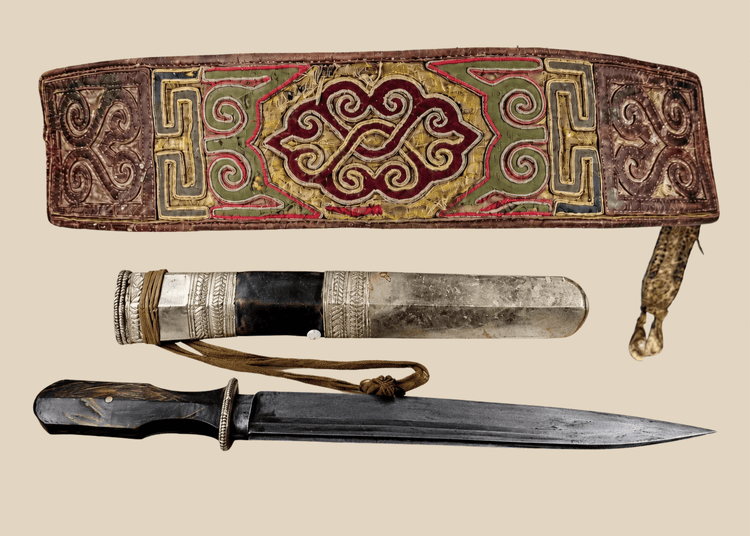
Cet ensemble remarquable de ceinture tibétaine comprend une ceinture traditionnelle utilitaire ou de guerrier, ainsi qu'une dague substantielle à un seul tranchant, logée dans son fourreau ajusté d'origine.
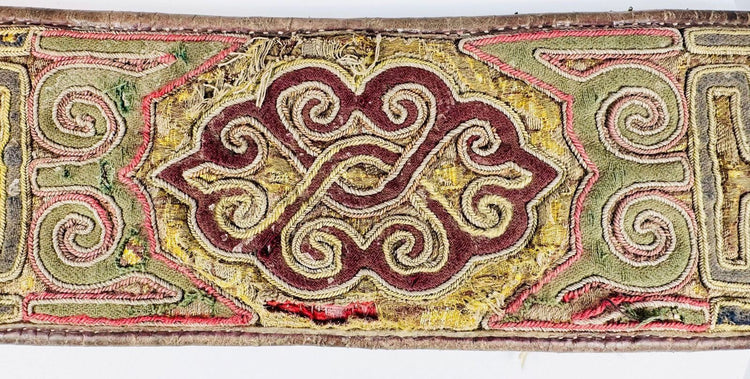
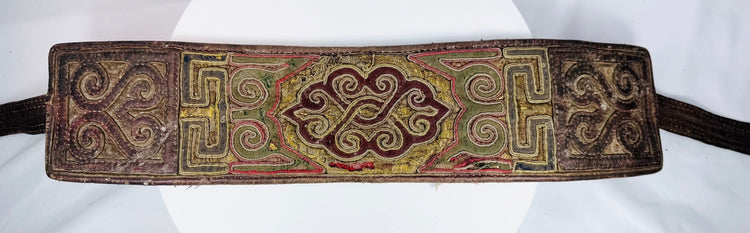
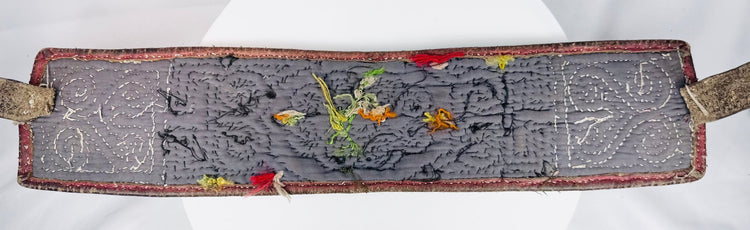
La large ceinture est confectionnée en coton rembourré et recouverte de panneaux textiles aux couleurs riches, ornés de passementerie appliquée, d'appliqués découpés et de motifs géométriques brodés en spirale. Son champ central est dominé par un motif symétrique élaboré, exécuté en bordeaux, crème, jaune, vert et rose, entouré de bordures angulaires à motifs de clé et de dessins en spirale répétés. Les panneaux terminaux sont renforcés de cuir et décorés de motifs en volutes en relief. Le revers révèle la confection cousue à la main, le support textile et les sangles d'attache restantes. La boucle de ceinture d'origine n'est plus présente.
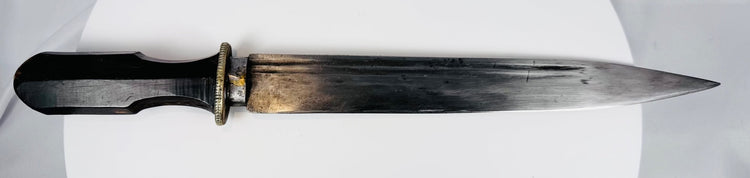
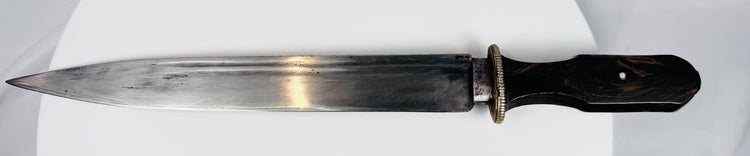
La dague qui l'accompagne est une forme tibétaine caractéristique, dotée d'une robuste lame en acier forgé avec un seul tranchant, un dos droit et une pointe effilée. Ses proportions substantielles indiquent qu'elle était destinée à être un couteau de travail et de défense pratique plutôt qu'un objet purement cérémoniel. Le manche en corne sombre facettée est profilé avec une prise rétrécie et une extrémité légèrement évasée, tandis qu'un petit insert pâle offre un accent décoratif contrastant. Une garde en métal argenté avec une bordure finement travaillée à motif de corde sépare le manche de la lame.
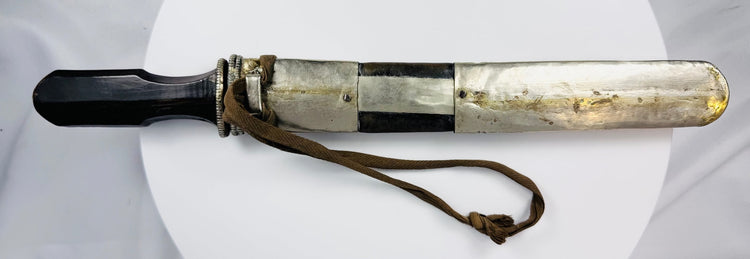
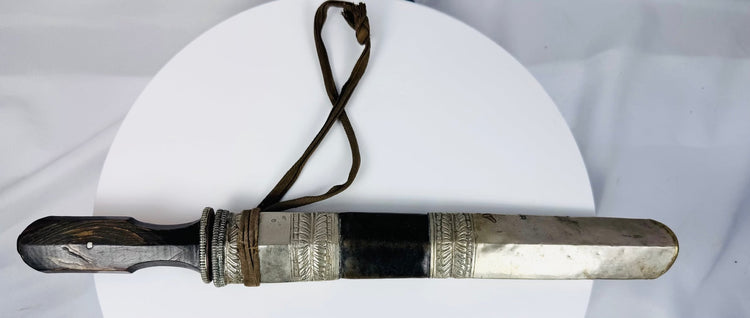
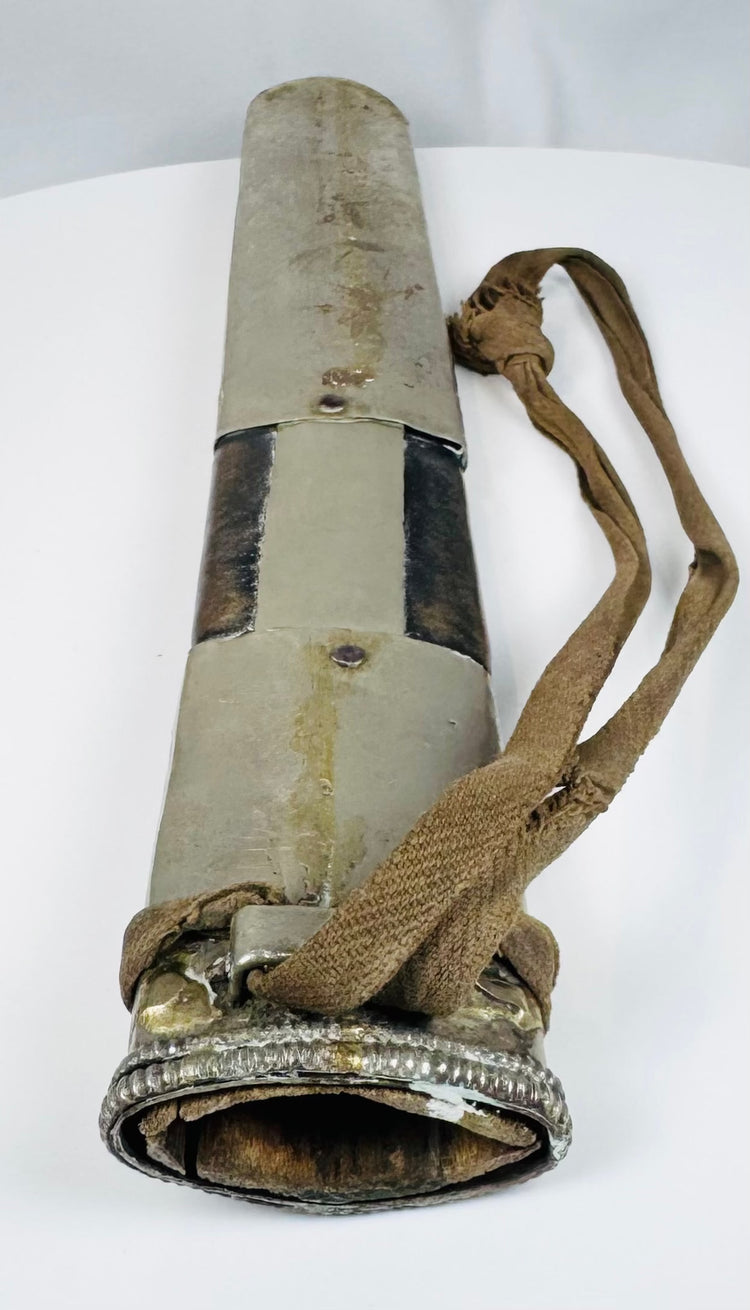
La dague conserve son fourreau d'origine en bois recouvert de cuir, largement gainé de grandes montures en métal argenté. Le fourreau est décoré de bandes florales estampées et ciselées, de panneaux sombres alternés et d'une extrémité arrondie. Un cordon de suspension tressé restant permettait d'attacher la dague à la ceinture et de la porter à la taille.
Caractéristiques
- Orné d'appliqués découpés, de passementerie appliquée et de broderies
- Motifs géométriques en spirale et à clé
- Dague tibétaine caractéristique avec une robuste lame en acier à un seul tranchant
- Manche en corne sombre facettée avec incrustation contrastante
- Garde en métal argenté avec bordure à motif de corde
- Fourreau original en bois recouvert de cuir
- Grandes montures de fourreau argentées avec décoration florale en relief
- Conserve son cordon de suspension tressé d'origine
- Exemple complet et visuellement impressionnant d'accoutrements masculins tibétains
Signification culturelle
Les dagues constituaient un élément important de la tenue masculine tibétaine traditionnelle et étaient portées comme outils pratiques, armes défensives et indicateurs de statut social. Les couteaux tibétains étaient utilisés dans la vie quotidienne pour couper la nourriture, préparer des matériaux, gérer le bétail et effectuer de nombreuses tâches lors des voyages à travers le plateau. Des exemples plus élaborés étaient montés avec de l'argent, du laiton, de la corne, du corail ou d'autres matériaux précieux et reflétaient à la fois le statut du porteur et les compétences des métallurgistes régionaux.
La ceinture richement décorée aurait maintenu ces objets à la taille tout en servant d'expression visible des traditions textiles régionales. Plutôt que de représenter un uniforme militaire standardisé, l'ensemble doit être compris comme l'équipement personnel d'un homme tibétain qui aurait pu être un guerrier, un voyageur armé, un chasseur, un berger ou une personne de haut rang social.
État
L'ensemble reste en bon état antique et présente une usure générale liée à l'âge. La lame en acier présente une oxydation de surface dispersée, une patine assombrie, des rayures et des traces de nettoyage historique. La lame reste substantielle et conserve son profil pointu. Le manche en corne présente une usure de surface, des rayures, des variations naturelles et des imperfections mineures conformes à l'âge et à l'usage.
Le fourreau reste intact et présente des bosses, des rayures, un ternissement, des frottements, une décoloration et des zones de séparation ou d'irrégularité sur le revêtement en métal argenté. Le cuir, le noyau en bois, le cordon de suspension et les montures décoratives montrent une usure conforme à une utilisation prolongée et à la conservation.
La ceinture textile présente une usure considérable, une décoloration, un effilochage, une perte de fil, des taches, un tissu de fond exposé et des pertes localisées sur la broderie et la décoration appliquée. Le revers présente d'importantes coutures à la main, des fils lâches, d'anciennes réparations et une usure de surface. La boucle de ceinture d'origine est manquante.
Dimensions (Approximatives)
Longueur de la ceinture : 32 pouces
Longueur de la dague : 15 pouces
Âge (Approximatif)
126–156 ans
Provenance
Anciennement partie d'une collection privée de Cheyenne, Wyoming, États-Unis, spécialisée dans les armes, armures et objets militaires antiques. La collection a été constituée sur de nombreuses années avec un accent particulier sur les armes historiques, les accessoires de poudre, les armures et les objets martiaux.
En savoir plus
Voir une dague et un fourreau tibétains connexes dans la collection du Metropolitan Museum of Art
Parcourir notre Collection d'armes, armures et armements historiques
Description
Contexte historique et origine
Région : Tibet / Région himalayenne
Matériaux : Acier forgé, corne, bois, cuir, métal argenté, coton et broderie de soie
Période : Fin du XIXe siècle de notre ère, vers 1870-1900
Description
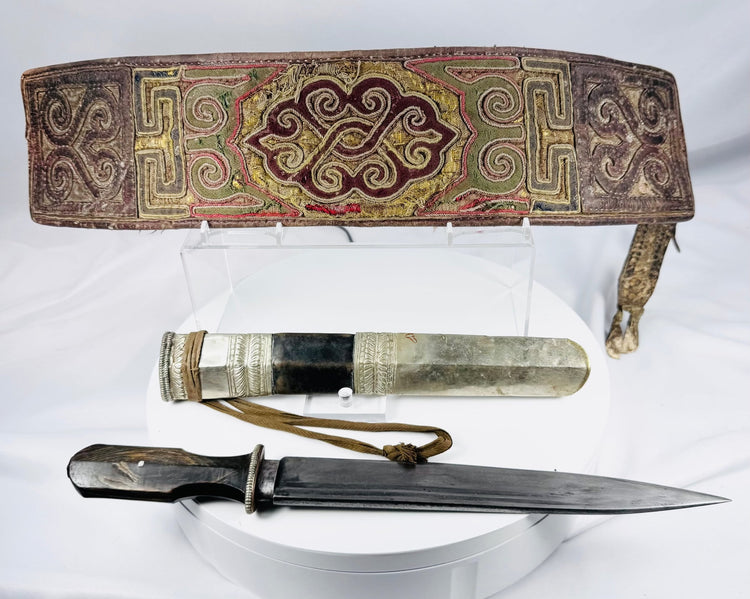
Cet ensemble remarquable de ceinture tibétaine comprend une ceinture traditionnelle utilitaire ou de guerrier, ainsi qu'une dague substantielle à un seul tranchant, logée dans son fourreau ajusté d'origine.
La large ceinture est confectionnée en coton rembourré et recouverte de panneaux textiles aux couleurs riches, ornés de passementerie appliquée, d'appliqués découpés et de motifs géométriques brodés en spirale. Son champ central est dominé par un motif symétrique élaboré, exécuté en bordeaux, crème, jaune, vert et rose, entouré de bordures angulaires à motifs de clé et de dessins en spirale répétés. Les panneaux terminaux sont renforcés de cuir et décorés de motifs en volutes en relief. Le revers révèle la confection cousue à la main, le support textile et les sangles d'attache restantes. La boucle de ceinture d'origine n'est plus présente.
La dague qui l'accompagne est une forme tibétaine caractéristique, dotée d'une robuste lame en acier forgé avec un seul tranchant, un dos droit et une pointe effilée. Ses proportions substantielles indiquent qu'elle était destinée à être un couteau de travail et de défense pratique plutôt qu'un objet purement cérémoniel. Le manche en corne sombre facettée est profilé avec une prise rétrécie et une extrémité légèrement évasée, tandis qu'un petit insert pâle offre un accent décoratif contrastant. Une garde en métal argenté avec une bordure finement travaillée à motif de corde sépare le manche de la lame.
La dague conserve son fourreau d'origine en bois recouvert de cuir, largement gainé de grandes montures en métal argenté. Le fourreau est décoré de bandes florales estampées et ciselées, de panneaux sombres alternés et d'une extrémité arrondie. Un cordon de suspension tressé restant permettait d'attacher la dague à la ceinture et de la porter à la taille.
Caractéristiques
- Orné d'appliqués découpés, de passementerie appliquée et de broderies
- Motifs géométriques en spirale et à clé
- Dague tibétaine caractéristique avec une robuste lame en acier à un seul tranchant
- Manche en corne sombre facettée avec incrustation contrastante
- Garde en métal argenté avec bordure à motif de corde
- Fourreau original en bois recouvert de cuir
- Grandes montures de fourreau argentées avec décoration florale en relief
- Conserve son cordon de suspension tressé d'origine
- Exemple complet et visuellement impressionnant d'accoutrements masculins tibétains
Signification culturelle
Les dagues constituaient un élément important de la tenue masculine tibétaine traditionnelle et étaient portées comme outils pratiques, armes défensives et indicateurs de statut social. Les couteaux tibétains étaient utilisés dans la vie quotidienne pour couper la nourriture, préparer des matériaux, gérer le bétail et effectuer de nombreuses tâches lors des voyages à travers le plateau. Des exemples plus élaborés étaient montés avec de l'argent, du laiton, de la corne, du corail ou d'autres matériaux précieux et reflétaient à la fois le statut du porteur et les compétences des métallurgistes régionaux.
La ceinture richement décorée aurait maintenu ces objets à la taille tout en servant d'expression visible des traditions textiles régionales. Plutôt que de représenter un uniforme militaire standardisé, l'ensemble doit être compris comme l'équipement personnel d'un homme tibétain qui aurait pu être un guerrier, un voyageur armé, un chasseur, un berger ou une personne de haut rang social.
État
L'ensemble reste en bon état antique et présente une usure générale liée à l'âge. La lame en acier présente une oxydation de surface dispersée, une patine assombrie, des rayures et des traces de nettoyage historique. La lame reste substantielle et conserve son profil pointu. Le manche en corne présente une usure de surface, des rayures, des variations naturelles et des imperfections mineures conformes à l'âge et à l'usage.
Le fourreau reste intact et présente des bosses, des rayures, un ternissement, des frottements, une décoloration et des zones de séparation ou d'irrégularité sur le revêtement en métal argenté. Le cuir, le noyau en bois, le cordon de suspension et les montures décoratives montrent une usure conforme à une utilisation prolongée et à la conservation.
La ceinture textile présente une usure considérable, une décoloration, un effilochage, une perte de fil, des taches, un tissu de fond exposé et des pertes localisées sur la broderie et la décoration appliquée. Le revers présente d'importantes coutures à la main, des fils lâches, d'anciennes réparations et une usure de surface. La boucle de ceinture d'origine est manquante.
Dimensions (Approximatives)
Longueur de la ceinture : 32 pouces
Longueur de la dague : 15 pouces
Âge (Approximatif)
126–156 ans
Provenance
Anciennement partie d'une collection privée de Cheyenne, Wyoming, États-Unis, spécialisée dans les armes, armures et objets militaires antiques. La collection a été constituée sur de nombreuses années avec un accent particulier sur les armes historiques, les accessoires de poudre, les armures et les objets martiaux.
En savoir plus
Voir une dague et un fourreau tibétains connexes dans la collection du Metropolitan Museum of Art
Parcourir notre Collection d'armes, armures et armements historiques
Vous aimerez peut-être aussi
