


Chinese Pottery Head Fragment | Attributed to Ming Dynasty | Circa 1368 – 1644 CE
- Prix habituel
- $1,250.00
- Prix soldé
- $1,250.00
- Prix habituel
Impossible de charger la disponibilité du service de retrait




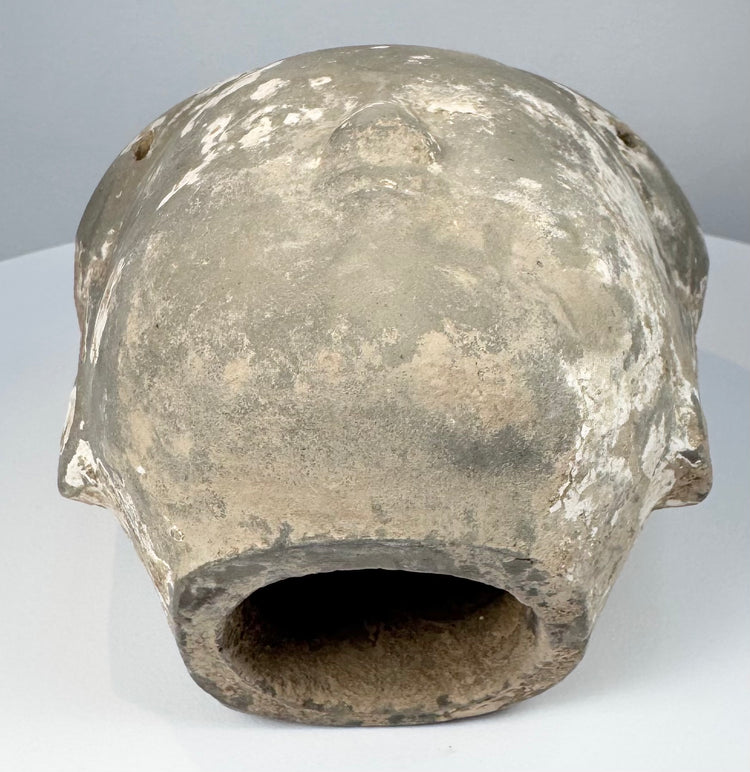
Chinese Pottery Head Fragment | Attributed to Ming Dynasty | Circa 1368 – 1644 CE
Description
Plus
Moins
Historical Context & Origin
Region: China
Material: Earthenware / terracotta with remnants of pale surface slip and mineral accretions
Period: Attributed to the Ming Dynasty, 1368–1644 CE
Description
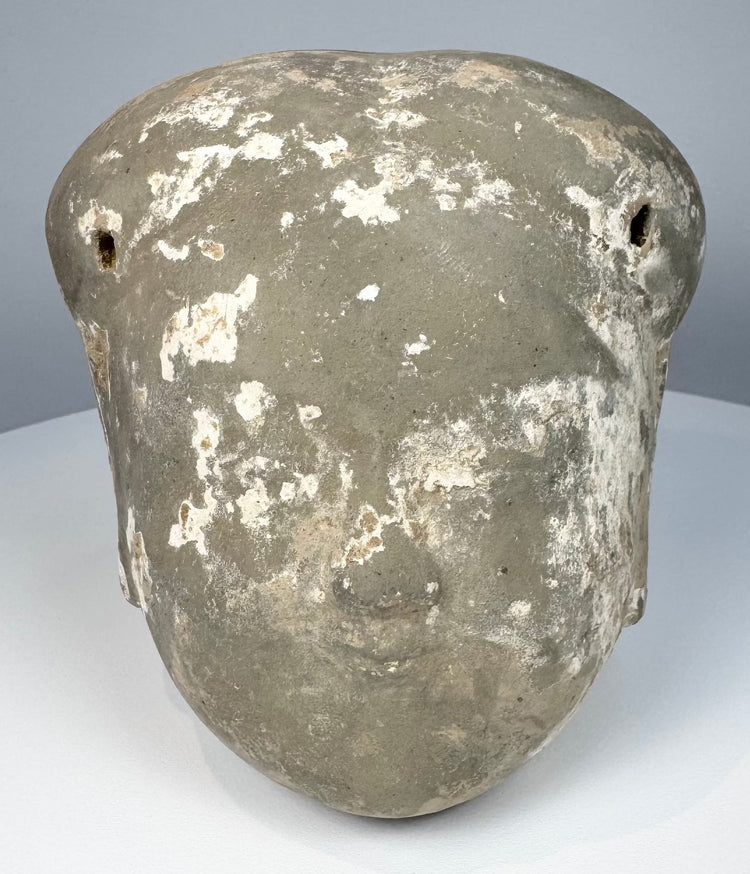
This evocative Chinese pottery head fragment is attributed to the Ming Dynasty and preserves the softly modelled facial characteristics associated with traditional Chinese ceramic sculpture. Formed from grey-buff earthenware, the head displays a broad rounded cranium, gently defined eyes, a prominent yet restrained nose, softly indicated lips, and a rounded chin.
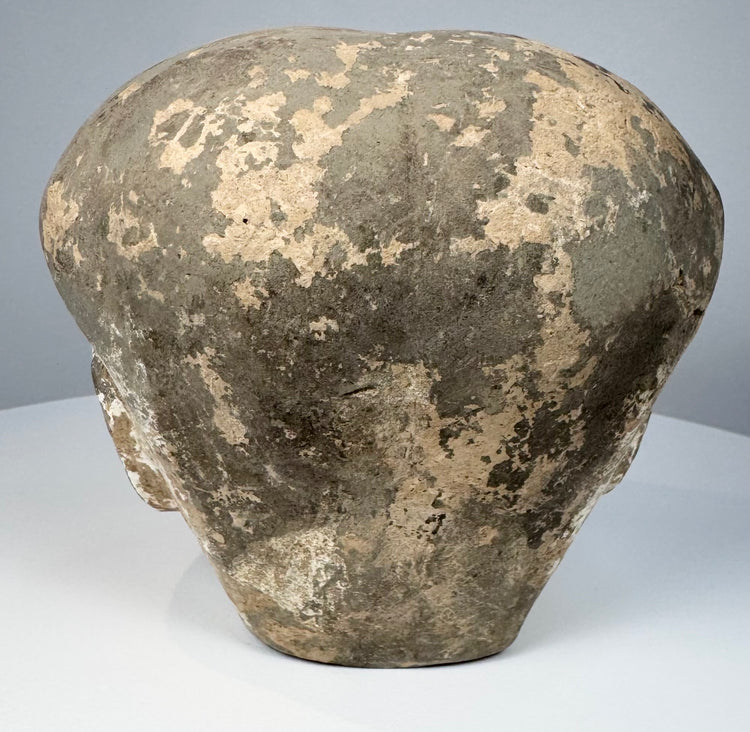
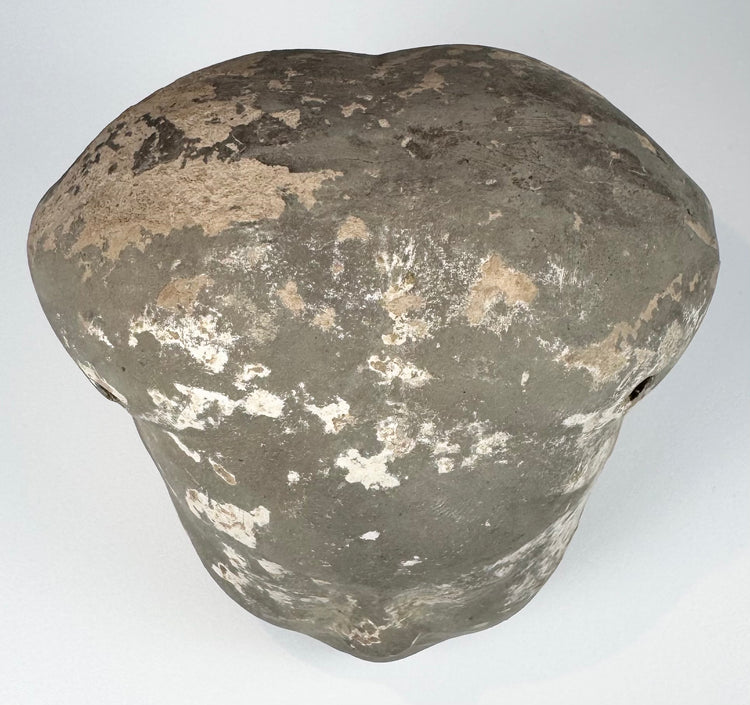
The surface retains extensive areas of pale whitish material, likely representing remnants of an original slip or surface preparation intermixed with later mineral deposits and burial accretions. The resulting mottled grey, cream, and earthy coloration gives the piece a particularly strong archaeological character.
Two small openings are positioned symmetrically toward the upper sides of the head. These appear intentional and may have served an original construction or attachment function, potentially associated with another component of the figure, although their precise purpose cannot be determined from the surviving fragment.
The head was likely once incorporated into a larger sculptural figure. During the Ming period, ceramic sculpture was produced for both funerary and religious contexts, including representations of attendants, officials, guardians, Buddhist figures, and other human forms. Surviving museum examples demonstrate the use of earthenware and stoneware heads, often originally finished with slip, pigment, or glaze.
Features
- Sculpted Chinese earthenware human head
- Broad rounded head with softly modelled facial features
- Remnants of pale surface slip or coating
- Naturally weathered grey, cream, and earthy surface
- Two apparently intentional apertures positioned toward the upper sides
- Extensive age-related surface deposits and losses
- Fragment from what was likely a larger ceramic sculptural figure
- Strong archaeological and sculptural display presence
Cultural Significance
Ceramic figures formed an important component of Chinese artistic and funerary traditions for many centuries. During the Ming Dynasty, earthenware figures continued to be produced as mingqi—objects placed within tombs to symbolically accompany and serve the deceased—while ceramic sculpture was also employed in religious and architectural settings. Ming examples preserved in major museum collections include earthenware figures as well as separately surviving sculptural heads.
As a fragment, this head offers a particularly intimate view of the modelling techniques used by Chinese craftsmen, with the loss of its original body emphasizing the expressive qualities of the face and the aged surface of the ceramic itself.
Condition
Fragmentary condition consistent with considerable age. Extensive surface weathering, abrasions, areas of lost surface coating, mineral deposits, discoloration, minor chips, and age-related cracking are present throughout.
Two openings toward the upper sides of the head appear intentional and may relate to its original construction. The piece retains an attractive archaeological surface and displays well from multiple angles.
Dimensions (Approximate)
Height: 4.25 in
Width: 4.5 in
Depth: 3 in
Age (Approximate)
380–650 years old
Provenance
Long Island, New York private collection, where the piece was preserved as part of an established collection of antiquities and historical material.
Formerly in the collection of Nancy and John Hyde Devoe, New York City and New Jersey, active collectors during the 1950s–1970s. Their collection was assembled during a significant period of American interest in ancient and ethnographic art.
Subsequently handled by Artemis Fine Arts Gallery, a specialist dealer in ancient, classical, ethnographic, and culturally significant works of art.
Learn More
View a comparable Ming Dynasty Chinese ceramic sculptural head in the collection of the Smithsonian’s National Museum of Asian Art
Discover our curated Ancient Chinese Artifacts & Imperial Relics Collection
Description
Historical Context & Origin
Region: China
Material: Earthenware / terracotta with remnants of pale surface slip and mineral accretions
Period: Attributed to the Ming Dynasty, 1368–1644 CE
Description
This evocative Chinese pottery head fragment is attributed to the Ming Dynasty and preserves the softly modelled facial characteristics associated with traditional Chinese ceramic sculpture. Formed from grey-buff earthenware, the head displays a broad rounded cranium, gently defined eyes, a prominent yet restrained nose, softly indicated lips, and a rounded chin.
The surface retains extensive areas of pale whitish material, likely representing remnants of an original slip or surface preparation intermixed with later mineral deposits and burial accretions. The resulting mottled grey, cream, and earthy coloration gives the piece a particularly strong archaeological character.
Two small openings are positioned symmetrically toward the upper sides of the head. These appear intentional and may have served an original construction or attachment function, potentially associated with another component of the figure, although their precise purpose cannot be determined from the surviving fragment.
The head was likely once incorporated into a larger sculptural figure. During the Ming period, ceramic sculpture was produced for both funerary and religious contexts, including representations of attendants, officials, guardians, Buddhist figures, and other human forms. Surviving museum examples demonstrate the use of earthenware and stoneware heads, often originally finished with slip, pigment, or glaze.
Features
- Sculpted Chinese earthenware human head
- Broad rounded head with softly modelled facial features
- Remnants of pale surface slip or coating
- Naturally weathered grey, cream, and earthy surface
- Two apparently intentional apertures positioned toward the upper sides
- Extensive age-related surface deposits and losses
- Fragment from what was likely a larger ceramic sculptural figure
- Strong archaeological and sculptural display presence
Cultural Significance
Ceramic figures formed an important component of Chinese artistic and funerary traditions for many centuries. During the Ming Dynasty, earthenware figures continued to be produced as mingqi—objects placed within tombs to symbolically accompany and serve the deceased—while ceramic sculpture was also employed in religious and architectural settings. Ming examples preserved in major museum collections include earthenware figures as well as separately surviving sculptural heads.
As a fragment, this head offers a particularly intimate view of the modelling techniques used by Chinese craftsmen, with the loss of its original body emphasizing the expressive qualities of the face and the aged surface of the ceramic itself.
Condition
Fragmentary condition consistent with considerable age. Extensive surface weathering, abrasions, areas of lost surface coating, mineral deposits, discoloration, minor chips, and age-related cracking are present throughout.
Two openings toward the upper sides of the head appear intentional and may relate to its original construction. The piece retains an attractive archaeological surface and displays well from multiple angles.
Dimensions (Approximate)
Height: 4.25 in
Width: 4.5 in
Depth: 3 in
Age (Approximate)
380–650 years old
Provenance
Long Island, New York private collection, where the piece was preserved as part of an established collection of antiquities and historical material.
Formerly in the collection of Nancy and John Hyde Devoe, New York City and New Jersey, active collectors during the 1950s–1970s. Their collection was assembled during a significant period of American interest in ancient and ethnographic art.
Subsequently handled by Artemis Fine Arts Gallery, a specialist dealer in ancient, classical, ethnographic, and culturally significant works of art.
Learn More
View a comparable Ming Dynasty Chinese ceramic sculptural head in the collection of the Smithsonian’s National Museum of Asian Art
Discover our curated Ancient Chinese Artifacts & Imperial Relics Collection
Vous aimerez peut-être aussi
