



Âge du Bronze | Présentoir de pointes de flèche à formes ailées, lancéolées et à épaulement | Circa 1400 – 1000 av. J.-C.
- Prix habituel
- $300.00
- Prix soldé
- $300.00
- Prix habituel
Impossible de charger la disponibilité du service de retrait


Âge du Bronze | Présentoir de pointes de flèche à formes ailées, lancéolées et à épaulement | Circa 1400 – 1000 av. J.-C.
Description
Plus
Moins
Contexte historique et origine
Région : Asie occidentale, probablement le plateau iranien
Matériau : Bronze coulé / alliage de cuivre
Période : Âge du bronze tardif – début de l'âge du fer, environ XIVe-Xe siècle av. J.-C.
Description
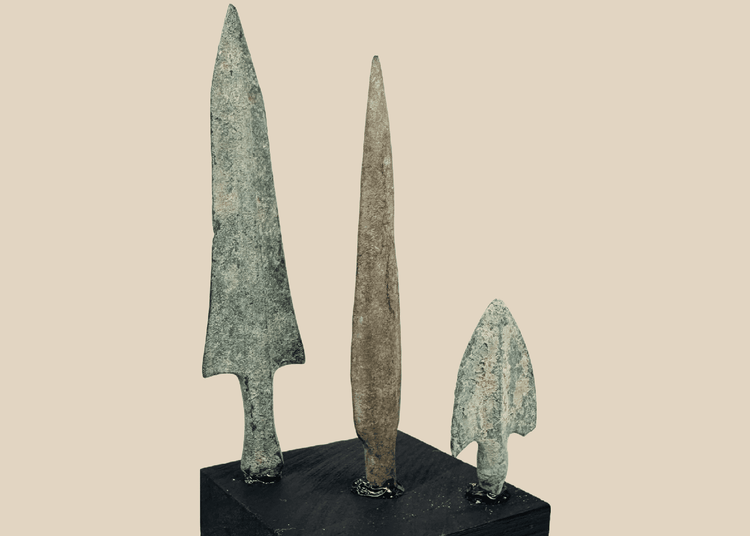
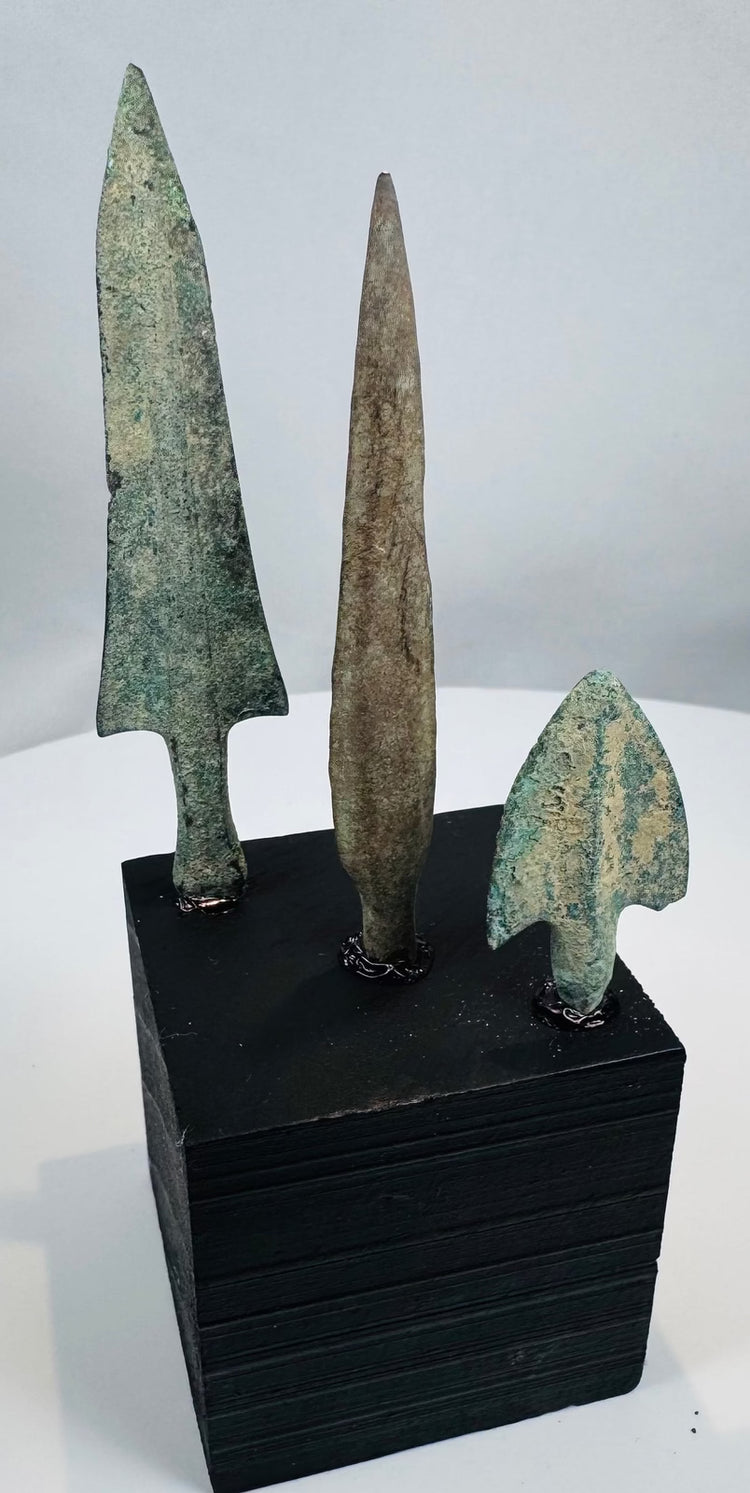
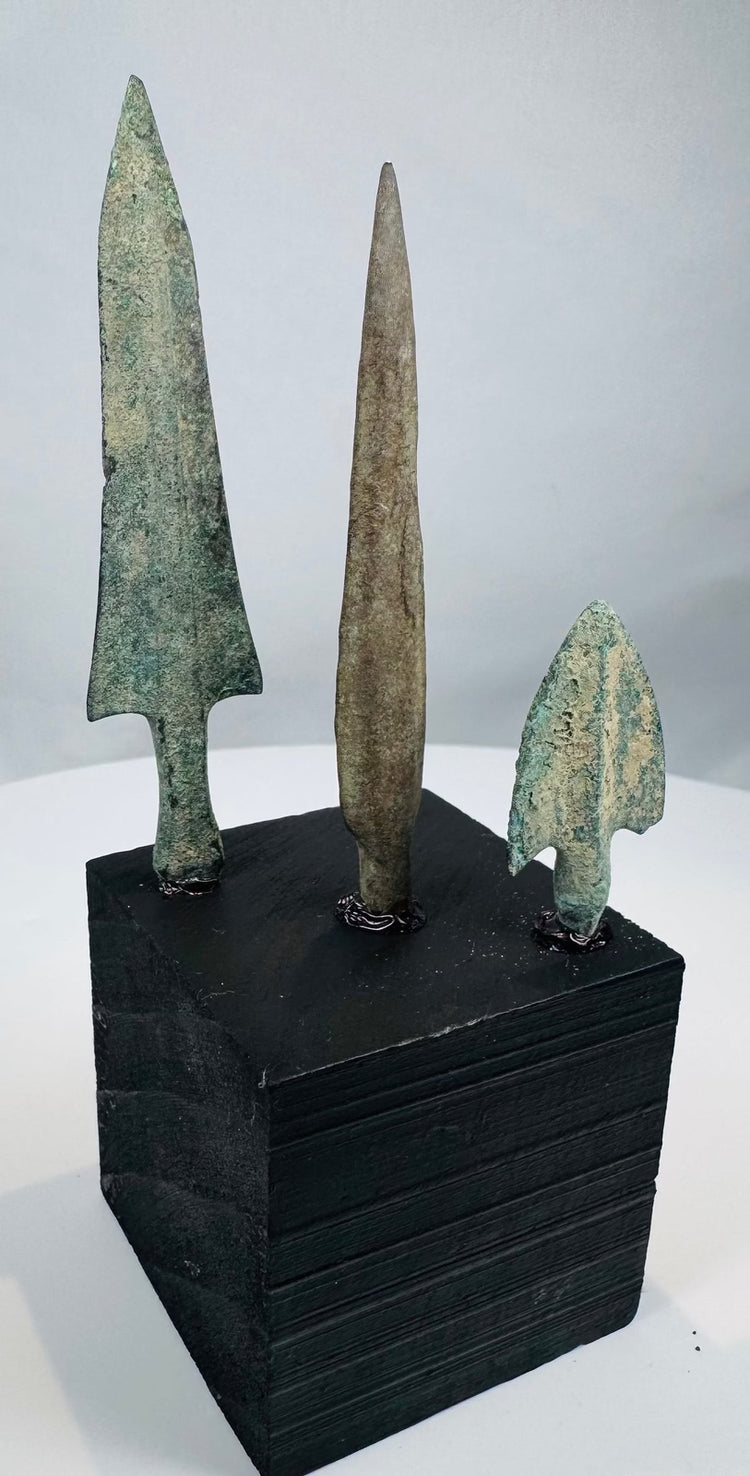
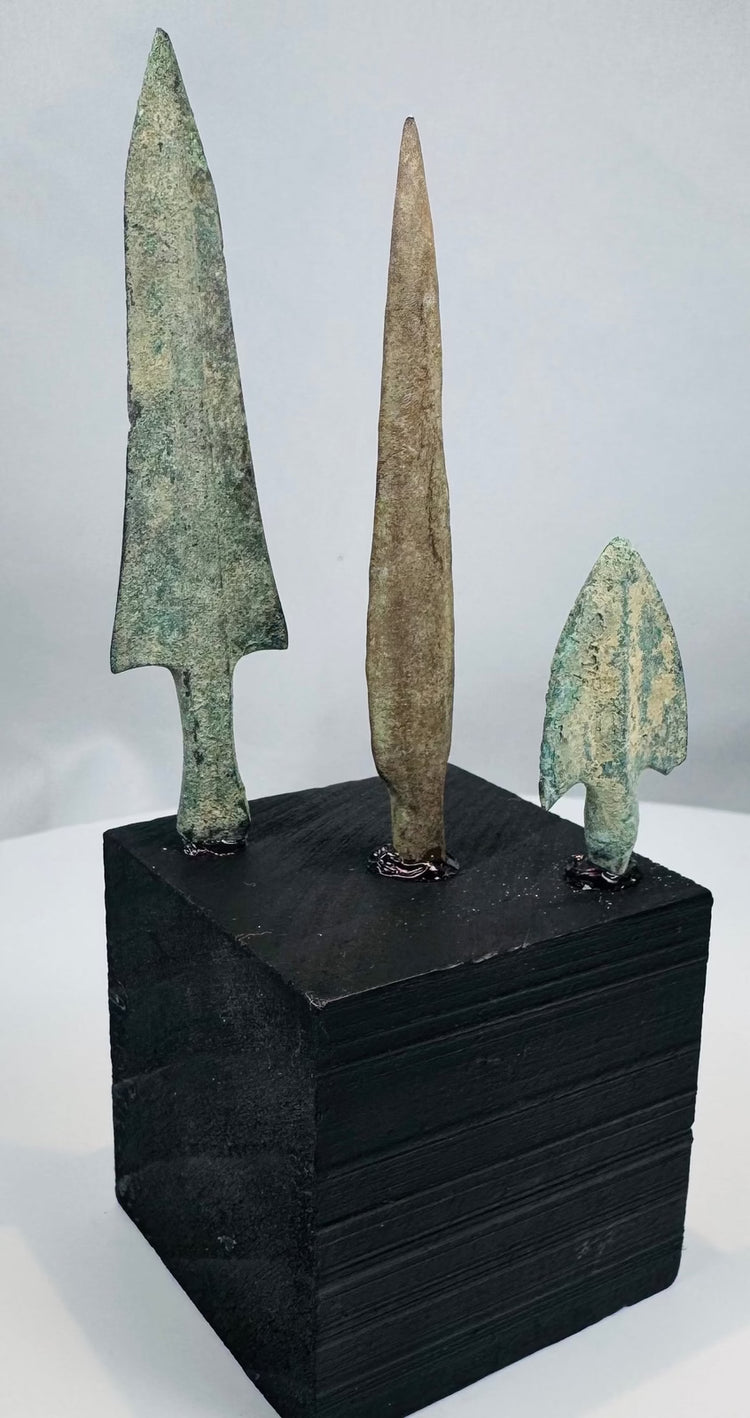
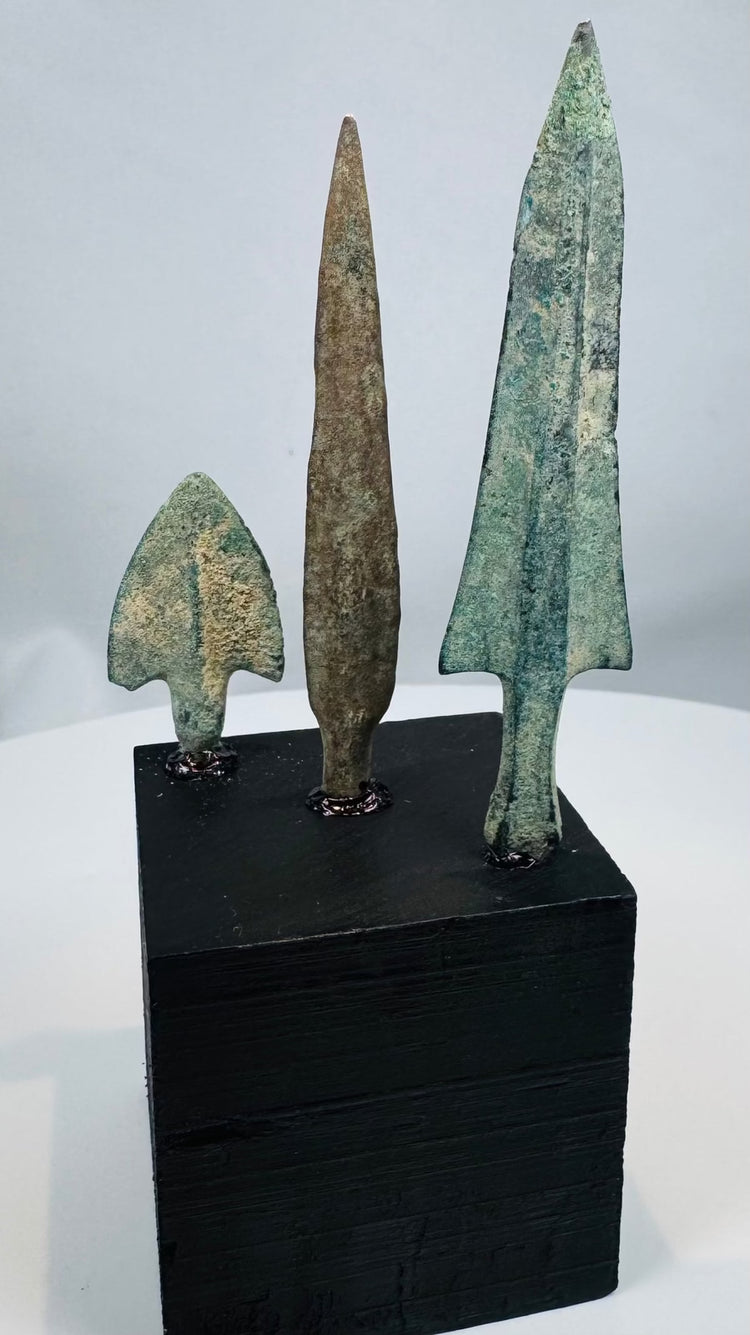
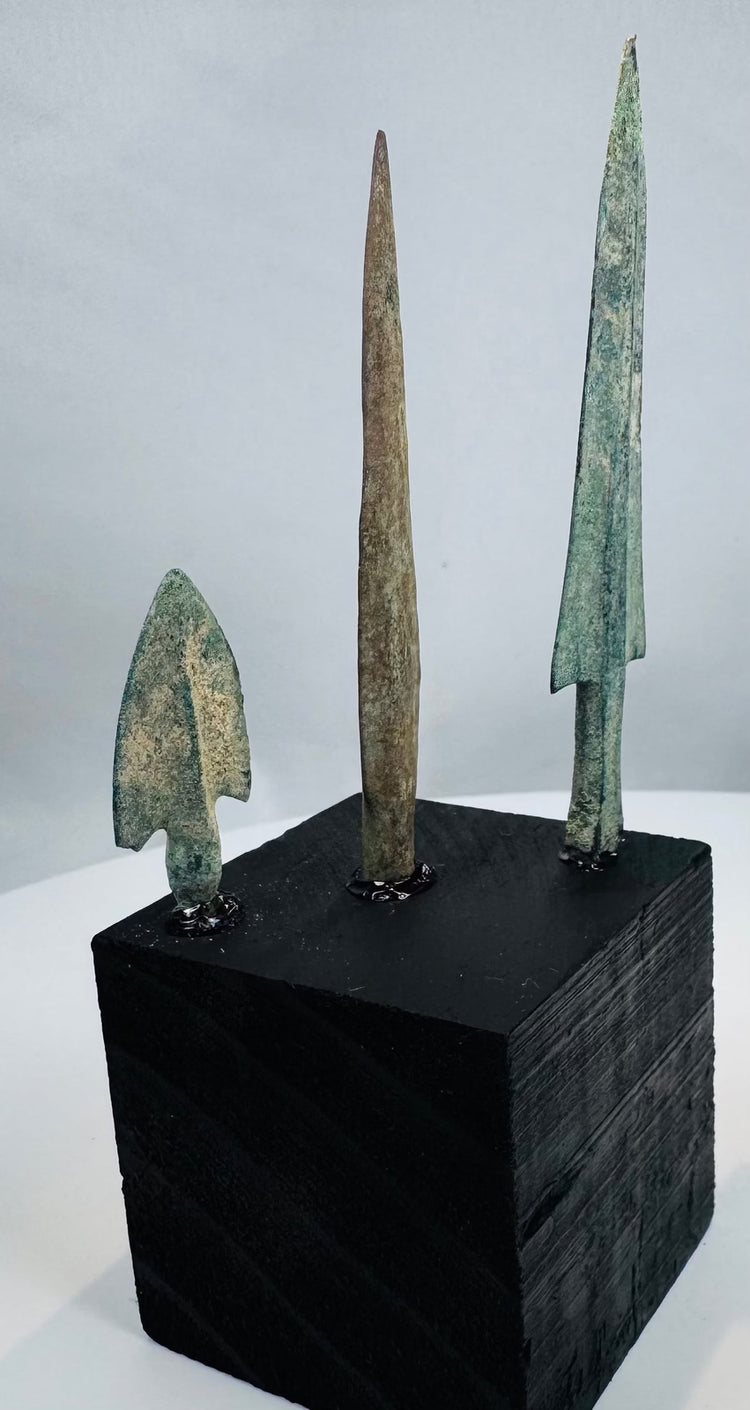
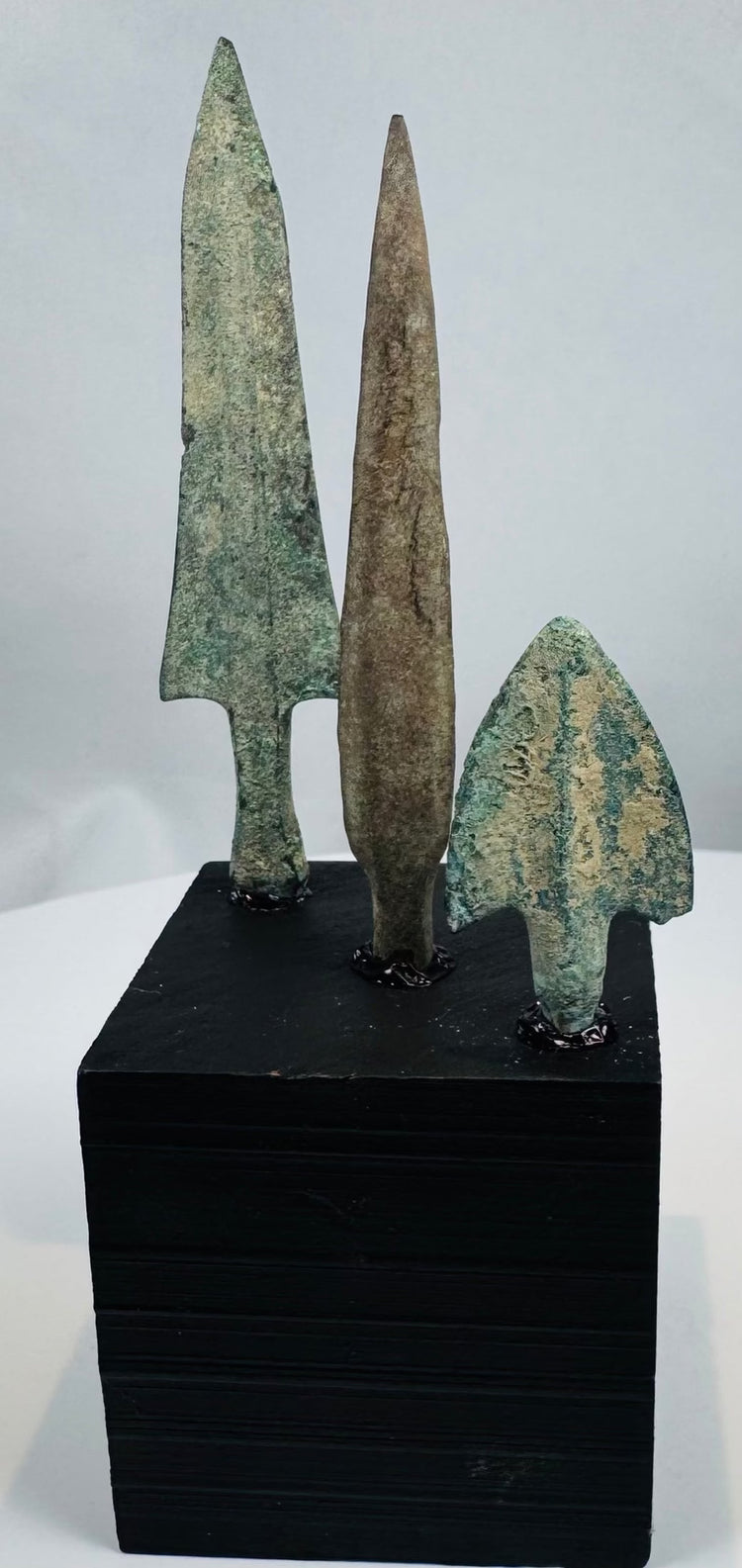
Cette collection montée comprend trois pointes de projectile en bronze d'Asie occidentale antique, datant globalement de l'âge du bronze tardif au début de l'âge du fer. Le groupe comprend une lame allongée à soie avec des épaules prononcées, une longue pointe lancéolée étroite et une pointe de flèche barbelée compacte, démontrant la variété des formes de projectiles utilisées sur l'ancien plateau iranien et les régions avoisinantes.
Le plus grand exemple présente une lame longue et étroite qui s'élargit progressivement vers le corps inférieur avant de former des épaules nettement saillantes au-dessus d'une large soie. Ses proportions substantielles suggèrent qu'il aurait pu fonctionner comme une pointe de flèche lourde, une pointe de javelot légère ou un fer de lance compact. La lame conserve une extrémité pointue clairement définie et un profil symétrique marqué, tandis que la surface présente une patine minérale verte et pâle étendue, associée au vieillissement naturel des anciens alliages de cuivre.
L'exemple central est formé d'une lame lancéolée exceptionnellement longue et fine, s'amincissant uniformément vers une pointe étroite. Son profil fuselé aurait concentré la force d'impact sur une zone relativement petite, la rendant adaptée à la pénétration. La lame se rétrécit vers sa base et se termine par une soie survivante qui aurait été insérée à l'origine dans un fût en bois préparé.
Le plus petit exemple a une tête triangulaire compacte avec des épaules barbelées ou saillantes prononcées et une courte soie centrale. Sa silhouette a été comparée à un oiseau stylisé en vol, en particulier une hirondelle aux ailes déployées. Les pointes de flèches de cette configuration générale correspondent aux formes discutées dans la classification de Khorasani des armes iraniennes antiques, y compris des exemples avec des ailes fortement saillantes ou ressemblant à des jets.
Les pointes de flèches métalliques étaient répandues dans l'est de l'Iran à l'âge du bronze, tandis que le bronze est resté un matériau important pour les armes de jet jusqu'au début de l'âge du fer.
Caractéristiques
- Coulé en bronze ou en alliage de cuivre
- Comprend des formes épaulées, lancéolées et barbelées
- Plus grand exemple avec lame allongée et épaules latérales prononcées
- Exemple central avec un profil lancéolé long et étroit
- Plus petit exemple avec des ailes ou des barbillons saillants en forme d'hirondelle
- Soies survivantes destinées à être insérées dans des hampes en bois
- Patine minérale verte, bleu-vert, brune et pâle sur l'ensemble
- Monté sur une base d'affichage moderne en bois noir
Signification culturelle
Les pointes de flèches en bronze et les pointes de projectile connexes étaient des éléments importants de la guerre et de la chasse dans toute l'Asie occidentale antique. Différentes formes ont été développées en fonction de l'utilisation prévue du projectile, de la méthode par laquelle il était fixé à sa hampe et du type de cible qu'il était destiné à frapper.
Les longues pointes lancéolées offraient un profil pénétrant étroit, tandis que les exemples plus larges offraient une plus grande surface de coupe. Les formes barbelées ou ailées étaient conçues pour résister à un retrait facile après l'impact et pouvaient infliger des blessures plus étendues. Le Metropolitan Museum of Art note cette fonction dans sa description d'une pointe de flèche en bronze barbelée iranienne ultérieure, expliquant que le barbillon aidait à empêcher son retrait de la cible.
Le petit exemple ailé appartient à une famille distinctive de pointes d'Asie occidentale dont les épaules saillantes ressemblent aux ailes d'un oiseau en vol. Des formes comparables sont illustrées dans Arms and Armour from Iran: The Bronze Age to the End of the Qajar Period. L'étude de Khorasani s'appuie sur des objets provenant de musées iraniens, de matériel fouillé et de collections privées documentées pour retracer le développement des armes iraniennes sur plusieurs millénaires.
Des sites funéraires iraniens anciens ont livré des pointes de flèches en bronze ainsi que des épées, des poignards, des fers de lance, des boucliers, des casques et d'autres équipements militaires, démontrant l'importance des armes de jet dans les contextes martiaux et funéraires.
Condition
Les trois pointes de projectile sont en bon état archéologique et présentent une altération de surface étendue liée à l'âge. Chacune présente des incrustations minérales, des piqûres, des dépôts de surface, des décolorations, des irrégularités de coulée, une usure des bords et des pertes localisées compatibles avec l'enfouissement ancien et la conservation à long terme.
Les deux exemples les plus larges conservent une patine verte et bleu-vert étendue avec des dépôts terreux pâles. La pointe lancéolée centrale a une surface principalement brune et grise avec des zones d'oxydation et d'accrétion minérale. Le plus petit exemple barbelé présente une perte de bord localisée et une irrégularité au niveau de ses épaules saillantes, tout en conservant son profil général reconnaissable.
Les objets ont été fixés de manière permanente à une base d'affichage moderne en bois noir avec un matériau de montage visible. La base présente des rayures mineures, une usure due à la manipulation et des irrégularités de surface.
Dimensions (approximatives)
Hauteur totale de l'affichage : 5,25 po
Âge (approximatif)
3 025–3 425 ans
Provenance
Faisait autrefois partie d'une collection privée de Londres, Royaume-Uni, constituée dans les années 1990.
En savoir plus
Voir une pointe de flèche en bronze ancienne apparentée dans la collection de The Metropolitan Museum of Art
Explorez notre Collection d'armes, armures et armement historique
Description
Contexte historique et origine
Région : Asie occidentale, probablement le plateau iranien
Matériau : Bronze coulé / alliage de cuivre
Période : Âge du bronze tardif – début de l'âge du fer, environ XIVe-Xe siècle av. J.-C.
Description
Cette collection montée comprend trois pointes de projectile en bronze d'Asie occidentale antique, datant globalement de l'âge du bronze tardif au début de l'âge du fer. Le groupe comprend une lame allongée à soie avec des épaules prononcées, une longue pointe lancéolée étroite et une pointe de flèche barbelée compacte, démontrant la variété des formes de projectiles utilisées sur l'ancien plateau iranien et les régions avoisinantes.
Le plus grand exemple présente une lame longue et étroite qui s'élargit progressivement vers le corps inférieur avant de former des épaules nettement saillantes au-dessus d'une large soie. Ses proportions substantielles suggèrent qu'il aurait pu fonctionner comme une pointe de flèche lourde, une pointe de javelot légère ou un fer de lance compact. La lame conserve une extrémité pointue clairement définie et un profil symétrique marqué, tandis que la surface présente une patine minérale verte et pâle étendue, associée au vieillissement naturel des anciens alliages de cuivre.
L'exemple central est formé d'une lame lancéolée exceptionnellement longue et fine, s'amincissant uniformément vers une pointe étroite. Son profil fuselé aurait concentré la force d'impact sur une zone relativement petite, la rendant adaptée à la pénétration. La lame se rétrécit vers sa base et se termine par une soie survivante qui aurait été insérée à l'origine dans un fût en bois préparé.
Le plus petit exemple a une tête triangulaire compacte avec des épaules barbelées ou saillantes prononcées et une courte soie centrale. Sa silhouette a été comparée à un oiseau stylisé en vol, en particulier une hirondelle aux ailes déployées. Les pointes de flèches de cette configuration générale correspondent aux formes discutées dans la classification de Khorasani des armes iraniennes antiques, y compris des exemples avec des ailes fortement saillantes ou ressemblant à des jets.
Les pointes de flèches métalliques étaient répandues dans l'est de l'Iran à l'âge du bronze, tandis que le bronze est resté un matériau important pour les armes de jet jusqu'au début de l'âge du fer.
Caractéristiques
- Coulé en bronze ou en alliage de cuivre
- Comprend des formes épaulées, lancéolées et barbelées
- Plus grand exemple avec lame allongée et épaules latérales prononcées
- Exemple central avec un profil lancéolé long et étroit
- Plus petit exemple avec des ailes ou des barbillons saillants en forme d'hirondelle
- Soies survivantes destinées à être insérées dans des hampes en bois
- Patine minérale verte, bleu-vert, brune et pâle sur l'ensemble
- Monté sur une base d'affichage moderne en bois noir
Signification culturelle
Les pointes de flèches en bronze et les pointes de projectile connexes étaient des éléments importants de la guerre et de la chasse dans toute l'Asie occidentale antique. Différentes formes ont été développées en fonction de l'utilisation prévue du projectile, de la méthode par laquelle il était fixé à sa hampe et du type de cible qu'il était destiné à frapper.
Les longues pointes lancéolées offraient un profil pénétrant étroit, tandis que les exemples plus larges offraient une plus grande surface de coupe. Les formes barbelées ou ailées étaient conçues pour résister à un retrait facile après l'impact et pouvaient infliger des blessures plus étendues. Le Metropolitan Museum of Art note cette fonction dans sa description d'une pointe de flèche en bronze barbelée iranienne ultérieure, expliquant que le barbillon aidait à empêcher son retrait de la cible.
Le petit exemple ailé appartient à une famille distinctive de pointes d'Asie occidentale dont les épaules saillantes ressemblent aux ailes d'un oiseau en vol. Des formes comparables sont illustrées dans Arms and Armour from Iran: The Bronze Age to the End of the Qajar Period. L'étude de Khorasani s'appuie sur des objets provenant de musées iraniens, de matériel fouillé et de collections privées documentées pour retracer le développement des armes iraniennes sur plusieurs millénaires.
Des sites funéraires iraniens anciens ont livré des pointes de flèches en bronze ainsi que des épées, des poignards, des fers de lance, des boucliers, des casques et d'autres équipements militaires, démontrant l'importance des armes de jet dans les contextes martiaux et funéraires.
Condition
Les trois pointes de projectile sont en bon état archéologique et présentent une altération de surface étendue liée à l'âge. Chacune présente des incrustations minérales, des piqûres, des dépôts de surface, des décolorations, des irrégularités de coulée, une usure des bords et des pertes localisées compatibles avec l'enfouissement ancien et la conservation à long terme.
Les deux exemples les plus larges conservent une patine verte et bleu-vert étendue avec des dépôts terreux pâles. La pointe lancéolée centrale a une surface principalement brune et grise avec des zones d'oxydation et d'accrétion minérale. Le plus petit exemple barbelé présente une perte de bord localisée et une irrégularité au niveau de ses épaules saillantes, tout en conservant son profil général reconnaissable.
Les objets ont été fixés de manière permanente à une base d'affichage moderne en bois noir avec un matériau de montage visible. La base présente des rayures mineures, une usure due à la manipulation et des irrégularités de surface.
Dimensions (approximatives)
Hauteur totale de l'affichage : 5,25 po
Âge (approximatif)
3 025–3 425 ans
Provenance
Faisait autrefois partie d'une collection privée de Londres, Royaume-Uni, constituée dans les années 1990.
En savoir plus
Voir une pointe de flèche en bronze ancienne apparentée dans la collection de The Metropolitan Museum of Art
Explorez notre Collection d'armes, armures et armement historique
Vous aimerez peut-être aussi
