

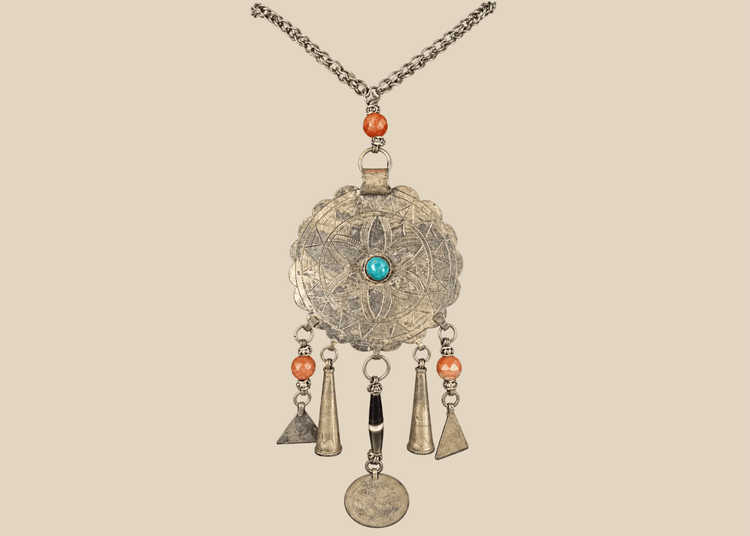
Collier pendentif tribal d'Asie Centrale avec turquoise et pampilles de pièces de monnaie | Milieu du XXe siècle
- Prix habituel
- $350.00
- Prix soldé
- $350.00
- Prix habituel
Impossible de charger la disponibilité du service de retrait


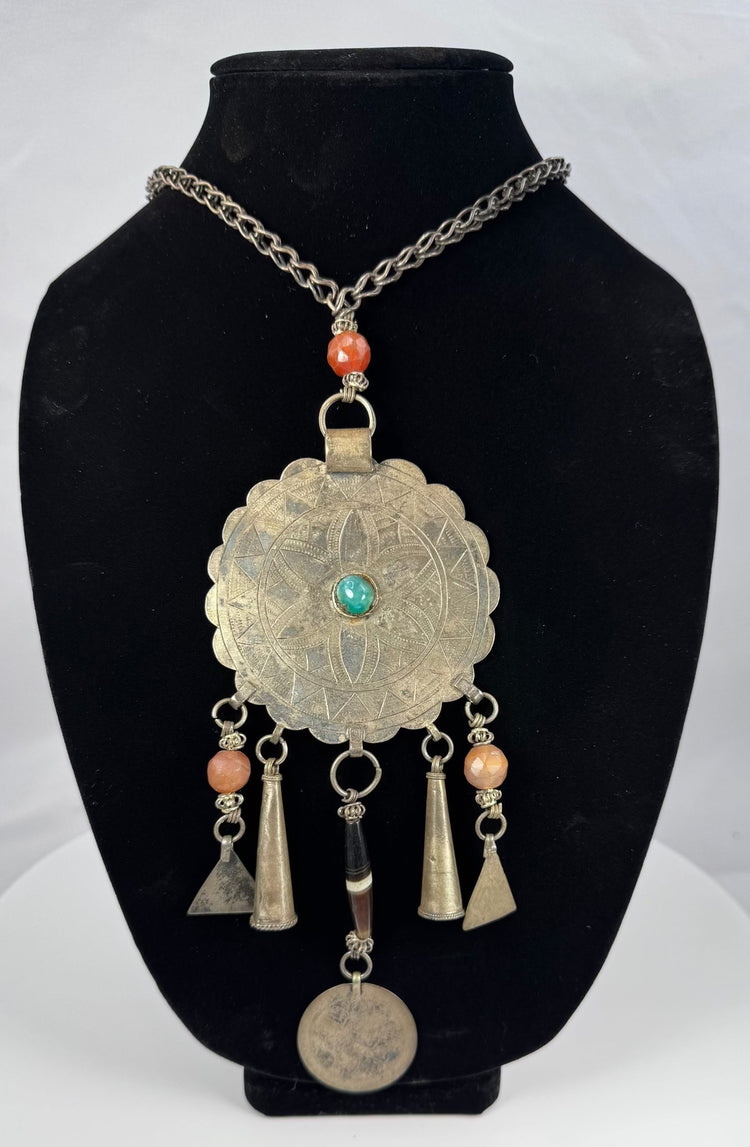
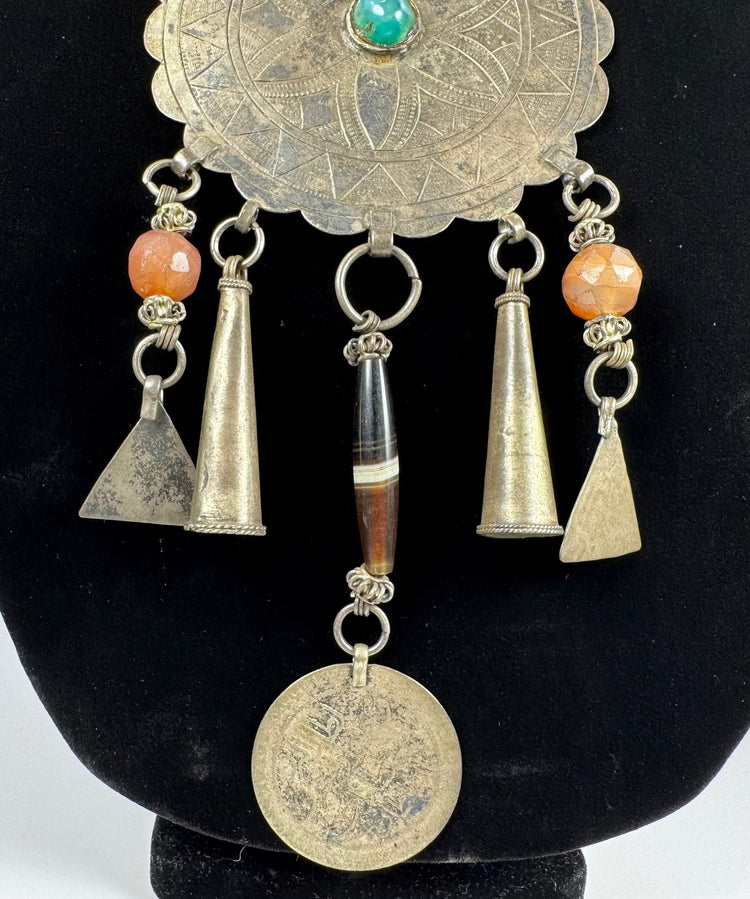
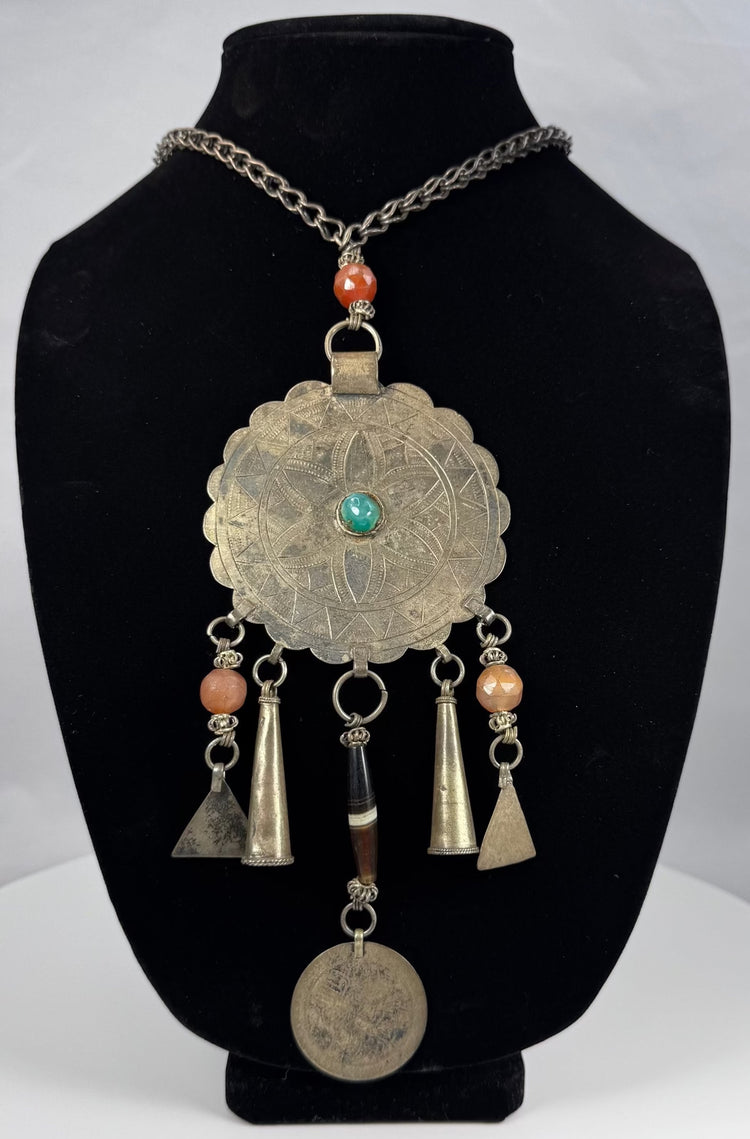
Collier pendentif tribal d'Asie Centrale avec turquoise et pampilles de pièces de monnaie | Milieu du XXe siècle
Description
Plus
Moins
Contexte historique et origine
Région : Asie centrale / Régions frontalières de l'Himalaya, probablement Afghanistan, Nord du Pakistan, Cachemire ou Ladakh
Culture : Tradition de bijoux tribaux, éventuellement pachtoune, kuchi, cachemiri ou ladakhi
Matériaux : Alliage métallique de couleur argent, cabochon de couleur turquoise, perles oranges et rayées, pièce de monnaie et chaîne métallique
Période : Milieu du XXe siècle de notre ère
Description
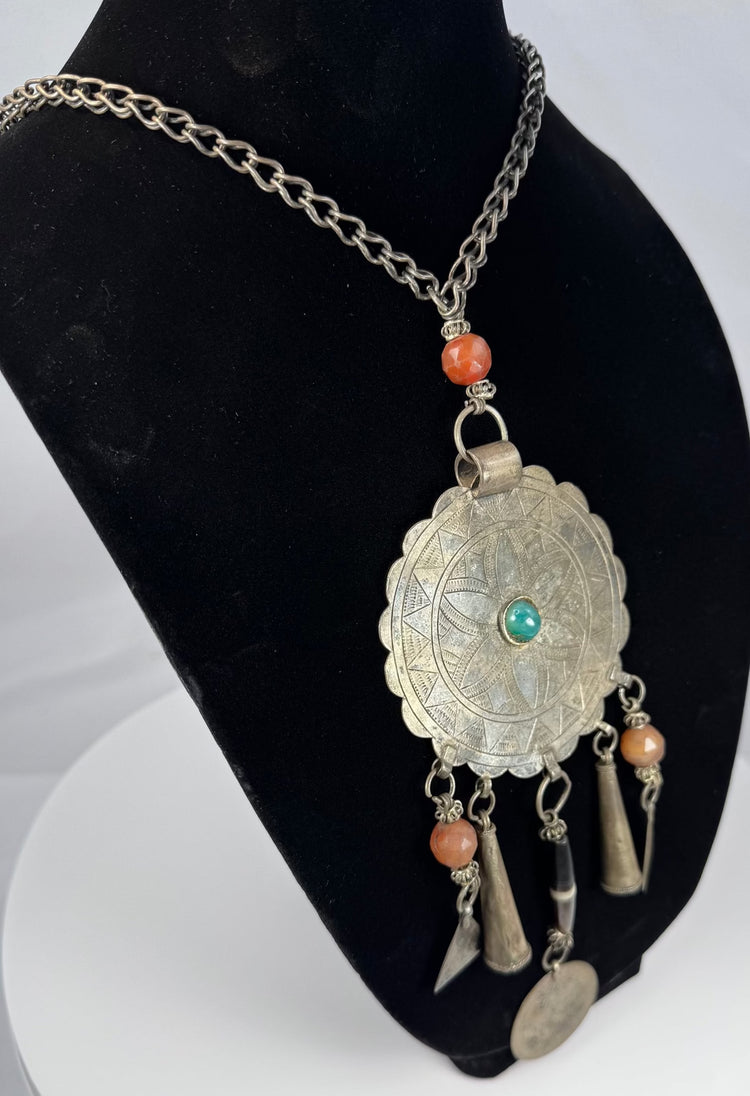
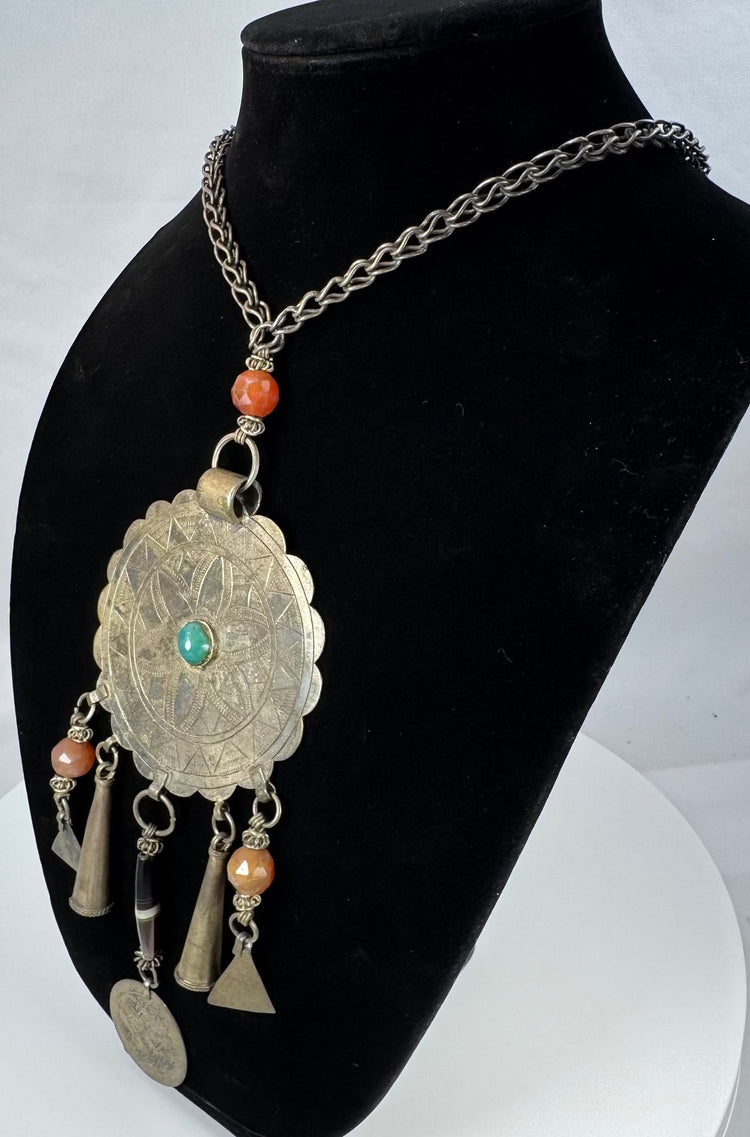
Ce collier tribal substantiel est un exemple visuellement frappant de bijoux associés à l'Afghanistan et aux régions frontalières plus larges de l'Asie centrale et de l'Himalaya. Il est couramment rattaché à la vaste catégorie des ornements kuchi ou pachtounes, bien que son attribution culturelle précise demeure incertaine sans historique de collection documenté.
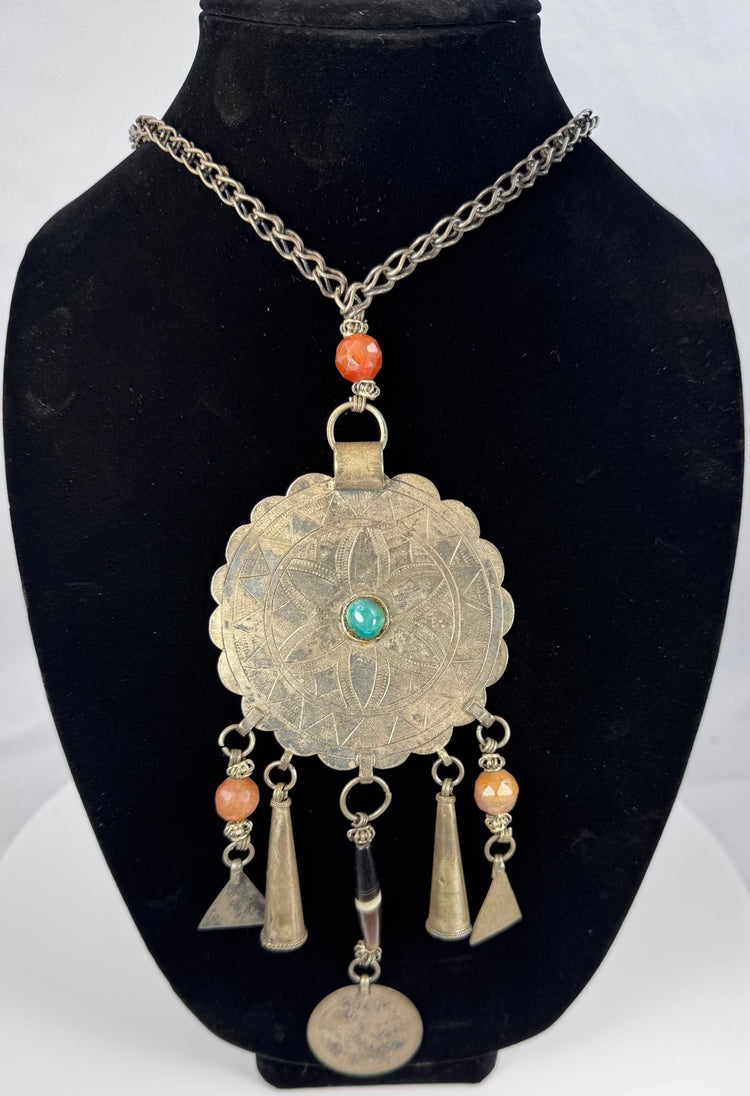
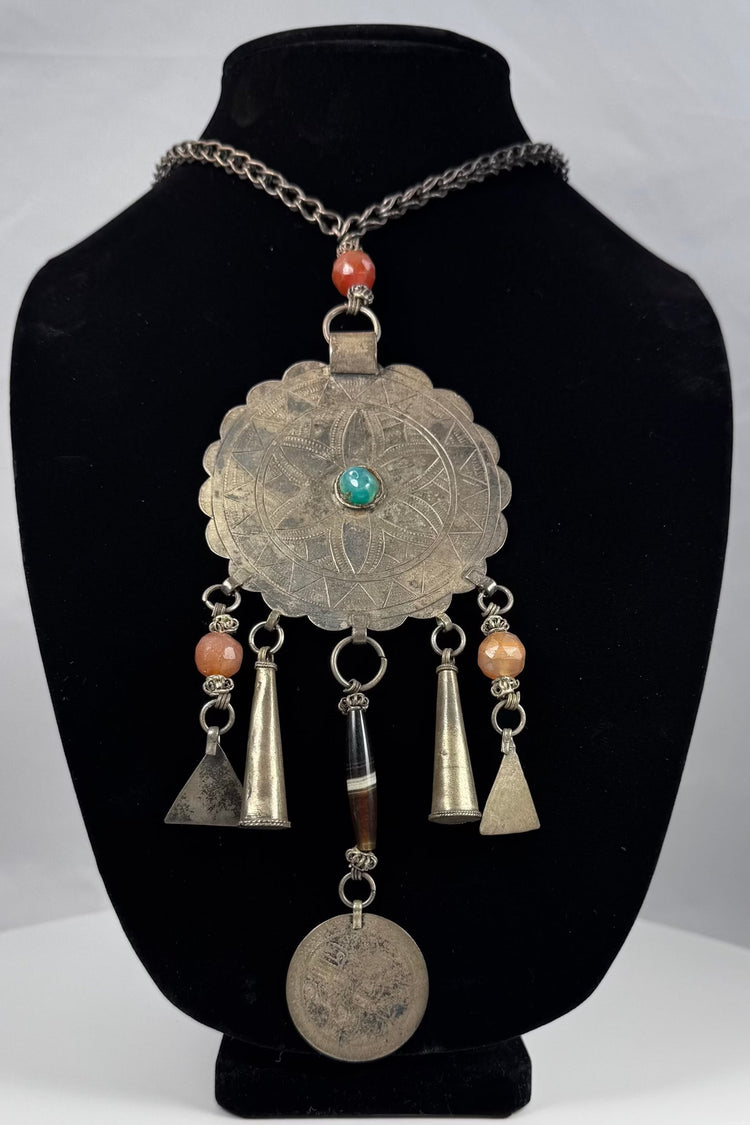
Le collier est construit autour d'un grand pendentif circulaire suspendu à une chaîne métallique substantielle à maillons entrelacés et orné de perles colorées, d'ornements suspendus et d'une pièce de monnaie.
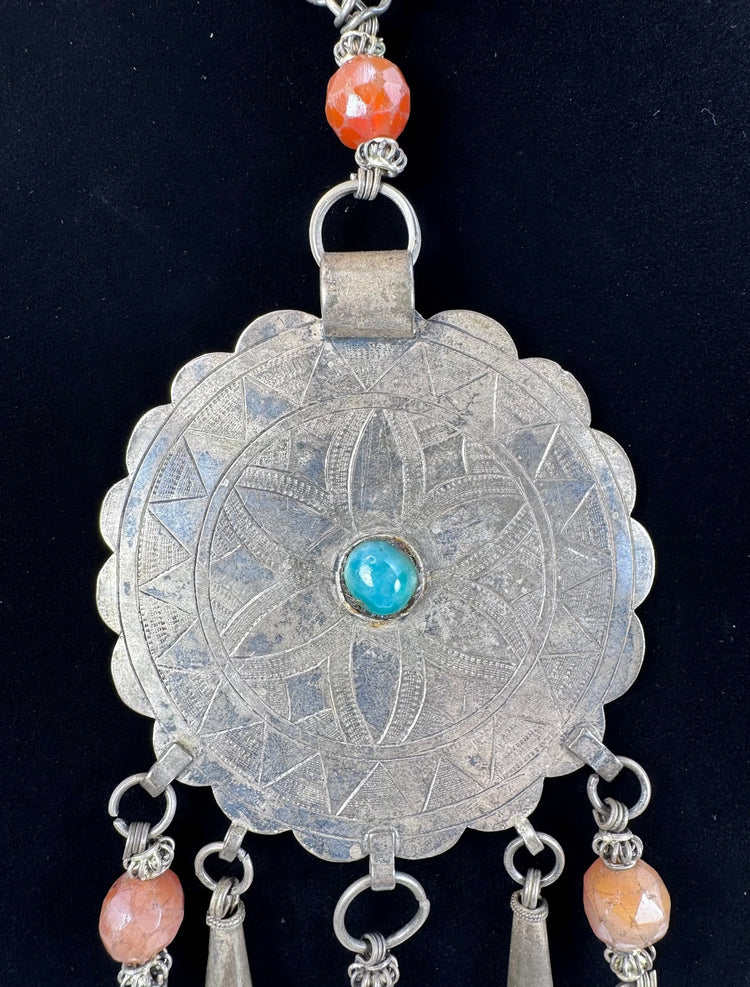
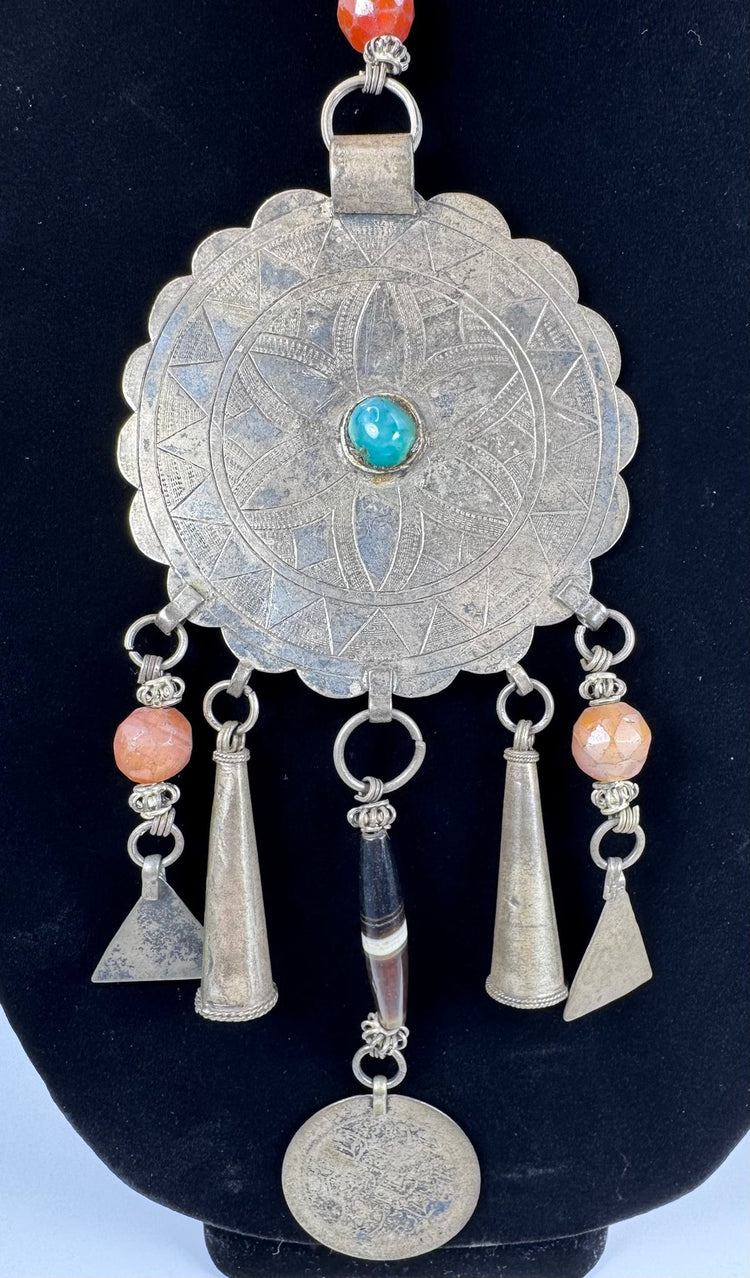
Le pendentif principal est une large plaque circulaire à bord extérieur festonné. Sa surface avant est richement gravée d'un motif floral symétrique à six pétales ou d'une rosette disposée autour d'un cabochon central surélevé de couleur turquoise. Des bordures concentriques de triangles incisés, de panneaux hachurés, de fines lignes perforées et de divisions géométriques entourent la fleur centrale, créant une composition décorative dense et soigneusement équilibrée.
Une grande boucle de suspension intégrée relie le pendentif à la chaîne par une perle orange facettée, peut-être de la cornaline, du verre ou un matériau décoratif similaire. La chaîne est composée de doubles maillons entrelacés et peut représenter soit la suspension d'origine, soit un ajout compatible ultérieur.
Cinq éléments suspendus pendent du bord inférieur de la plaque circulaire. Les pendentifs extérieurs incorporent des perles oranges facettées suivies de pendentifs triangulaires plats en métal. Entre ceux-ci se trouvent deux ornements coniques creux allongés avec des bords en fil finement torsadé autour de leurs bases.
Le pendentif central se compose d'une longue perle rayée, probablement de l'agate ou du verre, se terminant par une pièce de monnaie très usée portant de faibles inscriptions en caractères arabes ou persans.
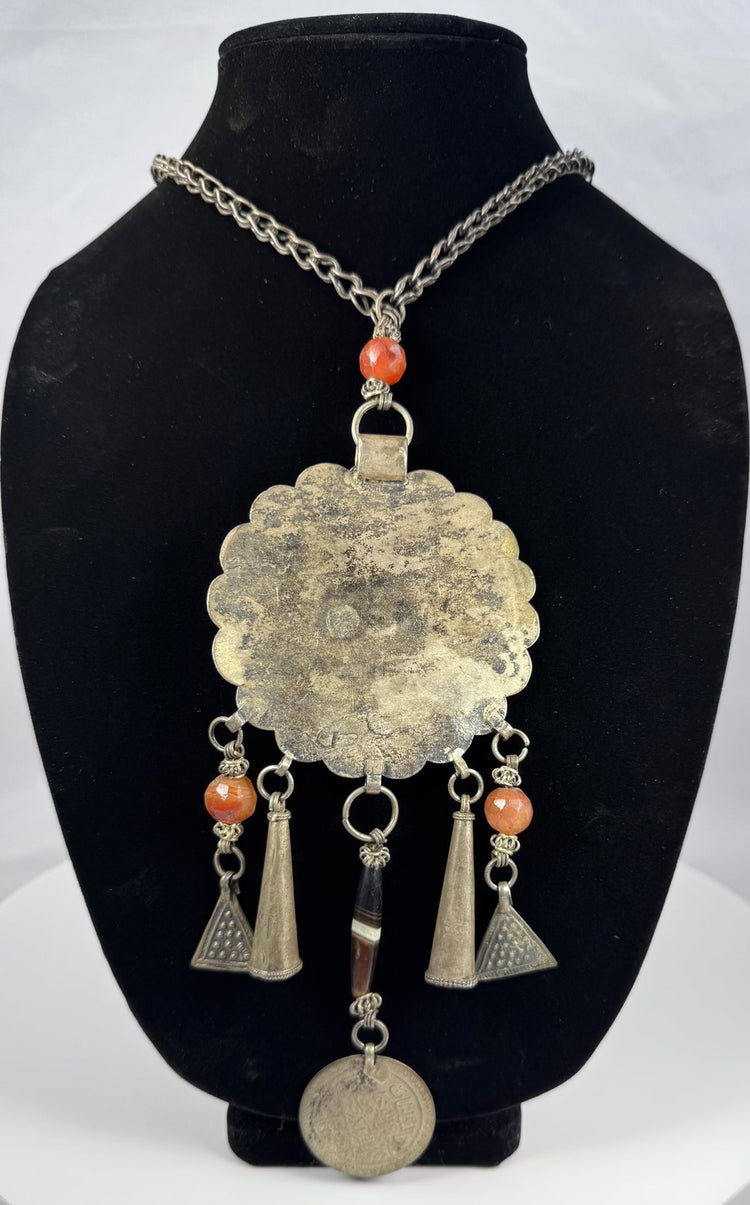
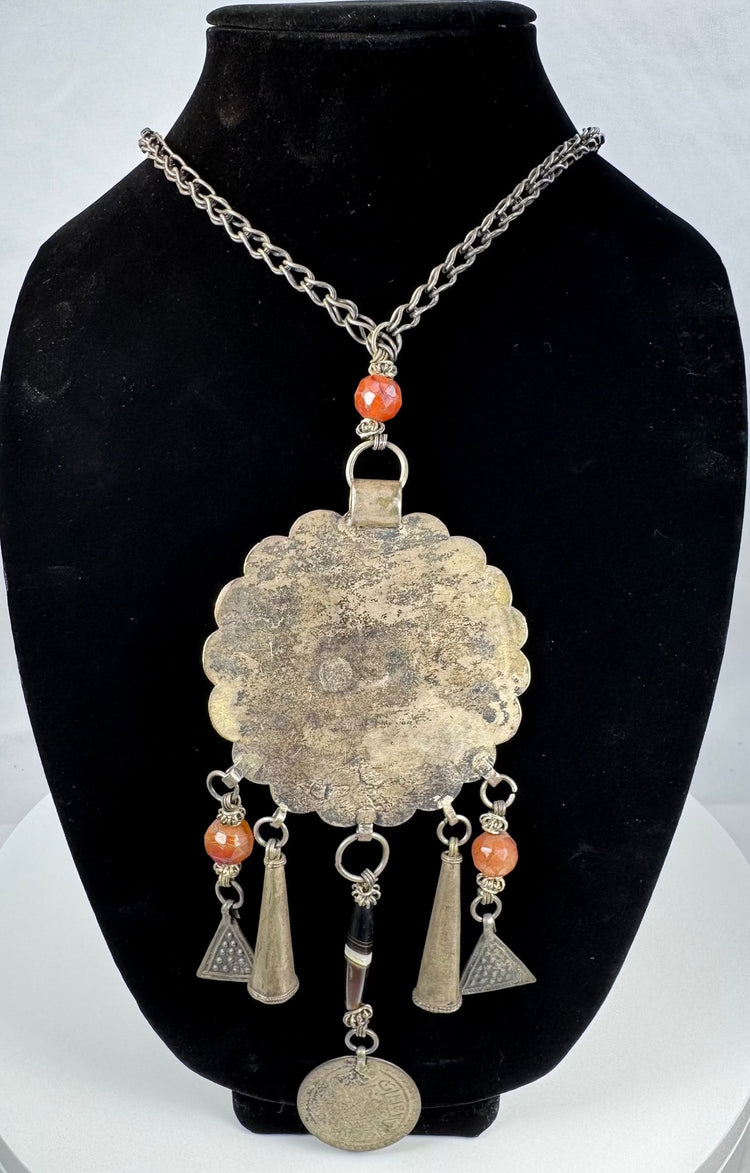
Le revers de la plaque circulaire est largement non décoré et présente d'importants frottements, oxydations et décolorations de surface, compatibles avec une usure prolongée. Le collier semble avoir été assemblé à partir d'éléments fabriqués individuellement à la main, avec de légères irrégularités dans le filigrane, les anneaux de suspension, les lignes gravées et la construction des pendentifs, reflétant une production artisanale traditionnelle plutôt qu'une fabrication mécanique moderne.
Les bijoux de ce type général étaient traditionnellement portés lors de célébrations, mariages, festivals et autres occasions sociales importantes. La combinaison de gravures géométriques, de pierres aux couleurs vives, d'ornements métalliques suspendus et de pièces de monnaie réutilisées créait des bijoux à la fois visuellement spectaculaires et capables de produire mouvement et son lorsqu'ils étaient portés.
Caractéristiques
- Grand pendentif circulaire festonné
- Motif floral ou rosette gravé à six pétales
- Bordures géométriques et triangulaires concentriques
- Cabochon central surélevé de couleur turquoise
- Perles oranges facettées au-dessus et en dessous du pendentif
- Perle centrale rayée en agate ou en verre
- Pièce de monnaie suspendue avec inscription en caractères arabes ou persans
- Chaîne métallique substantielle à maillons entrelacés
- Anneaux de fil et éléments de connexion fabriqués à la main
- Longueur totale impressionnante de 63,5 cm
Signification culturelle
Les bijoux ont historiquement occupé une place importante dans les cultures de l'Afghanistan et des régions voisines d'Asie centrale et du Sud. Les grands colliers, pendentifs, boucles d'oreilles, ornements de tête et accessoires vestimentaires pouvaient communiquer l'identité régionale, la richesse familiale, le statut matrimonial et la participation à des cérémonies importantes.
La grande plaque circulaire au centre de ce collier reflète un vocabulaire décoratif basé sur la symétrie, la répétition et l'abstraction géométrique. La rosette à six pétales peut être interprétée comme un motif floral ou d'inspiration solaire, bien que sa signification exacte ne puisse être confirmée sans attribution culturelle documentée.
Les pierres de couleur turquoise étaient particulièrement prisées en Asie centrale, en Iran, en Afghanistan et dans les régions voisines. Leur coloration bleu-vert vif offrait un fort contraste visuel avec le métal argenté ou de couleur argent et était souvent associée à la protection, la prospérité et la bonne fortune.
Les pièces de monnaie étaient fréquemment incorporées dans les bijoux traditionnels car elles combinaient un métal facilement disponible avec des associations visibles de richesse, de mouvement, d'histoire et d'échange. Les pièces plus anciennes pouvaient rester utilisées comme bijoux bien après la fin de leur circulation monétaire originale. La date de la pièce ne détermine donc pas nécessairement la date d'assemblage du collier.
Les pendentifs coniques et triangulaires suspendus bougeaient librement lorsqu'ils étaient portés, produisant à la fois un mouvement visuel et un subtil son métallique. Ces qualités sensorielles étaient une partie importante des bijoux de cérémonie, particulièrement lorsqu'ils étaient portés lors de danses, de célébrations de mariage ou de rassemblements communautaires.
État
Le collier est substantiellement complet et se présente bien pour l'exposition. Les surfaces métalliques présentent un ternissement généralisé, une oxydation, des frottements, de petites rayures, des bosses, une usure des bords et des zones plus sombres de patine accumulée, compatibles avec l'âge et l'utilisation traditionnelle.
La décoration gravée sur le pendentif principal reste clairement visible, bien que certaines lignes aient été adoucies par l'usure. Le cabochon central de couleur turquoise reste en place et présente des irrégularités de surface naturelles ou manufacturées. Les perles oranges montrent des abrasions mineures, des inclusions et une usure localisée.
Les ornements coniques et triangulaires suspendus conservent leurs formes originales, avec des bosses mineures, des irrégularités de surface et de l'usure autour des anneaux d'attache. Plusieurs anneaux de connexion semblent légèrement ouverts ou irréguliers, comme c'est courant avec les bijoux faits à la main de ce type.
Le pendentif en forme de pièce de monnaie est très usé, une grande partie de son inscription et de son iconographie étant adoucie ou obscurcie. Le revers de la plaque centrale présente d'importants frottements de surface et une décoloration. Le métal n'a pas été testé pour sa teneur en argent et doit être décrit comme un alliage métallique de couleur argent, à moins d'une analyse formelle.
Dimensions (approximatives)
Longueur totale : 63,5 cm
Âge (approximatif)
75-80 ans
Provenance
Anciennement partie d'une collection privée à Brooklyn, New York, États-Unis, constituée par un collectionneur passionné d'art ethnographique et de matériaux tribaux.
En savoir plus
Voir un ornement pectoral pachtoun apparenté d'Afghanistan dans la collection du Metropolitan Museum of Art
Explorez notre Collection d'Objets Culturels & Ethnographiques
Description
Contexte historique et origine
Région : Asie centrale / Régions frontalières de l'Himalaya, probablement Afghanistan, Nord du Pakistan, Cachemire ou Ladakh
Culture : Tradition de bijoux tribaux, éventuellement pachtoune, kuchi, cachemiri ou ladakhi
Matériaux : Alliage métallique de couleur argent, cabochon de couleur turquoise, perles oranges et rayées, pièce de monnaie et chaîne métallique
Période : Milieu du XXe siècle de notre ère
Description
Ce collier tribal substantiel est un exemple visuellement frappant de bijoux associés à l'Afghanistan et aux régions frontalières plus larges de l'Asie centrale et de l'Himalaya. Il est couramment rattaché à la vaste catégorie des ornements kuchi ou pachtounes, bien que son attribution culturelle précise demeure incertaine sans historique de collection documenté.
Le collier est construit autour d'un grand pendentif circulaire suspendu à une chaîne métallique substantielle à maillons entrelacés et orné de perles colorées, d'ornements suspendus et d'une pièce de monnaie.
Le pendentif principal est une large plaque circulaire à bord extérieur festonné. Sa surface avant est richement gravée d'un motif floral symétrique à six pétales ou d'une rosette disposée autour d'un cabochon central surélevé de couleur turquoise. Des bordures concentriques de triangles incisés, de panneaux hachurés, de fines lignes perforées et de divisions géométriques entourent la fleur centrale, créant une composition décorative dense et soigneusement équilibrée.
Une grande boucle de suspension intégrée relie le pendentif à la chaîne par une perle orange facettée, peut-être de la cornaline, du verre ou un matériau décoratif similaire. La chaîne est composée de doubles maillons entrelacés et peut représenter soit la suspension d'origine, soit un ajout compatible ultérieur.
Cinq éléments suspendus pendent du bord inférieur de la plaque circulaire. Les pendentifs extérieurs incorporent des perles oranges facettées suivies de pendentifs triangulaires plats en métal. Entre ceux-ci se trouvent deux ornements coniques creux allongés avec des bords en fil finement torsadé autour de leurs bases.
Le pendentif central se compose d'une longue perle rayée, probablement de l'agate ou du verre, se terminant par une pièce de monnaie très usée portant de faibles inscriptions en caractères arabes ou persans.
Le revers de la plaque circulaire est largement non décoré et présente d'importants frottements, oxydations et décolorations de surface, compatibles avec une usure prolongée. Le collier semble avoir été assemblé à partir d'éléments fabriqués individuellement à la main, avec de légères irrégularités dans le filigrane, les anneaux de suspension, les lignes gravées et la construction des pendentifs, reflétant une production artisanale traditionnelle plutôt qu'une fabrication mécanique moderne.
Les bijoux de ce type général étaient traditionnellement portés lors de célébrations, mariages, festivals et autres occasions sociales importantes. La combinaison de gravures géométriques, de pierres aux couleurs vives, d'ornements métalliques suspendus et de pièces de monnaie réutilisées créait des bijoux à la fois visuellement spectaculaires et capables de produire mouvement et son lorsqu'ils étaient portés.
Caractéristiques
- Grand pendentif circulaire festonné
- Motif floral ou rosette gravé à six pétales
- Bordures géométriques et triangulaires concentriques
- Cabochon central surélevé de couleur turquoise
- Perles oranges facettées au-dessus et en dessous du pendentif
- Perle centrale rayée en agate ou en verre
- Pièce de monnaie suspendue avec inscription en caractères arabes ou persans
- Chaîne métallique substantielle à maillons entrelacés
- Anneaux de fil et éléments de connexion fabriqués à la main
- Longueur totale impressionnante de 63,5 cm
Signification culturelle
Les bijoux ont historiquement occupé une place importante dans les cultures de l'Afghanistan et des régions voisines d'Asie centrale et du Sud. Les grands colliers, pendentifs, boucles d'oreilles, ornements de tête et accessoires vestimentaires pouvaient communiquer l'identité régionale, la richesse familiale, le statut matrimonial et la participation à des cérémonies importantes.
La grande plaque circulaire au centre de ce collier reflète un vocabulaire décoratif basé sur la symétrie, la répétition et l'abstraction géométrique. La rosette à six pétales peut être interprétée comme un motif floral ou d'inspiration solaire, bien que sa signification exacte ne puisse être confirmée sans attribution culturelle documentée.
Les pierres de couleur turquoise étaient particulièrement prisées en Asie centrale, en Iran, en Afghanistan et dans les régions voisines. Leur coloration bleu-vert vif offrait un fort contraste visuel avec le métal argenté ou de couleur argent et était souvent associée à la protection, la prospérité et la bonne fortune.
Les pièces de monnaie étaient fréquemment incorporées dans les bijoux traditionnels car elles combinaient un métal facilement disponible avec des associations visibles de richesse, de mouvement, d'histoire et d'échange. Les pièces plus anciennes pouvaient rester utilisées comme bijoux bien après la fin de leur circulation monétaire originale. La date de la pièce ne détermine donc pas nécessairement la date d'assemblage du collier.
Les pendentifs coniques et triangulaires suspendus bougeaient librement lorsqu'ils étaient portés, produisant à la fois un mouvement visuel et un subtil son métallique. Ces qualités sensorielles étaient une partie importante des bijoux de cérémonie, particulièrement lorsqu'ils étaient portés lors de danses, de célébrations de mariage ou de rassemblements communautaires.
État
Le collier est substantiellement complet et se présente bien pour l'exposition. Les surfaces métalliques présentent un ternissement généralisé, une oxydation, des frottements, de petites rayures, des bosses, une usure des bords et des zones plus sombres de patine accumulée, compatibles avec l'âge et l'utilisation traditionnelle.
La décoration gravée sur le pendentif principal reste clairement visible, bien que certaines lignes aient été adoucies par l'usure. Le cabochon central de couleur turquoise reste en place et présente des irrégularités de surface naturelles ou manufacturées. Les perles oranges montrent des abrasions mineures, des inclusions et une usure localisée.
Les ornements coniques et triangulaires suspendus conservent leurs formes originales, avec des bosses mineures, des irrégularités de surface et de l'usure autour des anneaux d'attache. Plusieurs anneaux de connexion semblent légèrement ouverts ou irréguliers, comme c'est courant avec les bijoux faits à la main de ce type.
Le pendentif en forme de pièce de monnaie est très usé, une grande partie de son inscription et de son iconographie étant adoucie ou obscurcie. Le revers de la plaque centrale présente d'importants frottements de surface et une décoloration. Le métal n'a pas été testé pour sa teneur en argent et doit être décrit comme un alliage métallique de couleur argent, à moins d'une analyse formelle.
Dimensions (approximatives)
Longueur totale : 63,5 cm
Âge (approximatif)
75-80 ans
Provenance
Anciennement partie d'une collection privée à Brooklyn, New York, États-Unis, constituée par un collectionneur passionné d'art ethnographique et de matériaux tribaux.
En savoir plus
Voir un ornement pectoral pachtoun apparenté d'Afghanistan dans la collection du Metropolitan Museum of Art
Explorez notre Collection d'Objets Culturels & Ethnographiques
Vous aimerez peut-être aussi
