

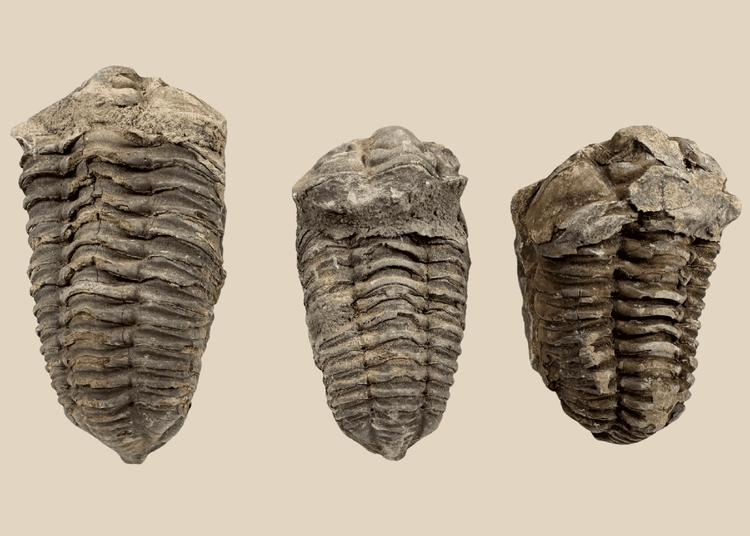
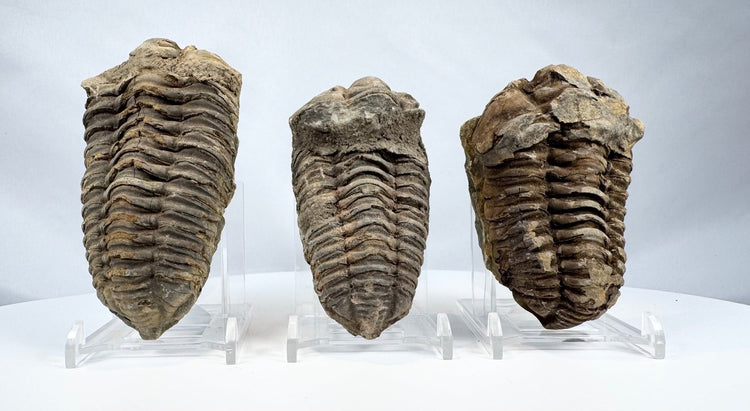
Collection de trois trilobites fossiles | 400–359 millions d'années
- Prix habituel
- $500.00
- Prix soldé
- $500.00
- Prix habituel
Impossible de charger la disponibilité du service de retrait


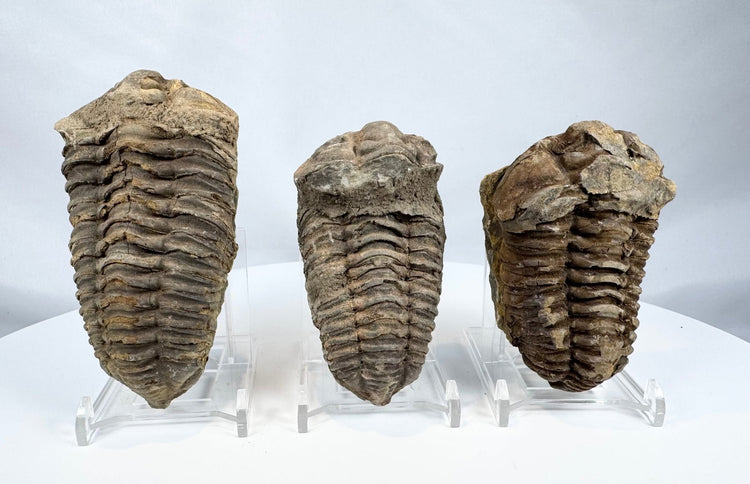
Collection de trois trilobites fossiles | 400–359 millions d'années
Description
Plus
Moins
Contexte historique et origine
Région : Newcastle, Wyoming, États-Unis
Matériau : Exosquelettes de trilobites fossilisés conservés dans de la roche sédimentaire
Période : Ère paléozoïque
Description
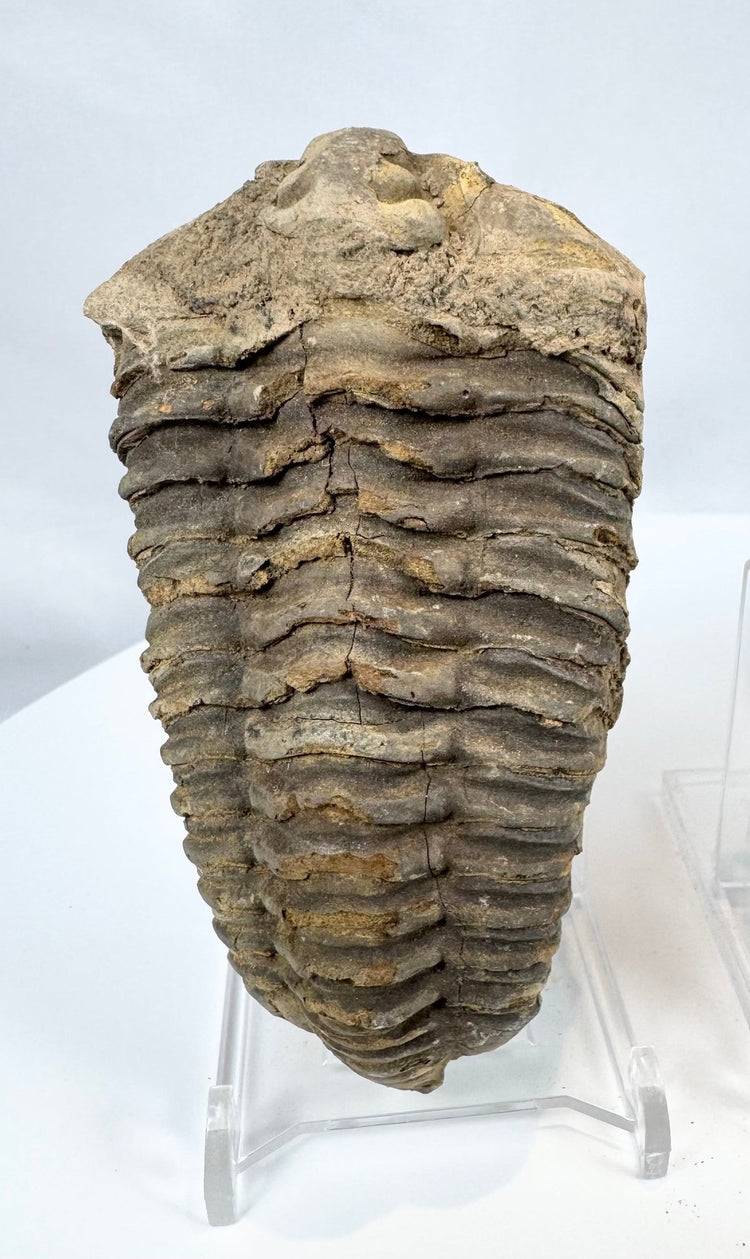
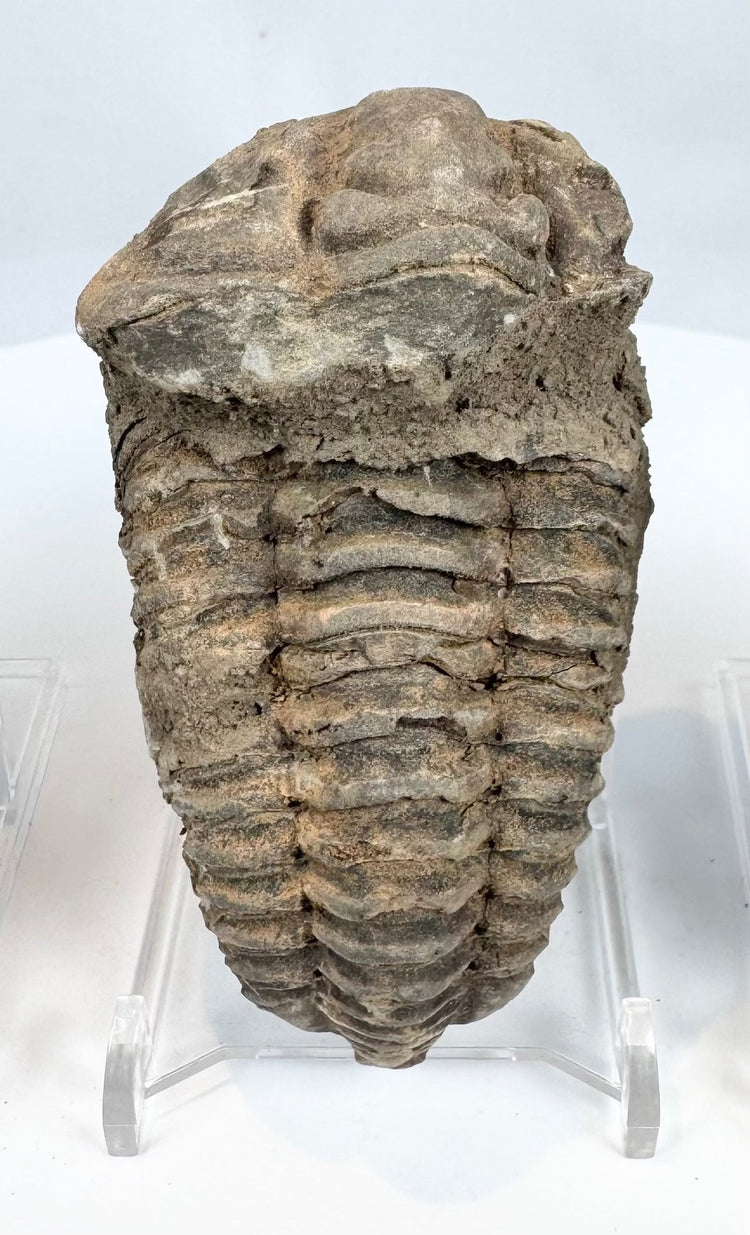
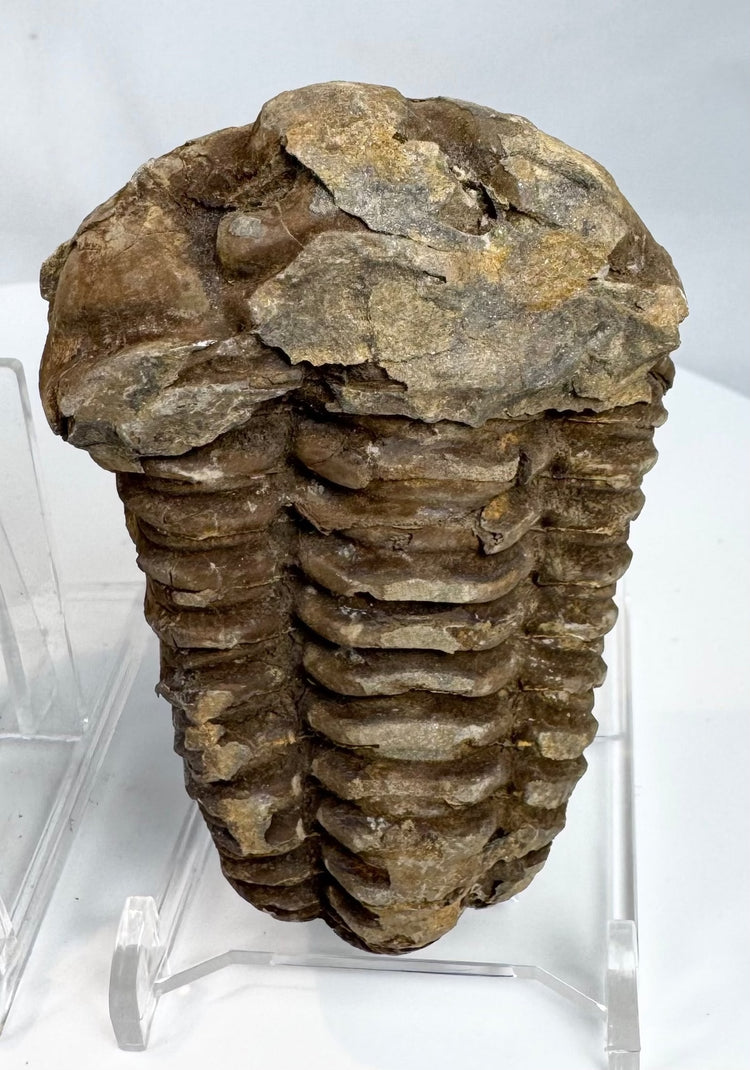
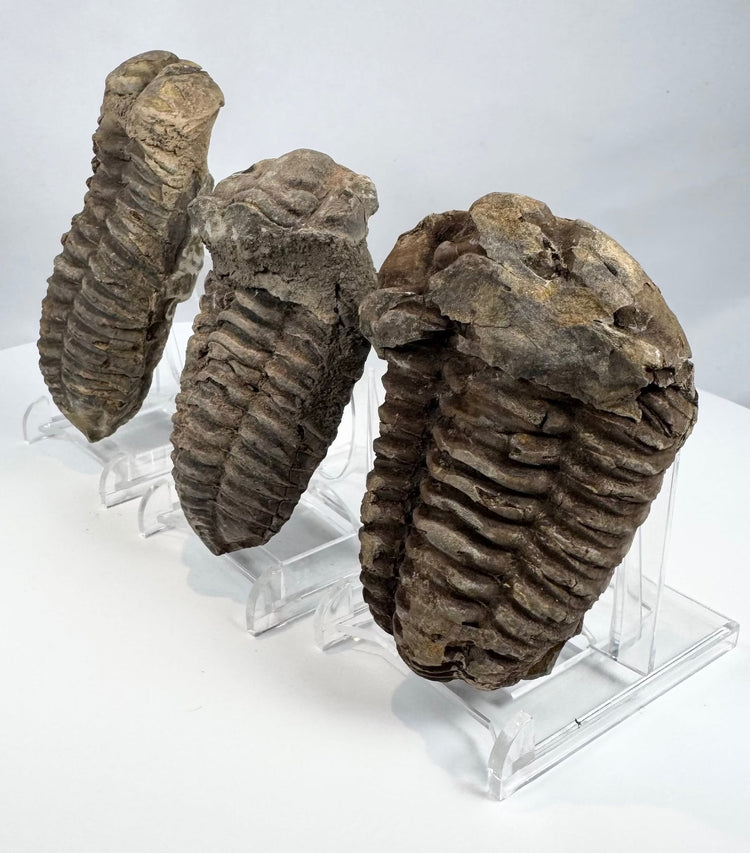
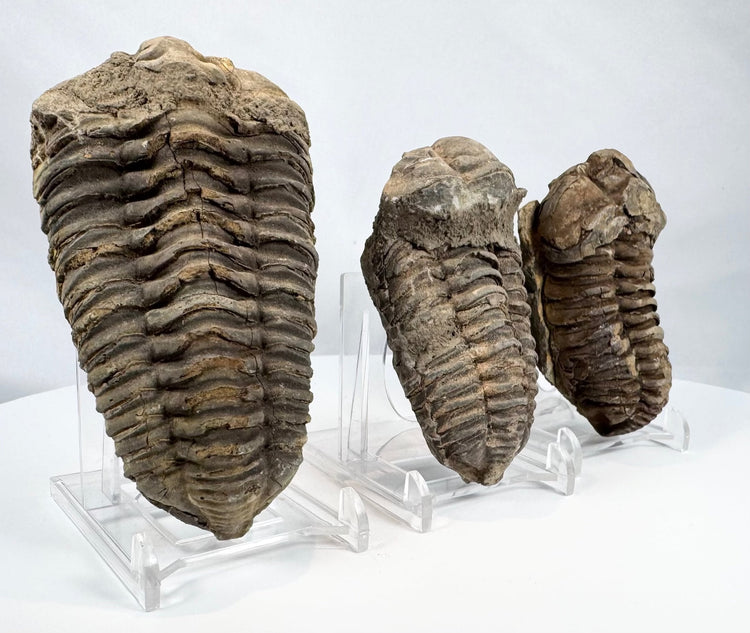
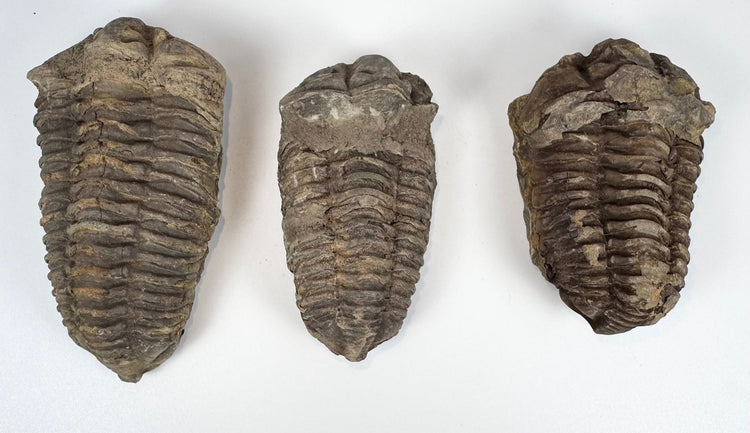
Cette collection comprend trois fossiles de trilobites substantiels, qui conservent l'anatomie segmentée distinctive de l'un des groupes les plus reconnaissables d'arthropodes marins préhistoriques. Chaque spécimen présente le plan corporel caractéristique des trilobites, avec une région axiale centrale flanquée de lobes latéraux et une série de segments thoraciques proéminemment articulés.
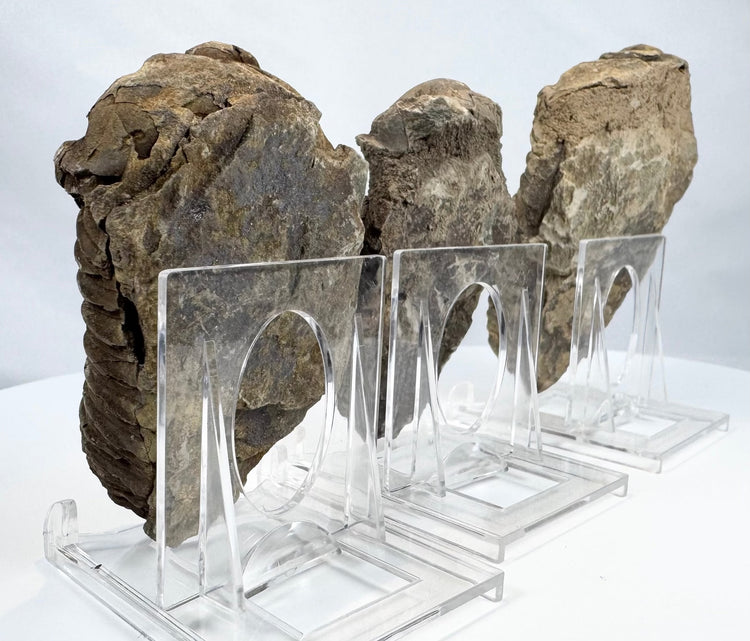
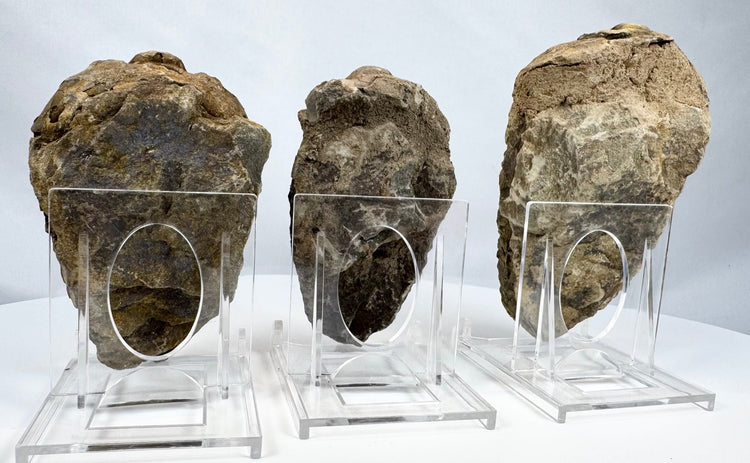
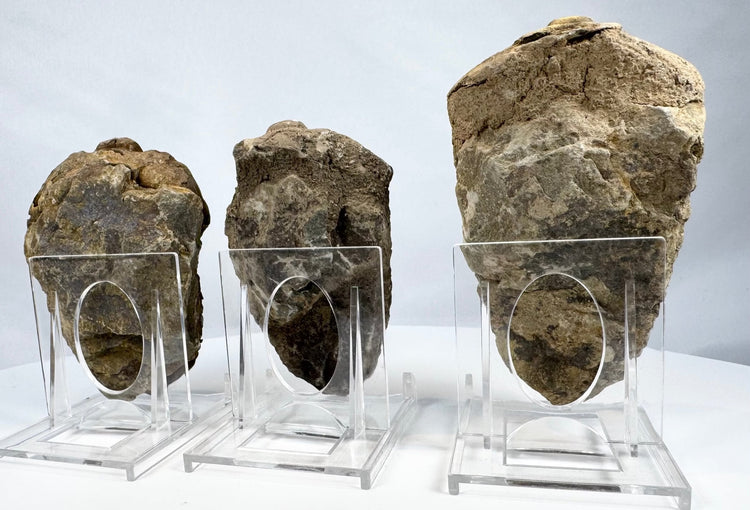
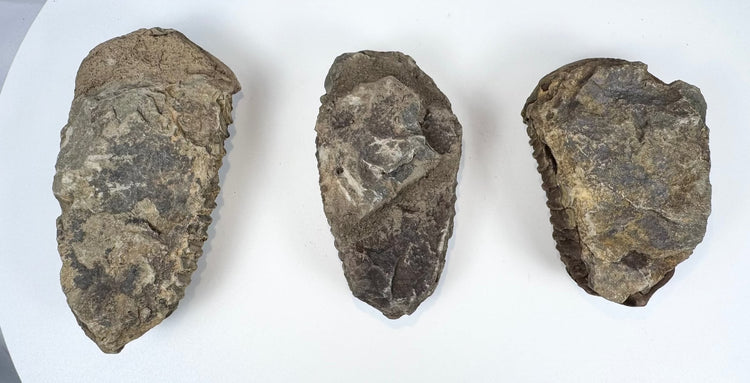
Les trois fossiles varient naturellement en forme, en coloration et en conservation, allant du gris-brun clair aux tons terreux plus profonds. Des zones de matrice adhérente restent visibles, en particulier autour des régions céphaliques et au revers, offrant un enregistrement évocateur du sédiment dans lequel les spécimens ont été conservés.
Présenté ensemble, le groupe offre un aperçu impressionnant des écosystèmes marins qui existaient des centaines de millions d'années avant l'apparition des dinosaures.
Caractéristiques
- Collection de trois spécimens authentiques de trilobites fossiles
- Exosquelettes segmentés clairement définis et anatomie caractéristique des trilobites
- Coloration minérale naturelle grise, brune et terreuse
- Zones de matrice sédimentaire originale conservées
- Chaque spécimen présente des variations individuelles de conservation et de forme
- Acquis auprès d'un revendeur canadien établi de fossiles et de minéraux
Importance culturelle et scientifique
Les trilobites figuraient parmi les premiers arthropodes marins les plus réussis, habitant les océans du monde pendant environ 270 millions d'années avant de disparaître lors de l'extinction massive de la fin du Permien, il y a environ 252 millions d'années. Leur vaste registre fossile les a rendus particulièrement importants pour la paléontologie, aidant les chercheurs à reconstituer les anciens environnements marins et à corréler les formations géologiques à travers différentes régions.
Leurs exosquelettes articulés conservent également un enregistrement visuel extraordinaire de l'évolution précoce des arthropodes. Avec leurs segments corporels répétés, leurs céphalons protecteurs et leur anatomie trilobée hautement reconnaissable, les trilobites sont devenus par conséquent certains des fossiles les plus largement collectés de l'ère paléozoïque.
État
Bien conservé dans l'ensemble, avec des détails anatomiques substantiels encore visibles. Les spécimens présentent des fractures naturelles, des usures de surface, des dépôts minéraux, des zones de matrice sédimentaire adhérente et des pertes conformes à la fossilisation, à l'excavation et à l'âge géologique. Les surfaces du revers restent largement dans leur matrice rocheuse d'origine. Veuillez vous référer aux photographies pour l'état et la conservation individuels de chaque spécimen.
Dimensions (Approximatif)
Spécimen le plus grand :
Longueur : 4,25 pouces
Largeur : 2,5 pouces
Âge (Approximatif)
Ère paléozoïque — des centaines de millions d'années
Une datation géologique plus précise nécessiterait la confirmation de l'identification du trilobite et de la formation fossilifère.
Provenance
Acquis auprès de Broken Rock Fossil Shop, Belfast, Île-du-Prince-Édouard, Canada, une boutique indépendante de fossiles et de minéraux exploitée par Linda Nobles et spécialisée dans les fossiles, les minéraux, les cristaux et d'autres spécimens d'histoire naturelle.
Les spécimens auraient été personnellement déterrés par Nobles lors d'une de ses expéditions de terrain près de Newcastle, Wyoming, États-Unis, où elle a participé à la découverte et à l'excavation de vestiges préhistoriques.
Acquis par la suite par un collectionneur privé à Toronto, Ontario, Canada.
En savoir plus
Explorez la Collection de trilobites de l'American Museum of Natural History pour en apprendre davantage sur l'anatomie, l'évolution et la conservation des fossiles de trilobites.
Parcourez notre Collection Science, Exploration & Curiosités.
Description
Contexte historique et origine
Région : Newcastle, Wyoming, États-Unis
Matériau : Exosquelettes de trilobites fossilisés conservés dans de la roche sédimentaire
Période : Ère paléozoïque
Description
Cette collection comprend trois fossiles de trilobites substantiels, qui conservent l'anatomie segmentée distinctive de l'un des groupes les plus reconnaissables d'arthropodes marins préhistoriques. Chaque spécimen présente le plan corporel caractéristique des trilobites, avec une région axiale centrale flanquée de lobes latéraux et une série de segments thoraciques proéminemment articulés.
Les trois fossiles varient naturellement en forme, en coloration et en conservation, allant du gris-brun clair aux tons terreux plus profonds. Des zones de matrice adhérente restent visibles, en particulier autour des régions céphaliques et au revers, offrant un enregistrement évocateur du sédiment dans lequel les spécimens ont été conservés.
Présenté ensemble, le groupe offre un aperçu impressionnant des écosystèmes marins qui existaient des centaines de millions d'années avant l'apparition des dinosaures.
Caractéristiques
- Collection de trois spécimens authentiques de trilobites fossiles
- Exosquelettes segmentés clairement définis et anatomie caractéristique des trilobites
- Coloration minérale naturelle grise, brune et terreuse
- Zones de matrice sédimentaire originale conservées
- Chaque spécimen présente des variations individuelles de conservation et de forme
- Acquis auprès d'un revendeur canadien établi de fossiles et de minéraux
Importance culturelle et scientifique
Les trilobites figuraient parmi les premiers arthropodes marins les plus réussis, habitant les océans du monde pendant environ 270 millions d'années avant de disparaître lors de l'extinction massive de la fin du Permien, il y a environ 252 millions d'années. Leur vaste registre fossile les a rendus particulièrement importants pour la paléontologie, aidant les chercheurs à reconstituer les anciens environnements marins et à corréler les formations géologiques à travers différentes régions.
Leurs exosquelettes articulés conservent également un enregistrement visuel extraordinaire de l'évolution précoce des arthropodes. Avec leurs segments corporels répétés, leurs céphalons protecteurs et leur anatomie trilobée hautement reconnaissable, les trilobites sont devenus par conséquent certains des fossiles les plus largement collectés de l'ère paléozoïque.
État
Bien conservé dans l'ensemble, avec des détails anatomiques substantiels encore visibles. Les spécimens présentent des fractures naturelles, des usures de surface, des dépôts minéraux, des zones de matrice sédimentaire adhérente et des pertes conformes à la fossilisation, à l'excavation et à l'âge géologique. Les surfaces du revers restent largement dans leur matrice rocheuse d'origine. Veuillez vous référer aux photographies pour l'état et la conservation individuels de chaque spécimen.
Dimensions (Approximatif)
Spécimen le plus grand :
Longueur : 4,25 pouces
Largeur : 2,5 pouces
Âge (Approximatif)
Ère paléozoïque — des centaines de millions d'années
Une datation géologique plus précise nécessiterait la confirmation de l'identification du trilobite et de la formation fossilifère.
Provenance
Acquis auprès de Broken Rock Fossil Shop, Belfast, Île-du-Prince-Édouard, Canada, une boutique indépendante de fossiles et de minéraux exploitée par Linda Nobles et spécialisée dans les fossiles, les minéraux, les cristaux et d'autres spécimens d'histoire naturelle.
Les spécimens auraient été personnellement déterrés par Nobles lors d'une de ses expéditions de terrain près de Newcastle, Wyoming, États-Unis, où elle a participé à la découverte et à l'excavation de vestiges préhistoriques.
Acquis par la suite par un collectionneur privé à Toronto, Ontario, Canada.
En savoir plus
Explorez la Collection de trilobites de l'American Museum of Natural History pour en apprendre davantage sur l'anatomie, l'évolution et la conservation des fossiles de trilobites.
Parcourez notre Collection Science, Exploration & Curiosités.
Vous aimerez peut-être aussi
