

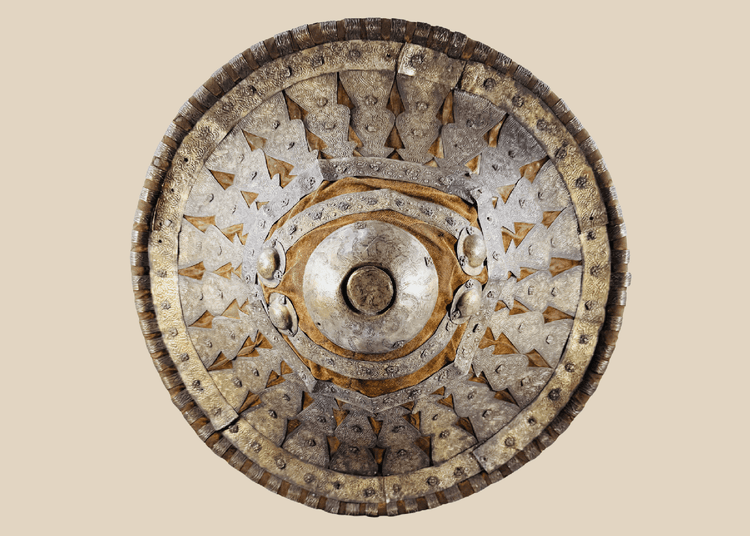
Bouclier de Cour d'Afrique de l'Est avec montures estampées et dorées | Circa 1870 – 1900
- Prix habituel
- $1,750.00
- Prix soldé
- $1,750.00
- Prix habituel
Impossible de charger la disponibilité du service de retrait



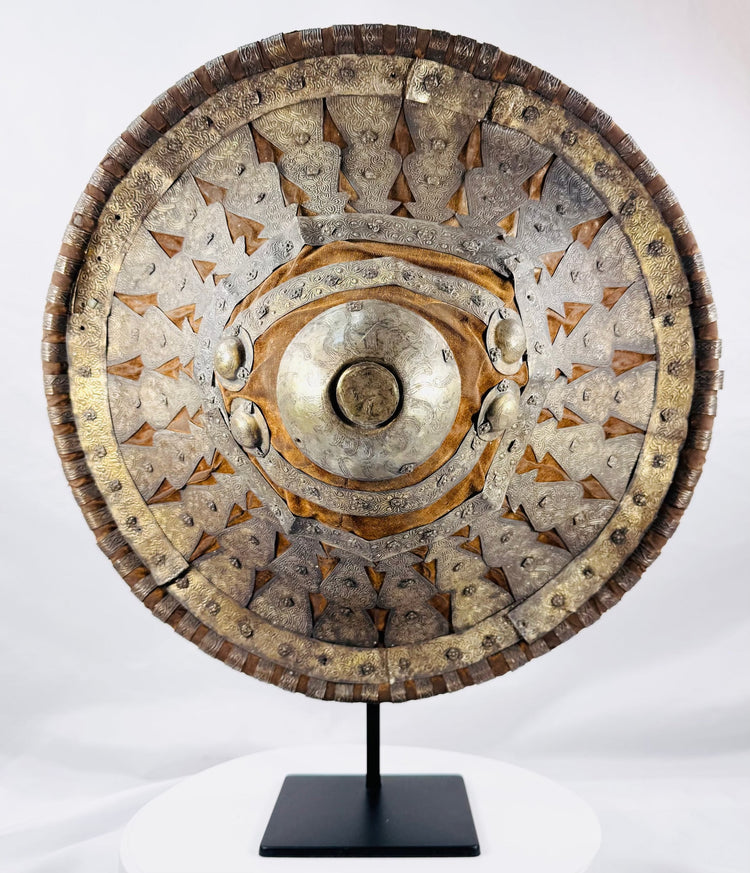
Bouclier de Cour d'Afrique de l'Est avec montures estampées et dorées | Circa 1870 – 1900
Description
Plus
Moins
Contexte historique et origine
Région : Éthiopie, Afrique de l'Est
Matériaux : Peau, velours, montures en métal argenté et doré, cuir et textile
Période : Fin du XIXe siècle de notre ère, vers 1870-1900
Description
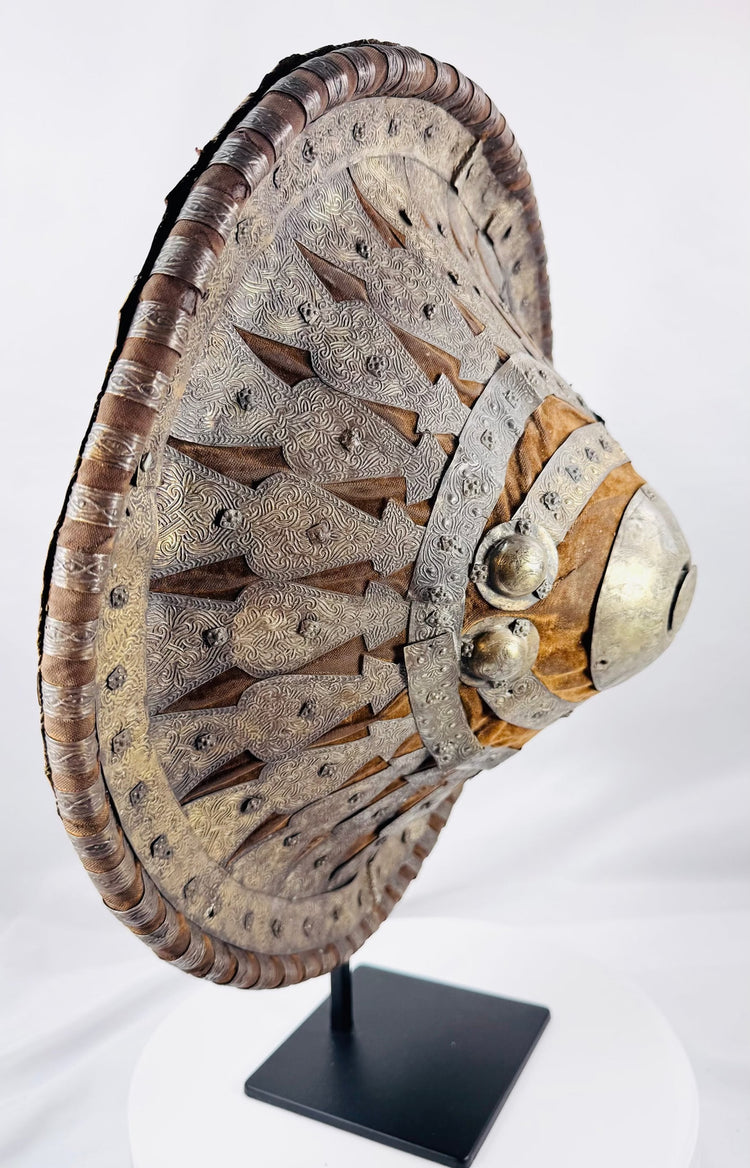
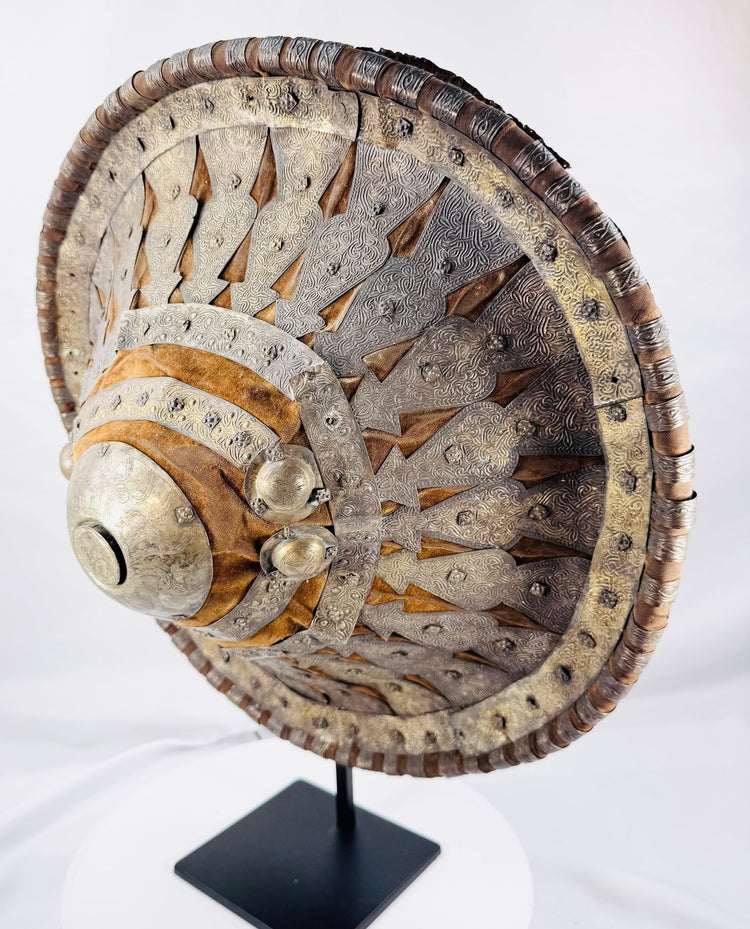
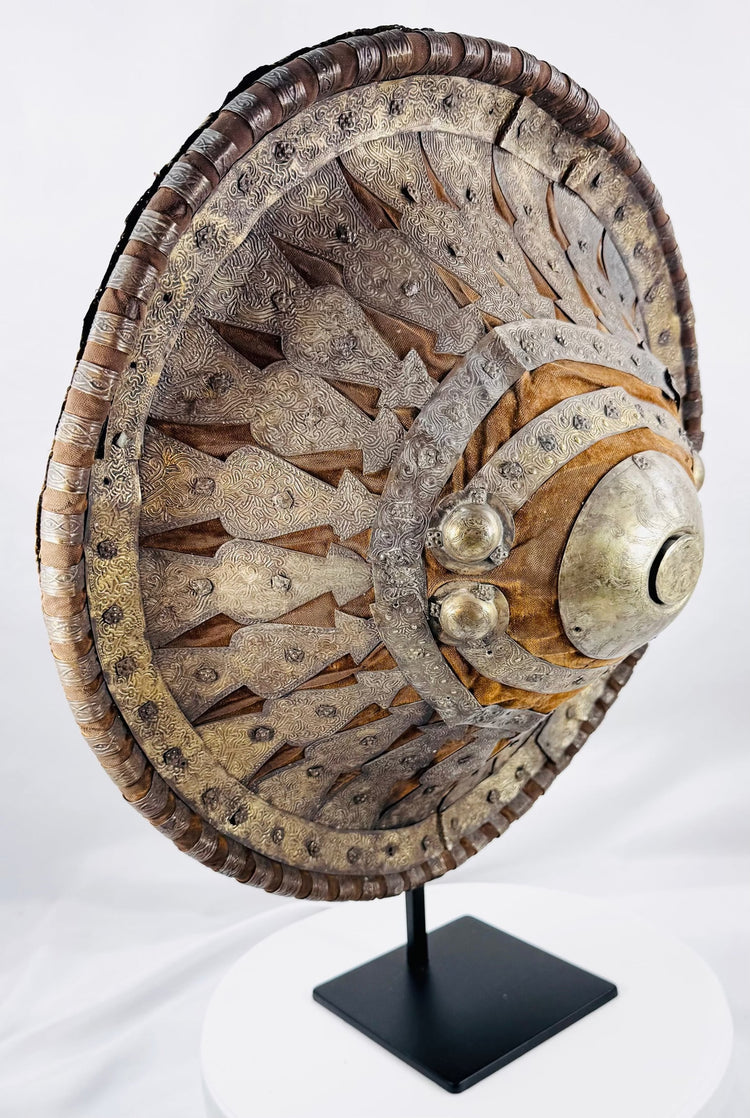
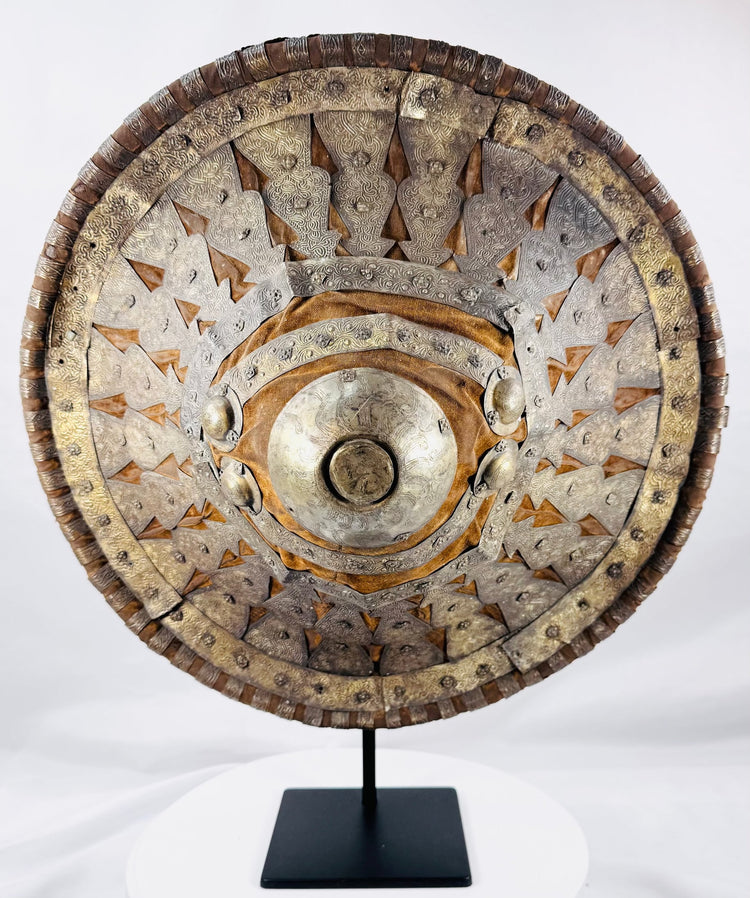
Ce bouclier éthiopien circulaire exceptionnel est un exemple de haute qualité des boucliers de prestige richement ornés traditionnellement associés à la cour impériale et aux membres de haut rang de la noblesse éthiopienne. Les boucliers de ce type richement décoré sont communément identifiés dans le domaine de la collection comme des boucliers Ras, en référence au titre aristocratique et militaire éthiopien Ras.
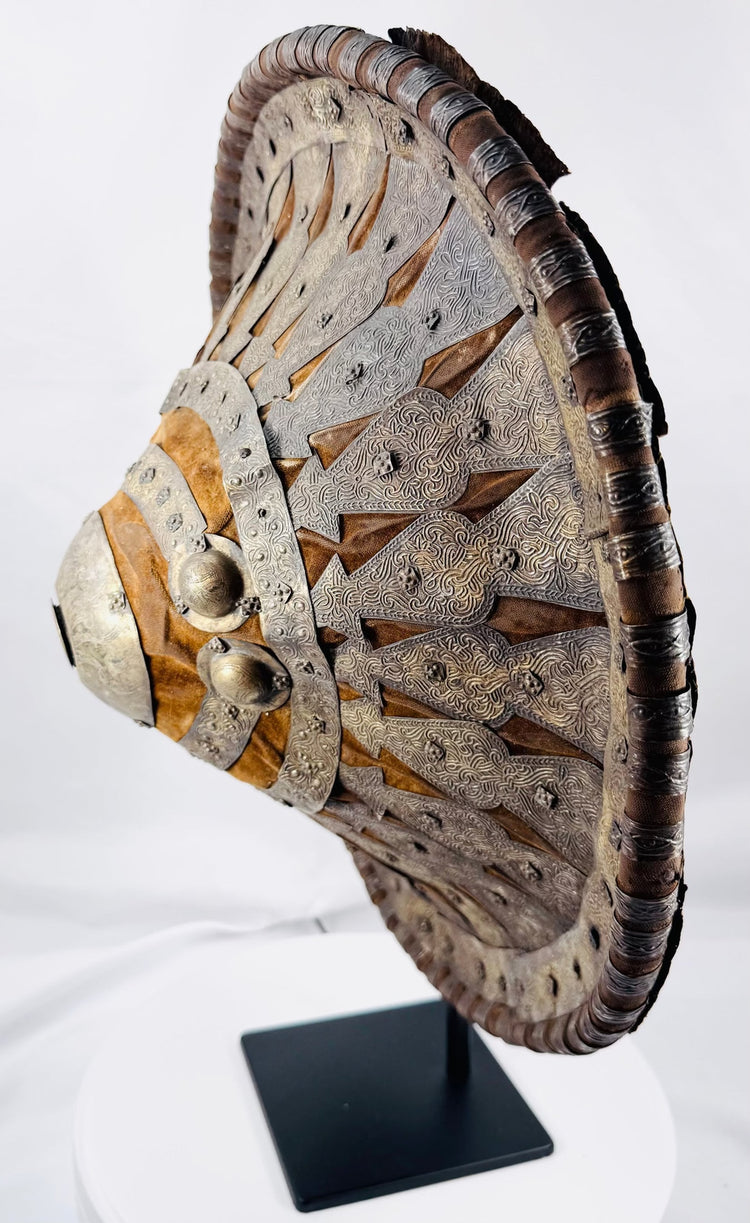
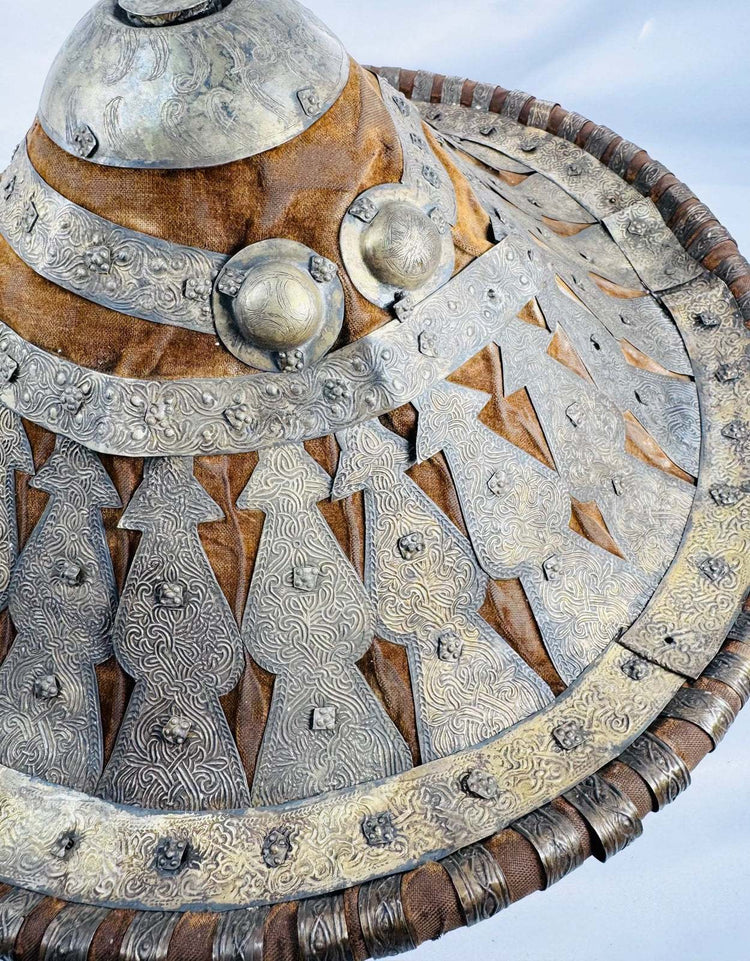
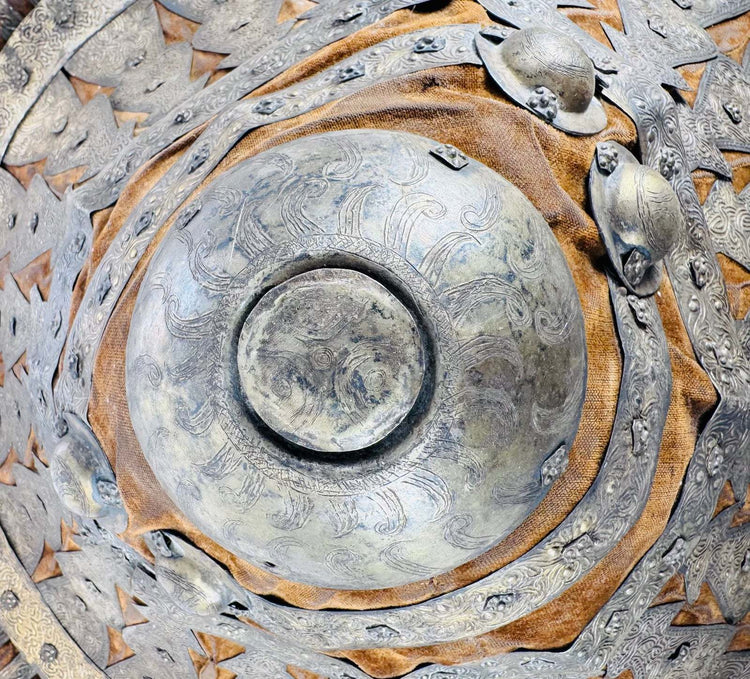
Le bouclier est construit à partir d'un corps en peau épais et convexe, recouvert sur le devant de velours brun doré et d'un extraordinaire arrangement de montures en métal ajourées, repoussées, gravées et partiellement dorées. De nombreuses plaques rayonnantes s'étendent du centre en rangées superposées, chacune taillée en forme de fer de lance stylisé ou de vase et densément travaillée avec des volutes entrelacées, des ornements linéaires et des motifs répétitifs complexes.
De larges bandes métalliques concentriques renforcent et décorent le bouclier, tandis qu'une série de cabochons hémisphériques en relief entourent la zone centrale. Le centre est dominé par un grand cabochon circulaire convexe gravé d'ornements foliaires et en forme de flamme rayonnants autour d'un plus petit disque central en relief. Cet arrangement proéminent en forme de soleil est caractéristique des boucliers éthiopiens très décorés, créant un puissant point focal tout en soulignant l'apparence cérémonielle et symbolique du bouclier.
Le périmètre extérieur est renforcé par une large bande métallique décorée fixée par de nombreux petits raccords. Au-delà, le rebord est étroitement enveloppé de sections alternées de textile et de métal repoussé, créant une bordure substantielle et visuellement frappante. Les motifs gravés répétés, les superpositions de métal, les cabochons en relief et le fond de velours contrastant démontrent le travail considérable impliqué dans sa construction.
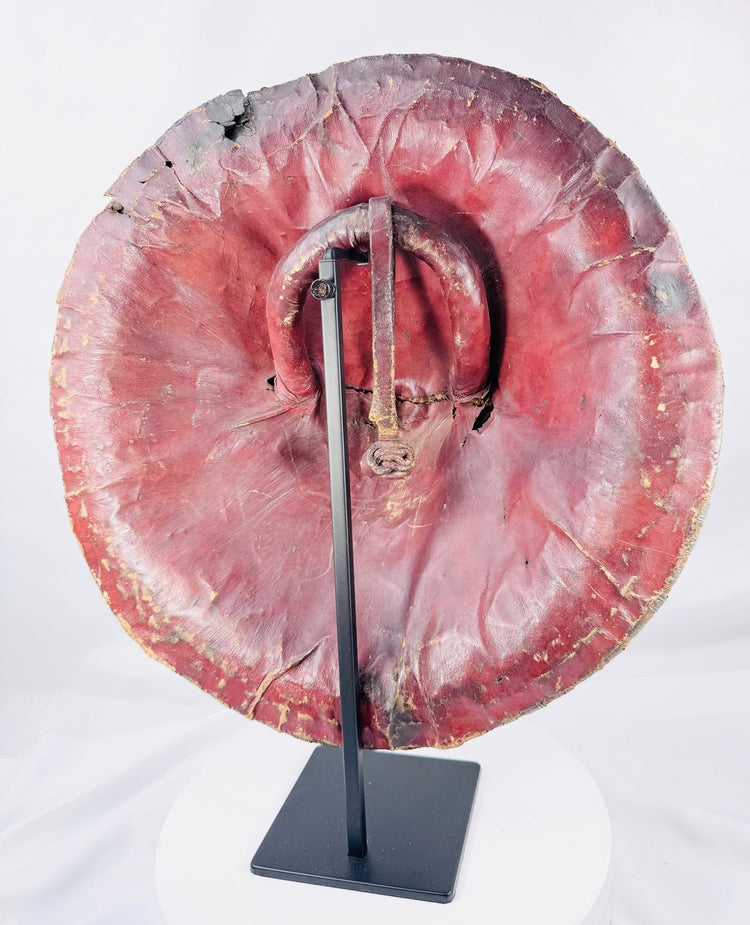
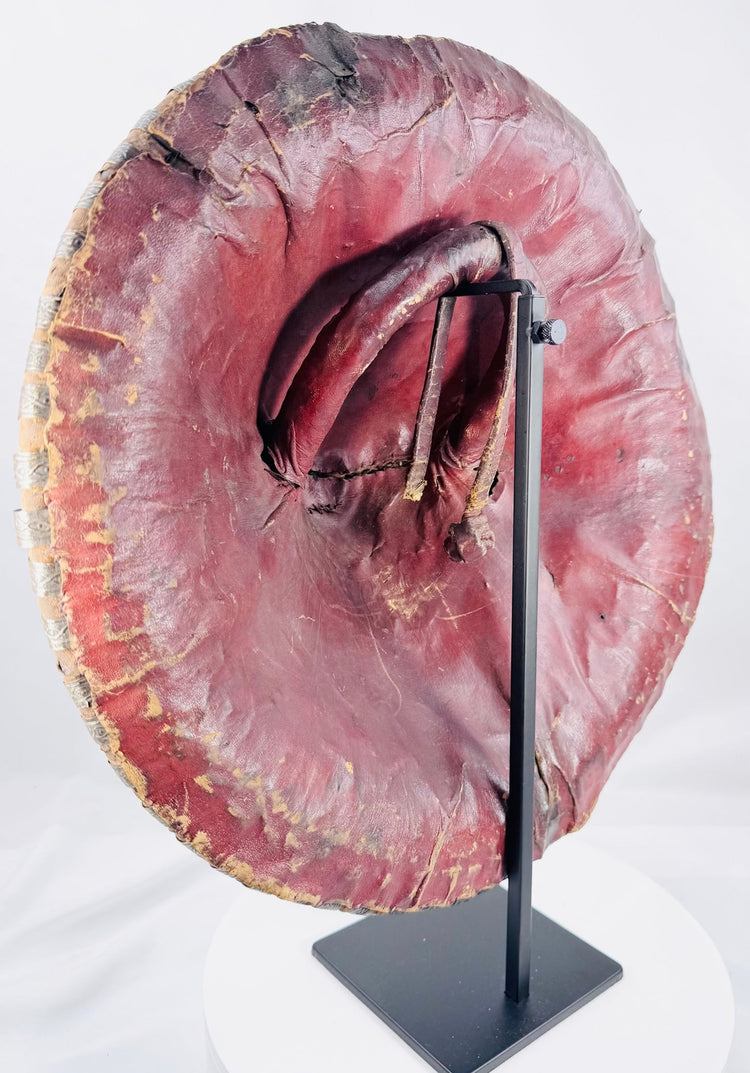
Le revers est entièrement recouvert de cuir teint en rouge et conserve sa poignée en cuir rembourrée d'origine et sa sangle de fixation associée. Le profil profondément convexe et la construction robuste en peau préservent la forme fonctionnelle d'un bouclier défensif, bien que l'ornementation métallique étendue indique que cet exemple servait également d'objet de rang, d'exposition cérémonielle et de prestige de la cour.
Caractéristiques
- Forme courtoise traditionnellement associée à un Ras ou à un noble de haut rang
- Corps circulaire convexe construit à partir d'une peau épaisse
- Face recouverte de velours brun doré
- Richement orné de nombreuses montures métalliques ajourées et repoussées
- Décoration dense gravée d'entrelacs et de volutes partout
- Appliques rayonnantes en forme de fer de lance et de vase
- Grand cabochon central convexe avec ornement gravé en forme de soleil
- Multiples cabochons hémisphériques en relief entourant le centre
- Revêtement alterné de textile et de métal repoussé autour du bord extérieur
- Revers entièrement recouvert de cuir teint en rouge
- Poignée en cuir rembourrée d'origine intacte
Signification culturelle
Dans l'Éthiopie impériale, les boucliers étaient d'importantes armes défensives ainsi que des symboles très visibles de statut militaire, de richesse et d'autorité politique. Les exemples fonctionnels étaient généralement faits d'une peau animale épaisse, ce qui leur conférait une solidité tout en étant plus légers qu'un bouclier entièrement métallique. Les exemples de prestige destinés aux nobles, aux commandants et aux membres de la cour impériale étaient fréquemment rehaussés de revêtements en velours, de montures argentées ou dorées, de cabochons gravés et de motifs décoratifs complexes.
Le titre de Ras était attribué aux nobles puissants, aux gouverneurs provinciaux et aux commandants militaires supérieurs. Bien que tous les boucliers éthiopiens ornés ne puissent être liés à un Ras spécifique, le terme bouclier Ras est largement utilisé pour distinguer les exemples de cour somptueux des boucliers en peau plus utilitaires portés par les soldats ordinaires. Des boucliers comparables recouverts de velours et ornés de montures en métaux précieux ont été associés aux membres des cours des empereurs éthiopiens, y compris la cour de l'empereur Ménélik II.
L'arrangement rayonnant des montures et le cabochon central proéminent rappellent la forme du soleil, un motif visuellement puissant qui rehausse la présence cérémonielle du bouclier. Des objets de cette qualité auraient communiqué le rang et le statut de leurs propriétaires lors de processions militaires, d'apparitions à la cour, de cérémonies publiques et de rassemblements officiels.
État
Le bouclier reste structurellement intact et présente une usure importante liée à l'âge, conforme à sa datation de la fin du XIXe siècle. Les montures métalliques présentent du ternissement, de l'oxydation, des frottements, une patine assombrie, des bosses mineures, des abrasions de surface et des pertes localisées de la finition argentée ou dorée d'origine. Plusieurs montures présentent de petits trous, des fixations manquantes, des pliures, des séparations et des irrégularités résultant de l'âge et de l'utilisation.
La couverture frontale en velours présente des décolorations, des taches, des compressions, des altérations de couleur et une usure localisée sous et entre les montures métalliques. L'enveloppe textile extérieure est usée et effilochée à plusieurs endroits, avec des pertes éparses et des matériaux sous-jacents exposés.
Le revers en cuir rouge présente de nombreux frottements, craquelures, plis, pertes de surface, abrasions, anciennes déchirures et zones de séparation autour du périmètre. La poignée rembourrée d'origine et la sangle de fixation sont toujours présentes mais montrent une sécheresse considérable, des craquelures, une usure et des pertes partielles.
Dimensions (approximatives)
Diamètre : 43,9 cm
Âge (approximatif)
126 à 156 ans
Provenance
Faisait partie d'une collection privée de Cheyenne, Wyoming, États-Unis, spécialisée dans les armes, armures et militaria anciens. La collection a été constituée au fil de nombreuses années avec un accent particulier sur les armes historiques, les accessoires de poudre, les armures et les objets martiaux.
En savoir plus
Découvrez l'importance cérémonielle et historique des boucliers éthiopiens à travers Le Royal Ethiopian Trust
Explorez notre Collection d'objets culturels et ethnographiques
Description
Contexte historique et origine
Région : Éthiopie, Afrique de l'Est
Matériaux : Peau, velours, montures en métal argenté et doré, cuir et textile
Période : Fin du XIXe siècle de notre ère, vers 1870-1900
Description
Ce bouclier éthiopien circulaire exceptionnel est un exemple de haute qualité des boucliers de prestige richement ornés traditionnellement associés à la cour impériale et aux membres de haut rang de la noblesse éthiopienne. Les boucliers de ce type richement décoré sont communément identifiés dans le domaine de la collection comme des boucliers Ras, en référence au titre aristocratique et militaire éthiopien Ras.
Le bouclier est construit à partir d'un corps en peau épais et convexe, recouvert sur le devant de velours brun doré et d'un extraordinaire arrangement de montures en métal ajourées, repoussées, gravées et partiellement dorées. De nombreuses plaques rayonnantes s'étendent du centre en rangées superposées, chacune taillée en forme de fer de lance stylisé ou de vase et densément travaillée avec des volutes entrelacées, des ornements linéaires et des motifs répétitifs complexes.
De larges bandes métalliques concentriques renforcent et décorent le bouclier, tandis qu'une série de cabochons hémisphériques en relief entourent la zone centrale. Le centre est dominé par un grand cabochon circulaire convexe gravé d'ornements foliaires et en forme de flamme rayonnants autour d'un plus petit disque central en relief. Cet arrangement proéminent en forme de soleil est caractéristique des boucliers éthiopiens très décorés, créant un puissant point focal tout en soulignant l'apparence cérémonielle et symbolique du bouclier.
Le périmètre extérieur est renforcé par une large bande métallique décorée fixée par de nombreux petits raccords. Au-delà, le rebord est étroitement enveloppé de sections alternées de textile et de métal repoussé, créant une bordure substantielle et visuellement frappante. Les motifs gravés répétés, les superpositions de métal, les cabochons en relief et le fond de velours contrastant démontrent le travail considérable impliqué dans sa construction.
Le revers est entièrement recouvert de cuir teint en rouge et conserve sa poignée en cuir rembourrée d'origine et sa sangle de fixation associée. Le profil profondément convexe et la construction robuste en peau préservent la forme fonctionnelle d'un bouclier défensif, bien que l'ornementation métallique étendue indique que cet exemple servait également d'objet de rang, d'exposition cérémonielle et de prestige de la cour.
Caractéristiques
- Forme courtoise traditionnellement associée à un Ras ou à un noble de haut rang
- Corps circulaire convexe construit à partir d'une peau épaisse
- Face recouverte de velours brun doré
- Richement orné de nombreuses montures métalliques ajourées et repoussées
- Décoration dense gravée d'entrelacs et de volutes partout
- Appliques rayonnantes en forme de fer de lance et de vase
- Grand cabochon central convexe avec ornement gravé en forme de soleil
- Multiples cabochons hémisphériques en relief entourant le centre
- Revêtement alterné de textile et de métal repoussé autour du bord extérieur
- Revers entièrement recouvert de cuir teint en rouge
- Poignée en cuir rembourrée d'origine intacte
Signification culturelle
Dans l'Éthiopie impériale, les boucliers étaient d'importantes armes défensives ainsi que des symboles très visibles de statut militaire, de richesse et d'autorité politique. Les exemples fonctionnels étaient généralement faits d'une peau animale épaisse, ce qui leur conférait une solidité tout en étant plus légers qu'un bouclier entièrement métallique. Les exemples de prestige destinés aux nobles, aux commandants et aux membres de la cour impériale étaient fréquemment rehaussés de revêtements en velours, de montures argentées ou dorées, de cabochons gravés et de motifs décoratifs complexes.
Le titre de Ras était attribué aux nobles puissants, aux gouverneurs provinciaux et aux commandants militaires supérieurs. Bien que tous les boucliers éthiopiens ornés ne puissent être liés à un Ras spécifique, le terme bouclier Ras est largement utilisé pour distinguer les exemples de cour somptueux des boucliers en peau plus utilitaires portés par les soldats ordinaires. Des boucliers comparables recouverts de velours et ornés de montures en métaux précieux ont été associés aux membres des cours des empereurs éthiopiens, y compris la cour de l'empereur Ménélik II.
L'arrangement rayonnant des montures et le cabochon central proéminent rappellent la forme du soleil, un motif visuellement puissant qui rehausse la présence cérémonielle du bouclier. Des objets de cette qualité auraient communiqué le rang et le statut de leurs propriétaires lors de processions militaires, d'apparitions à la cour, de cérémonies publiques et de rassemblements officiels.
État
Le bouclier reste structurellement intact et présente une usure importante liée à l'âge, conforme à sa datation de la fin du XIXe siècle. Les montures métalliques présentent du ternissement, de l'oxydation, des frottements, une patine assombrie, des bosses mineures, des abrasions de surface et des pertes localisées de la finition argentée ou dorée d'origine. Plusieurs montures présentent de petits trous, des fixations manquantes, des pliures, des séparations et des irrégularités résultant de l'âge et de l'utilisation.
La couverture frontale en velours présente des décolorations, des taches, des compressions, des altérations de couleur et une usure localisée sous et entre les montures métalliques. L'enveloppe textile extérieure est usée et effilochée à plusieurs endroits, avec des pertes éparses et des matériaux sous-jacents exposés.
Le revers en cuir rouge présente de nombreux frottements, craquelures, plis, pertes de surface, abrasions, anciennes déchirures et zones de séparation autour du périmètre. La poignée rembourrée d'origine et la sangle de fixation sont toujours présentes mais montrent une sécheresse considérable, des craquelures, une usure et des pertes partielles.
Dimensions (approximatives)
Diamètre : 43,9 cm
Âge (approximatif)
126 à 156 ans
Provenance
Faisait partie d'une collection privée de Cheyenne, Wyoming, États-Unis, spécialisée dans les armes, armures et militaria anciens. La collection a été constituée au fil de nombreuses années avec un accent particulier sur les armes historiques, les accessoires de poudre, les armures et les objets martiaux.
En savoir plus
Découvrez l'importance cérémonielle et historique des boucliers éthiopiens à travers Le Royal Ethiopian Trust
Explorez notre Collection d'objets culturels et ethnographiques
Vous aimerez peut-être aussi
