



Ancient Egyptian Bronze Standing Harpocrates Figure | Late Period | Circa 712–332 BCE
- Prix habituel
- $1,500.00
- Prix soldé
- $1,500.00
- Prix habituel
Impossible de charger la disponibilité du service de retrait




Ancient Egyptian Bronze Standing Harpocrates Figure | Late Period | Circa 712–332 BCE
Description
Plus
Moins
Historical Context & Origin
Region: Ancient Egypt
Material: Cast bronze with dark green and reddish-brown patination; later teak display base
Period: Egyptian Late Period, circa 712–332 BCE
Description
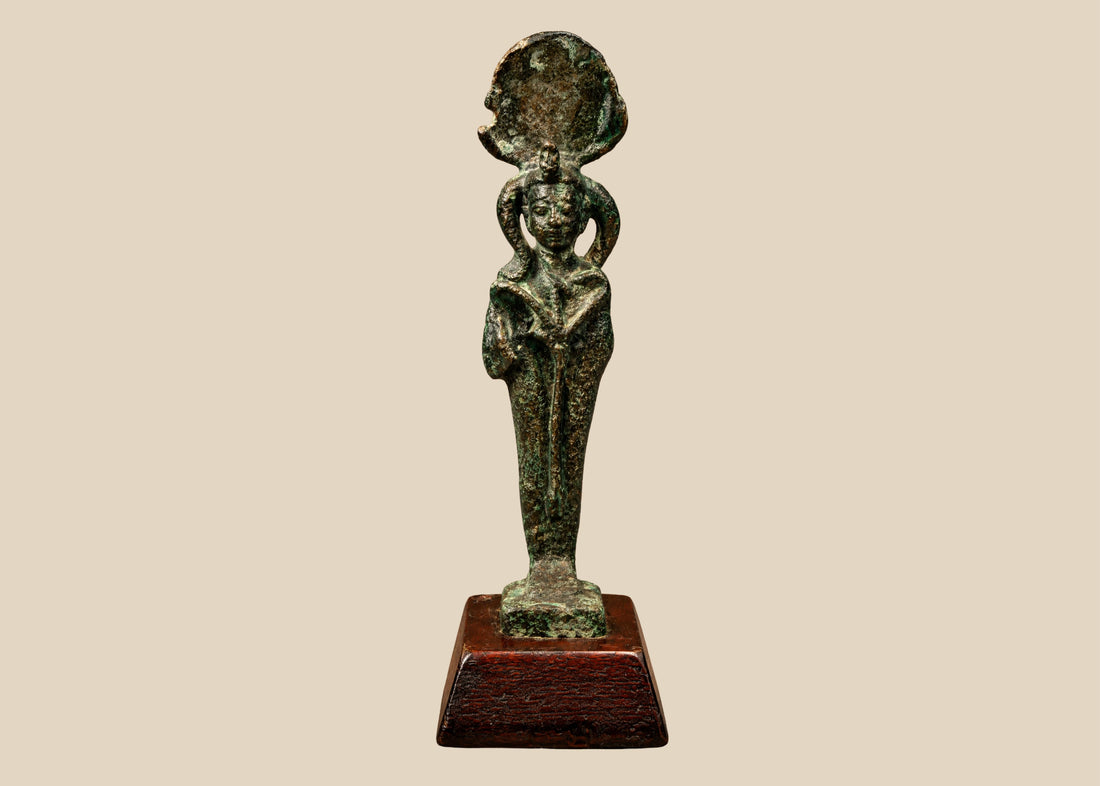
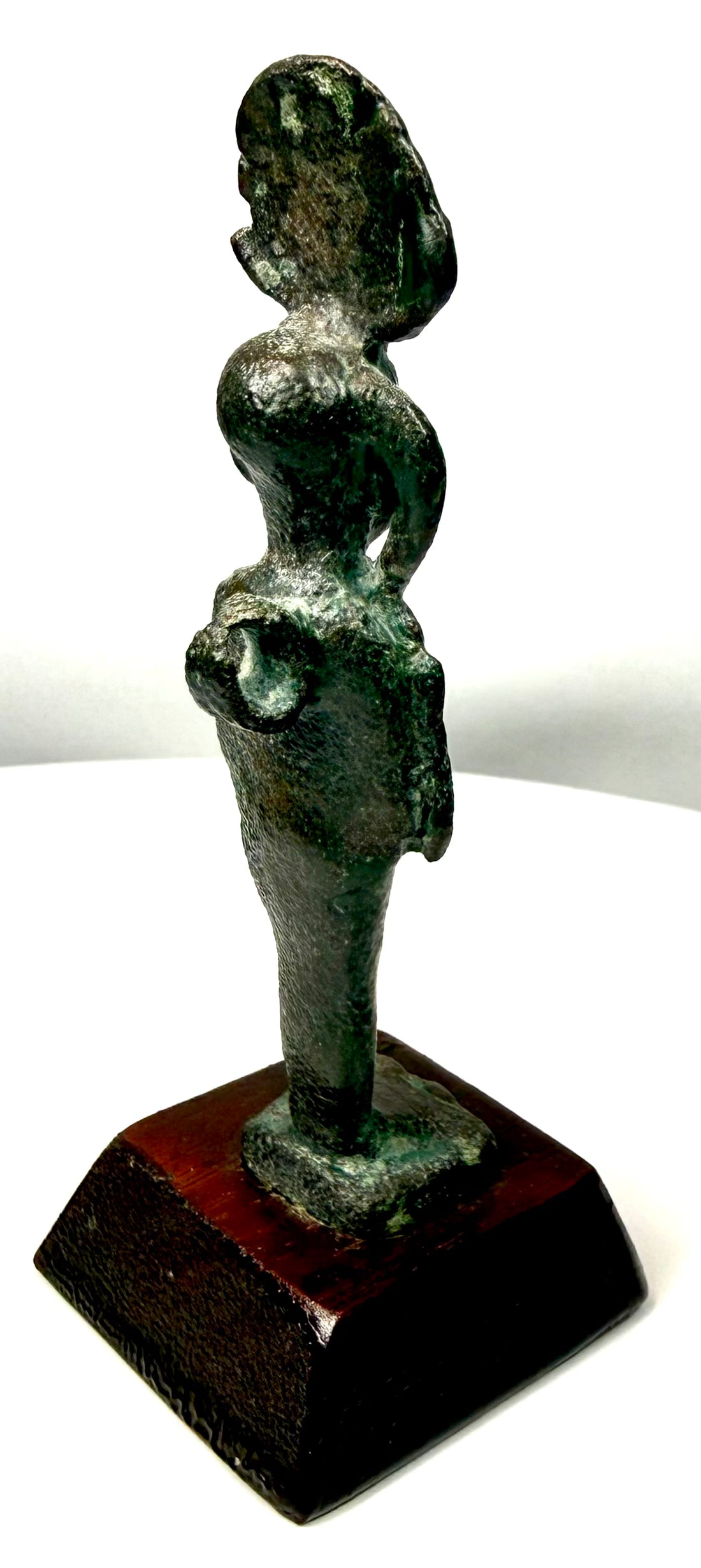
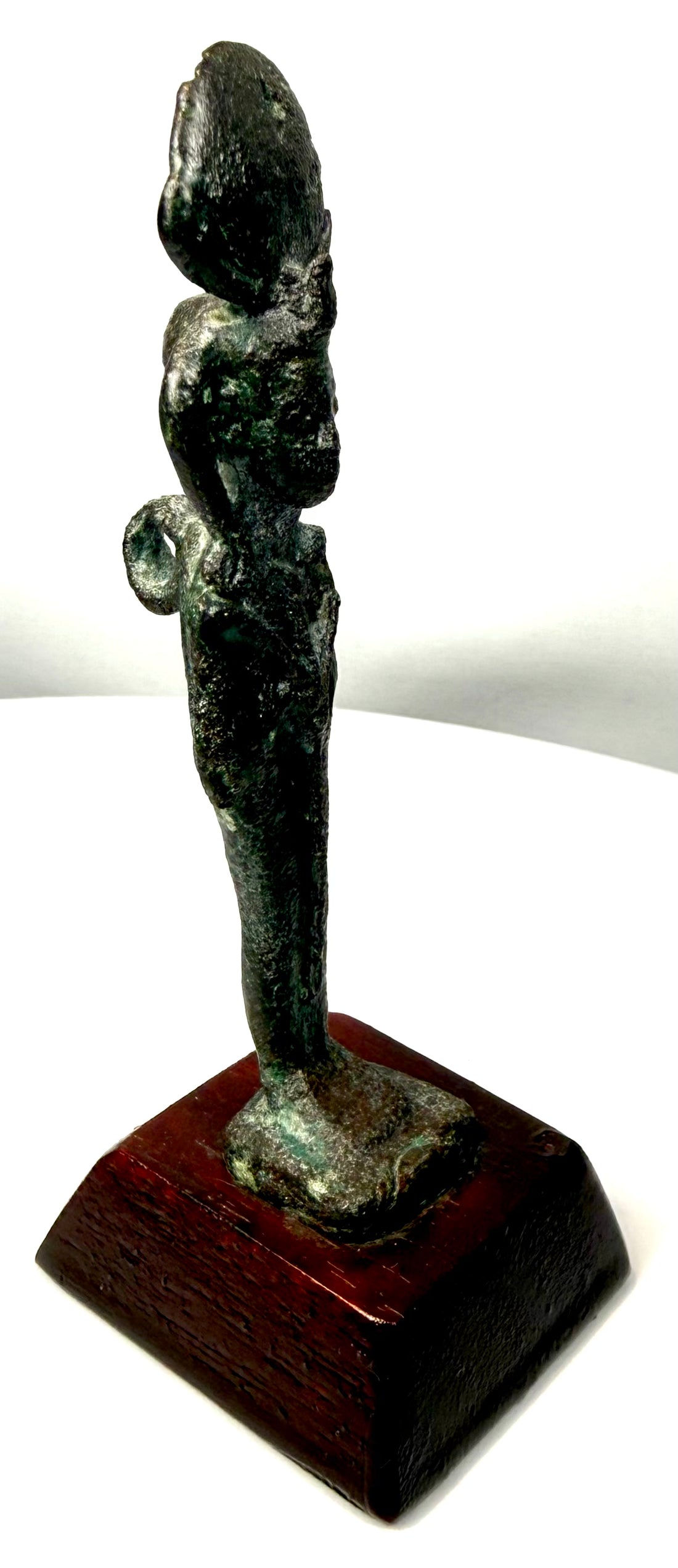
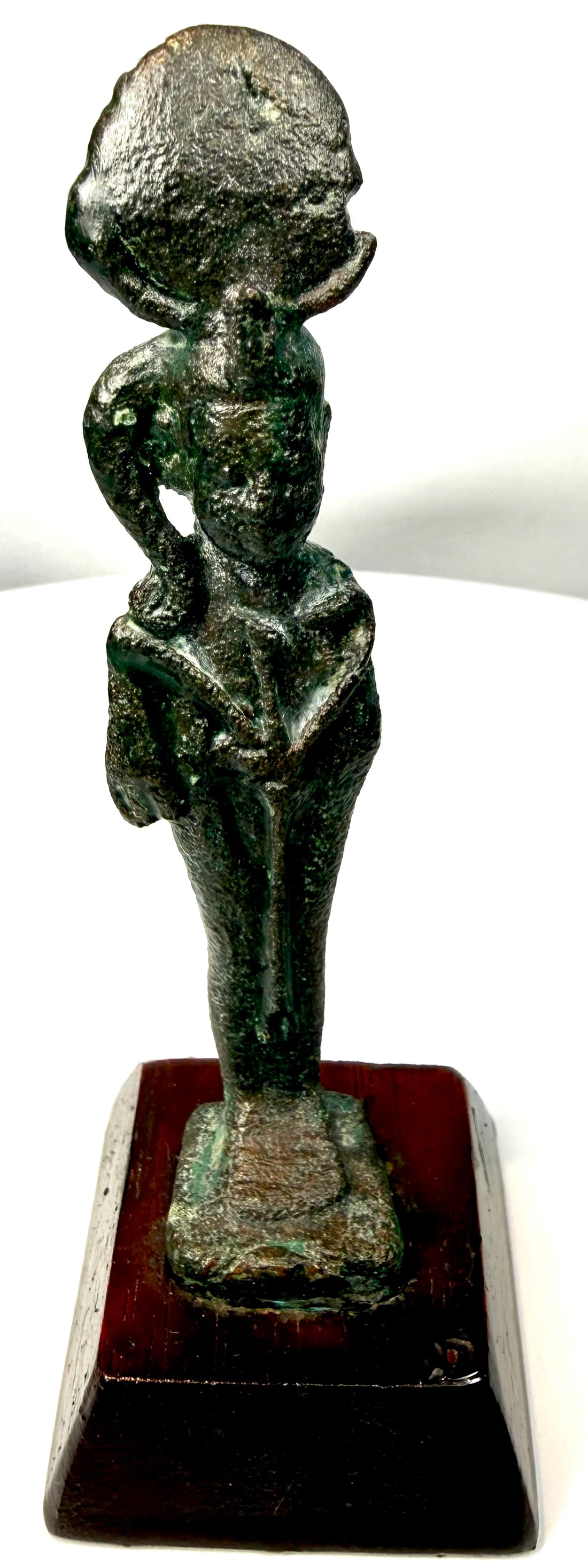
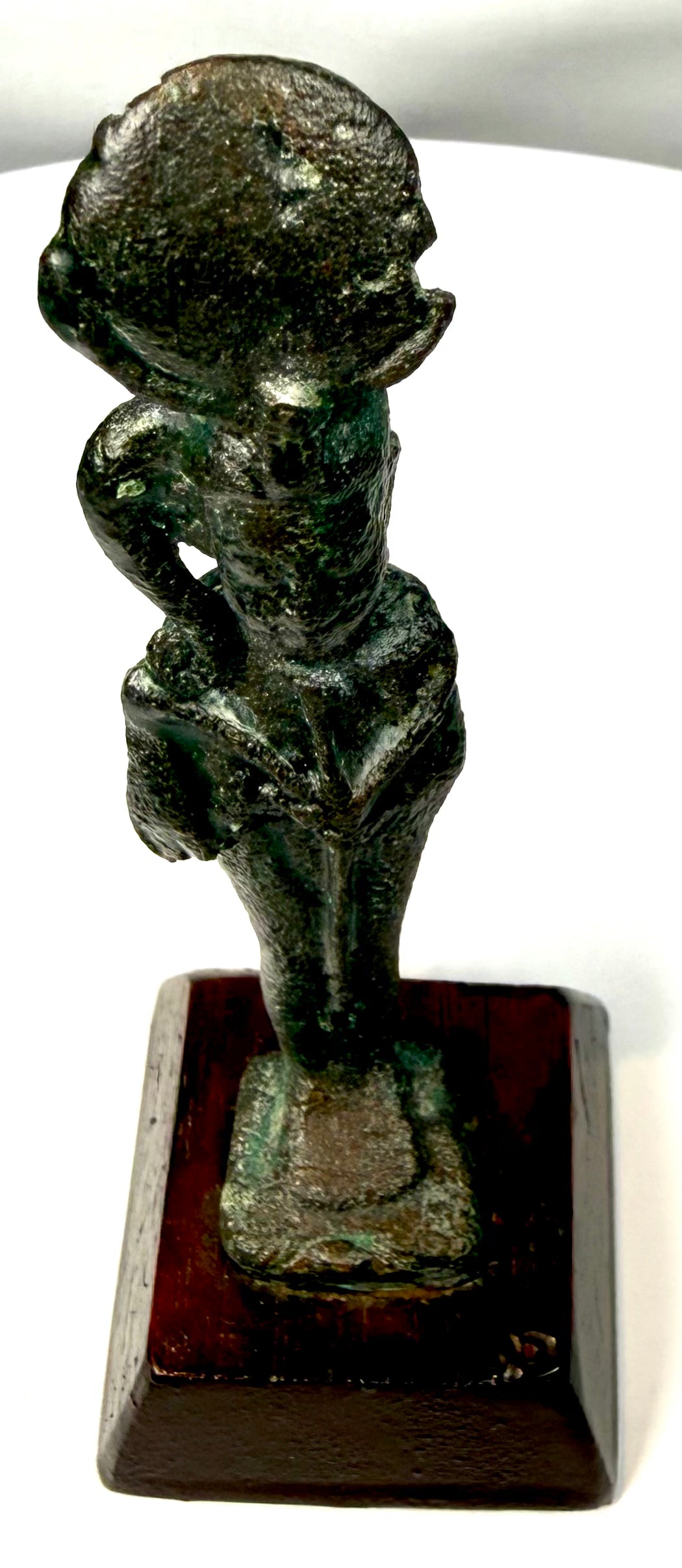
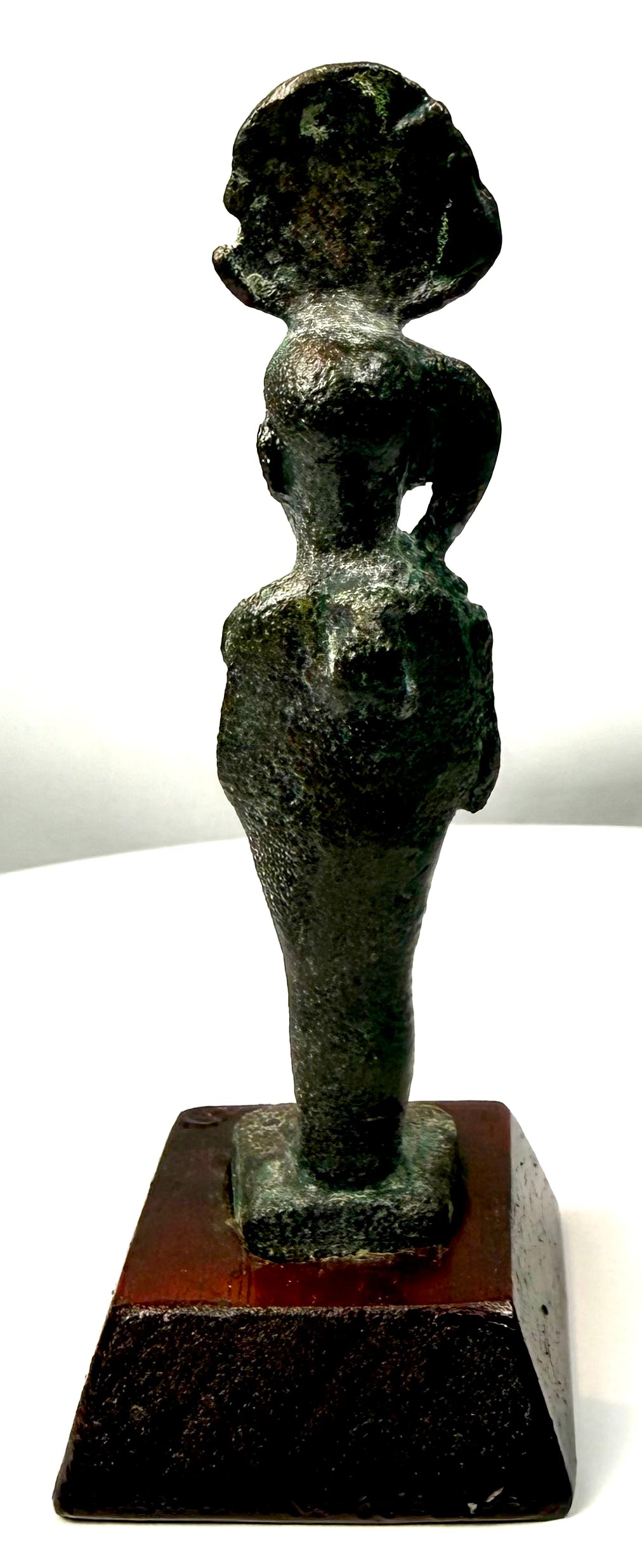
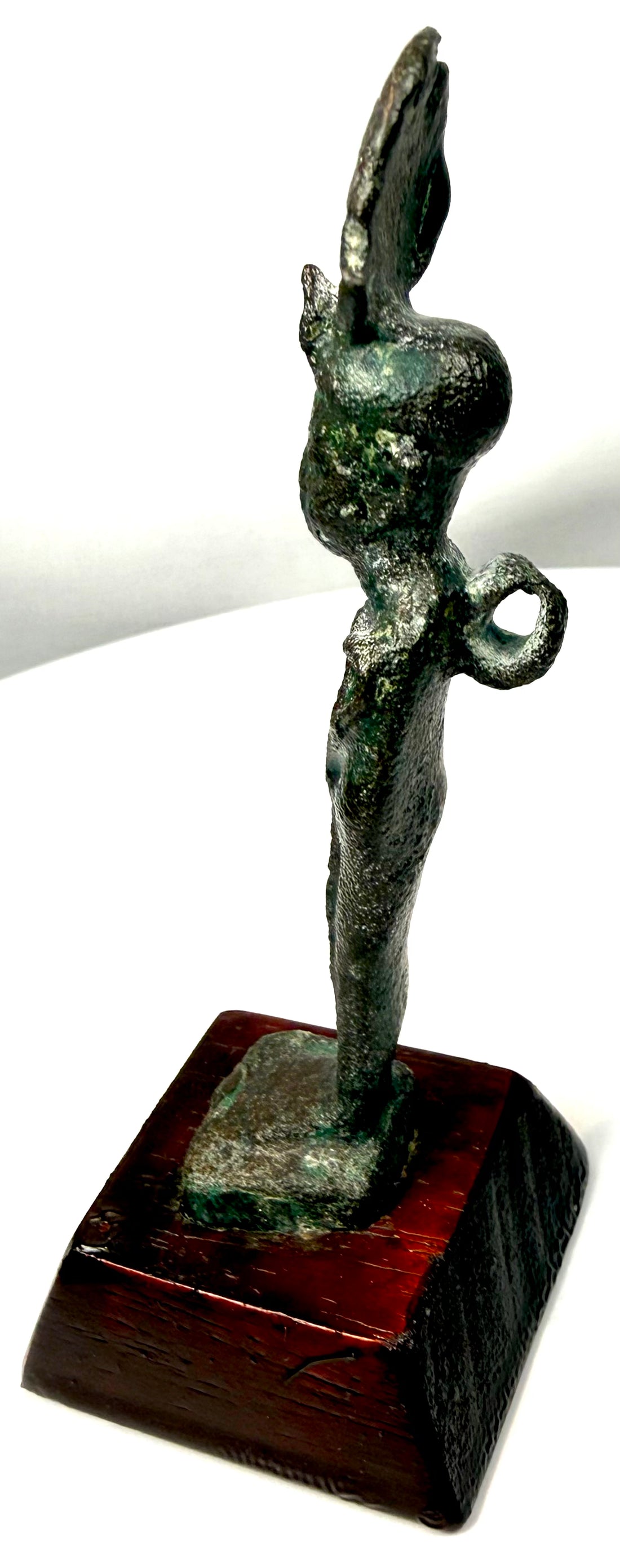
This distinctive Egyptian bronze statuette represents a standing mummiform child deity, identified in the accompanying Certificate of Authenticity as Harpocrates, or Horus the Child. The figure embodies the religious iconography of ancient Egypt, combining traditional divine symbolism with expressive sculptural modelling and richly textured bronze patination.
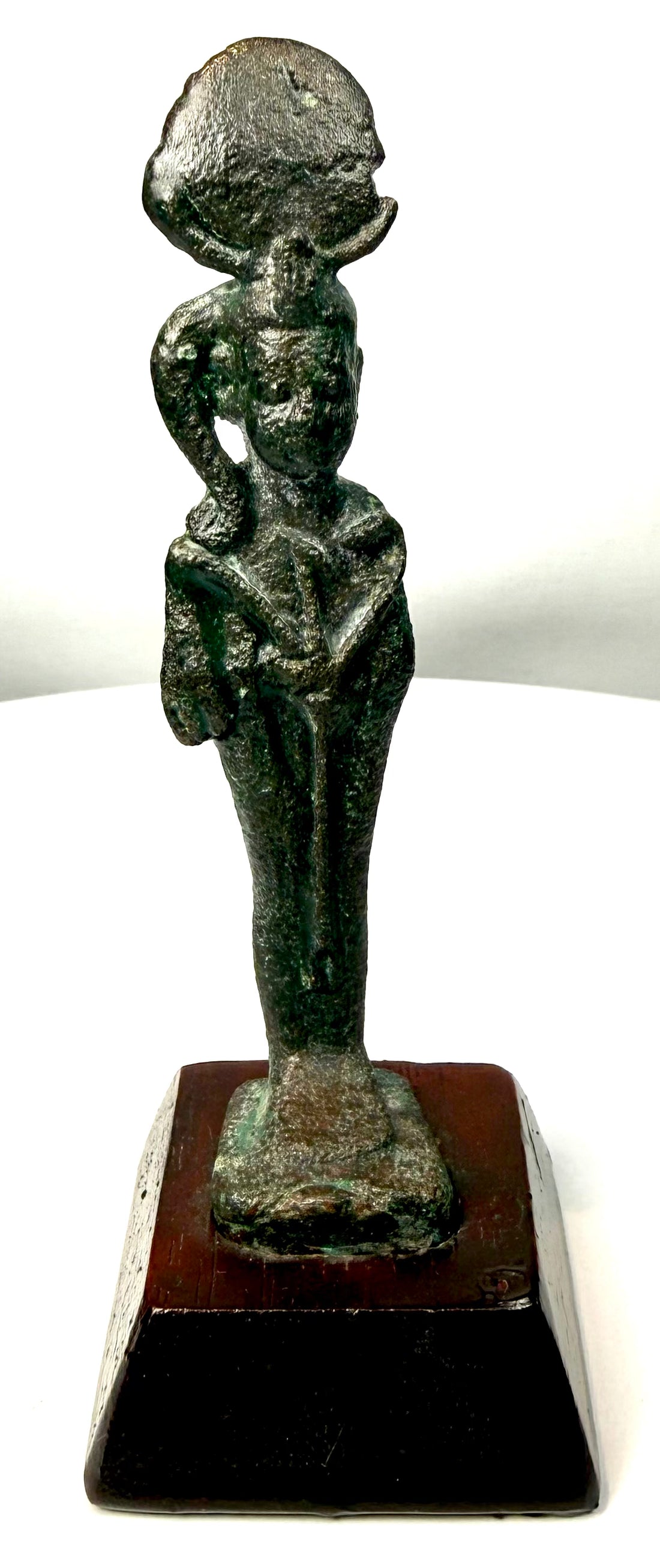
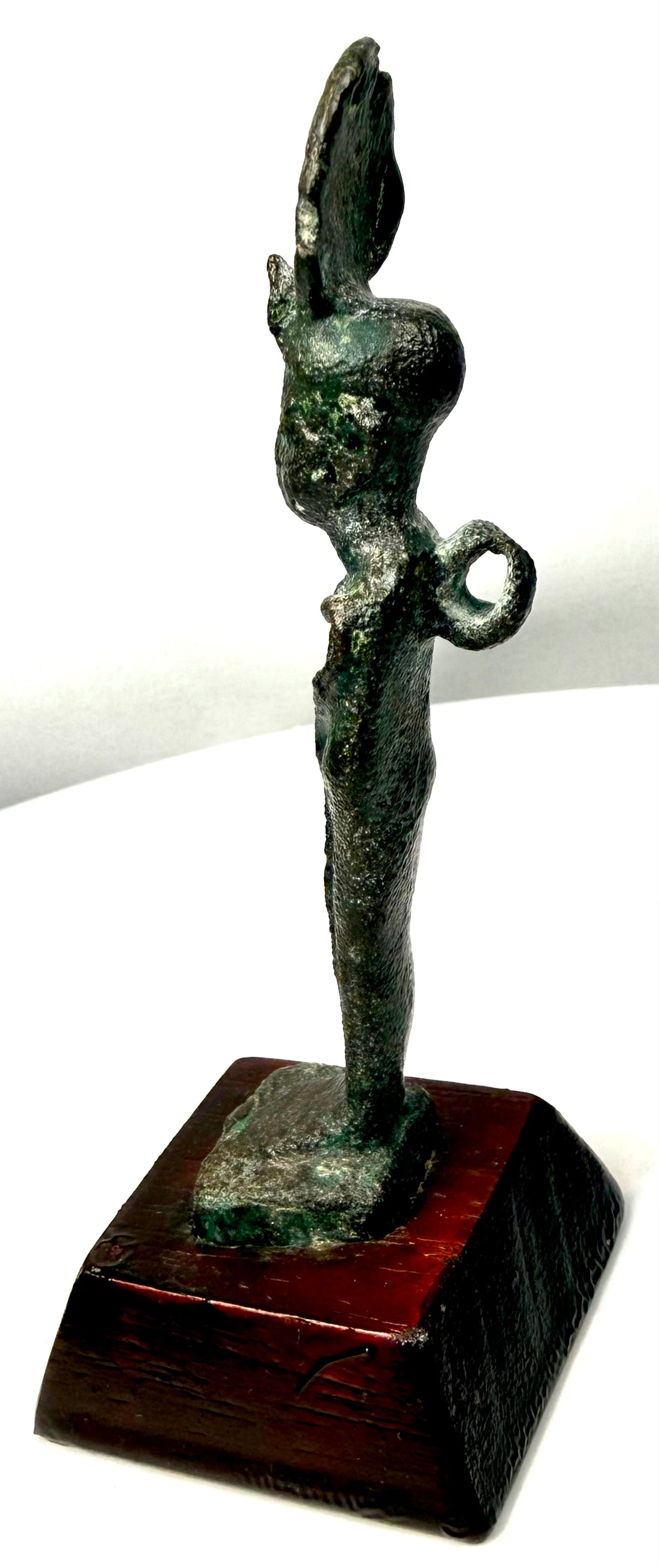
The head is surmounted by a prominent circular crown framed by curved lateral projections, identified in the accompanying documentation as an Isis crown. The facial features include a defined brow, recessed eyes, a prominent nose, and a small mouth. A curved projection descending beside the head resembles the traditional sidelock of youth, an important attribute associated with Egyptian child deities.
The upper torso displays raised diagonal sculptural elements across the chest, while the elongated lower body retains its characteristic mummiform silhouette. Comparable bronze representations of Khonsu, the Egyptian lunar deity, also exhibit this combination of a circular crown, sidelock of youth, and closely fitted garment, illustrating the shared iconographic traditions of Egyptian child gods.
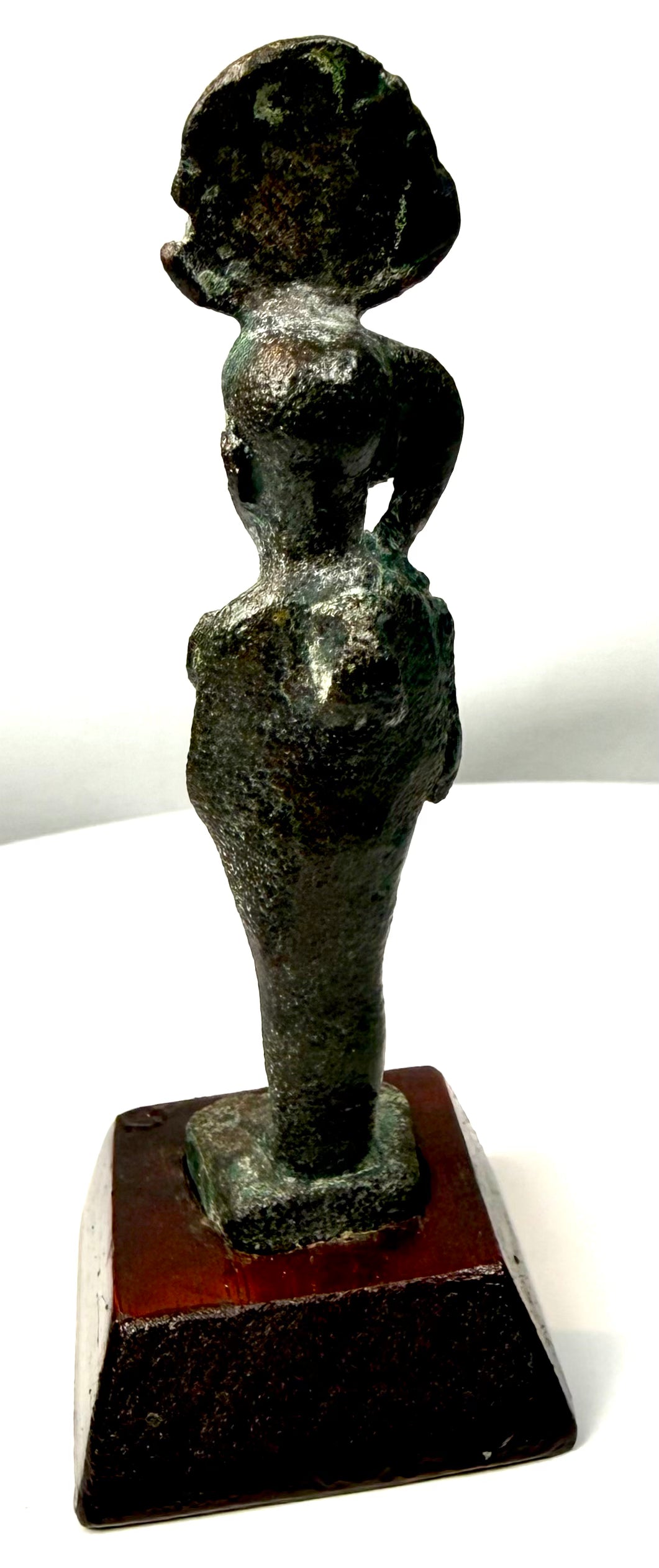
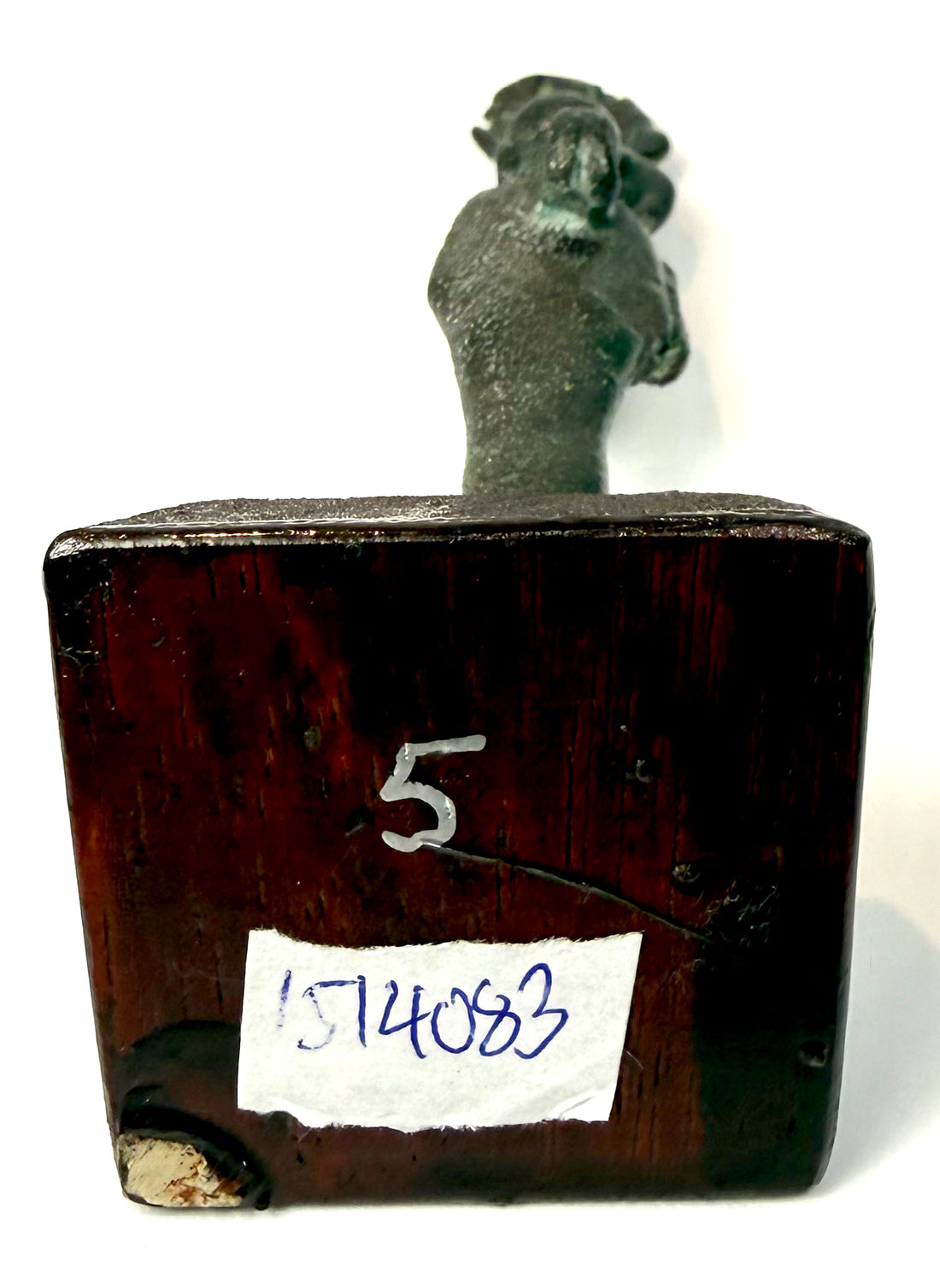
The bronze surface displays attractive variations of deep green, reddish-brown, and nearly black patination. The figure stands upon an integral bronze base and is mounted on a later trapezoidal teak display plinth dating to approximately the 1970s, according to the accompanying documentation.
Features
- Cast bronze mummiform figure of an Egyptian child deity
- Prominent circular crown with curved lateral projections
- Recognizable facial features and apparent sidelock of youth
- Raised sculptural detailing across the upper torso
- Rich dark green, reddish-brown, and nearly black patination
- Integral bronze base mounted on a later teak display plinth
- Documented collection history extending back to before 1966
- Accompanied by a Certificate of Authenticity from Senatus Consulto
Cultural Significance
Child deities became increasingly prominent within ancient Egyptian religious traditions during the Third Intermediate and Late periods. Harpocrates, the Greek rendering of Horus the Child, was traditionally identified as the son of Isis and Osiris and associated with divine kingship, protection, and regeneration. Khonsu, the son of Amun and Mut, was similarly revered as a youthful deity associated with the moon and the passage of time.
Egyptian child gods frequently shared iconographic characteristics, including the sidelock of youth, distinctive ceremonial crowns, and stylized garments. These overlapping artistic conventions reflected the complex and interconnected nature of Egyptian religious beliefs.
Bronze representations of Egyptian deities were commonly produced as votive offerings and devotional objects, often dedicated within temples and sacred settings. Their imagery expressed devotion, divine protection, and the enduring relationship between religious belief and artistic craftsmanship in ancient Egypt.
Condition
The bronze statuette is well preserved overall, retaining recognizable facial features, ceremonial crown, upper-body modelling, and its elongated mummiform profile. The surface displays extensive dark green and reddish-brown patination, scattered abrasions, localized pitting, and minor surface losses. Small losses are visible along portions of the crown, consistent with the condition recorded in the accompanying certificate. The integral bronze base remains preserved, and the figure is secured to a later trapezoidal teak display plinth exhibiting minor surface wear and signs of handling.
Dimensions (Approximate)
Bronze Figure:
Height: 3.82 in
Including Display Base:
Height: 4.45 in
Age (Approximate)
2,360–2,740 years old
Provenance
Previously held in the Dr. Hans Halter Private Collection, Switzerland, reportedly acquired before 1966.
Subsequently offered through Gorny & Mosch Giessener Münzhandlung GmbH, Munich, Germany. Established in 1970, Gorny & Mosch is a German auction house specializing in ancient coins, antiquities, and archaeological artworks.
Subsequently handled by Senatus Consulto, Copenhagen, Denmark, an antiquities dealership specializing in ancient artifacts, coins, bronzes, ceramics, and historical collectibles.
Subsequently held in the private collection of Joseph Margiotta, Academic Specialist in History at Union County College, Cranford, New Jersey, USA.
Certificate of Authenticity
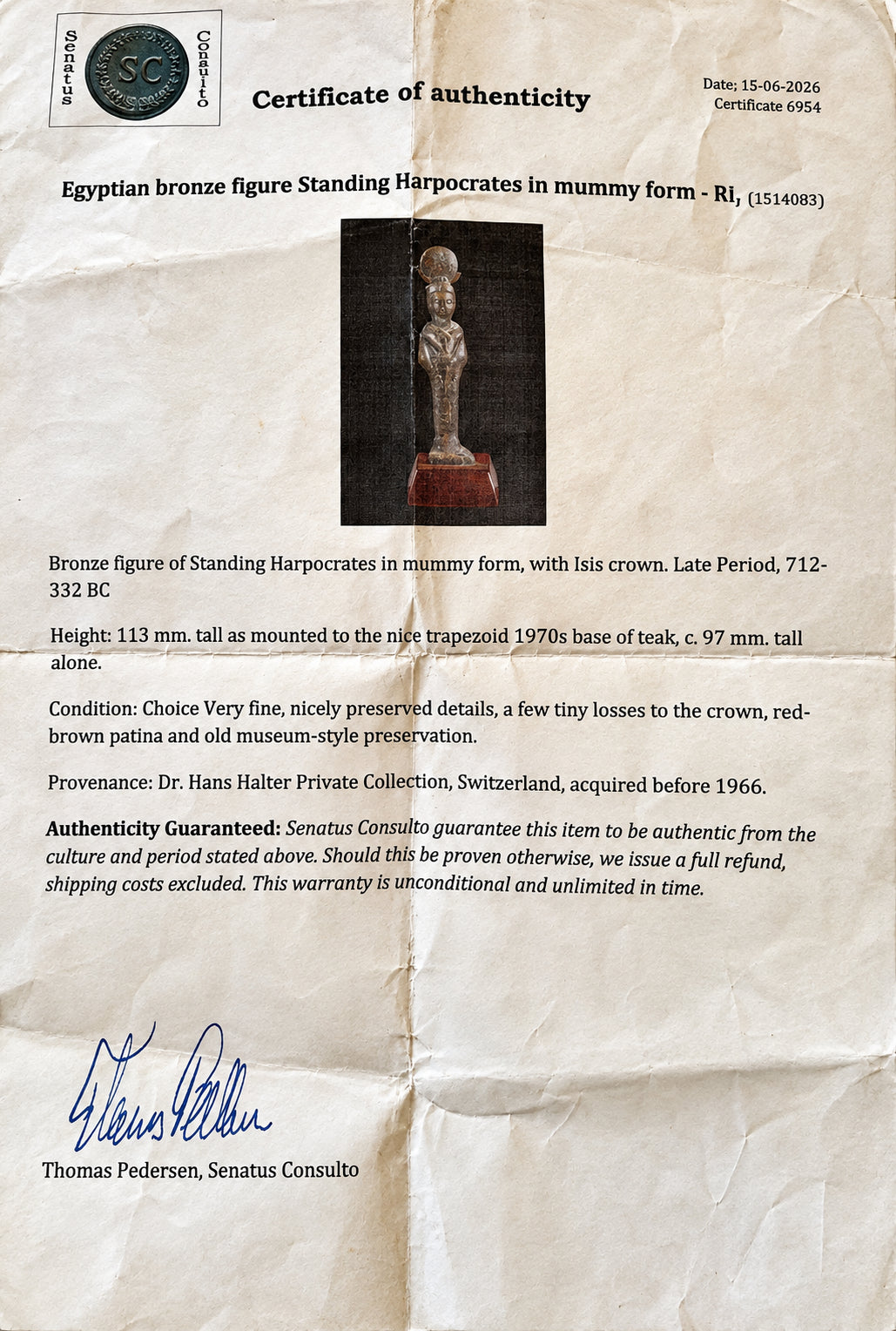
Accompanied by a signed Certificate of Authenticity issued by Thomas Pedersen of Senatus Consulto, dated June 15, 2026, Certificate No. 6954. The certificate identifies the statuette as an Egyptian bronze standing Harpocrates in mummiform dress with an Isis crown, dating to circa 712–332 BCE, and records its provenance from the Dr. Hans Halter Private Collection, Switzerland, where it was acquired before 1966.
Learn More
Discover a closely comparable bronze representation of Khonsu the Child, featuring a distinctive lunar crown, sidelock of youth, and mummiform garment, through the collections of The Metropolitan Museum of Art
Explore additional Egyptian religious bronzes, funerary figures, amulets, and archaeological artifacts in our Ancient Egyptian Mummies & Artifacts Collection
Description
Historical Context & Origin
Region: Ancient Egypt
Material: Cast bronze with dark green and reddish-brown patination; later teak display base
Period: Egyptian Late Period, circa 712–332 BCE
Description
This distinctive Egyptian bronze statuette represents a standing mummiform child deity, identified in the accompanying Certificate of Authenticity as Harpocrates, or Horus the Child. The figure embodies the religious iconography of ancient Egypt, combining traditional divine symbolism with expressive sculptural modelling and richly textured bronze patination.
The head is surmounted by a prominent circular crown framed by curved lateral projections, identified in the accompanying documentation as an Isis crown. The facial features include a defined brow, recessed eyes, a prominent nose, and a small mouth. A curved projection descending beside the head resembles the traditional sidelock of youth, an important attribute associated with Egyptian child deities.
The upper torso displays raised diagonal sculptural elements across the chest, while the elongated lower body retains its characteristic mummiform silhouette. Comparable bronze representations of Khonsu, the Egyptian lunar deity, also exhibit this combination of a circular crown, sidelock of youth, and closely fitted garment, illustrating the shared iconographic traditions of Egyptian child gods.
The bronze surface displays attractive variations of deep green, reddish-brown, and nearly black patination. The figure stands upon an integral bronze base and is mounted on a later trapezoidal teak display plinth dating to approximately the 1970s, according to the accompanying documentation.
Features
- Cast bronze mummiform figure of an Egyptian child deity
- Prominent circular crown with curved lateral projections
- Recognizable facial features and apparent sidelock of youth
- Raised sculptural detailing across the upper torso
- Rich dark green, reddish-brown, and nearly black patination
- Integral bronze base mounted on a later teak display plinth
- Documented collection history extending back to before 1966
- Accompanied by a Certificate of Authenticity from Senatus Consulto
Cultural Significance
Child deities became increasingly prominent within ancient Egyptian religious traditions during the Third Intermediate and Late periods. Harpocrates, the Greek rendering of Horus the Child, was traditionally identified as the son of Isis and Osiris and associated with divine kingship, protection, and regeneration. Khonsu, the son of Amun and Mut, was similarly revered as a youthful deity associated with the moon and the passage of time.
Egyptian child gods frequently shared iconographic characteristics, including the sidelock of youth, distinctive ceremonial crowns, and stylized garments. These overlapping artistic conventions reflected the complex and interconnected nature of Egyptian religious beliefs.
Bronze representations of Egyptian deities were commonly produced as votive offerings and devotional objects, often dedicated within temples and sacred settings. Their imagery expressed devotion, divine protection, and the enduring relationship between religious belief and artistic craftsmanship in ancient Egypt.
Condition
The bronze statuette is well preserved overall, retaining recognizable facial features, ceremonial crown, upper-body modelling, and its elongated mummiform profile. The surface displays extensive dark green and reddish-brown patination, scattered abrasions, localized pitting, and minor surface losses. Small losses are visible along portions of the crown, consistent with the condition recorded in the accompanying certificate. The integral bronze base remains preserved, and the figure is secured to a later trapezoidal teak display plinth exhibiting minor surface wear and signs of handling.
Dimensions (Approximate)
Bronze Figure:
Height: 3.82 in
Including Display Base:
Height: 4.45 in
Age (Approximate)
2,360–2,740 years old
Provenance
Previously held in the Dr. Hans Halter Private Collection, Switzerland, reportedly acquired before 1966.
Subsequently offered through Gorny & Mosch Giessener Münzhandlung GmbH, Munich, Germany. Established in 1970, Gorny & Mosch is a German auction house specializing in ancient coins, antiquities, and archaeological artworks.
Subsequently handled by Senatus Consulto, Copenhagen, Denmark, an antiquities dealership specializing in ancient artifacts, coins, bronzes, ceramics, and historical collectibles.
Subsequently held in the private collection of Joseph Margiotta, Academic Specialist in History at Union County College, Cranford, New Jersey, USA.
Certificate of Authenticity
Accompanied by a signed Certificate of Authenticity issued by Thomas Pedersen of Senatus Consulto, dated June 15, 2026, Certificate No. 6954. The certificate identifies the statuette as an Egyptian bronze standing Harpocrates in mummiform dress with an Isis crown, dating to circa 712–332 BCE, and records its provenance from the Dr. Hans Halter Private Collection, Switzerland, where it was acquired before 1966.
Learn More
Discover a closely comparable bronze representation of Khonsu the Child, featuring a distinctive lunar crown, sidelock of youth, and mummiform garment, through the collections of The Metropolitan Museum of Art
Explore additional Egyptian religious bronzes, funerary figures, amulets, and archaeological artifacts in our Ancient Egyptian Mummies & Artifacts Collection
Vous aimerez peut-être aussi
