



Ancient Egyptian Falcon-Headed Canopic Jar | Qebehsenuef Type | Period Undetermined
- Prix habituel
- $5,000.00
- Prix soldé
- $5,000.00
- Prix habituel
Impossible de charger la disponibilité du service de retrait













Ancient Egyptian Falcon-Headed Canopic Jar | Qebehsenuef Type | Period Undetermined
Description
Plus
Moins
Historical Context & Origin
Region: Ancient Egypt (attributed)
Material: Carved stone, possibly limestone, with apparent surface coatings and deposits
Period: Undetermined. The form and iconography share characteristics with Egyptian funerary vessels, including examples from the Late Period (circa 664–332 BCE). A specific dynasty or date has not been established.
Description
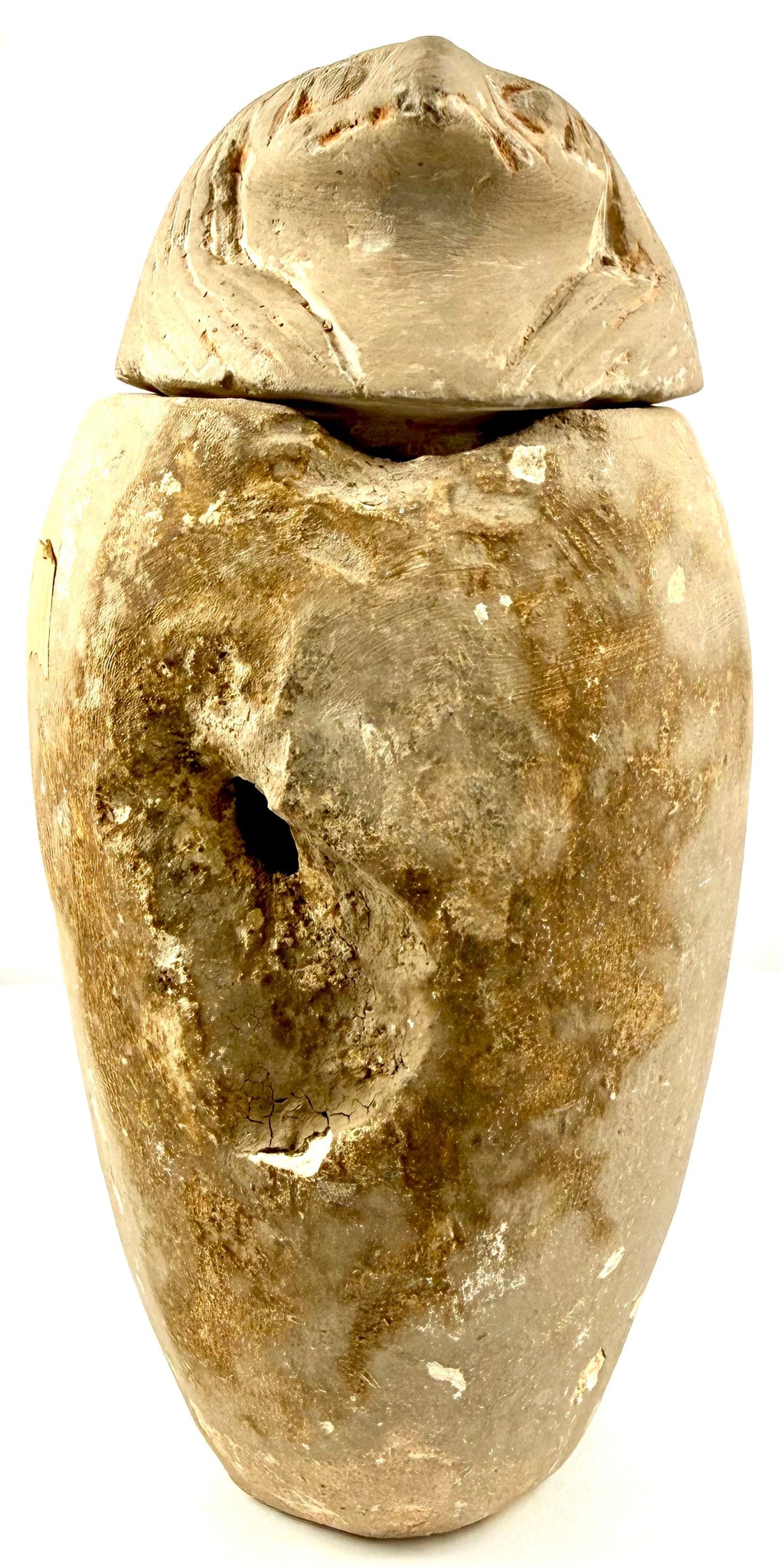
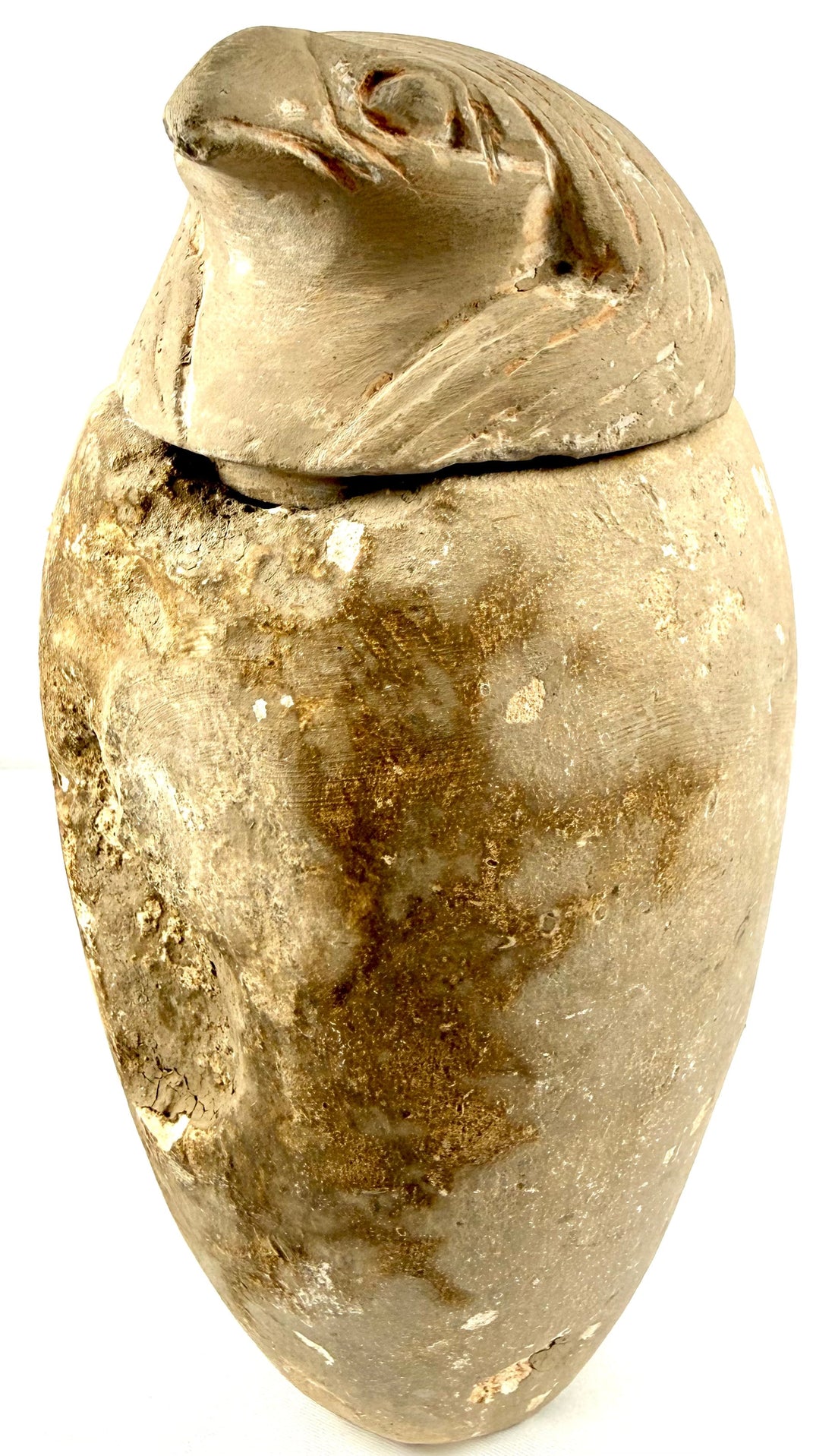
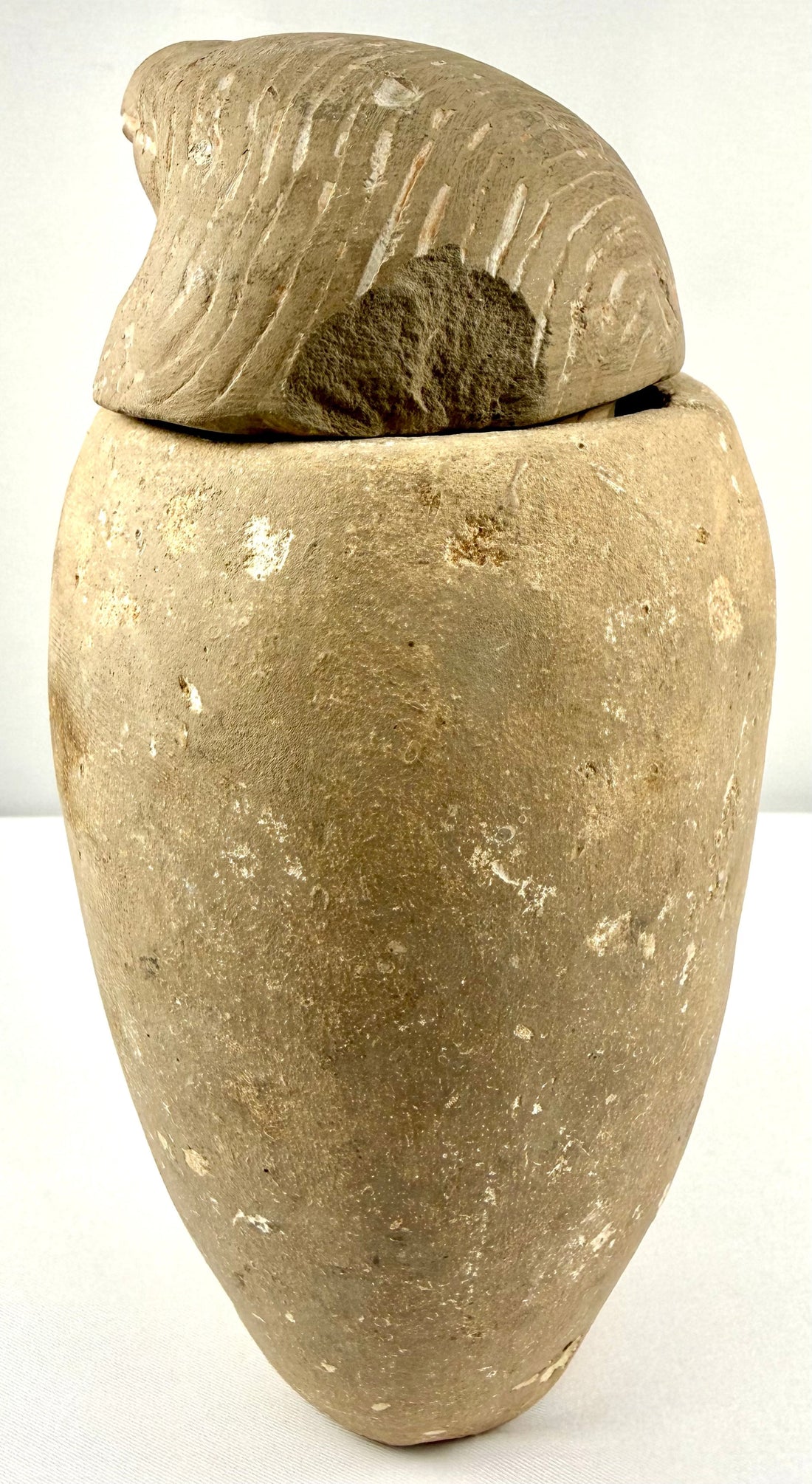
A carved stone vessel with a removable falcon-headed lid, fashioned in the traditional form of an Egyptian canopic jar. The sculptural design is associated with Qebehsenuef, one of the Four Sons of Horus, who was traditionally responsible for protecting the intestines of the deceased during ancient Egyptian funerary practices.
The vessel features an elongated, slightly tapering body, rounded shoulders, a flattened base, and a hollow interior. Its overall configuration resembles examples of Egyptian funerary containers produced across several historical periods.
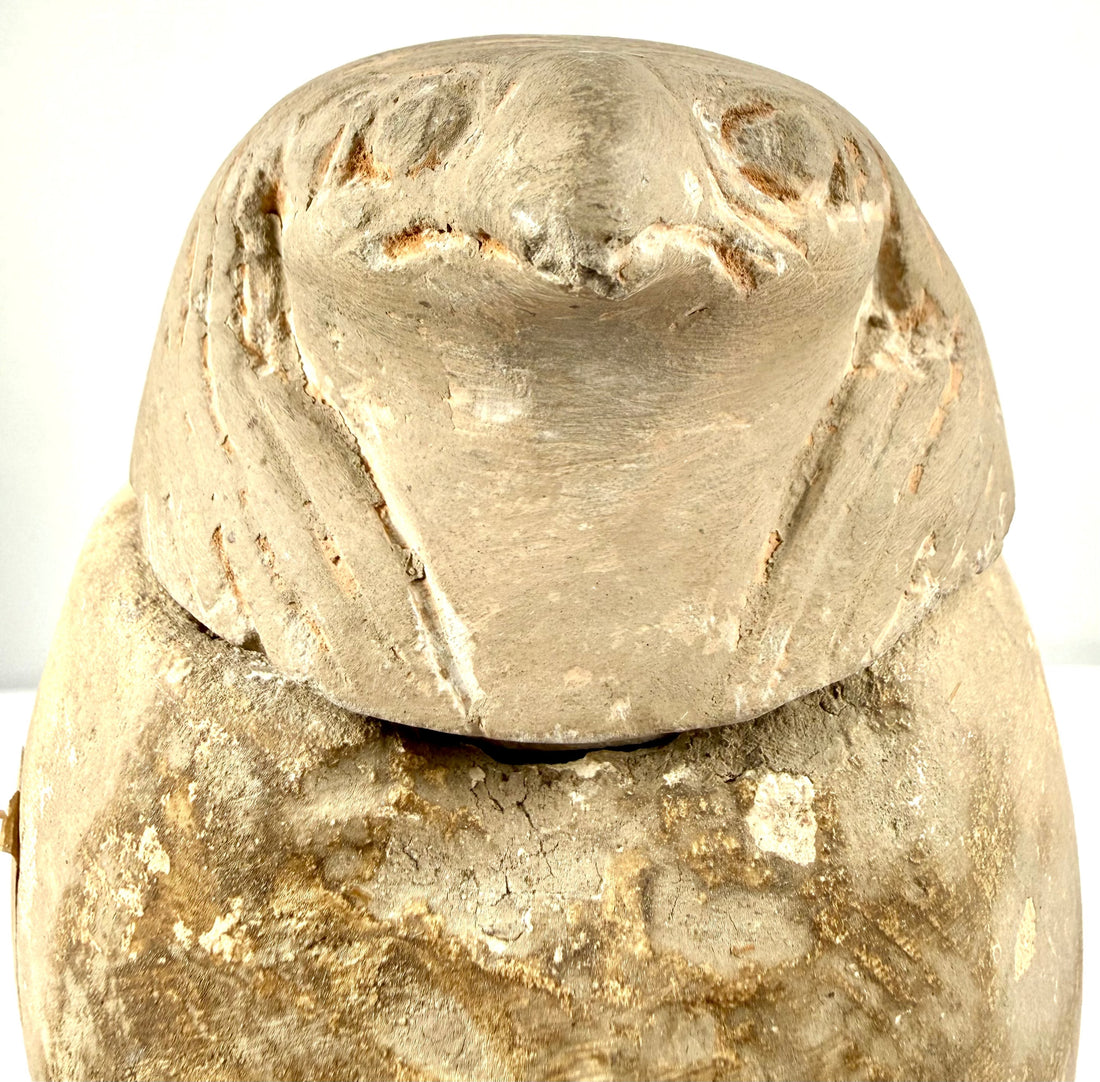
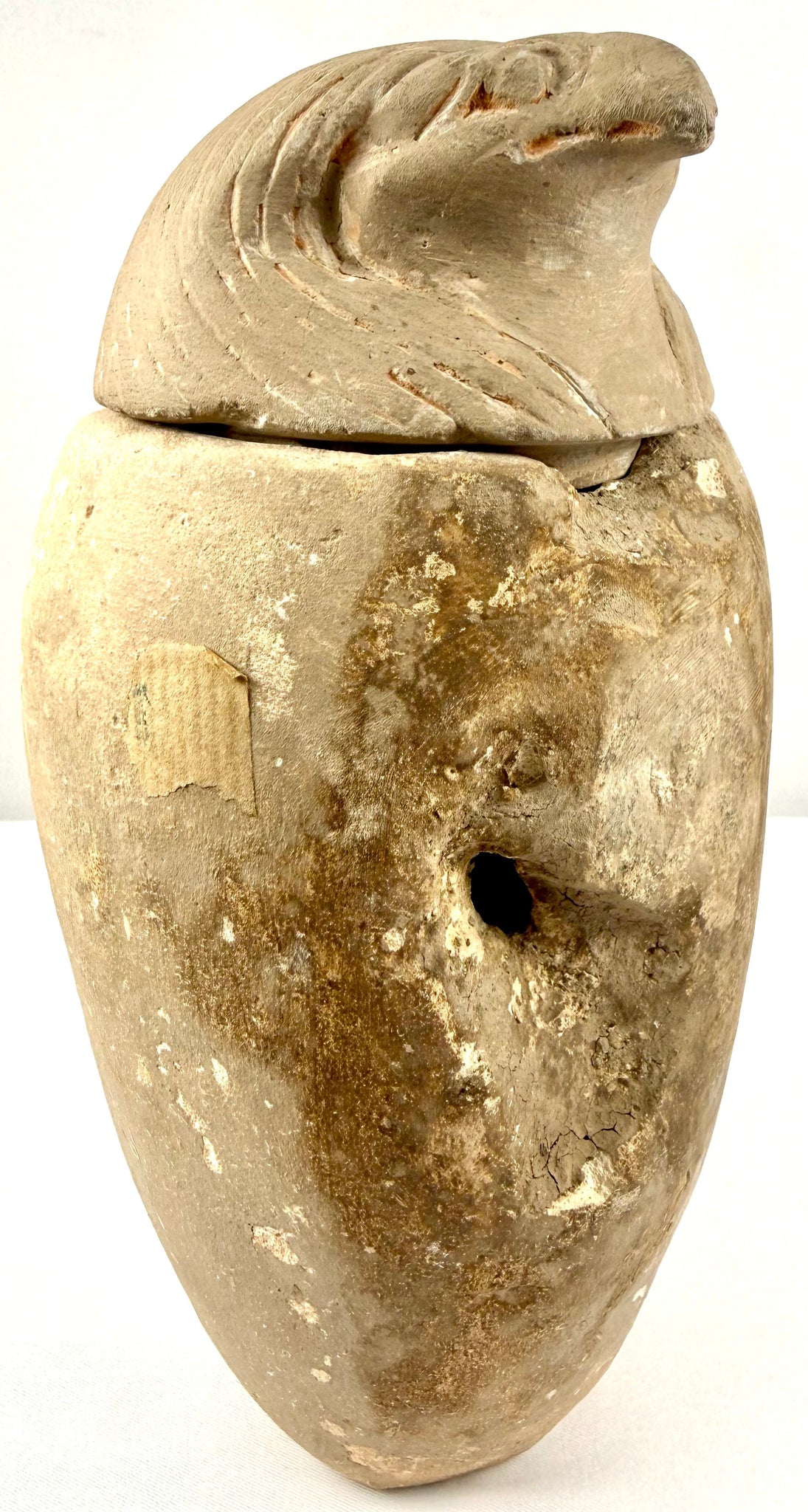
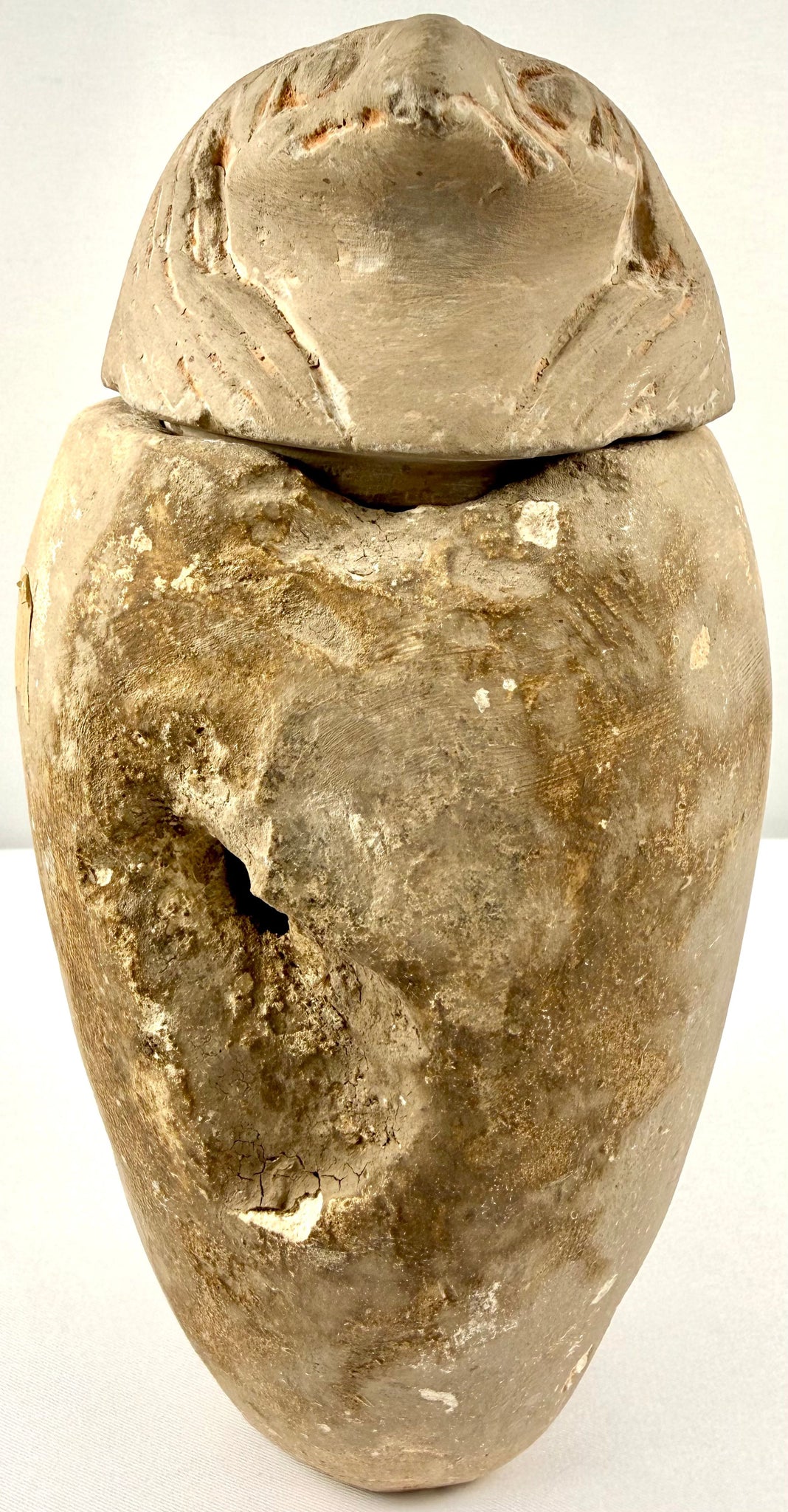
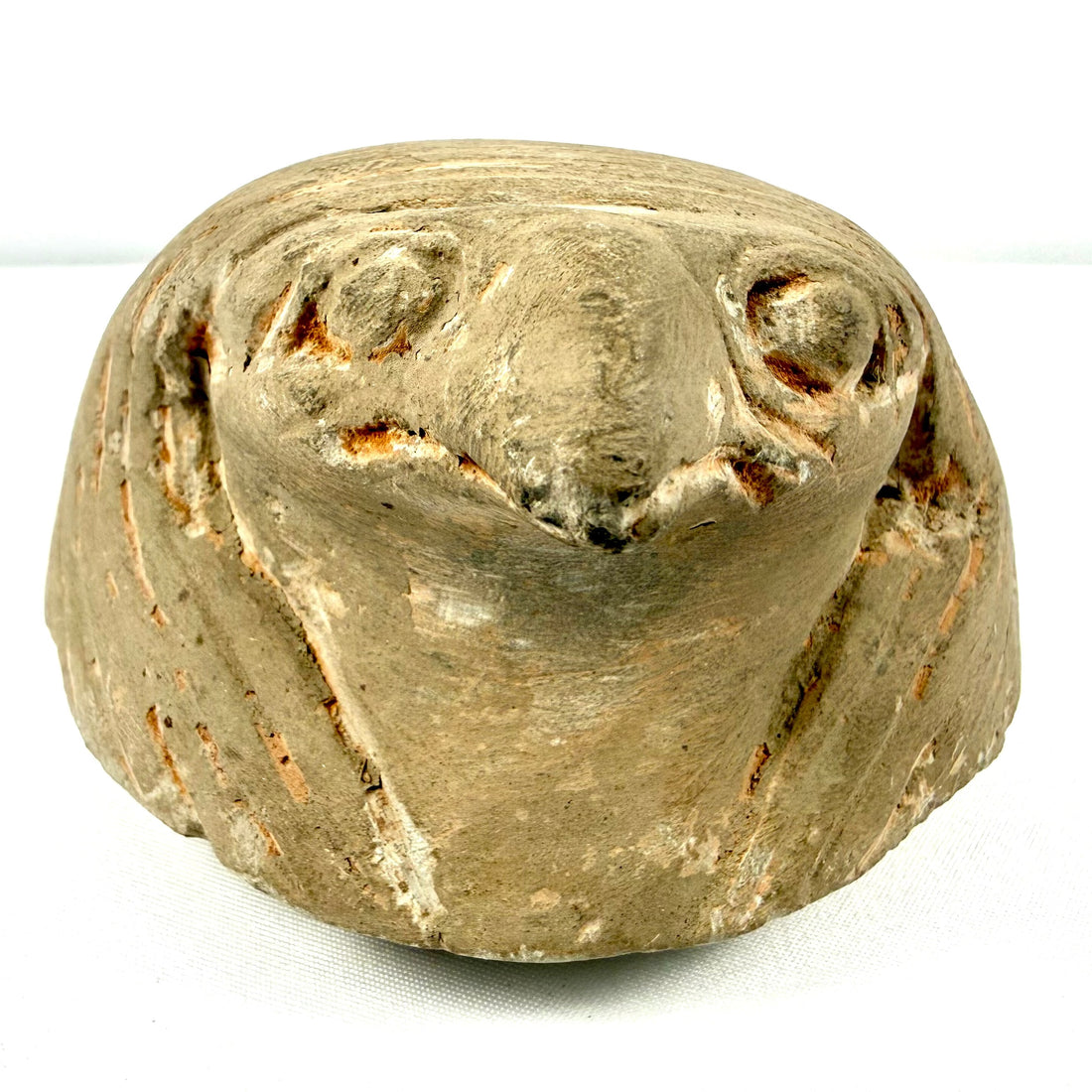
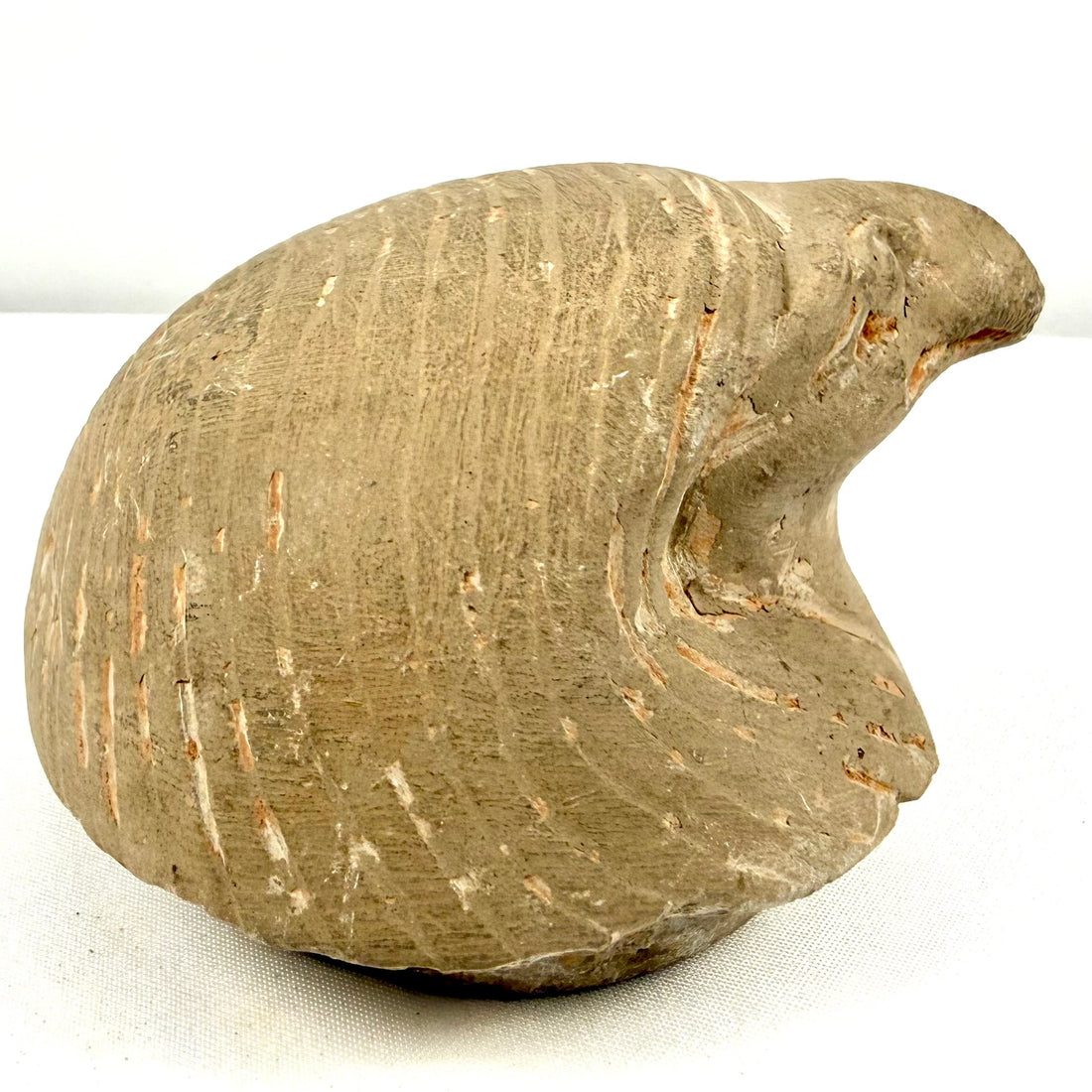
The separately carved lid depicts a stylized falcon's head with a prominent curved beak, rounded eyes, and incised linear decoration extending across the head and neck. These markings represent feather-like detailing, emphasizing the bird's distinctive appearance.
The general form and iconography bear similarities to documented Egyptian canopic jars and lids, including carved stone examples from the Late Period and 26th Dynasty. Comparable falcon-headed vessels also occur in earlier Egyptian periods. These stylistic comparisons do not independently establish the vessel's date or authenticity.
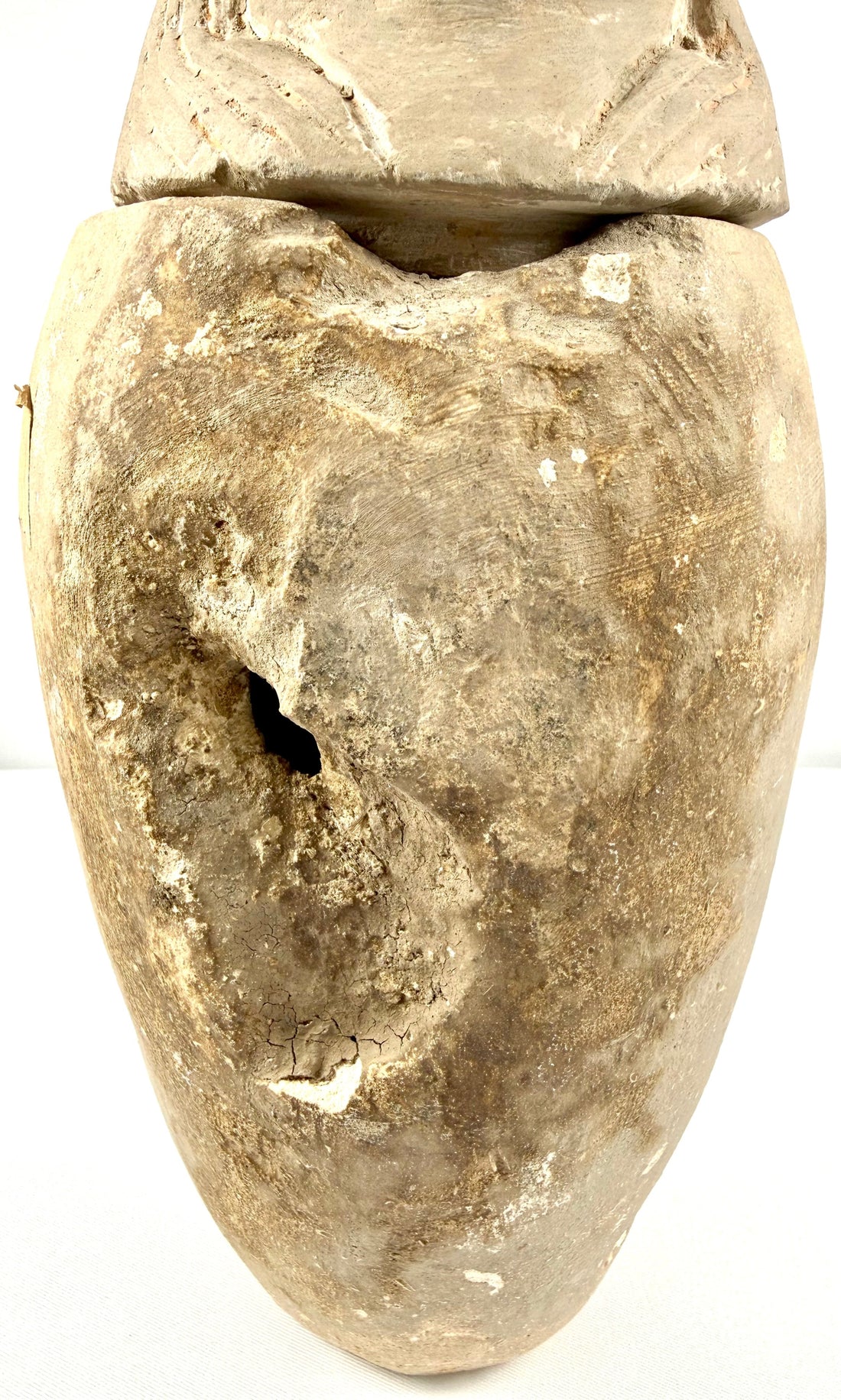
The exterior displays considerable surface variation, including beige, cream, and brown coloration, scattered lighter patches, localized deposits, and areas of apparent material loss. Several sections exhibit an uneven or layered appearance, with visible chipping, cracking, and flaking.
The contrasting light and dark surface areas are a particularly notable characteristic of the vessel. Ancient Egyptian stone funerary containers were sometimes finished with painted or plaster-based surfaces, and documented museum examples preserve remnants of such treatments. Over time, applied coatings can deteriorate, detach, or expose the underlying material.
The vessel's visible surface characteristics are consistent with several possible explanations, including exposed underlying stone, deteriorated coatings, mineral accumulations, or materials associated with previous restoration. Although these characteristics resemble those observed on certain archaeological objects, the composition, originality, and age of the apparent surface layers have not been independently established.
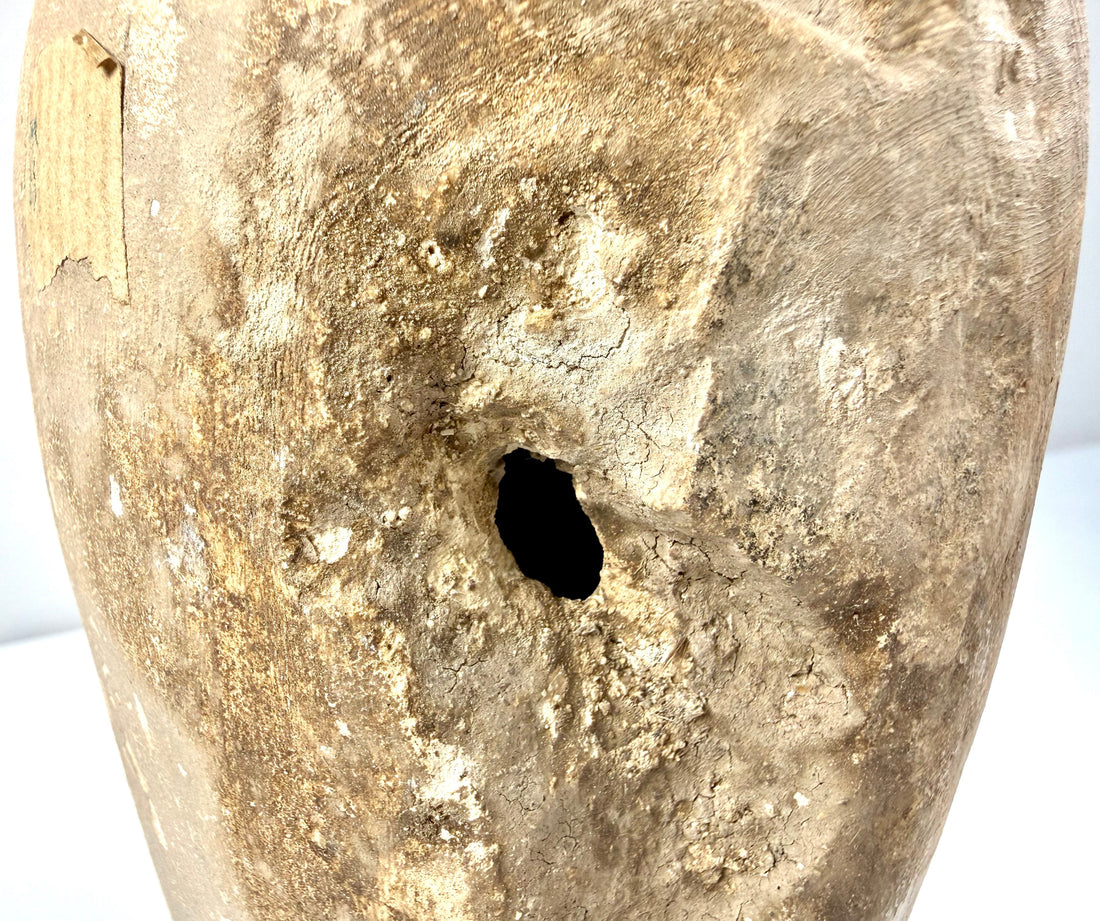
A prominent irregular opening or damaged area is visible on one side of the body. The surrounding material exhibits contrasting coloration, roughened textures, and areas of apparent surface deterioration. The cause and age of this damage remain undetermined.
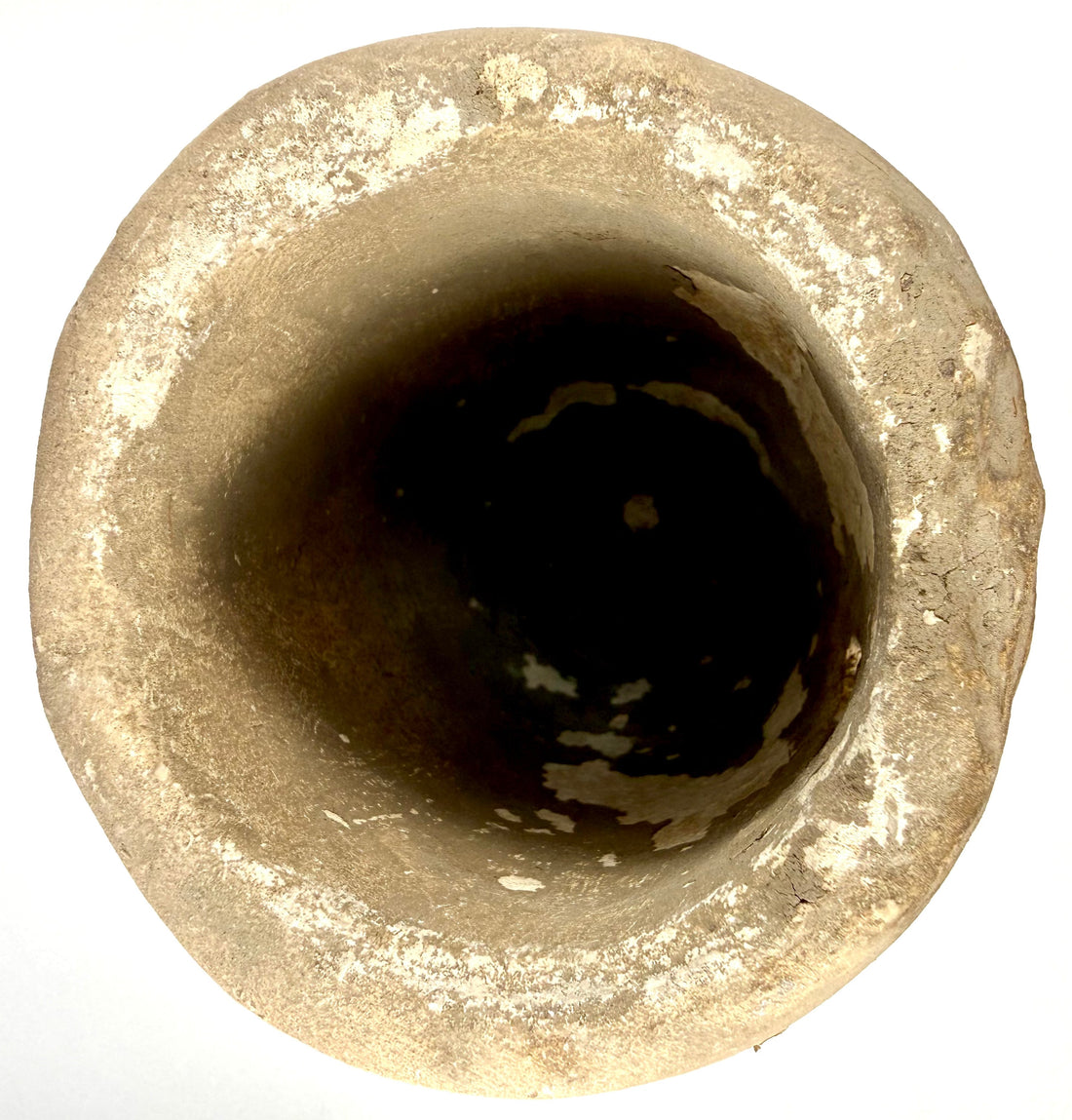
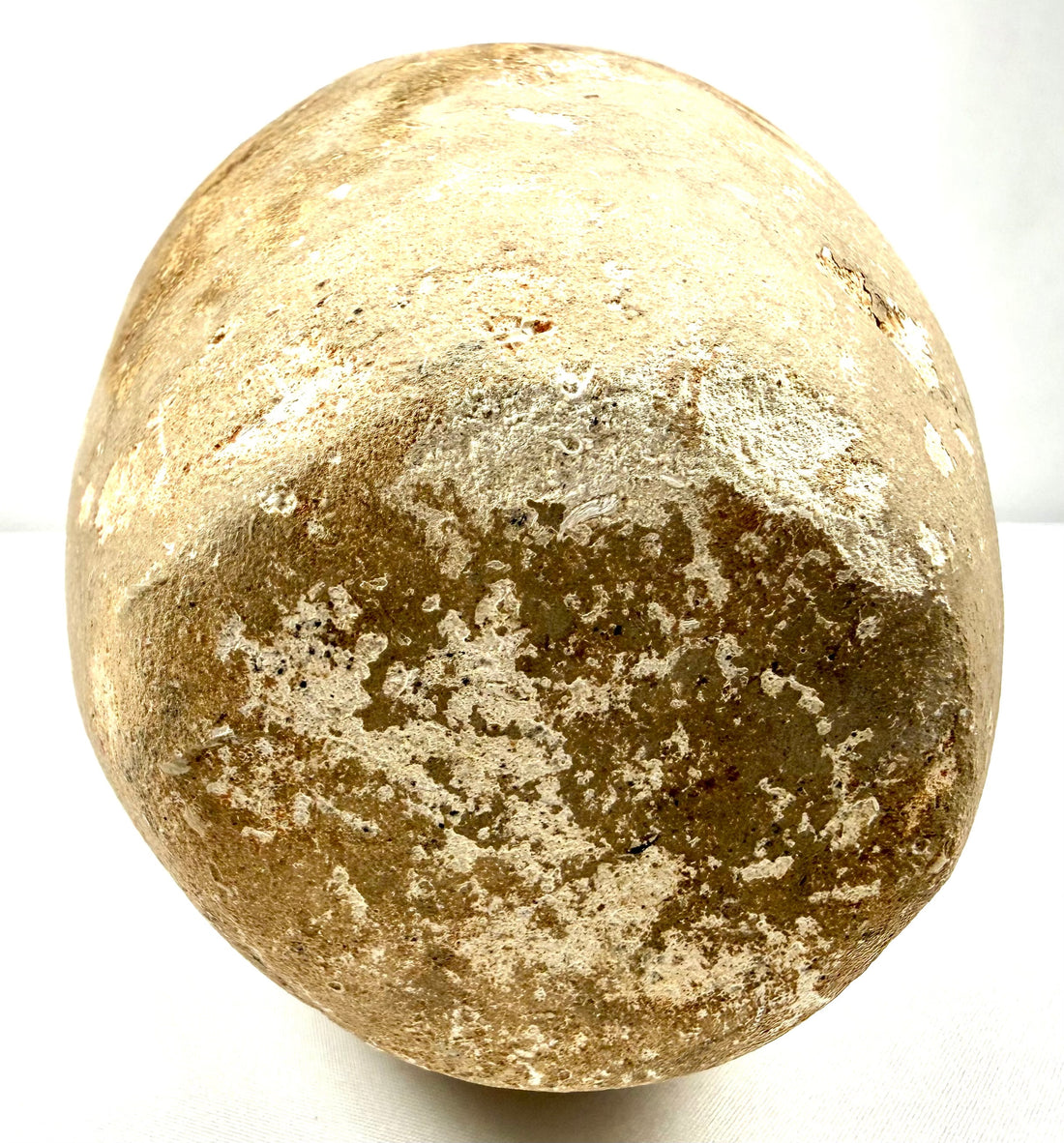
The hollow interior displays a darkened surface with irregular pale patches and areas of apparent surface loss. These contrasting areas may represent exposed underlying material, deteriorated coatings, mineral deposits, or previous conservation treatments. Their precise composition and date remain unknown.
Features
- Carved stone vessel with removable falcon-headed lid
- Falcon imagery associated with the Egyptian deity Qebehsenuef
- Prominent curved beak, rounded eyes, and incised feather-like detailing
- Elongated, slightly tapering body with rounded shoulders
- Hollow interior and flattened base
- Varied beige, cream, and brown exterior coloration
- Darkened interior with contrasting irregular pale patches
- Localized deposits and areas of apparent surface coating or deterioration
- Visible chipping, flaking, abrasions, and material loss
- Prominent irregular opening or damaged area on one side of the body
- Remnants of an old collection label affixed to the vessel
Cultural Significance
Canopic jars formed an important part of ancient Egyptian funerary traditions, particularly in connection with mummification and the preservation of the deceased.
Traditionally, these vessels were used to contain internal organs removed during embalming. Their purpose reflected the Egyptian belief that protecting the physical remains was essential for continued existence in the afterlife.
The Four Sons of Horus were associated with the protection of these organs, each represented by a distinctive head. Qebehsenuef, identified by his falcon-headed appearance, was traditionally responsible for protecting the intestines and was associated with the protective goddess Serqet.
Over time, Egyptian funerary practices evolved, and some canopic jars served symbolic rather than functional purposes. Certain examples were produced with reduced interior cavities or as solid vessels, maintaining their religious significance even when the organs were no longer stored separately.
Falcon-headed canopic jars and lids are represented in major museum collections, including the Metropolitan Museum of Art and the Cleveland Museum of Art. Documented examples from the New Kingdom, Third Intermediate Period, and Late Period demonstrate the enduring significance of Qebehsenuef and the Four Sons of Horus within Egyptian burial traditions.
Condition
The vessel exhibits substantial visible wear and surface irregularities, including discoloration, abrasions, chips, localized cracking, flaking, and areas of material loss.
A prominent irregular opening or damaged area is present on one side of the body. The surrounding material shows uneven textures, localized cracking, and contrasting lighter and darker coloration.
Several sections of the exterior display what appears to be a partially detached, worn, or deteriorated surface layer. Scattered pale patches may represent exposed underlying material, remnants of an applied coating, mineral deposits, or materials associated with previous restoration. The visible flaking and apparent separation of surface layers have not been scientifically examined.
The removable falcon-headed lid exhibits additional surface wear, small chips, abrasions, and localized losses to the carved details. The principal facial features, including the curved beak, rounded eyes, and incised feather-like markings, remain recognizable.
The hollow interior displays darkened surfaces, irregular pale patches, and deposits of uncertain composition. Areas of apparent surface loss or deterioration are visible within the cavity.
No definitive determination has been made regarding the age of the visible damage, the presence of historical or more recent restoration, or the originality and composition of any apparent surface coatings. The vessel's material and surface treatments have not undergone independent scientific analysis.
Dimensions (Approximate)
Height: 8 in, including lid
Width: 4.25 in
Age (Approximate)
Undetermined. A reliable numerical age cannot be established from the available evidence.
Provenance
Formerly part of the distinguished private collection of Carol A. Groh, an acclaimed American interior designer whose influential career included an association with the New York design firm GN Associates. Groh received significant professional recognition, including being named Interiors magazine's 1988 Designer of the Year.
Together with her husband, prominent American architect Donald C. Smith, associated with the internationally recognized architectural firm Skidmore, Owings & Merrill, Groh developed the remarkable Pyramid Point residence on St. Croix in the United States Virgin Islands.
The residence reflected the couple's appreciation for architectural geometry and their particular fascination with ancient Egyptian pyramidal forms. Their distinctive home was featured in the January 1998 issue of Architectural Digest under the title St. Croix Geometries.
Subsequently handled by Lion and Unicorn, an established full-service auction house headquartered in Hollywood, Florida, USA, with more than 30 years of experience in the fine art, antiques, and collectibles market.
Remnants of an old collection label remain affixed to the side of the vessel, providing additional physical evidence of its history within a previous collection or inventory system.
Learn More
Discover a comparable falcon-headed limestone canopic jar at The Metropolitan Museum of Art
Explore Our Collection of Ancient Egyptian Mummies & Artifacts
Description
Historical Context & Origin
Region: Ancient Egypt (attributed)
Material: Carved stone, possibly limestone, with apparent surface coatings and deposits
Period: Undetermined. The form and iconography share characteristics with Egyptian funerary vessels, including examples from the Late Period (circa 664–332 BCE). A specific dynasty or date has not been established.
Description
A carved stone vessel with a removable falcon-headed lid, fashioned in the traditional form of an Egyptian canopic jar. The sculptural design is associated with Qebehsenuef, one of the Four Sons of Horus, who was traditionally responsible for protecting the intestines of the deceased during ancient Egyptian funerary practices.
The vessel features an elongated, slightly tapering body, rounded shoulders, a flattened base, and a hollow interior. Its overall configuration resembles examples of Egyptian funerary containers produced across several historical periods.
The separately carved lid depicts a stylized falcon's head with a prominent curved beak, rounded eyes, and incised linear decoration extending across the head and neck. These markings represent feather-like detailing, emphasizing the bird's distinctive appearance.
The general form and iconography bear similarities to documented Egyptian canopic jars and lids, including carved stone examples from the Late Period and 26th Dynasty. Comparable falcon-headed vessels also occur in earlier Egyptian periods. These stylistic comparisons do not independently establish the vessel's date or authenticity.
The exterior displays considerable surface variation, including beige, cream, and brown coloration, scattered lighter patches, localized deposits, and areas of apparent material loss. Several sections exhibit an uneven or layered appearance, with visible chipping, cracking, and flaking.
The contrasting light and dark surface areas are a particularly notable characteristic of the vessel. Ancient Egyptian stone funerary containers were sometimes finished with painted or plaster-based surfaces, and documented museum examples preserve remnants of such treatments. Over time, applied coatings can deteriorate, detach, or expose the underlying material.
The vessel's visible surface characteristics are consistent with several possible explanations, including exposed underlying stone, deteriorated coatings, mineral accumulations, or materials associated with previous restoration. Although these characteristics resemble those observed on certain archaeological objects, the composition, originality, and age of the apparent surface layers have not been independently established.
A prominent irregular opening or damaged area is visible on one side of the body. The surrounding material exhibits contrasting coloration, roughened textures, and areas of apparent surface deterioration. The cause and age of this damage remain undetermined.
The hollow interior displays a darkened surface with irregular pale patches and areas of apparent surface loss. These contrasting areas may represent exposed underlying material, deteriorated coatings, mineral deposits, or previous conservation treatments. Their precise composition and date remain unknown.
Features
- Carved stone vessel with removable falcon-headed lid
- Falcon imagery associated with the Egyptian deity Qebehsenuef
- Prominent curved beak, rounded eyes, and incised feather-like detailing
- Elongated, slightly tapering body with rounded shoulders
- Hollow interior and flattened base
- Varied beige, cream, and brown exterior coloration
- Darkened interior with contrasting irregular pale patches
- Localized deposits and areas of apparent surface coating or deterioration
- Visible chipping, flaking, abrasions, and material loss
- Prominent irregular opening or damaged area on one side of the body
- Remnants of an old collection label affixed to the vessel
Cultural Significance
Canopic jars formed an important part of ancient Egyptian funerary traditions, particularly in connection with mummification and the preservation of the deceased.
Traditionally, these vessels were used to contain internal organs removed during embalming. Their purpose reflected the Egyptian belief that protecting the physical remains was essential for continued existence in the afterlife.
The Four Sons of Horus were associated with the protection of these organs, each represented by a distinctive head. Qebehsenuef, identified by his falcon-headed appearance, was traditionally responsible for protecting the intestines and was associated with the protective goddess Serqet.
Over time, Egyptian funerary practices evolved, and some canopic jars served symbolic rather than functional purposes. Certain examples were produced with reduced interior cavities or as solid vessels, maintaining their religious significance even when the organs were no longer stored separately.
Falcon-headed canopic jars and lids are represented in major museum collections, including the Metropolitan Museum of Art and the Cleveland Museum of Art. Documented examples from the New Kingdom, Third Intermediate Period, and Late Period demonstrate the enduring significance of Qebehsenuef and the Four Sons of Horus within Egyptian burial traditions.
Condition
The vessel exhibits substantial visible wear and surface irregularities, including discoloration, abrasions, chips, localized cracking, flaking, and areas of material loss.
A prominent irregular opening or damaged area is present on one side of the body. The surrounding material shows uneven textures, localized cracking, and contrasting lighter and darker coloration.
Several sections of the exterior display what appears to be a partially detached, worn, or deteriorated surface layer. Scattered pale patches may represent exposed underlying material, remnants of an applied coating, mineral deposits, or materials associated with previous restoration. The visible flaking and apparent separation of surface layers have not been scientifically examined.
The removable falcon-headed lid exhibits additional surface wear, small chips, abrasions, and localized losses to the carved details. The principal facial features, including the curved beak, rounded eyes, and incised feather-like markings, remain recognizable.
The hollow interior displays darkened surfaces, irregular pale patches, and deposits of uncertain composition. Areas of apparent surface loss or deterioration are visible within the cavity.
No definitive determination has been made regarding the age of the visible damage, the presence of historical or more recent restoration, or the originality and composition of any apparent surface coatings. The vessel's material and surface treatments have not undergone independent scientific analysis.
Dimensions (Approximate)
Height: 8 in, including lid
Width: 4.25 in
Age (Approximate)
Undetermined. A reliable numerical age cannot be established from the available evidence.
Provenance
Formerly part of the distinguished private collection of Carol A. Groh, an acclaimed American interior designer whose influential career included an association with the New York design firm GN Associates. Groh received significant professional recognition, including being named Interiors magazine's 1988 Designer of the Year.
Together with her husband, prominent American architect Donald C. Smith, associated with the internationally recognized architectural firm Skidmore, Owings & Merrill, Groh developed the remarkable Pyramid Point residence on St. Croix in the United States Virgin Islands.
The residence reflected the couple's appreciation for architectural geometry and their particular fascination with ancient Egyptian pyramidal forms. Their distinctive home was featured in the January 1998 issue of Architectural Digest under the title St. Croix Geometries.
Subsequently handled by Lion and Unicorn, an established full-service auction house headquartered in Hollywood, Florida, USA, with more than 30 years of experience in the fine art, antiques, and collectibles market.
Remnants of an old collection label remain affixed to the side of the vessel, providing additional physical evidence of its history within a previous collection or inventory system.
Learn More
Discover a comparable falcon-headed limestone canopic jar at The Metropolitan Museum of Art
Explore Our Collection of Ancient Egyptian Mummies & Artifacts
Vous aimerez peut-être aussi
