



Ancient Egyptian Carved Steatite Osiris Statuette | Late Dynastic Period | Circa 730–332 BCE
- Prix habituel
- $2,250.00
- Prix soldé
- $2,250.00
- Prix habituel
Impossible de charger la disponibilité du service de retrait




Ancient Egyptian Carved Steatite Osiris Statuette | Late Dynastic Period | Circa 730–332 BCE
Description
Plus
Moins
Historical Context & Origin
Region: Ancient Egypt
Material: Carved grey steatite (soapstone)
Period: Late Dynastic Period, circa 730–332 BCE
Description
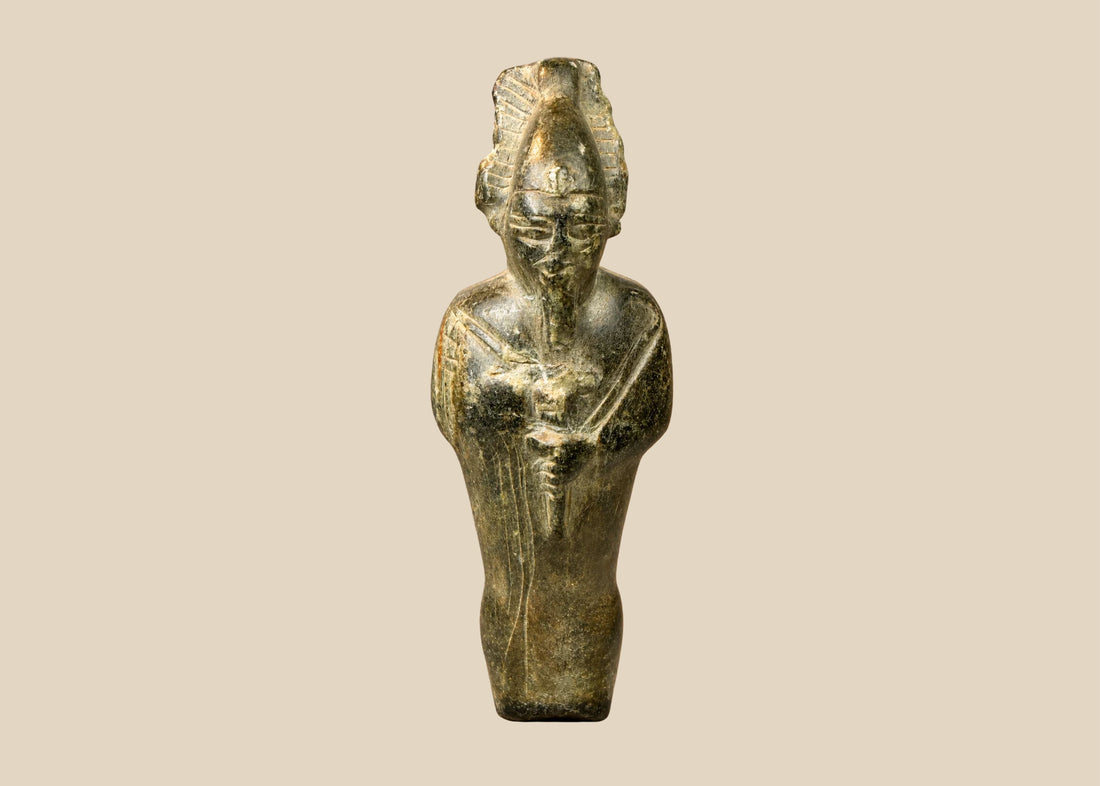
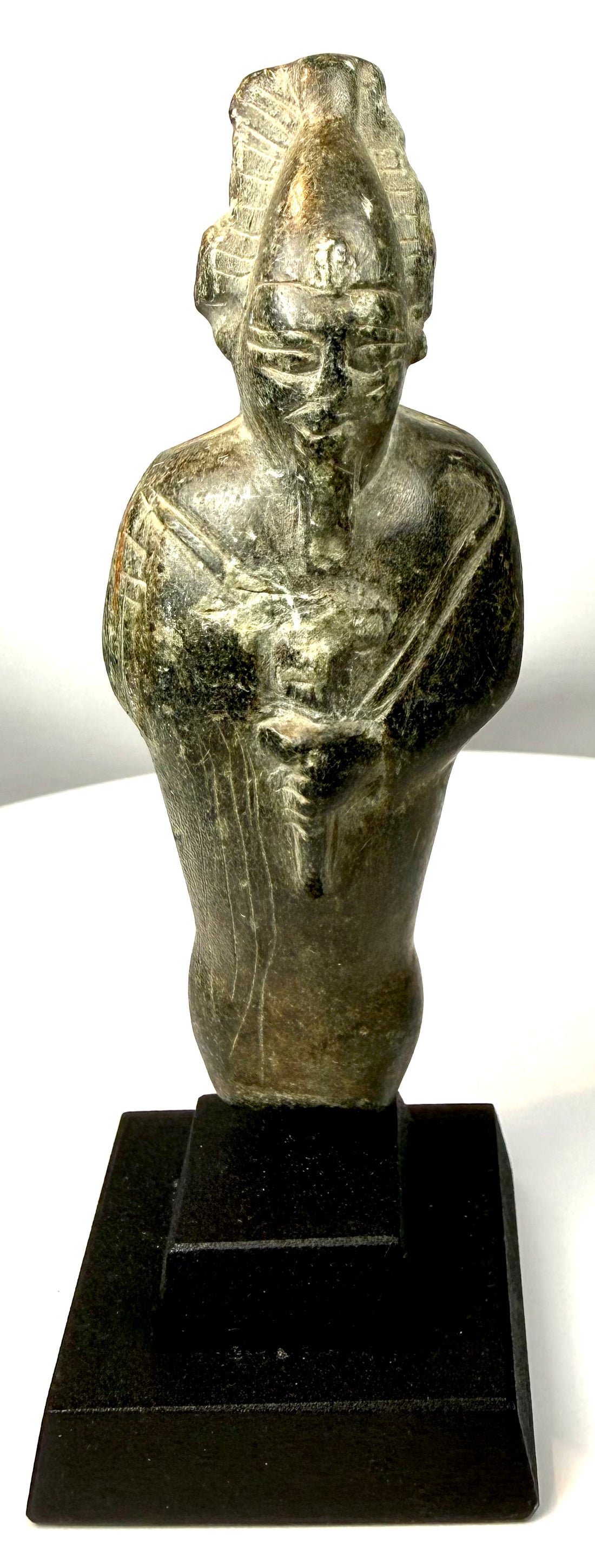
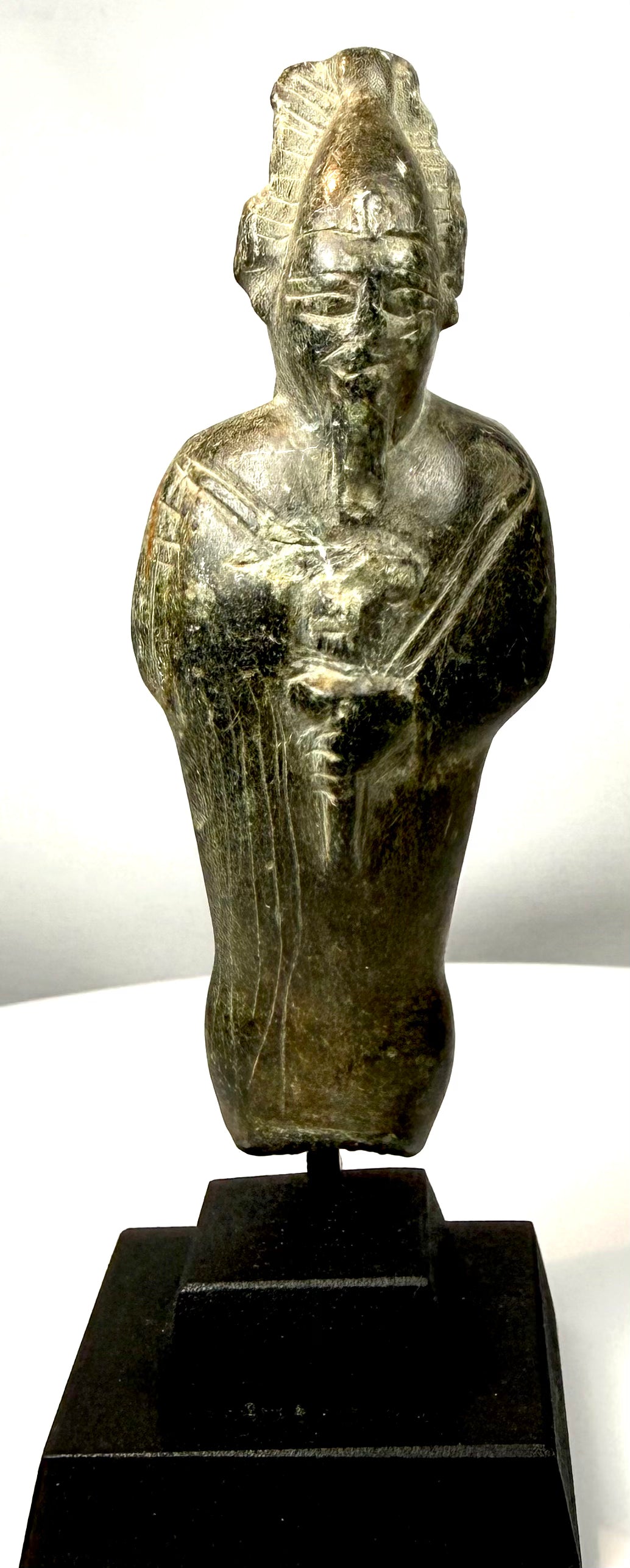
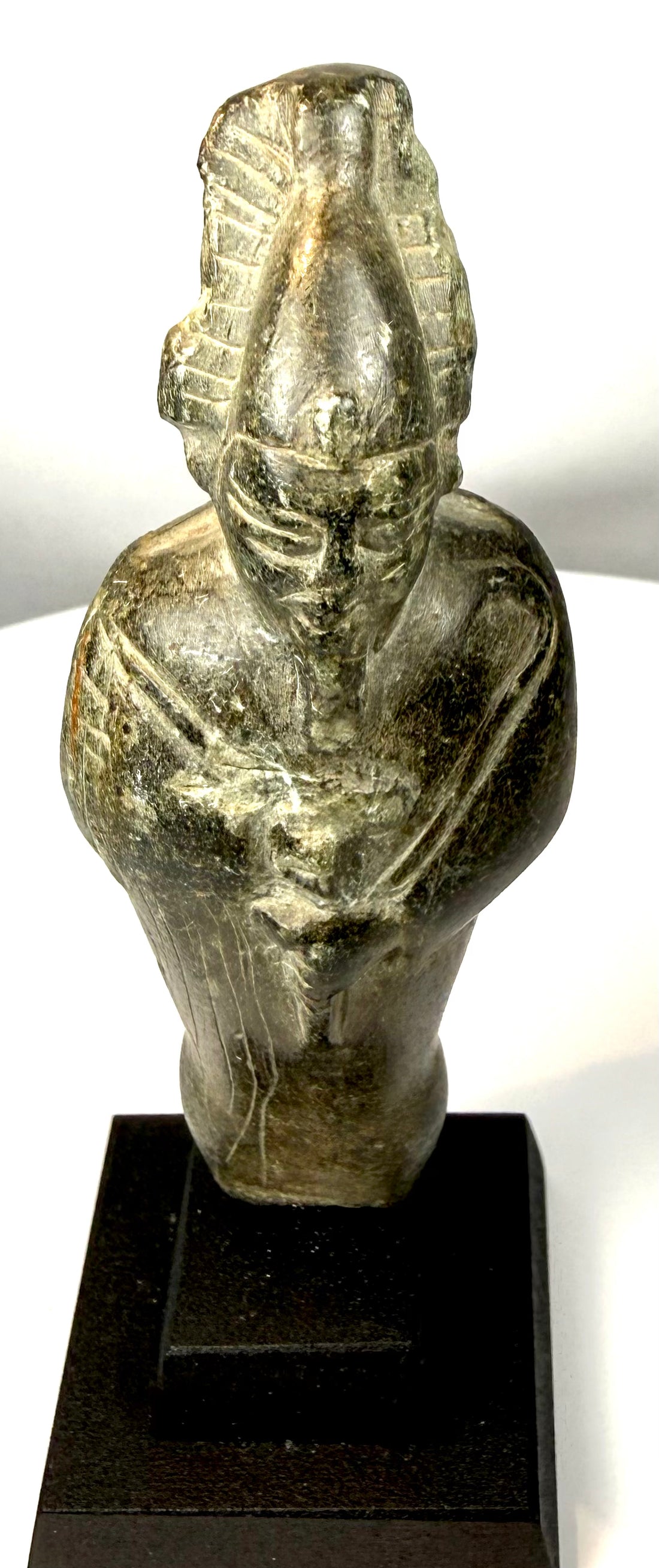
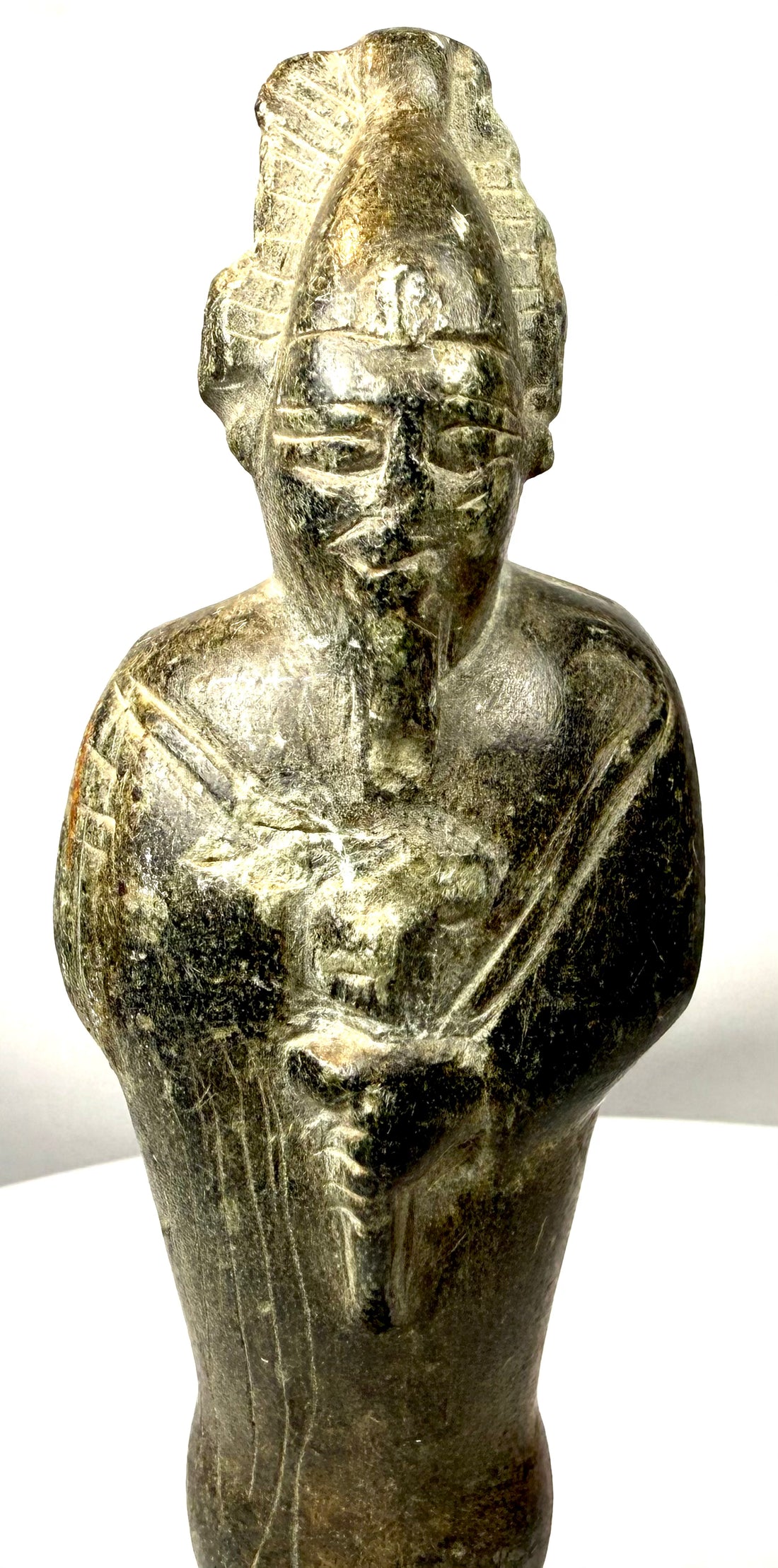
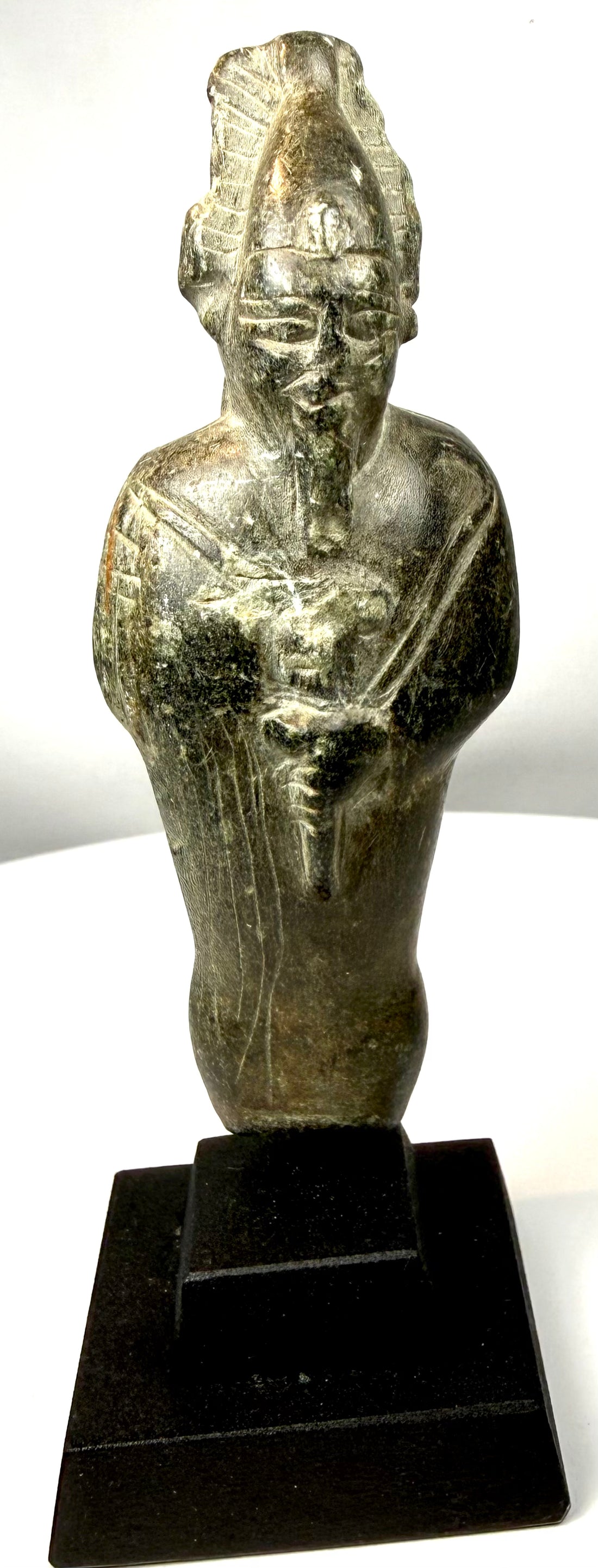
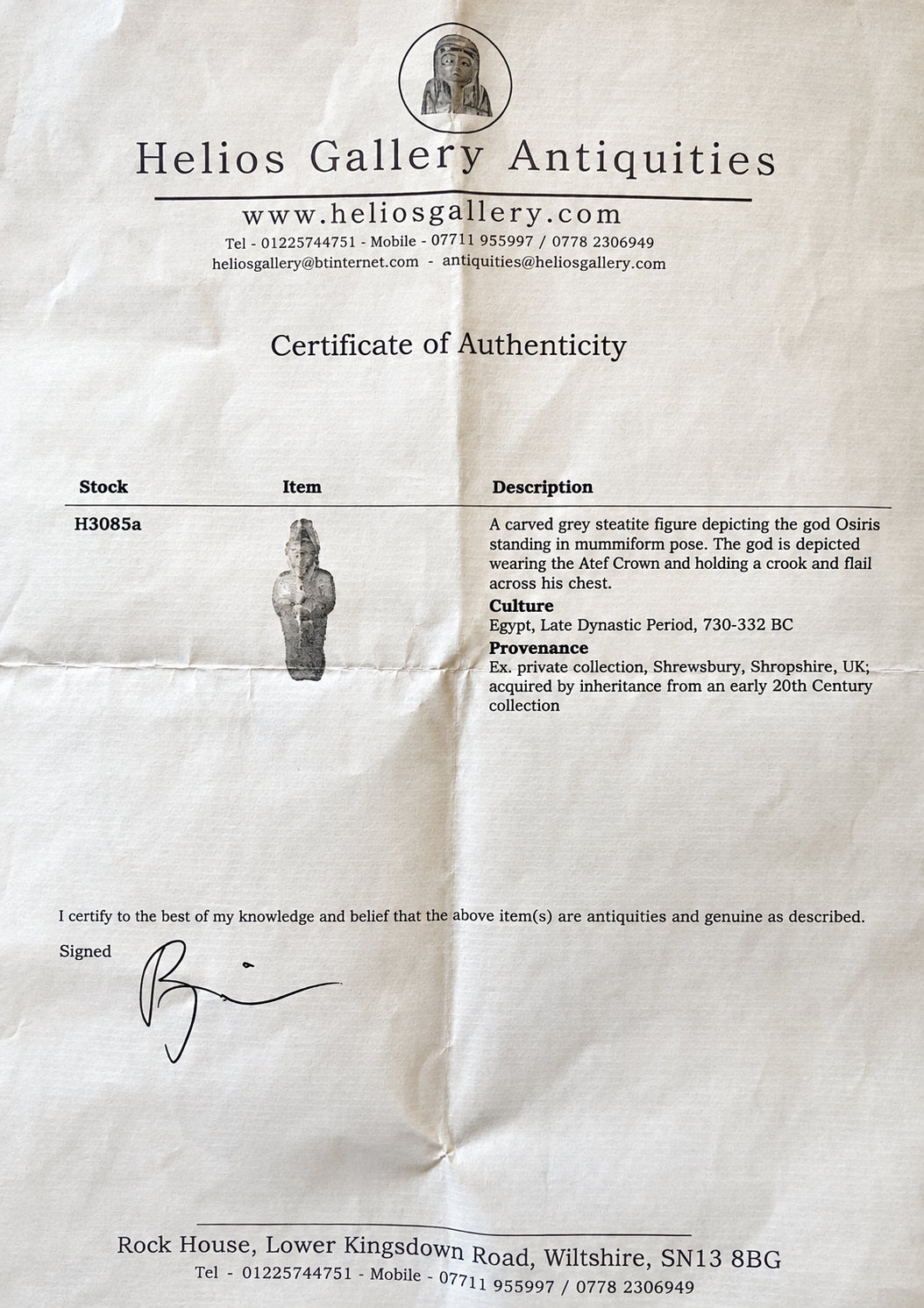
This distinctive carved grey steatite statuette depicts Osiris, the Egyptian god of the afterlife, resurrection, and regeneration. Dating to the Late Dynastic Period according to the accompanying Certificate of Authenticity, the deity is represented in his traditional standing mummiform pose, wearing the characteristic Atef crown and holding the ceremonial crook and flail across his chest.
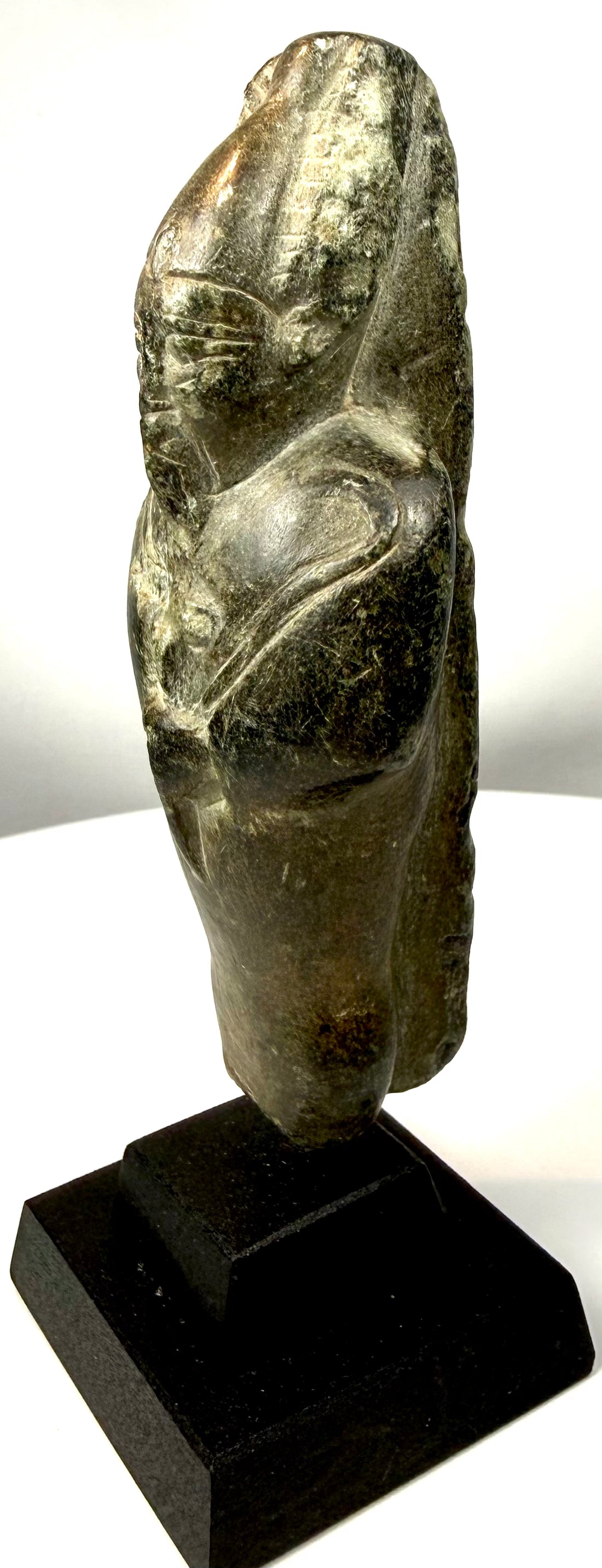
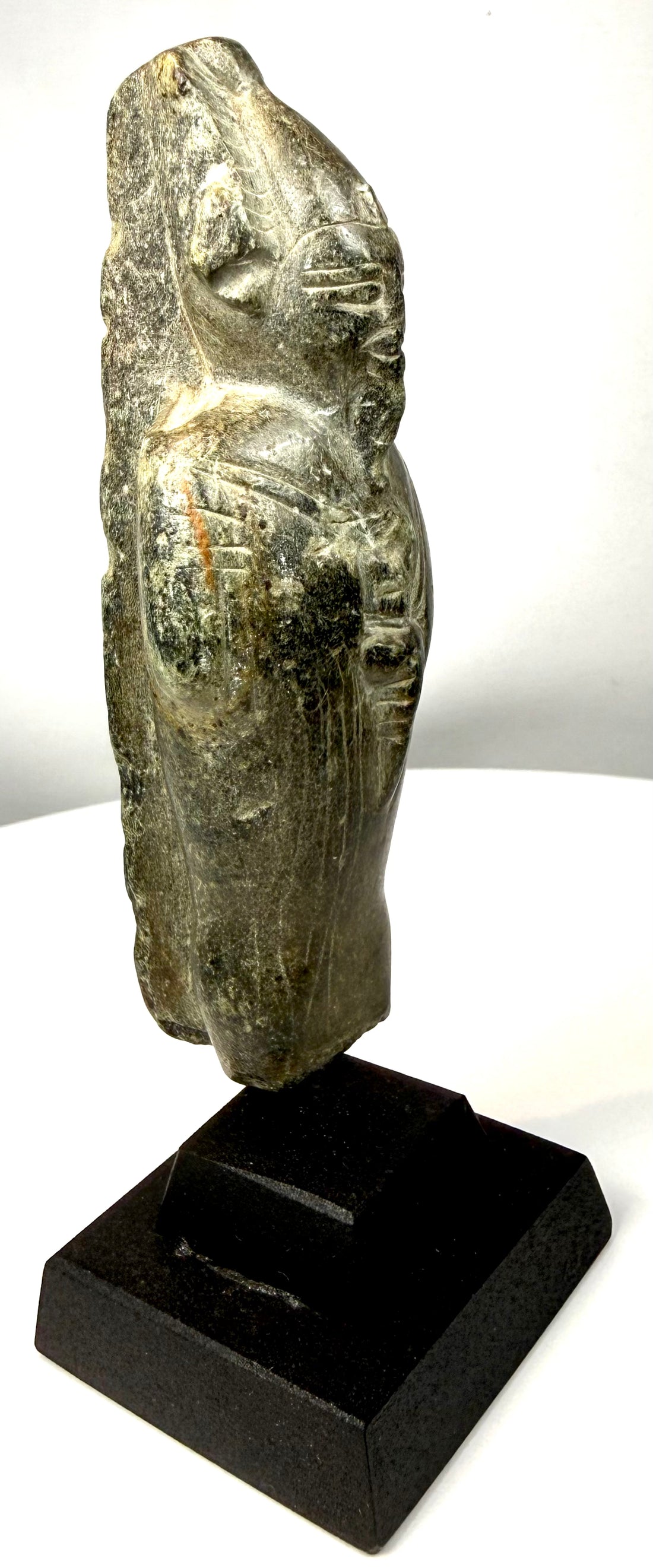
The figure exhibits broad, rounded shoulders tapering toward the lower body, with a close-fitting funerary shroud emphasizing its mummiform silhouette. The facial features include almond-shaped eyes, a prominent nose, a defined mouth, and an elongated ceremonial beard. Incised detailing along the crown, face, and torso provides definition to the traditional religious attributes.
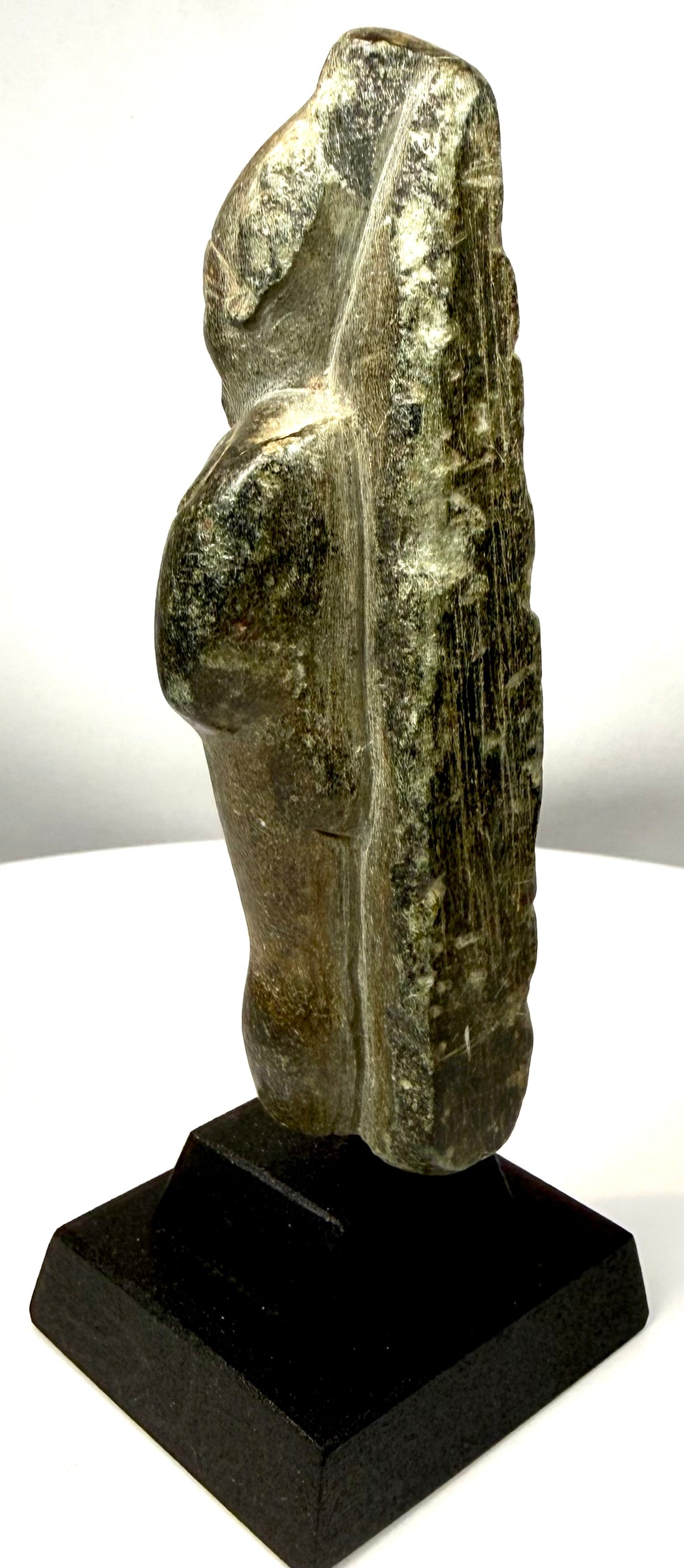
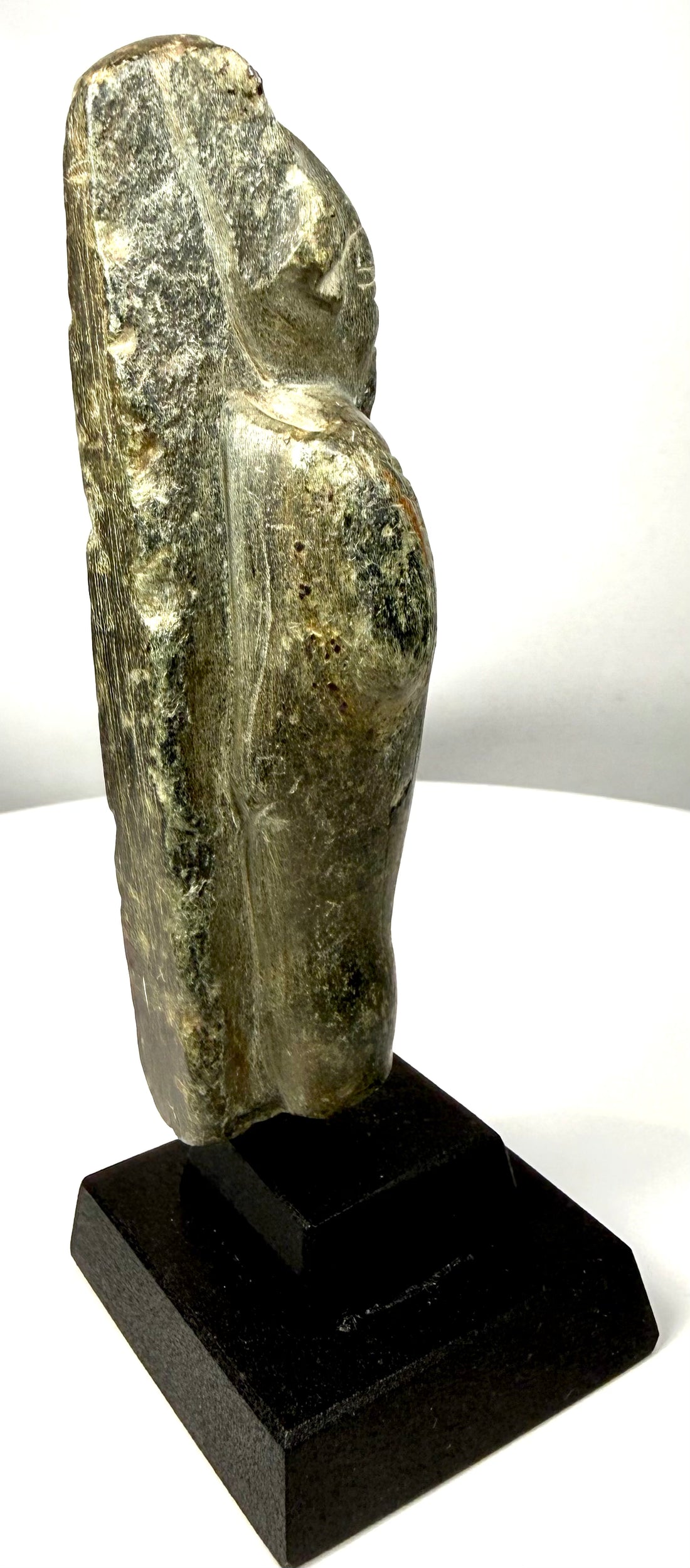
Carved from grey steatite, the statuette displays contrasting dark grey-green tones, lighter areas of surface wear, and a subtle sheen that accentuates its sculptural contours. Its distinctive stone composition, recognizable religious iconography, and documented collection history contribute to its historical and collectible interest. The figure is presented on a later display stand.
Features
- Carved grey steatite representation of Osiris in traditional mummiform pose
- Prominent Atef crown with a tall central element and stylized feathered sides
- Defined facial features and elongated ceremonial beard
- Hands holding the symbolic crook and flail across the chest
- Surviving incised details defining the ceremonial attributes
- Distinctive dark grey-green stone coloration with contrasting lighter surfaces
- Documented early 20th-century British collection history
- Accompanied by a signed Certificate of Authenticity from Helios Gallery Antiquities
Cultural Significance
Osiris was among the most important deities of ancient Egypt, presiding over the underworld and embodying resurrection, regeneration, and eternal life. His traditional mummiform appearance reflected his association with the deceased, while his mythology expressed the Egyptian belief in renewed existence beyond death.
The distinctive Atef crown, incorporating a tall central crown flanked by ostrich feathers, emphasized the deity's divine authority. The crook and flail were established symbols of Egyptian sovereignty, reinforcing Osiris's identity as both a divine ruler and lord of the afterlife.
During the Late Dynastic Period, representations of Osiris were widely produced as devotional objects and votive offerings. Although many surviving examples were made from bronze, stone representations are also documented in institutional collections. These sculptures illustrate the enduring importance of religious devotion, funerary symbolism, and the promise of resurrection within ancient Egyptian society.
Condition
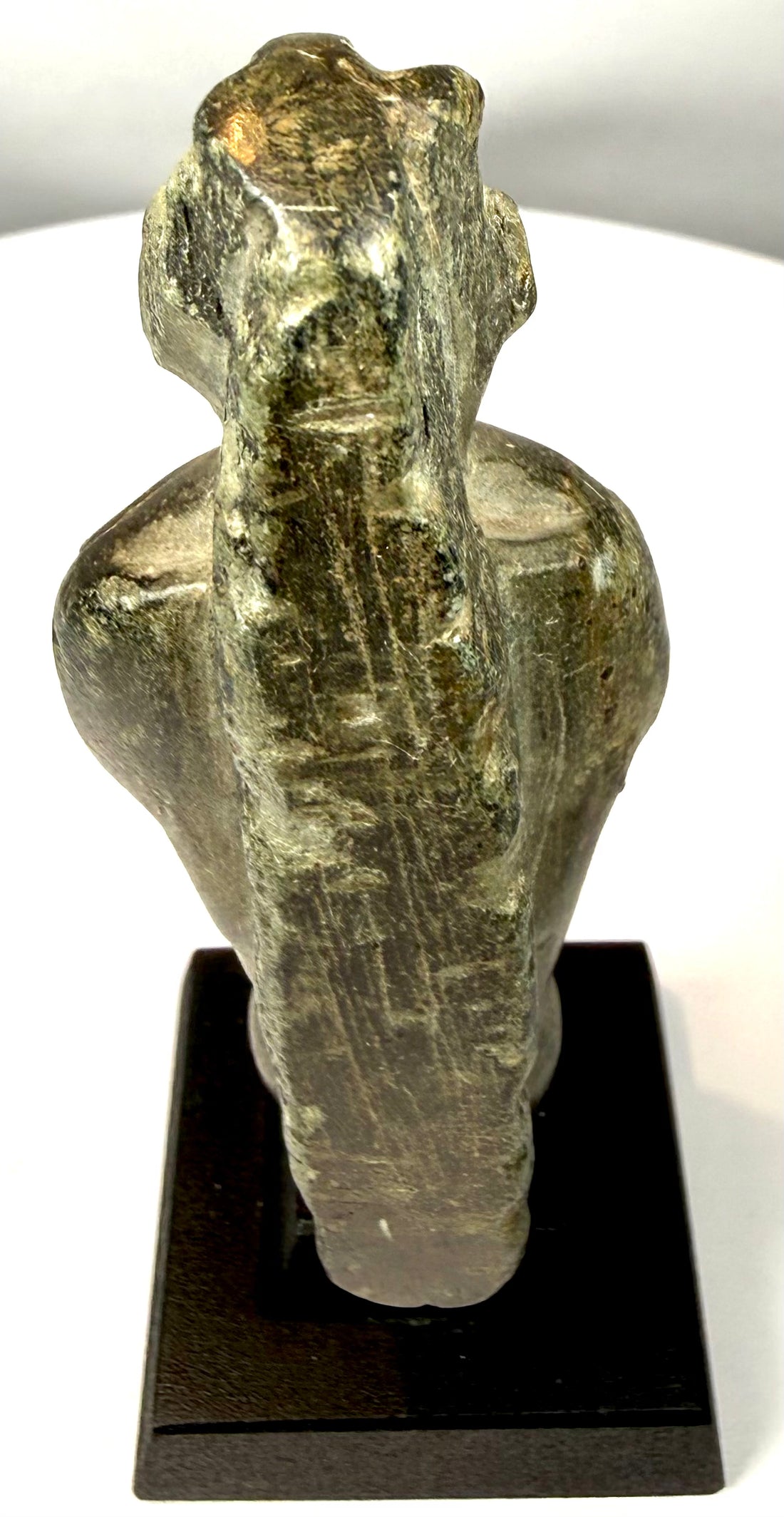
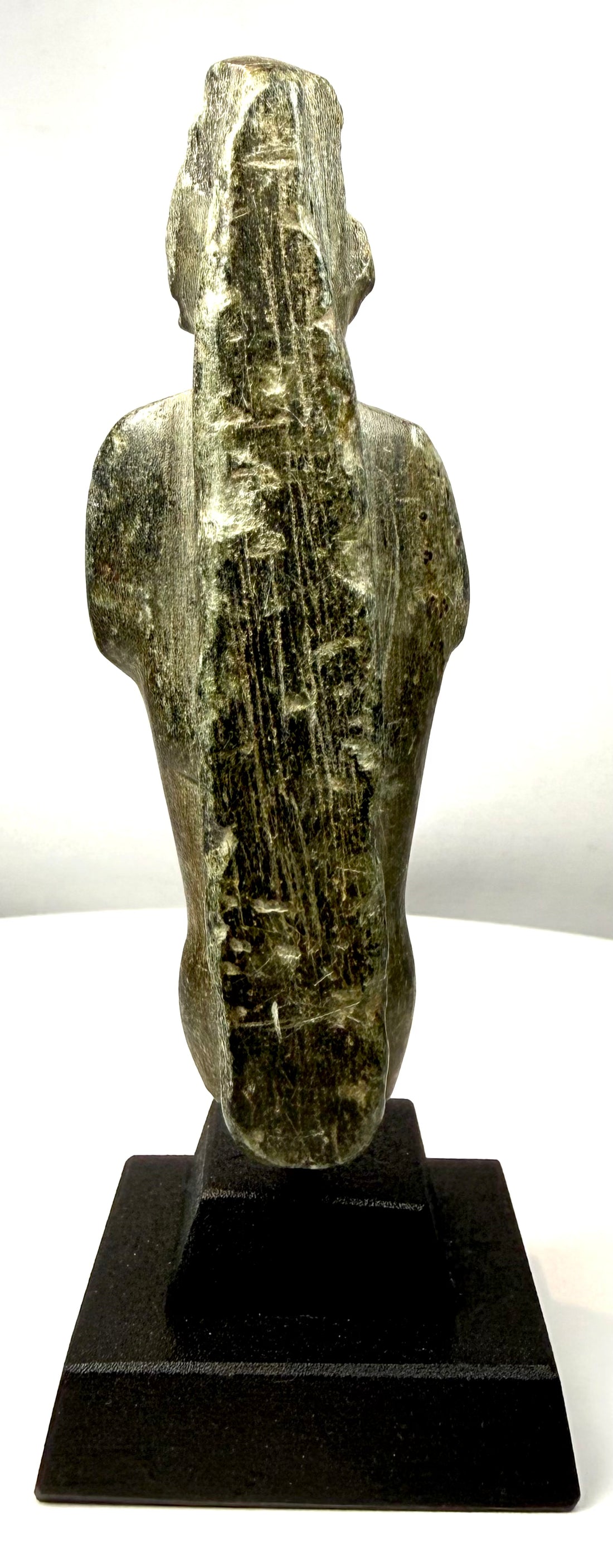
The statuette retains its principal sculptural features, including the Atef crown, recognizable facial details, ceremonial beard, and symbolic crook and flail. The stone exhibits widespread surface wear, scattered abrasions, fine scratches, small pits, and localized losses. Areas of lighter coloration contrast with the dark grey-green surface, particularly around the crown, shoulders, torso, and lower body. Portions of the incised detailing are softened by wear, although the overall religious iconography remains clearly recognizable. The reverse displays linear surface markings and localized discoloration. The figure is mounted on a later display stand.
Dimensions (Approximate)
Height: 5.5 in
Width: 2 in
Depth: 2 in
Age (Approximate)
2,350–2,750 years old
Provenance
Reportedly formerly belonging to an early 20th-century private collection in the United Kingdom. The statuette was subsequently inherited into a private collection in Shrewsbury, Shropshire, England.
Subsequently handled by Helios Gallery Antiquities, a British antiquities dealership specializing in ancient artifacts and historical objects from civilizations including Egypt, Greece, and Rome.
Helios Gallery issued a signed Certificate of Authenticity identifying this piece as a carved grey steatite figure of Osiris, dating to Egypt's Late Dynastic Period, circa 730–332 BCE.
The statuette was subsequently purchased through Helios Gallery Antiquities by Joseph M. Margiotta, an academic specialist in history associated with Union County College in New Jersey, United States in 2021.
Learn More
Discover a comparable carved steatite statuette of Osiris dating to circa 755–525 BCE, featuring the traditional Atef crown, funerary shroud, and ceremonial crook and flail, through the collections of the Los Angeles County Museum of Art
Explore additional Egyptian religious sculptures, funerary figures, amulets, and archaeological artifacts in our Ancient Egyptian Mummies & Artifacts Collection
Description
Historical Context & Origin
Region: Ancient Egypt
Material: Carved grey steatite (soapstone)
Period: Late Dynastic Period, circa 730–332 BCE
Description
This distinctive carved grey steatite statuette depicts Osiris, the Egyptian god of the afterlife, resurrection, and regeneration. Dating to the Late Dynastic Period according to the accompanying Certificate of Authenticity, the deity is represented in his traditional standing mummiform pose, wearing the characteristic Atef crown and holding the ceremonial crook and flail across his chest.
The figure exhibits broad, rounded shoulders tapering toward the lower body, with a close-fitting funerary shroud emphasizing its mummiform silhouette. The facial features include almond-shaped eyes, a prominent nose, a defined mouth, and an elongated ceremonial beard. Incised detailing along the crown, face, and torso provides definition to the traditional religious attributes.
Carved from grey steatite, the statuette displays contrasting dark grey-green tones, lighter areas of surface wear, and a subtle sheen that accentuates its sculptural contours. Its distinctive stone composition, recognizable religious iconography, and documented collection history contribute to its historical and collectible interest. The figure is presented on a later display stand.
Features
- Carved grey steatite representation of Osiris in traditional mummiform pose
- Prominent Atef crown with a tall central element and stylized feathered sides
- Defined facial features and elongated ceremonial beard
- Hands holding the symbolic crook and flail across the chest
- Surviving incised details defining the ceremonial attributes
- Distinctive dark grey-green stone coloration with contrasting lighter surfaces
- Documented early 20th-century British collection history
- Accompanied by a signed Certificate of Authenticity from Helios Gallery Antiquities
Cultural Significance
Osiris was among the most important deities of ancient Egypt, presiding over the underworld and embodying resurrection, regeneration, and eternal life. His traditional mummiform appearance reflected his association with the deceased, while his mythology expressed the Egyptian belief in renewed existence beyond death.
The distinctive Atef crown, incorporating a tall central crown flanked by ostrich feathers, emphasized the deity's divine authority. The crook and flail were established symbols of Egyptian sovereignty, reinforcing Osiris's identity as both a divine ruler and lord of the afterlife.
During the Late Dynastic Period, representations of Osiris were widely produced as devotional objects and votive offerings. Although many surviving examples were made from bronze, stone representations are also documented in institutional collections. These sculptures illustrate the enduring importance of religious devotion, funerary symbolism, and the promise of resurrection within ancient Egyptian society.
Condition
The statuette retains its principal sculptural features, including the Atef crown, recognizable facial details, ceremonial beard, and symbolic crook and flail. The stone exhibits widespread surface wear, scattered abrasions, fine scratches, small pits, and localized losses. Areas of lighter coloration contrast with the dark grey-green surface, particularly around the crown, shoulders, torso, and lower body. Portions of the incised detailing are softened by wear, although the overall religious iconography remains clearly recognizable. The reverse displays linear surface markings and localized discoloration. The figure is mounted on a later display stand.
Dimensions (Approximate)
Height: 5.5 in
Width: 2 in
Depth: 2 in
Age (Approximate)
2,350–2,750 years old
Provenance
Reportedly formerly belonging to an early 20th-century private collection in the United Kingdom. The statuette was subsequently inherited into a private collection in Shrewsbury, Shropshire, England.
Subsequently handled by Helios Gallery Antiquities, a British antiquities dealership specializing in ancient artifacts and historical objects from civilizations including Egypt, Greece, and Rome.
Helios Gallery issued a signed Certificate of Authenticity identifying this piece as a carved grey steatite figure of Osiris, dating to Egypt's Late Dynastic Period, circa 730–332 BCE.
The statuette was subsequently purchased through Helios Gallery Antiquities by Joseph M. Margiotta, an academic specialist in history associated with Union County College in New Jersey, United States in 2021.
Learn More
Discover a comparable carved steatite statuette of Osiris dating to circa 755–525 BCE, featuring the traditional Atef crown, funerary shroud, and ceremonial crook and flail, through the collections of the Los Angeles County Museum of Art
Explore additional Egyptian religious sculptures, funerary figures, amulets, and archaeological artifacts in our Ancient Egyptian Mummies & Artifacts Collection
Vous aimerez peut-être aussi
