
Ancient Chinese Han Dynasty Carved Funerary Stone Slab | Painted Animal Relief | Circa 206 BCE – 220 CE
- Prix habituel
- $2,500.00
- Prix soldé
- $2,500.00
- Prix habituel
Impossible de charger la disponibilité du service de retrait




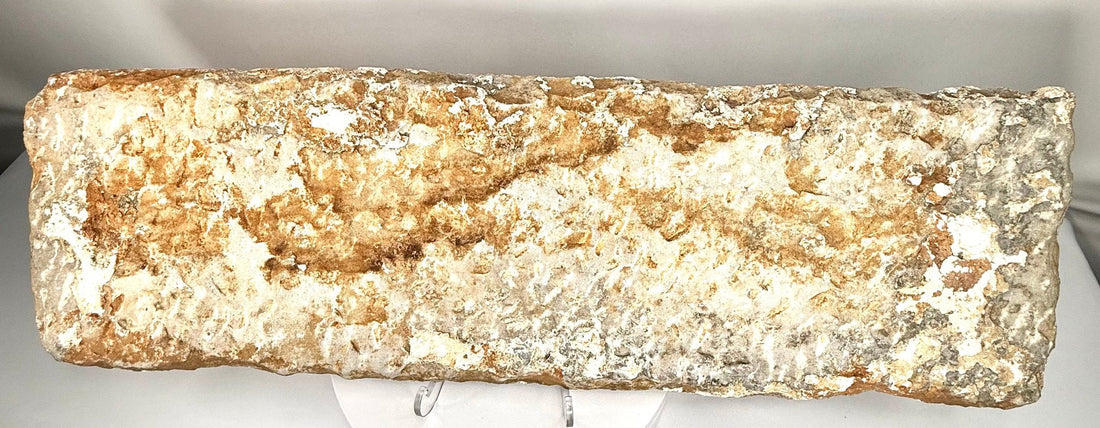
Ancient Chinese Han Dynasty Carved Funerary Stone Slab | Painted Animal Relief | Circa 206 BCE – 220 CE
Description
Plus
Moins
Historical Context & Origin
Region: China, East Asia
Material: Carved stone with surviving reddish-brown pigmentation
Period: Han Dynasty (206 BCE–220 CE), with stylistic characteristics associated with the Eastern Han Dynasty (25–220 CE)
Description
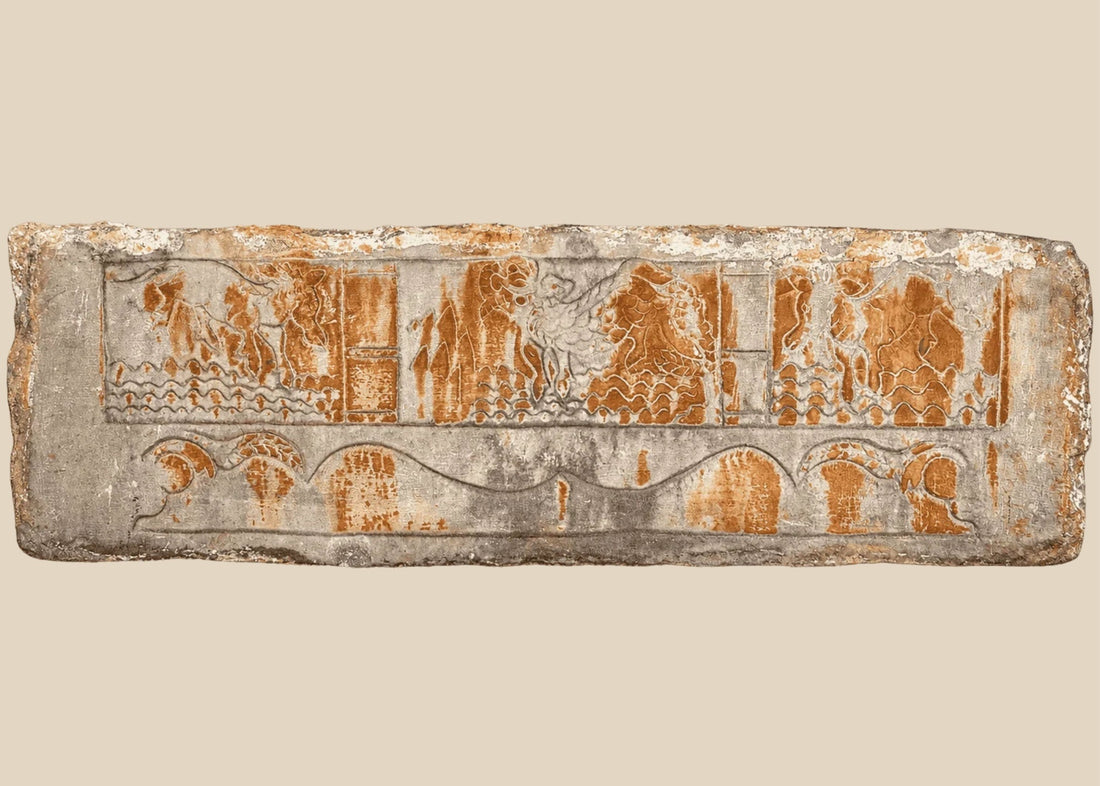
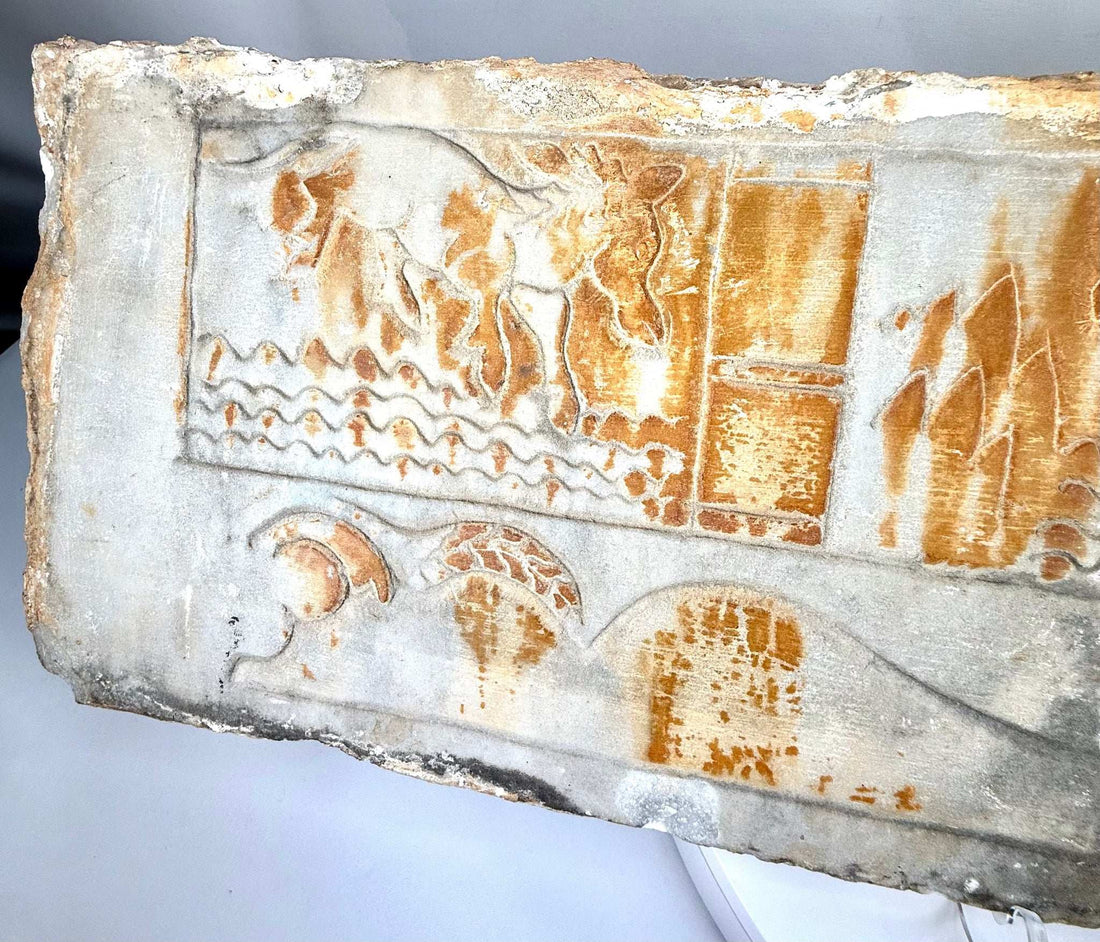
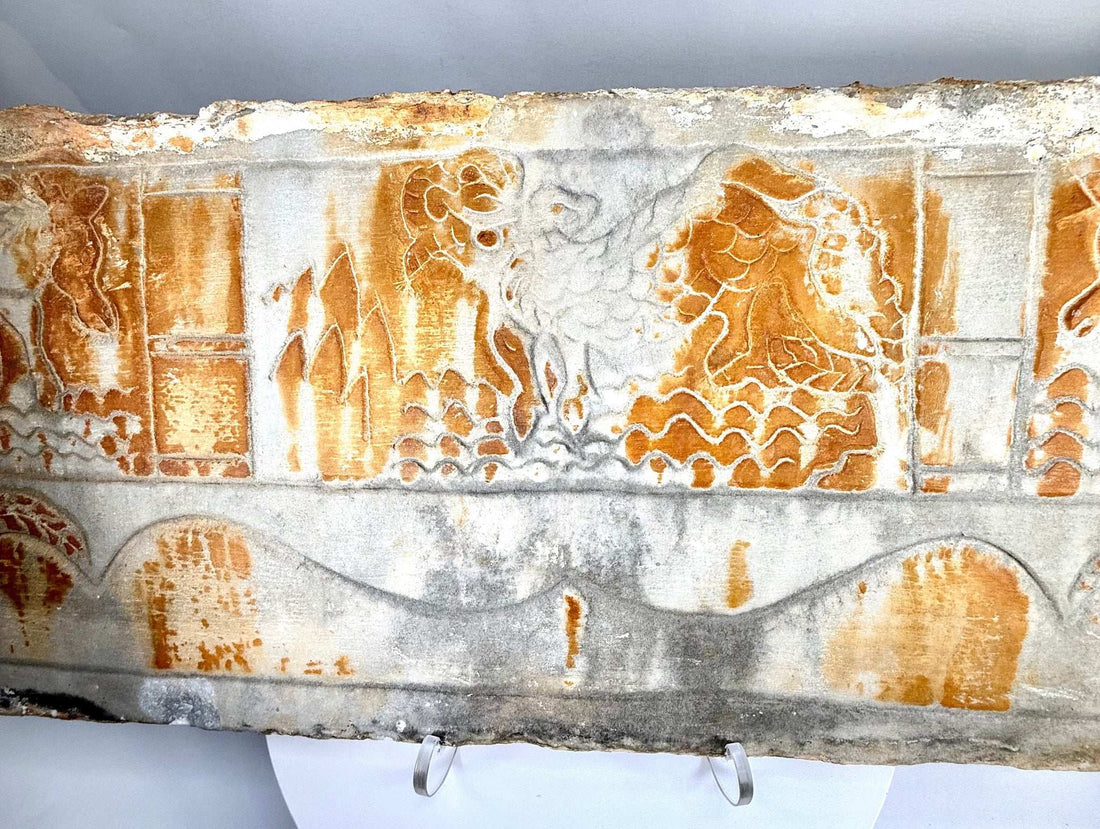
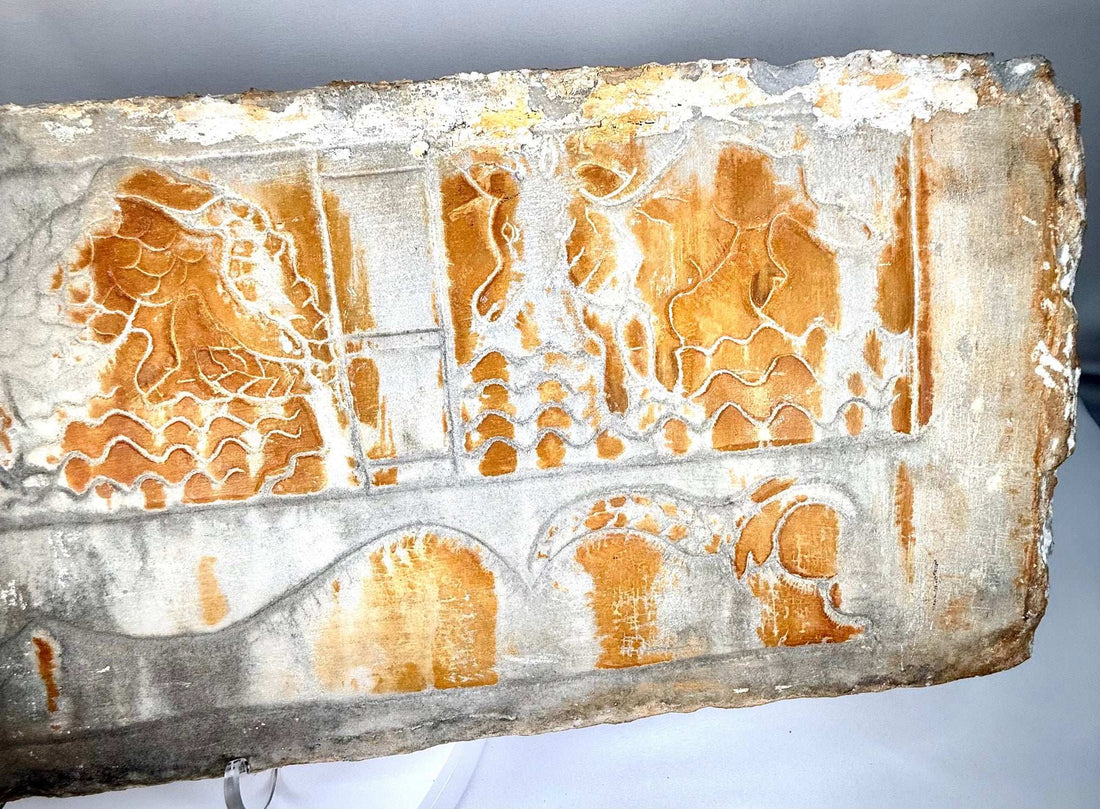
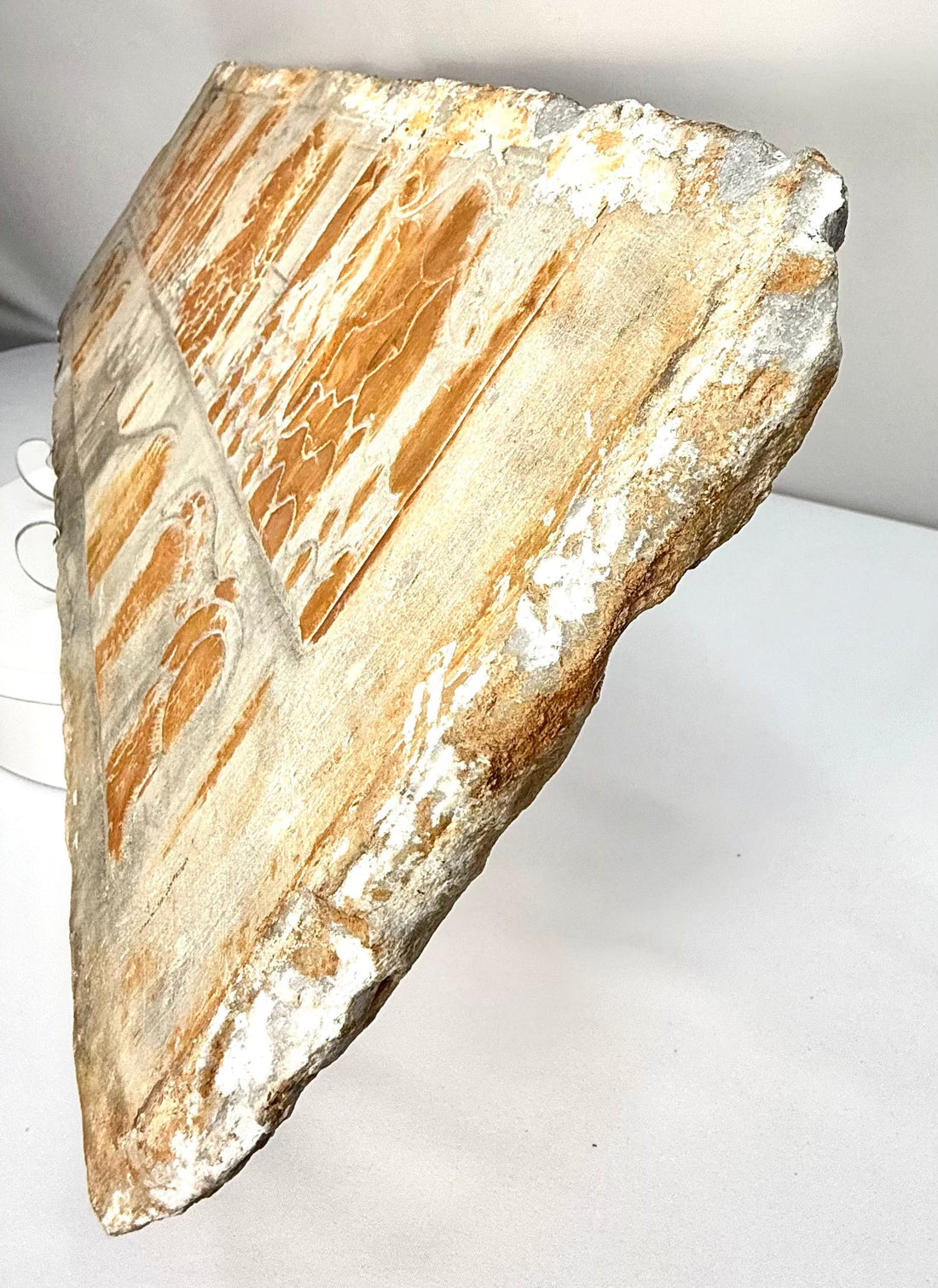
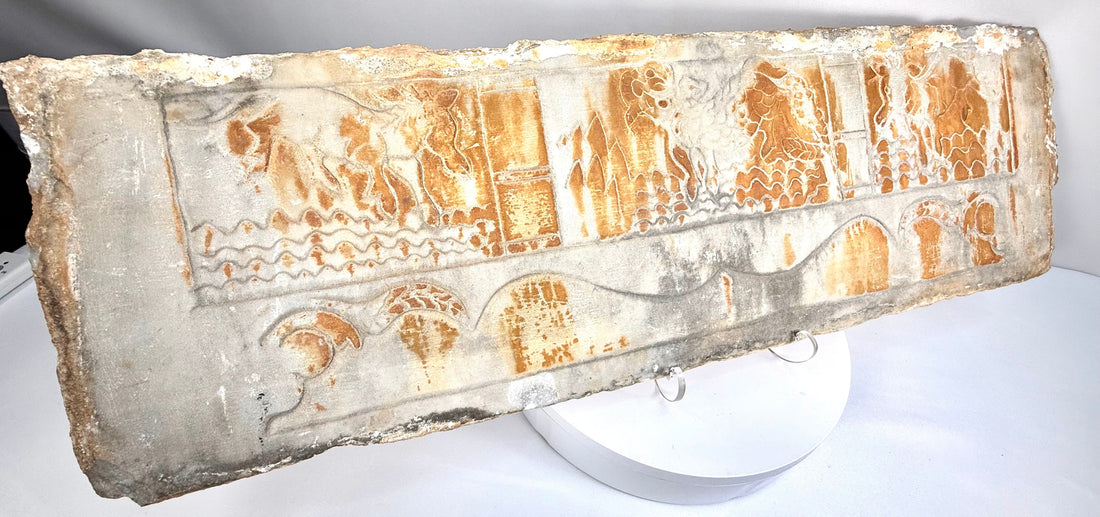
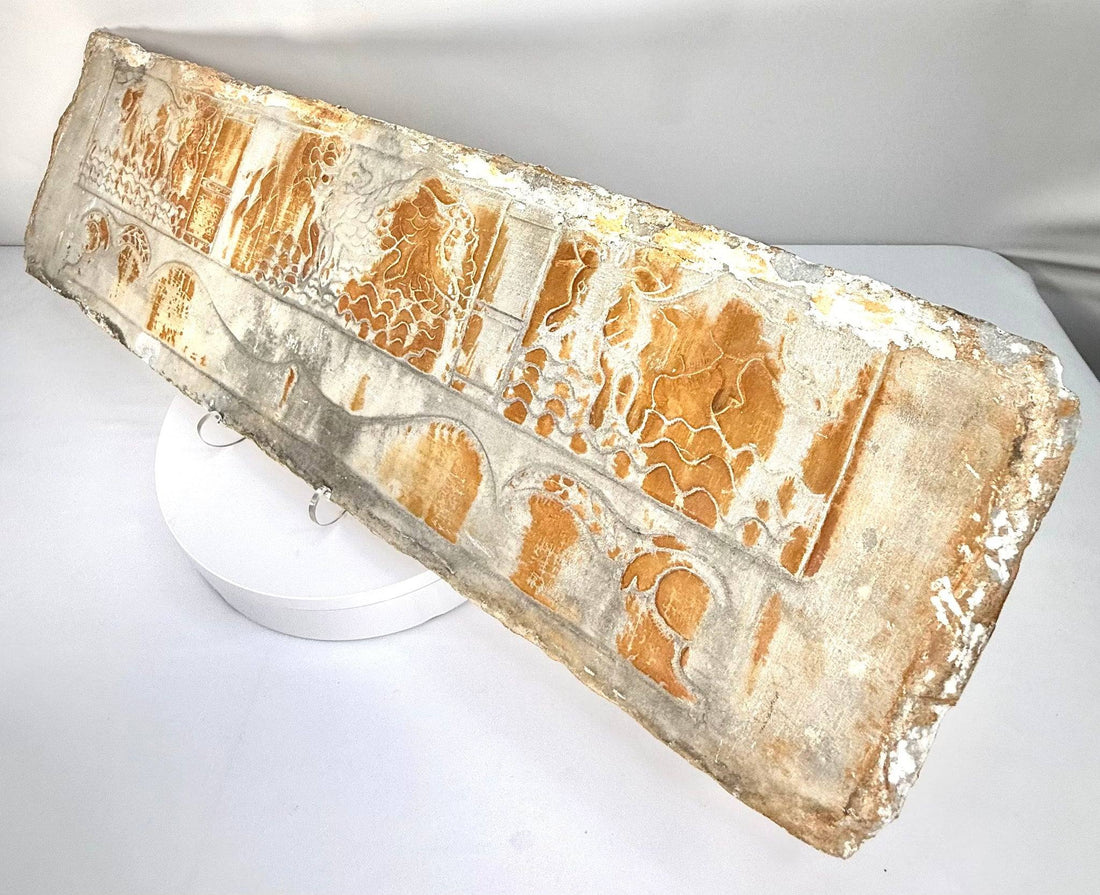
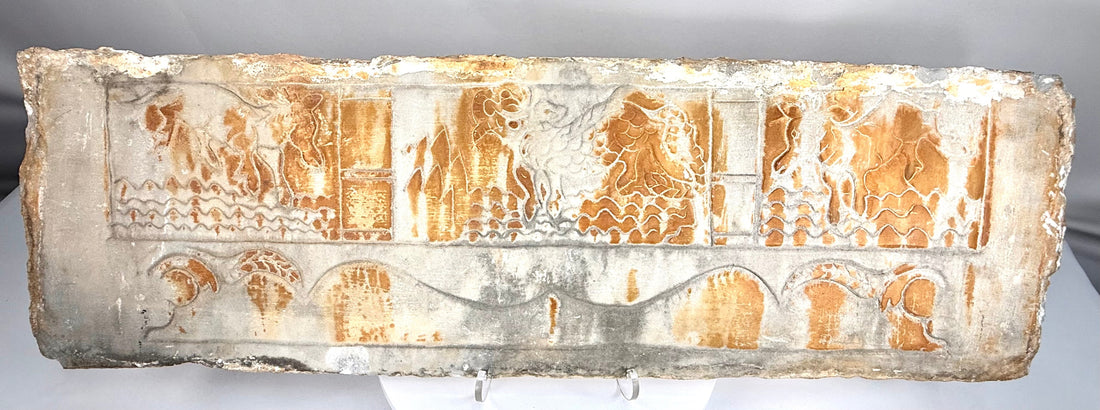
This substantial ancient Chinese funerary stone slab, attributed to the Han Dynasty (206 BCE–220 CE), features an elaborate arrangement of carved and painted animal imagery associated with traditional Chinese burial practices and beliefs concerning the afterlife. The rectangular panel is decorated across its frontal surface with two distinct horizontal registers, combining shallow relief carving, incised detailing, and surviving reddish-brown pigmentation.
The upper register contains three individually framed animal compositions separated by architectural-style vertical divisions. The outer panels depict a horse and a bull, while the central composition features a highly stylized stag-like creature with an elaborately ornamented body and mane rendered through repeating crescent-shaped forms. The animals are surrounded by undulating wave patterns, mountainous formations, and stylized vegetation, creating an imaginative landscape reflecting the symbolic and supernatural imagery associated with Han Dynasty funerary art.
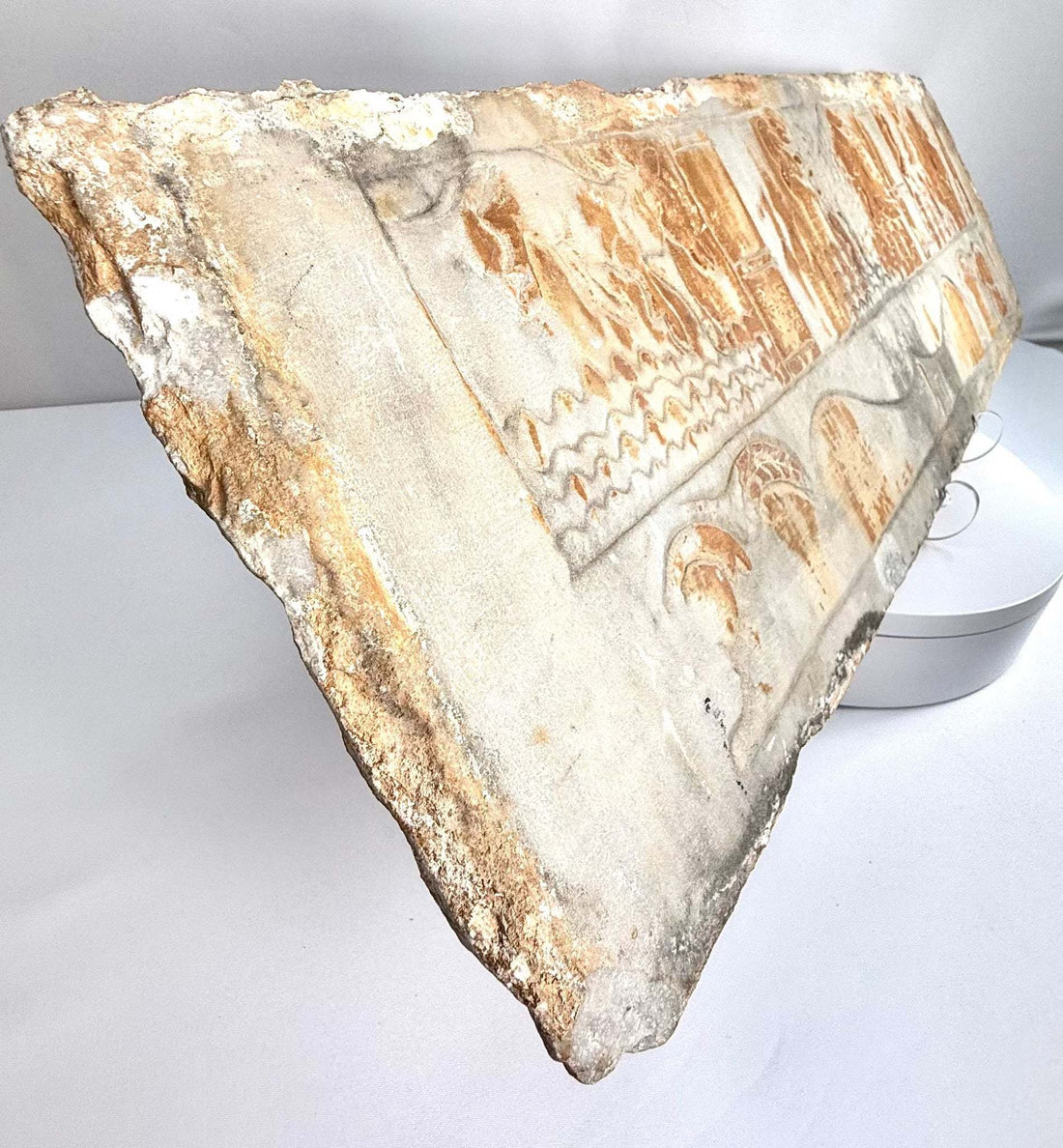
Beneath the principal animal compositions, the lower register displays a decorative arrangement of rounded arch-like forms, curved ornamental elements, and flowing geometric patterns. The original antiquities dealer compared these motifs to architectural forms associated with early Buddhist art, including the Indian chaitya arch. The stone retains areas of warm reddish-brown pigmentation contrasting with its weathered grey surface, while its irregular edges and largely unfinished reverse reflect the surviving character of this historical architectural fragment.
Features
- Substantial rectangular carved stone panel featuring two horizontal decorative registers
- Three individually framed animal compositions across the upper register
- Historical identification of a horse, bull, and elaborately stylized stag
- Distinctive crescent-shaped detailing across the central animal's body and mane
- Stylized mountainous landscapes, undulating waves, and vegetation
- Lower decorative register featuring rounded arch-like motifs and flowing ornamental patterns
- Carved and incised surface retaining areas of reddish-brown pigmentation
- Irregular stone edges, natural surface deposits, and largely unfinished reverse
Cultural Significance
During China's Han Dynasty, funerary architecture became an important expression of wealth, social standing, religious belief, and the continuation of earthly existence beyond death.
Elaborately decorated tombs incorporated carved stone reliefs, painted imagery, sculptures, and ceremonial objects intended to honour the deceased and provide symbolic protection in the afterlife.
These pictorial stone reliefs, known as huaxiangshi (画像石), became particularly prominent during the Eastern Han Dynasty (25–220 CE). They frequently depicted auspicious animals, mythological creatures, ceremonial processions, natural landscapes, and scenes associated with immortality.
Animals occupied an especially important place within Han funerary symbolism. Horses could represent prestige, transportation, and movement between realms, while deer and other auspicious creatures were associated with longevity, good fortune, and the supernatural world.
Condition
The stone slab displays substantial age-related surface wear, including areas of pigment loss, weathering, mineral-like deposits, irregular edges, and scattered chips and abrasions consistent with its previously documented condition. The principal animal compositions and lower ornamental register remain recognizable, with surviving areas of reddish-brown pigmentation providing contrast against the weathered grey stone. The upper and lower edges are uneven, with visible losses and exposed stone. The reverse remains largely undecorated and exhibits extensive surface deposits and discolouration.
Dimensions (Approximate)
Length: 30 in
Width: 9 in
Depth: 1 in
Age (Approximate)
1,800–2,200 years old
Provenance
Previously presented by Ancient & Oriental (Ancient Art), London, United Kingdom, an established London antiquities dealership specializing in ancient artifacts, classical antiquities, and archaeological objects.
Subsequently handled by Gallery Elder, Ottawa, Ontario, Canada, a gallery specializing in antiques, fine art, historical objects, and decorative works.
Formerly in a private collection in Ottawa, Ontario, Canada, following its acquisition through Gallery Elder.
Learn More
Explore a comparable Han Dynasty funerary stone relief featuring carved animals, mythical creatures, and symbolic imagery associated with ancient Chinese burial traditions through the Henan Museum
Discover additional ancient Chinese sculptures, funerary artifacts, and historical relics in our Ancient Chinese Artifacts & Imperial Relics Collection
Description
Historical Context & Origin
Region: China, East Asia
Material: Carved stone with surviving reddish-brown pigmentation
Period: Han Dynasty (206 BCE–220 CE), with stylistic characteristics associated with the Eastern Han Dynasty (25–220 CE)
Description
This substantial ancient Chinese funerary stone slab, attributed to the Han Dynasty (206 BCE–220 CE), features an elaborate arrangement of carved and painted animal imagery associated with traditional Chinese burial practices and beliefs concerning the afterlife. The rectangular panel is decorated across its frontal surface with two distinct horizontal registers, combining shallow relief carving, incised detailing, and surviving reddish-brown pigmentation.
The upper register contains three individually framed animal compositions separated by architectural-style vertical divisions. The outer panels depict a horse and a bull, while the central composition features a highly stylized stag-like creature with an elaborately ornamented body and mane rendered through repeating crescent-shaped forms. The animals are surrounded by undulating wave patterns, mountainous formations, and stylized vegetation, creating an imaginative landscape reflecting the symbolic and supernatural imagery associated with Han Dynasty funerary art.
Beneath the principal animal compositions, the lower register displays a decorative arrangement of rounded arch-like forms, curved ornamental elements, and flowing geometric patterns. The original antiquities dealer compared these motifs to architectural forms associated with early Buddhist art, including the Indian chaitya arch. The stone retains areas of warm reddish-brown pigmentation contrasting with its weathered grey surface, while its irregular edges and largely unfinished reverse reflect the surviving character of this historical architectural fragment.
Features
- Substantial rectangular carved stone panel featuring two horizontal decorative registers
- Three individually framed animal compositions across the upper register
- Historical identification of a horse, bull, and elaborately stylized stag
- Distinctive crescent-shaped detailing across the central animal's body and mane
- Stylized mountainous landscapes, undulating waves, and vegetation
- Lower decorative register featuring rounded arch-like motifs and flowing ornamental patterns
- Carved and incised surface retaining areas of reddish-brown pigmentation
- Irregular stone edges, natural surface deposits, and largely unfinished reverse
Cultural Significance
During China's Han Dynasty, funerary architecture became an important expression of wealth, social standing, religious belief, and the continuation of earthly existence beyond death.
Elaborately decorated tombs incorporated carved stone reliefs, painted imagery, sculptures, and ceremonial objects intended to honour the deceased and provide symbolic protection in the afterlife.
These pictorial stone reliefs, known as huaxiangshi (画像石), became particularly prominent during the Eastern Han Dynasty (25–220 CE). They frequently depicted auspicious animals, mythological creatures, ceremonial processions, natural landscapes, and scenes associated with immortality.
Animals occupied an especially important place within Han funerary symbolism. Horses could represent prestige, transportation, and movement between realms, while deer and other auspicious creatures were associated with longevity, good fortune, and the supernatural world.
Condition
The stone slab displays substantial age-related surface wear, including areas of pigment loss, weathering, mineral-like deposits, irregular edges, and scattered chips and abrasions consistent with its previously documented condition. The principal animal compositions and lower ornamental register remain recognizable, with surviving areas of reddish-brown pigmentation providing contrast against the weathered grey stone. The upper and lower edges are uneven, with visible losses and exposed stone. The reverse remains largely undecorated and exhibits extensive surface deposits and discolouration.
Dimensions (Approximate)
Length: 30 in
Width: 9 in
Depth: 1 in
Age (Approximate)
1,800–2,200 years old
Provenance
Previously presented by Ancient & Oriental (Ancient Art), London, United Kingdom, an established London antiquities dealership specializing in ancient artifacts, classical antiquities, and archaeological objects.
Subsequently handled by Gallery Elder, Ottawa, Ontario, Canada, a gallery specializing in antiques, fine art, historical objects, and decorative works.
Formerly in a private collection in Ottawa, Ontario, Canada, following its acquisition through Gallery Elder.
Learn More
Explore a comparable Han Dynasty funerary stone relief featuring carved animals, mythical creatures, and symbolic imagery associated with ancient Chinese burial traditions through the Henan Museum
Discover additional ancient Chinese sculptures, funerary artifacts, and historical relics in our Ancient Chinese Artifacts & Imperial Relics Collection
Vous aimerez peut-être aussi
