


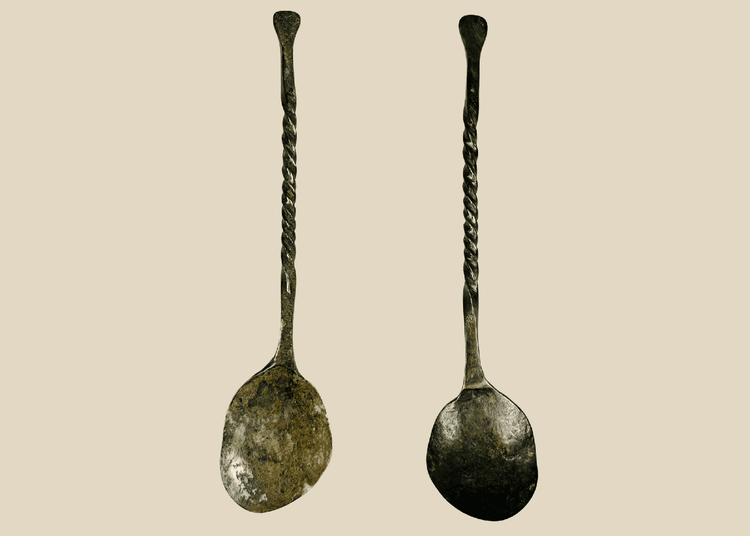
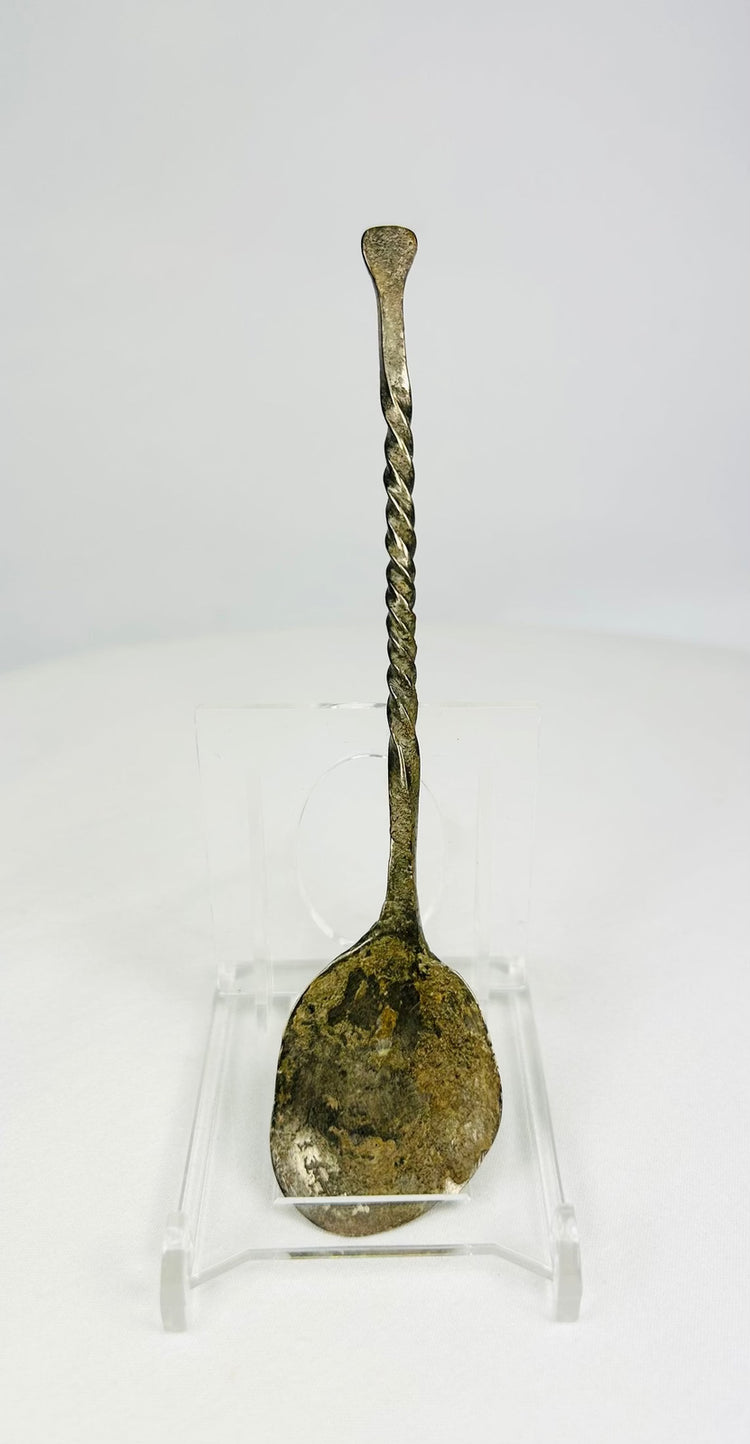
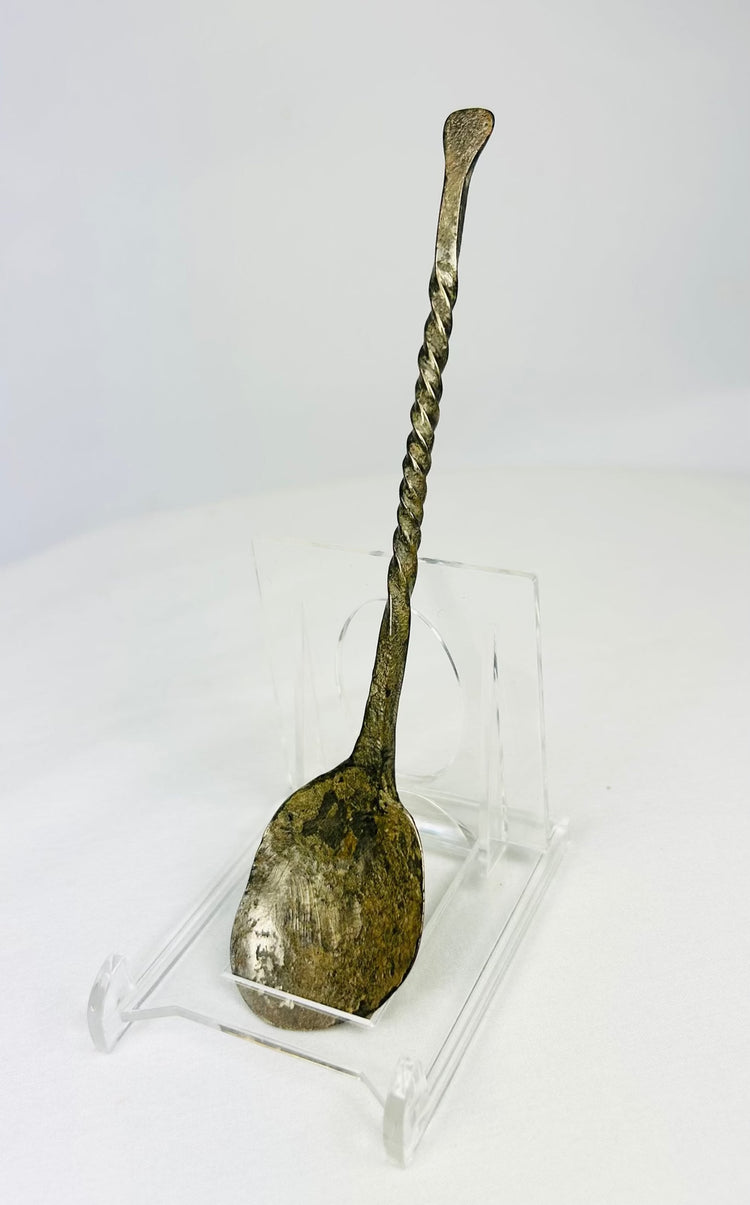
Cuillère forgée à la main avec manche torsadé | Vers le IIe siècle ap. J.-C.
- Prix habituel
- $400.00
- Prix soldé
- $400.00
- Prix habituel
Impossible de charger la disponibilité du service de retrait


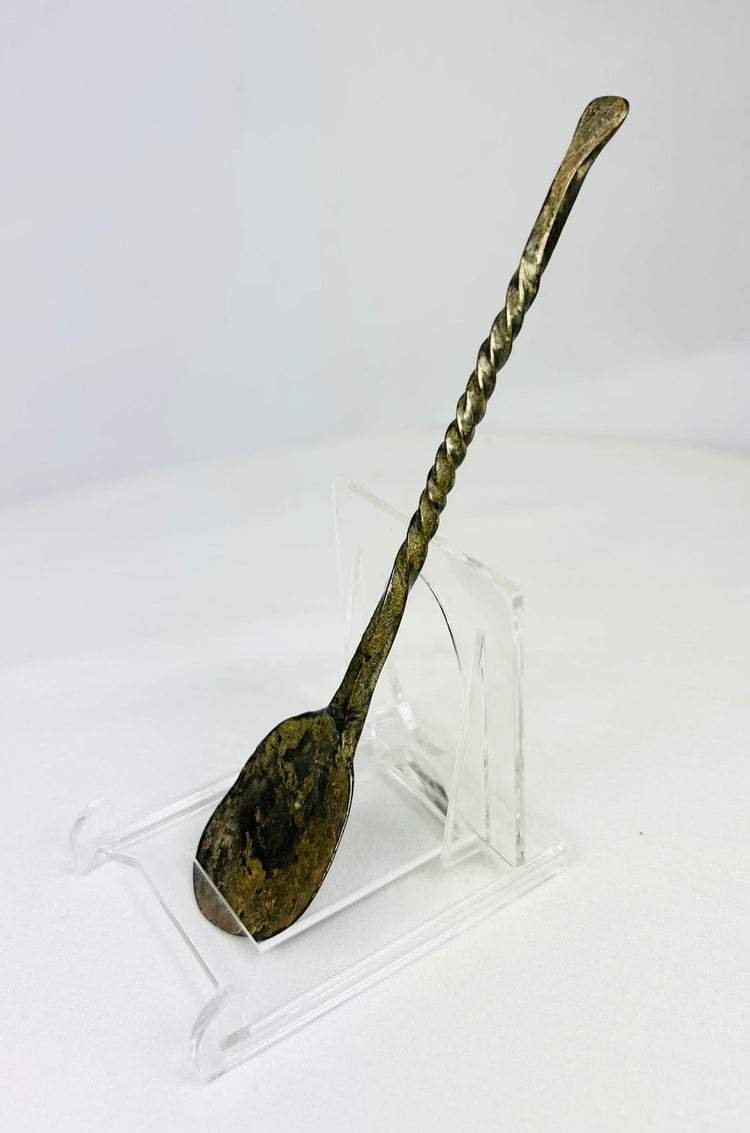
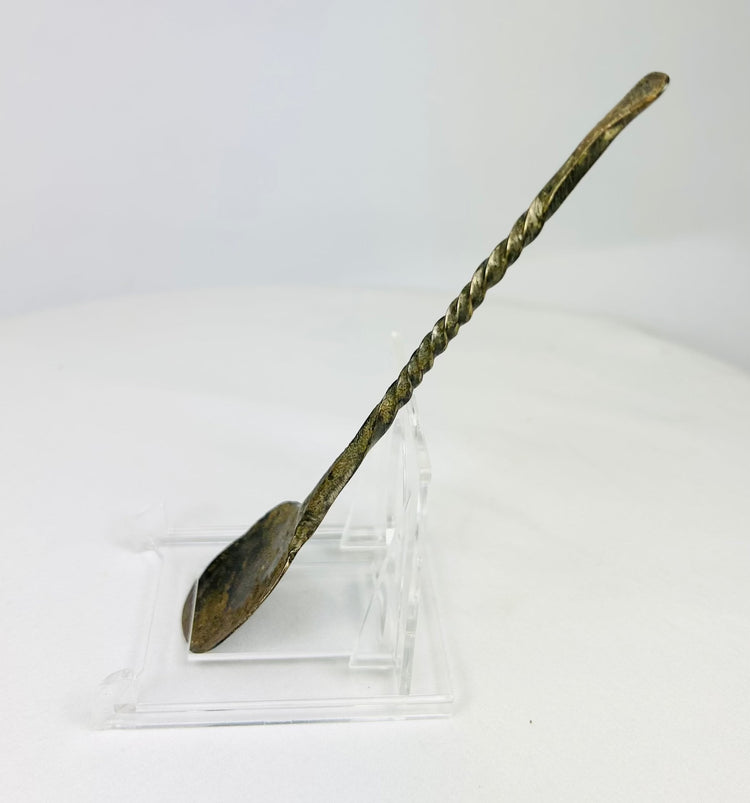
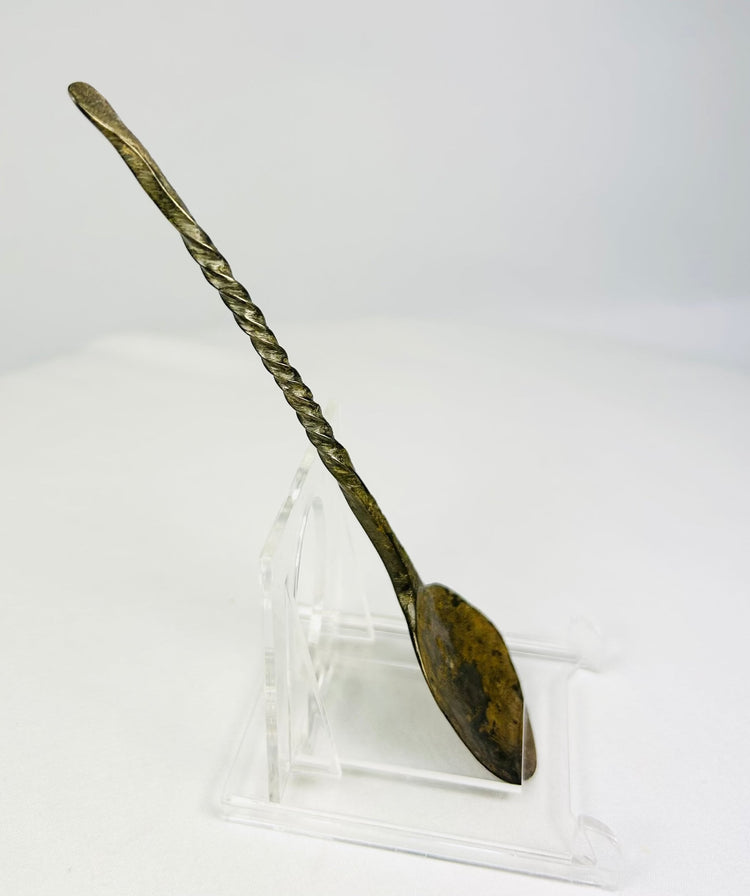
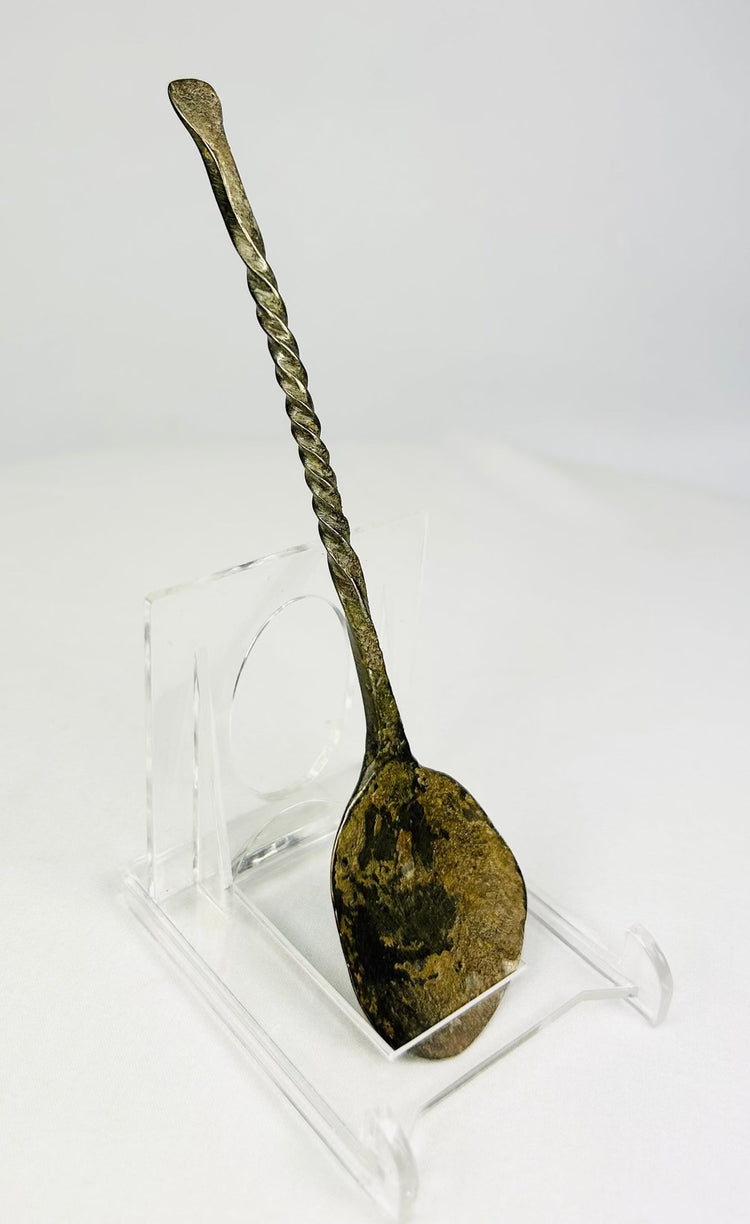
Cuillère forgée à la main avec manche torsadé | Vers le IIe siècle ap. J.-C.
Description
Plus
Moins
Contexte Historique et Origine
Région : Empire romain (probablement la région méditerranéenne)
Matériau : Bronze coulé avec patine naturelle
Période : Vers le IIe siècle après J.-C.
Description
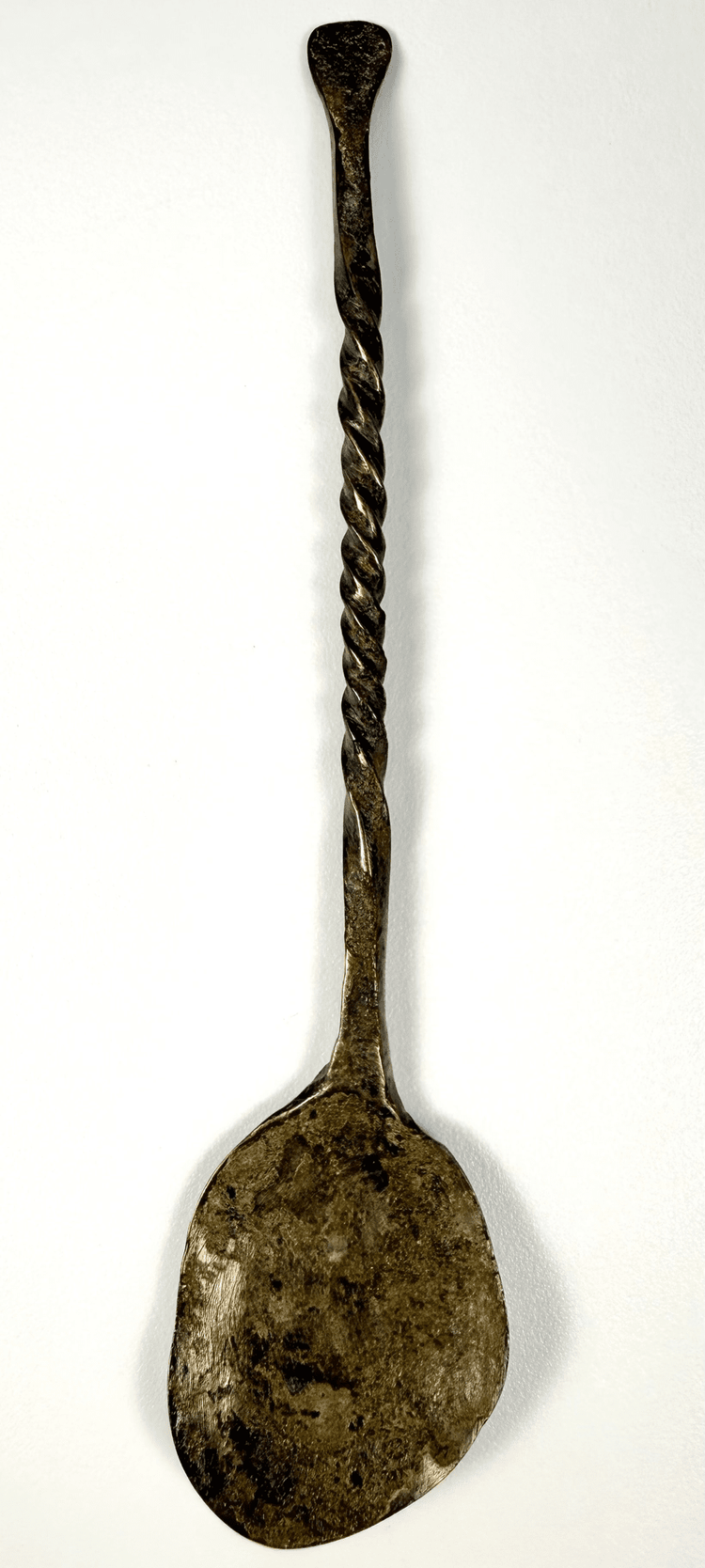
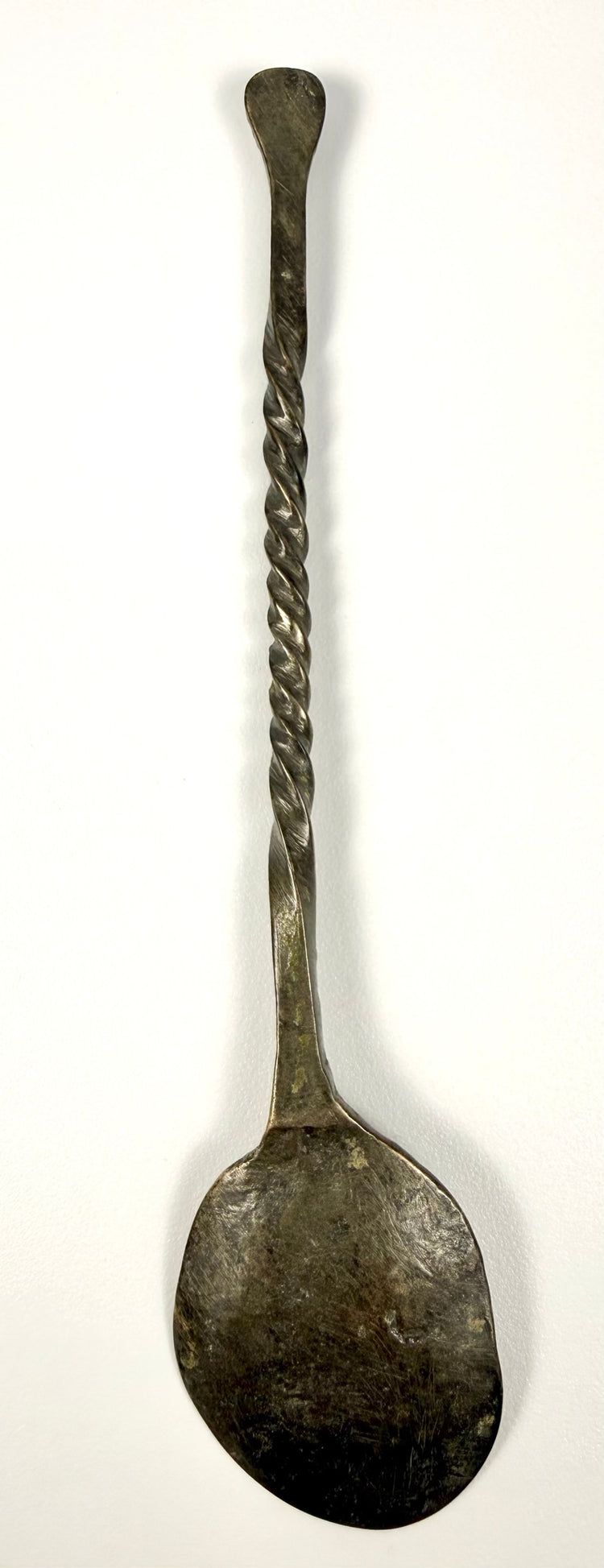
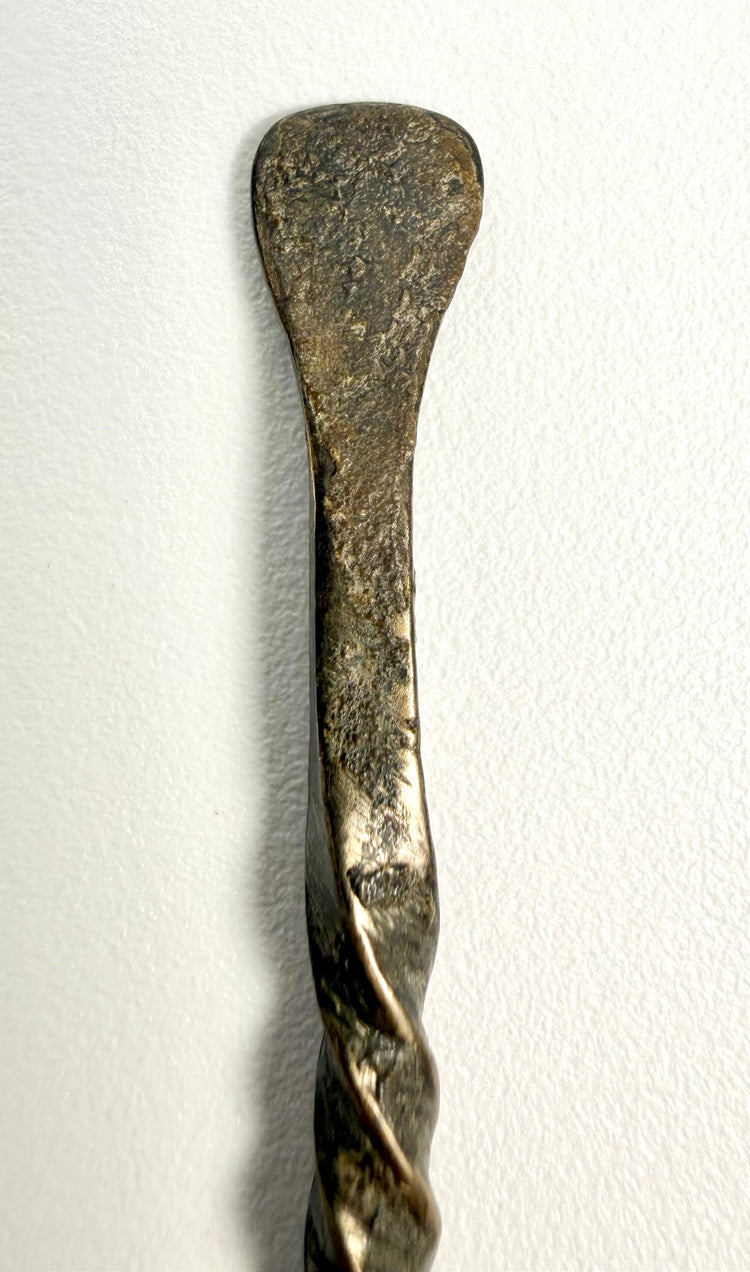
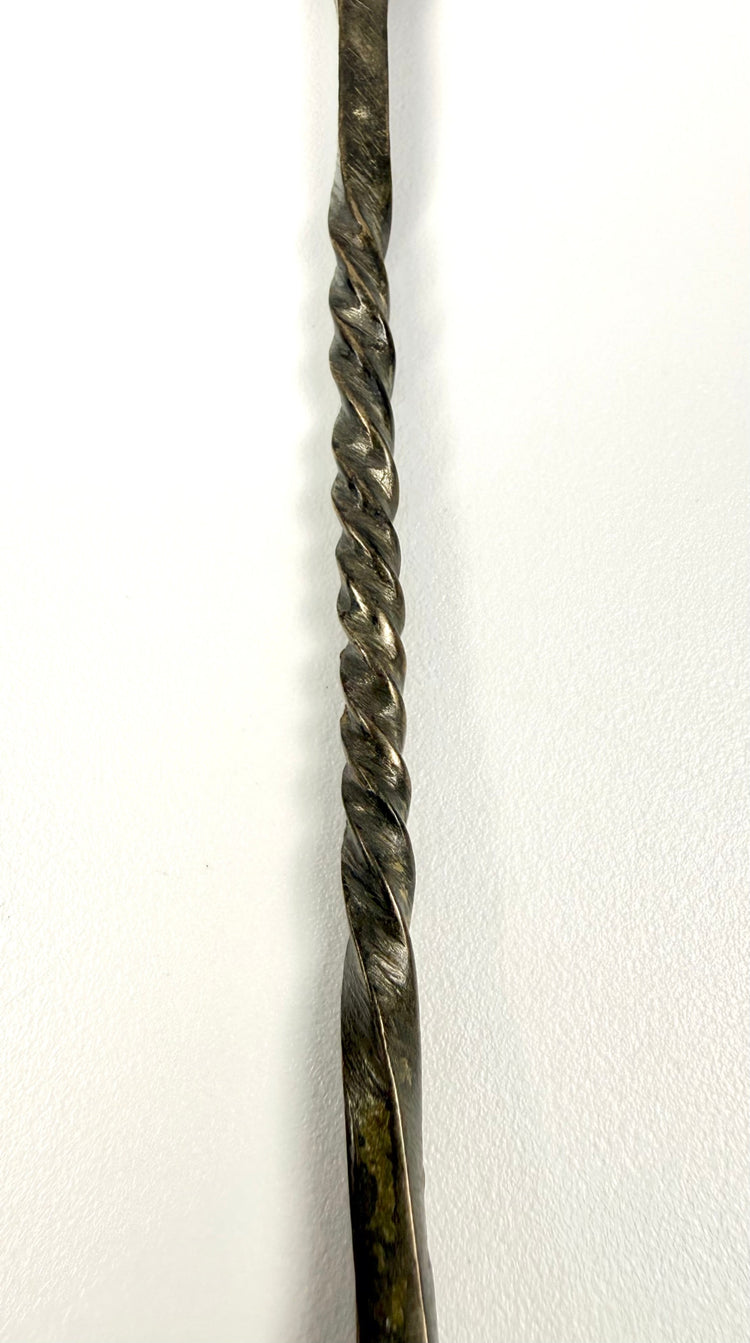
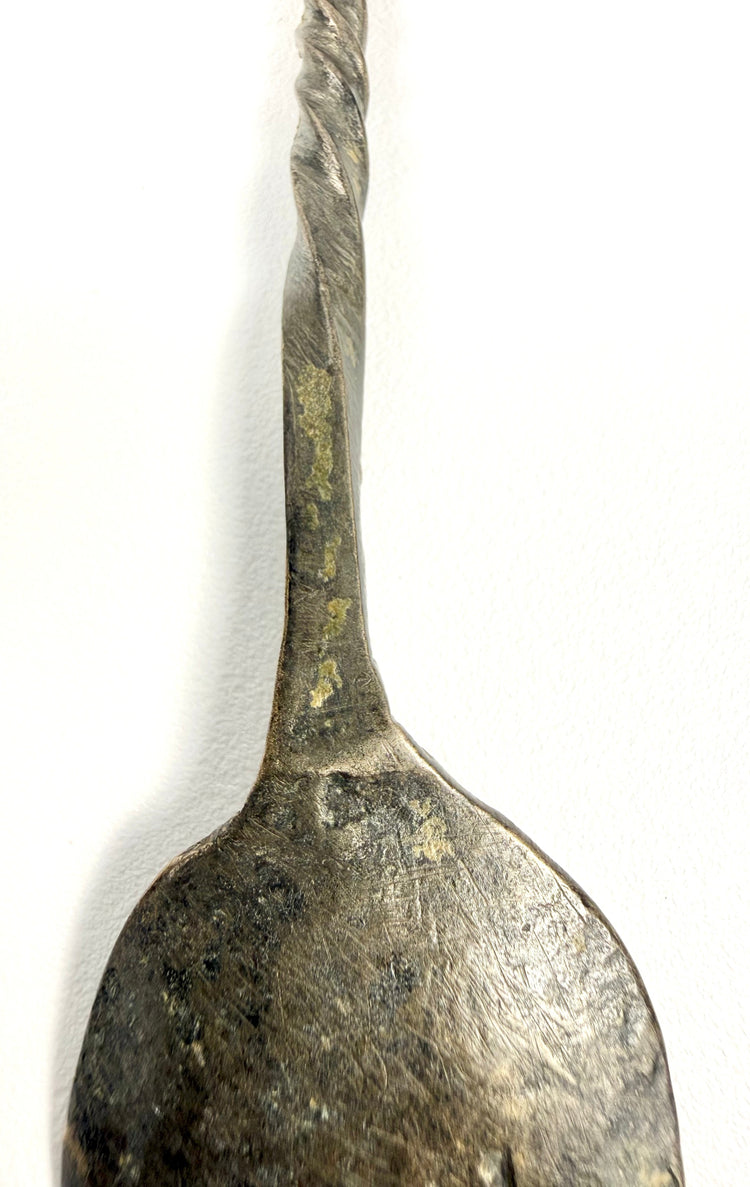
Une authentique cuillère romaine antique en bronze, élégamment forgée avec un manche torsadé et un cuilleron légèrement arrondi. Cet ustensile finement travaillé reflète la vie quotidienne et les pratiques culinaires raffinées des ménages romains à l'apogée de l'Empire. Son manche torsadé à la main et son cuilleron lisse révèlent le savoir-faire artisanal et la sensibilité esthétique typiques du travail du bronze romain.
Caractéristiques
- Bronze forgé à la main avec manche torsadé en spirale
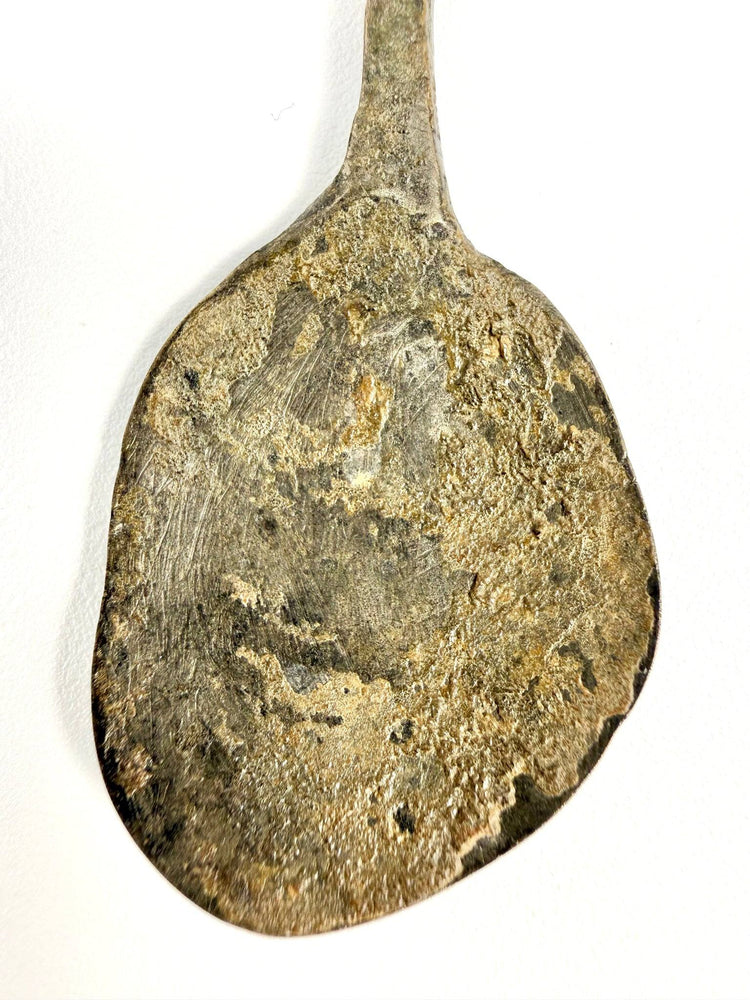
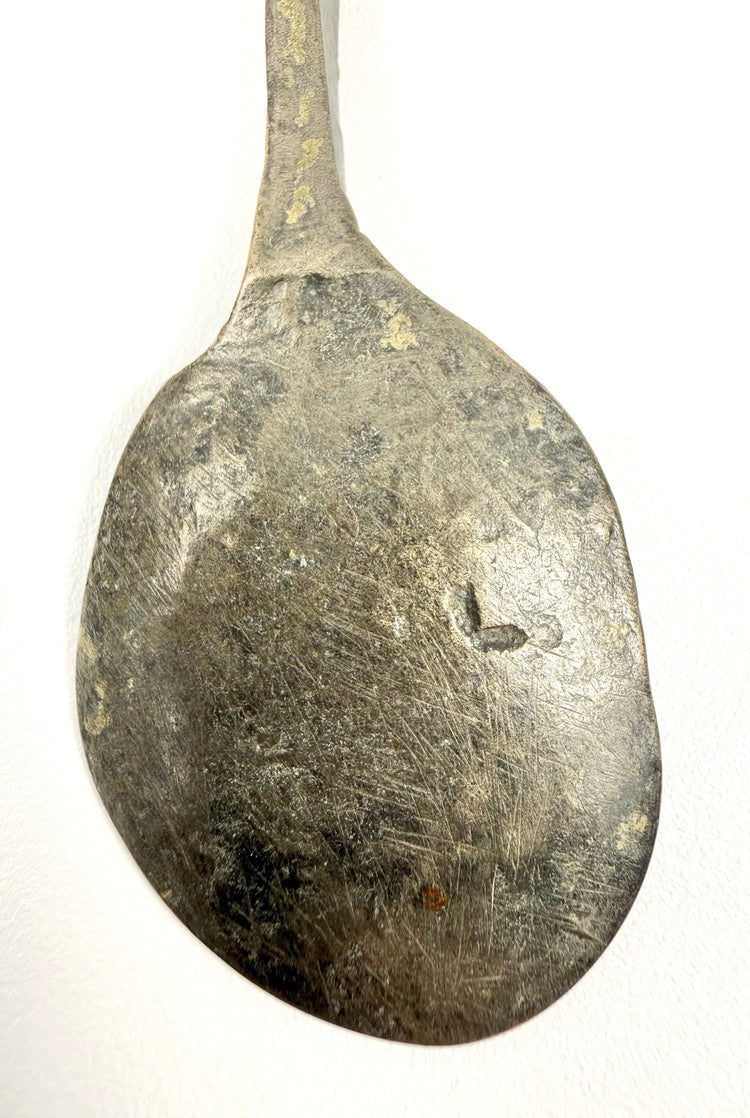
- Cuilleron ovale peu profond avec intérieur lisse
- Patine naturelle vert foncé et brune due à l'âge
- Proportions équilibrées, raffiné mais pratique
Importance Culturelle
Ces cuillères étaient courantes dans les foyers romains, utilisées pour les repas, les huiles ou les mélanges médicinaux. Elles illustrent l'approche romaine de l'artisanat, où la fonctionnalité rencontrait la beauté. Les exemples subsistants sont rares et offrent un lien tactile avec la vie quotidienne et les traditions d'hospitalité antiques.
État
Excellent état ancien avec patine stable et légère incrustation due à l'enfouissement. Légère usure de surface conforme à l'âge.
Dimensions (Approximatives)
Longueur : 14 cm
Largeur : 3,2 cm
Âge (Approximatif)
1 825–1 925 ans
Provenance
Anciennement détenue dans une collection privée au Royaume-Uni dans les années 1980. Ensuite achetée au Grays Antique Market, Mayfair, Londres, Angleterre, puis traitée par la Palmyra Heritage Gallery. La pièce est ensuite entrée dans une collection privée à Toronto, Ontario, Canada.
Fondé en 1977, Grays Antique Market est un centre d'antiquités de Mayfair de longue date, connu pour ses marchands spécialisés en beaux-arts, céramiques et objets de collection.
En savoir plus
Découvrez la conception et l'utilisation quotidienne des cuillères romaines dans le Journal of Roman Archaeology
Explorez la culture culinaire romaine à travers The Metropolitan Museum of Art
Parcourez les antiquités connexes dans notre Collection d'artefacts romains et grecs
Description
Contexte Historique et Origine
Région : Empire romain (probablement la région méditerranéenne)
Matériau : Bronze coulé avec patine naturelle
Période : Vers le IIe siècle après J.-C.
Description
Une authentique cuillère romaine antique en bronze, élégamment forgée avec un manche torsadé et un cuilleron légèrement arrondi. Cet ustensile finement travaillé reflète la vie quotidienne et les pratiques culinaires raffinées des ménages romains à l'apogée de l'Empire. Son manche torsadé à la main et son cuilleron lisse révèlent le savoir-faire artisanal et la sensibilité esthétique typiques du travail du bronze romain.
Caractéristiques
- Bronze forgé à la main avec manche torsadé en spirale
- Cuilleron ovale peu profond avec intérieur lisse
- Patine naturelle vert foncé et brune due à l'âge
- Proportions équilibrées, raffiné mais pratique
Importance Culturelle
Ces cuillères étaient courantes dans les foyers romains, utilisées pour les repas, les huiles ou les mélanges médicinaux. Elles illustrent l'approche romaine de l'artisanat, où la fonctionnalité rencontrait la beauté. Les exemples subsistants sont rares et offrent un lien tactile avec la vie quotidienne et les traditions d'hospitalité antiques.
État
Excellent état ancien avec patine stable et légère incrustation due à l'enfouissement. Légère usure de surface conforme à l'âge.
Dimensions (Approximatives)
Longueur : 14 cm
Largeur : 3,2 cm
Âge (Approximatif)
1 825–1 925 ans
Provenance
Anciennement détenue dans une collection privée au Royaume-Uni dans les années 1980. Ensuite achetée au Grays Antique Market, Mayfair, Londres, Angleterre, puis traitée par la Palmyra Heritage Gallery. La pièce est ensuite entrée dans une collection privée à Toronto, Ontario, Canada.
Fondé en 1977, Grays Antique Market est un centre d'antiquités de Mayfair de longue date, connu pour ses marchands spécialisés en beaux-arts, céramiques et objets de collection.
En savoir plus
Découvrez la conception et l'utilisation quotidienne des cuillères romaines dans le Journal of Roman Archaeology
Explorez la culture culinaire romaine à travers The Metropolitan Museum of Art
Parcourez les antiquités connexes dans notre Collection d'artefacts romains et grecs
Vous aimerez peut-être aussi
