
Hypacrosaurus Dinosaur Fibula Fossil | Late Cretaceous | 75–70 Million Years Old
- Prix habituel
- $1,600.00
- Prix soldé
- $1,600.00
- Prix habituel
Impossible de charger la disponibilité du service de retrait







Hypacrosaurus Dinosaur Fibula Fossil | Late Cretaceous | 75–70 Million Years Old
Description
Plus
Moins
Historical Context & Origin
Region: Western North America; reportedly discovered near Newcastle, Wyoming, USA
Material: Fossilized dinosaur bone with natural mineralization
Period: Late Cretaceous, circa 75–70 million years ago (attributed to Hypacrosaurus sp.)
Description
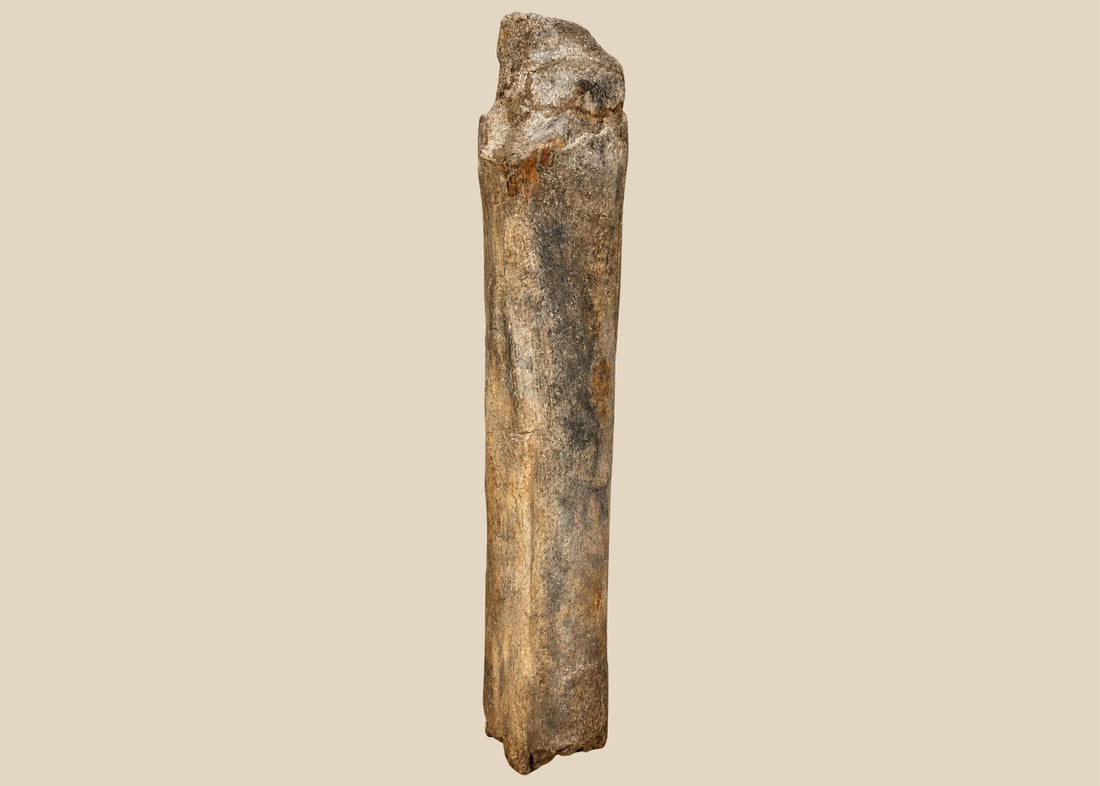
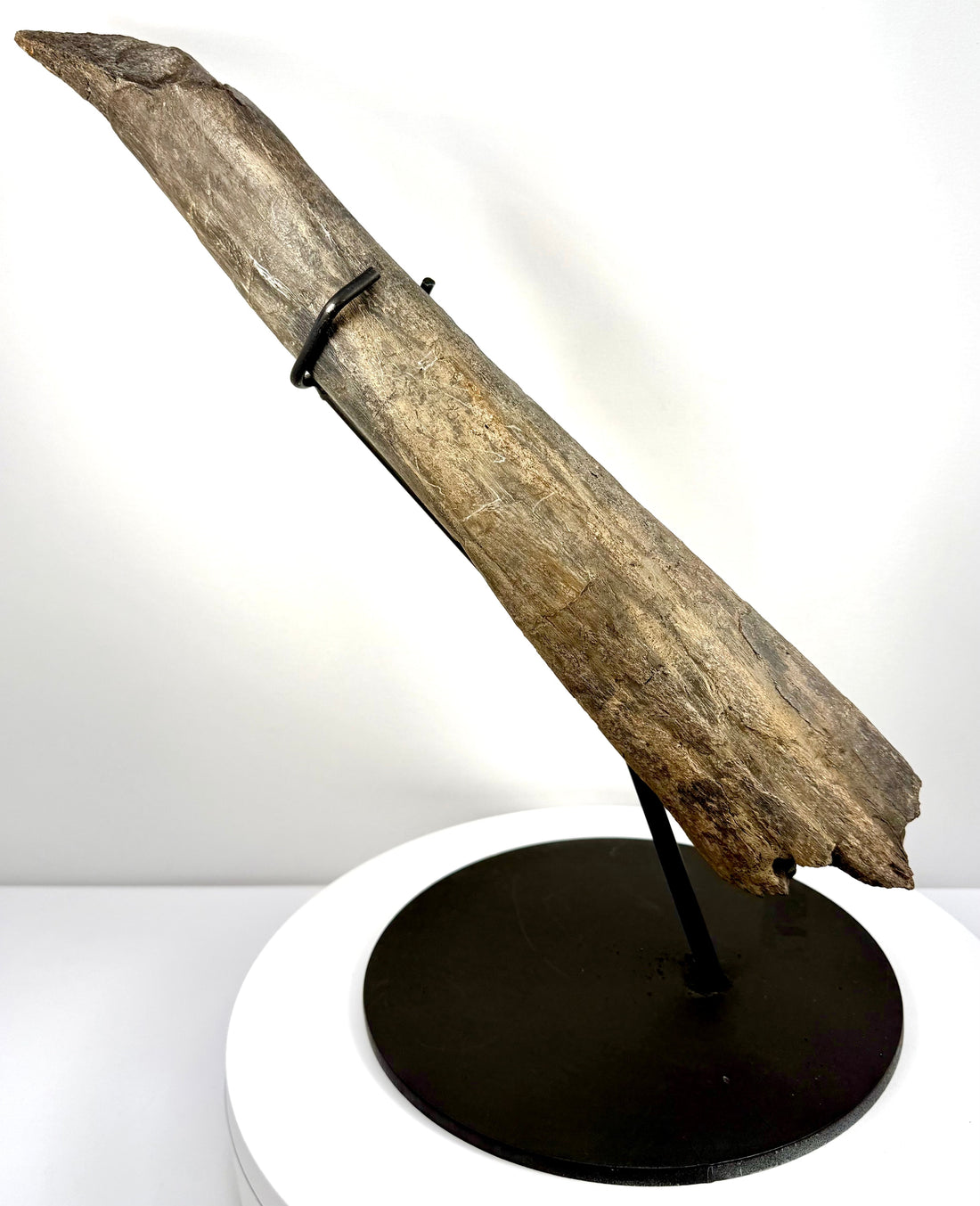
This impressive prehistoric fossil consists of a substantial fibula, or lower hind-leg bone, attributed to Hypacrosaurus, a large herbivorous, duck-billed dinosaur that inhabited western North America during the Late Cretaceous Period. Measuring approximately 17 inches in length, the specimen retains an elongated, naturally tapering anatomical form.
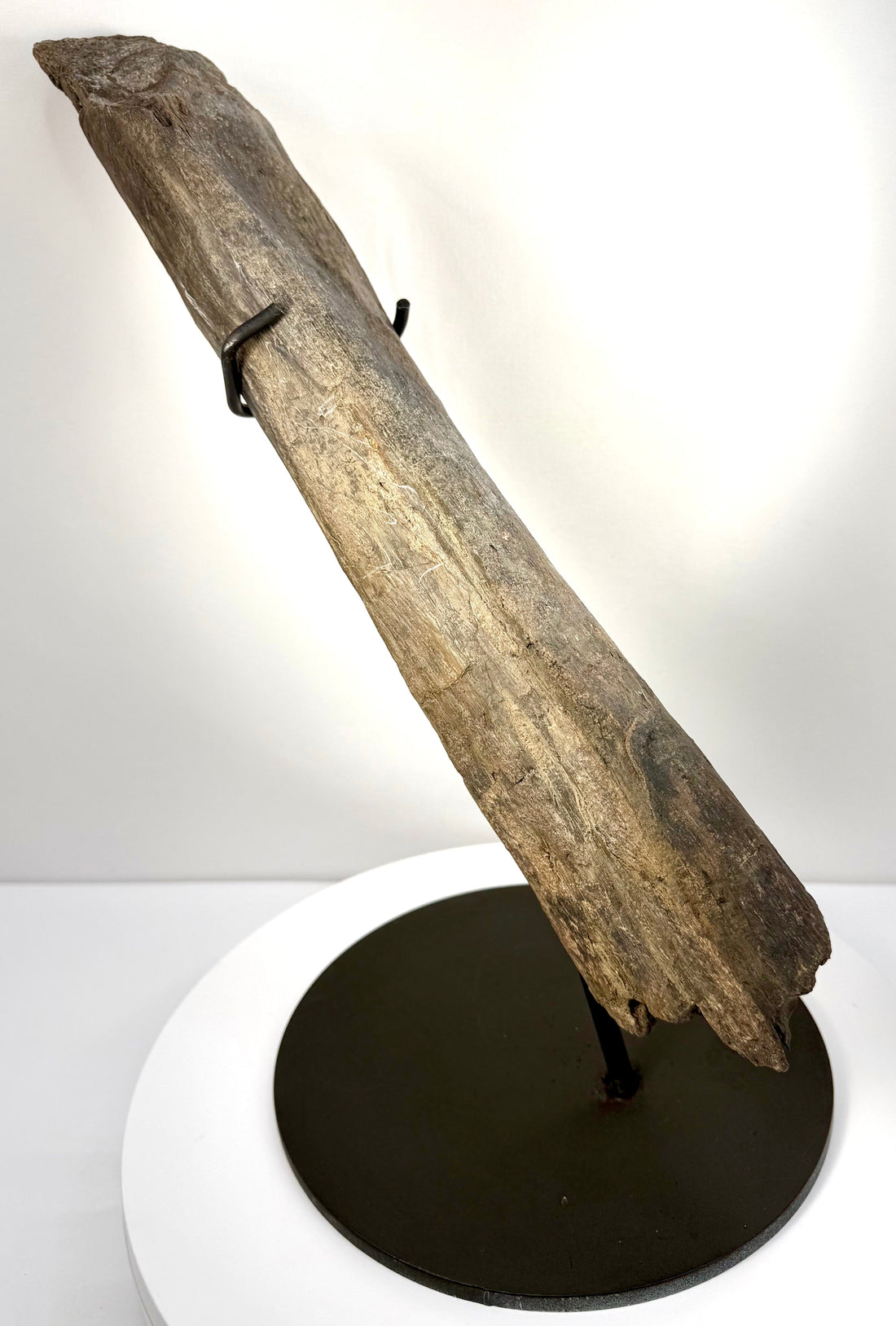
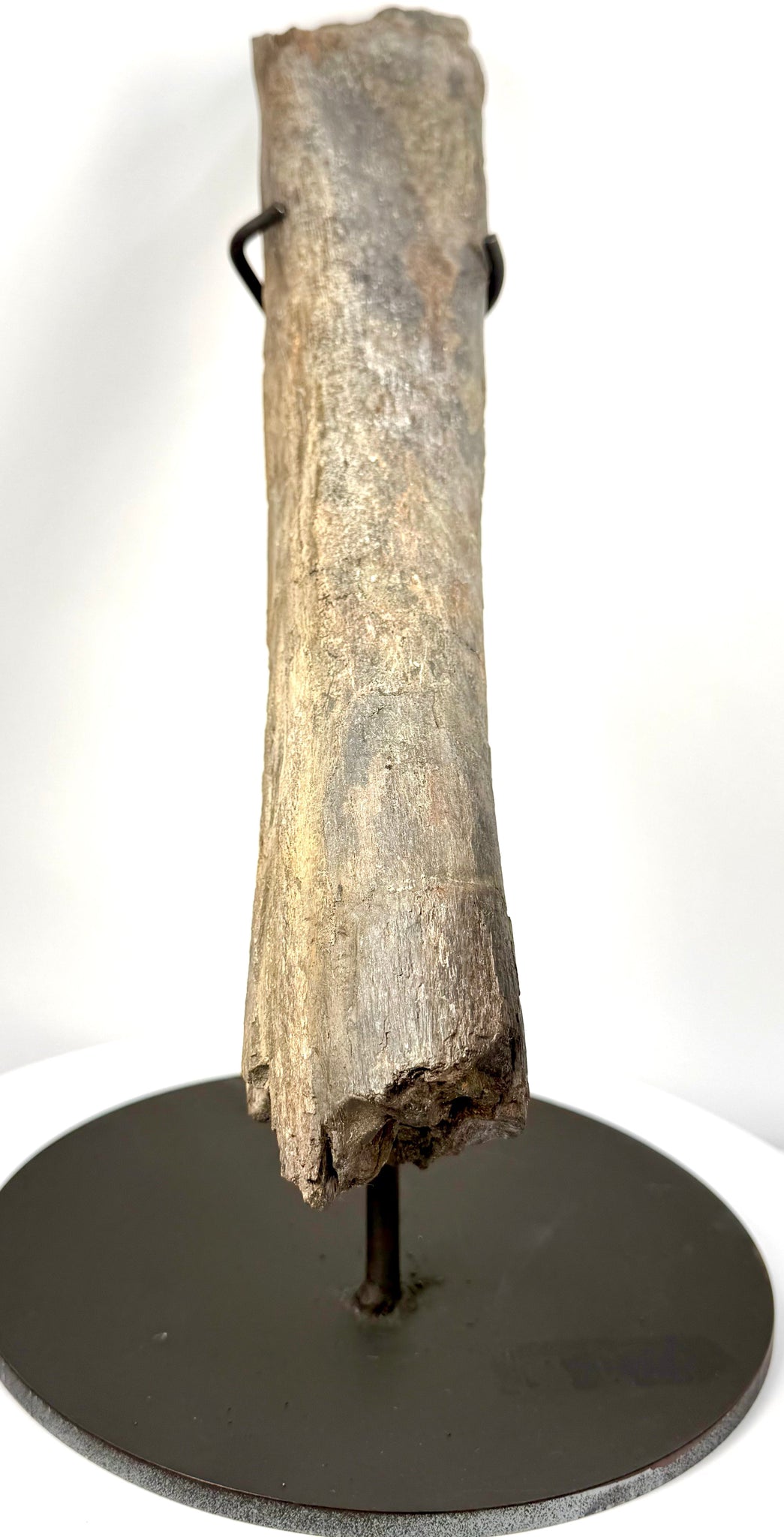
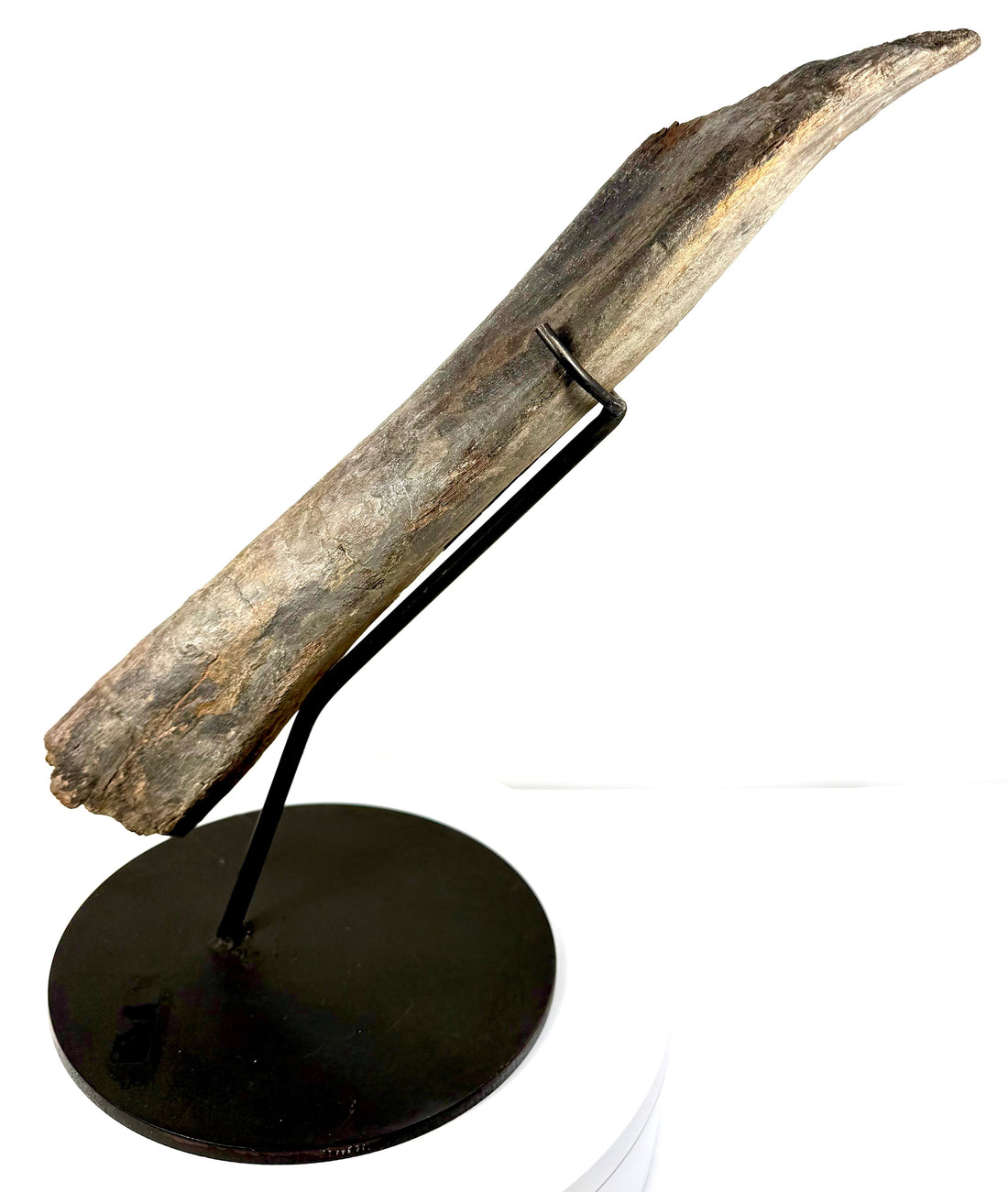
The bone displays contrasting earthy grey, brown, charcoal, and pale beige coloration, complemented by natural mineral deposits, longitudinal ridges, shallow grooves, and exposed internal textures. The preserved shaft gradually narrows toward one extremity, while the opposite end exhibits an irregular, fractured termination.
The fibula formed part of the dinosaur's lower hind limb, extending alongside the larger tibia and contributing to the skeletal structure of the leg. Its substantial size, recognizable anatomical profile, and distinctive mineral coloration make this specimen a remarkable natural-history display piece.
Features
- Substantial fossilized fibula attributed to Hypacrosaurus sp.
- Elongated shaft with a naturally tapering anatomical profile
- Distinctive longitudinal ridges and shallow surface grooves
- Contrasting grey, brown, charcoal, and pale beige coloration
- Natural mineralization and localized mineral deposits
- Exposed internal bone textures along fractured extremities
Cultural Significance
Hypacrosaurus was a genus of large herbivorous dinosaurs belonging to the Hadrosauridae family, commonly known as duck-billed dinosaurs. Named by paleontologist Barnum Brown in 1913, these dinosaurs could reach approximately 9 metres in length and were distinguished by their elaborate hollow cranial crests, believed to have played roles in visual recognition and acoustic communication.
Fossil discoveries in Alberta, Canada, and Montana, USA, have provided valuable evidence of the prehistoric environments inhabited by Hypacrosaurus. Discoveries of nesting sites, eggs, and skeletal remains representing different stages of development have contributed significantly to scientific understanding of dinosaur reproduction and growth.
Hadrosaurids possessed powerful hind limbs and were capable of moving on both two and four legs. Fossilized limb bones, including the fibula, provide paleontologists with important insights into dinosaur anatomy, locomotion, and evolutionary adaptations. Such specimens offer a tangible connection to the remarkable prehistoric ecosystems of the Late Cretaceous Period.
Condition
Preserved as a substantial, incomplete fossilized bone displaying natural surface weathering, mineral staining, scattered abrasions, longitudinal fissures, and localized surface losses consistent with its geological preservation. The elongated shaft retains much of its recognizable anatomical form, while both extremities exhibit varying degrees of breakage, with irregular margins and exposed internal textures. Contrasting mineral coloration, small pits, and shallow surface grooves remain visible throughout.
Dimensions (Approximate)
Length: 17 in
Width: 3.5 in
Depth: 3.25 in
Measurements exclude the display stand.
Age (Approximate)
70–75 million years old
Provenance
Acquired from Broken Rock Fossil Shop, Belfast, Prince Edward Island, Canada, an independent fossil and mineral shop operated by Linda Nobles and specializing in dinosaur fossils, minerals, crystals, and other natural-history specimens.
The specimen was reportedly discovered by Nobles during one of her field expeditions near Newcastle, Wyoming, USA, where she has participated in the discovery and excavation of prehistoric remains.
Subsequently acquired by a private collector in Toronto, Ontario, Canada.
Learn More
Discover the prehistoric origins, anatomical characteristics, and scientific classification of Hypacrosaurus through the dinosaur directory at Natural History Museum, London
Examine a comparable Late Cretaceous hadrosaur fibula attributed to Edmontosaurus, discovered in Wyoming, USA, through the collections of the Smithsonian National Museum of Natural History
Explore additional prehistoric specimens, scientific objects, and natural-history curiosities in our Science, Exploration & Curiosities Collection
Description
Historical Context & Origin
Region: Western North America; reportedly discovered near Newcastle, Wyoming, USA
Material: Fossilized dinosaur bone with natural mineralization
Period: Late Cretaceous, circa 75–70 million years ago (attributed to Hypacrosaurus sp.)
Description
This impressive prehistoric fossil consists of a substantial fibula, or lower hind-leg bone, attributed to Hypacrosaurus, a large herbivorous, duck-billed dinosaur that inhabited western North America during the Late Cretaceous Period. Measuring approximately 17 inches in length, the specimen retains an elongated, naturally tapering anatomical form.
The bone displays contrasting earthy grey, brown, charcoal, and pale beige coloration, complemented by natural mineral deposits, longitudinal ridges, shallow grooves, and exposed internal textures. The preserved shaft gradually narrows toward one extremity, while the opposite end exhibits an irregular, fractured termination.
The fibula formed part of the dinosaur's lower hind limb, extending alongside the larger tibia and contributing to the skeletal structure of the leg. Its substantial size, recognizable anatomical profile, and distinctive mineral coloration make this specimen a remarkable natural-history display piece.
Features
- Substantial fossilized fibula attributed to Hypacrosaurus sp.
- Elongated shaft with a naturally tapering anatomical profile
- Distinctive longitudinal ridges and shallow surface grooves
- Contrasting grey, brown, charcoal, and pale beige coloration
- Natural mineralization and localized mineral deposits
- Exposed internal bone textures along fractured extremities
Cultural Significance
Hypacrosaurus was a genus of large herbivorous dinosaurs belonging to the Hadrosauridae family, commonly known as duck-billed dinosaurs. Named by paleontologist Barnum Brown in 1913, these dinosaurs could reach approximately 9 metres in length and were distinguished by their elaborate hollow cranial crests, believed to have played roles in visual recognition and acoustic communication.
Fossil discoveries in Alberta, Canada, and Montana, USA, have provided valuable evidence of the prehistoric environments inhabited by Hypacrosaurus. Discoveries of nesting sites, eggs, and skeletal remains representing different stages of development have contributed significantly to scientific understanding of dinosaur reproduction and growth.
Hadrosaurids possessed powerful hind limbs and were capable of moving on both two and four legs. Fossilized limb bones, including the fibula, provide paleontologists with important insights into dinosaur anatomy, locomotion, and evolutionary adaptations. Such specimens offer a tangible connection to the remarkable prehistoric ecosystems of the Late Cretaceous Period.
Condition
Preserved as a substantial, incomplete fossilized bone displaying natural surface weathering, mineral staining, scattered abrasions, longitudinal fissures, and localized surface losses consistent with its geological preservation. The elongated shaft retains much of its recognizable anatomical form, while both extremities exhibit varying degrees of breakage, with irregular margins and exposed internal textures. Contrasting mineral coloration, small pits, and shallow surface grooves remain visible throughout.
Dimensions (Approximate)
Length: 17 in
Width: 3.5 in
Depth: 3.25 in
Measurements exclude the display stand.
Age (Approximate)
70–75 million years old
Provenance
Acquired from Broken Rock Fossil Shop, Belfast, Prince Edward Island, Canada, an independent fossil and mineral shop operated by Linda Nobles and specializing in dinosaur fossils, minerals, crystals, and other natural-history specimens.
The specimen was reportedly discovered by Nobles during one of her field expeditions near Newcastle, Wyoming, USA, where she has participated in the discovery and excavation of prehistoric remains.
Subsequently acquired by a private collector in Toronto, Ontario, Canada.
Learn More
Discover the prehistoric origins, anatomical characteristics, and scientific classification of Hypacrosaurus through the dinosaur directory at Natural History Museum, London
Examine a comparable Late Cretaceous hadrosaur fibula attributed to Edmontosaurus, discovered in Wyoming, USA, through the collections of the Smithsonian National Museum of Natural History
Explore additional prehistoric specimens, scientific objects, and natural-history curiosities in our Science, Exploration & Curiosities Collection
Vous aimerez peut-être aussi
