



Large Hadrosaur Dinosaur Tibia Tip Fossil | Late Cretaceous | Circa 85–66 million years ago
- Prix habituel
- $2,500.00
- Prix soldé
- $2,500.00
- Prix habituel
Impossible de charger la disponibilité du service de retrait









Large Hadrosaur Dinosaur Tibia Tip Fossil | Late Cretaceous | Circa 85–66 million years ago
Description
Plus
Moins
Historical Context & Origin
Region: Geographic origin undetermined; hadrosaurid dinosaurs were widely distributed across prehistoric North America and Asia
Material: Fossilized dinosaur bone with natural mineralization
Period: Late Cretaceous, circa 85–66 million years ago (attributed to Hadrosauridae)
Description
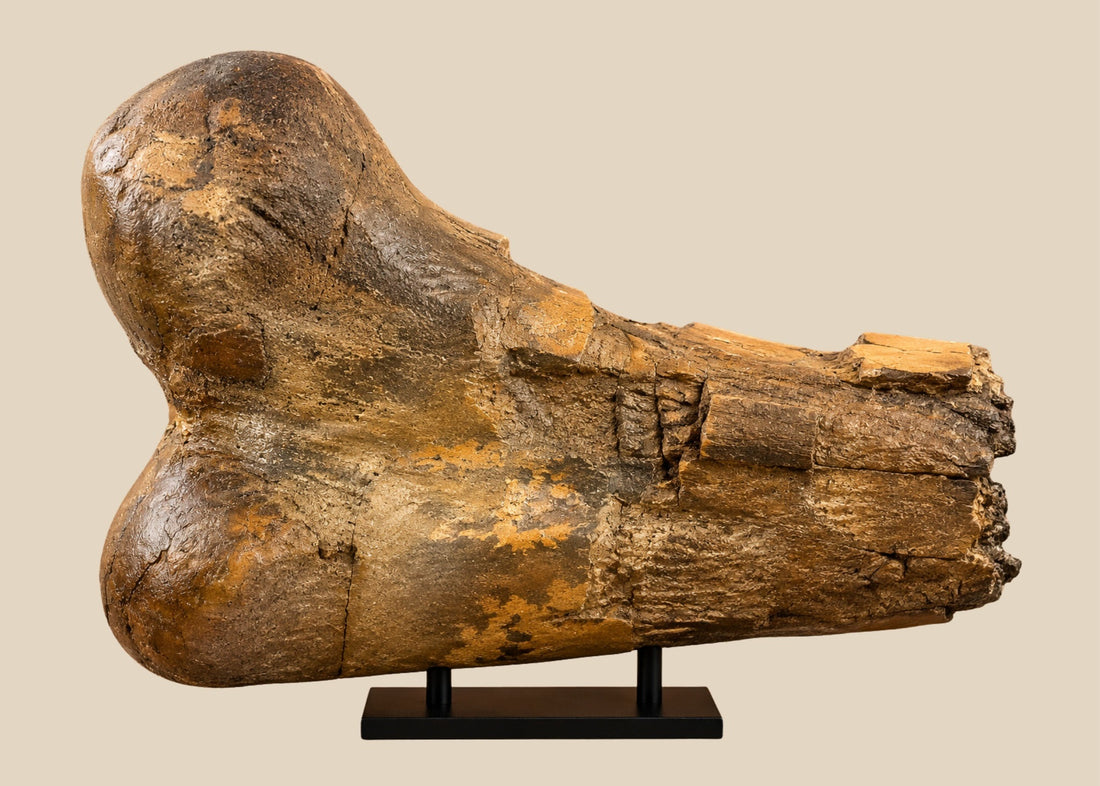
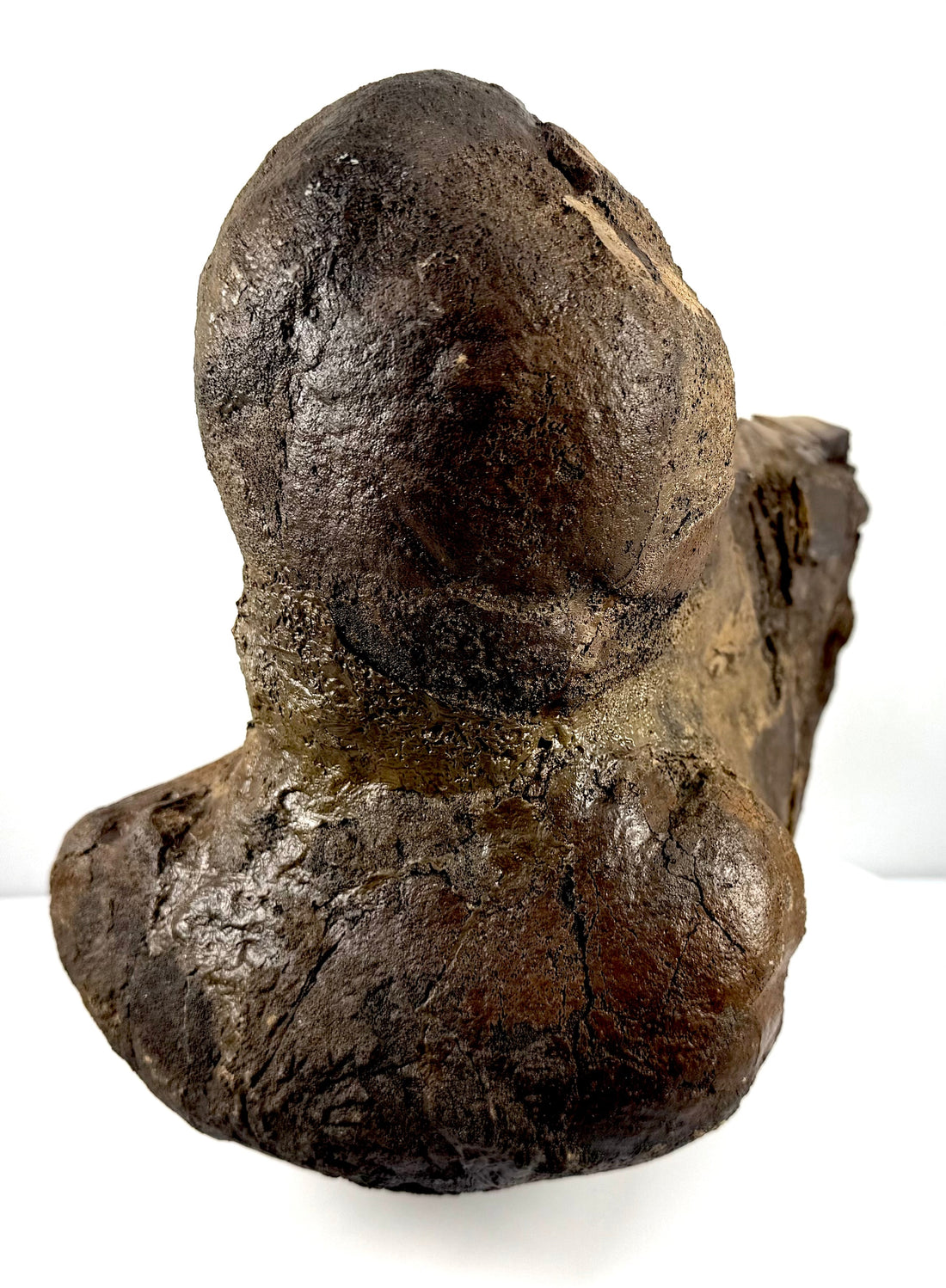
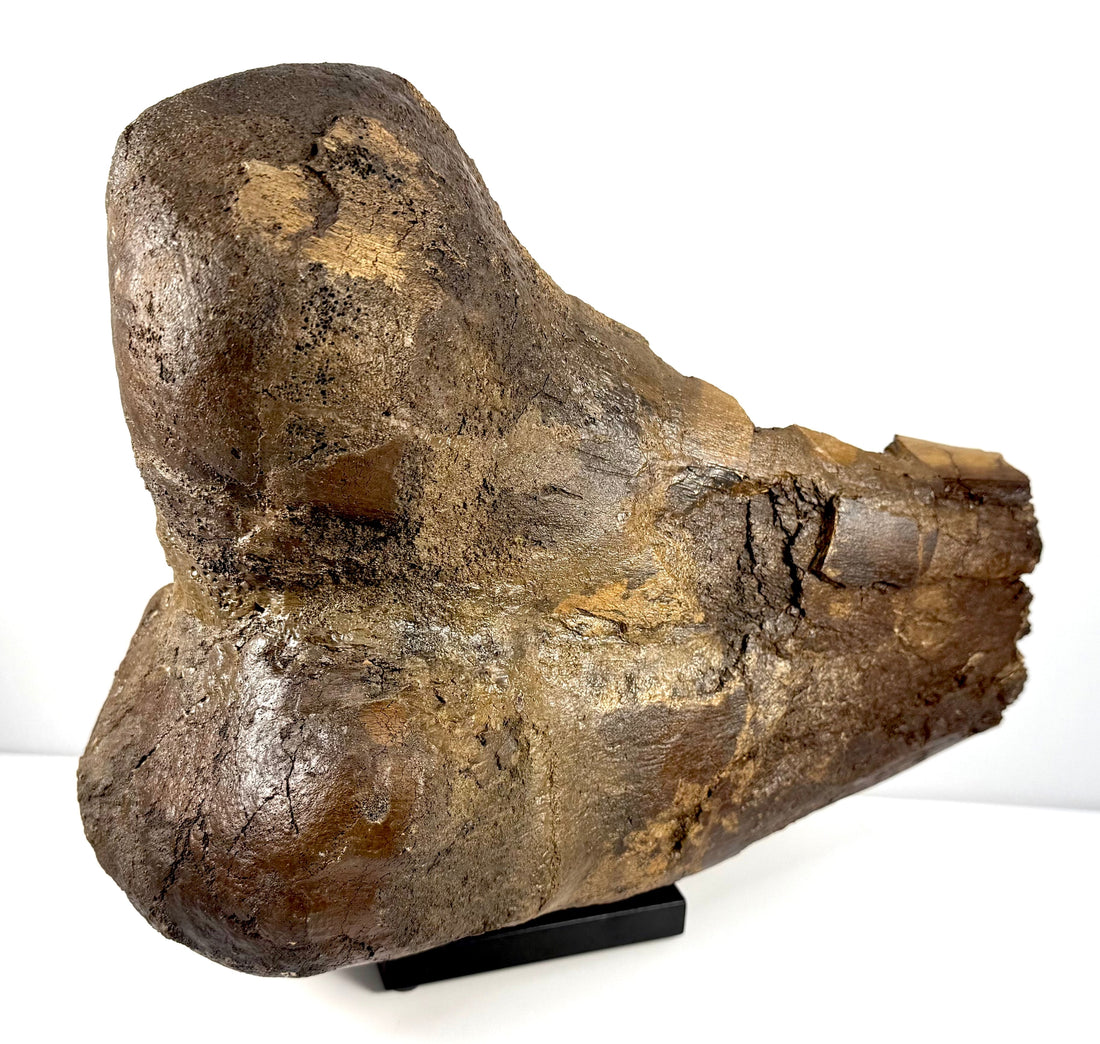
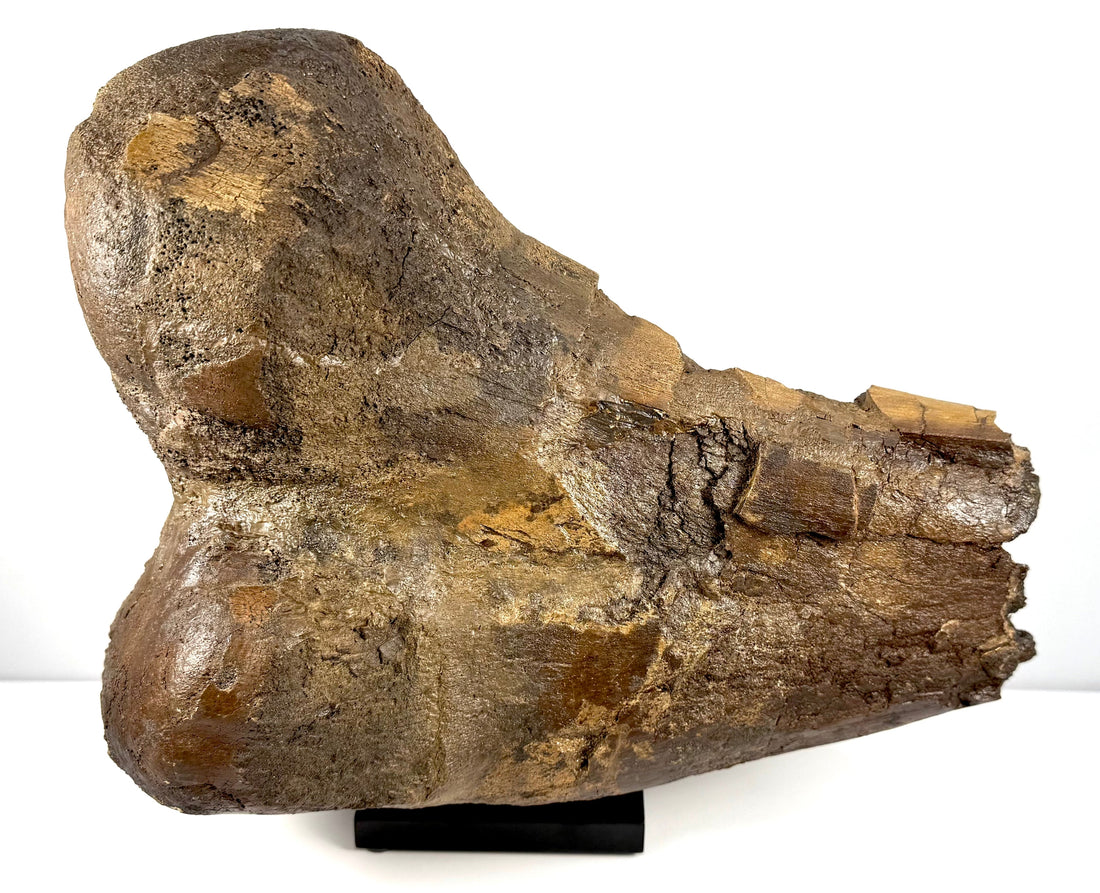
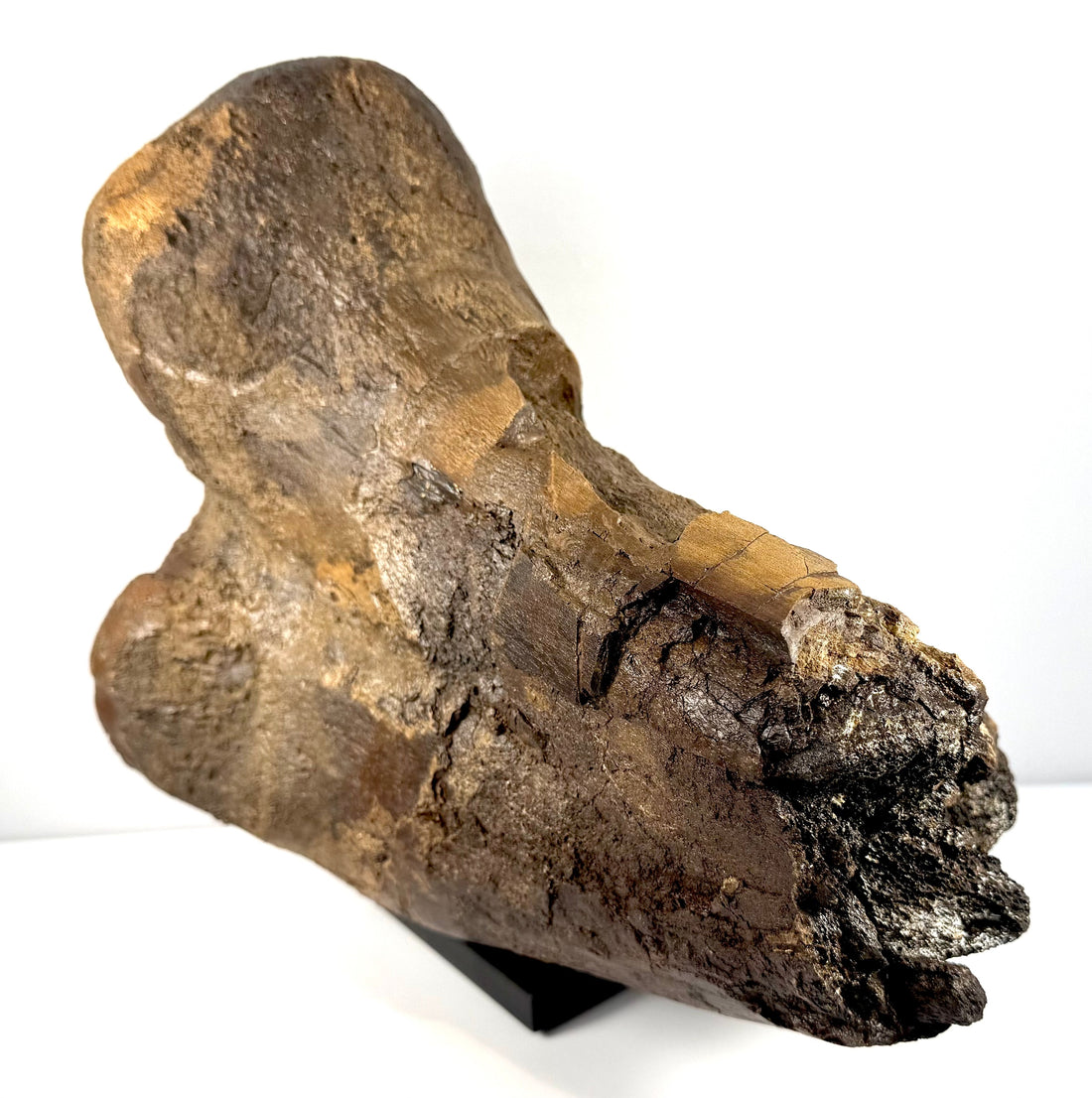
This impressive prehistoric fossil consists of a substantial terminal section of a tibia, or lower hind-leg bone, attributed to a hadrosaur, one of the large herbivorous duck-billed dinosaurs that inhabited Earth during the Late Cretaceous Period. Measuring approximately 14 inches in length, the specimen preserves a remarkably robust, expanded bone structure with prominent rounded projections, broad anatomical contours, and a substantial section of the adjoining shaft.
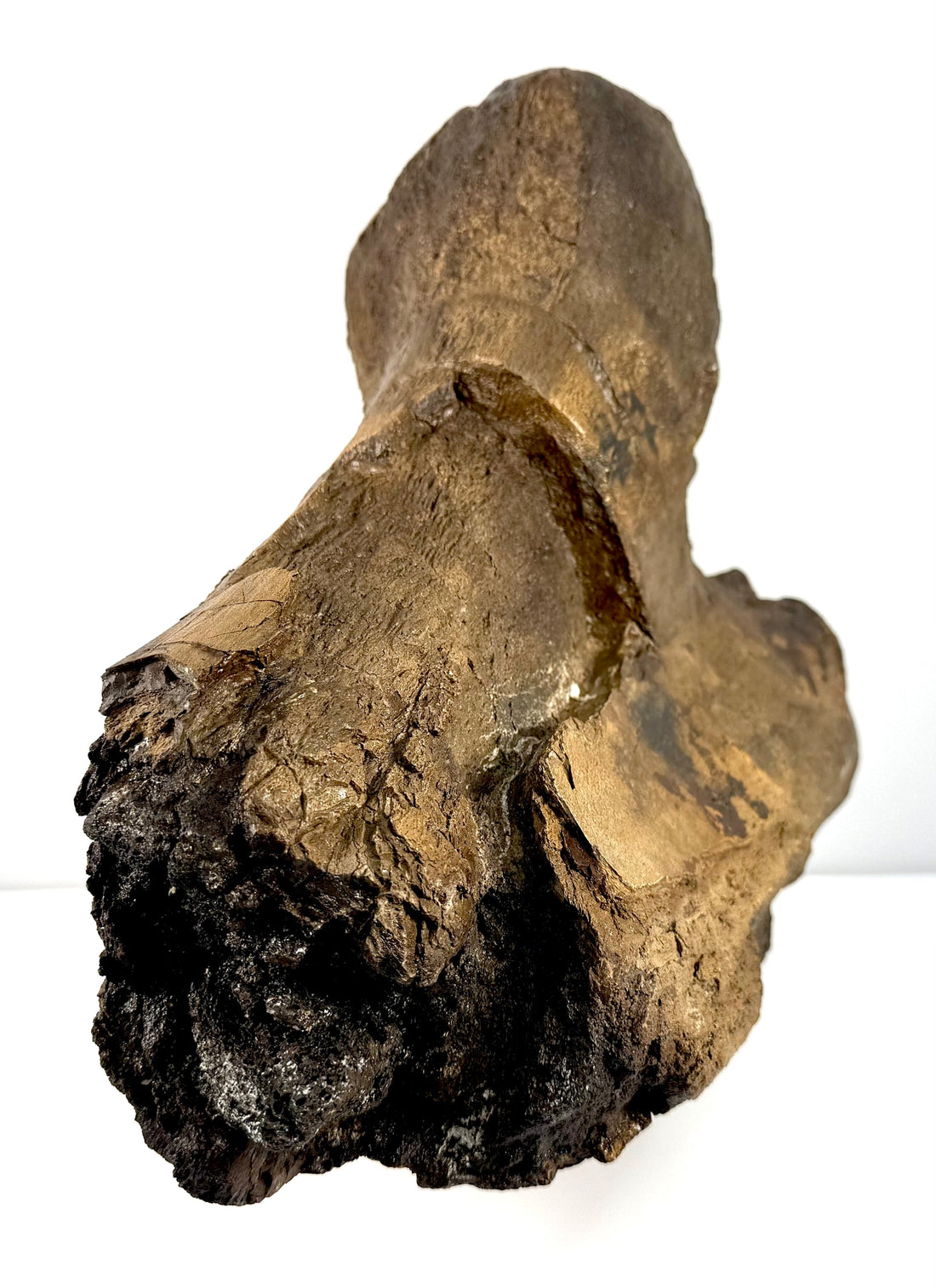
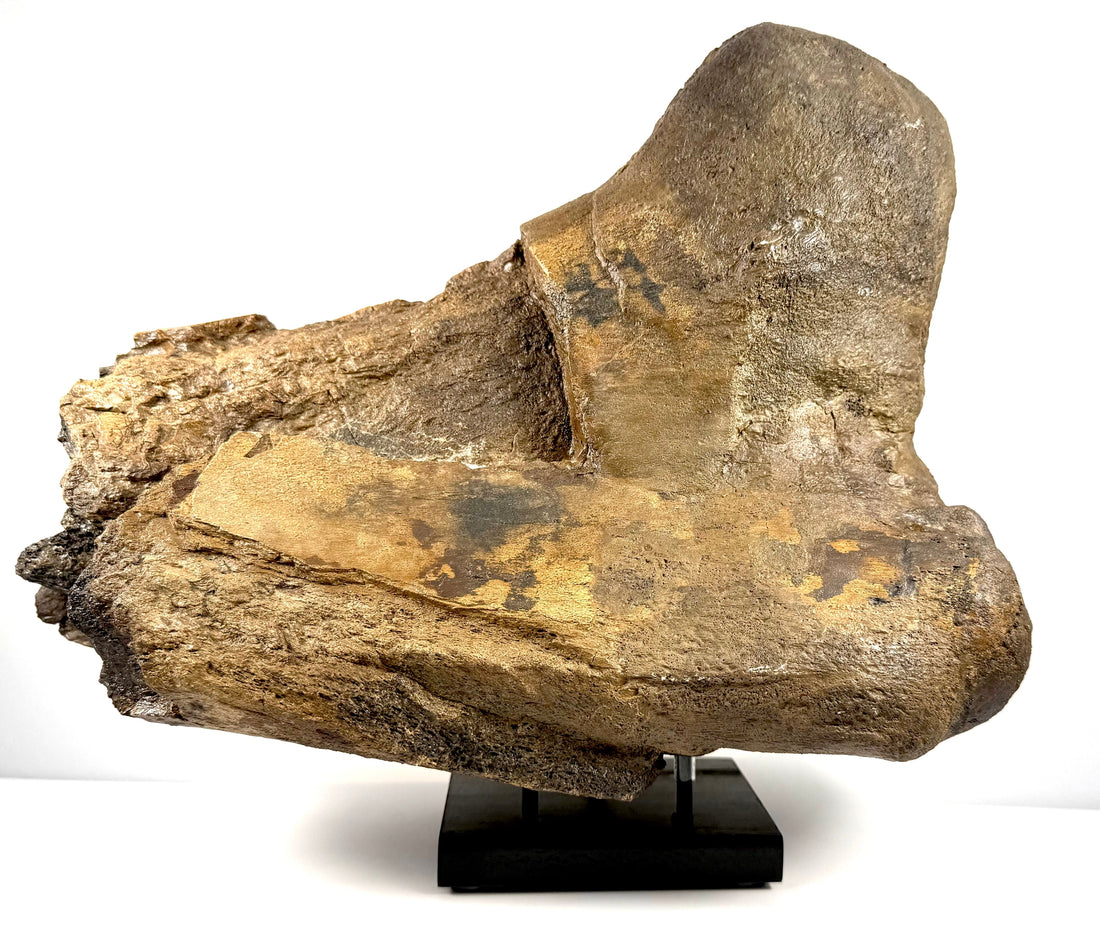
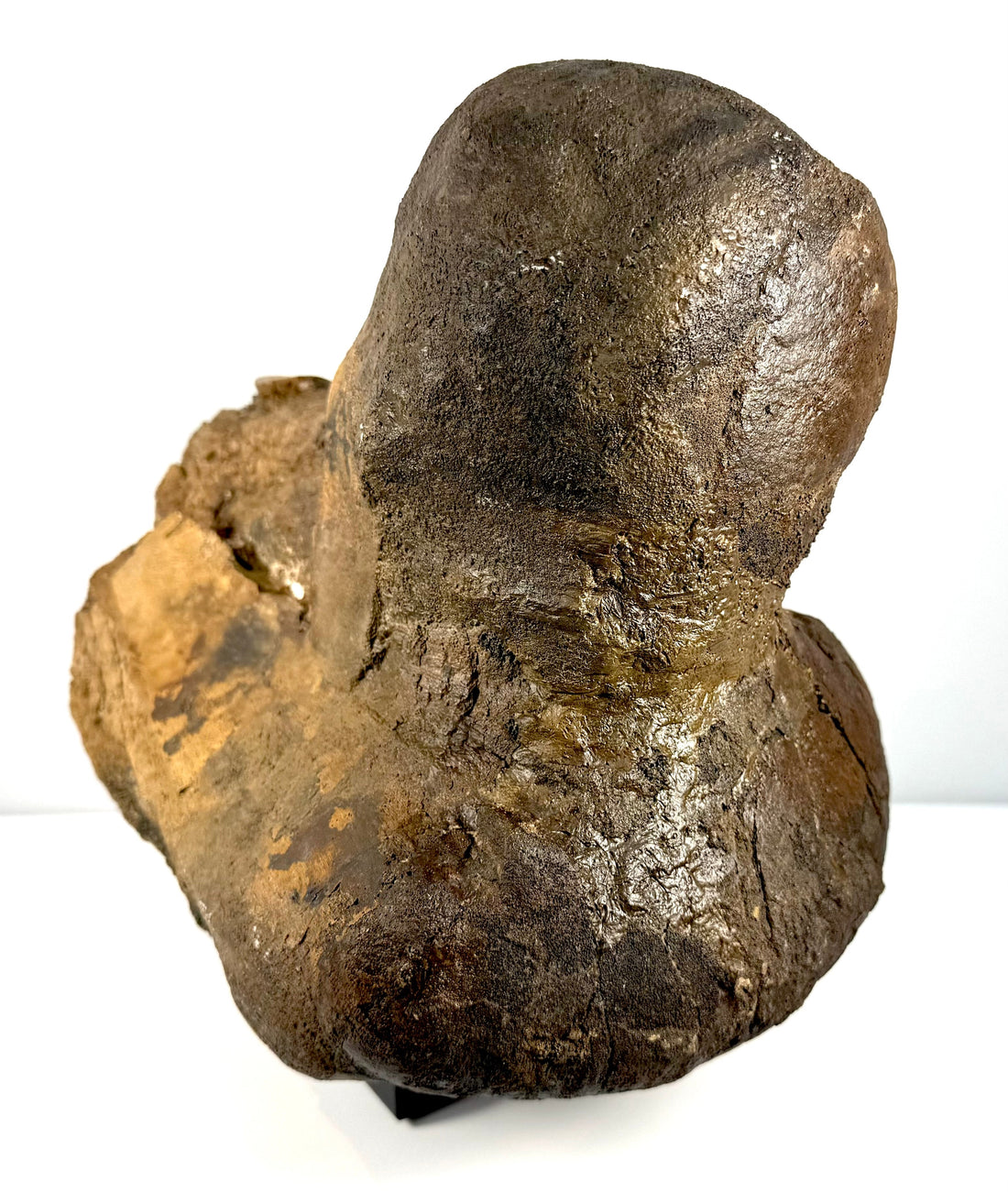
The specimen is characterized by a large, rounded extremity that rises prominently above the surrounding bone structure. This expanded area exhibits a relatively smooth, weathered exterior with subtle depressions, irregular surface textures, and areas of darker mineral coloration. Additional projecting bone structures create a complex anatomical profile with broad surfaces, recessed areas, and naturally irregular contours.
Extending from the enlarged extremity is a substantial section of the tibial shaft, displaying an elongated and gradually narrowing form. The preserved shaft exhibits longitudinal ridges, roughened surfaces, localized depressions, and exposed fossil textures. Its opposing termination is fractured and incomplete, revealing darker internal material and irregular broken surfaces.
The fossil displays an attractive combination of earthy brown, dark charcoal, golden ochre, tan, and muted amber coloration. Certain surfaces exhibit a darker, slightly glossy appearance, while other areas retain lighter, granular textures and contrasting mineral deposits. Fine fissures, shallow grooves, and irregular surface markings contribute to its distinctive appearance.
The tibia was one of the principal weight-bearing bones of the dinosaur's hind limb, extending between the knee and ankle. In hadrosaurid dinosaurs, this substantial skeletal element helped support the animal's body weight and played an important role in movement, balance, and locomotion. Its expanded ends provided articulation surfaces and anatomical structures associated with the surrounding joints and musculature.
The preserved extremity offers an opportunity to examine the robust skeletal adaptations of a large prehistoric herbivore. Although the specimen is attributed to a hadrosaur tibia, its precise anatomical orientation, genus, species, and original geological formation have not been independently established.
Features
- Substantial fossilized bone attributed to a hadrosaur tibia extremity
- Large, rounded articular region with prominent anatomical projections
- Preserved section of the adjoining tibial shaft
- Broad, smoothly contoured areas contrasting with roughened fossil surfaces
- Distinctive dark brown, charcoal, golden ochre, amber, and tan coloration
- Preserved longitudinal ridges, shallow grooves, and recessed anatomical areas
- Exposed internal fossil textures along fractured surfaces
- Natural mineral deposits and contrasting surface characteristics
- Substantial sculptural form illustrating the robust hind-limb anatomy of duck-billed dinosaurs
Cultural Significance
Hadrosaurs, commonly known as duck-billed dinosaurs, were among the most successful and widespread herbivorous dinosaurs of the Late Cretaceous Period. Inhabiting prehistoric North America and Asia, these remarkable animals were characterized by broad, flattened snouts, powerful hind limbs, and specialized dental structures adapted to processing large quantities of vegetation. Well-known genera include Edmontosaurus, Corythosaurus, and Parasaurolophus.
Hadrosaurs were capable of moving on both two and four legs, with their robust hind limbs providing essential support and propulsion. The tibia played a particularly important role in locomotion, supporting the animal's considerable body weight and facilitating movement between the knee and ankle. Fossilized limb bones provide paleontologists with valuable insights into dinosaur anatomy, posture, physical development, and evolutionary adaptations.
Hadrosaur fossils have played an important role in paleontological research since the historic discovery of Hadrosaurus foulkii in New Jersey in 1858. Subsequent discoveries of skeletons, fossilized skin impressions, eggs, and nesting sites have expanded our understanding of these prehistoric animals. Preserved skeletal specimens offer a tangible connection to the extraordinary diversity of life that existed millions of years before the emergence of human civilization.
Condition
Preserved as a substantial, incomplete fossilized bone displaying extensive surface weathering, mineral deposits, scattered abrasions, fractures, and localized losses consistent with its fragmentary preservation. The prominent expanded extremity retains much of its rounded form, with broad, relatively smooth surfaces exhibiting fine pitting, shallow depressions, and contrasting mineral coloration. The adjoining bone structures display irregular projections, recessed areas, and variations in surface texture. The preserved section of the shaft exhibits substantial weathering, longitudinal cracks, localized losses, and fractured surfaces. Its terminal end is incomplete, with irregular broken margins and darker exposed internal material. Several areas exhibit distinct lines of separation, differences in surface coloration, and sections of lighter material that may represent previous stabilization, filling, or restoration. The exterior retains a combination of dark brown, charcoal, golden ochre, and tan coloration, with certain areas exhibiting a slightly glossy appearance. Scattered pits, surface abrasions, and irregular mineral deposits remain visible throughout.
Dimensions (Approximate)
Length: 14 in
Height: 10 in
Depth: 9 in
Measurements exclude the display stand.
Age (Approximate)
66–85 million years old (precise geological age undetermined)
Provenance
Acquired from Broken Rock Fossil Shop, Belfast, Prince Edward Island, Canada, an independent fossil and mineral shop operated by Linda Nobles and specializing in dinosaur fossils, minerals, crystals, and other natural-history specimens.
Subsequently acquired by a private collector in Toronto, Ontario, Canada.
Learn More
Examine a comparable Late Cretaceous hadrosaur tibia documented among the fossilized skeletal remains of Hadrosaurus occidentalis through the collections of the Smithsonian National Museum of Natural History
Explore additional dinosaur fossils, prehistoric skeletal remains, and remarkable natural-history specimens in our Science, Exploration & Curiosities Collection
Description
Historical Context & Origin
Region: Geographic origin undetermined; hadrosaurid dinosaurs were widely distributed across prehistoric North America and Asia
Material: Fossilized dinosaur bone with natural mineralization
Period: Late Cretaceous, circa 85–66 million years ago (attributed to Hadrosauridae)
Description
This impressive prehistoric fossil consists of a substantial terminal section of a tibia, or lower hind-leg bone, attributed to a hadrosaur, one of the large herbivorous duck-billed dinosaurs that inhabited Earth during the Late Cretaceous Period. Measuring approximately 14 inches in length, the specimen preserves a remarkably robust, expanded bone structure with prominent rounded projections, broad anatomical contours, and a substantial section of the adjoining shaft.
The specimen is characterized by a large, rounded extremity that rises prominently above the surrounding bone structure. This expanded area exhibits a relatively smooth, weathered exterior with subtle depressions, irregular surface textures, and areas of darker mineral coloration. Additional projecting bone structures create a complex anatomical profile with broad surfaces, recessed areas, and naturally irregular contours.
Extending from the enlarged extremity is a substantial section of the tibial shaft, displaying an elongated and gradually narrowing form. The preserved shaft exhibits longitudinal ridges, roughened surfaces, localized depressions, and exposed fossil textures. Its opposing termination is fractured and incomplete, revealing darker internal material and irregular broken surfaces.
The fossil displays an attractive combination of earthy brown, dark charcoal, golden ochre, tan, and muted amber coloration. Certain surfaces exhibit a darker, slightly glossy appearance, while other areas retain lighter, granular textures and contrasting mineral deposits. Fine fissures, shallow grooves, and irregular surface markings contribute to its distinctive appearance.
The tibia was one of the principal weight-bearing bones of the dinosaur's hind limb, extending between the knee and ankle. In hadrosaurid dinosaurs, this substantial skeletal element helped support the animal's body weight and played an important role in movement, balance, and locomotion. Its expanded ends provided articulation surfaces and anatomical structures associated with the surrounding joints and musculature.
The preserved extremity offers an opportunity to examine the robust skeletal adaptations of a large prehistoric herbivore. Although the specimen is attributed to a hadrosaur tibia, its precise anatomical orientation, genus, species, and original geological formation have not been independently established.
Features
- Substantial fossilized bone attributed to a hadrosaur tibia extremity
- Large, rounded articular region with prominent anatomical projections
- Preserved section of the adjoining tibial shaft
- Broad, smoothly contoured areas contrasting with roughened fossil surfaces
- Distinctive dark brown, charcoal, golden ochre, amber, and tan coloration
- Preserved longitudinal ridges, shallow grooves, and recessed anatomical areas
- Exposed internal fossil textures along fractured surfaces
- Natural mineral deposits and contrasting surface characteristics
- Substantial sculptural form illustrating the robust hind-limb anatomy of duck-billed dinosaurs
Cultural Significance
Hadrosaurs, commonly known as duck-billed dinosaurs, were among the most successful and widespread herbivorous dinosaurs of the Late Cretaceous Period. Inhabiting prehistoric North America and Asia, these remarkable animals were characterized by broad, flattened snouts, powerful hind limbs, and specialized dental structures adapted to processing large quantities of vegetation. Well-known genera include Edmontosaurus, Corythosaurus, and Parasaurolophus.
Hadrosaurs were capable of moving on both two and four legs, with their robust hind limbs providing essential support and propulsion. The tibia played a particularly important role in locomotion, supporting the animal's considerable body weight and facilitating movement between the knee and ankle. Fossilized limb bones provide paleontologists with valuable insights into dinosaur anatomy, posture, physical development, and evolutionary adaptations.
Hadrosaur fossils have played an important role in paleontological research since the historic discovery of Hadrosaurus foulkii in New Jersey in 1858. Subsequent discoveries of skeletons, fossilized skin impressions, eggs, and nesting sites have expanded our understanding of these prehistoric animals. Preserved skeletal specimens offer a tangible connection to the extraordinary diversity of life that existed millions of years before the emergence of human civilization.
Condition
Preserved as a substantial, incomplete fossilized bone displaying extensive surface weathering, mineral deposits, scattered abrasions, fractures, and localized losses consistent with its fragmentary preservation. The prominent expanded extremity retains much of its rounded form, with broad, relatively smooth surfaces exhibiting fine pitting, shallow depressions, and contrasting mineral coloration. The adjoining bone structures display irregular projections, recessed areas, and variations in surface texture. The preserved section of the shaft exhibits substantial weathering, longitudinal cracks, localized losses, and fractured surfaces. Its terminal end is incomplete, with irregular broken margins and darker exposed internal material. Several areas exhibit distinct lines of separation, differences in surface coloration, and sections of lighter material that may represent previous stabilization, filling, or restoration. The exterior retains a combination of dark brown, charcoal, golden ochre, and tan coloration, with certain areas exhibiting a slightly glossy appearance. Scattered pits, surface abrasions, and irregular mineral deposits remain visible throughout.
Dimensions (Approximate)
Length: 14 in
Height: 10 in
Depth: 9 in
Measurements exclude the display stand.
Age (Approximate)
66–85 million years old (precise geological age undetermined)
Provenance
Acquired from Broken Rock Fossil Shop, Belfast, Prince Edward Island, Canada, an independent fossil and mineral shop operated by Linda Nobles and specializing in dinosaur fossils, minerals, crystals, and other natural-history specimens.
Subsequently acquired by a private collector in Toronto, Ontario, Canada.
Learn More
Examine a comparable Late Cretaceous hadrosaur tibia documented among the fossilized skeletal remains of Hadrosaurus occidentalis through the collections of the Smithsonian National Museum of Natural History
Explore additional dinosaur fossils, prehistoric skeletal remains, and remarkable natural-history specimens in our Science, Exploration & Curiosities Collection
Vous aimerez peut-être aussi
