



Late Medieval Bronze Finger Ring with Engraved Geometric Bezel | Circa 15th–16th Century CE
- Prix habituel
- $400.00
- Prix soldé
- $400.00
- Prix habituel
Impossible de charger la disponibilité du service de retrait







Late Medieval Bronze Finger Ring with Engraved Geometric Bezel | Circa 15th–16th Century CE
Description
Plus
Moins
Historical Context & Origin
Region: Medieval Europe, Western European tradition
Material: Bronze (copper alloy)
Period: Late Medieval Period, circa 15th–16th Century CE (attributed)
Description
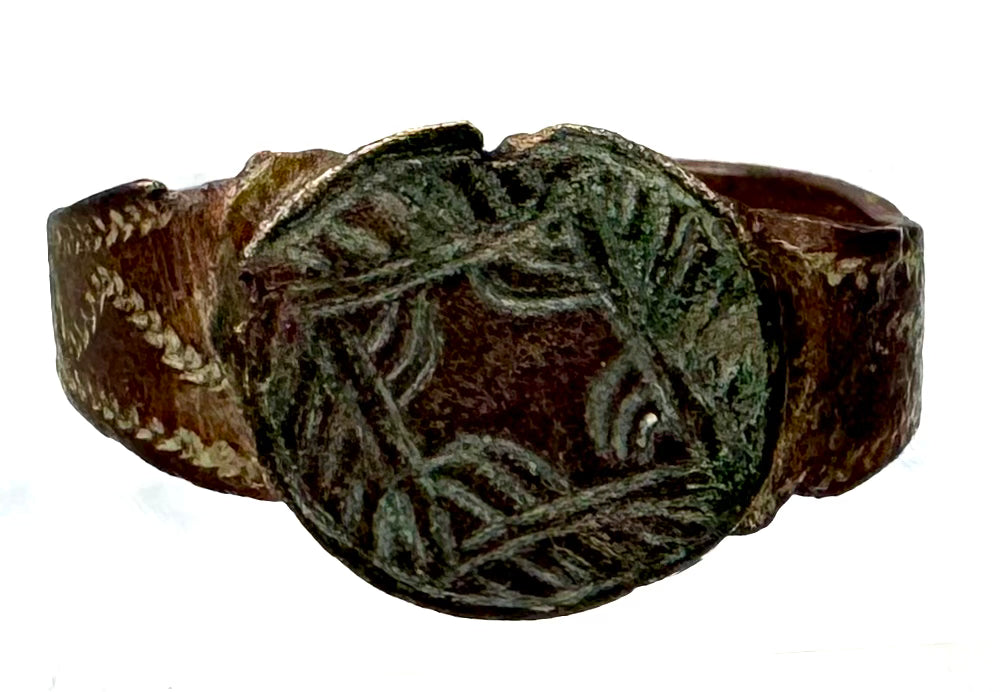
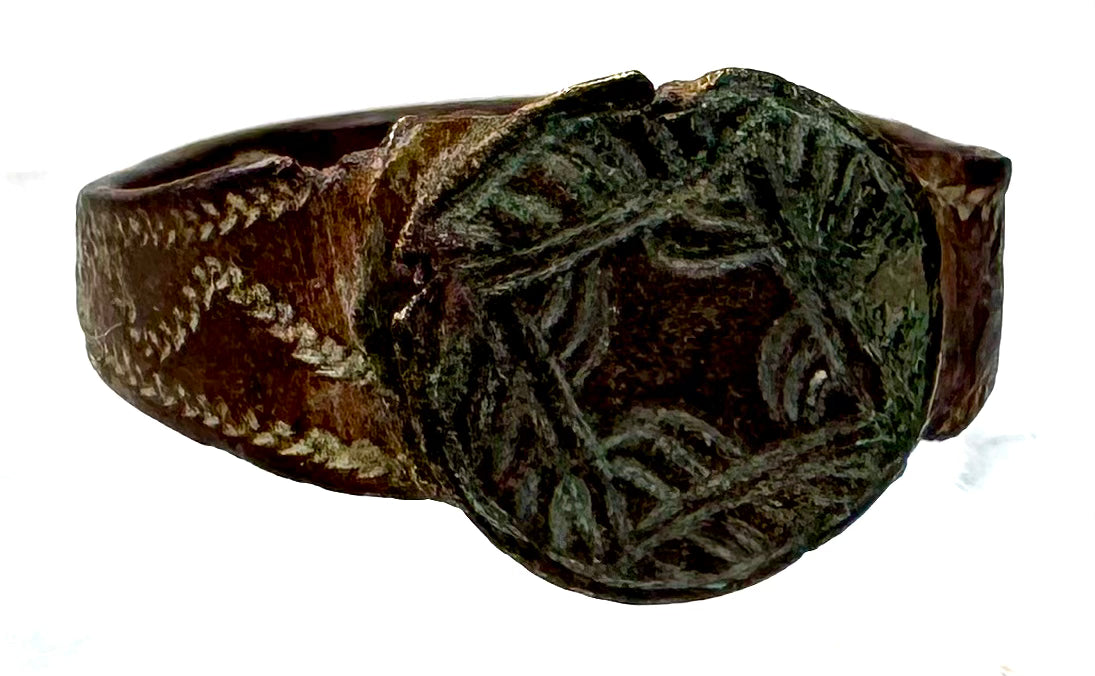
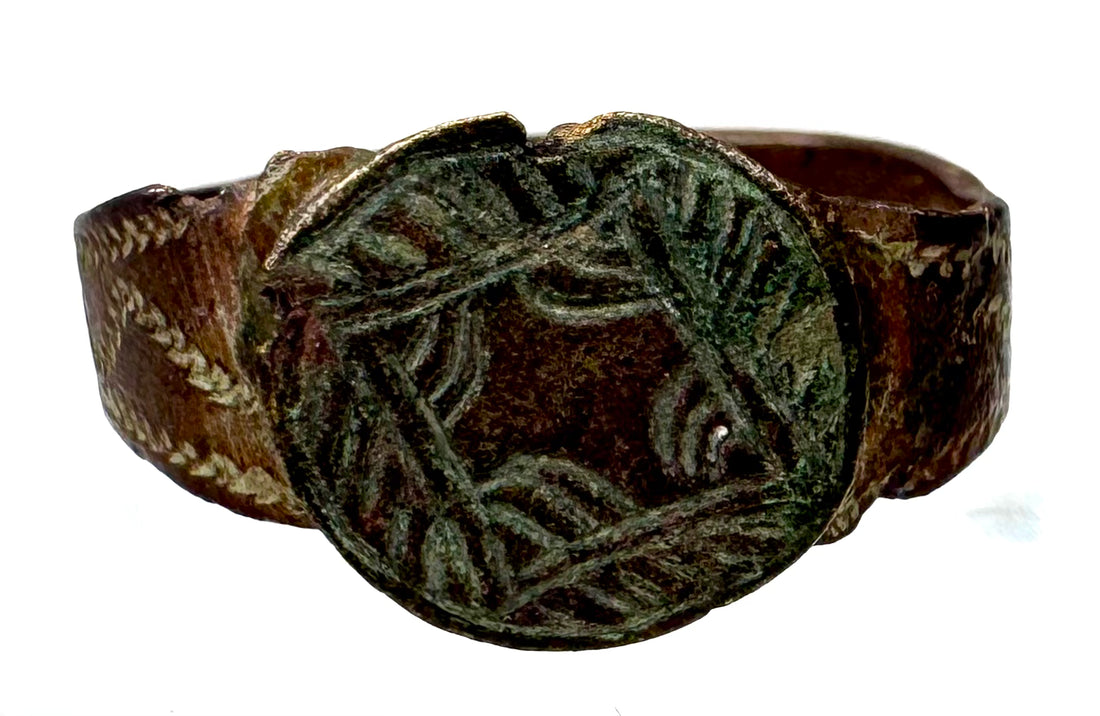
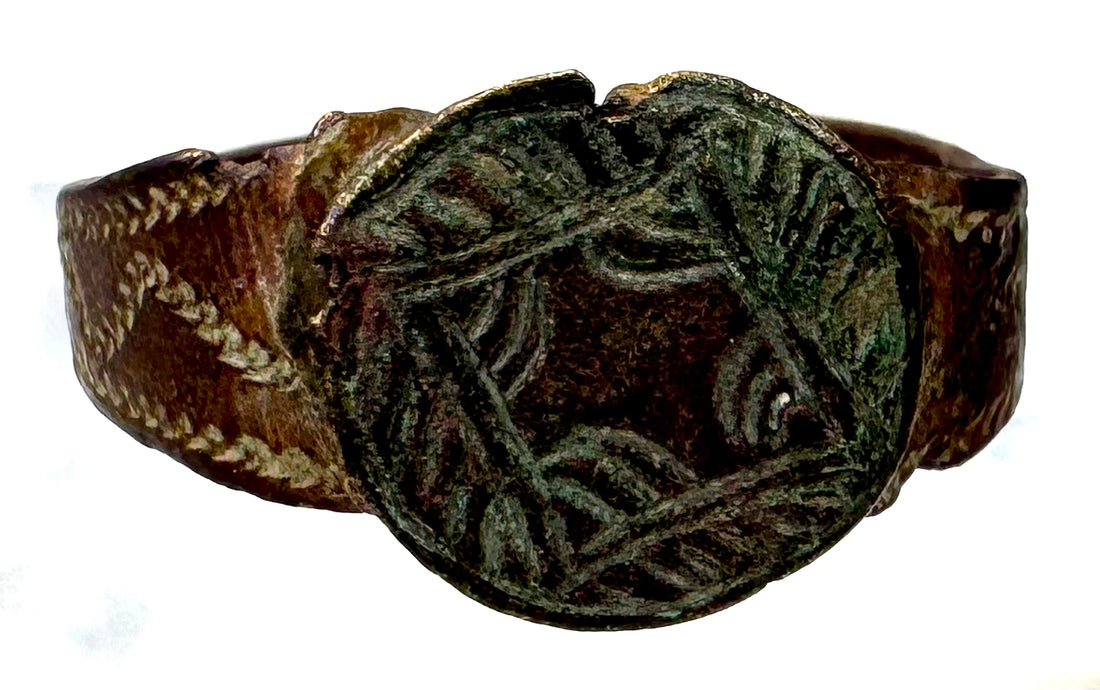
This distinctive Late Medieval-style bronze finger ring features a prominent circular bezel decorated with intricate geometric engraving, a substantial bronze hoop, and ornamental detailing along its shoulders. Attributed to the 15th–16th century CE, the ring reflects the decorative metalworking traditions associated with European medieval jewellery, in which engraved patterns and symbolic ornamentation were frequently incorporated into personal accessories.
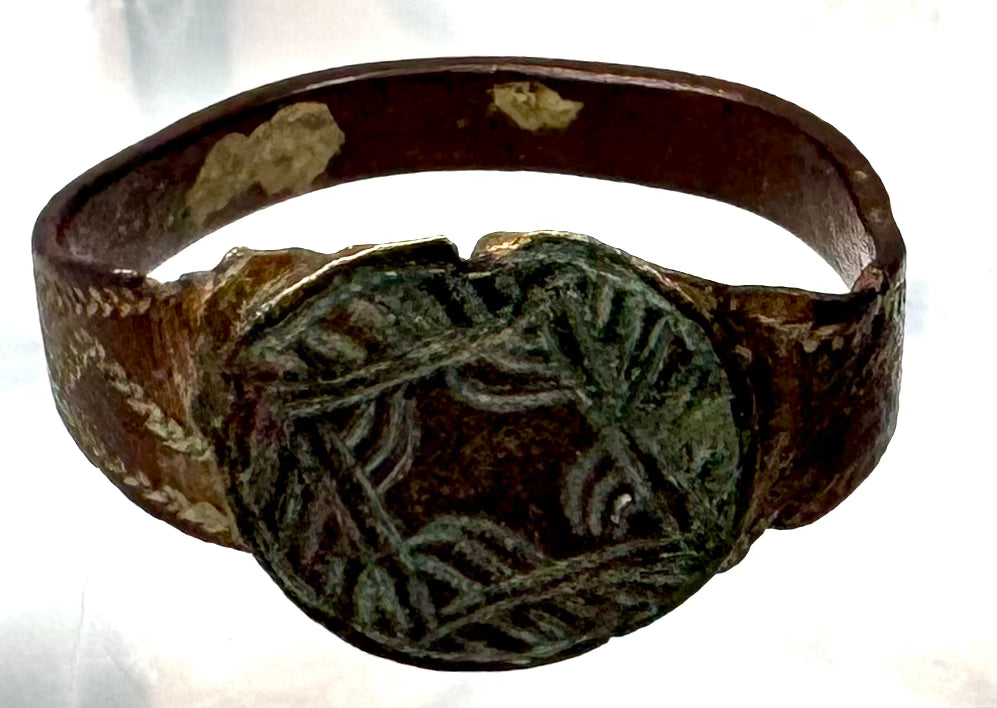
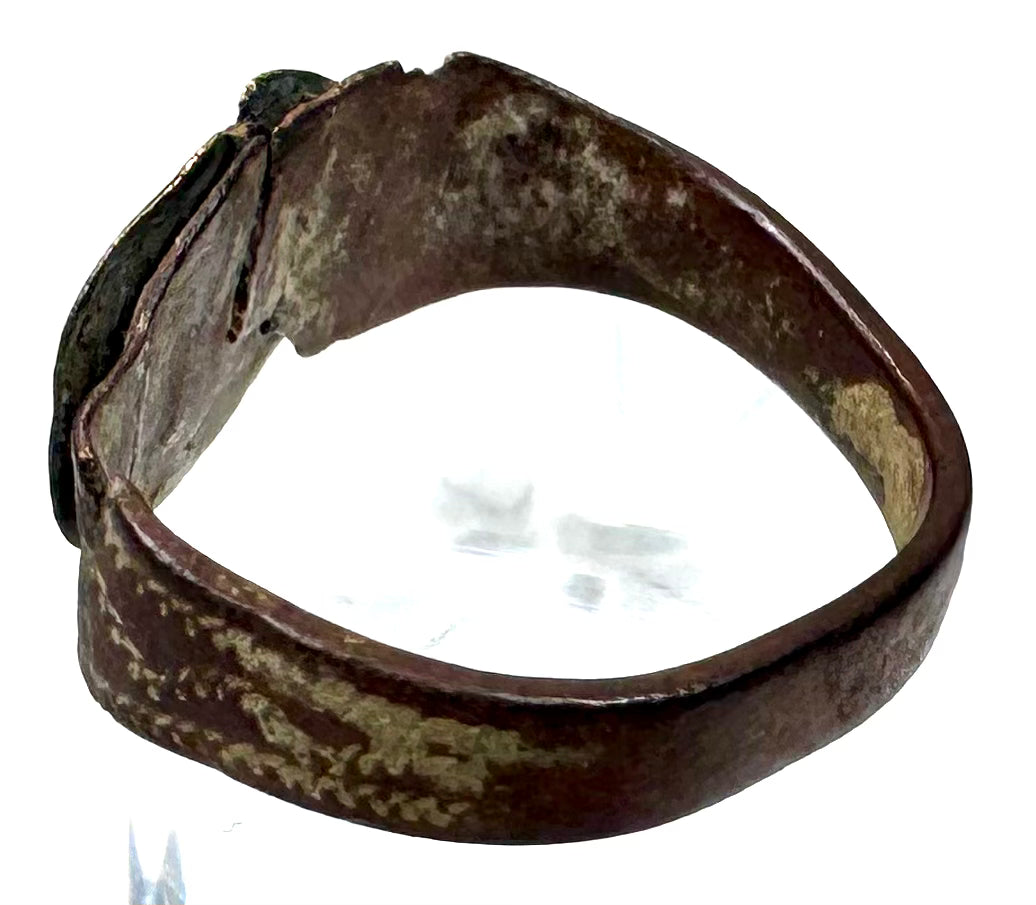
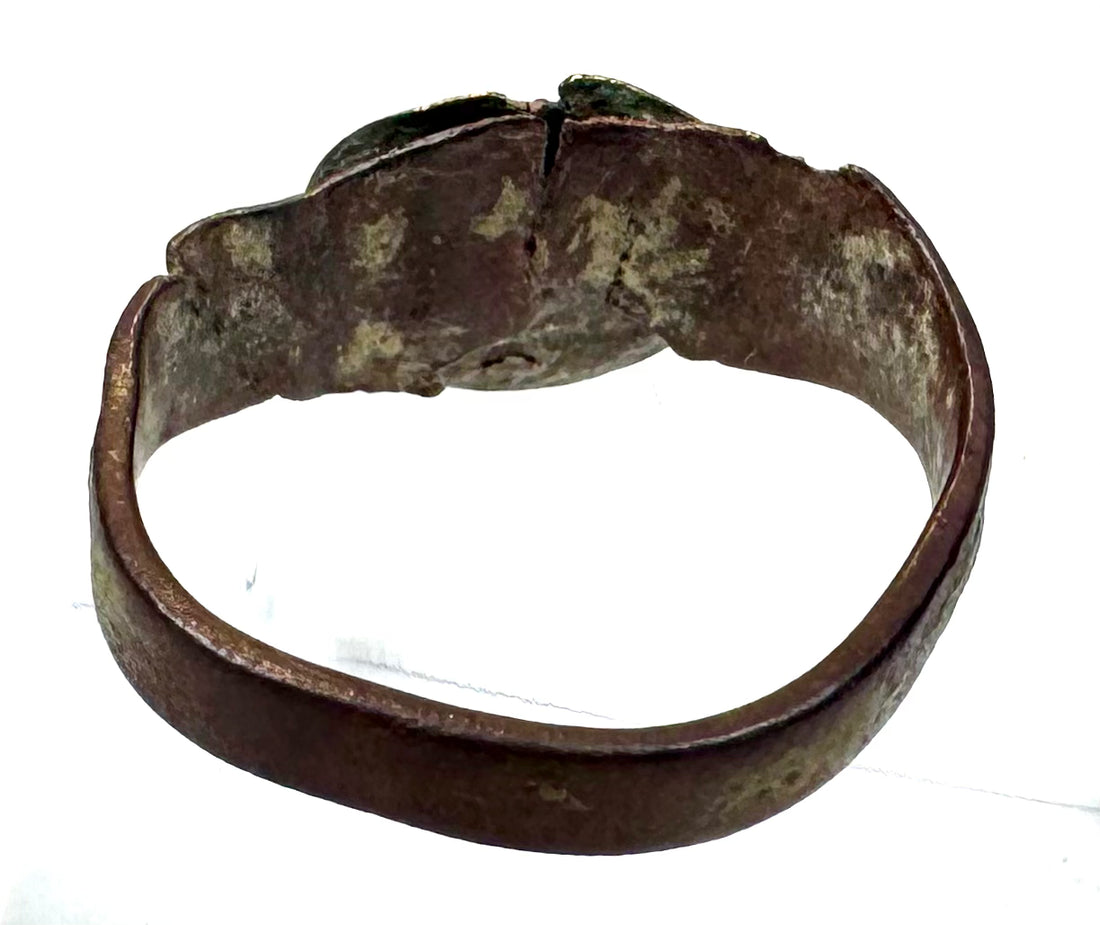
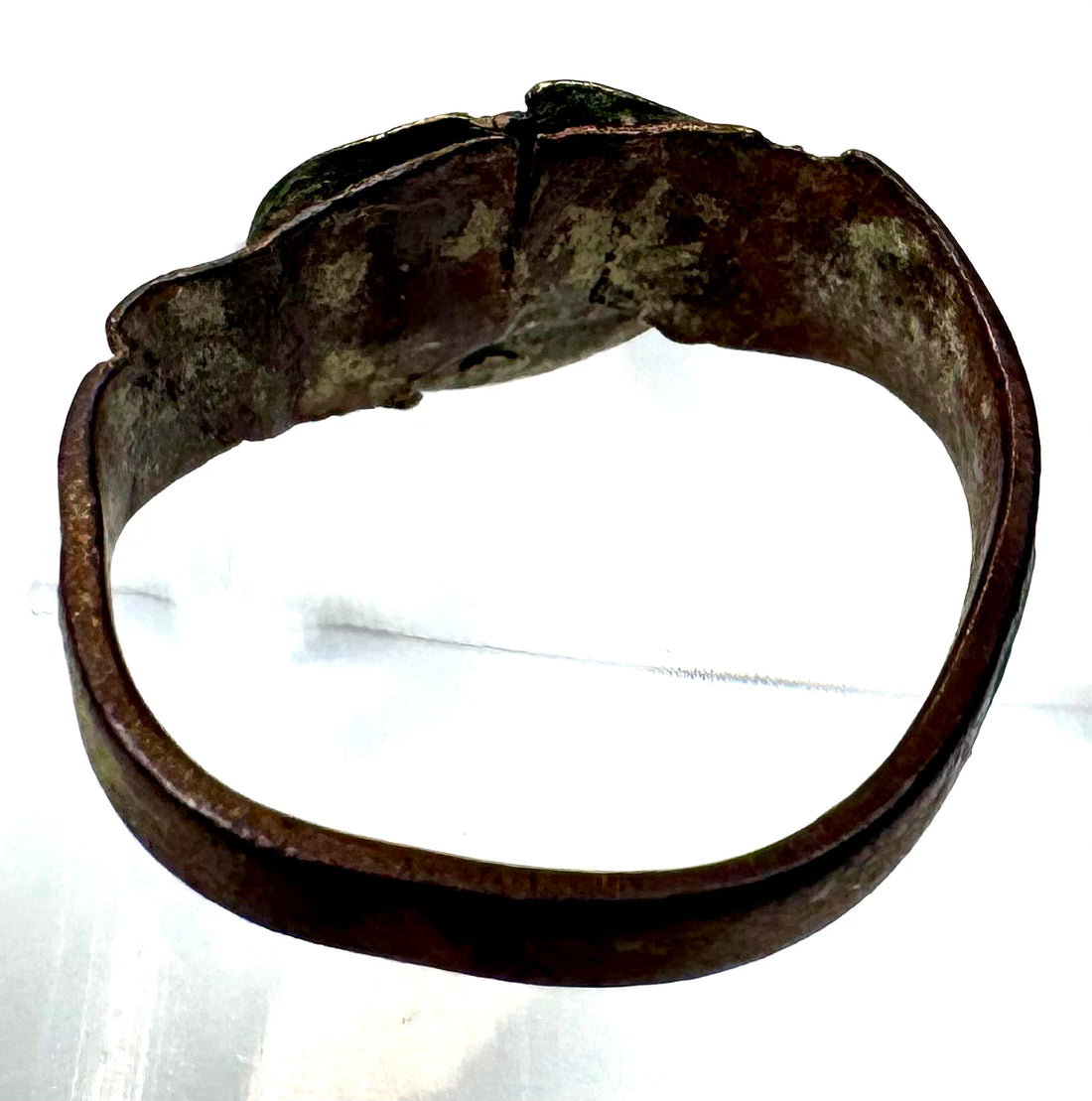
The ring features a broad, continuous bronze band that gradually expands toward the shoulders, supporting a raised circular bezel. Its central decoration consists of intersecting straight and curved lines forming an elaborate geometric composition with star-like and foliate characteristics. Closely spaced diagonal incisions fill portions of the surrounding design, while additional linear decoration is visible along the shoulders. The bezel retains a slightly irregular perimeter, and the band narrows toward the rear, forming a relatively smooth interior.
The bronze surface exhibits a rich combination of reddish-brown, dark olive-green, and earthy tones, with scattered pale mineral-like deposits and extensive surface oxidation. Darker green patination is particularly evident within the recessed engravings, accentuating the intricate decorative pattern against the warmer bronze-coloured surface. The ring's substantial hoop, raised circular bezel, and engraved geometric ornamentation are closely comparable to Late Medieval bronze rings documented by specialist antiquities dealers.
Features
- Prominent raised circular bezel with engraved geometric decoration
- Intricate arrangement of intersecting straight and curved incised lines
- Central star-like composition with surrounding foliate-style ornamentation
- Broad bronze hoop gradually expanding toward the shoulders
- Additional incised linear decoration along the shoulder sections
- Continuous circular band with a relatively smooth interior
- Rich reddish-brown and dark olive-green surface patination
- Extensive oxidation, scattered mineral-like deposits, and age-related surface wear
Cultural Significance
Finger rings were important objects of personal adornment throughout medieval Europe, reflecting individual identity, social standing, personal beliefs, and artistic preferences. During the later Middle Ages, rings were produced from various metals, including gold, silver, bronze, and other copper alloys. While precious-metal jewellery was often associated with wealth and higher social status, bronze rings provided a more accessible form of personal ornamentation and could incorporate elaborate decorative designs.
Engraved bezels became a distinctive feature of medieval jewellery, frequently incorporating geometric patterns, floral motifs, religious symbols, heraldic imagery, and personal inscriptions. Some rings served as signets, allowing their owners to impress identifying marks into sealing wax, while others were worn primarily as decorative or symbolic ornaments. The intersecting linear and curved decoration of this example reflects the geometric and ornamental traditions encountered in Late Medieval metalwork, although the original meaning and intended function of its engraved design remain undetermined.
During the 15th and 16th centuries, European jewellery continued to develop through advances in metalworking and engraving techniques. Craftsmen produced rings featuring raised bezels, decorated shoulders, and increasingly varied ornamental compositions. These accessories provide valuable insight into the relationship between personal adornment, craftsmanship, and cultural expression during the transition from the Late Medieval period into the Early Modern era.
Condition
The ring retains its overall circular form, substantial bronze hoop, and prominent engraved bezel. Extensive surface wear is visible throughout, including scattered abrasions, scratches, oxidation, localized pitting, mineral-like deposits, and areas of discolouration. The circular bezel retains its intricate geometric decoration, with dark green corrosion products and accumulated deposits concentrated within the recessed lines. The surrounding surface exhibits rich reddish-brown coloration with traces of darker olive-green patination. Wear and minor irregularities are present along the raised bezel edges and adjoining shoulders, with small gaps or apparent fissures visible near the bezel attachment areas. The band exhibits scattered pale deposits, particularly along the interior and outer shoulders, together with areas of uneven surface texture and minor distortion. Despite these condition characteristics, the ring retains its distinctive decorative design and recognizable historical form.
Dimensions (Approximate)
Ring Size - US 6.5
Age (Approximate)
425–625 years old
Provenance
Formerly part of the Moneta Collection, a Tucson-based numismatic dealership specializing in collectible coins. Moneta is listed among professional dealers on the VCoins marketplace and participated in the 2017 U.S. Mexican Numismatic Association convention.
Subsequently handled by Palmyra Heritage Gallery, a third-generation family business specializing in ancient coins, antiquities, and historical artifacts, with a New York gallery operating since 1995. The gallery deals in Egyptian, Greek, Roman, Byzantine, Islamic, and Pre-Columbian material and is affiliated with the American Numismatic Society and Florida Numismatic Association.
Learn More
Explore a comparable Late Medieval copper-alloy finger ring dating to the 15th–16th century CE, featuring an engraved circular bezel, geometric decoration, and broad shoulders, documented by the Portable Antiquities Scheme
Discover additional medieval rings, historic jewellery, and decorative metalwork in our Ancient Rings & Jewelry Collection
Description
Historical Context & Origin
Region: Medieval Europe, Western European tradition
Material: Bronze (copper alloy)
Period: Late Medieval Period, circa 15th–16th Century CE (attributed)
Description
This distinctive Late Medieval-style bronze finger ring features a prominent circular bezel decorated with intricate geometric engraving, a substantial bronze hoop, and ornamental detailing along its shoulders. Attributed to the 15th–16th century CE, the ring reflects the decorative metalworking traditions associated with European medieval jewellery, in which engraved patterns and symbolic ornamentation were frequently incorporated into personal accessories.
The ring features a broad, continuous bronze band that gradually expands toward the shoulders, supporting a raised circular bezel. Its central decoration consists of intersecting straight and curved lines forming an elaborate geometric composition with star-like and foliate characteristics. Closely spaced diagonal incisions fill portions of the surrounding design, while additional linear decoration is visible along the shoulders. The bezel retains a slightly irregular perimeter, and the band narrows toward the rear, forming a relatively smooth interior.
The bronze surface exhibits a rich combination of reddish-brown, dark olive-green, and earthy tones, with scattered pale mineral-like deposits and extensive surface oxidation. Darker green patination is particularly evident within the recessed engravings, accentuating the intricate decorative pattern against the warmer bronze-coloured surface. The ring's substantial hoop, raised circular bezel, and engraved geometric ornamentation are closely comparable to Late Medieval bronze rings documented by specialist antiquities dealers.
Features
- Prominent raised circular bezel with engraved geometric decoration
- Intricate arrangement of intersecting straight and curved incised lines
- Central star-like composition with surrounding foliate-style ornamentation
- Broad bronze hoop gradually expanding toward the shoulders
- Additional incised linear decoration along the shoulder sections
- Continuous circular band with a relatively smooth interior
- Rich reddish-brown and dark olive-green surface patination
- Extensive oxidation, scattered mineral-like deposits, and age-related surface wear
Cultural Significance
Finger rings were important objects of personal adornment throughout medieval Europe, reflecting individual identity, social standing, personal beliefs, and artistic preferences. During the later Middle Ages, rings were produced from various metals, including gold, silver, bronze, and other copper alloys. While precious-metal jewellery was often associated with wealth and higher social status, bronze rings provided a more accessible form of personal ornamentation and could incorporate elaborate decorative designs.
Engraved bezels became a distinctive feature of medieval jewellery, frequently incorporating geometric patterns, floral motifs, religious symbols, heraldic imagery, and personal inscriptions. Some rings served as signets, allowing their owners to impress identifying marks into sealing wax, while others were worn primarily as decorative or symbolic ornaments. The intersecting linear and curved decoration of this example reflects the geometric and ornamental traditions encountered in Late Medieval metalwork, although the original meaning and intended function of its engraved design remain undetermined.
During the 15th and 16th centuries, European jewellery continued to develop through advances in metalworking and engraving techniques. Craftsmen produced rings featuring raised bezels, decorated shoulders, and increasingly varied ornamental compositions. These accessories provide valuable insight into the relationship between personal adornment, craftsmanship, and cultural expression during the transition from the Late Medieval period into the Early Modern era.
Condition
The ring retains its overall circular form, substantial bronze hoop, and prominent engraved bezel. Extensive surface wear is visible throughout, including scattered abrasions, scratches, oxidation, localized pitting, mineral-like deposits, and areas of discolouration. The circular bezel retains its intricate geometric decoration, with dark green corrosion products and accumulated deposits concentrated within the recessed lines. The surrounding surface exhibits rich reddish-brown coloration with traces of darker olive-green patination. Wear and minor irregularities are present along the raised bezel edges and adjoining shoulders, with small gaps or apparent fissures visible near the bezel attachment areas. The band exhibits scattered pale deposits, particularly along the interior and outer shoulders, together with areas of uneven surface texture and minor distortion. Despite these condition characteristics, the ring retains its distinctive decorative design and recognizable historical form.
Dimensions (Approximate)
Ring Size - US 6.5
Age (Approximate)
425–625 years old
Provenance
Formerly part of the Moneta Collection, a Tucson-based numismatic dealership specializing in collectible coins. Moneta is listed among professional dealers on the VCoins marketplace and participated in the 2017 U.S. Mexican Numismatic Association convention.
Subsequently handled by Palmyra Heritage Gallery, a third-generation family business specializing in ancient coins, antiquities, and historical artifacts, with a New York gallery operating since 1995. The gallery deals in Egyptian, Greek, Roman, Byzantine, Islamic, and Pre-Columbian material and is affiliated with the American Numismatic Society and Florida Numismatic Association.
Learn More
Explore a comparable Late Medieval copper-alloy finger ring dating to the 15th–16th century CE, featuring an engraved circular bezel, geometric decoration, and broad shoulders, documented by the Portable Antiquities Scheme
Discover additional medieval rings, historic jewellery, and decorative metalwork in our Ancient Rings & Jewelry Collection
Vous aimerez peut-être aussi
