



Late Roman Bronze Finger Ring with Engraved Geometric Bezel | Circa 3rd–5th Century CE
- Prix habituel
- $250.00
- Prix soldé
- $250.00
- Prix habituel
Impossible de charger la disponibilité du service de retrait


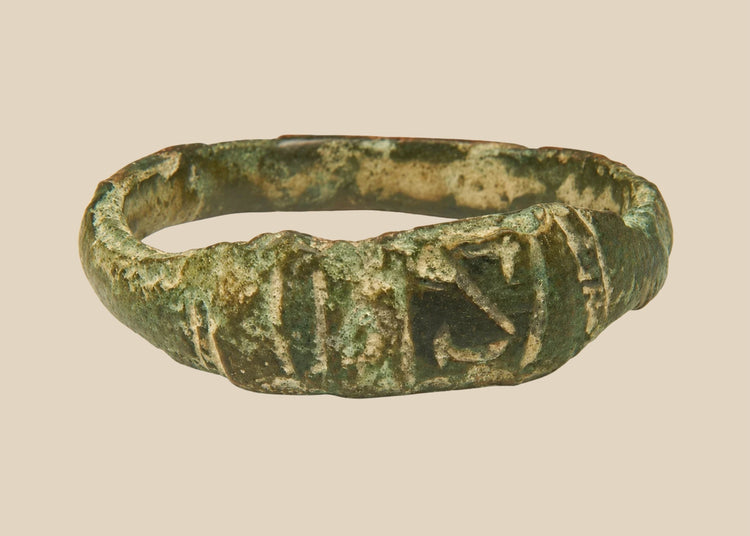
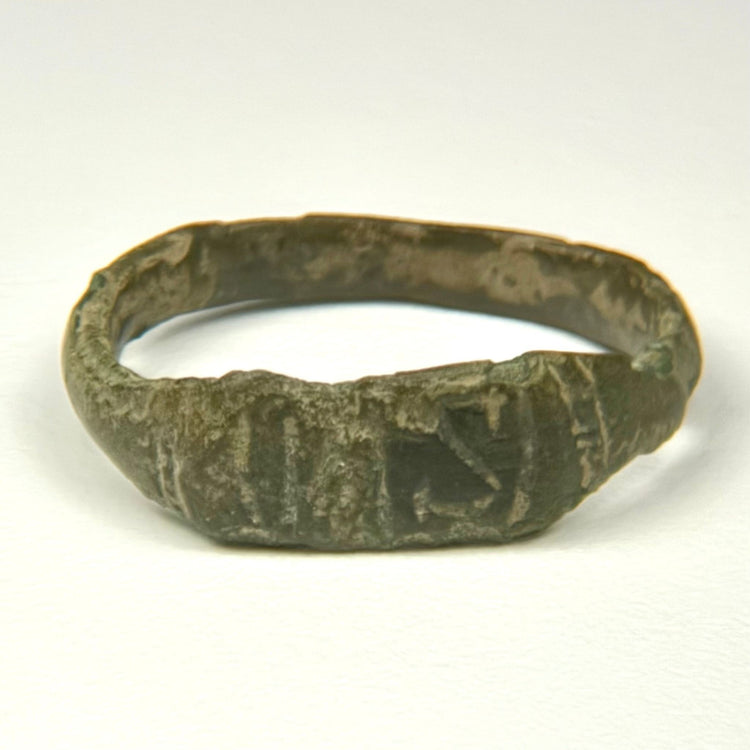
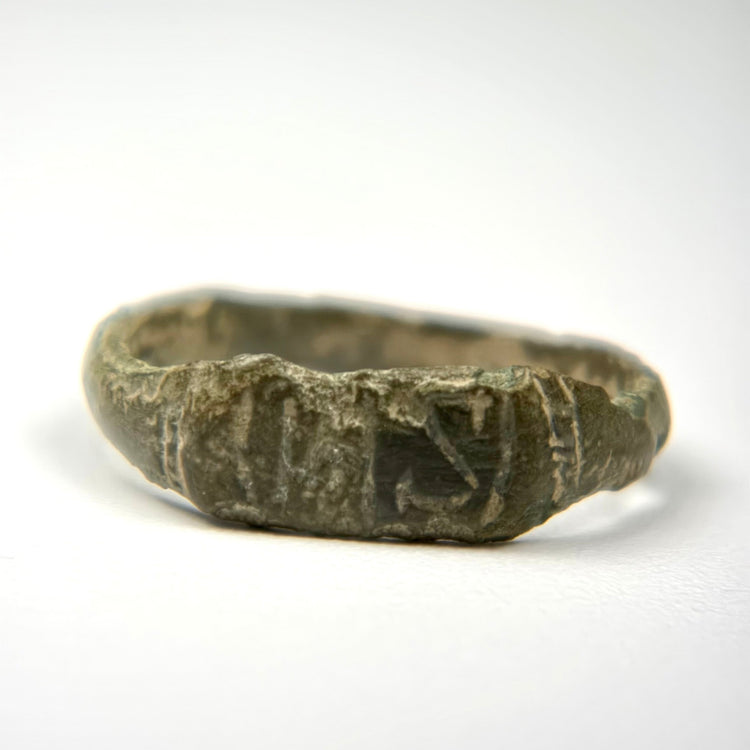
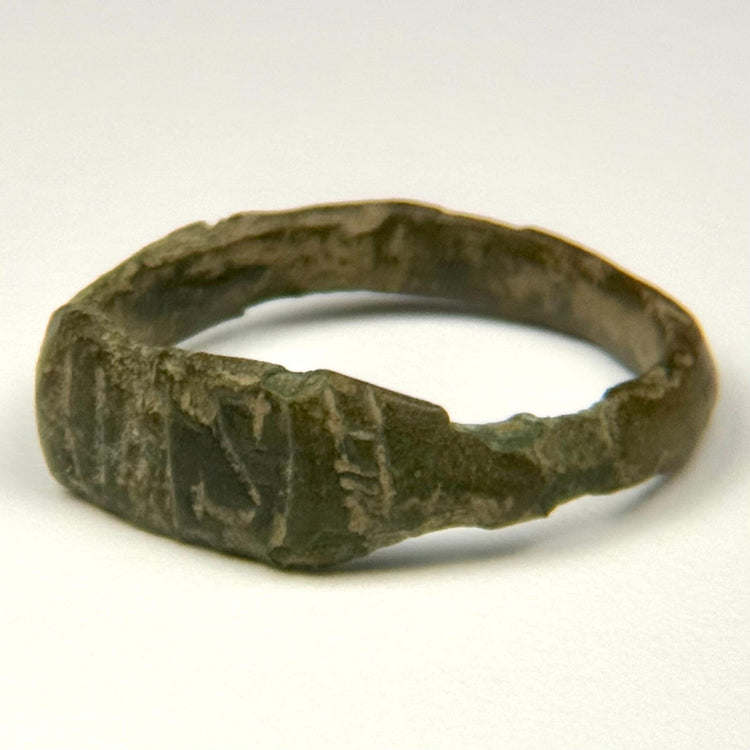
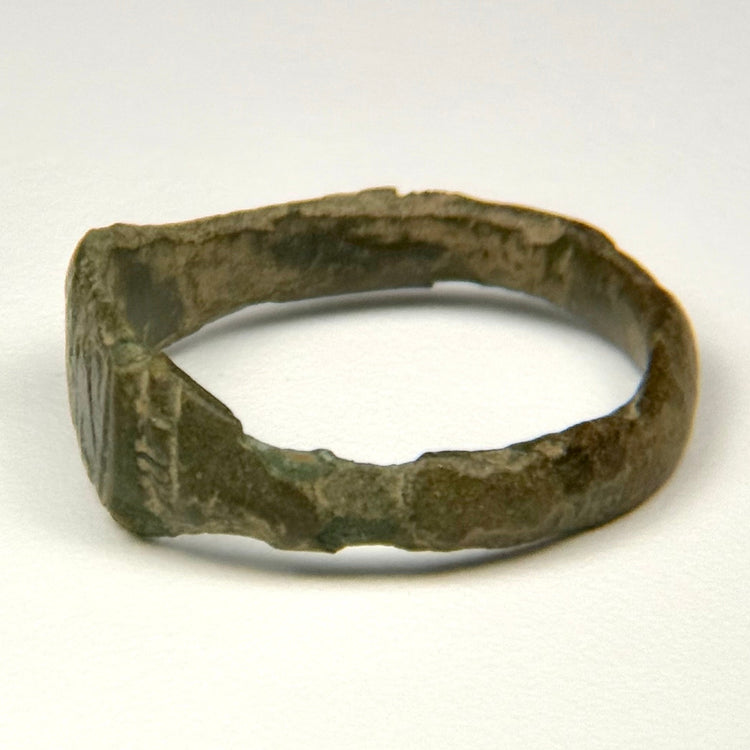
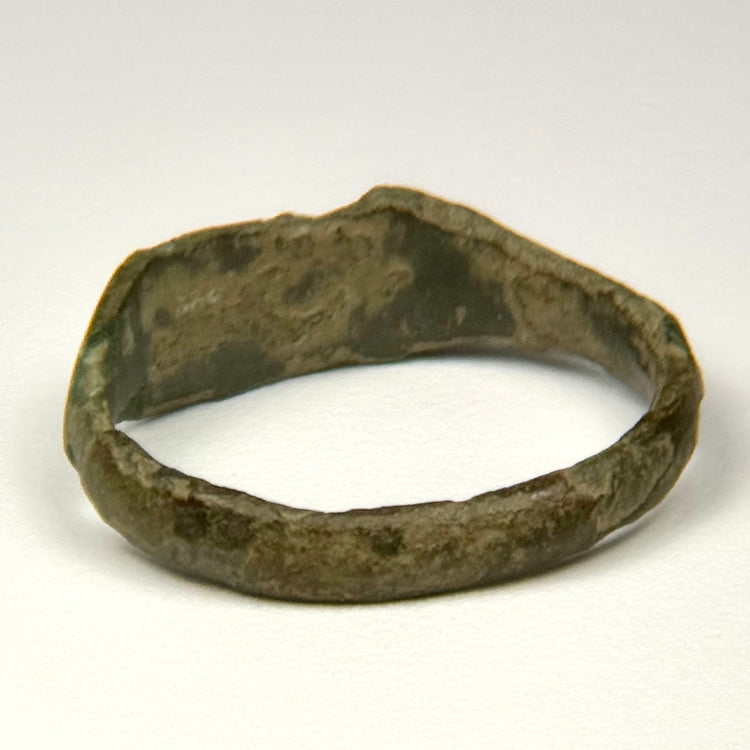
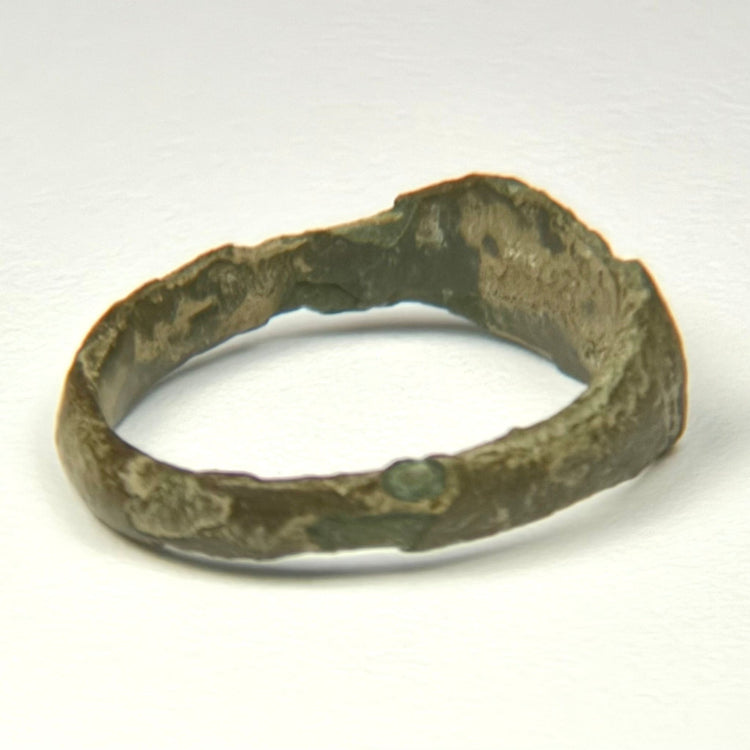
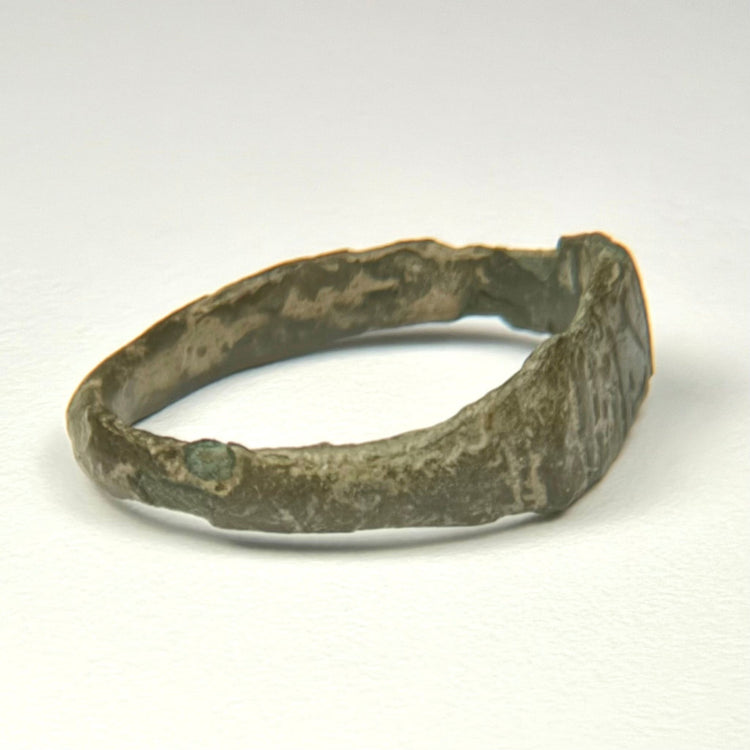
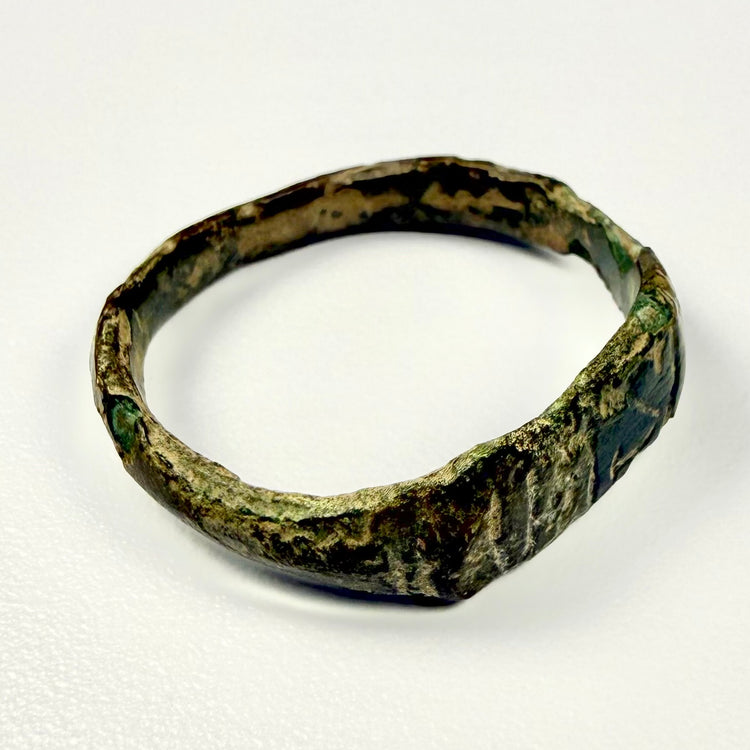
Late Roman Bronze Finger Ring with Engraved Geometric Bezel | Circa 3rd–5th Century CE
Description
Plus
Moins
Historical Context & Origin
Region: Eastern Mediterranean
Material: Bronze (copper alloy)
Period: Late Roman Period, circa 3rd–5th century CE
Description
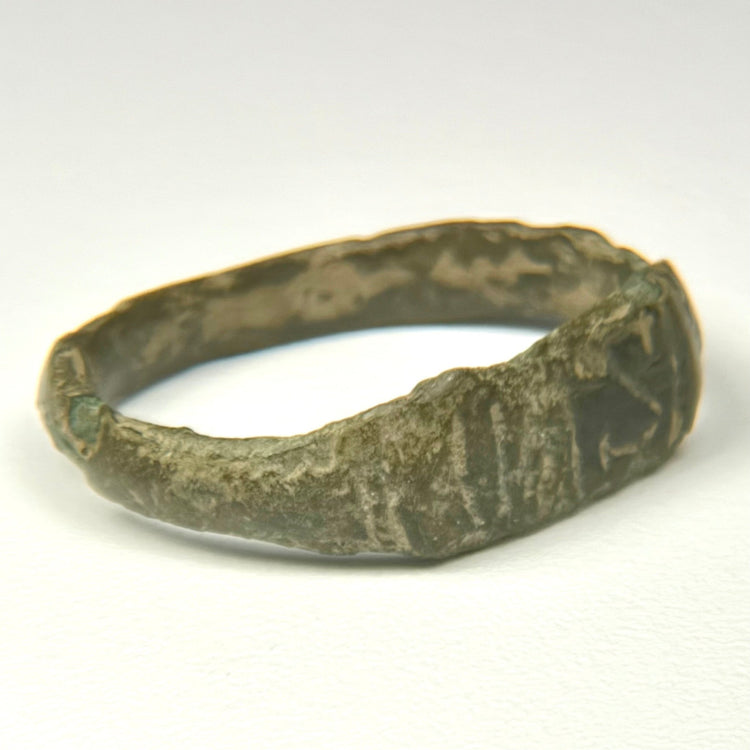
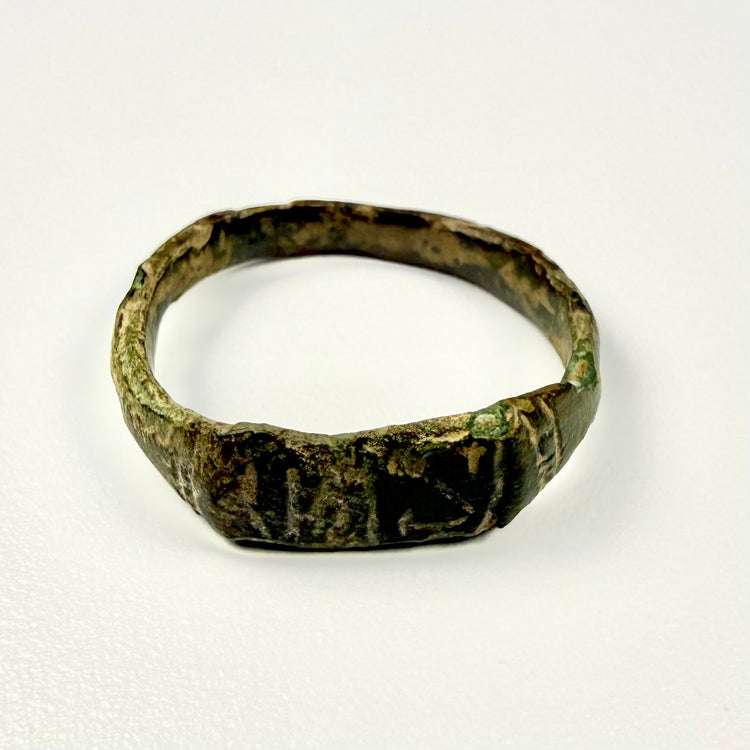
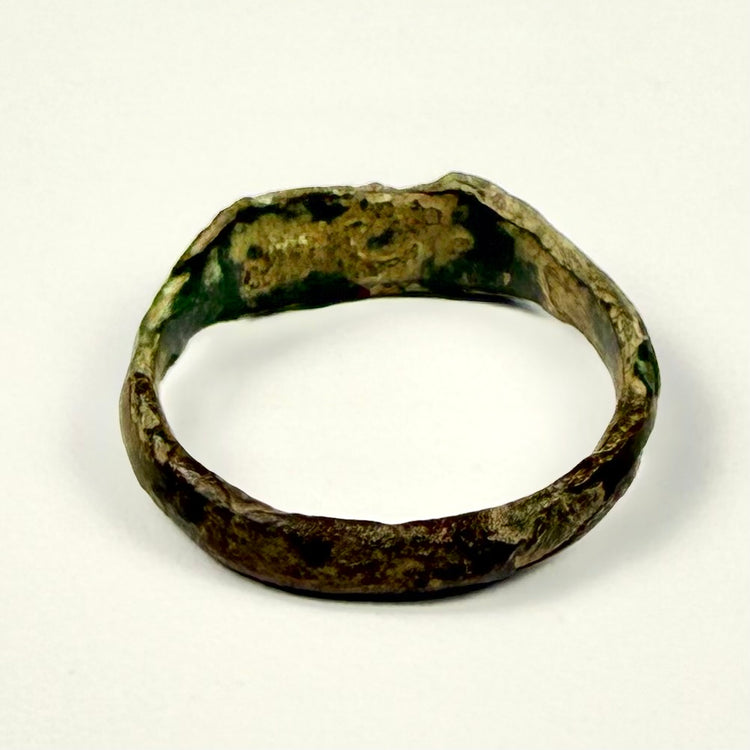
A distinctive Late Roman bronze finger ring characterized by a broad flattened front, angular shoulders, and an extensively engraved linear design. Cast as a single piece, the ring gradually expands from a relatively narrow hoop toward a wide rectangular-to-trapezoidal bezel area that provides a substantial surface for decoration.
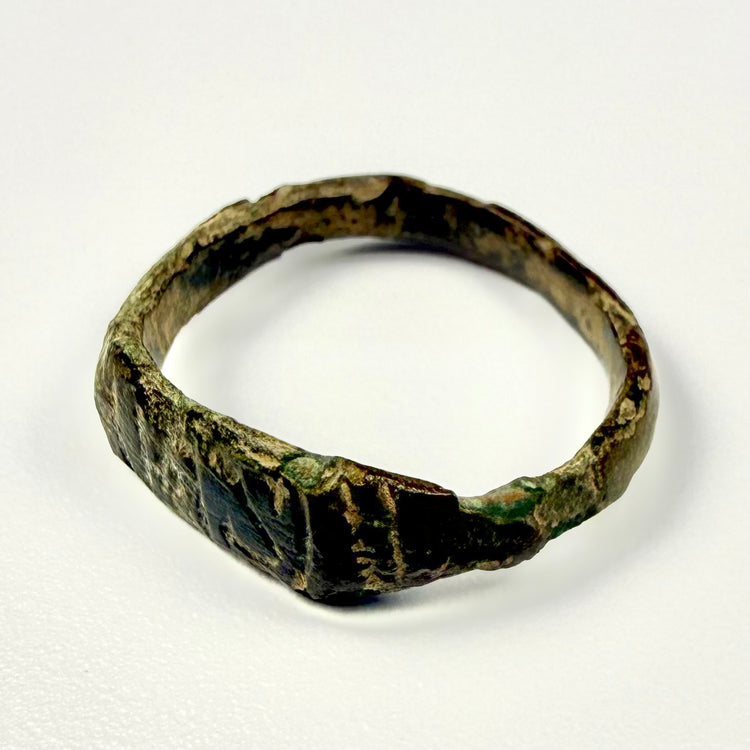
The expanded front is divided visually by a series of deeply incised vertical, diagonal, and geometric lines. Several of the surviving marks have a distinctly letter-like appearance, while others form simple linear compartments and angular motifs. Considerable archaeological wear has obscured portions of the original design, preventing the engraved sequence from being securely interpreted as a specific inscription, monogram, or symbol.
The shoulders continue the engraved decoration with multiple transverse and diagonal grooves, creating a continuous ornamental transition between the broad bezel and the narrower hoop. The slightly angular and irregular profile of the band is characteristic of an individually cast and finished ancient object rather than a modern mechanically produced ring.
The bronze surface displays an extensive brown, olive-green, and dark green archaeological patina with areas of mineralization, earthen encrustation, oxidation, and exposed metal. Small localized green deposits are visible along the hoop and shoulders. Despite substantial surface loss, the engraved decoration remains sufficiently preserved to reveal the deliberate ornamental character of the original ring.
Features
- Broad flattened rectangular-to-trapezoidal bezel area
- Incised geometric and linear decoration across the front
- Surviving vertical, diagonal, and letter-like engraved forms
- Decorated shoulders with transverse and angular grooves
- Solid one-piece cast bronze construction
- Broad angular hoop with irregular ancient profile
- Brown, olive-green, and dark green archaeological patina
- Mineral deposits and earthen surface encrustation
Cultural Significance
Finger rings remained important personal objects throughout the later Roman Empire, serving as ornaments as well as expressions of identity, status, affiliation, belief, and personal sentiment. Bronze examples allowed the widespread use of ring forms and decorative traditions otherwise represented in more costly silver and gold jewelry.
Engraved Late Roman rings could incorporate geometric ornament, abbreviated inscriptions, names, auspicious phrases, religious symbols, or monograms. Flat and expanded surfaces were particularly suited to this type of decoration. Although the surviving marks on this example are too worn to permit a secure reading, their deliberate arrangement demonstrates that the ring originally carried a meaningful visual design rather than an undecorated bezel.
The combination of its flattened engraved face, angular construction, and substantial bronze hoop places the ring within the broader tradition of later Roman personal jewelry, when increasingly prominent ring surfaces provided space for symbolic and individualized decoration.
Condition
Ancient archaeological condition with extensive age-related wear, corrosion, oxidation, mineralization, surface pitting, and earthen deposits throughout. Portions of the outer surface and edges have been lost or softened through burial and age, giving the hoop an irregular profile. The engraved front remains visible, although individual symbols and possible letterforms are incomplete and cannot be securely interpreted. Localized green mineral accretions are present along the band. The hoop remains substantially complete with no major open break visible in the photographs.
Dimensions (Approximate)
Ring Size: US 11
Age (Approximate)
1,500–1,800 years old
Provenance
Acquired in London during the 1970s. The artifact later entered the collection of Dr. Arnold Saslow, a noted numismatist and antiquarian who handled ancient coins, antiquities, and other historic objects over several decades, and was associated with Ye Olde Curiosity Shoppe in New Jersey. It was subsequently handled by Artemis Fine Arts, a U.S.-based gallery specializing in ancient, Classical, Pre-Columbian, and ethnographic art.
Learn More
Explore a related Late Roman engraved bronze finger ring in the collection of the British Museum
Browse our collection of Roman & Greek artifacts
Description
Historical Context & Origin
Region: Eastern Mediterranean
Material: Bronze (copper alloy)
Period: Late Roman Period, circa 3rd–5th century CE
Description
A distinctive Late Roman bronze finger ring characterized by a broad flattened front, angular shoulders, and an extensively engraved linear design. Cast as a single piece, the ring gradually expands from a relatively narrow hoop toward a wide rectangular-to-trapezoidal bezel area that provides a substantial surface for decoration.
The expanded front is divided visually by a series of deeply incised vertical, diagonal, and geometric lines. Several of the surviving marks have a distinctly letter-like appearance, while others form simple linear compartments and angular motifs. Considerable archaeological wear has obscured portions of the original design, preventing the engraved sequence from being securely interpreted as a specific inscription, monogram, or symbol.
The shoulders continue the engraved decoration with multiple transverse and diagonal grooves, creating a continuous ornamental transition between the broad bezel and the narrower hoop. The slightly angular and irregular profile of the band is characteristic of an individually cast and finished ancient object rather than a modern mechanically produced ring.
The bronze surface displays an extensive brown, olive-green, and dark green archaeological patina with areas of mineralization, earthen encrustation, oxidation, and exposed metal. Small localized green deposits are visible along the hoop and shoulders. Despite substantial surface loss, the engraved decoration remains sufficiently preserved to reveal the deliberate ornamental character of the original ring.
Features
- Broad flattened rectangular-to-trapezoidal bezel area
- Incised geometric and linear decoration across the front
- Surviving vertical, diagonal, and letter-like engraved forms
- Decorated shoulders with transverse and angular grooves
- Solid one-piece cast bronze construction
- Broad angular hoop with irregular ancient profile
- Brown, olive-green, and dark green archaeological patina
- Mineral deposits and earthen surface encrustation
Cultural Significance
Finger rings remained important personal objects throughout the later Roman Empire, serving as ornaments as well as expressions of identity, status, affiliation, belief, and personal sentiment. Bronze examples allowed the widespread use of ring forms and decorative traditions otherwise represented in more costly silver and gold jewelry.
Engraved Late Roman rings could incorporate geometric ornament, abbreviated inscriptions, names, auspicious phrases, religious symbols, or monograms. Flat and expanded surfaces were particularly suited to this type of decoration. Although the surviving marks on this example are too worn to permit a secure reading, their deliberate arrangement demonstrates that the ring originally carried a meaningful visual design rather than an undecorated bezel.
The combination of its flattened engraved face, angular construction, and substantial bronze hoop places the ring within the broader tradition of later Roman personal jewelry, when increasingly prominent ring surfaces provided space for symbolic and individualized decoration.
Condition
Ancient archaeological condition with extensive age-related wear, corrosion, oxidation, mineralization, surface pitting, and earthen deposits throughout. Portions of the outer surface and edges have been lost or softened through burial and age, giving the hoop an irregular profile. The engraved front remains visible, although individual symbols and possible letterforms are incomplete and cannot be securely interpreted. Localized green mineral accretions are present along the band. The hoop remains substantially complete with no major open break visible in the photographs.
Dimensions (Approximate)
Ring Size: US 11
Age (Approximate)
1,500–1,800 years old
Provenance
Acquired in London during the 1970s. The artifact later entered the collection of Dr. Arnold Saslow, a noted numismatist and antiquarian who handled ancient coins, antiquities, and other historic objects over several decades, and was associated with Ye Olde Curiosity Shoppe in New Jersey. It was subsequently handled by Artemis Fine Arts, a U.S.-based gallery specializing in ancient, Classical, Pre-Columbian, and ethnographic art.
Learn More
Explore a related Late Roman engraved bronze finger ring in the collection of the British Museum
Browse our collection of Roman & Greek artifacts
Vous aimerez peut-être aussi
