

Ensemble monté de trois pointes d'armes archéologiques en fer | Circa IIIe – XIVe siècle
- Prix habituel
- $250.00
- Prix soldé
- $250.00
- Prix habituel
Impossible de charger la disponibilité du service de retrait


Ensemble monté de trois pointes d'armes archéologiques en fer | Circa IIIe – XIVe siècle
Description
Plus
Moins
Contexte historique et origine
Région : Europe
Matériau : Fer forgé à la main
Période : Fin de l'époque romaine au Moyen Âge, vers le IIIe-XIVe siècle de notre ère
Description
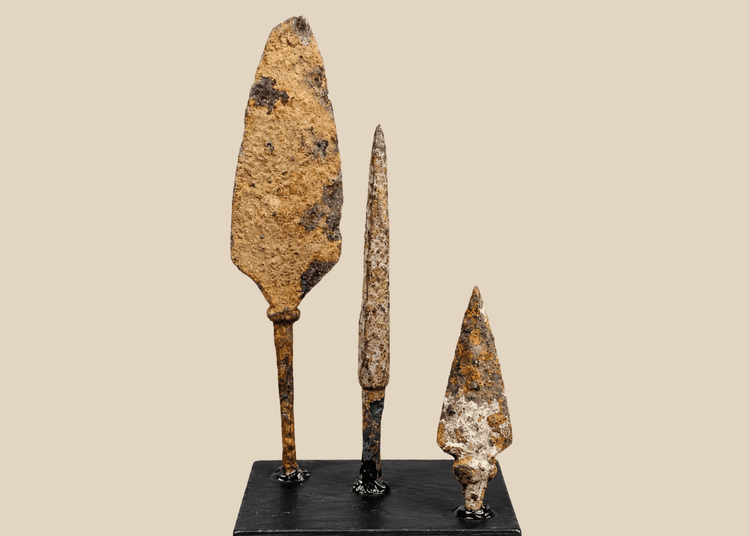
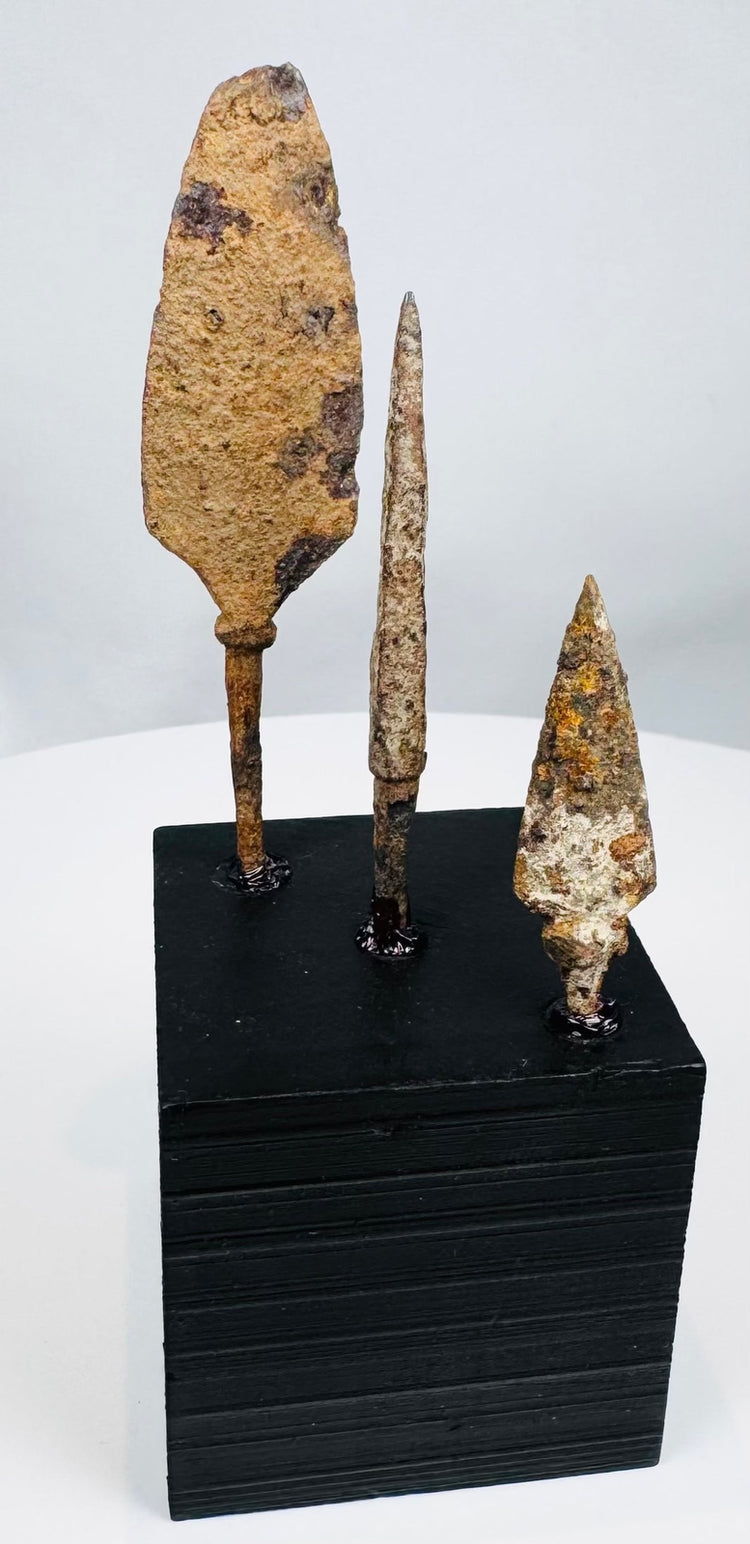
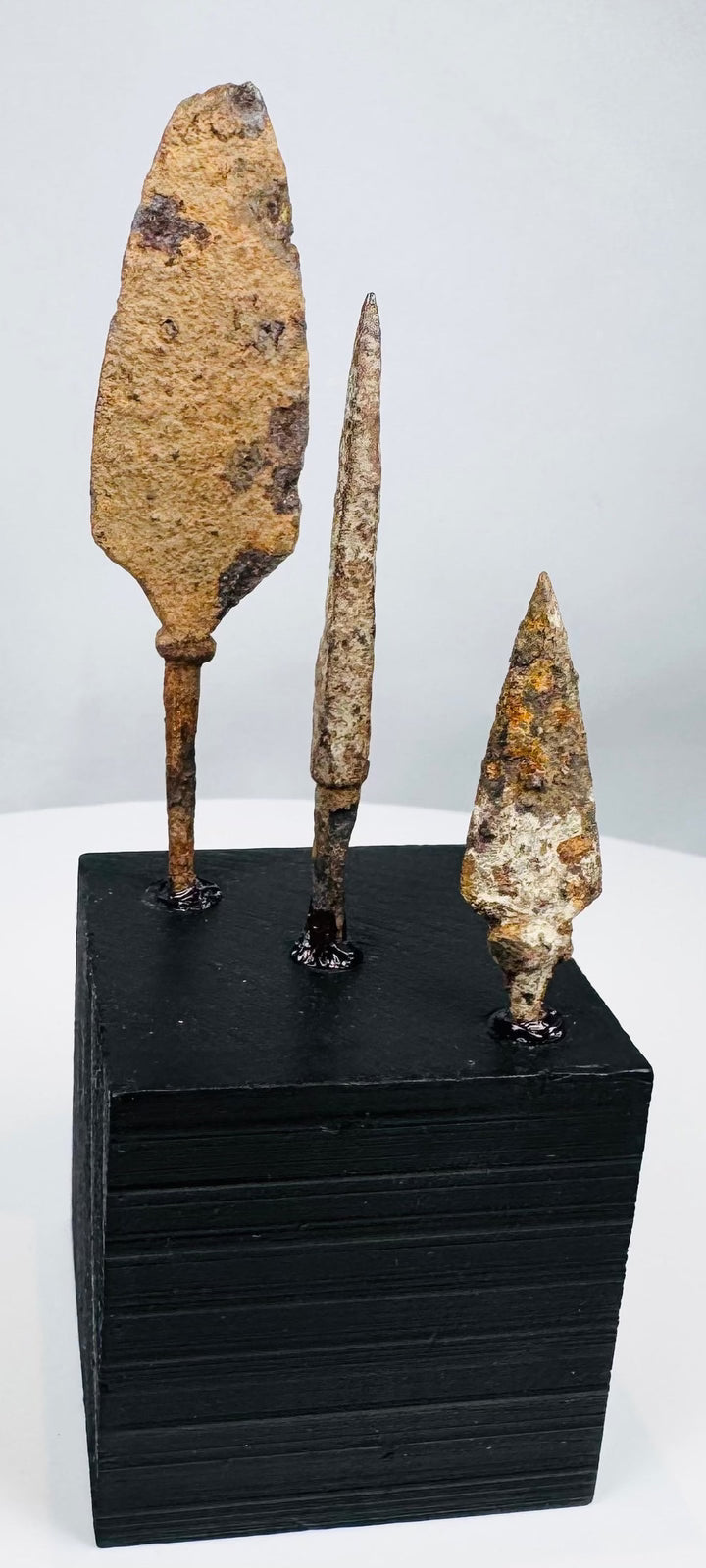
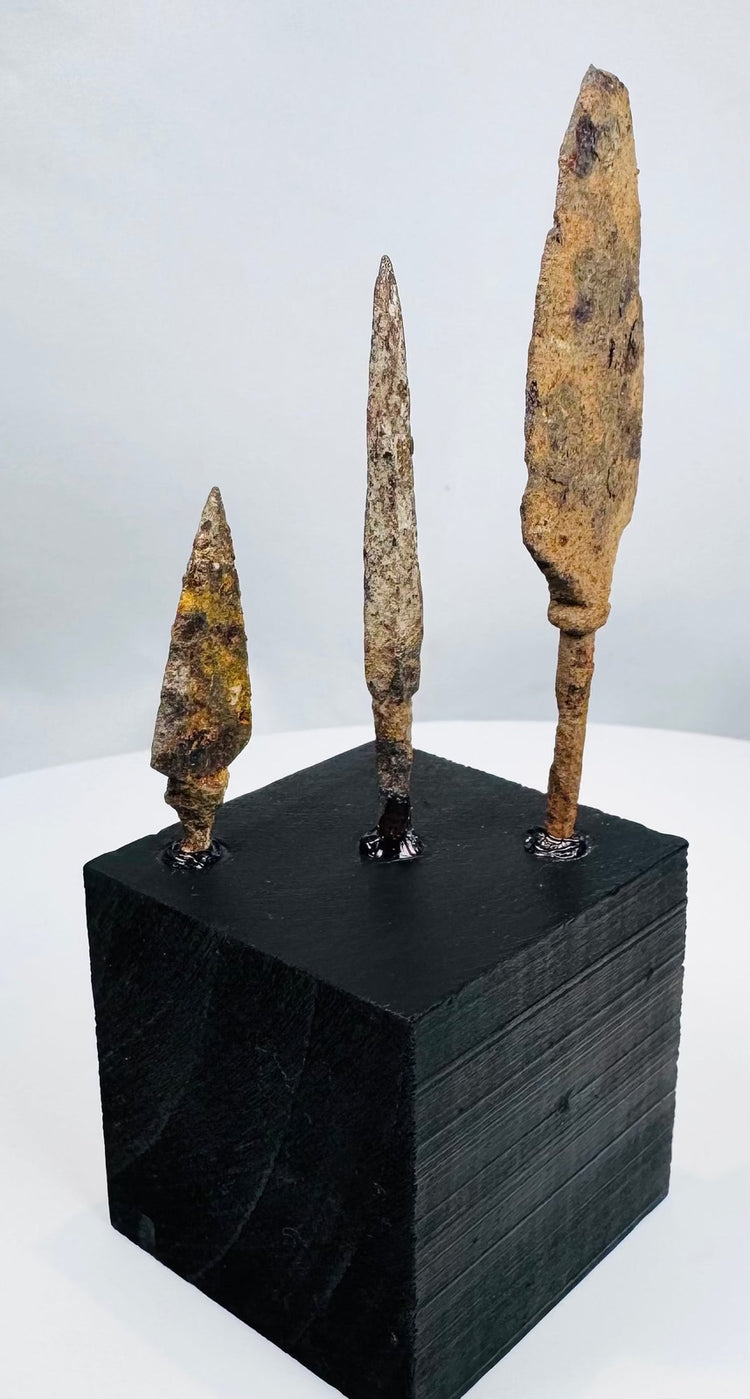
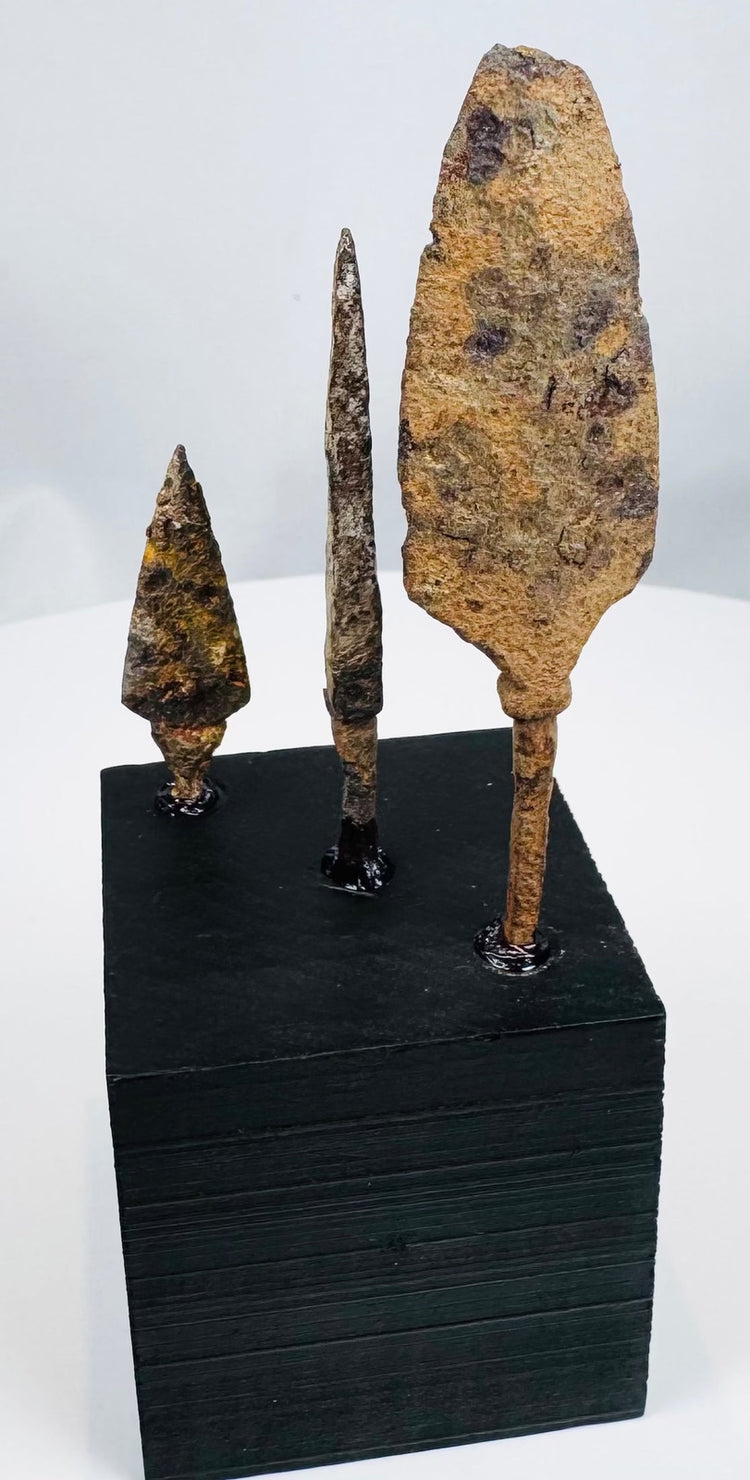
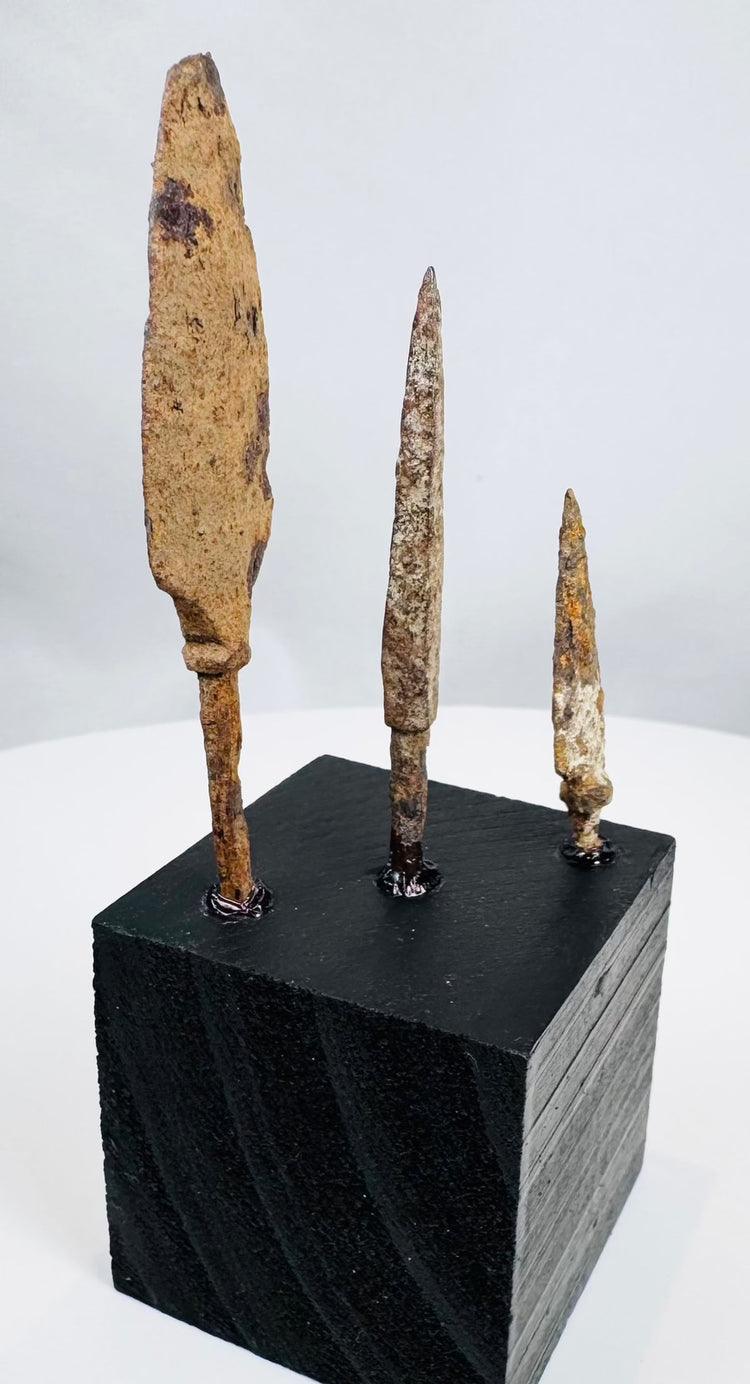
Ce groupe monté de trois pointes de projectile archéologiques en fer représente une sélection variée d'armes forgées à la main datant généralement de la fin de l'époque romaine jusqu'à la période médiévale. L'ensemble comprend une large pointe en forme de feuille, une longue pointe étroite de type alène, et une plus petite pointe triangulaire, chacune conservant une partie de sa soie d'origine et maintenant présentées ensemble sur une base d'affichage moderne en bois noir.
Le plus grand exemple est formé d'une large lame allongée en forme de feuille qui se rétrécit vers la base avant de se poursuivre en une longue soie. Sa largeur substantielle et son profil relativement plat suggèrent qu'il a pu servir de flèche à large tête, de projectile de chasse, de pointe de lance légère ou de pointe de javelot. Les formes larges de ce type étaient efficaces contre les cibles non blindées et pouvaient créer un canal de blessure plus large que les pointes étroites perforant l'armure.
L'exemple central a un profil long, mince et effilé étroitement associé aux têtes de projectile de type alène. Les pointes étroites étaient conçues pour concentrer la force dans une petite zone et étaient particulièrement efficaces contre les vêtements épais, les protections en cuir, la cotte de mailles et les interstices entre les équipements défensifs. Sa soie subsistante aurait été à l'origine insérée dans une hampe en bois et fixée avec un lien ou un adhésif.
La plus petite pointe présente une lame compacte triangulaire ou en forme de feuille avec un profil central prononcé et une courte soie subsistante. Sa forme équilibrée aurait convenu pour être utilisée comme pointe de flèche ou tête de carreau légère. Les formes variées au sein de ce groupe reflètent l'éventail des formes de projectiles spécialisées employées en Europe pour la guerre, la chasse et la défense personnelle pendant de nombreux siècles.
Caractéristiques
- Forgé à la main dans le fer
- Comprend des formes larges en feuille, étroites de type alène et triangulaires compactes
- Soies subsistantes utilisées à l'origine pour fixer les pointes aux hampes en bois
- Associé au tir à l'arc historique, à la chasse, à la guerre et à la défense personnelle
- Présente une oxydation archéologique et une incrustation minérale étendues
- Monté individuellement sur une base d'affichage moderne en bois noir
- Groupe typologique varié illustrant différentes fonctions de projectile
- Anciennement détenu dans des collections européennes établies
Importance culturelle
Les pointes de projectile en fer étaient des composants essentiels de la technologie militaire ancienne et médiévale. Les archers, les guerriers montés, les chasseurs et les arbalétriers s'appuyaient sur des conceptions de pointes spécialisées adaptées à différentes fins. Les têtes larges en forme de feuille étaient efficaces contre les cibles légèrement protégées et les gibiers, tandis que les longues pointes étroites de type alène concentraient l'impact et offraient une meilleure pénétration contre les vêtements défensifs, le cuir, la cotte de mailles et les interstices d'armure.
Pendant la période romaine, les armées utilisaient de nombreuses formes de flèches, de carreaux, de javelots et de pointes de lances légères. Ces traditions se sont poursuivies et ont évolué tout au long de la période des Migrations, de l'âge viking, des Croisades et des siècles médiévaux ultérieurs. Les forgerons locaux produisaient des têtes de projectile en grand nombre en utilisant des techniques de forge établies, créant des variations de forme, de poids et de construction selon les exigences régionales et la cible visée.
État
Les trois pointes de projectile restent stables dans un état archéologique fortement oxydé. Chacune présente une corrosion étendue, une incrustation minérale, des piqûres, des écailles, des dépôts de surface et des irrégularités conformes à un enfouissement prolongé et à un âge considérable.
La large pointe en forme de feuille présente une accumulation minérale substantielle, une perte de bord, une décoloration et des zones où la surface forgée d'origine est obscurcie. La longue pointe centrale reste relativement complète mais présente une forte oxydation, une rugosité de surface et un amincissement localisé. La plus petite pointe triangulaire conserve un contour reconnaissable mais présente de la corrosion, de l'usure des bords et des incrustations minérales partout.
Les pointes ont été fixées de manière permanente à une base d'affichage moderne en bois noir avec un matériau de montage visible. La base présente des rayures mineures, des marques de surface et des irrégularités.
Dimensions (approximatives)
Hauteur totale de l'affichage : 12,7 cm
Âge (approximatif)
De 625 à 1 725 ans
Provenance
Anciennement proposées sur le marché de l'art allemand dans les années 2000, où le groupe est entré dans le commerce moderne des antiquités européennes.
Acquise par la suite auprès d'un collectionneur de l'Union européenne résidant à Londres, en Angleterre, qui entretenait une collection privée d'artefacts anciens et médiévaux.
Ultérieurement détenue dans la collection privée d'un gentleman du Surrey, Royaume-Uni.
En savoir plus
Référencer une pointe de flèche ancienne en fer similaire dans la collection du Metropolitan Museum of Art
Explorez notre Collection d'armes, d'armures et d'armement historique
Description
Contexte historique et origine
Région : Europe
Matériau : Fer forgé à la main
Période : Fin de l'époque romaine au Moyen Âge, vers le IIIe-XIVe siècle de notre ère
Description
Ce groupe monté de trois pointes de projectile archéologiques en fer représente une sélection variée d'armes forgées à la main datant généralement de la fin de l'époque romaine jusqu'à la période médiévale. L'ensemble comprend une large pointe en forme de feuille, une longue pointe étroite de type alène, et une plus petite pointe triangulaire, chacune conservant une partie de sa soie d'origine et maintenant présentées ensemble sur une base d'affichage moderne en bois noir.
Le plus grand exemple est formé d'une large lame allongée en forme de feuille qui se rétrécit vers la base avant de se poursuivre en une longue soie. Sa largeur substantielle et son profil relativement plat suggèrent qu'il a pu servir de flèche à large tête, de projectile de chasse, de pointe de lance légère ou de pointe de javelot. Les formes larges de ce type étaient efficaces contre les cibles non blindées et pouvaient créer un canal de blessure plus large que les pointes étroites perforant l'armure.
L'exemple central a un profil long, mince et effilé étroitement associé aux têtes de projectile de type alène. Les pointes étroites étaient conçues pour concentrer la force dans une petite zone et étaient particulièrement efficaces contre les vêtements épais, les protections en cuir, la cotte de mailles et les interstices entre les équipements défensifs. Sa soie subsistante aurait été à l'origine insérée dans une hampe en bois et fixée avec un lien ou un adhésif.
La plus petite pointe présente une lame compacte triangulaire ou en forme de feuille avec un profil central prononcé et une courte soie subsistante. Sa forme équilibrée aurait convenu pour être utilisée comme pointe de flèche ou tête de carreau légère. Les formes variées au sein de ce groupe reflètent l'éventail des formes de projectiles spécialisées employées en Europe pour la guerre, la chasse et la défense personnelle pendant de nombreux siècles.
Caractéristiques
- Forgé à la main dans le fer
- Comprend des formes larges en feuille, étroites de type alène et triangulaires compactes
- Soies subsistantes utilisées à l'origine pour fixer les pointes aux hampes en bois
- Associé au tir à l'arc historique, à la chasse, à la guerre et à la défense personnelle
- Présente une oxydation archéologique et une incrustation minérale étendues
- Monté individuellement sur une base d'affichage moderne en bois noir
- Groupe typologique varié illustrant différentes fonctions de projectile
- Anciennement détenu dans des collections européennes établies
Importance culturelle
Les pointes de projectile en fer étaient des composants essentiels de la technologie militaire ancienne et médiévale. Les archers, les guerriers montés, les chasseurs et les arbalétriers s'appuyaient sur des conceptions de pointes spécialisées adaptées à différentes fins. Les têtes larges en forme de feuille étaient efficaces contre les cibles légèrement protégées et les gibiers, tandis que les longues pointes étroites de type alène concentraient l'impact et offraient une meilleure pénétration contre les vêtements défensifs, le cuir, la cotte de mailles et les interstices d'armure.
Pendant la période romaine, les armées utilisaient de nombreuses formes de flèches, de carreaux, de javelots et de pointes de lances légères. Ces traditions se sont poursuivies et ont évolué tout au long de la période des Migrations, de l'âge viking, des Croisades et des siècles médiévaux ultérieurs. Les forgerons locaux produisaient des têtes de projectile en grand nombre en utilisant des techniques de forge établies, créant des variations de forme, de poids et de construction selon les exigences régionales et la cible visée.
État
Les trois pointes de projectile restent stables dans un état archéologique fortement oxydé. Chacune présente une corrosion étendue, une incrustation minérale, des piqûres, des écailles, des dépôts de surface et des irrégularités conformes à un enfouissement prolongé et à un âge considérable.
La large pointe en forme de feuille présente une accumulation minérale substantielle, une perte de bord, une décoloration et des zones où la surface forgée d'origine est obscurcie. La longue pointe centrale reste relativement complète mais présente une forte oxydation, une rugosité de surface et un amincissement localisé. La plus petite pointe triangulaire conserve un contour reconnaissable mais présente de la corrosion, de l'usure des bords et des incrustations minérales partout.
Les pointes ont été fixées de manière permanente à une base d'affichage moderne en bois noir avec un matériau de montage visible. La base présente des rayures mineures, des marques de surface et des irrégularités.
Dimensions (approximatives)
Hauteur totale de l'affichage : 12,7 cm
Âge (approximatif)
De 625 à 1 725 ans
Provenance
Anciennement proposées sur le marché de l'art allemand dans les années 2000, où le groupe est entré dans le commerce moderne des antiquités européennes.
Acquise par la suite auprès d'un collectionneur de l'Union européenne résidant à Londres, en Angleterre, qui entretenait une collection privée d'artefacts anciens et médiévaux.
Ultérieurement détenue dans la collection privée d'un gentleman du Surrey, Royaume-Uni.
En savoir plus
Référencer une pointe de flèche ancienne en fer similaire dans la collection du Metropolitan Museum of Art
Explorez notre Collection d'armes, d'armures et d'armement historique
Vous aimerez peut-être aussi
