

Oligocene Dugong (Sirenian) Fossil Rib on Custom Display Stand | Circa 23–34 Million Years Old
- Prix habituel
- $1,500.00
- Prix soldé
- $1,500.00
- Prix habituel
Impossible de charger la disponibilité du service de retrait


Oligocene Dugong (Sirenian) Fossil Rib on Custom Display Stand | Circa 23–34 Million Years Old
Description
Plus
Moins
Historical Context & Origin
Region: Geological origin unrecorded
Material: Fossilized bone; modern wood and metal display stand
Period: Oligocene Epoch, approximately 23–34 million years ago
Description
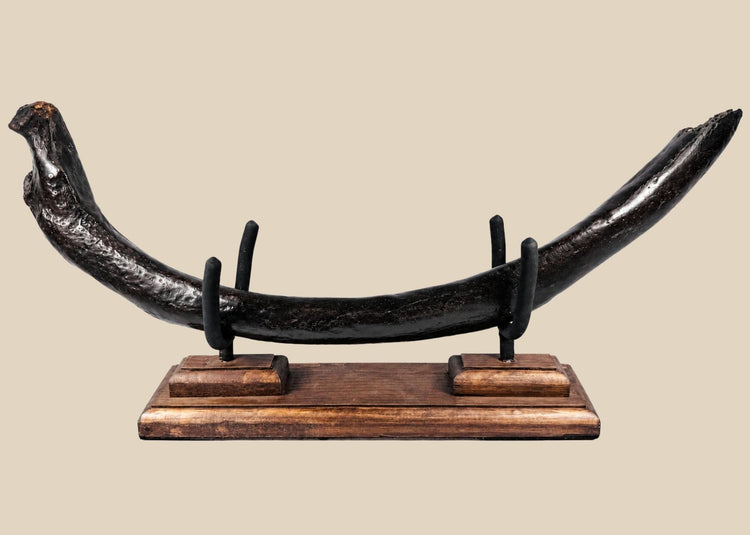
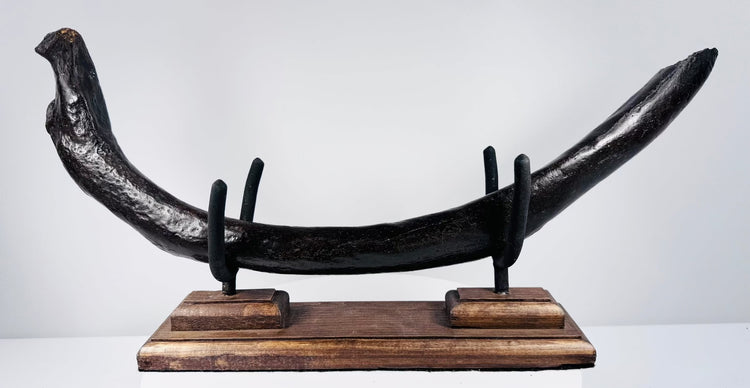
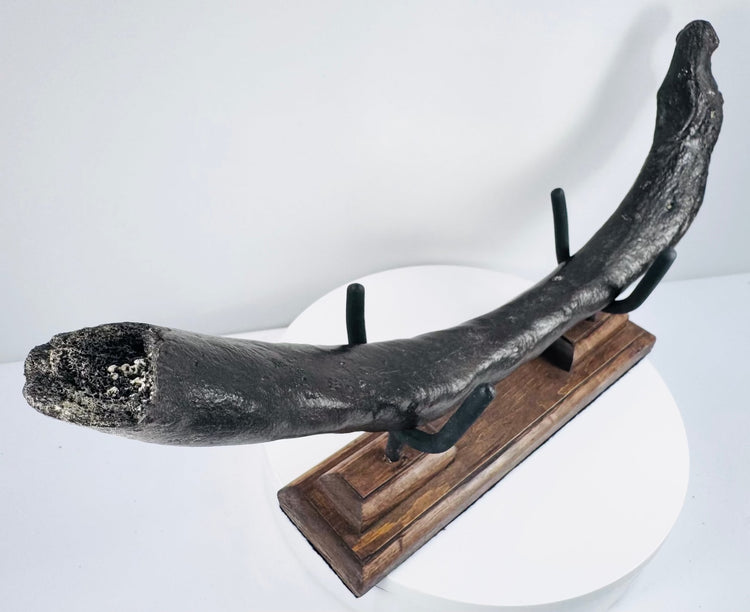
An impressive fossilized rib attributed to an ancient dugong or closely related sirenian dating to the Oligocene Epoch, approximately 23 to 34 million years ago.
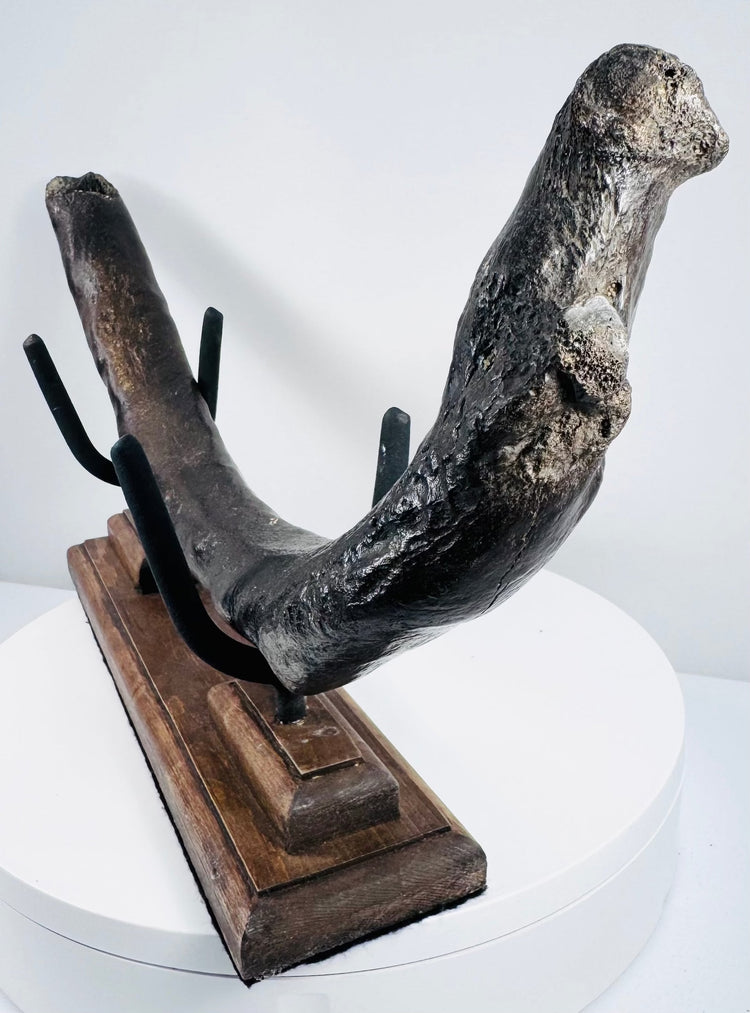
The substantial rib displays the long, naturally curved form characteristic of the exceptionally dense skeletal structure of sirenians, the marine mammal group that includes modern dugongs and manatees. Sirenian ribs are unusually heavy and compact, an adaptation known as pachyostosis that helped these slow-moving aquatic herbivores regulate buoyancy while feeding in shallow coastal environments.
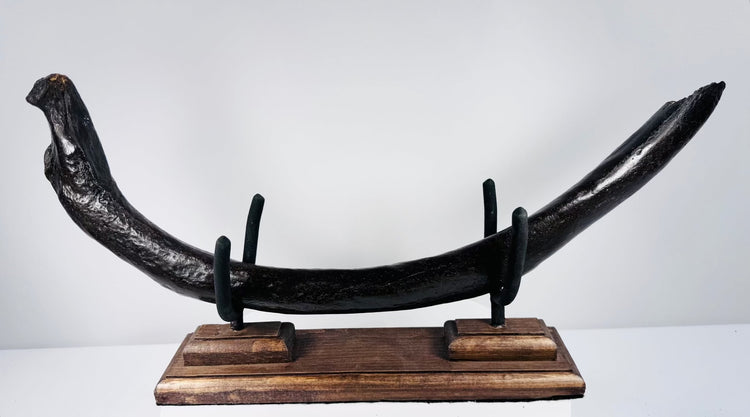
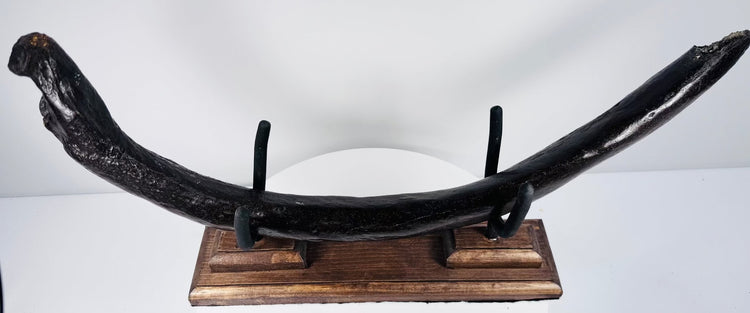
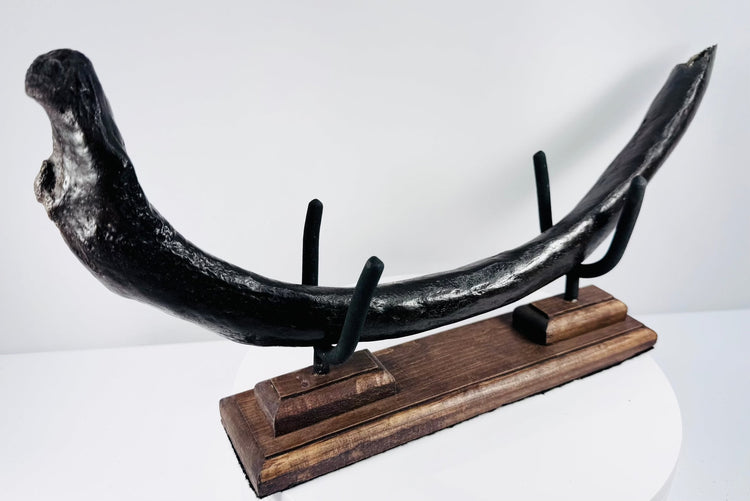
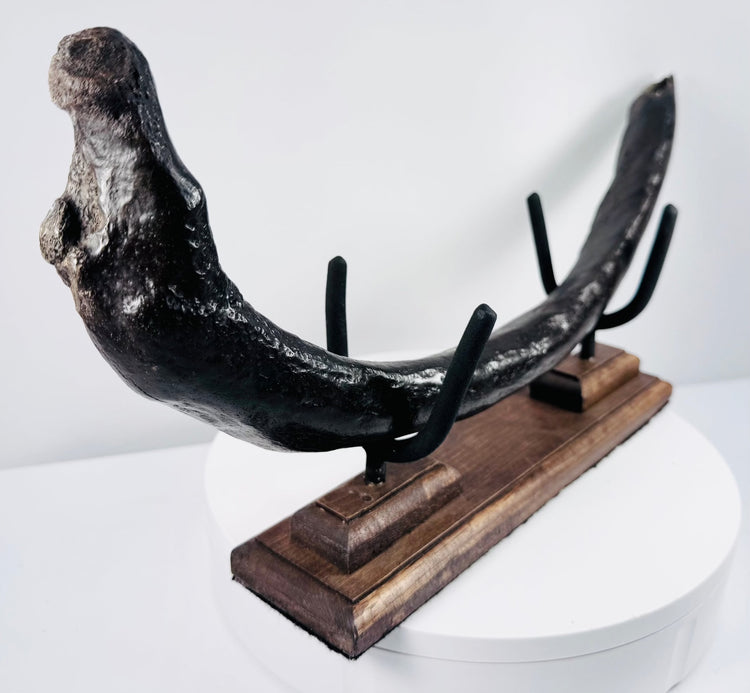
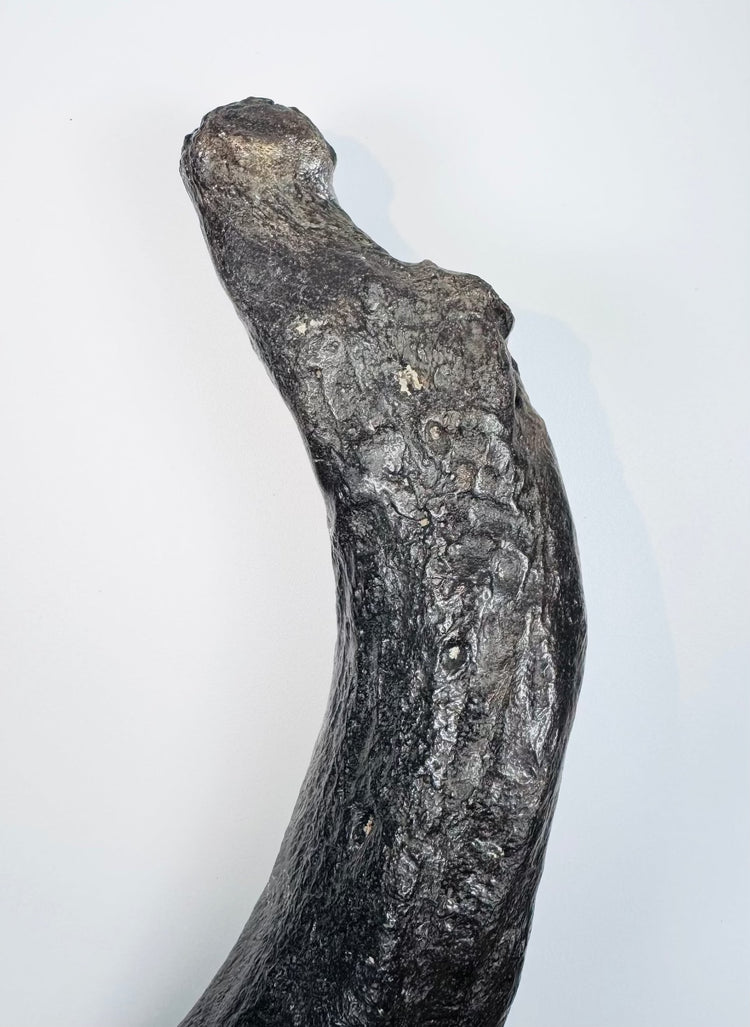
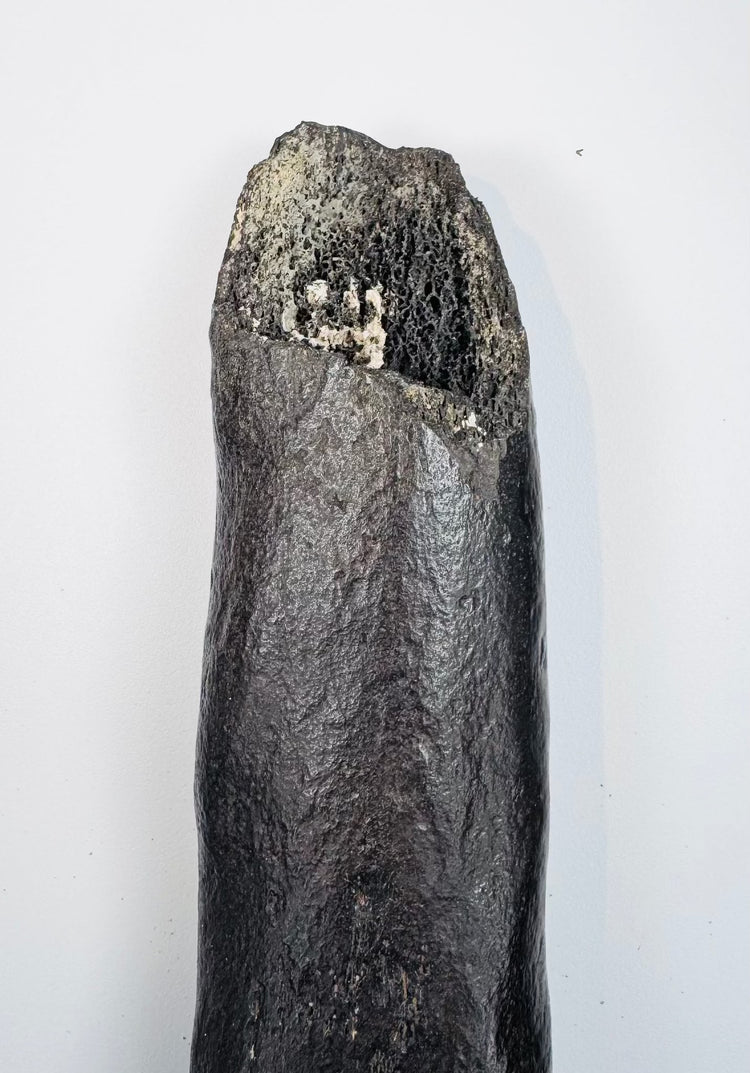
This specimen possesses a dramatic sweeping profile, with areas of naturally exposed internal bone structure visible at the ends. The dark mineralized surface preserves pronounced geological texture, irregularities, and areas of lighter mineral deposition accumulated during fossilization.
Features
- Genuine fossilized rib attributed to an ancient dugong or related sirenian
- Dates to the Oligocene Epoch
- Approximately 23–34 million years old
- Large, sweeping naturally curved form
- Dense fossilized structure characteristic of sirenian ribs
- Visible internal bone structure at the naturally incomplete ends
- Dark mineralized surface with contrasting fossil and mineral deposits
- Substantial approximately 19.5-inch overall length
- Presented on a custom wood and metal display stand
Cultural Significance
Dugongs belong to the order Sirenia, an ancient lineage of fully aquatic herbivorous mammals whose fossil record extends more than 50 million years into the past. During the Oligocene, changing coastlines and increasingly widespread shallow marine habitats encouraged the diversification of several sirenian groups.
Unlike most mammals, sirenians developed exceptionally thick and dense ribs. This skeletal adaptation added ballast to the body and assisted the animals in remaining submerged while grazing on seagrasses and other aquatic vegetation.
Fossilized ribs therefore provide an immediately tangible example of both the anatomy and evolutionary adaptation of prehistoric marine mammals. At nearly twenty inches in overall display length, this specimen presents that adaptation on an unusually substantial scale.
Condition
The fossil remains in good, stable geological condition with extensive natural mineralization, surface texture, age-related erosion, fissures, deposits, and irregularities consistent with fossilized bone of considerable antiquity.
Both terminal areas are incomplete and expose portions of the internal fossilized bone structure. Surface variation, mineral deposits, small losses, pits, and natural imperfections are present throughout and form part of the specimen's geological character.
Dimensions (Approximate)
Length: 19.5 in
Height: 9 in
Width: 3 in
Including Display Stand
Age (Approximate)
Oligocene Epoch, 23–34 million years old
Provenance
Acquired from Broken Rock Fossil Shop, Belfast, Prince Edward Island, Canada, an independent fossil and mineral shop operated by Linda Nobles and specializing in dinosaur fossils, minerals, crystals, and other natural-history specimens.
The specimen was reportedly personally unearthed by Nobles during one of her field expeditions near Newcastle, Wyoming, USA, where she has participated in the discovery and excavation of prehistoric remains.
Subsequently acquired by a private collector in Toronto, Ontario, Canada.
Learn More
Explore fossilized dugong remains and learn more about the ancient history of sirenians through Qatar Museums
Discover our curated Prehistoric Wonders: Ancient Relics & Art Collection
Description
Historical Context & Origin
Region: Geological origin unrecorded
Material: Fossilized bone; modern wood and metal display stand
Period: Oligocene Epoch, approximately 23–34 million years ago
Description
An impressive fossilized rib attributed to an ancient dugong or closely related sirenian dating to the Oligocene Epoch, approximately 23 to 34 million years ago.
The substantial rib displays the long, naturally curved form characteristic of the exceptionally dense skeletal structure of sirenians, the marine mammal group that includes modern dugongs and manatees. Sirenian ribs are unusually heavy and compact, an adaptation known as pachyostosis that helped these slow-moving aquatic herbivores regulate buoyancy while feeding in shallow coastal environments.
This specimen possesses a dramatic sweeping profile, with areas of naturally exposed internal bone structure visible at the ends. The dark mineralized surface preserves pronounced geological texture, irregularities, and areas of lighter mineral deposition accumulated during fossilization.
Features
- Genuine fossilized rib attributed to an ancient dugong or related sirenian
- Dates to the Oligocene Epoch
- Approximately 23–34 million years old
- Large, sweeping naturally curved form
- Dense fossilized structure characteristic of sirenian ribs
- Visible internal bone structure at the naturally incomplete ends
- Dark mineralized surface with contrasting fossil and mineral deposits
- Substantial approximately 19.5-inch overall length
- Presented on a custom wood and metal display stand
Cultural Significance
Dugongs belong to the order Sirenia, an ancient lineage of fully aquatic herbivorous mammals whose fossil record extends more than 50 million years into the past. During the Oligocene, changing coastlines and increasingly widespread shallow marine habitats encouraged the diversification of several sirenian groups.
Unlike most mammals, sirenians developed exceptionally thick and dense ribs. This skeletal adaptation added ballast to the body and assisted the animals in remaining submerged while grazing on seagrasses and other aquatic vegetation.
Fossilized ribs therefore provide an immediately tangible example of both the anatomy and evolutionary adaptation of prehistoric marine mammals. At nearly twenty inches in overall display length, this specimen presents that adaptation on an unusually substantial scale.
Condition
The fossil remains in good, stable geological condition with extensive natural mineralization, surface texture, age-related erosion, fissures, deposits, and irregularities consistent with fossilized bone of considerable antiquity.
Both terminal areas are incomplete and expose portions of the internal fossilized bone structure. Surface variation, mineral deposits, small losses, pits, and natural imperfections are present throughout and form part of the specimen's geological character.
Dimensions (Approximate)
Length: 19.5 in
Height: 9 in
Width: 3 in
Including Display Stand
Age (Approximate)
Oligocene Epoch, 23–34 million years old
Provenance
Acquired from Broken Rock Fossil Shop, Belfast, Prince Edward Island, Canada, an independent fossil and mineral shop operated by Linda Nobles and specializing in dinosaur fossils, minerals, crystals, and other natural-history specimens.
The specimen was reportedly personally unearthed by Nobles during one of her field expeditions near Newcastle, Wyoming, USA, where she has participated in the discovery and excavation of prehistoric remains.
Subsequently acquired by a private collector in Toronto, Ontario, Canada.
Learn More
Explore fossilized dugong remains and learn more about the ancient history of sirenians through Qatar Museums
Discover our curated Prehistoric Wonders: Ancient Relics & Art Collection
Vous aimerez peut-être aussi
