



British Scott & Co. Silk Top Hat & Leather Travel Case | RMS Queen Mary Cunard White Star | Circa 1930s–1940s
- Prix habituel
- $1,000.00
- Prix soldé
- $1,000.00
- Prix habituel
Impossible de charger la disponibilité du service de retrait


British Scott & Co. Silk Top Hat & Leather Travel Case | RMS Queen Mary Cunard White Star | Circa 1930s–1940s
Description
Plus
Moins
Historical Context & Origin
Region: London, England, United Kingdom; documented maritime and railway connections between New York and Great Britain
Material: Black silk plush, structured hat body, textile lining, grosgrain ribbon, brown leather travelling hat case, metal fittings, and original paper luggage labels
Period: Early to mid-20th century, likely circa 1930s–1940s
Description
An exceptional antique British gentleman's black silk top hat by Scott & Co., Hatters to His Majesty the King and the Royal Family, presented in its period fitted leather travelling case and retaining a remarkable collection of historic luggage labels associated with the legendary RMS Queen Mary and the Cunard White Star Line.
This distinguished ensemble represents a fascinating intersection of British luxury craftsmanship, traditional formal dress, and the golden age of transatlantic ocean travel. Particularly noteworthy is the surviving Cunard White Star passenger luggage label identifying a named traveller, his ship, sailing date, accommodation details, and port of departure.
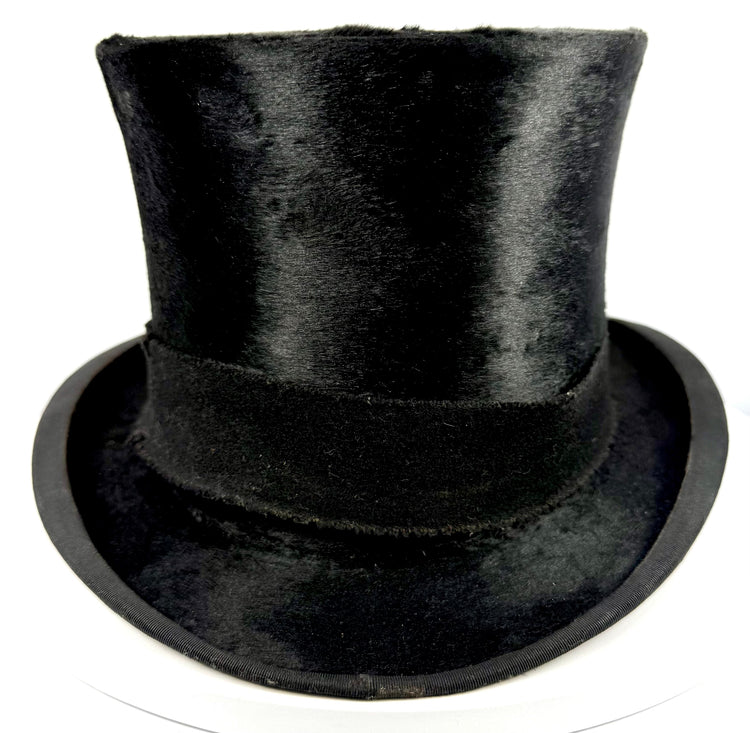
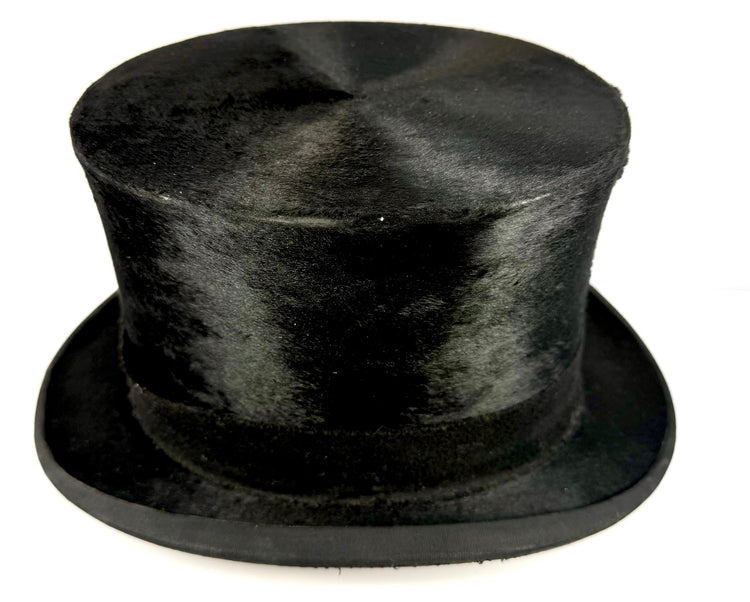
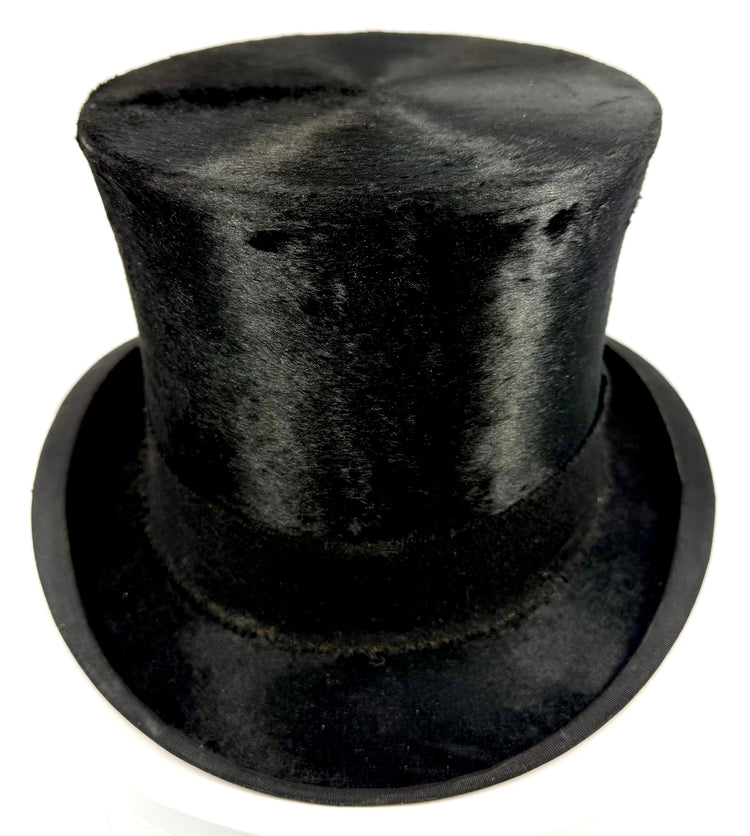
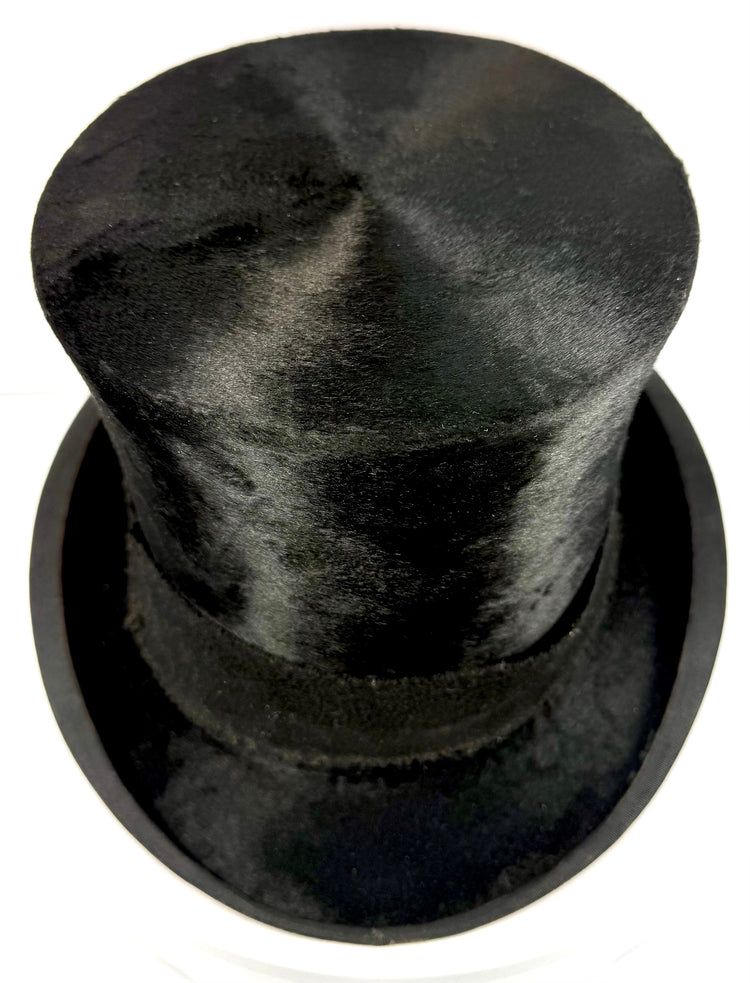
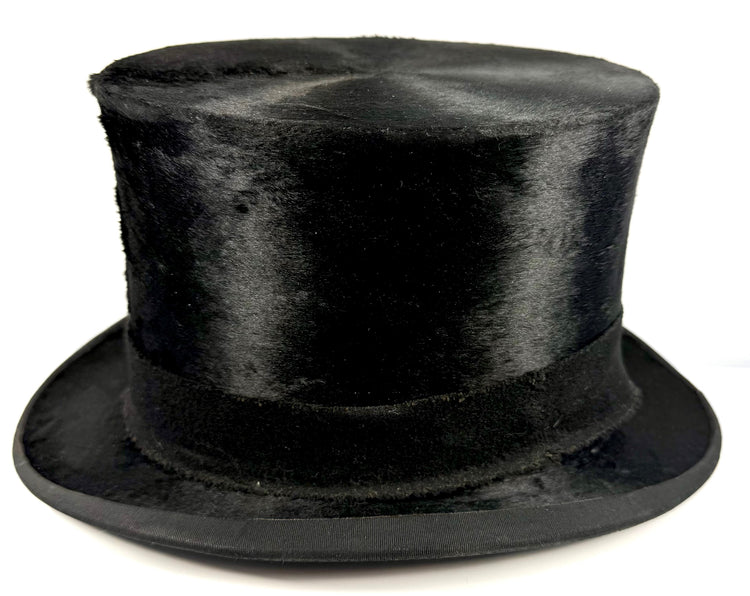
The top hat is fashioned from lustrous black silk plush, with a tall, structured crown, gently shaped brim, and traditional black ribbon band. Its refined proportions and elegant silhouette reflect the standards of British formal headwear during the early 20th century, when silk top hats remained important accessories for ceremonial occasions, formal social gatherings, weddings, and prestigious public events.
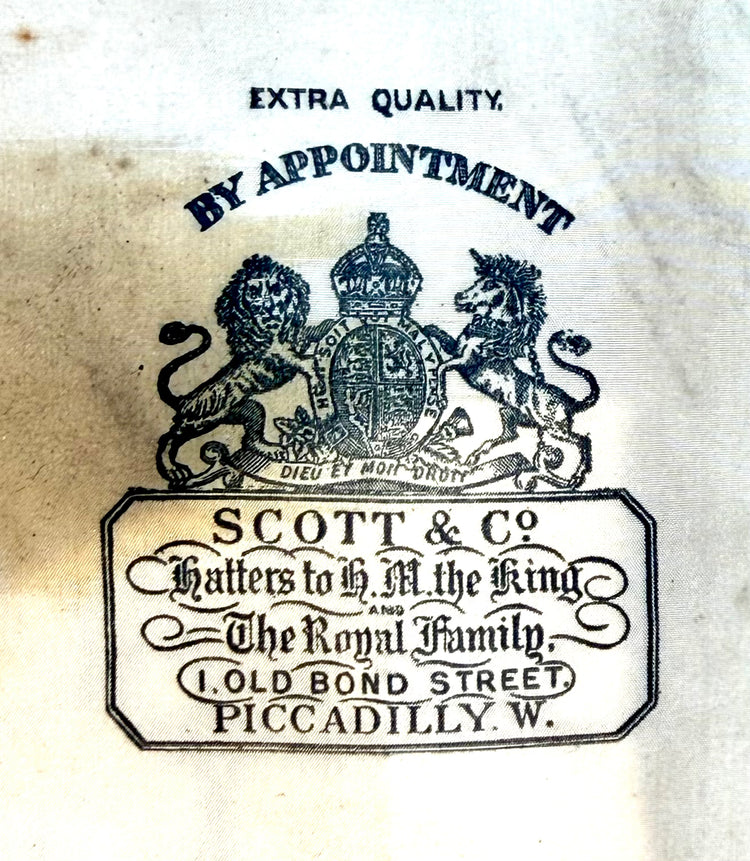
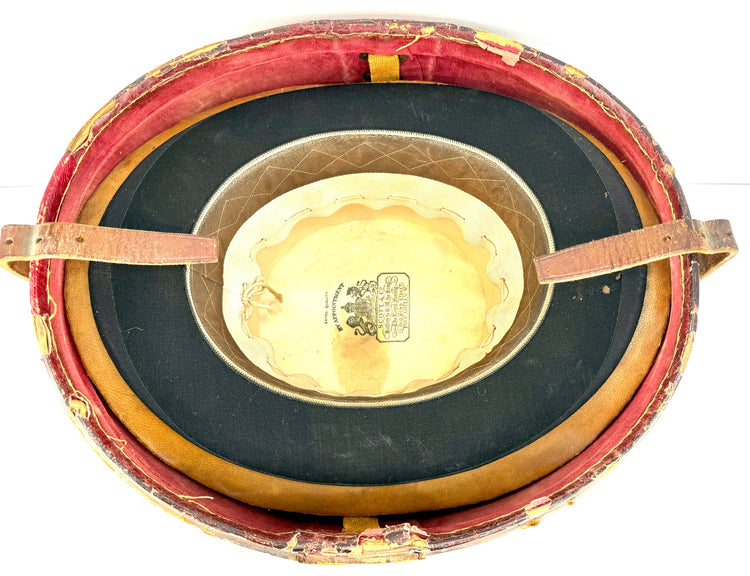
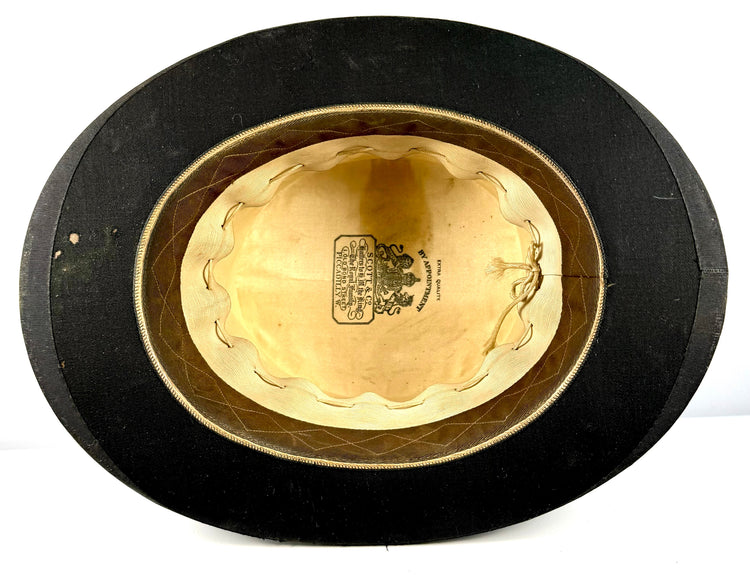
Inside the crown, the original manufacturer's insignia remains clearly preserved, displaying the British Royal Arms and the inscription:
"EXTRA QUALITY – BY APPOINTMENT – SCOTT & CO. – HATTERS TO H.M. THE KING AND THE ROYAL FAMILY – 1 OLD BOND STREET – PICCADILLY W."
Scott & Co. was an established London hatting firm associated with high-quality traditional headwear and royal patronage. Its prestigious Old Bond Street address placed the business among London's distinguished retailers serving fashionable and affluent clientele. Comparable Scott & Co. top hats are preserved in British heritage collections.
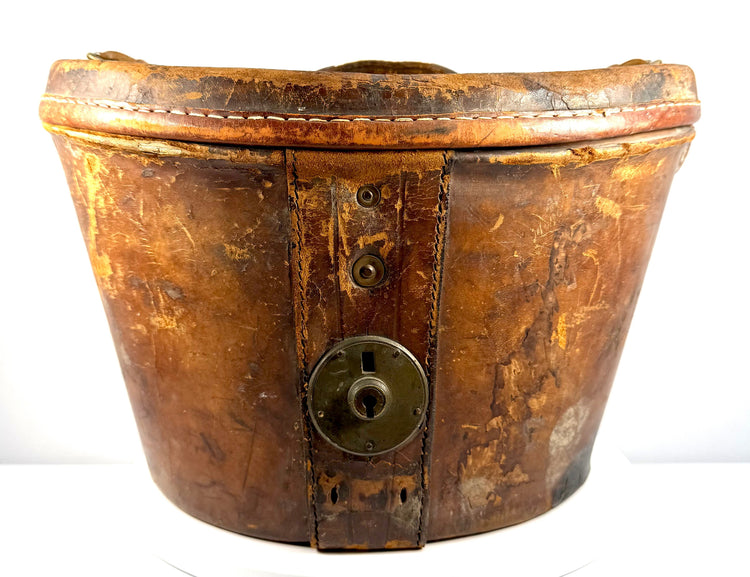
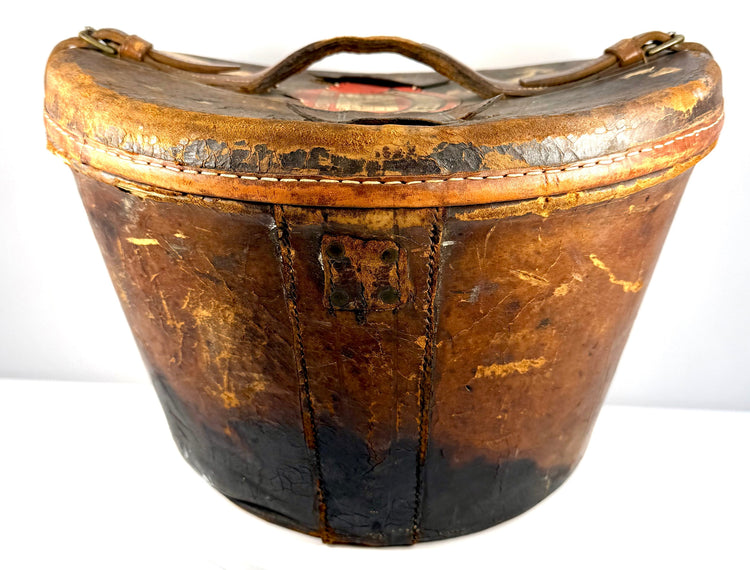
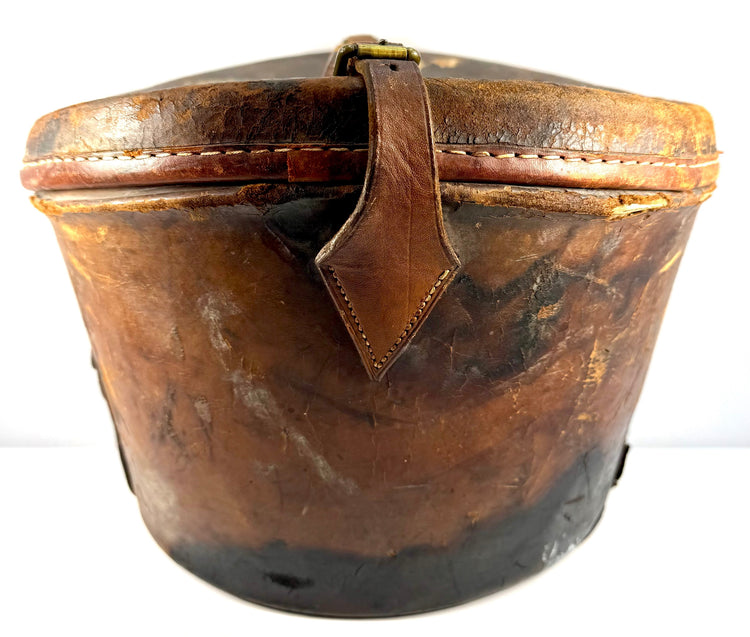
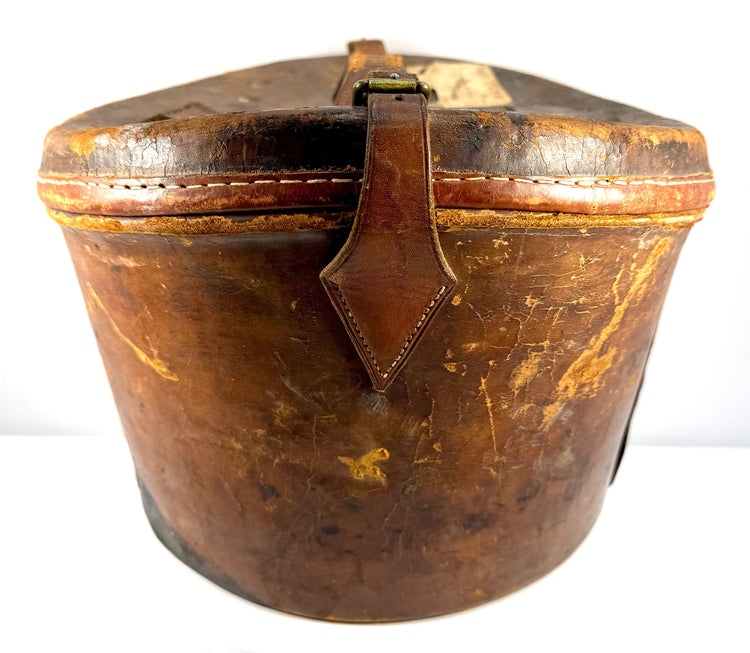
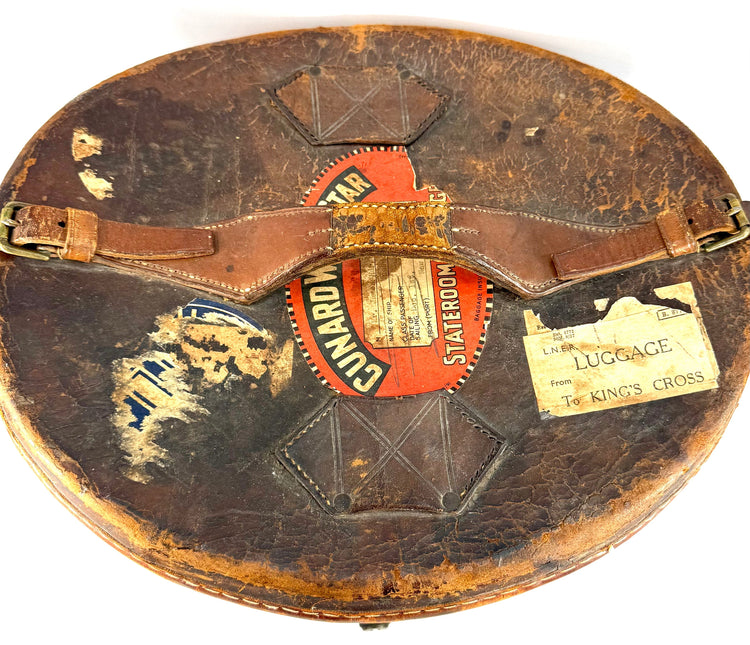
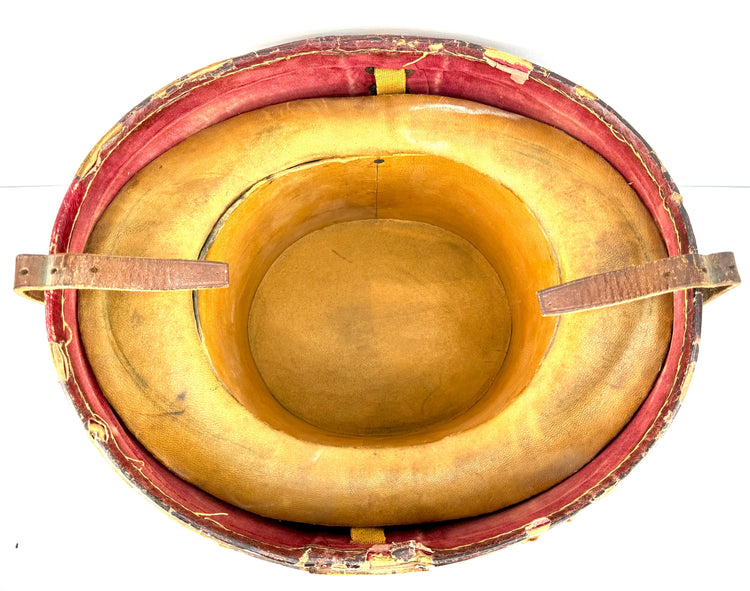
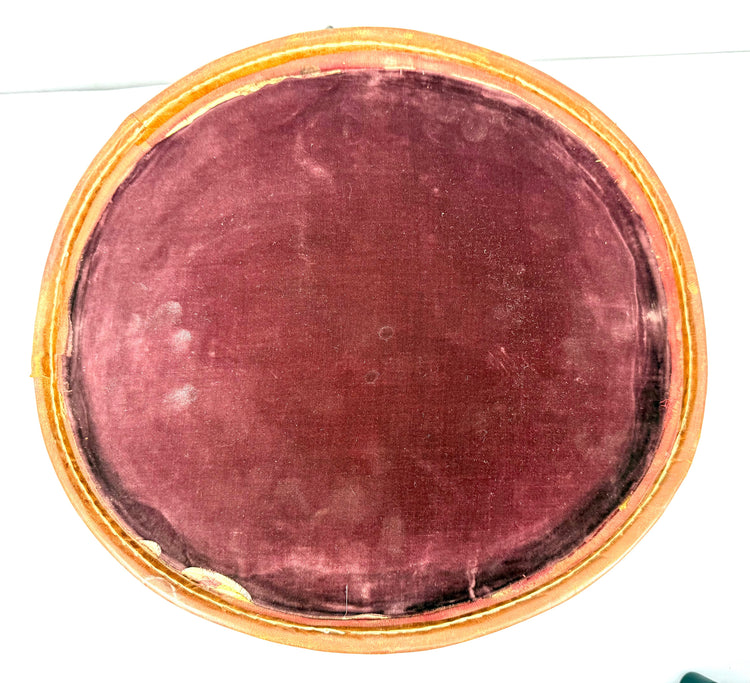
The accompanying brown leather travelling case is equally compelling. Constructed in a distinctive oval, slightly tapered form, it features substantial stitched leather panels, reinforced edges, a fitted lid, leather retaining straps, metal buckles, and a centrally mounted metal lock plate. The interior retains its period textile lining, including red edging and fitted supports designed to protect the hat during transportation.
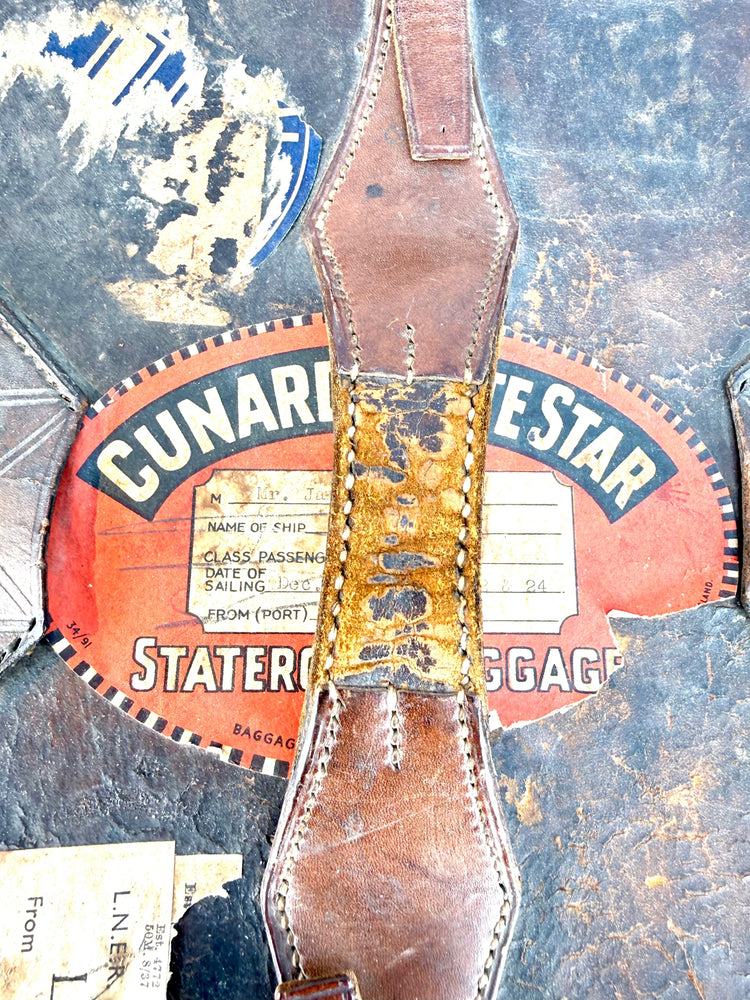
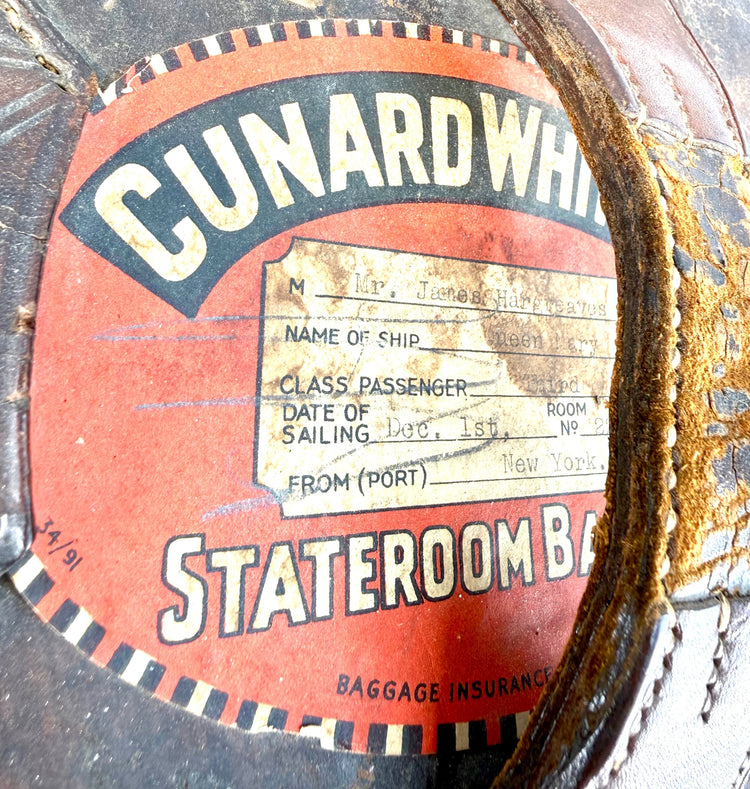
Most significantly, the exterior of the case retains an original Cunard White Star "Stateroom Baggage" label associated with the RMS Queen Mary.
The historic label identifies the following travel details:
Passenger: Mr. James Hargreaves
Shipping Company: Cunard White Star
Vessel: RMS Queen Mary
Passenger Class: Third Class
Date of Sailing: December 1st
Room Numbers: 22 & 24
Port of Departure: New York
Luggage Designation: Stateroom Baggage
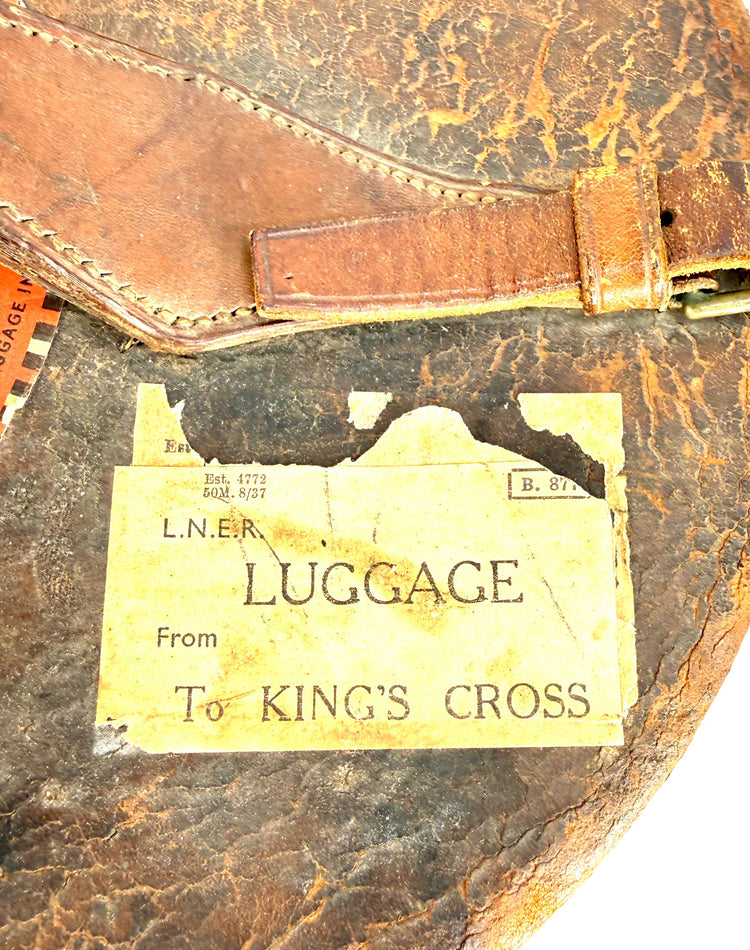
Also preserved is an original London and North Eastern Railway (LNER) luggage label bearing the prominent destination "KING'S CROSS." The label includes period railway typography and a small printed production code that appears to read "50M. 8/37," suggesting a printing date of August 1937.
Together, these labels suggest an intriguing history of transatlantic travel and onward railway transportation in Britain. While the precise itinerary cannot be independently reconstructed from the labels alone, their survival transforms the ensemble from a fine example of historic British headwear into a particularly evocative piece of maritime and transportation memorabilia.
Additional remnants of older paper labels, extensive leather patination, and surviving period construction details further contribute to its historical character.
Features
- Original Royal Appointment manufacturer's insignia inside the crown.
- Historic address of 1 Old Bond Street, Piccadilly, London.
- Black ribbon hatband and original interior textile lining.
- Leather carrying handle, retaining straps, buckles, and metal lock plate.
- Original Cunard White Star Stateroom Baggage label.
- RMS Queen Mary ocean liner specifically named on the label.
- Original LNER railway luggage label marked King's Cross.
- Railway label bearing an apparent August 1937 printing code.
Cultural Significance
This remarkable ensemble brings together three important aspects of British history: traditional luxury craftsmanship, the celebrated era of transatlantic passenger liners, and the development of modern railway travel.
Scott & Co. and British Royal Patronage
Scott & Co. was a respected London hatting establishment known for its finely crafted formal headwear. The company's association with the British Royal Family, prominently advertised through its Royal Appointment insignia, reflected the importance of skilled craftsmanship, established reputation, and formal presentation within British society.
During the late Victorian, Edwardian, and early 20th-century periods, the silk top hat became a defining accessory of formal masculine dress. Although everyday fashion gradually moved toward more practical headwear, the traditional black top hat remained associated with weddings, court functions, ceremonial occasions, and prestigious social gatherings.
The survival of both the maker-marked hat and its period travelling case provides an opportunity to appreciate not only the craftsmanship of the headwear itself, but also the specialized accessories required to transport and preserve expensive formal attire.
RMS Queen Mary and the Golden Age of Ocean Travel
The connection to the RMS Queen Mary is particularly noteworthy.
Built by John Brown & Company at Clydebank, Scotland, the RMS Queen Mary entered transatlantic passenger service on May 27, 1936. Operated by Cunard White Star, the enormous ocean liner became internationally celebrated for its speed, engineering, sophisticated interiors, and important role in connecting Europe with North America.
During the late 1930s, the Queen Mary represented the height of international ocean travel, transporting passengers across the Atlantic on one of the world's most famous maritime routes.
Following the outbreak of the Second World War, the vessel was converted for military transport, later returning to civilian passenger service in 1947. Its long career continued until 1967, when the ship was retired and subsequently preserved at Long Beach, California.
The original Cunard White Star label retained on this hat case is especially appealing because it records individual passenger information rather than simply displaying the shipping company's name.
The identification of Mr. James Hargreaves, together with his listed accommodation and December 1st sailing, provides a tangible human connection to the history of transatlantic travel.
The London and North Eastern Railway Connection
The surviving LNER luggage label adds another dimension to the ensemble's historical significance.
Established in 1923, the London and North Eastern Railway was one of Britain's four major railway companies before nationalization in 1948. Its extensive passenger network connected London with important destinations throughout eastern England and Scotland.
King's Cross railway station served as one of its principal London terminals and remains closely associated with British railway history.
The original railway label suggests that this travelling case was also prepared for transportation within the British railway system, illustrating how maritime and rail services formed interconnected elements of long-distance journeys.
The combination of a prestigious London maker, Cunard White Star passenger documentation, and an original LNER label makes this a distinctive surviving ensemble of early 20th-century British travel history.
Condition
The top hat survives in good antique condition overall, retaining its recognizable traditional silhouette, structured crown, broad shaped brim, black exterior finish, and original manufacturer identification.
The silk plush displays areas of surface wear, slight variations in sheen, and minor blemishes consistent with age and historic use. The interior lining shows age-related discolouration and wear, while the maker's insignia remains legible.
The accompanying leather travelling case exhibits substantial age-related wear, including extensive surface cracking, scuffing, areas of leather loss, abrasions, weakened edges, and deterioration around portions of the seams and lid.
The metal fittings display age-related patination and oxidation. The lock mechanism has not been tested, and no key is confirmed.
The interior retains its period construction and lining materials, with visible wear and fraying around the red textile borders.
The original paper luggage labels exhibit expected discolouration, fading, tears, and partial losses. Importantly, the principal Cunard White Star label remains sufficiently preserved to identify the passenger, vessel, travel class, sailing date, accommodation details, and departure port.
Dimensions (Approximate)
Fitted leather travelling case:
Length: 15 in
Width: 13 in
Height: 9 in
Age (Approximate)
80–100 years old
Provenance
Historically associated with Mr. James Hargreaves, whose name appears on the surviving original Cunard White Star Stateroom Baggage label affixed to the fitted leather case. The label identifies passage aboard the RMS Queen Mary, departing New York on December 1st, with third-class accommodation and room numbers 22 and 24. The case also retains an original London and North Eastern Railway luggage label marked King's Cross, with an apparent printing code dating to August 1937.
Subsequently held in a private collection in Toronto, Ontario, Canada, where the ensemble was preserved for its historical significance, fine British craftsmanship, and remarkable connection to the golden age of transatlantic ocean travel.
Learn More
Explore a comparable Scott & Company silk top hat at The Metropolitan Museum of Art
Browse Our Collection of 20th Century Artifacts
Description
Historical Context & Origin
Region: London, England, United Kingdom; documented maritime and railway connections between New York and Great Britain
Material: Black silk plush, structured hat body, textile lining, grosgrain ribbon, brown leather travelling hat case, metal fittings, and original paper luggage labels
Period: Early to mid-20th century, likely circa 1930s–1940s
Description
An exceptional antique British gentleman's black silk top hat by Scott & Co., Hatters to His Majesty the King and the Royal Family, presented in its period fitted leather travelling case and retaining a remarkable collection of historic luggage labels associated with the legendary RMS Queen Mary and the Cunard White Star Line.
This distinguished ensemble represents a fascinating intersection of British luxury craftsmanship, traditional formal dress, and the golden age of transatlantic ocean travel. Particularly noteworthy is the surviving Cunard White Star passenger luggage label identifying a named traveller, his ship, sailing date, accommodation details, and port of departure.
The top hat is fashioned from lustrous black silk plush, with a tall, structured crown, gently shaped brim, and traditional black ribbon band. Its refined proportions and elegant silhouette reflect the standards of British formal headwear during the early 20th century, when silk top hats remained important accessories for ceremonial occasions, formal social gatherings, weddings, and prestigious public events.
Inside the crown, the original manufacturer's insignia remains clearly preserved, displaying the British Royal Arms and the inscription:
"EXTRA QUALITY – BY APPOINTMENT – SCOTT & CO. – HATTERS TO H.M. THE KING AND THE ROYAL FAMILY – 1 OLD BOND STREET – PICCADILLY W."
Scott & Co. was an established London hatting firm associated with high-quality traditional headwear and royal patronage. Its prestigious Old Bond Street address placed the business among London's distinguished retailers serving fashionable and affluent clientele. Comparable Scott & Co. top hats are preserved in British heritage collections.
The accompanying brown leather travelling case is equally compelling. Constructed in a distinctive oval, slightly tapered form, it features substantial stitched leather panels, reinforced edges, a fitted lid, leather retaining straps, metal buckles, and a centrally mounted metal lock plate. The interior retains its period textile lining, including red edging and fitted supports designed to protect the hat during transportation.
Most significantly, the exterior of the case retains an original Cunard White Star "Stateroom Baggage" label associated with the RMS Queen Mary.
The historic label identifies the following travel details:
Passenger: Mr. James Hargreaves
Shipping Company: Cunard White Star
Vessel: RMS Queen Mary
Passenger Class: Third Class
Date of Sailing: December 1st
Room Numbers: 22 & 24
Port of Departure: New York
Luggage Designation: Stateroom Baggage
Also preserved is an original London and North Eastern Railway (LNER) luggage label bearing the prominent destination "KING'S CROSS." The label includes period railway typography and a small printed production code that appears to read "50M. 8/37," suggesting a printing date of August 1937.
Together, these labels suggest an intriguing history of transatlantic travel and onward railway transportation in Britain. While the precise itinerary cannot be independently reconstructed from the labels alone, their survival transforms the ensemble from a fine example of historic British headwear into a particularly evocative piece of maritime and transportation memorabilia.
Additional remnants of older paper labels, extensive leather patination, and surviving period construction details further contribute to its historical character.
Features
- Original Royal Appointment manufacturer's insignia inside the crown.
- Historic address of 1 Old Bond Street, Piccadilly, London.
- Black ribbon hatband and original interior textile lining.
- Leather carrying handle, retaining straps, buckles, and metal lock plate.
- Original Cunard White Star Stateroom Baggage label.
- RMS Queen Mary ocean liner specifically named on the label.
- Original LNER railway luggage label marked King's Cross.
- Railway label bearing an apparent August 1937 printing code.
Cultural Significance
This remarkable ensemble brings together three important aspects of British history: traditional luxury craftsmanship, the celebrated era of transatlantic passenger liners, and the development of modern railway travel.
Scott & Co. and British Royal Patronage
Scott & Co. was a respected London hatting establishment known for its finely crafted formal headwear. The company's association with the British Royal Family, prominently advertised through its Royal Appointment insignia, reflected the importance of skilled craftsmanship, established reputation, and formal presentation within British society.
During the late Victorian, Edwardian, and early 20th-century periods, the silk top hat became a defining accessory of formal masculine dress. Although everyday fashion gradually moved toward more practical headwear, the traditional black top hat remained associated with weddings, court functions, ceremonial occasions, and prestigious social gatherings.
The survival of both the maker-marked hat and its period travelling case provides an opportunity to appreciate not only the craftsmanship of the headwear itself, but also the specialized accessories required to transport and preserve expensive formal attire.
RMS Queen Mary and the Golden Age of Ocean Travel
The connection to the RMS Queen Mary is particularly noteworthy.
Built by John Brown & Company at Clydebank, Scotland, the RMS Queen Mary entered transatlantic passenger service on May 27, 1936. Operated by Cunard White Star, the enormous ocean liner became internationally celebrated for its speed, engineering, sophisticated interiors, and important role in connecting Europe with North America.
During the late 1930s, the Queen Mary represented the height of international ocean travel, transporting passengers across the Atlantic on one of the world's most famous maritime routes.
Following the outbreak of the Second World War, the vessel was converted for military transport, later returning to civilian passenger service in 1947. Its long career continued until 1967, when the ship was retired and subsequently preserved at Long Beach, California.
The original Cunard White Star label retained on this hat case is especially appealing because it records individual passenger information rather than simply displaying the shipping company's name.
The identification of Mr. James Hargreaves, together with his listed accommodation and December 1st sailing, provides a tangible human connection to the history of transatlantic travel.
The London and North Eastern Railway Connection
The surviving LNER luggage label adds another dimension to the ensemble's historical significance.
Established in 1923, the London and North Eastern Railway was one of Britain's four major railway companies before nationalization in 1948. Its extensive passenger network connected London with important destinations throughout eastern England and Scotland.
King's Cross railway station served as one of its principal London terminals and remains closely associated with British railway history.
The original railway label suggests that this travelling case was also prepared for transportation within the British railway system, illustrating how maritime and rail services formed interconnected elements of long-distance journeys.
The combination of a prestigious London maker, Cunard White Star passenger documentation, and an original LNER label makes this a distinctive surviving ensemble of early 20th-century British travel history.
Condition
The top hat survives in good antique condition overall, retaining its recognizable traditional silhouette, structured crown, broad shaped brim, black exterior finish, and original manufacturer identification.
The silk plush displays areas of surface wear, slight variations in sheen, and minor blemishes consistent with age and historic use. The interior lining shows age-related discolouration and wear, while the maker's insignia remains legible.
The accompanying leather travelling case exhibits substantial age-related wear, including extensive surface cracking, scuffing, areas of leather loss, abrasions, weakened edges, and deterioration around portions of the seams and lid.
The metal fittings display age-related patination and oxidation. The lock mechanism has not been tested, and no key is confirmed.
The interior retains its period construction and lining materials, with visible wear and fraying around the red textile borders.
The original paper luggage labels exhibit expected discolouration, fading, tears, and partial losses. Importantly, the principal Cunard White Star label remains sufficiently preserved to identify the passenger, vessel, travel class, sailing date, accommodation details, and departure port.
Dimensions (Approximate)
Fitted leather travelling case:
Length: 15 in
Width: 13 in
Height: 9 in
Age (Approximate)
80–100 years old
Provenance
Historically associated with Mr. James Hargreaves, whose name appears on the surviving original Cunard White Star Stateroom Baggage label affixed to the fitted leather case. The label identifies passage aboard the RMS Queen Mary, departing New York on December 1st, with third-class accommodation and room numbers 22 and 24. The case also retains an original London and North Eastern Railway luggage label marked King's Cross, with an apparent printing code dating to August 1937.
Subsequently held in a private collection in Toronto, Ontario, Canada, where the ensemble was preserved for its historical significance, fine British craftsmanship, and remarkable connection to the golden age of transatlantic ocean travel.
Learn More
Explore a comparable Scott & Company silk top hat at The Metropolitan Museum of Art
Browse Our Collection of 20th Century Artifacts
Vous aimerez peut-être aussi
