Figura de jinete a caballo de terracota beocia de la Antigua Grecia | Procedencia detallada | Circa 700–500 a. C.

Historial de procedencia y propiedad

Adquirido en la tienda de antigüedades Roussos, Atenas, Grecia, el 19 de septiembre de 1980. Acompañado del recibo de compra original, documentación de exportación y una fotografía de época original que muestra la pieza en la colección poco después de su adquisición.

Posteriormente conservado en una colección privada de Minnesota, EE. UU., durante más de cuatro décadas.

Precio habitual
$3,000.00
Precio de venta
$3,000.00
Precio habitual
Envío calculado al finalizar la compra.

The only one in the world. Once it is sold, it will not be restocked.

Ancient Greek Boeotian terracotta horse and rider figure dating to the Late Geometric and Early Archaic periods.
Ancient Boeotian Greek terracotta horse and rider votive figure dating to circa 700–500 BCE, shown in a rotating 360-degree view highlighting its stylized geometric form, surviving traces of red pigment, archaeological patina, and sculptural details. The video concludes with the original 1980 purchase receipt, export documentation, and period provenance photographs.
Boeotian terracotta horse and rider votive sculpture from ancient Greece with traces of original red pigment.
Ancient Greek horse and rider terracotta figure featuring stylized geometric forms and archaeological patina.
Pre-Classical Greek terracotta equestrian figure from Boeotia with surviving red pigment and mineral deposits.
Ancient Boeotian horse and rider sculpture representing a traditional Greek votive offering from circa 700–500 BCE.
Greek terracotta horse and rider figurine with abstract geometric styling characteristic of Boeotian workshops.
Ancient Boeotian equestrian terracotta sculpture displaying weathered surfaces, pigment remnants, and mineral encrustation.
Hand-modeled Greek terracotta horse and rider figure from Boeotia mounted on a custom display stand.
Ancient Greek votive horse and rider figure illustrating the distinctive artistic traditions of Boeotian terracotta sculpture.
Original 1980 purchase receipt from Roussos Antiques Shop in Athens, Greece, accompanying the ancient Boeotian terracotta figure.
Original receipt documentation accompanying the ancient Greek Boeotian horse and rider terracotta sculpture.
Period provenance photograph documenting the ancient Boeotian terracotta horse and rider figure shortly after its acquisition into a private collection.
Original purchase receipt from Roussos Antiques Shop, Athens, Greece, dated September 19, 1980, documenting the acquisition of the ancient Boeotian terracotta horse and rider figure.
  • Ancient Greek Boeotian terracotta horse and rider figure dating to the Late Geometric and Early Archaic periods.
  • Ancient Boeotian Greek terracotta horse and rider votive figure dating to circa 700–500 BCE, shown in a rotating 360-degree view highlighting its stylized geometric form, surviving traces of red pigment, archaeological patina, and sculptural details. The video concludes with the original 1980 purchase receipt, export documentation, and period provenance photographs.
  • Boeotian terracotta horse and rider votive sculpture from ancient Greece with traces of original red pigment.
  • Ancient Greek horse and rider terracotta figure featuring stylized geometric forms and archaeological patina.
  • Pre-Classical Greek terracotta equestrian figure from Boeotia with surviving red pigment and mineral deposits.
  • Ancient Boeotian horse and rider sculpture representing a traditional Greek votive offering from circa 700–500 BCE.
  • Greek terracotta horse and rider figurine with abstract geometric styling characteristic of Boeotian workshops.
  • Ancient Boeotian equestrian terracotta sculpture displaying weathered surfaces, pigment remnants, and mineral encrustation.
  • Hand-modeled Greek terracotta horse and rider figure from Boeotia mounted on a custom display stand.
  • Ancient Greek votive horse and rider figure illustrating the distinctive artistic traditions of Boeotian terracotta sculpture.
  • Original 1980 purchase receipt from Roussos Antiques Shop in Athens, Greece, accompanying the ancient Boeotian terracotta figure.
  • Original receipt documentation accompanying the ancient Greek Boeotian horse and rider terracotta sculpture.
  • Period provenance photograph documenting the ancient Boeotian terracotta horse and rider figure shortly after its acquisition into a private collection.
  • Original purchase receipt from Roussos Antiques Shop, Athens, Greece, dated September 19, 1980, documenting the acquisition of the ancient Boeotian terracotta horse and rider figure.
Ancient Greek Boeotian terracotta horse and rider figure dating to the Late Geometric and Early Archaic periods.
Ancient Boeotian Greek terracotta horse and rider votive figure dating to circa 700–500 BCE, shown in a rotating 360-degree view highlighting its stylized geometric form, surviving traces of red pigment, archaeological patina, and sculptural details. The video concludes with the original 1980 purchase receipt, export documentation, and period provenance photographs.
Boeotian terracotta horse and rider votive sculpture from ancient Greece with traces of original red pigment.
Ancient Greek horse and rider terracotta figure featuring stylized geometric forms and archaeological patina.
Pre-Classical Greek terracotta equestrian figure from Boeotia with surviving red pigment and mineral deposits.
Ancient Boeotian horse and rider sculpture representing a traditional Greek votive offering from circa 700–500 BCE.
Greek terracotta horse and rider figurine with abstract geometric styling characteristic of Boeotian workshops.
Ancient Boeotian equestrian terracotta sculpture displaying weathered surfaces, pigment remnants, and mineral encrustation.
Hand-modeled Greek terracotta horse and rider figure from Boeotia mounted on a custom display stand.
Ancient Greek votive horse and rider figure illustrating the distinctive artistic traditions of Boeotian terracotta sculpture.
Original 1980 purchase receipt from Roussos Antiques Shop in Athens, Greece, accompanying the ancient Boeotian terracotta figure.
Original receipt documentation accompanying the ancient Greek Boeotian horse and rider terracotta sculpture.
Period provenance photograph documenting the ancient Boeotian terracotta horse and rider figure shortly after its acquisition into a private collection.
Original purchase receipt from Roussos Antiques Shop, Athens, Greece, dated September 19, 1980, documenting the acquisition of the ancient Boeotian terracotta horse and rider figure.
Authenticity and secure checkout guarantee

Figura de jinete a caballo de terracota beocia de la Antigua Grecia | Procedencia detallada | Circa 700–500 a. C.

Descripción

Contexto histórico y origen

Región: Beocia, Antigua Grecia
Material: Terracota modelada a mano con restos de pigmento rojo
Período: Período Geométrico Tardío a Arcaico Temprano, c. 700–500 a.C.

Descripción

Esta antigua figura griega de terracota de caballo y jinete proviene de Beocia, una región famosa por su prolífica producción de esculturas votivas ecuestres estilizadas durante los períodos Geométrico y Arcaico Temprano. Las figuras de caballo y jinete como esta se dedicaban comúnmente en santuarios, se depositaban como ofrendas funerarias o se presentaban como símbolos de estatus, riqueza e identidad aristocrática.

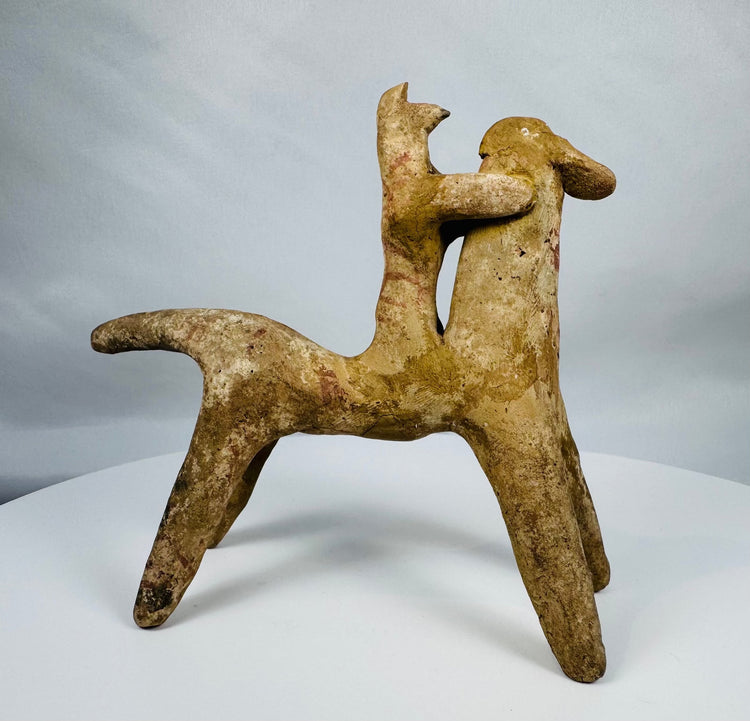
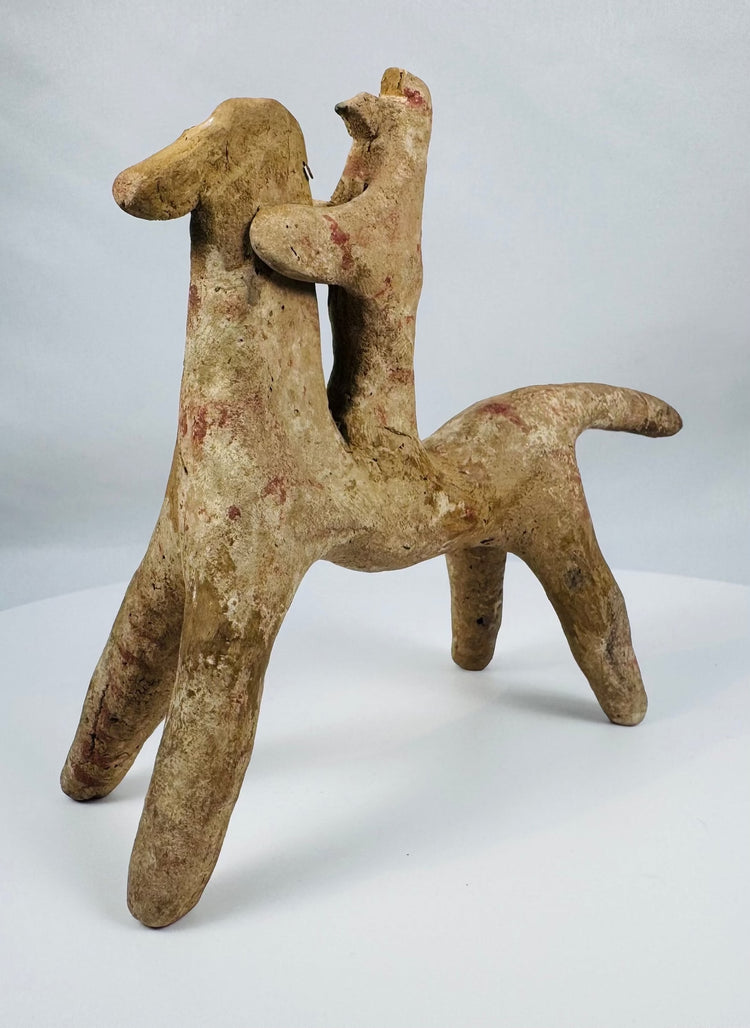
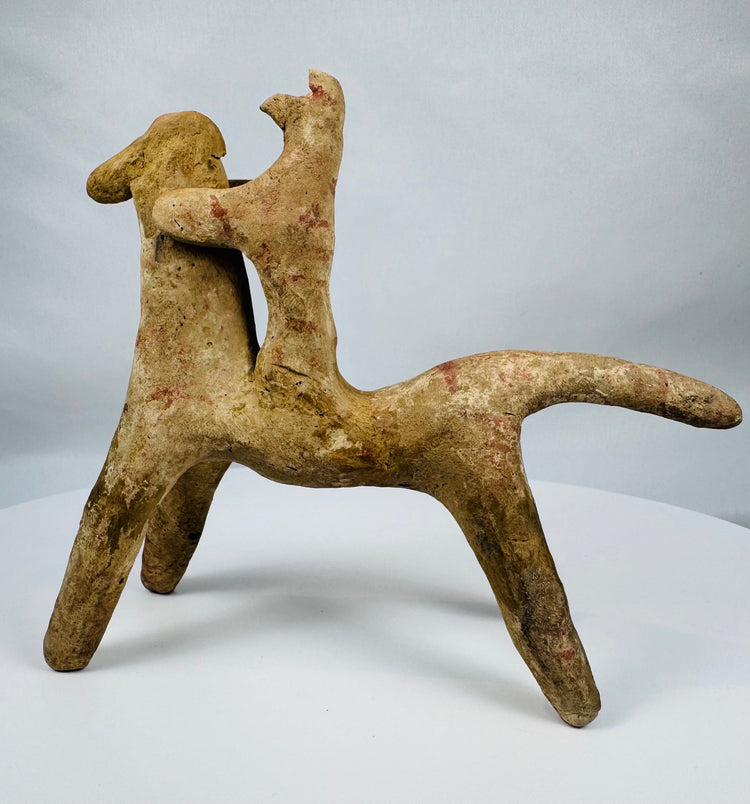
La escultura representa a un jinete sentado a horcajadas sobre un caballo, realizado de la manera altamente abstracta y expresiva característica de los talleres de terracota beocios. Los brazos del jinete se extienden hacia afuera para agarrar ambos lados del cuello o la crin del caballo, mientras que tanto el caballo como el jinete están simplificados en elegantes formas geométricas. Las patas alargadas, el cuello arqueado y la cola saliente del caballo crean una silueta dinámica que ejemplifica las convenciones artísticas de la escultura figurativa griega temprana.

Restos del pigmento rojo original permanecen visibles en algunas partes de la superficie, lo que proporciona evidencia de la decoración pintada que una vez realzó la figura. La pieza presenta importantes concreciones minerales, intemperismo y pátina de entierro consistentes con una considerable antigüedad. Ejemplos de figuras votivas de caballo y jinete similares están representados en importantes colecciones de museos y se consideran precursores importantes de la escultura naturalista de los períodos Arcaico y Clásico griego.

Estado

Buen estado antiguo en general. Desgaste superficial, depósitos minerales, restos de pigmento, imperfecciones de cocción y desgaste relacionado con la edad en toda la pieza. Pequeñas pérdidas y abrasiones consistentes con la edad y la recuperación arqueológica. Se presenta bien con una forma escultórica fuerte y superficies antiguas atractivas.

Dimensiones (Aproximadas)

Altura: 5.25 in
Ancho: 5.5 in
Largo: 2.25 in

Edad (Aproximada)

2.500–2.700 años de antigüedad

Procedencia

Comprado en Roussos Antiques Shop, Atenas, Grecia, el 19 de septiembre de 1980. Acompañado del recibo de compra original, la documentación de exportación y una fotografía original de la época que muestra la pieza en la colección poco después de su adquisición.

Posteriormente, estuvo en una colección privada de Minnesota, EE. UU., durante más de cuatro décadas.

Más información

Obtenga información sobre la importancia de las figuras votivas de caballos y jinetes de la antigua Grecia a través de el Departamento de Clásicas de la Universidad de Colorado Boulder

Ver nuestra Colección de Artefactos Romanos y Griegos Antiguos

Descripción

Contexto histórico y origen

Región: Beocia, Antigua Grecia
Material: Terracota modelada a mano con restos de pigmento rojo
Período: Período Geométrico Tardío a Arcaico Temprano, c. 700–500 a.C.

Descripción

Esta antigua figura griega de terracota de caballo y jinete proviene de Beocia, una región famosa por su prolífica producción de esculturas votivas ecuestres estilizadas durante los períodos Geométrico y Arcaico Temprano. Las figuras de caballo y jinete como esta se dedicaban comúnmente en santuarios, se depositaban como ofrendas funerarias o se presentaban como símbolos de estatus, riqueza e identidad aristocrática.

La escultura representa a un jinete sentado a horcajadas sobre un caballo, realizado de la manera altamente abstracta y expresiva característica de los talleres de terracota beocios. Los brazos del jinete se extienden hacia afuera para agarrar ambos lados del cuello o la crin del caballo, mientras que tanto el caballo como el jinete están simplificados en elegantes formas geométricas. Las patas alargadas, el cuello arqueado y la cola saliente del caballo crean una silueta dinámica que ejemplifica las convenciones artísticas de la escultura figurativa griega temprana.

Restos del pigmento rojo original permanecen visibles en algunas partes de la superficie, lo que proporciona evidencia de la decoración pintada que una vez realzó la figura. La pieza presenta importantes concreciones minerales, intemperismo y pátina de entierro consistentes con una considerable antigüedad. Ejemplos de figuras votivas de caballo y jinete similares están representados en importantes colecciones de museos y se consideran precursores importantes de la escultura naturalista de los períodos Arcaico y Clásico griego.

Estado

Buen estado antiguo en general. Desgaste superficial, depósitos minerales, restos de pigmento, imperfecciones de cocción y desgaste relacionado con la edad en toda la pieza. Pequeñas pérdidas y abrasiones consistentes con la edad y la recuperación arqueológica. Se presenta bien con una forma escultórica fuerte y superficies antiguas atractivas.

Dimensiones (Aproximadas)

Altura: 5.25 in
Ancho: 5.5 in
Largo: 2.25 in

Edad (Aproximada)

2.500–2.700 años de antigüedad

Procedencia

Comprado en Roussos Antiques Shop, Atenas, Grecia, el 19 de septiembre de 1980. Acompañado del recibo de compra original, la documentación de exportación y una fotografía original de la época que muestra la pieza en la colección poco después de su adquisición.

Posteriormente, estuvo en una colección privada de Minnesota, EE. UU., durante más de cuatro décadas.

Más información

Obtenga información sobre la importancia de las figuras votivas de caballos y jinetes de la antigua Grecia a través de el Departamento de Clásicas de la Universidad de Colorado Boulder

Ver nuestra Colección de Artefactos Romanos y Griegos Antiguos

También te puede interesar