


American Civil War-Era Family CDV Photograph Album | 14 Original Cartes de Visite & 1865 Revenue Stamps | Circa 1860s
- Precio habitual
- $500.00
- Precio de venta
- $500.00
- Precio habitual
No se pudo cargar la disponibilidad de retiro


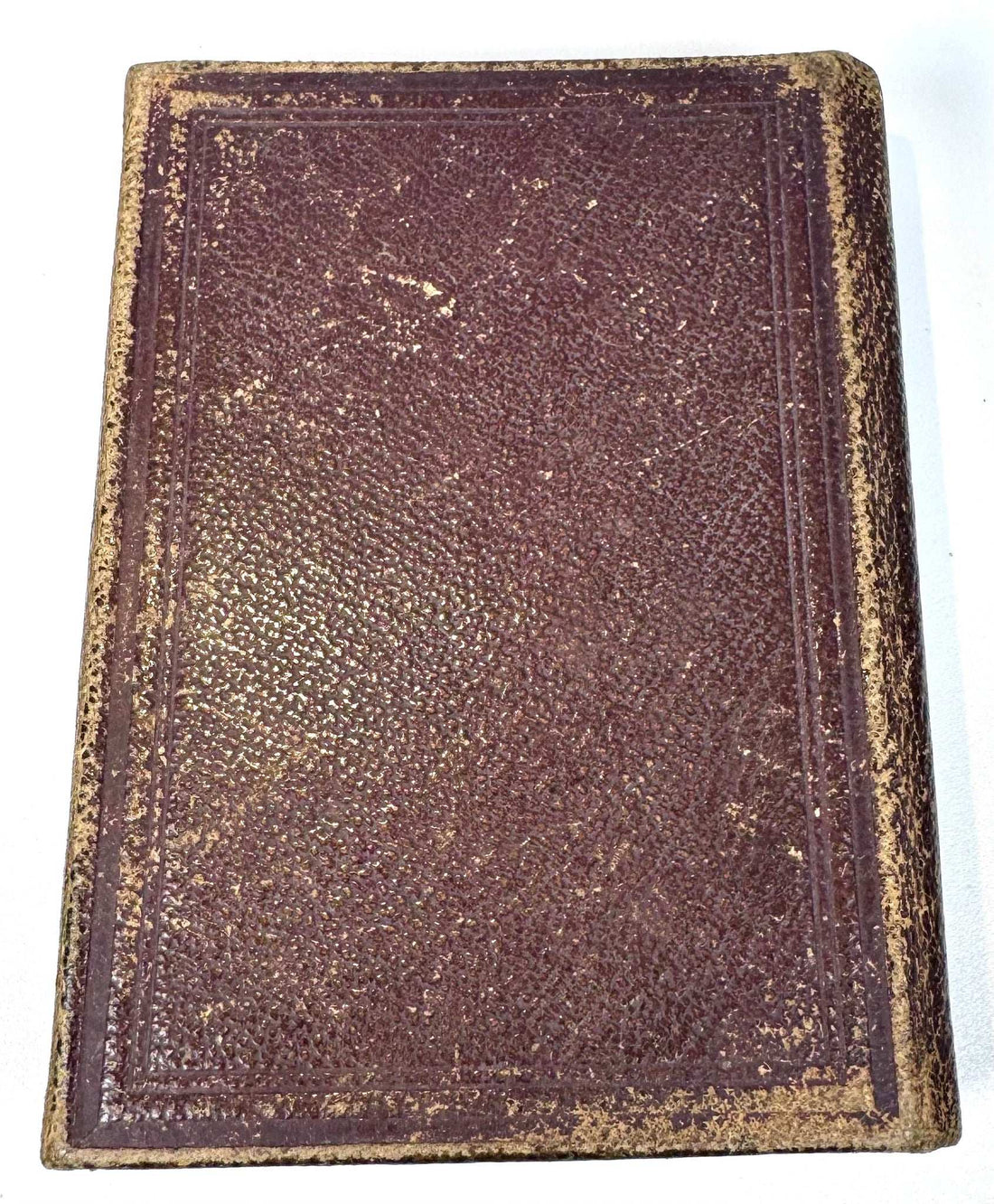
American Civil War-Era Family CDV Photograph Album | 14 Original Cartes de Visite & 1865 Revenue Stamps | Circa 1860s
Descripción
Más
Menos
Historical Context & Origin
Region: United States, including Hope, Bartholomew County, Indiana
Material: Leather, paper, cardboard-mounted albumen photographs, and original U.S. Internal Revenue stamps
Period: American Civil War and Early Reconstruction Era, circa 1860s, with documented examples dated 1865
Description
This remarkable mid-19th-century American family photograph album contains 14 original cartes de visite (CDVs) dating to the Civil War and early Reconstruction era. The collection features studio portraits of men, women, couples, and younger individuals dressed in period clothing, offering a glimpse into American family life during the 1860s.
Several photographs retain original U.S. Internal Revenue stamps, with reported cancellations dated August and October 1865. Photographer's markings identify Olds & Schaub of Hope, Indiana, a photographic partnership documented in 1865. These surviving details provide valuable historical evidence connecting the collection to the final months of the Civil War and the beginning of Reconstruction.
The original dark brown leather-covered album features an embossed decorative border, wraparound closure flap, and fastening strap. Internally, decorative arched photographic openings frame the portraits, while handwritten inscriptions, including names appearing to read "Louise Huffman Fishel" and "Sanford Fishel", offer potential family connections. An original page of printed photograph-insertion instructions also survives.
Features
- Contains 14 original cartes de visite photographic portraits
- Multiple photographs retain original U.S. Internal Revenue stamps
- Reported revenue-stamp cancellations dated August and October 1865
- Photographer's imprints identifying Olds & Schaub of Hope, Indiana
- Original leather-covered binding with embossed decoration, wraparound flap, and fastening strap
- Period studio portraits depicting men, women, couples, and younger subjects
- Decorative arched photographic openings with printed ornamental borders
- Handwritten identification inscriptions, including the Fishel family names
- Surviving original manufacturer's photograph-insertion instructions
Cultural Significance
Cartes de visite became one of the most popular photographic formats in America during the Civil War era. Their compact size and relatively affordable production allowed families to exchange portraits, preserve images of loved ones, and assemble personal photographic albums. These collections became important records of family relationships, social identity, Victorian fashion, and the development of commercial photography.
The survival of this album as a collection of 14 portraits, together with its original binding, photographer's imprints, handwritten inscriptions, and federal revenue stamps, makes it a meaningful example of 19th-century American photographic and social history. The documented 1865 studio association and surviving tax stamps provide particularly valuable connections to the final months of the Civil War and the beginning of the Reconstruction period.
Condition
Fair antique condition, exhibiting substantial age-related wear consistent with its approximately 160-year history. The original leather binding displays extensive surface rubbing, cracking, abrasions, edge wear, and losses to the original finish, revealing lighter underlying material. The closure flap and leather fastening components remain present, with visible wear from age and handling.
The internal album pages exhibit foxing, staining, discolouration, age toning, and localized tears or deterioration around some photographic openings. Several paper mounting corners and edges show lifting, splitting, or losses.
The 14 photographic portraits remain identifiable, displaying varying degrees of fading, contrast loss, foxing, and surface discolouration. Original revenue stamps, handwritten inscriptions, and period photographer markings are preserved among the collection.
Dimensions (Approximate)
Height: 4.5 in
Length: 3.5 in
Depth: 1 in
Age (Approximate)
155–170 years old
Provenance
Purchased on April 26, 2001, from an antique store in the United States, as documented by an accompanying original typed collector's inventory tag. Subsequently preserved within a private collection in Burlington, North Carolina, United States, before its acquisition by Relic & Rarity.
The album is accompanied by its original typed inventory tag from the 2001 purchase, which has been preserved alongside the collection and provides a documented record of its acquisition and collecting history.
The collection retains reported revenue-stamp cancellations dated August and October 1865, providing important historical dating evidence.
Learn More
Explore the history of Civil War-era cartes de visite and photographic revenue stamps through the Genesee Country Village & Museum: American Carte de Visite Photography
Discover related 19th-century historical objects in our collection: Victorian Artifacts & Historic Relics
Descripción
Historical Context & Origin
Region: United States, including Hope, Bartholomew County, Indiana
Material: Leather, paper, cardboard-mounted albumen photographs, and original U.S. Internal Revenue stamps
Period: American Civil War and Early Reconstruction Era, circa 1860s, with documented examples dated 1865
Description
This remarkable mid-19th-century American family photograph album contains 14 original cartes de visite (CDVs) dating to the Civil War and early Reconstruction era. The collection features studio portraits of men, women, couples, and younger individuals dressed in period clothing, offering a glimpse into American family life during the 1860s.
Several photographs retain original U.S. Internal Revenue stamps, with reported cancellations dated August and October 1865. Photographer's markings identify Olds & Schaub of Hope, Indiana, a photographic partnership documented in 1865. These surviving details provide valuable historical evidence connecting the collection to the final months of the Civil War and the beginning of Reconstruction.
The original dark brown leather-covered album features an embossed decorative border, wraparound closure flap, and fastening strap. Internally, decorative arched photographic openings frame the portraits, while handwritten inscriptions, including names appearing to read "Louise Huffman Fishel" and "Sanford Fishel", offer potential family connections. An original page of printed photograph-insertion instructions also survives.
Features
- Contains 14 original cartes de visite photographic portraits
- Multiple photographs retain original U.S. Internal Revenue stamps
- Reported revenue-stamp cancellations dated August and October 1865
- Photographer's imprints identifying Olds & Schaub of Hope, Indiana
- Original leather-covered binding with embossed decoration, wraparound flap, and fastening strap
- Period studio portraits depicting men, women, couples, and younger subjects
- Decorative arched photographic openings with printed ornamental borders
- Handwritten identification inscriptions, including the Fishel family names
- Surviving original manufacturer's photograph-insertion instructions
Cultural Significance
Cartes de visite became one of the most popular photographic formats in America during the Civil War era. Their compact size and relatively affordable production allowed families to exchange portraits, preserve images of loved ones, and assemble personal photographic albums. These collections became important records of family relationships, social identity, Victorian fashion, and the development of commercial photography.
The survival of this album as a collection of 14 portraits, together with its original binding, photographer's imprints, handwritten inscriptions, and federal revenue stamps, makes it a meaningful example of 19th-century American photographic and social history. The documented 1865 studio association and surviving tax stamps provide particularly valuable connections to the final months of the Civil War and the beginning of the Reconstruction period.
Condition
Fair antique condition, exhibiting substantial age-related wear consistent with its approximately 160-year history. The original leather binding displays extensive surface rubbing, cracking, abrasions, edge wear, and losses to the original finish, revealing lighter underlying material. The closure flap and leather fastening components remain present, with visible wear from age and handling.
The internal album pages exhibit foxing, staining, discolouration, age toning, and localized tears or deterioration around some photographic openings. Several paper mounting corners and edges show lifting, splitting, or losses.
The 14 photographic portraits remain identifiable, displaying varying degrees of fading, contrast loss, foxing, and surface discolouration. Original revenue stamps, handwritten inscriptions, and period photographer markings are preserved among the collection.
Dimensions (Approximate)
Height: 4.5 in
Length: 3.5 in
Depth: 1 in
Age (Approximate)
155–170 years old
Provenance
Purchased on April 26, 2001, from an antique store in the United States, as documented by an accompanying original typed collector's inventory tag. Subsequently preserved within a private collection in Burlington, North Carolina, United States, before its acquisition by Relic & Rarity.
The album is accompanied by its original typed inventory tag from the 2001 purchase, which has been preserved alongside the collection and provides a documented record of its acquisition and collecting history.
The collection retains reported revenue-stamp cancellations dated August and October 1865, providing important historical dating evidence.
Learn More
Explore the history of Civil War-era cartes de visite and photographic revenue stamps through the Genesee Country Village & Museum: American Carte de Visite Photography
Discover related 19th-century historical objects in our collection: Victorian Artifacts & Historic Relics
También te puede interesar
