



Victorian Gilt Bronze Cobra Inkstand with Thermometer & Compass | Benjamin Waterhouse Hawkins | Design Published 1850
- Precio habitual
- $1,500.00
- Precio de venta
- $1,500.00
- Precio habitual
No se pudo cargar la disponibilidad de retiro


Victorian Gilt Bronze Cobra Inkstand with Thermometer & Compass | Benjamin Waterhouse Hawkins | Design Published 1850
Descripción
Más
Menos
Historical Context & Origin
Region: England
Designer: Benjamin Waterhouse Hawkins (1807–1894)
Material: Gilt bronze, metal instrument fittings, glass, and red inset eyes
Period: Victorian Era, Mid-19th Century CE; Design Published 5 February 1850
Benjamin Waterhouse Hawkins was an English sculptor and natural history illustrator whose work brought together artistic craftsmanship and the study of the animal world. He is particularly remembered for the life-size reconstructions of dinosaurs and other prehistoric animals created for Crystal Palace Park at Sydenham. Unveiled in 1854, these included the world's first full-scale dinosaur reconstructions and helped introduce a broad public to the developing science of palaeontology.
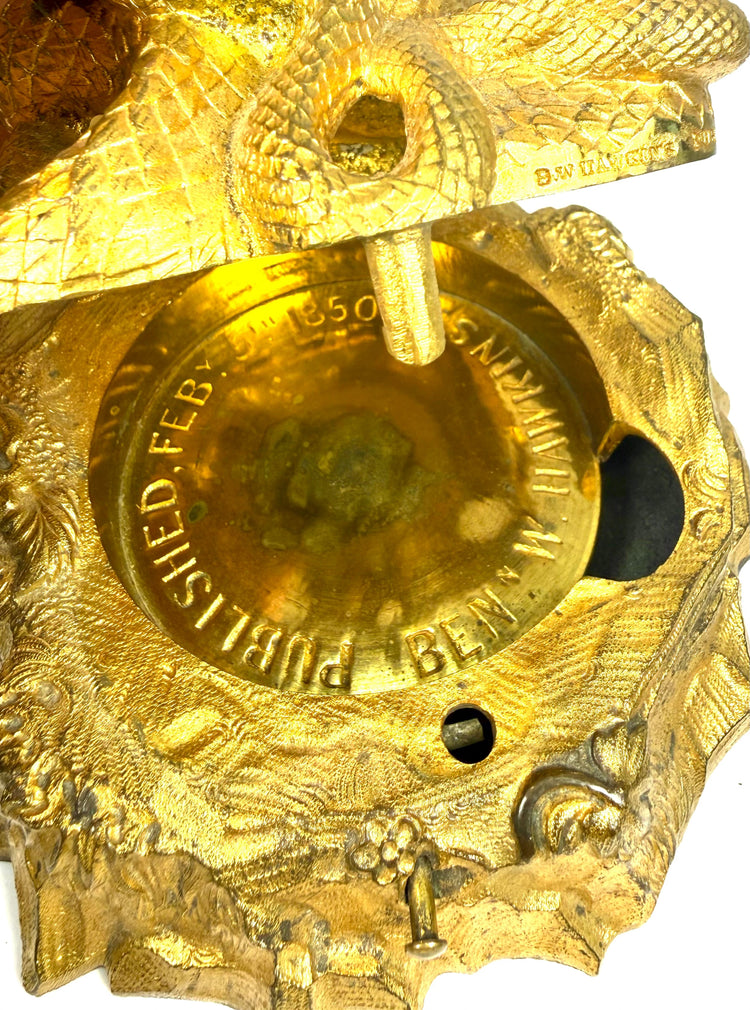
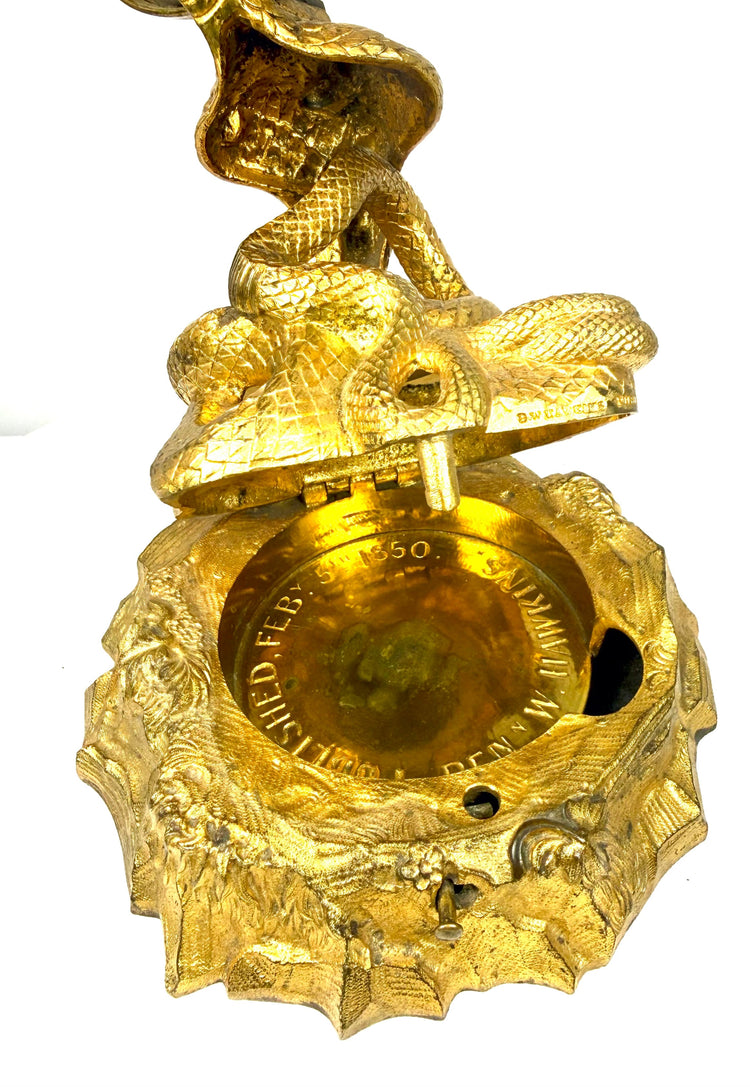
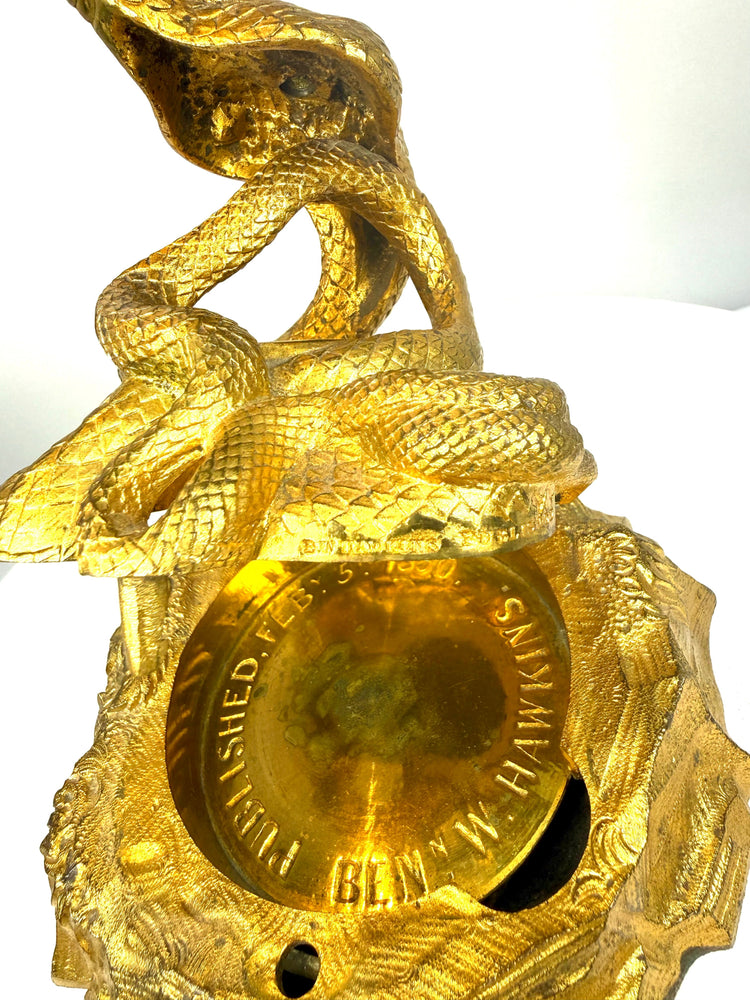
This cobra inkstand represents another aspect of Hawkins's work: the use of animal sculpture in decorative objects designed for everyday surroundings. Its cast inscriptions identify Hawkins and record a publication date of 5 February 1850, placing the design shortly before his celebrated Crystal Palace commission.
Description
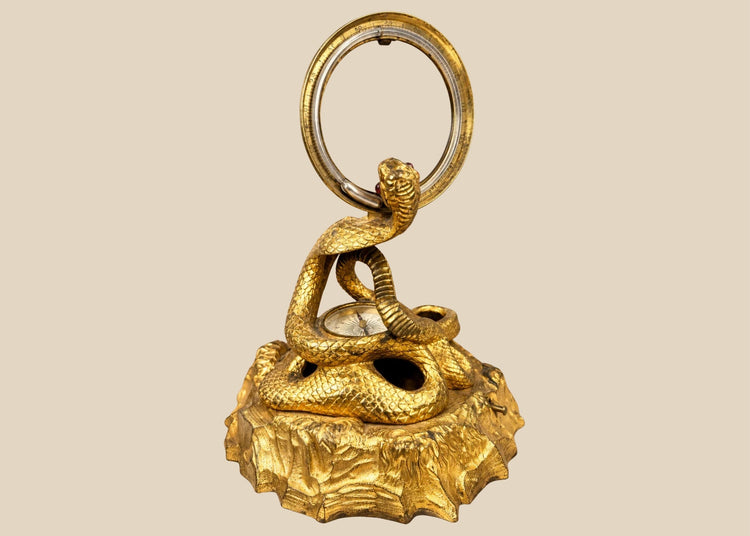
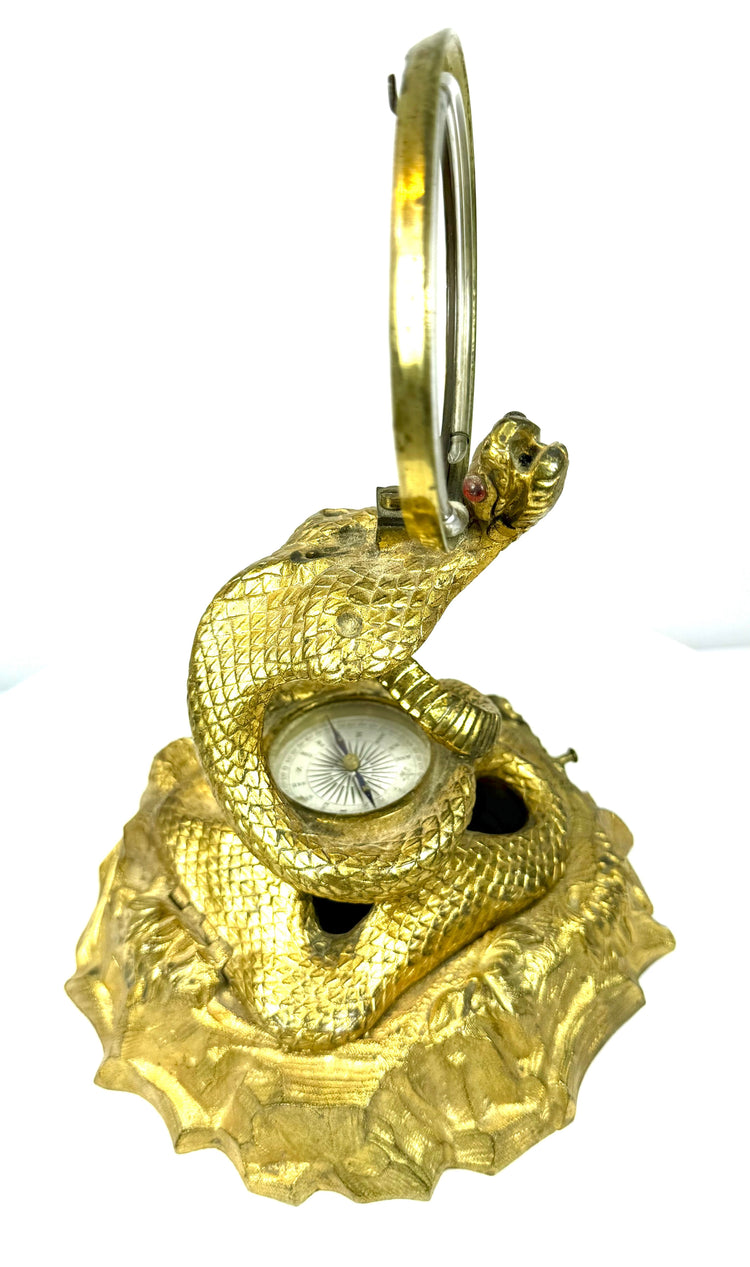
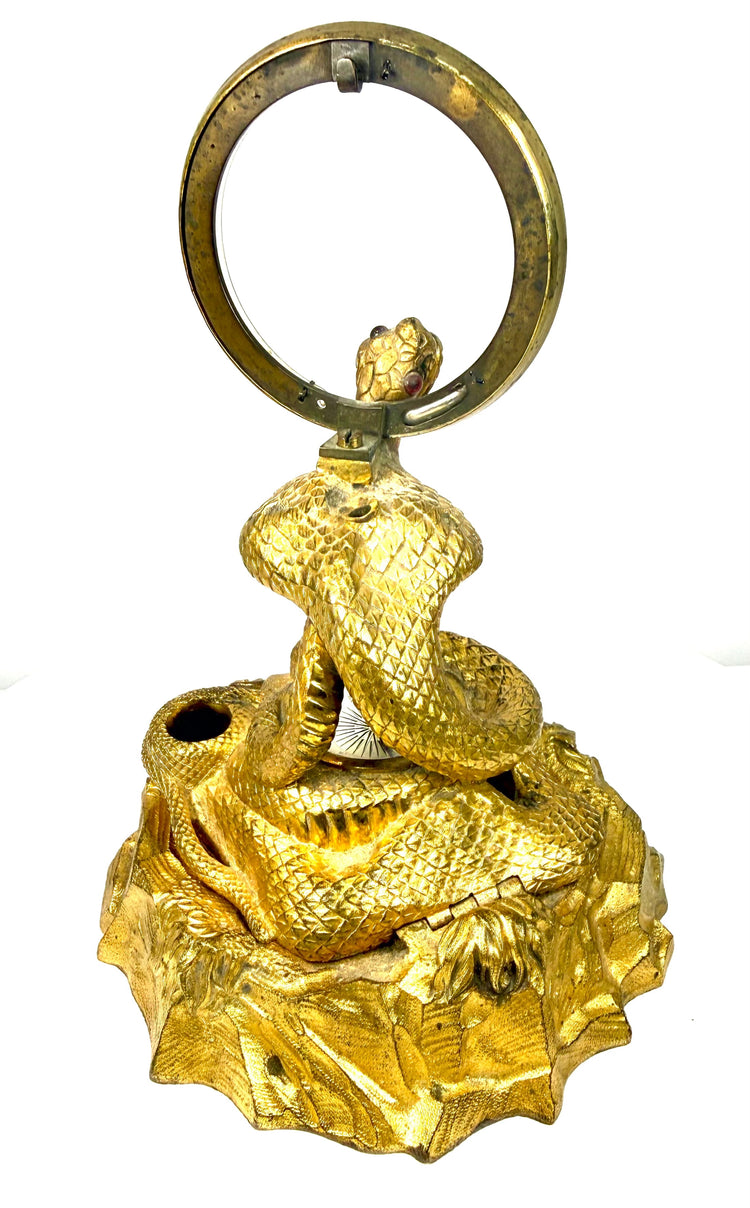
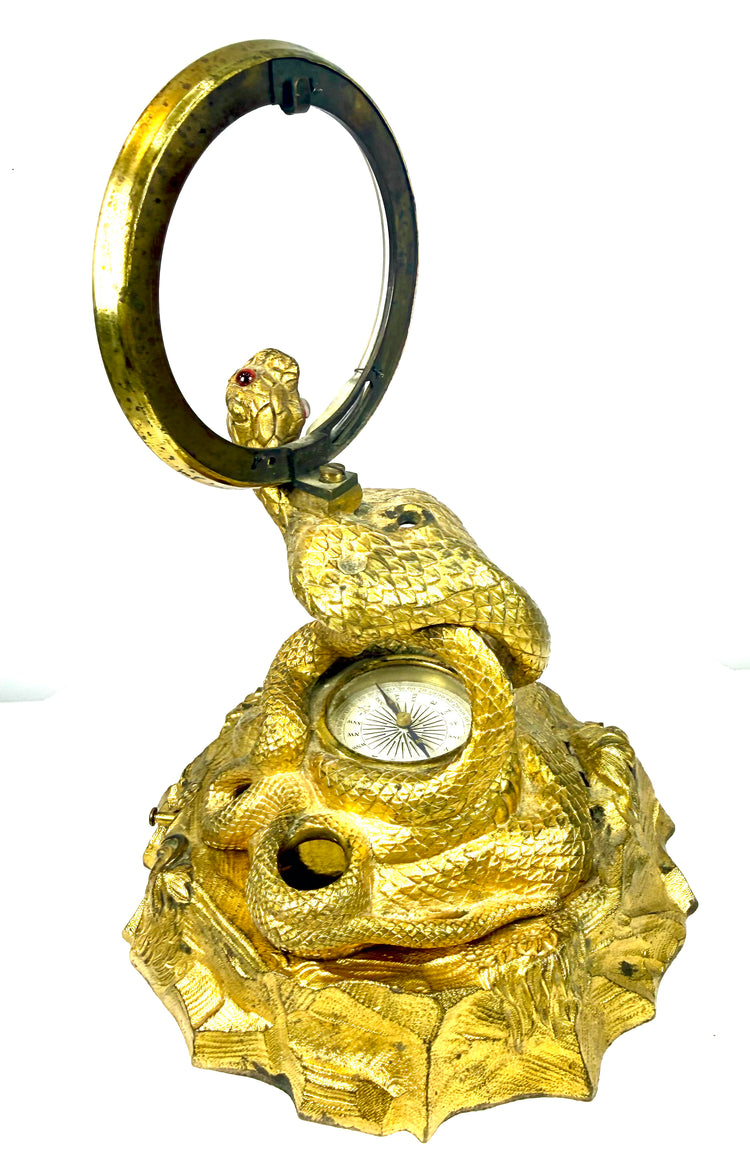
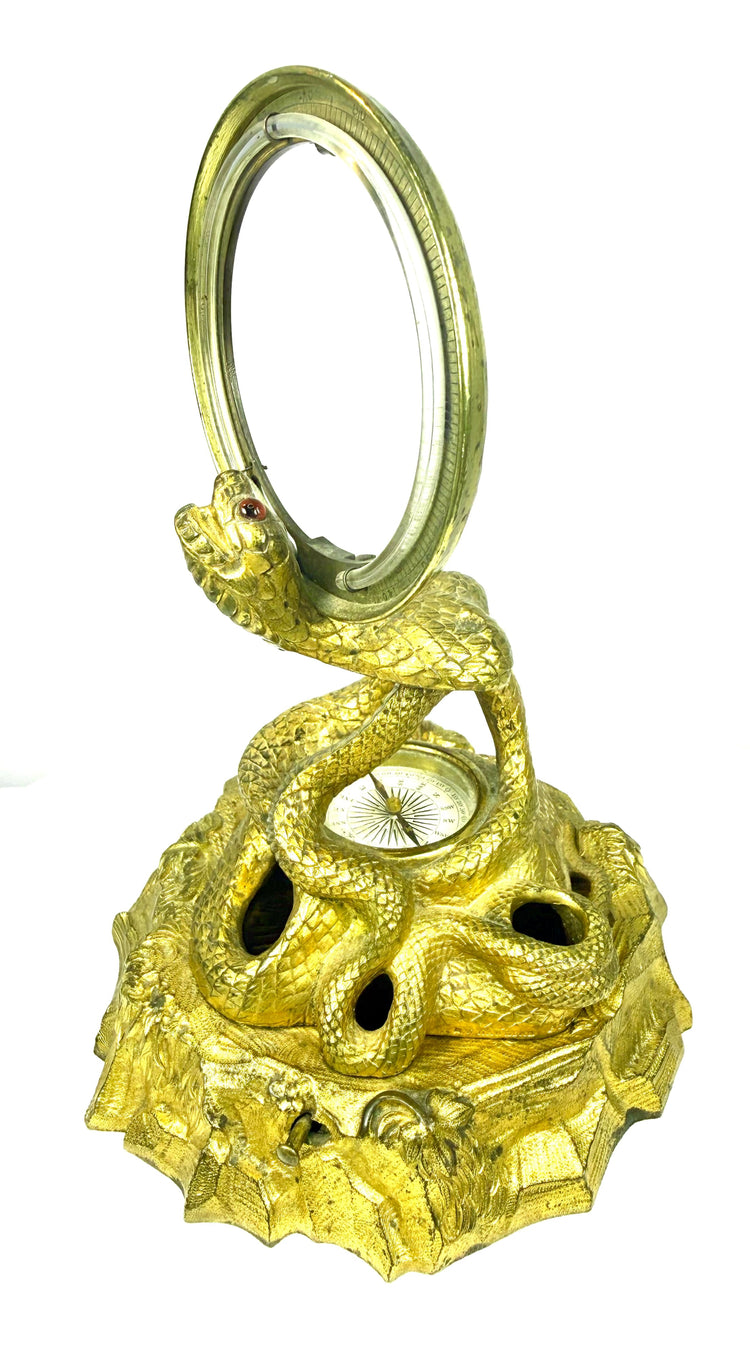
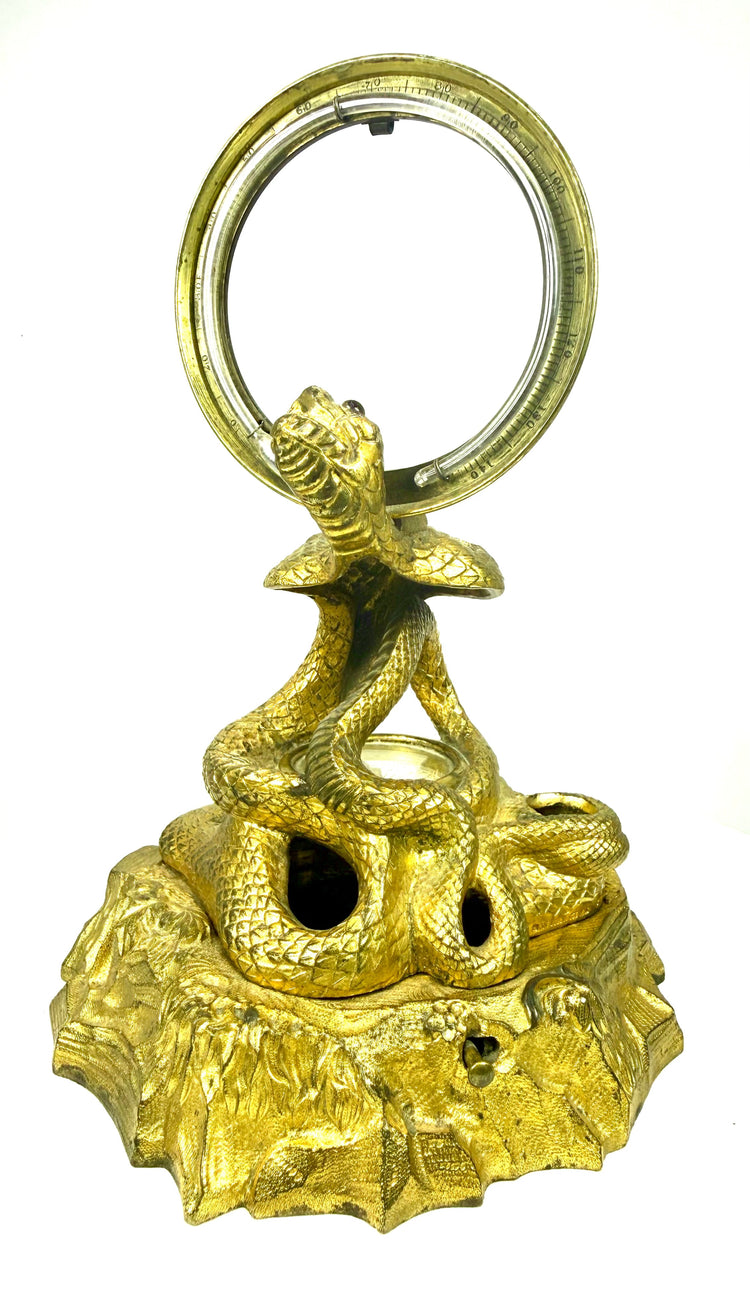
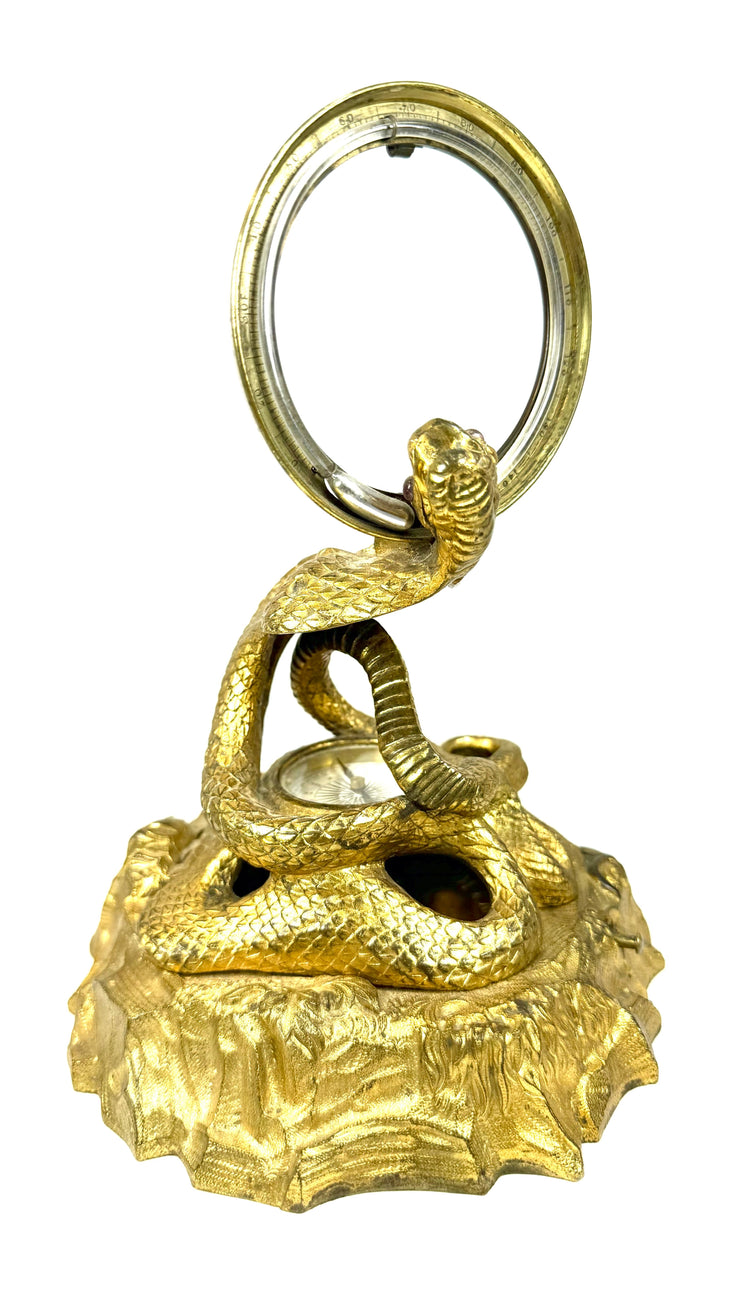
An elaborate Victorian desk accessory, this gilt bronze inkstand takes the form of a coiled cobra rising above a shaped base decorated with rockwork and foliage. The snake's body twists through an open sculptural arrangement, with individually defined scales, a ribbed underside, an expanded hood, and red inset eyes.
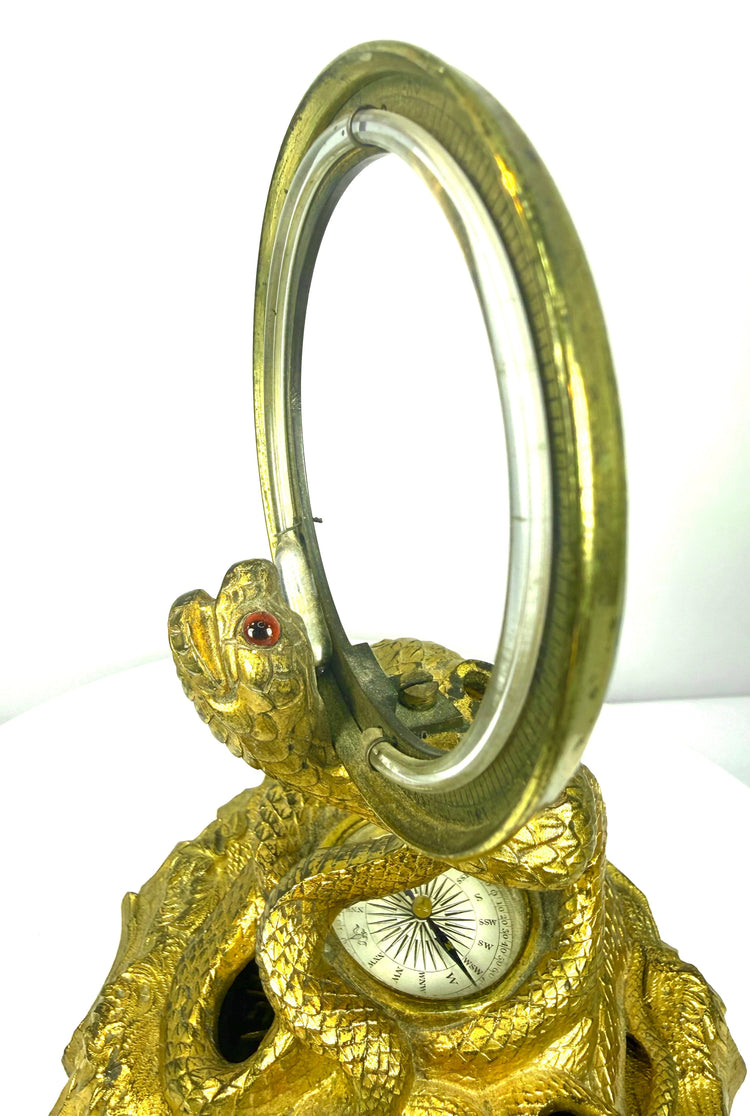
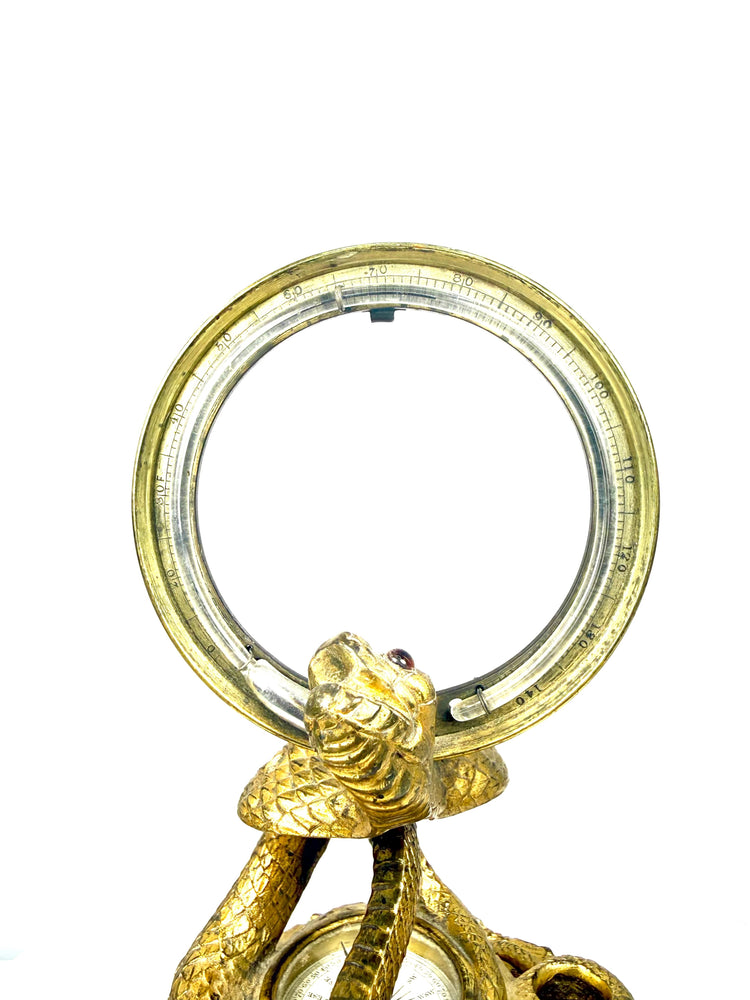
Mounted above the cobra is a circular thermometer, its curved glass tube following a graduated Fahrenheit scale around the inside of the metal ring. A small hook at the top provides a suspension point for a pocket watch, allowing a watch to be displayed within the circular opening.
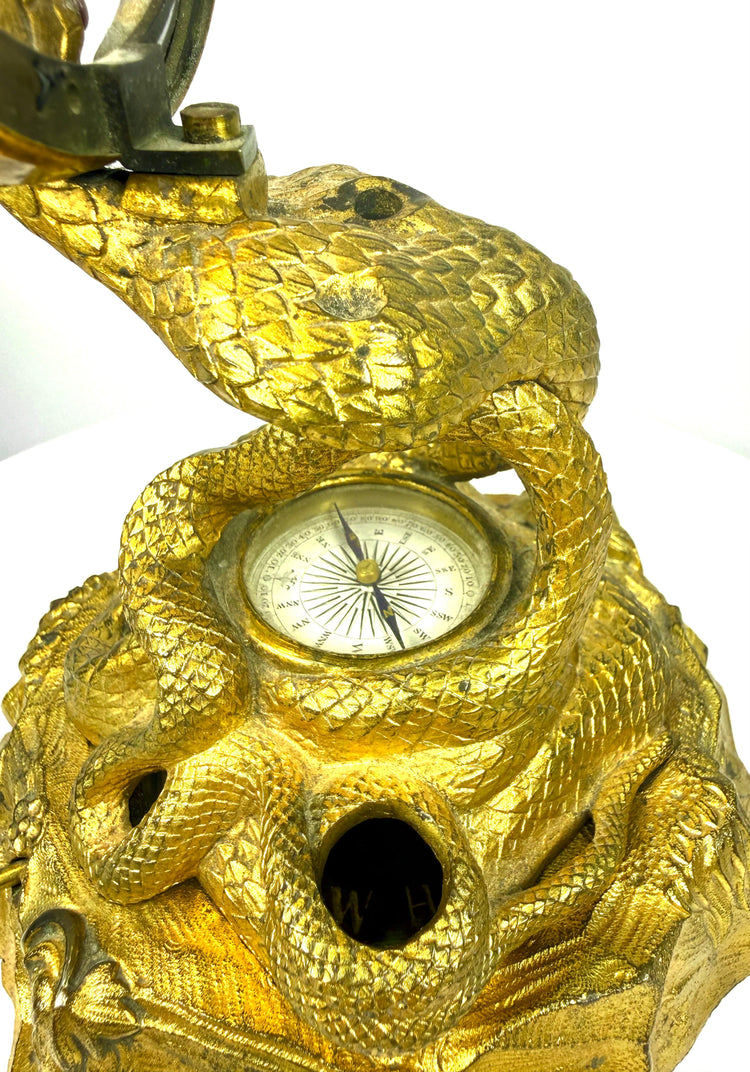
A compass is recessed among the lower coils, its face displaying a radiating compass rose and directional markings beneath glass. Openings incorporated into the composition accommodate the inkstand's writing functions, while the hinged upper section lifts to reveal the interior compartment.
The opened base exposes a prominent cast inscription bearing Hawkins's name and the 1850 publication date. Further lettering appears along the edge of the upper casting. These marks add particular interest to an object whose sculptural form and scientific fittings make it an engaging display piece for a study, library, or collection of Victorian curiosities.
Features
- Sculptural cobra design associated with Benjamin Waterhouse Hawkins
- Gilt bronze body with detailed scales, expanded hood, and red inset eyes
- Circular glass thermometer with a graduated Fahrenheit scale
- Suspension hook for displaying a pocket watch
- Inset compass with decorative compass rose and directional markings
- Integrated pen-holding and ink-access openings
- Hinged upper section revealing an interior ink compartment
- Cast inscriptions bearing Hawkins's name and the publication date of 5 February 1850
- Shaped base with rockwork and foliage decoration
Cultural Significance
The combination of animal sculpture, writing equipment, and scientific instruments gives this piece a distinctive place within Victorian decorative art. Its cobra serves both as the principal sculptural subject and as the framework around which the practical fittings are arranged.
For collectors, the Hawkins connection provides an additional dimension. His work at Crystal Palace helped establish how prehistoric animals were presented to the public in three dimensions. This smaller domestic object offers a different expression of the same artist's interest in modelling the natural world.
Condition
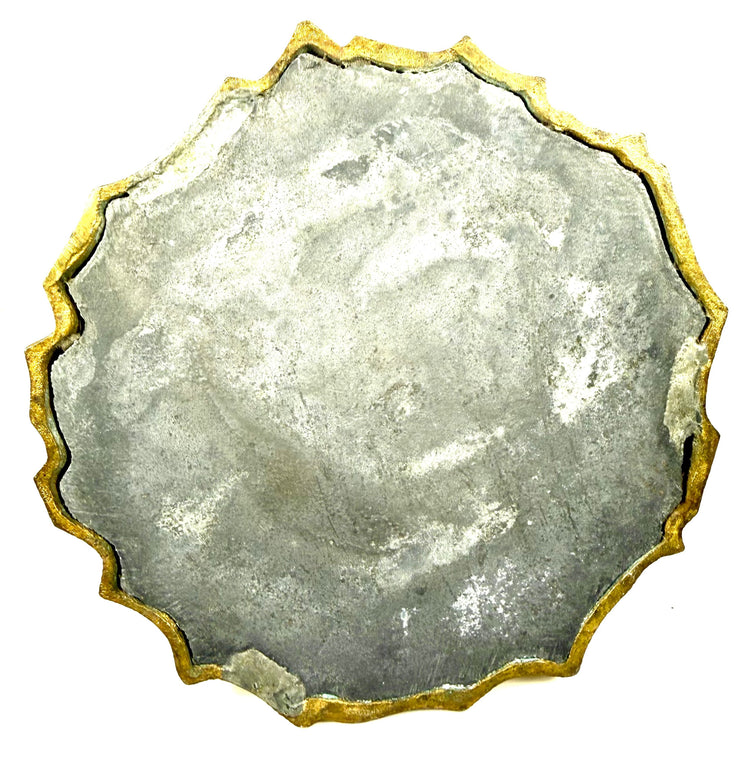
Antique condition with surface wear, rubbing to the gilt finish, scattered darkened areas, and localized oxidation. The modelling of the scales, foliage, and rockwork remains clearly defined, and the cast inscriptions are legible.
The compass, circular thermometer, watch hook, and hinged upper section are present. The working condition and accuracy of the instruments have not been verified.
The interior is shown without a separate removable ink liner. An open mounting aperture and a circular plugged fixing point are visible on the upper surface of the cobra's hood; the completeness of the original upper fittings has not been established. No pocket watch is included.
Dimensions (Approximate)
Height: 8 in
Width: 5.75 in
Depth: 5.75 in
Age (Approximate)
176 years old
Provenance
Previously handled by Quinn’s Auction Galleries, Falls Church, Virginia, USA. Quinn’s Auction Galleries is a long-established auction house based in Falls Church, Virginia, known for handling fine art, antiques, decorative arts, estate collections, and historically significant objects.
Learn More
Discover the remarkable contributions of Benjamin Waterhouse Hawkins to Victorian sculpture and natural history through the Natural History Museum
Browse our collection of Victorian Artifacts & Historic Relics
Descripción
Historical Context & Origin
Region: England
Designer: Benjamin Waterhouse Hawkins (1807–1894)
Material: Gilt bronze, metal instrument fittings, glass, and red inset eyes
Period: Victorian Era, Mid-19th Century CE; Design Published 5 February 1850
Benjamin Waterhouse Hawkins was an English sculptor and natural history illustrator whose work brought together artistic craftsmanship and the study of the animal world. He is particularly remembered for the life-size reconstructions of dinosaurs and other prehistoric animals created for Crystal Palace Park at Sydenham. Unveiled in 1854, these included the world's first full-scale dinosaur reconstructions and helped introduce a broad public to the developing science of palaeontology.
This cobra inkstand represents another aspect of Hawkins's work: the use of animal sculpture in decorative objects designed for everyday surroundings. Its cast inscriptions identify Hawkins and record a publication date of 5 February 1850, placing the design shortly before his celebrated Crystal Palace commission.
Description
An elaborate Victorian desk accessory, this gilt bronze inkstand takes the form of a coiled cobra rising above a shaped base decorated with rockwork and foliage. The snake's body twists through an open sculptural arrangement, with individually defined scales, a ribbed underside, an expanded hood, and red inset eyes.
Mounted above the cobra is a circular thermometer, its curved glass tube following a graduated Fahrenheit scale around the inside of the metal ring. A small hook at the top provides a suspension point for a pocket watch, allowing a watch to be displayed within the circular opening.
A compass is recessed among the lower coils, its face displaying a radiating compass rose and directional markings beneath glass. Openings incorporated into the composition accommodate the inkstand's writing functions, while the hinged upper section lifts to reveal the interior compartment.
The opened base exposes a prominent cast inscription bearing Hawkins's name and the 1850 publication date. Further lettering appears along the edge of the upper casting. These marks add particular interest to an object whose sculptural form and scientific fittings make it an engaging display piece for a study, library, or collection of Victorian curiosities.
Features
- Sculptural cobra design associated with Benjamin Waterhouse Hawkins
- Gilt bronze body with detailed scales, expanded hood, and red inset eyes
- Circular glass thermometer with a graduated Fahrenheit scale
- Suspension hook for displaying a pocket watch
- Inset compass with decorative compass rose and directional markings
- Integrated pen-holding and ink-access openings
- Hinged upper section revealing an interior ink compartment
- Cast inscriptions bearing Hawkins's name and the publication date of 5 February 1850
- Shaped base with rockwork and foliage decoration
Cultural Significance
The combination of animal sculpture, writing equipment, and scientific instruments gives this piece a distinctive place within Victorian decorative art. Its cobra serves both as the principal sculptural subject and as the framework around which the practical fittings are arranged.
For collectors, the Hawkins connection provides an additional dimension. His work at Crystal Palace helped establish how prehistoric animals were presented to the public in three dimensions. This smaller domestic object offers a different expression of the same artist's interest in modelling the natural world.
Condition
Antique condition with surface wear, rubbing to the gilt finish, scattered darkened areas, and localized oxidation. The modelling of the scales, foliage, and rockwork remains clearly defined, and the cast inscriptions are legible.
The compass, circular thermometer, watch hook, and hinged upper section are present. The working condition and accuracy of the instruments have not been verified.
The interior is shown without a separate removable ink liner. An open mounting aperture and a circular plugged fixing point are visible on the upper surface of the cobra's hood; the completeness of the original upper fittings has not been established. No pocket watch is included.
Dimensions (Approximate)
Height: 8 in
Width: 5.75 in
Depth: 5.75 in
Age (Approximate)
176 years old
Provenance
Previously handled by Quinn’s Auction Galleries, Falls Church, Virginia, USA. Quinn’s Auction Galleries is a long-established auction house based in Falls Church, Virginia, known for handling fine art, antiques, decorative arts, estate collections, and historically significant objects.
Learn More
Discover the remarkable contributions of Benjamin Waterhouse Hawkins to Victorian sculpture and natural history through the Natural History Museum
Browse our collection of Victorian Artifacts & Historic Relics
También te puede interesar
