

Japanese Meiji–Taisho Falconer with Eagle Okimono | Circa 1890 – 1920
- Prix habituel
- $450.00
- Prix soldé
- $450.00
- Prix habituel
Impossible de charger la disponibilité du service de retrait


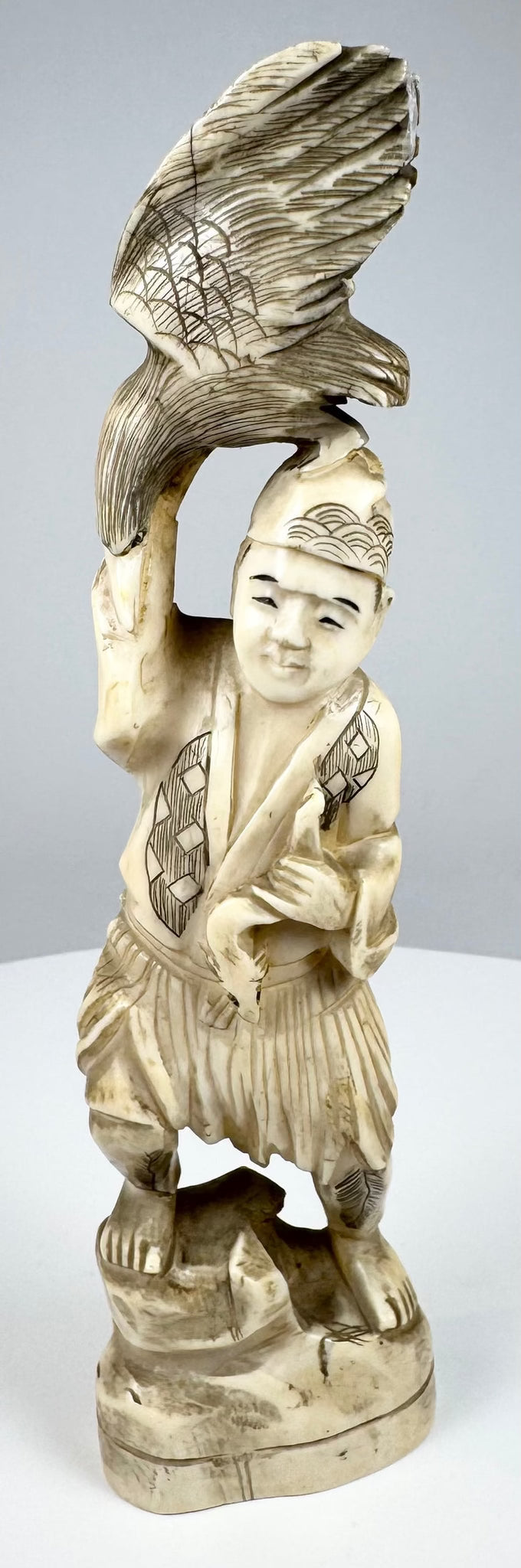
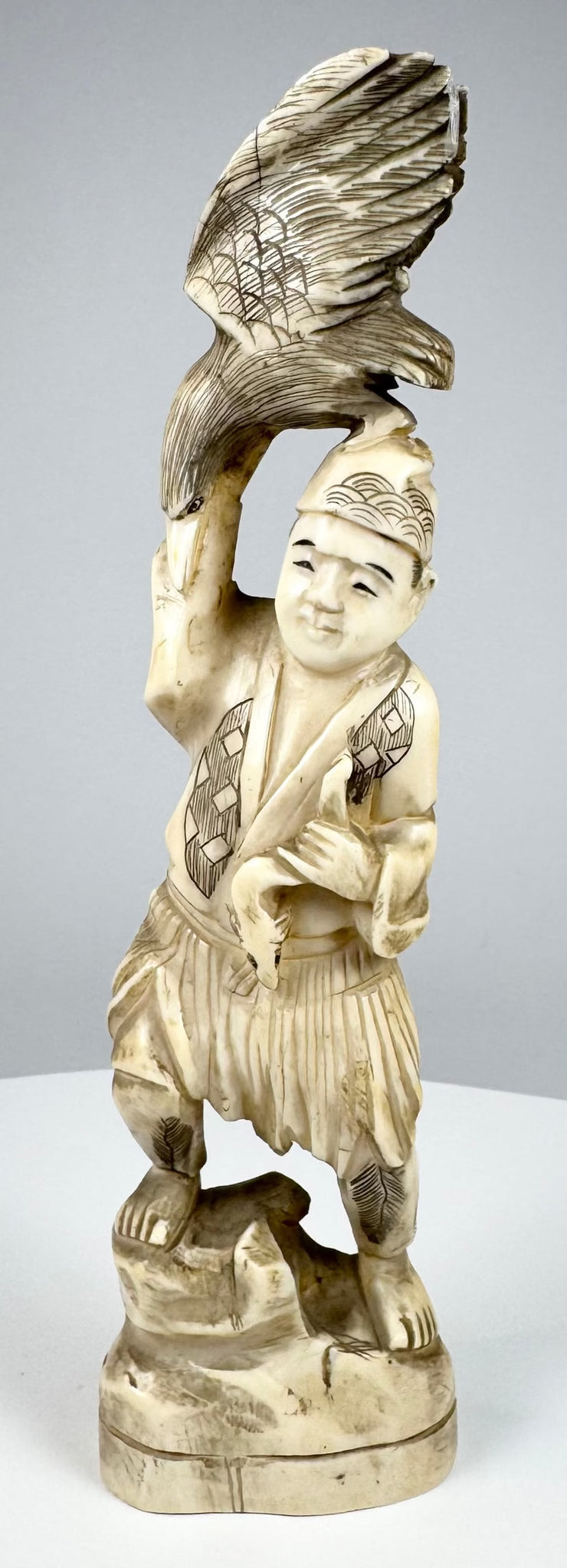
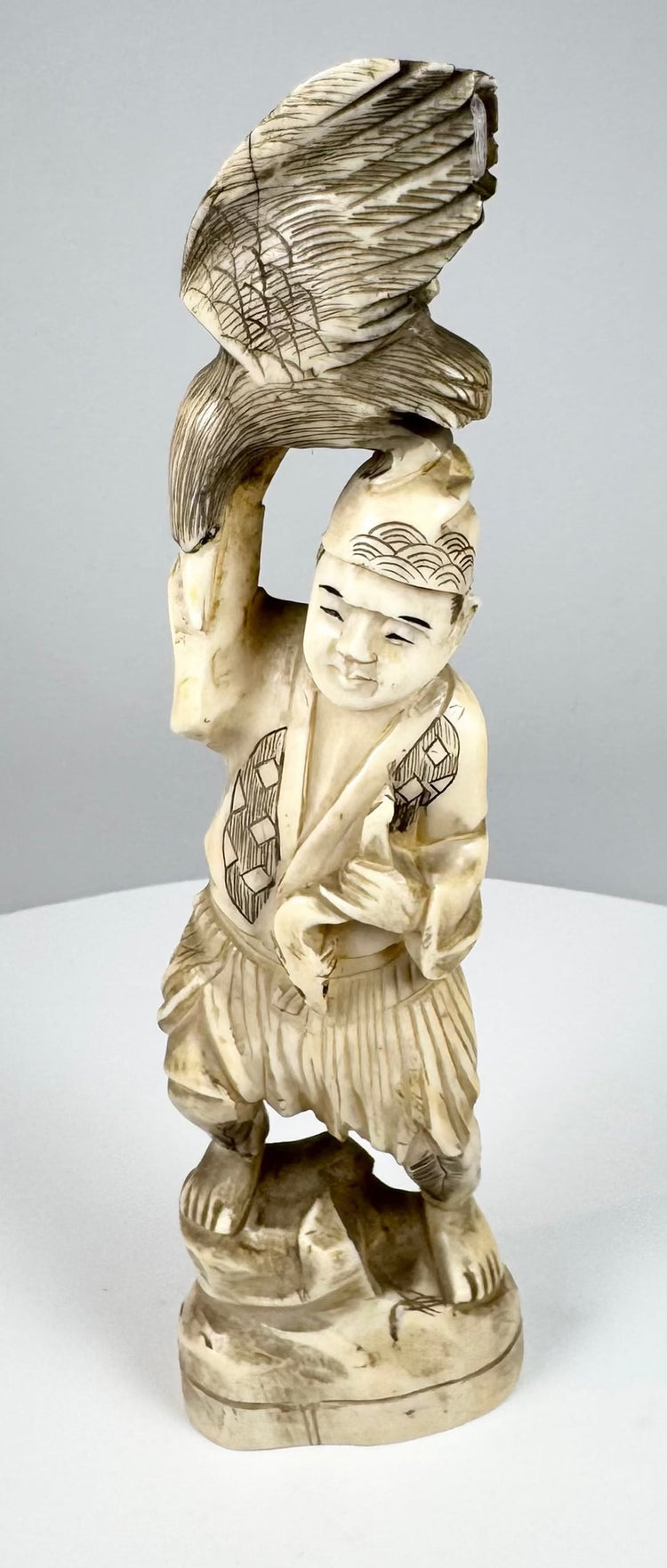
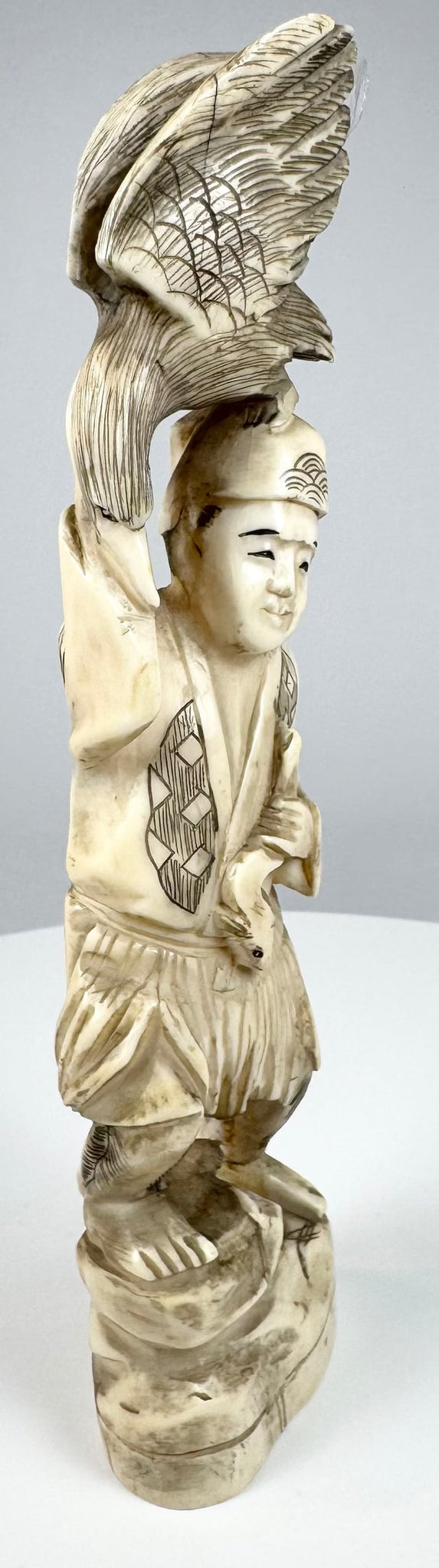
Japanese Meiji–Taisho Falconer with Eagle Okimono | Circa 1890 – 1920
Description
Plus
Moins
Historical Context & Origin
Region: Japan
Material: Sectionally carved natural material, possibly bone, with incised and inked decoration; material remains untested
Period: Late Meiji to Early Taisho Period, Circa 1890–1920
Description
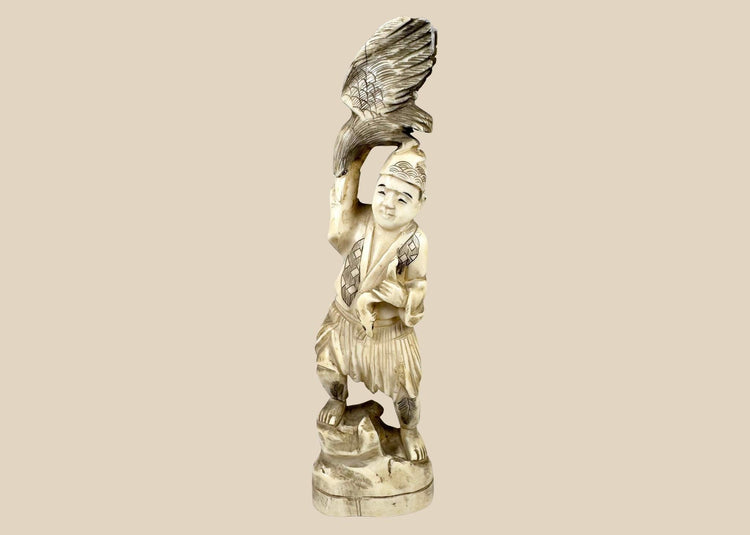
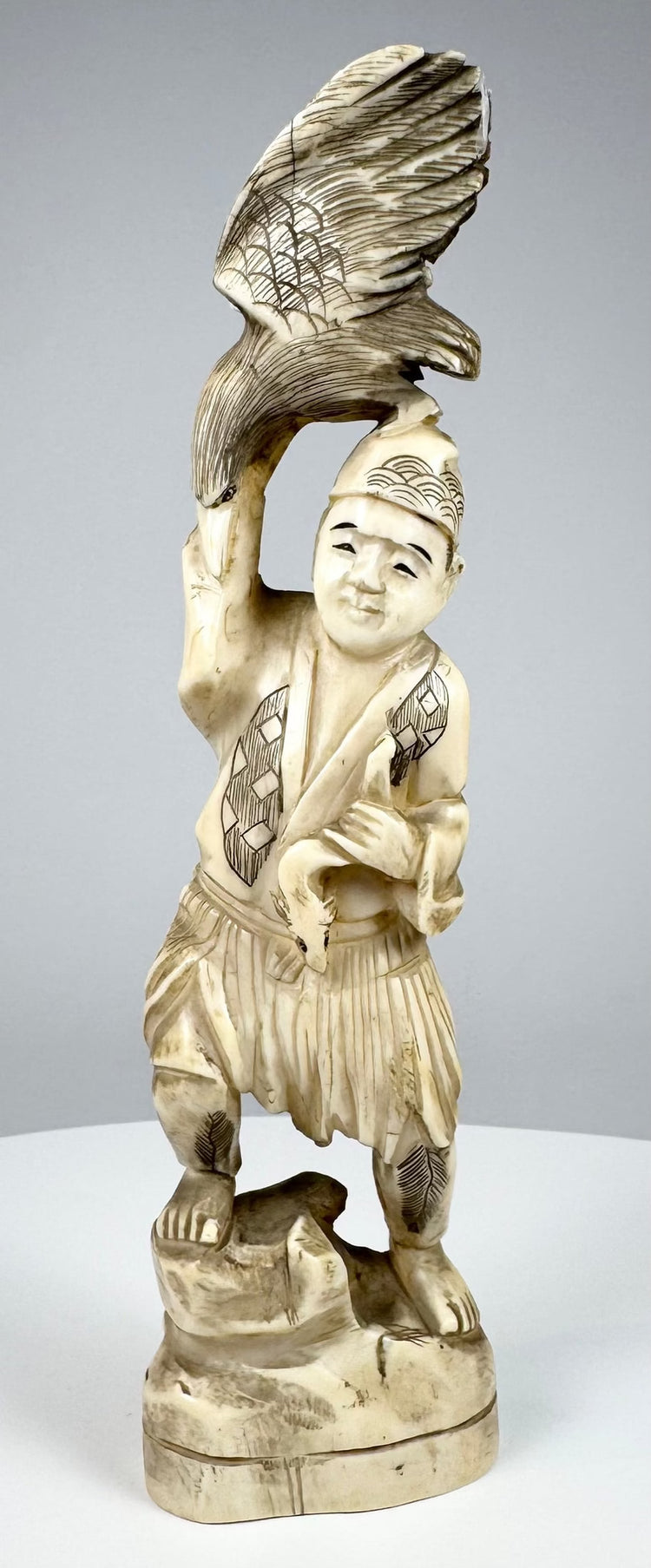
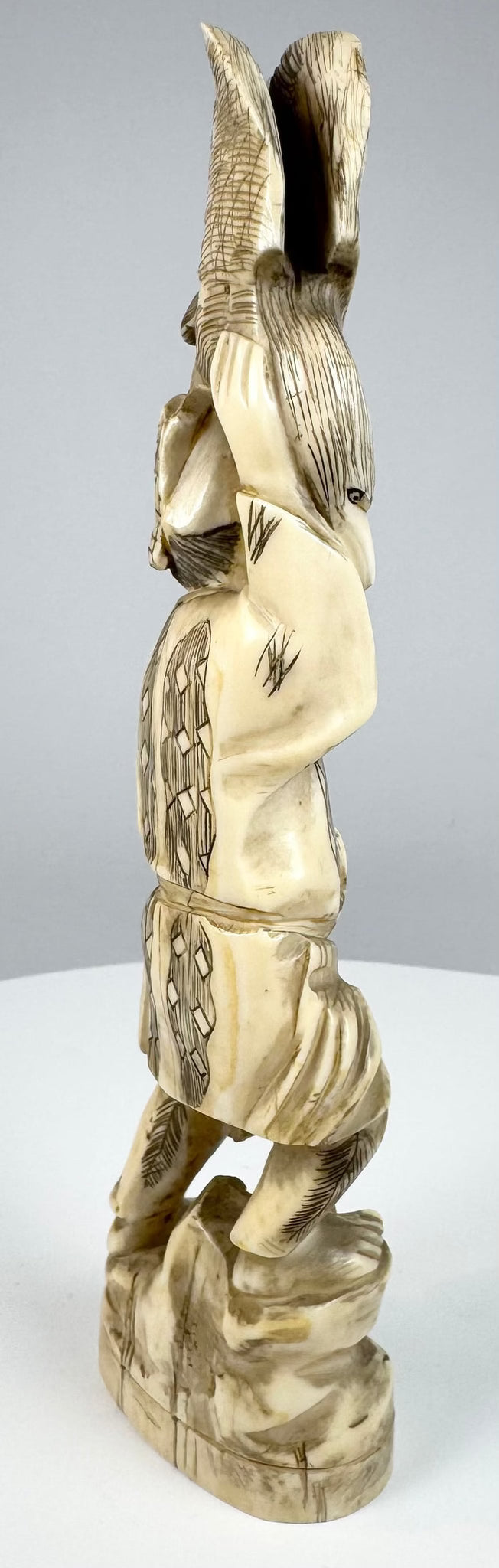
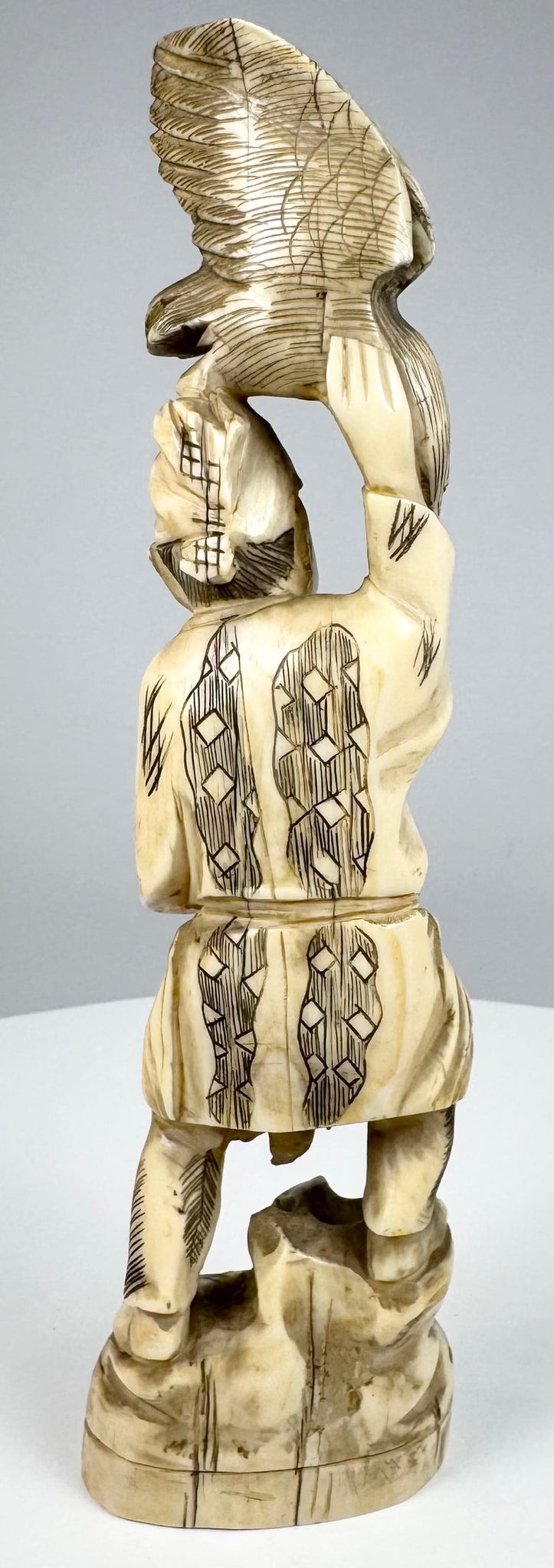
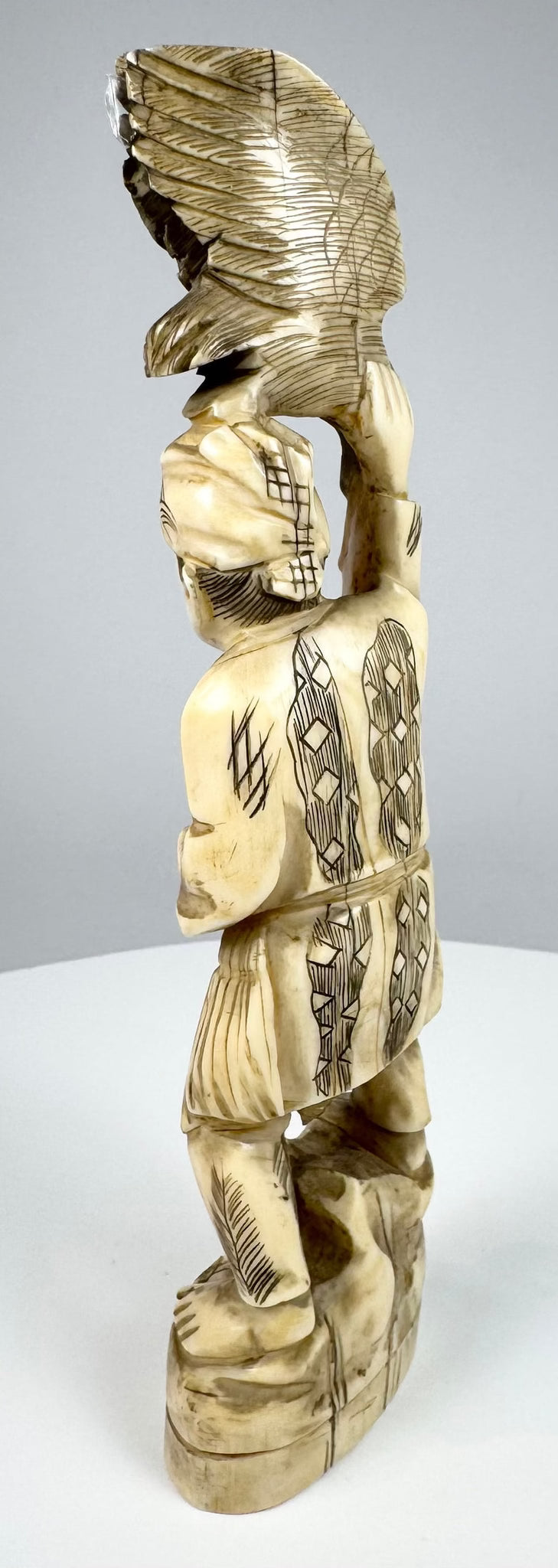
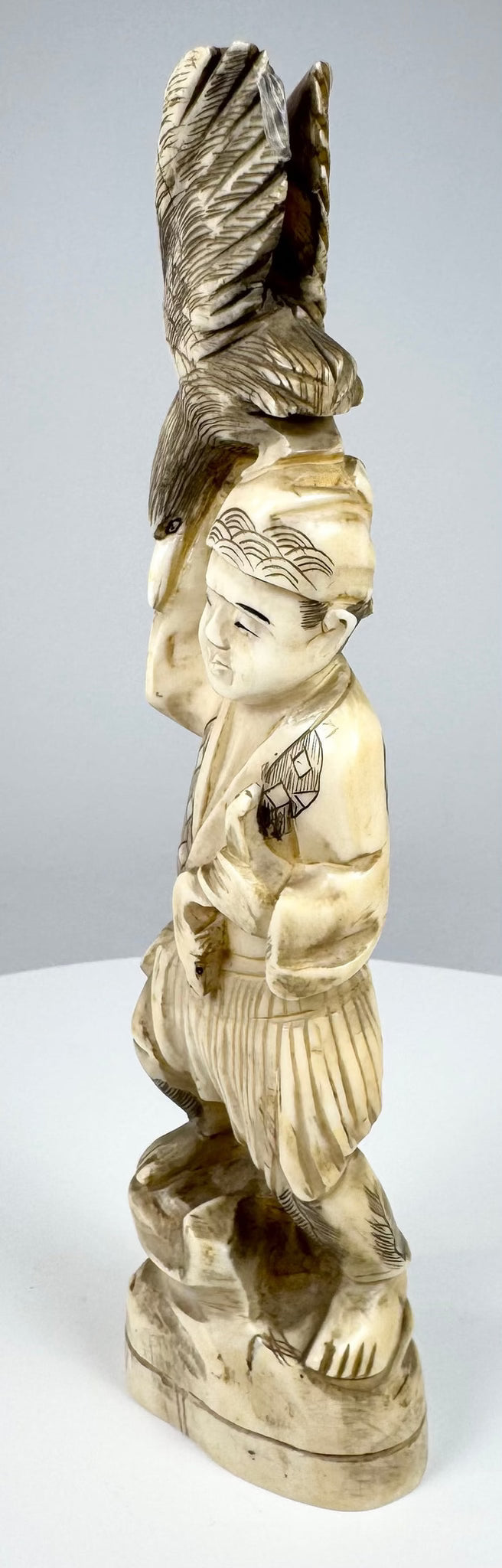
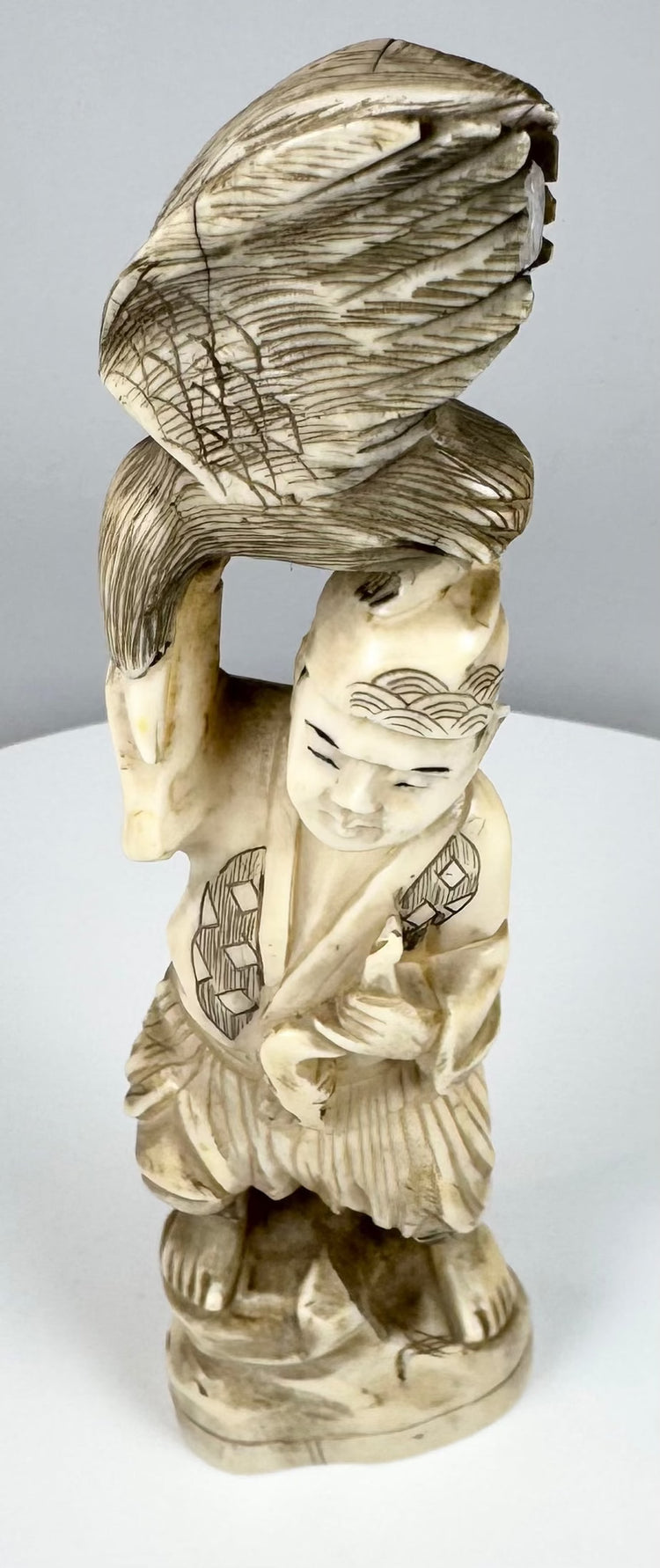
This dynamically composed Japanese okimono depicts a traditionally dressed falconer supporting a large bird of prey, probably an eagle or hawk, above his head. Most likely produced during the late Meiji or early Taisho period, the sculpture reflects Japan’s celebrated tradition of small-scale decorative carving and the strong Western demand for Japanese works of art during the late 19th and early 20th centuries.
The falconer is shown standing upon an irregular rocky base, his body leaning subtly beneath the weight and movement of the bird. One arm rises to support the raptor while the opposite hand is drawn toward the torso, possibly controlling the bird’s tether or related falconry equipment. His upward gaze connects the human figure with the dramatically posed bird overhead.
The figure wears a patterned sleeveless garment over loosely pleated trousers. Finely incised geometric lozenges decorate the front and reverse of the clothing, while the head covering carries a repeating seigaiha, or stylized wave, pattern. Additional linear engraving defines the folds of the garments, hair, facial features, hands, and feet.
Above the falconer, the raptor spreads its wings in a commanding display. Individual flight feathers have been carefully defined through deeply incised parallel lines, with darker pigment or staining used to emphasize the plumage, hooked beak, eyes, and contours of the body. Open spaces between the wings, figure, and raised arm give the sculpture a particularly animated silhouette.
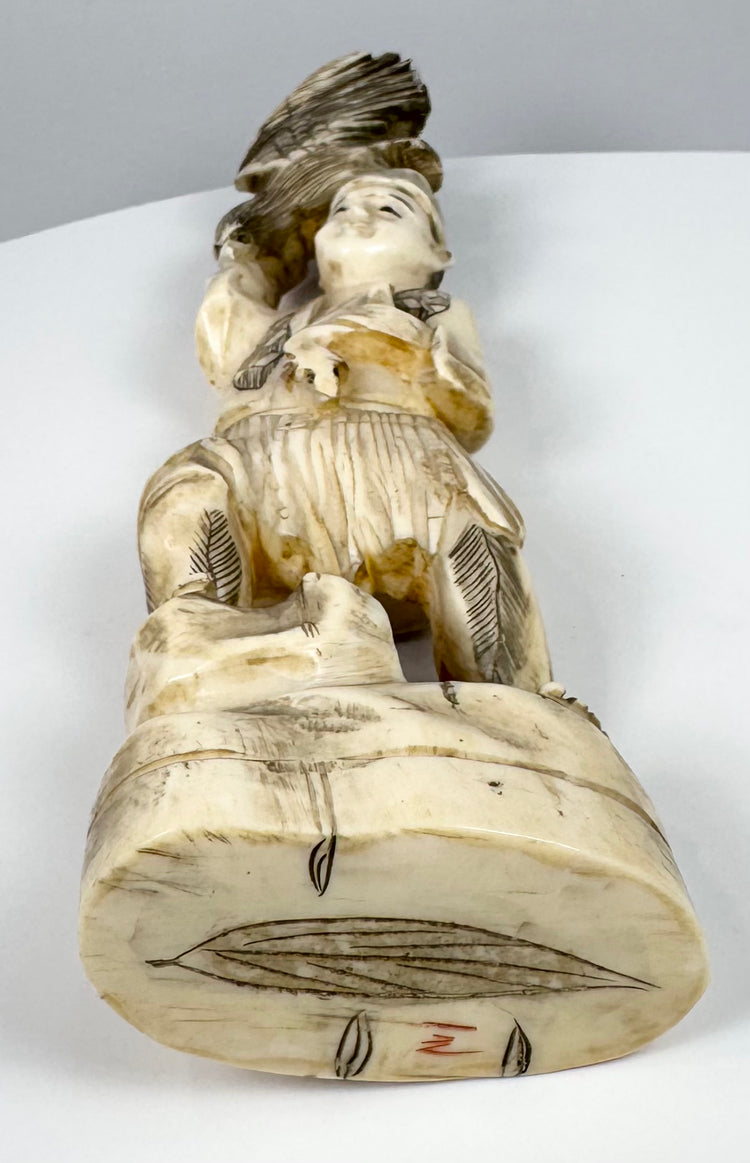
The carving was assembled from multiple fitted sections, a common practical approach when creating larger and more complex okimono from natural material. A small red mark is visible on the underside of the base, although it cannot presently be identified confidently as an artist’s signature.
Features
- Japanese sectional okimono of a falconer and large bird of prey
- Dynamic composition with an eagle or hawk displayed overhead
- Finely incised feathering with darkened engraved details
- Traditional clothing decorated with geometric lozenge patterns
- Stylized seigaiha wave design across the head covering
- Expressive upward-facing pose and carefully modelled facial features
- Openwork spaces incorporated between the figure, arm, and bird
- Sectional construction with fitted components
- Integral rocky base with a small red underside mark
- Naturally aged coloration and surface patina
Cultural Significance
Falconry, known in Japan as takagari, has a long history associated with the imperial court, aristocratic households, military leaders, and the samurai class. Trained hawks and falcons were valued not only for hunting but also as symbols of discipline, vigilance, authority, and martial refinement.
Birds of prey became recurring subjects within Japanese painting, metalwork, lacquerware, netsuke, and okimono. Their strength and commanding presence made them especially suitable for decorative works intended to communicate courage and elevated social status.
During the Meiji period, rapid modernization transformed the lives of many traditional artisans. As domestic demand for objects such as netsuke declined, carvers increasingly produced larger display sculptures known as okimono for international exhibitions and the expanding Western export market. These works combined traditional Japanese subjects with technically ambitious compositions designed for display in cabinets, galleries, and domestic interiors.
Condition
Good antique condition with wear consistent with age and handling. Naturally occurring age lines, cracks, discoloration, surface staining, scratches, abrasions, and minor edge losses are visible throughout.
Several construction seams are apparent, particularly across the body, garments, bird, and base. The raised wings exhibit age-related cracking and minor losses around some feather tips. Small chips and areas of separation may be present around fitted components and projecting details. The incised decoration retains substantial dark coloration, although some fading and irregularity are visible.
A small red mark remains on the underside but is not sufficiently clear for a confident attribution.
Dimensions (Approximate)
Height: 7.25 in
Width: 2 in
Depth: 1.1 in
Age (Approximate)
105–135 years old
Provenance
From a private collection in Toronto, Ontario, Canada, assembled with a particular focus on Chinese and broader Asian sculpture and traditional decorative arts.
Subsequently sold through Waddington’s Auctioneers & Appraisers, Toronto, Ontario, Canada. Established in 1850, Waddington’s describes itself as Canada’s original auction house and has long maintained specialist departments devoted to Asian and international art.
Learn More
Discover the history of Japanese okimono and export carving through Museums Victoria
View two similar carvings: Japanese Fisherman and Zhang Guolao
Explore our Collection of Eastern Antiquities & Cultural Relics
Description
Historical Context & Origin
Region: Japan
Material: Sectionally carved natural material, possibly bone, with incised and inked decoration; material remains untested
Period: Late Meiji to Early Taisho Period, Circa 1890–1920
Description
This dynamically composed Japanese okimono depicts a traditionally dressed falconer supporting a large bird of prey, probably an eagle or hawk, above his head. Most likely produced during the late Meiji or early Taisho period, the sculpture reflects Japan’s celebrated tradition of small-scale decorative carving and the strong Western demand for Japanese works of art during the late 19th and early 20th centuries.
The falconer is shown standing upon an irregular rocky base, his body leaning subtly beneath the weight and movement of the bird. One arm rises to support the raptor while the opposite hand is drawn toward the torso, possibly controlling the bird’s tether or related falconry equipment. His upward gaze connects the human figure with the dramatically posed bird overhead.
The figure wears a patterned sleeveless garment over loosely pleated trousers. Finely incised geometric lozenges decorate the front and reverse of the clothing, while the head covering carries a repeating seigaiha, or stylized wave, pattern. Additional linear engraving defines the folds of the garments, hair, facial features, hands, and feet.
Above the falconer, the raptor spreads its wings in a commanding display. Individual flight feathers have been carefully defined through deeply incised parallel lines, with darker pigment or staining used to emphasize the plumage, hooked beak, eyes, and contours of the body. Open spaces between the wings, figure, and raised arm give the sculpture a particularly animated silhouette.
The carving was assembled from multiple fitted sections, a common practical approach when creating larger and more complex okimono from natural material. A small red mark is visible on the underside of the base, although it cannot presently be identified confidently as an artist’s signature.
Features
- Japanese sectional okimono of a falconer and large bird of prey
- Dynamic composition with an eagle or hawk displayed overhead
- Finely incised feathering with darkened engraved details
- Traditional clothing decorated with geometric lozenge patterns
- Stylized seigaiha wave design across the head covering
- Expressive upward-facing pose and carefully modelled facial features
- Openwork spaces incorporated between the figure, arm, and bird
- Sectional construction with fitted components
- Integral rocky base with a small red underside mark
- Naturally aged coloration and surface patina
Cultural Significance
Falconry, known in Japan as takagari, has a long history associated with the imperial court, aristocratic households, military leaders, and the samurai class. Trained hawks and falcons were valued not only for hunting but also as symbols of discipline, vigilance, authority, and martial refinement.
Birds of prey became recurring subjects within Japanese painting, metalwork, lacquerware, netsuke, and okimono. Their strength and commanding presence made them especially suitable for decorative works intended to communicate courage and elevated social status.
During the Meiji period, rapid modernization transformed the lives of many traditional artisans. As domestic demand for objects such as netsuke declined, carvers increasingly produced larger display sculptures known as okimono for international exhibitions and the expanding Western export market. These works combined traditional Japanese subjects with technically ambitious compositions designed for display in cabinets, galleries, and domestic interiors.
Condition
Good antique condition with wear consistent with age and handling. Naturally occurring age lines, cracks, discoloration, surface staining, scratches, abrasions, and minor edge losses are visible throughout.
Several construction seams are apparent, particularly across the body, garments, bird, and base. The raised wings exhibit age-related cracking and minor losses around some feather tips. Small chips and areas of separation may be present around fitted components and projecting details. The incised decoration retains substantial dark coloration, although some fading and irregularity are visible.
A small red mark remains on the underside but is not sufficiently clear for a confident attribution.
Dimensions (Approximate)
Height: 7.25 in
Width: 2 in
Depth: 1.1 in
Age (Approximate)
105–135 years old
Provenance
From a private collection in Toronto, Ontario, Canada, assembled with a particular focus on Chinese and broader Asian sculpture and traditional decorative arts.
Subsequently sold through Waddington’s Auctioneers & Appraisers, Toronto, Ontario, Canada. Established in 1850, Waddington’s describes itself as Canada’s original auction house and has long maintained specialist departments devoted to Asian and international art.
Learn More
Discover the history of Japanese okimono and export carving through Museums Victoria
View two similar carvings: Japanese Fisherman and Zhang Guolao
Explore our Collection of Eastern Antiquities & Cultural Relics
Vous aimerez peut-être aussi
