



Antique Chinese Carved Zhang Guolao Figure – Eight Daoist Immortals | Circa 1890 – 1930
Couldn't load pickup availability


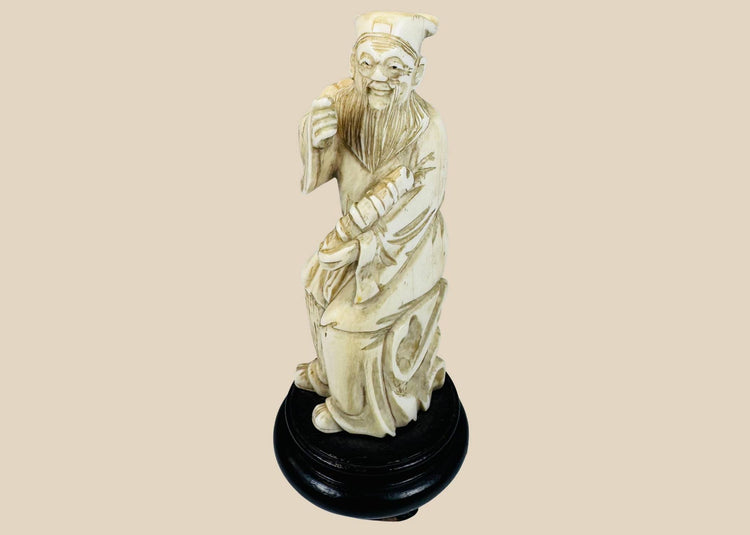
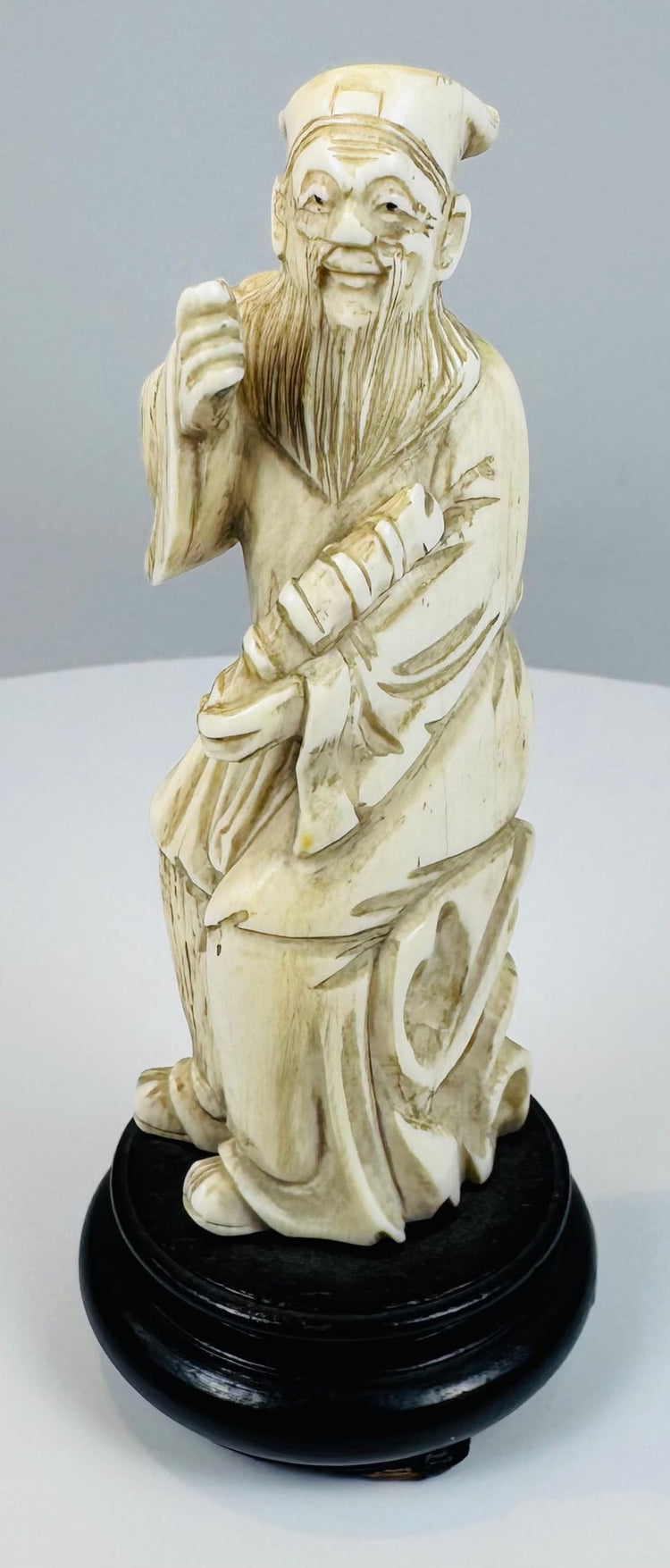
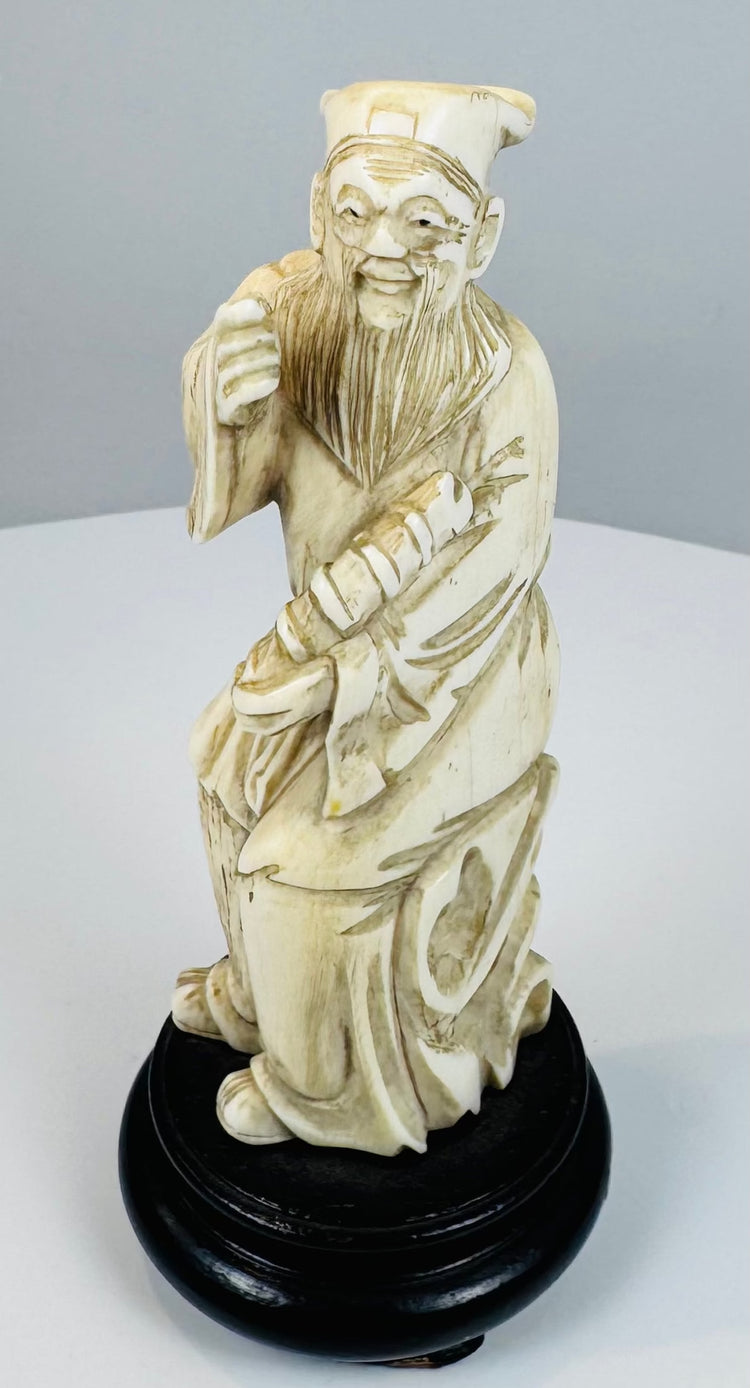
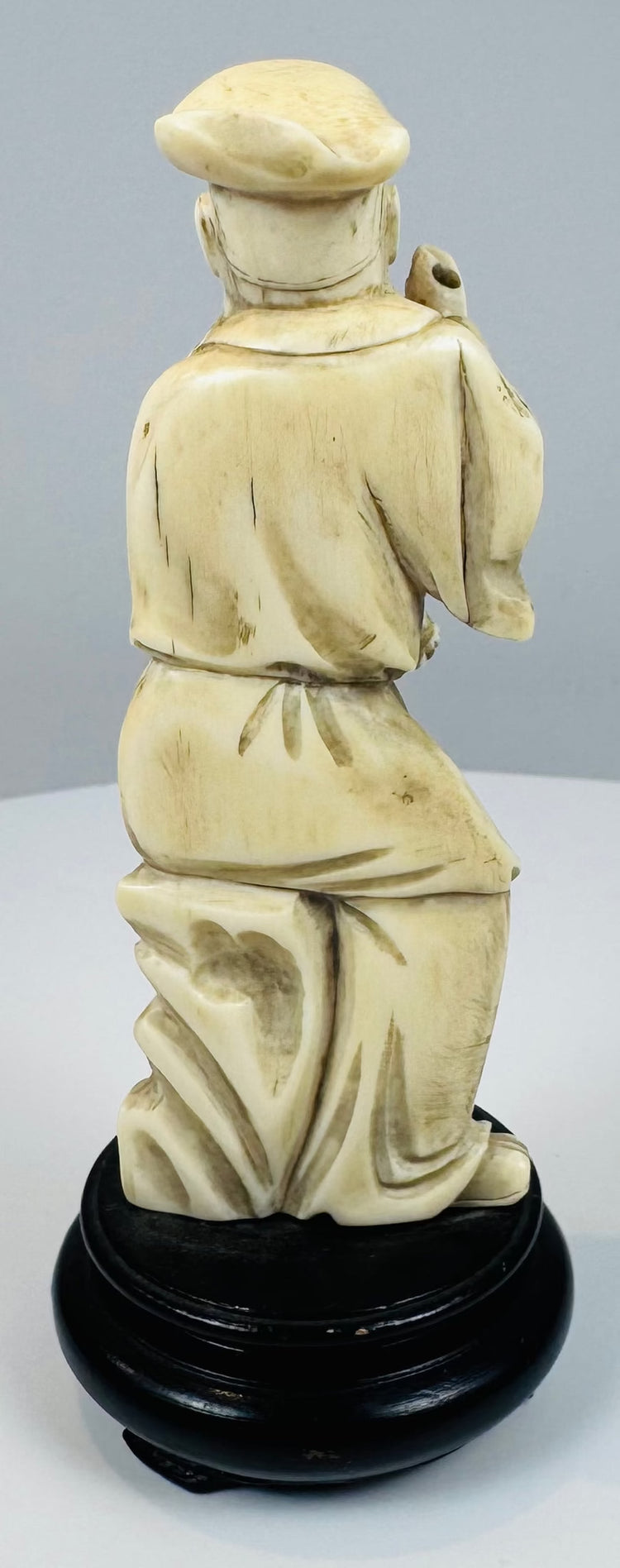
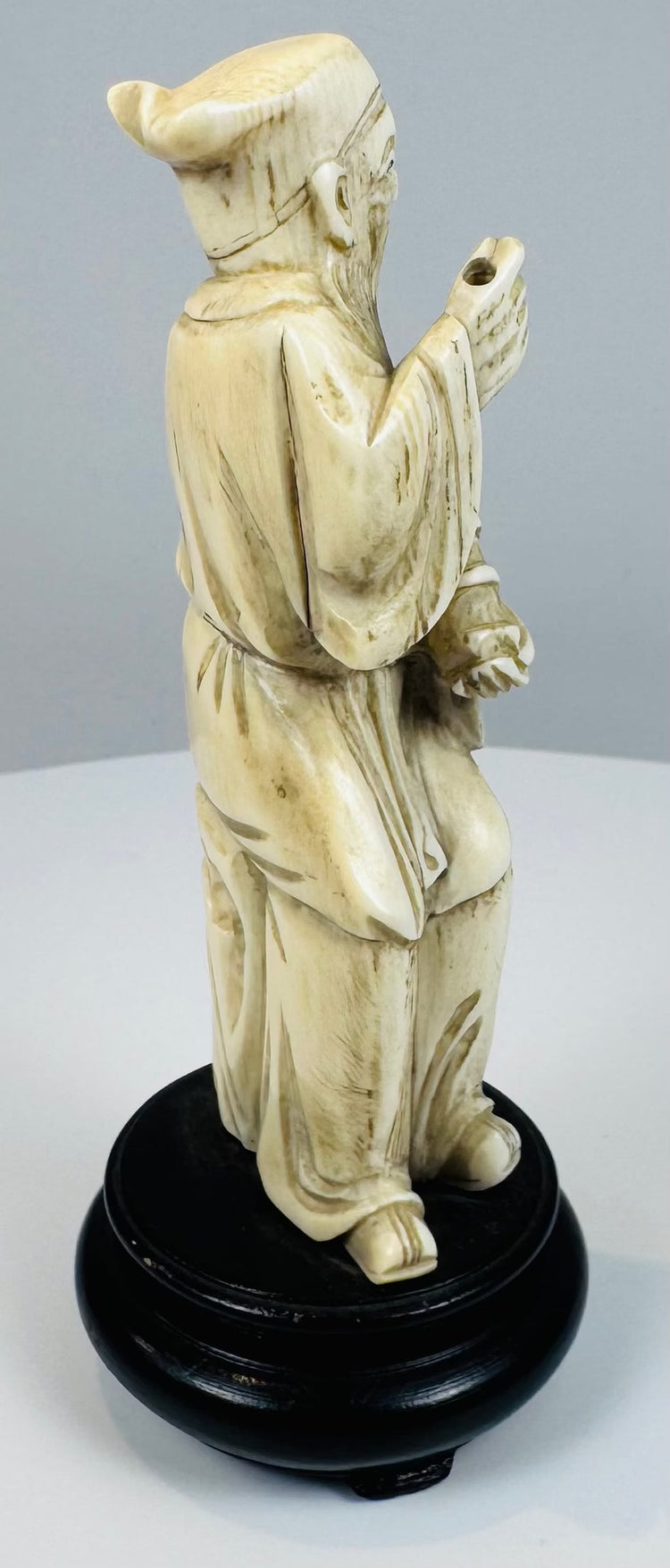
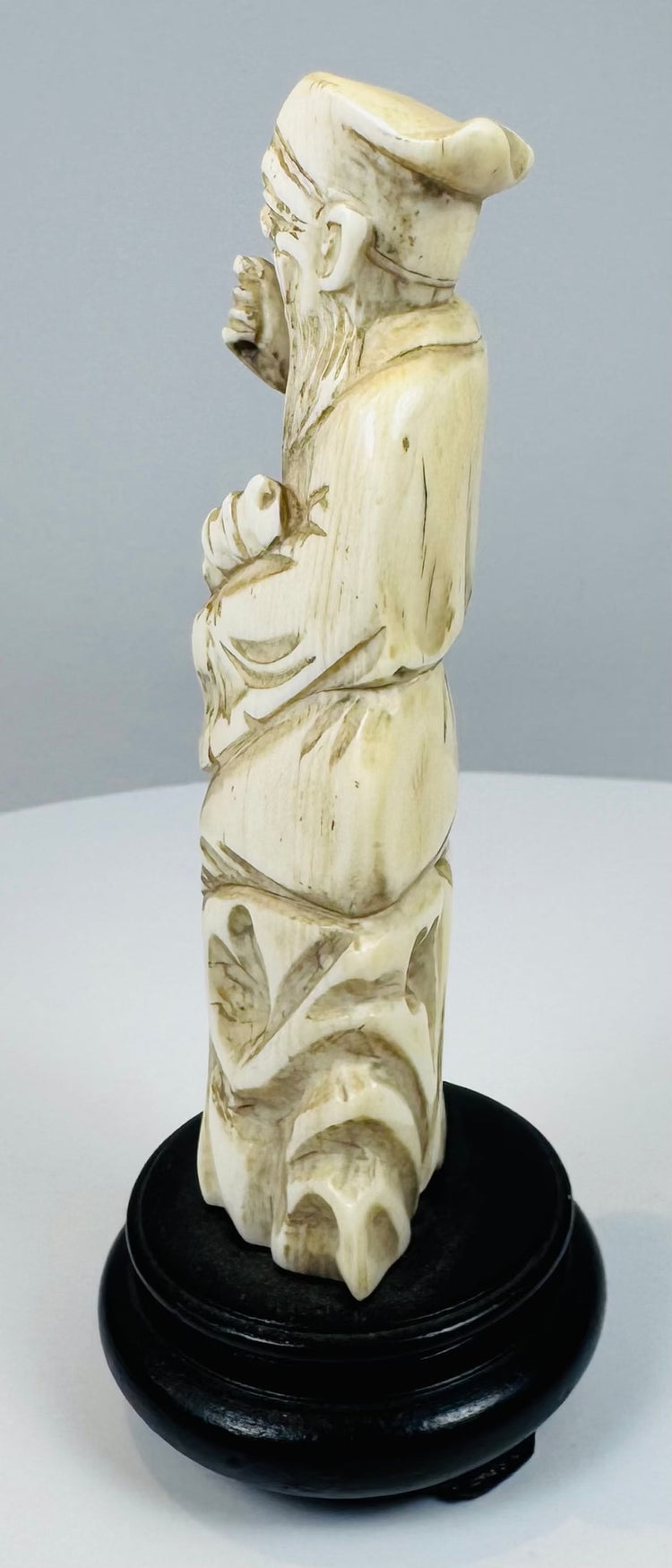
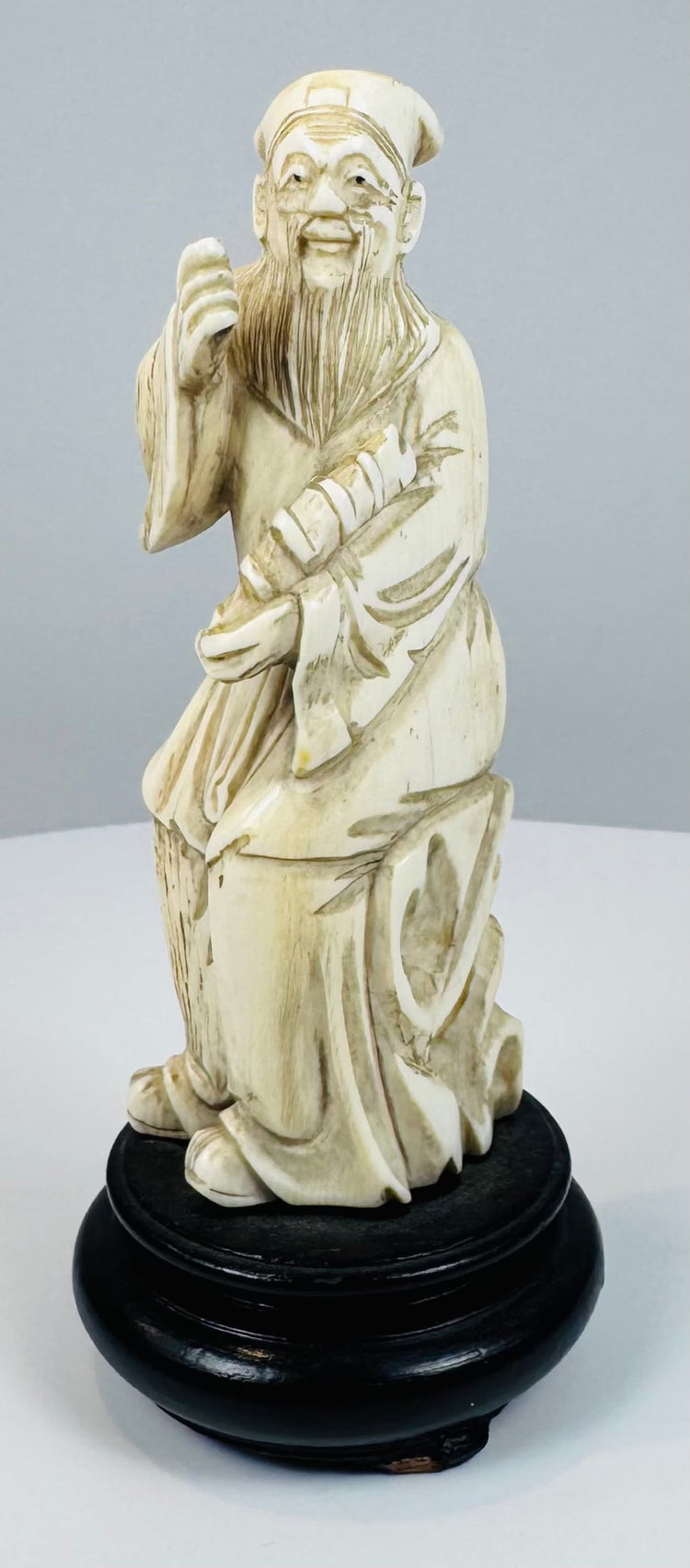
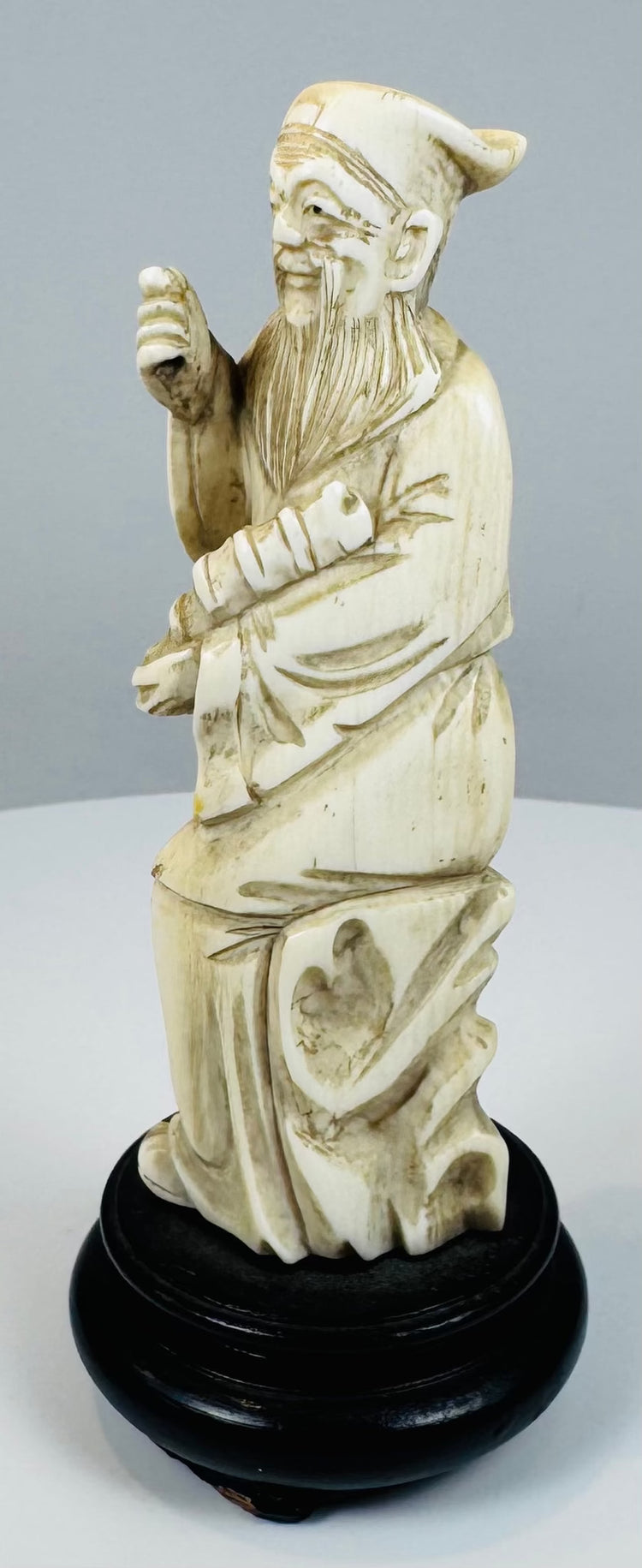
Antique Chinese Carved Zhang Guolao Figure – Eight Daoist Immortals | Circa 1890 – 1930
Description
More
Less
Historical Context & Origin
Region: China, likely a southern Chinese workshop
Material: Carved natural material, likely bone, with incised and stained decoration; mounted on an ebonized wooden base
Period: Circa 1890–1930, late Qing to early Republic period (attributed)
Description
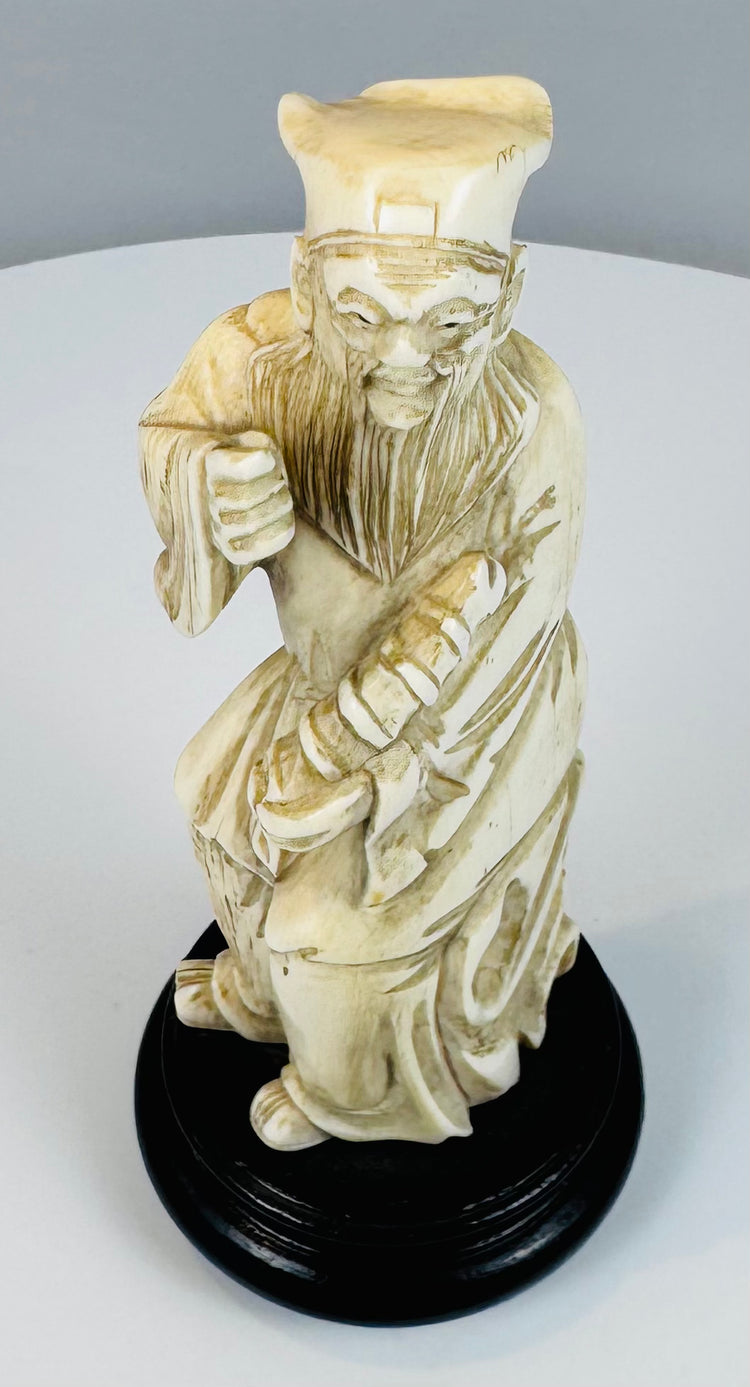
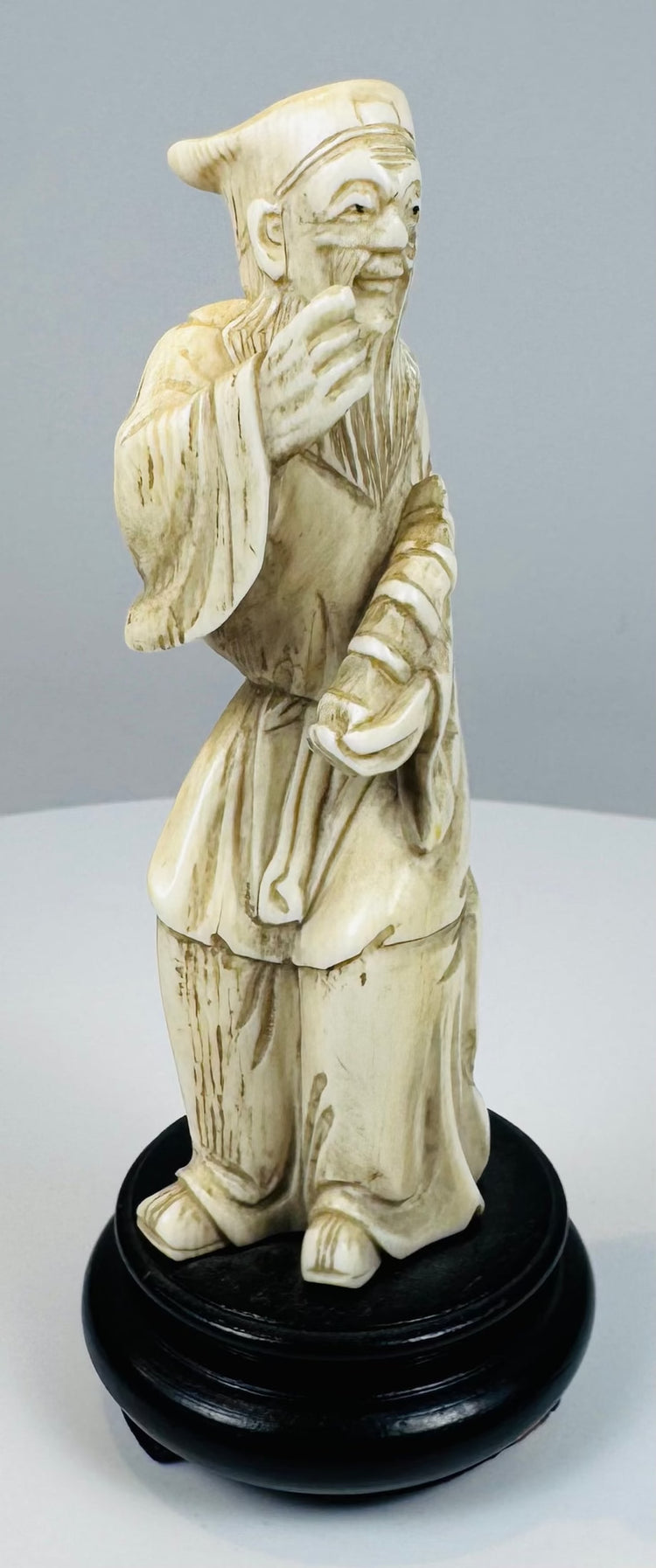
This finely detailed Chinese figure depicts Zhang Guolao, one of the legendary Eight Immortals of Daoist tradition. He is portrayed as an elderly sage with an expressive face, long pointed beard, soft scholar’s cap, and flowing robes.
The tubular object held diagonally across his body represents a yugu, traditionally translated as a “fish drum.” This bamboo percussion instrument, usually accompanied by two projecting rods or beaters, is Zhang Guolao’s principal identifying attribute and distinguishes him from more general representations of scholars and immortals.
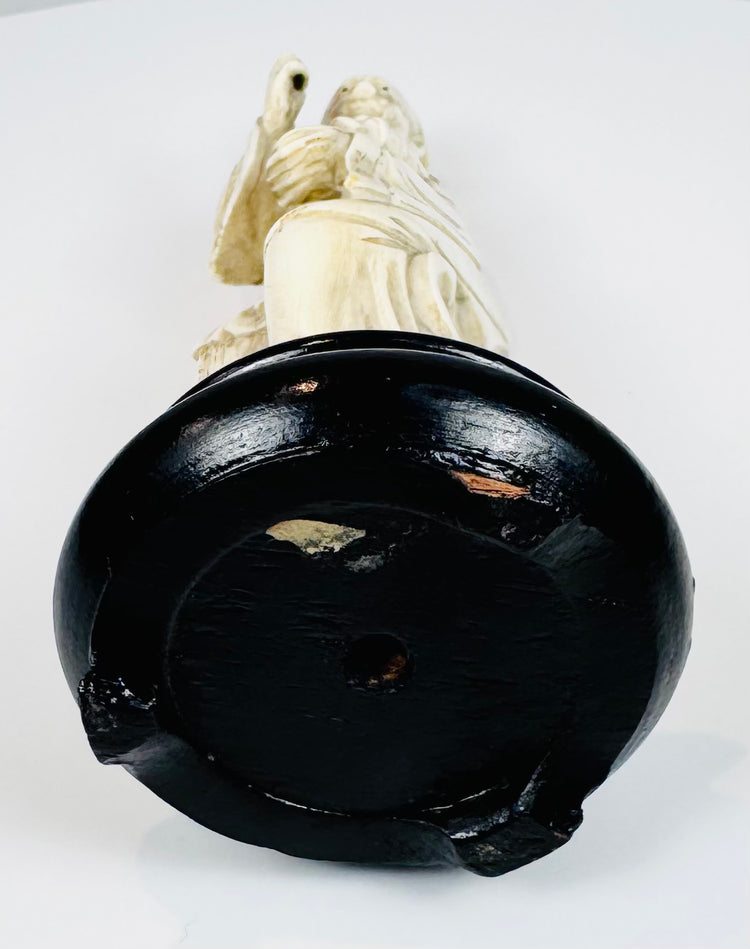
The carving incorporates delicate incised detailing throughout the beard, facial features, clothing, and accessories. Subtle brown staining emphasizes the recessed lines, giving depth and definition to the pale surface. The immortal is positioned beside a stylized pierced rock or tree-form support and mounted on a separate turned wooden display base with a dark ebonized finish.
Constructed from several carefully fitted sections, the figure demonstrates the specialized methods used by Chinese workshops when producing small devotional and decorative carvings from natural materials. Its compact scale, animated pose, and recognizable symbolism made figures of this type desirable for domestic display and for the international export market during the late Qing and early Republic periods.
Features
- Depiction of Zhang Guolao, one of the Eight Daoist Immortals
- Characteristic bamboo yugu or fish drum with projecting beaters
- Expressive elderly face with long incised beard
- Traditional scholar’s cap and deeply folded robes
- Raised hand rendered in an animated, conversational gesture
- Stylized pierced rock or tree-form support
- Fine incised lines enhanced with brown staining
- Sectionally carved and assembled construction
- Mounted on an ebonized wooden display base
- Naturally aged cream-colored surface and patina
Cultural Significance
Zhang Guolao is one of the Eight Immortals, a celebrated group of legendary figures in Chinese Daoist folklore. Traditionally described as an eccentric Tang-dynasty hermit with supernatural powers, he is often associated with longevity, unconventional wisdom, spiritual freedom, and the ability to transcend ordinary limitations.
According to legend, Zhang Guolao travelled great distances upon a magical white donkey, frequently riding backwards. At the end of a journey, he could fold the donkey like paper and restore it by sprinkling it with water. In art, however, he is most readily recognized by his bamboo fish drum and beaters.
Representations of the Eight Immortals were popular throughout the Qing dynasty and into the Republic period. Displayed individually or as a complete group, they conveyed wishes for longevity, prosperity, happiness, and protection.
Condition
Good antique condition with wear consistent with age and handling. The surface displays natural toning, staining, fine age lines, minor scratches, abrasions, and small edge losses. Some projecting elements appear slightly worn or incomplete. Sectional construction joins are visible. The wooden display base has minor scuffs and localized finish loss. The figure has not been removed from its base.
Dimensions (Approximate)
Height: 5 in
Width: 2 in
Depth: 2 in
Age (Approximate)
95–135 years old
Provenance
From a private collection in Toronto, Ontario, Canada, assembled with a particular focus on Chinese and broader Asian sculpture and traditional decorative arts.
Subsequently sold through Waddington’s Auctioneers & Appraisers, Toronto, Ontario, Canada. Established in 1850, Waddington’s describes itself as Canada’s original auction house and has long maintained specialist departments devoted to Asian and international art.
Learn More
Explore a comparable Qing-dynasty figure of Zhang Guolao in the collection of the McMaster Museum of Art
View two similar carvings: Japanese Fisherman and Falconer with Bird of Prey
Explore our Collection of Eastern Antiquities & Cultural Relics
Description
Historical Context & Origin
Region: China, likely a southern Chinese workshop
Material: Carved natural material, likely bone, with incised and stained decoration; mounted on an ebonized wooden base
Period: Circa 1890–1930, late Qing to early Republic period (attributed)
Description
This finely detailed Chinese figure depicts Zhang Guolao, one of the legendary Eight Immortals of Daoist tradition. He is portrayed as an elderly sage with an expressive face, long pointed beard, soft scholar’s cap, and flowing robes.
The tubular object held diagonally across his body represents a yugu, traditionally translated as a “fish drum.” This bamboo percussion instrument, usually accompanied by two projecting rods or beaters, is Zhang Guolao’s principal identifying attribute and distinguishes him from more general representations of scholars and immortals.
The carving incorporates delicate incised detailing throughout the beard, facial features, clothing, and accessories. Subtle brown staining emphasizes the recessed lines, giving depth and definition to the pale surface. The immortal is positioned beside a stylized pierced rock or tree-form support and mounted on a separate turned wooden display base with a dark ebonized finish.
Constructed from several carefully fitted sections, the figure demonstrates the specialized methods used by Chinese workshops when producing small devotional and decorative carvings from natural materials. Its compact scale, animated pose, and recognizable symbolism made figures of this type desirable for domestic display and for the international export market during the late Qing and early Republic periods.
Features
- Depiction of Zhang Guolao, one of the Eight Daoist Immortals
- Characteristic bamboo yugu or fish drum with projecting beaters
- Expressive elderly face with long incised beard
- Traditional scholar’s cap and deeply folded robes
- Raised hand rendered in an animated, conversational gesture
- Stylized pierced rock or tree-form support
- Fine incised lines enhanced with brown staining
- Sectionally carved and assembled construction
- Mounted on an ebonized wooden display base
- Naturally aged cream-colored surface and patina
Cultural Significance
Zhang Guolao is one of the Eight Immortals, a celebrated group of legendary figures in Chinese Daoist folklore. Traditionally described as an eccentric Tang-dynasty hermit with supernatural powers, he is often associated with longevity, unconventional wisdom, spiritual freedom, and the ability to transcend ordinary limitations.
According to legend, Zhang Guolao travelled great distances upon a magical white donkey, frequently riding backwards. At the end of a journey, he could fold the donkey like paper and restore it by sprinkling it with water. In art, however, he is most readily recognized by his bamboo fish drum and beaters.
Representations of the Eight Immortals were popular throughout the Qing dynasty and into the Republic period. Displayed individually or as a complete group, they conveyed wishes for longevity, prosperity, happiness, and protection.
Condition
Good antique condition with wear consistent with age and handling. The surface displays natural toning, staining, fine age lines, minor scratches, abrasions, and small edge losses. Some projecting elements appear slightly worn or incomplete. Sectional construction joins are visible. The wooden display base has minor scuffs and localized finish loss. The figure has not been removed from its base.
Dimensions (Approximate)
Height: 5 in
Width: 2 in
Depth: 2 in
Age (Approximate)
95–135 years old
Provenance
From a private collection in Toronto, Ontario, Canada, assembled with a particular focus on Chinese and broader Asian sculpture and traditional decorative arts.
Subsequently sold through Waddington’s Auctioneers & Appraisers, Toronto, Ontario, Canada. Established in 1850, Waddington’s describes itself as Canada’s original auction house and has long maintained specialist departments devoted to Asian and international art.
Learn More
Explore a comparable Qing-dynasty figure of Zhang Guolao in the collection of the McMaster Museum of Art
View two similar carvings: Japanese Fisherman and Falconer with Bird of Prey
Explore our Collection of Eastern Antiquities & Cultural Relics
You May Also Like
