



Antique Omani Hirz Amulet Necklace | Silver & Gilt Qur’an Holder | 19th Century
Couldn't load pickup availability


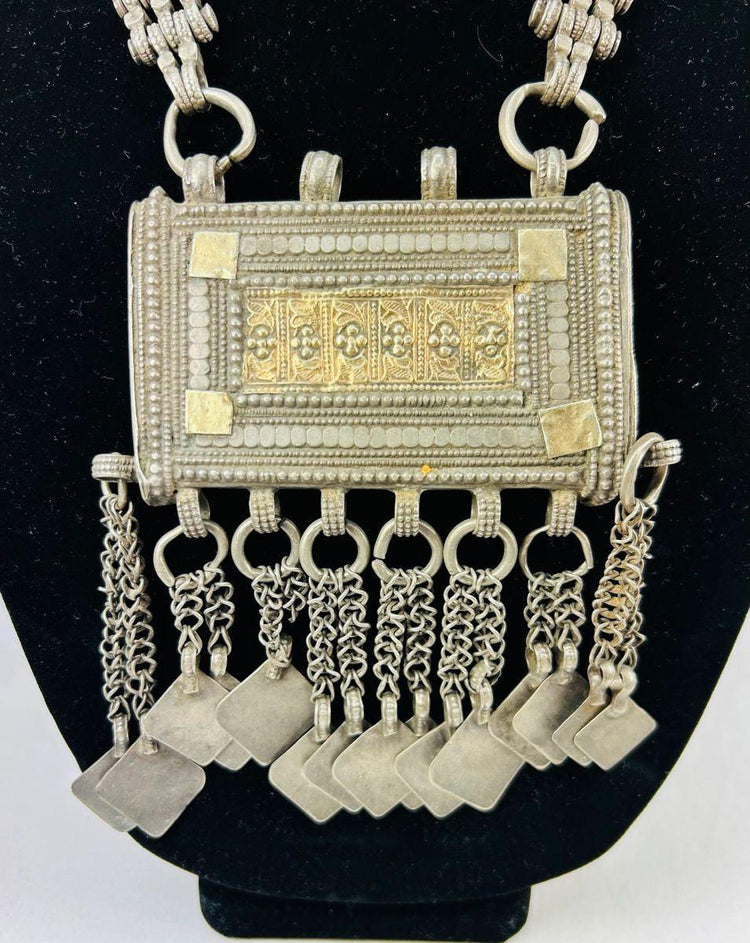
Antique Omani Hirz Amulet Necklace | Silver & Gilt Qur’an Holder | 19th Century
Description
More
Less
Historical Context & Origin
Region: Oman, Arabian Peninsula
Material: Silver with filigree work and gold-tone accents (likely gilding)
Period: 19th Century CE
Description
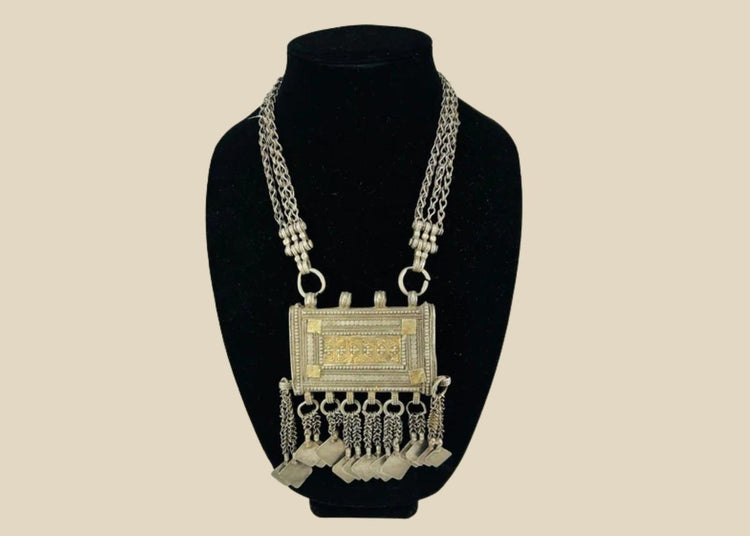
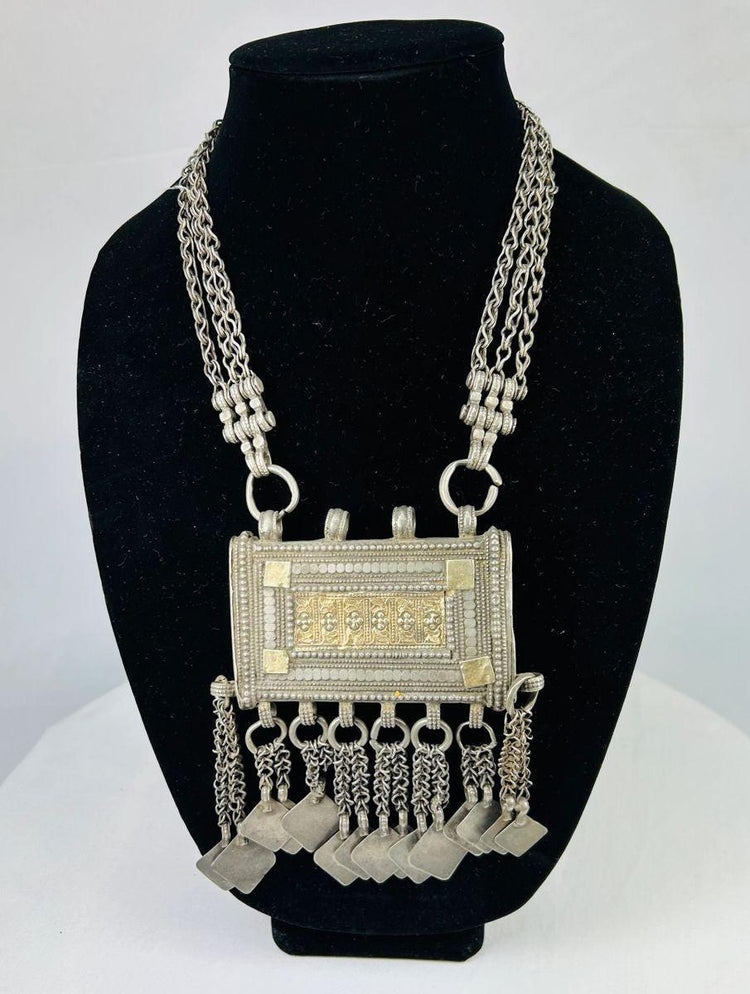
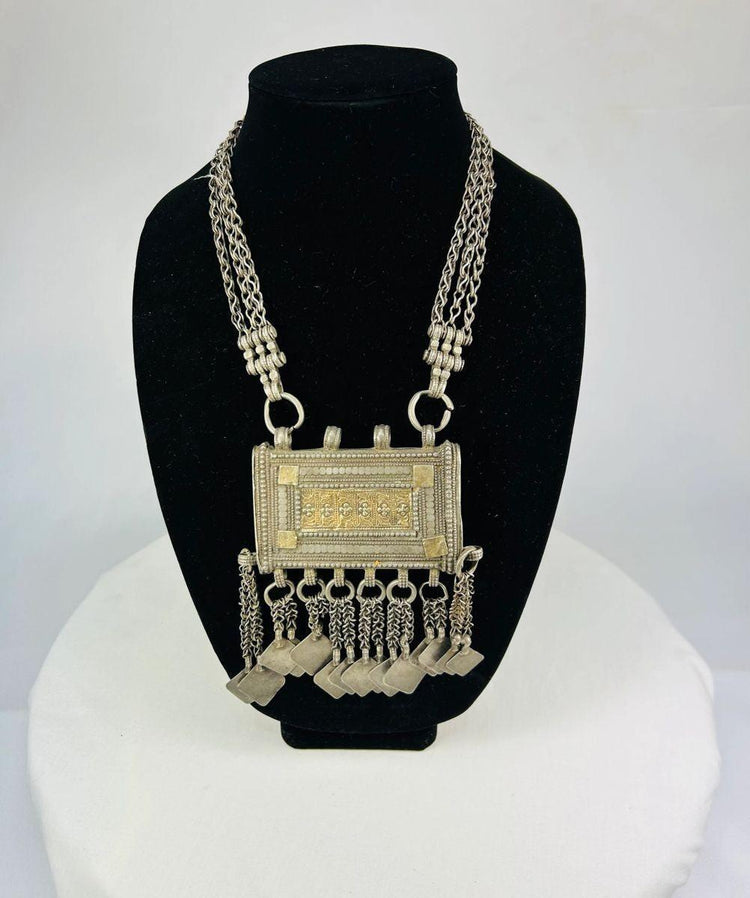
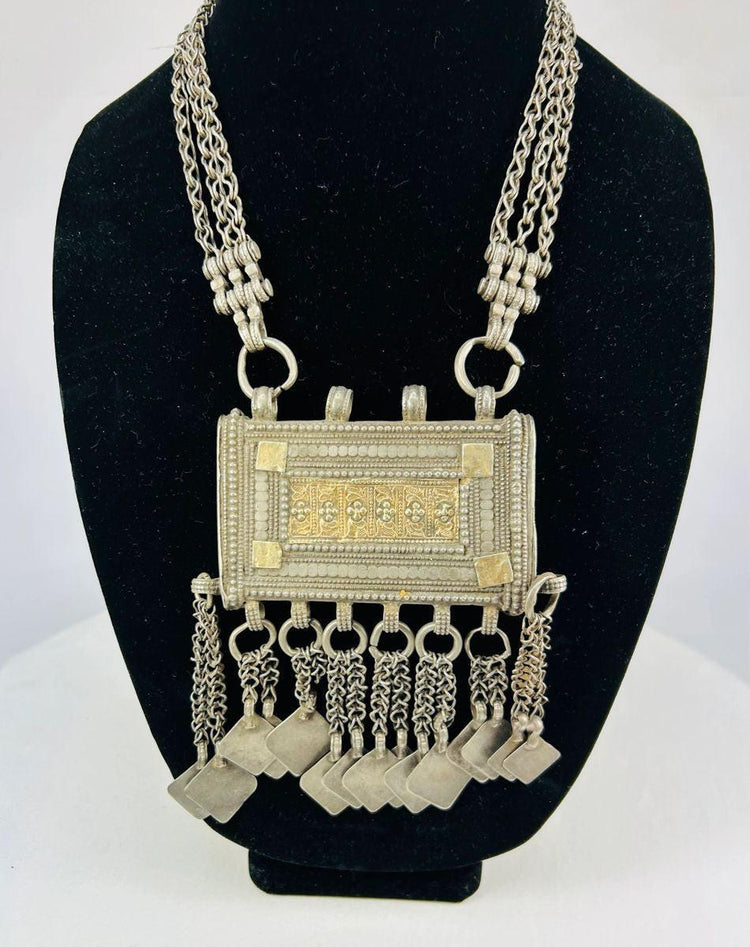
This exquisite Omani Koran holder necklace, known as a hirz or hezam, is a rare and beautiful example of 19th-century Islamic jewelry. At its center is a rectangular compartment traditionally used to hold protective verses or religious scrolls, embodying both spiritual and functional significance. Suspended from a multi-strand chain and adorned with delicate dangles, the necklace is both a symbol of faith, protection, and refined craftsmanship.
Features
- Central rectangular compartment designed to house holy verses or protective amulets
- Intricate silver filigree with gold-tone highlights enhancing its decorative appeal
- Decorative dangles and multi-strand chain adding movement and visual richness
- Spiritual adornment traditionally worn for protection and devotion
Cultural Significance
In Oman and across the Islamic world, hirz necklaces served as protective amulets believed to safeguard the wearer through sacred inscriptions or Qur’anic verses. Beyond their spiritual function, these pieces also carried deep familial and cultural meaning, often passed down as heirlooms that blended devotion, tradition, and artistry.
Condition
The necklace remains in excellent preserved condition, with filigree detailing intact and traces of original gilding visible. Subtle age-related wear enhances its authenticity and historical character.
Dimensions (Approximate)
Height: 17 in
Width: 4 in
Age (Approximate)
125–225 years old
Learn More
Explore museum comparisons of Hirz Qur’an-case necklaces
Read about the meaning of Omani Hirz amulets
Browse our Collection of Middle Eastern Antiquities & Ancient Art
Description
Historical Context & Origin
Region: Oman, Arabian Peninsula
Material: Silver with filigree work and gold-tone accents (likely gilding)
Period: 19th Century CE
Description
This exquisite Omani Koran holder necklace, known as a hirz or hezam, is a rare and beautiful example of 19th-century Islamic jewelry. At its center is a rectangular compartment traditionally used to hold protective verses or religious scrolls, embodying both spiritual and functional significance. Suspended from a multi-strand chain and adorned with delicate dangles, the necklace is both a symbol of faith, protection, and refined craftsmanship.
Features
- Central rectangular compartment designed to house holy verses or protective amulets
- Intricate silver filigree with gold-tone highlights enhancing its decorative appeal
- Decorative dangles and multi-strand chain adding movement and visual richness
- Spiritual adornment traditionally worn for protection and devotion
Cultural Significance
In Oman and across the Islamic world, hirz necklaces served as protective amulets believed to safeguard the wearer through sacred inscriptions or Qur’anic verses. Beyond their spiritual function, these pieces also carried deep familial and cultural meaning, often passed down as heirlooms that blended devotion, tradition, and artistry.
Condition
The necklace remains in excellent preserved condition, with filigree detailing intact and traces of original gilding visible. Subtle age-related wear enhances its authenticity and historical character.
Dimensions (Approximate)
Height: 17 in
Width: 4 in
Age (Approximate)
125–225 years old
Learn More
Explore museum comparisons of Hirz Qur’an-case necklaces
Read about the meaning of Omani Hirz amulets
Browse our Collection of Middle Eastern Antiquities & Ancient Art
You May Also Like
