

Ancient Blue-Green Glass Stamp Seal with Ibex and Sacred Tree | Circa 1st Millennium BCE
Couldn't load pickup availability


Ancient Blue-Green Glass Stamp Seal with Ibex and Sacred Tree | Circa 1st Millennium BCE
Description
More
Less
Historical Context & Origin
Region: Western Asia, likely Mesopotamia or the Iranian Plateau
Material: Blue-green glass
Period: Iron Age, circa 1st Millennium BCE
Description
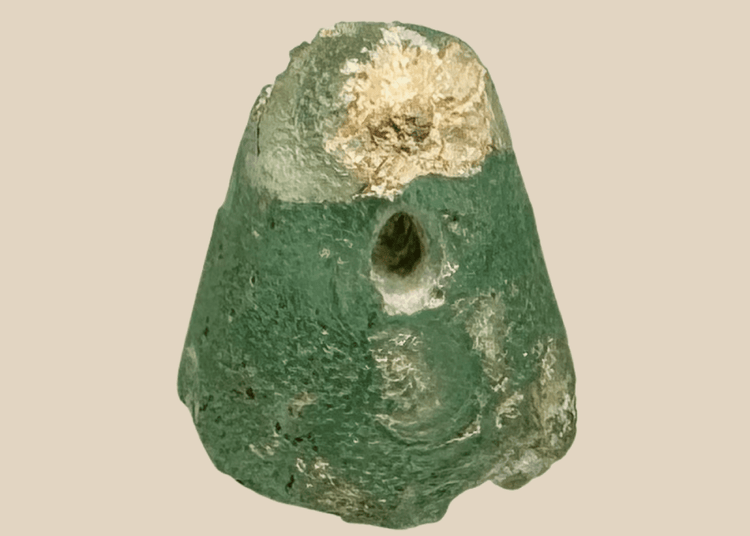
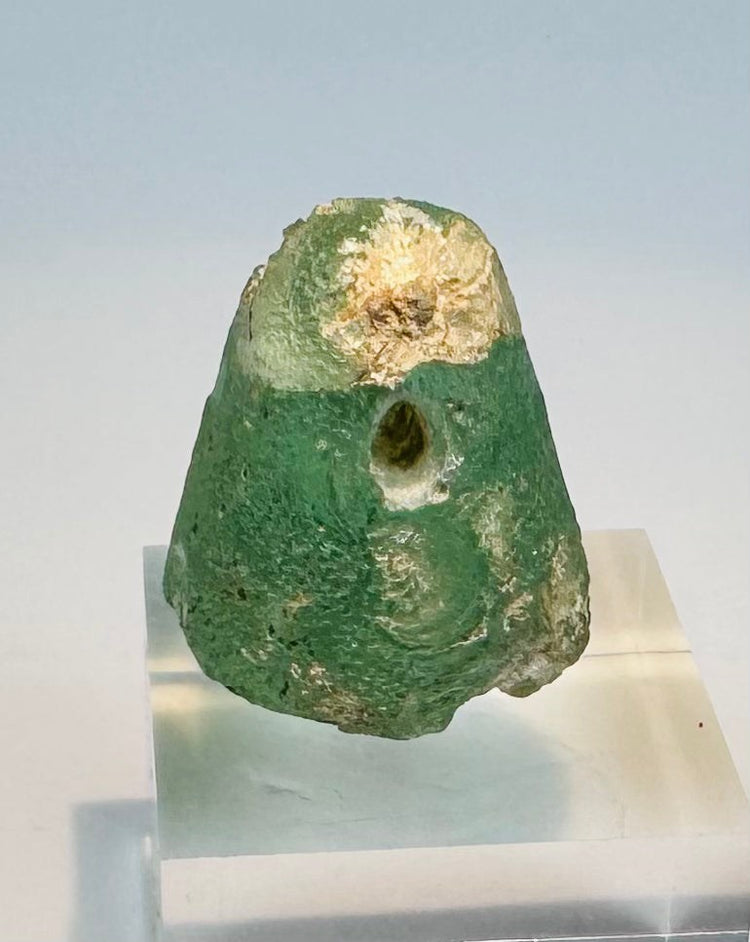
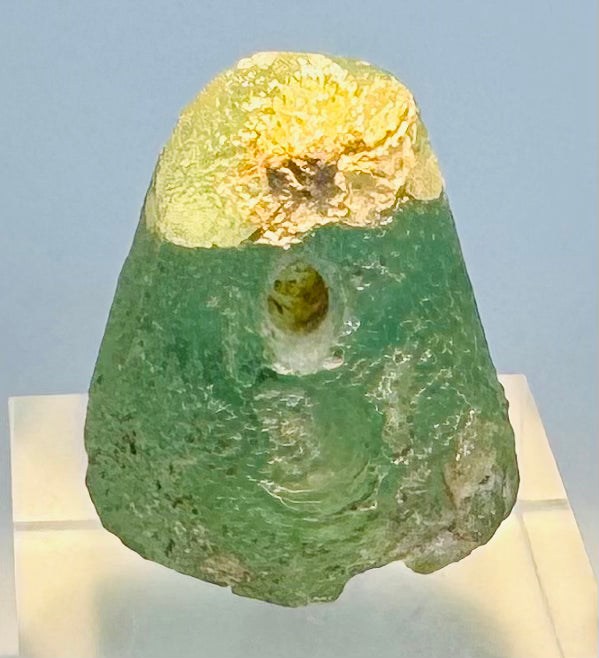
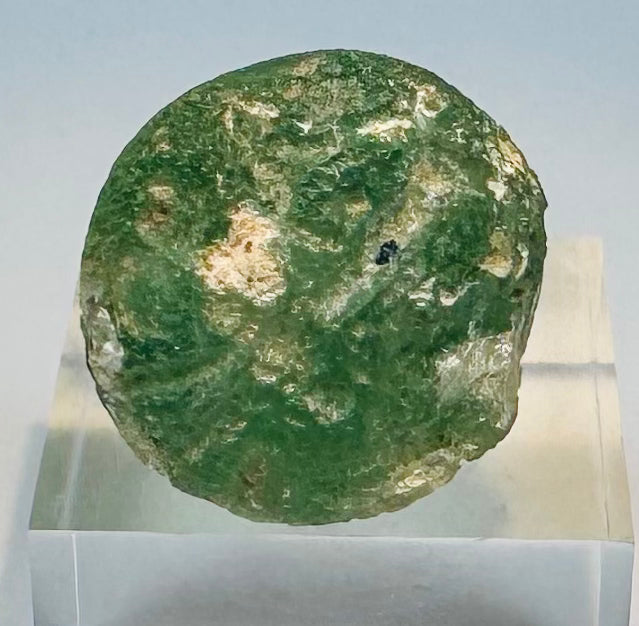
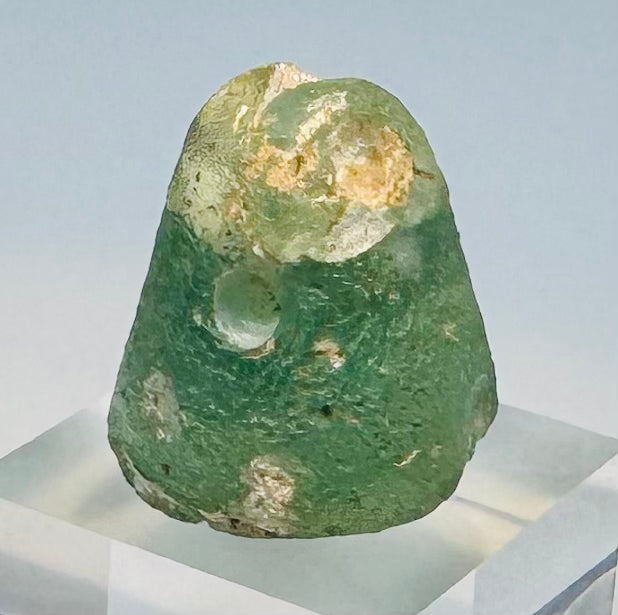
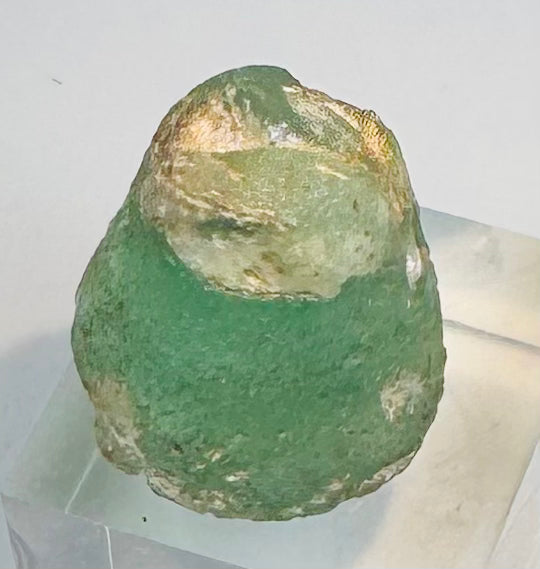
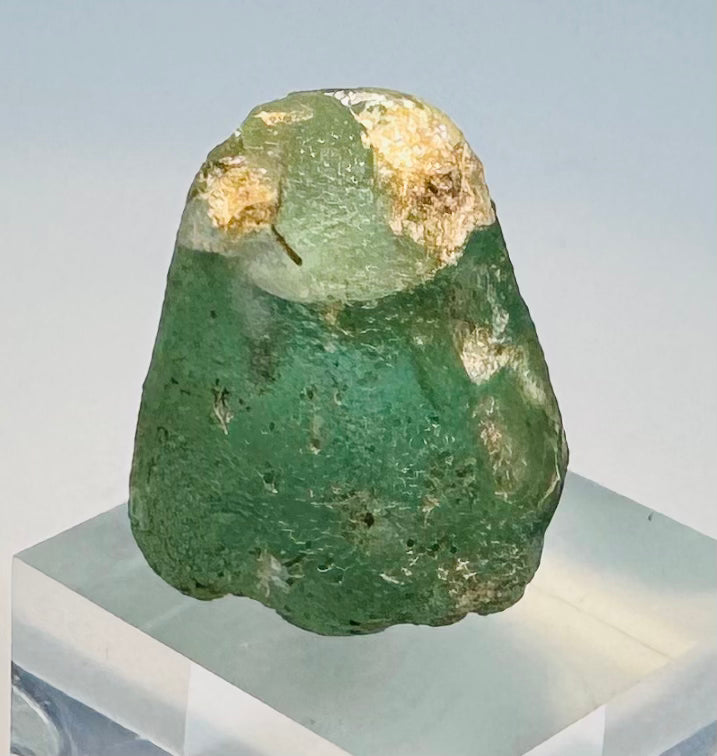
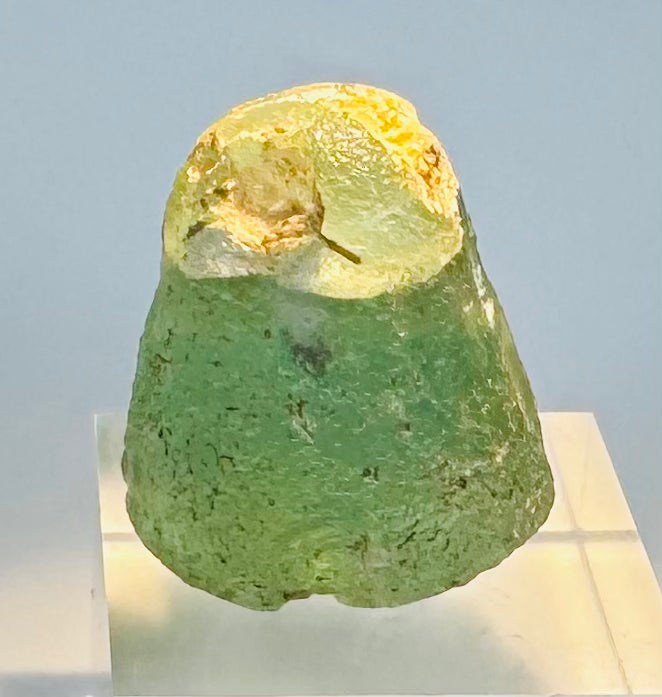
This rare ancient blue-green glass stamp seal is formed in the distinctive rounded conical shape commonly described as a gumdrop seal. The compact body rises from a broad circular sealing face to a domed upper section, creating a form that could be held between the fingers or suspended when not in use.
A transverse suspension hole passes through the upper portion of the dome, allowing the seal to be worn from a cord or carried as a personal object. Stamp seals were closely associated with individual identity, ownership, administration, and the authentication of goods or documents throughout the ancient Near East.
The engraved sealing face is reported to depict two rearing ibex arranged symmetrically on either side of a stylized central tree. Although areas of the design have been softened by wear, surface alteration, and mineral deposits, the composition belongs to a long-established ancient Near Eastern tradition in which confronted animals flank a sacred tree, plant, or other central symbol.
The ibex was a familiar subject in the visual culture of Western Asia, admired for its strength, agility, and distinctive curved horns. When shown confronting or rearing toward a central tree, the animals may have conveyed ideas connected with fertility, vitality, abundance, divine protection, or the ordered relationship between nature and the sacred world.
Features
- Distinctive rounded gumdrop or domed form
- Engraved circular sealing surface
- Reported impression of two rearing ibex
- Stylized tree positioned between the animals
- Transverse suspension hole near the top of the dome
- Intended for sealing, personal identification, or ownership marking
- Blue-green glass with extensive ancient surface weathering
- Pale mineral deposits and areas of iridescence
- Rare ancient Near Eastern glass seal type
Cultural Significance
Stamp seals played an important role in the administrative, commercial, and personal life of the ancient Near East. When pressed into damp clay, the engraved base produced a raised impression that could identify an individual, secure a container, authenticate an agreement, or mark property.
Unlike cylinder seals, which were rolled across clay, stamp seals were pressed directly downward to create a single compact image. Their small size and perforated bodies allowed them to be worn or carried, making them both functional administrative instruments and personal objects closely associated with their owners.
The motif of paired animals surrounding a central tree is among the most enduring symbolic arrangements in ancient Western Asian art. Confronted ibex, goats, or related horned animals frequently appear around trees, plants, vessels, and sacred emblems. Such compositions are commonly interpreted as representations of fertility, abundance, protection, or the relationship between the natural and divine worlds.
The use of glass adds further significance to the object. Ancient glass was a technically demanding material that required specialized knowledge and carefully controlled production. Blue-green examples could visually resemble turquoise, faience, or precious stones while retaining the distinctive appearance of manufactured glass.
Condition
The seal remains substantially complete and displays extensive age-related surface alteration consistent with ancient glass. A fracture and associated loss are present near the top of the dome, affecting part of the area around the suspension hole. Additional scattered chips, abrasions, surface pits, and irregularities are visible throughout.
The sealing face exhibits wear and mineral buildup that partially obscure the engraved design. Extensive pale earthen encrustation, weathering, and localized iridescence are present across the blue-green surface. The suspension hole remains visible.
Dimensions (Approximate)
Height: 0.75 in
Age (Approximate)
2,025–3,025 years old
Provenance
Formerly in the collection of Jack Guevrekian, Manhasset, New York, a noted New York numismatist and collector associated particularly with Armenian coinage and ancient material. Guevrekian assembled an extensive collection over several decades, and a major portion of his holdings was publicly offered as The Jack Guevrekian Collection by the Numismatic & Antiquarian Service Corporation of America in New York in 1977.
Subsequently held in a private New York City collection.
Learn More
View a related ancient Near Eastern seal featuring an ibex and stylized trees in the collection of The Metropolitan Museum of Art
Explore our curated Collection of Ancient Rings, Jewellery & Historic Relics
Description
Historical Context & Origin
Region: Western Asia, likely Mesopotamia or the Iranian Plateau
Material: Blue-green glass
Period: Iron Age, circa 1st Millennium BCE
Description
This rare ancient blue-green glass stamp seal is formed in the distinctive rounded conical shape commonly described as a gumdrop seal. The compact body rises from a broad circular sealing face to a domed upper section, creating a form that could be held between the fingers or suspended when not in use.
A transverse suspension hole passes through the upper portion of the dome, allowing the seal to be worn from a cord or carried as a personal object. Stamp seals were closely associated with individual identity, ownership, administration, and the authentication of goods or documents throughout the ancient Near East.
The engraved sealing face is reported to depict two rearing ibex arranged symmetrically on either side of a stylized central tree. Although areas of the design have been softened by wear, surface alteration, and mineral deposits, the composition belongs to a long-established ancient Near Eastern tradition in which confronted animals flank a sacred tree, plant, or other central symbol.
The ibex was a familiar subject in the visual culture of Western Asia, admired for its strength, agility, and distinctive curved horns. When shown confronting or rearing toward a central tree, the animals may have conveyed ideas connected with fertility, vitality, abundance, divine protection, or the ordered relationship between nature and the sacred world.
Features
- Distinctive rounded gumdrop or domed form
- Engraved circular sealing surface
- Reported impression of two rearing ibex
- Stylized tree positioned between the animals
- Transverse suspension hole near the top of the dome
- Intended for sealing, personal identification, or ownership marking
- Blue-green glass with extensive ancient surface weathering
- Pale mineral deposits and areas of iridescence
- Rare ancient Near Eastern glass seal type
Cultural Significance
Stamp seals played an important role in the administrative, commercial, and personal life of the ancient Near East. When pressed into damp clay, the engraved base produced a raised impression that could identify an individual, secure a container, authenticate an agreement, or mark property.
Unlike cylinder seals, which were rolled across clay, stamp seals were pressed directly downward to create a single compact image. Their small size and perforated bodies allowed them to be worn or carried, making them both functional administrative instruments and personal objects closely associated with their owners.
The motif of paired animals surrounding a central tree is among the most enduring symbolic arrangements in ancient Western Asian art. Confronted ibex, goats, or related horned animals frequently appear around trees, plants, vessels, and sacred emblems. Such compositions are commonly interpreted as representations of fertility, abundance, protection, or the relationship between the natural and divine worlds.
The use of glass adds further significance to the object. Ancient glass was a technically demanding material that required specialized knowledge and carefully controlled production. Blue-green examples could visually resemble turquoise, faience, or precious stones while retaining the distinctive appearance of manufactured glass.
Condition
The seal remains substantially complete and displays extensive age-related surface alteration consistent with ancient glass. A fracture and associated loss are present near the top of the dome, affecting part of the area around the suspension hole. Additional scattered chips, abrasions, surface pits, and irregularities are visible throughout.
The sealing face exhibits wear and mineral buildup that partially obscure the engraved design. Extensive pale earthen encrustation, weathering, and localized iridescence are present across the blue-green surface. The suspension hole remains visible.
Dimensions (Approximate)
Height: 0.75 in
Age (Approximate)
2,025–3,025 years old
Provenance
Formerly in the collection of Jack Guevrekian, Manhasset, New York, a noted New York numismatist and collector associated particularly with Armenian coinage and ancient material. Guevrekian assembled an extensive collection over several decades, and a major portion of his holdings was publicly offered as The Jack Guevrekian Collection by the Numismatic & Antiquarian Service Corporation of America in New York in 1977.
Subsequently held in a private New York City collection.
Learn More
View a related ancient Near Eastern seal featuring an ibex and stylized trees in the collection of The Metropolitan Museum of Art
Explore our curated Collection of Ancient Rings, Jewellery & Historic Relics
You May Also Like
