

Ancient Byzantine Terracotta Oil Lamp | Eastern Mediterranean | Circa 5th–6th Century CE
Couldn't load pickup availability


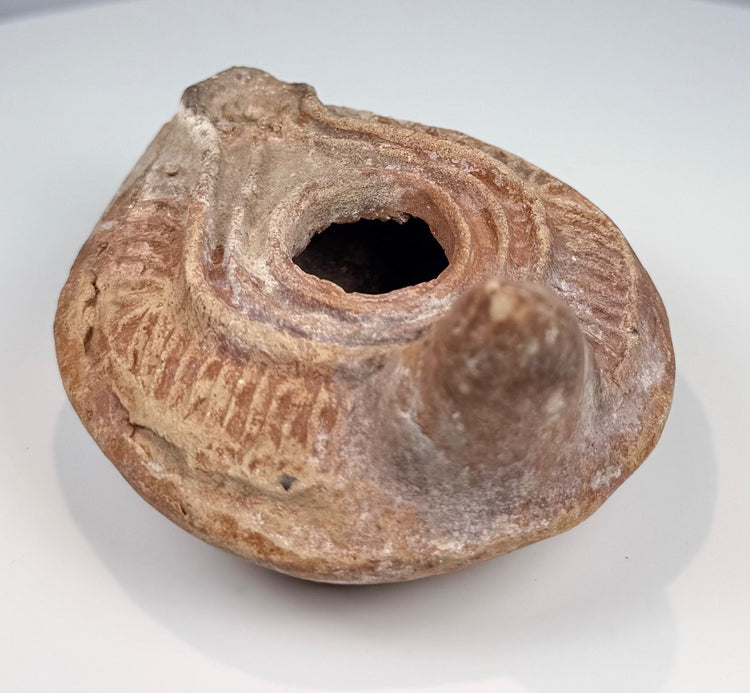
Ancient Byzantine Terracotta Oil Lamp | Eastern Mediterranean | Circa 5th–6th Century CE
Description
More
Less
Historical Context & Origin
Region: Eastern Mediterranean, likely the Levant, Cyprus, or surrounding Byzantine territories
Material: Mold-made terracotta
Period: Late Roman to Early Byzantine Period, circa 5th–6th Century CE
Description
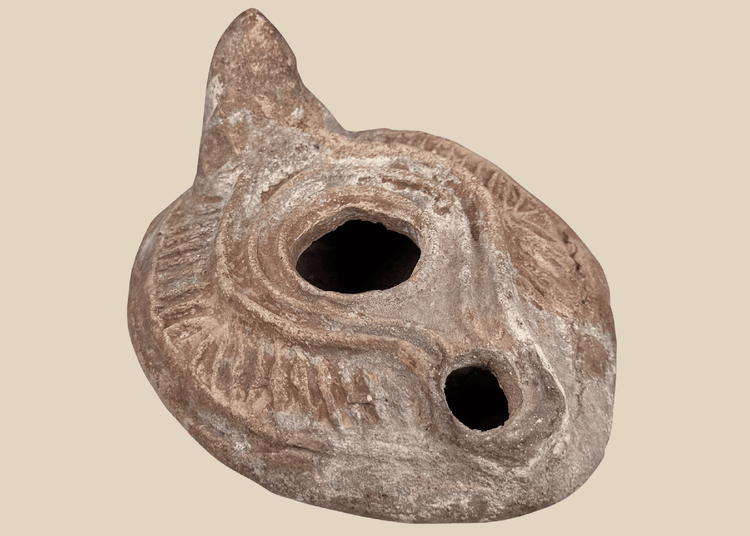
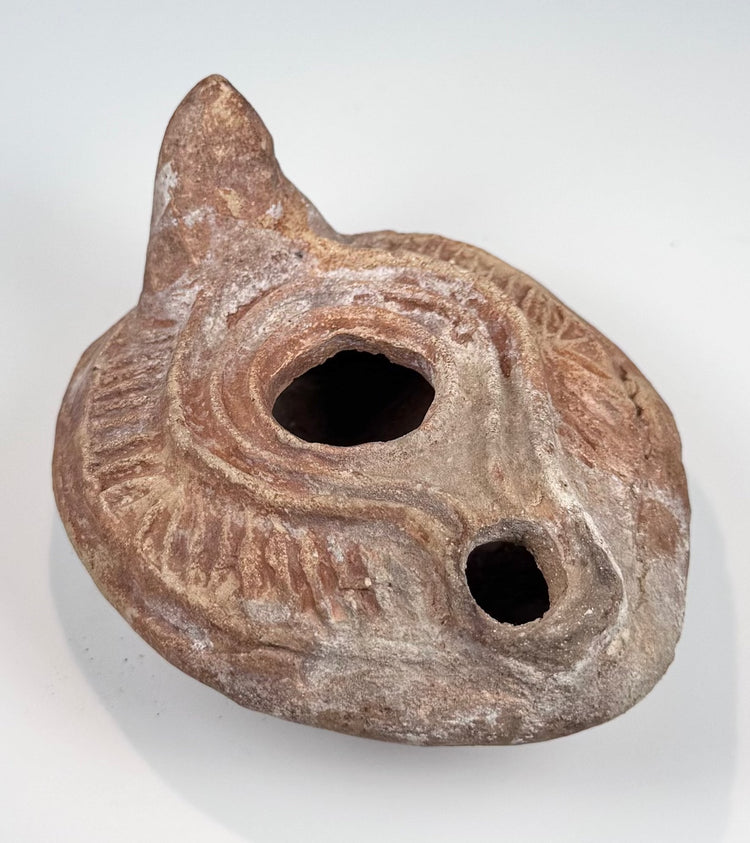
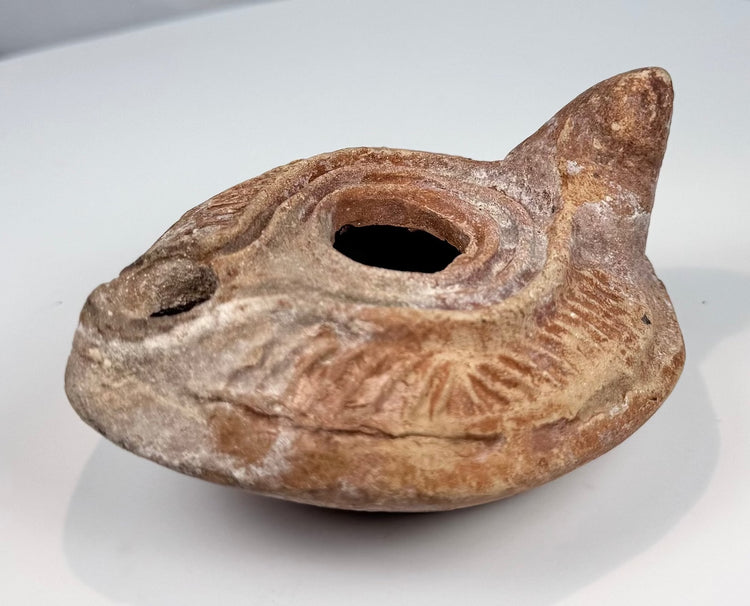
This ancient mold-made terracotta oil lamp dates to the Late Roman or Early Byzantine period and was created for the controlled burning of olive oil or another combustible fuel. Its form and decoration are consistent with Late Roman or Early Byzantine lamp traditions of the Eastern Mediterranean.
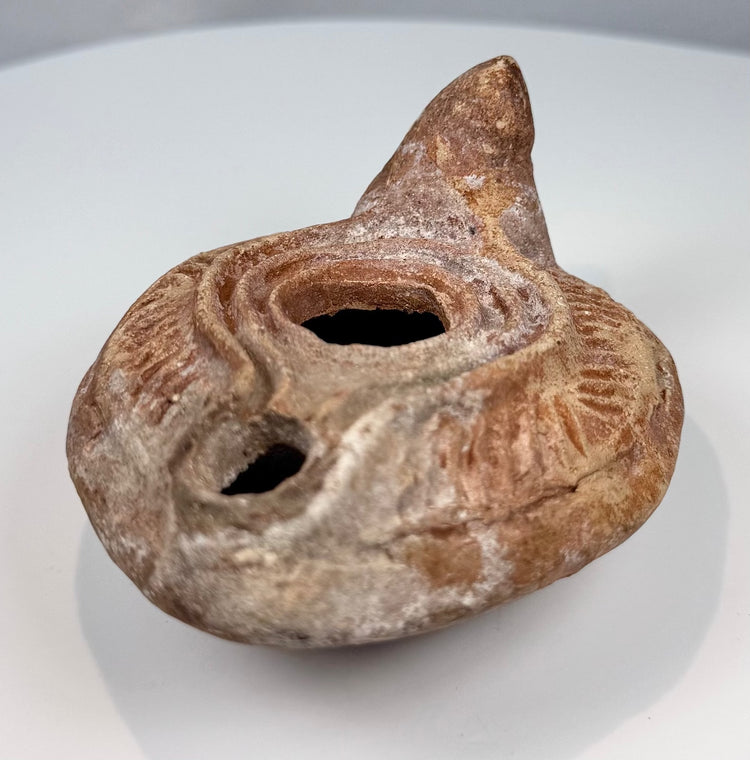
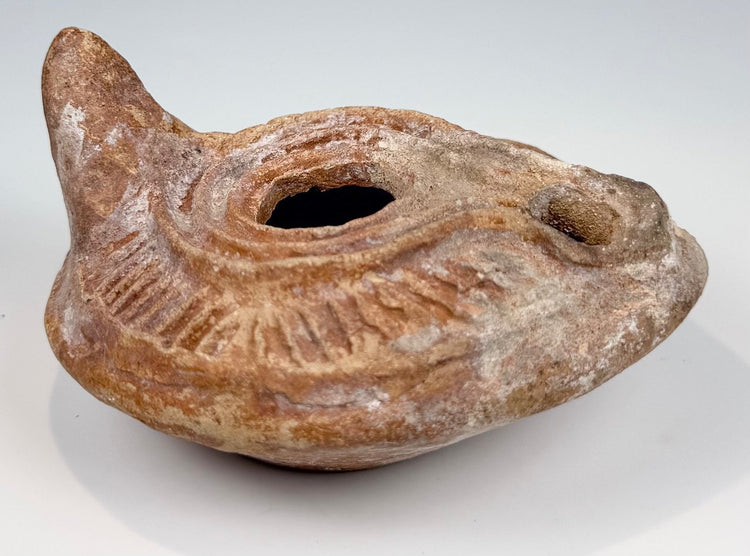
The lamp has a compact oval body with a raised central filling aperture and a smaller circular wick opening positioned at the end of an extended nozzle. Molded channels surround the filling hole and continue toward the nozzle, forming a visually unified upper surface. Repeated incised strokes arranged around the shoulder create a radiating or herringbone-like decorative pattern, while the rear rises into a prominent solid handle.
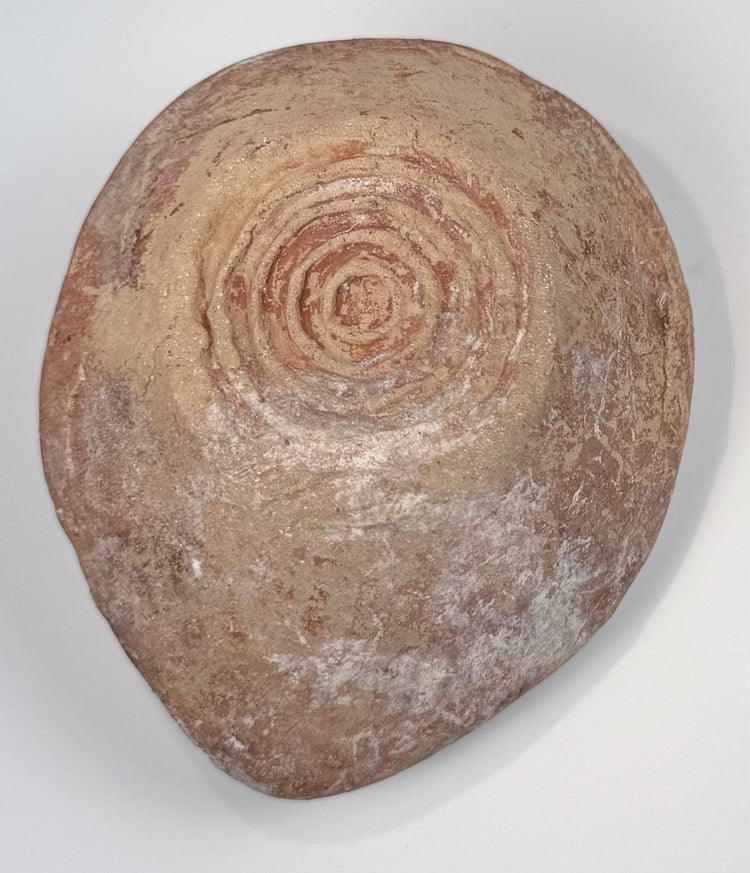
The underside is comparatively plain and displays a raised circular base ring formed from several concentric ridges. This would have provided stability when the lamp was placed on a flat surface. The reddish-brown terracotta retains extensive mineral deposits and earthen encrustation consistent with long-term burial or archaeological preservation.
Features
- Late Roman to Early Byzantine form
- Likely Eastern Mediterranean manufacture
- Separate circular wick opening
- Raised channel connecting the filling area and nozzle
- Repeated radiating or herringbone-style decoration
- Prominent solid rear handle
- Concentric raised base rings
- Reddish-brown earthenware fabric
- Retains extensive mineral deposits and burial encrustation
Cultural Significance
Oil lamps were essential household objects throughout the Roman and Byzantine worlds, providing portable illumination in private homes, workshops, religious buildings, tombs, and public spaces. A wick was inserted through the smaller nozzle opening while fuel was poured through the larger central aperture.
By the fifth and sixth centuries, molded terracotta lamps were produced in numerous regional workshops across the Eastern Mediterranean. Their decoration ranged from simple geometric patterns to religious symbols and figural imagery.
Condition
The lamp remains substantially intact and displays extensive age-related surface wear. Mineral deposits, earthen encrustation, discoloration, abrasions, and scattered surface losses are present throughout. The rims of the filling and wick apertures are irregular and exhibit expected wear. Minor chips and imperfections are visible around the body, handle, nozzle, and base. No restoration is immediately apparent.
Dimensions (Approximate)
Length: 4 in
Width: 3.25 in
Height: 2 in
Age (Approximate)
1,425–1,625 years old
Provenance
Formerly held in a private collection in Rhode Island, USA, assembled by a collector with a longstanding interest in ancient Mediterranean artifacts and early ceramics.
Learn More
Study a comparable Byzantine terracotta oil lamp in the collection of The Metropolitan Museum of Art
Discover more objects in our Collection of Cultural & Ethnographic Artifacts
Description
Historical Context & Origin
Region: Eastern Mediterranean, likely the Levant, Cyprus, or surrounding Byzantine territories
Material: Mold-made terracotta
Period: Late Roman to Early Byzantine Period, circa 5th–6th Century CE
Description
This ancient mold-made terracotta oil lamp dates to the Late Roman or Early Byzantine period and was created for the controlled burning of olive oil or another combustible fuel. Its form and decoration are consistent with Late Roman or Early Byzantine lamp traditions of the Eastern Mediterranean.
The lamp has a compact oval body with a raised central filling aperture and a smaller circular wick opening positioned at the end of an extended nozzle. Molded channels surround the filling hole and continue toward the nozzle, forming a visually unified upper surface. Repeated incised strokes arranged around the shoulder create a radiating or herringbone-like decorative pattern, while the rear rises into a prominent solid handle.
The underside is comparatively plain and displays a raised circular base ring formed from several concentric ridges. This would have provided stability when the lamp was placed on a flat surface. The reddish-brown terracotta retains extensive mineral deposits and earthen encrustation consistent with long-term burial or archaeological preservation.
Features
- Late Roman to Early Byzantine form
- Likely Eastern Mediterranean manufacture
- Separate circular wick opening
- Raised channel connecting the filling area and nozzle
- Repeated radiating or herringbone-style decoration
- Prominent solid rear handle
- Concentric raised base rings
- Reddish-brown earthenware fabric
- Retains extensive mineral deposits and burial encrustation
Cultural Significance
Oil lamps were essential household objects throughout the Roman and Byzantine worlds, providing portable illumination in private homes, workshops, religious buildings, tombs, and public spaces. A wick was inserted through the smaller nozzle opening while fuel was poured through the larger central aperture.
By the fifth and sixth centuries, molded terracotta lamps were produced in numerous regional workshops across the Eastern Mediterranean. Their decoration ranged from simple geometric patterns to religious symbols and figural imagery.
Condition
The lamp remains substantially intact and displays extensive age-related surface wear. Mineral deposits, earthen encrustation, discoloration, abrasions, and scattered surface losses are present throughout. The rims of the filling and wick apertures are irregular and exhibit expected wear. Minor chips and imperfections are visible around the body, handle, nozzle, and base. No restoration is immediately apparent.
Dimensions (Approximate)
Length: 4 in
Width: 3.25 in
Height: 2 in
Age (Approximate)
1,425–1,625 years old
Provenance
Formerly held in a private collection in Rhode Island, USA, assembled by a collector with a longstanding interest in ancient Mediterranean artifacts and early ceramics.
Learn More
Study a comparable Byzantine terracotta oil lamp in the collection of The Metropolitan Museum of Art
Discover more objects in our Collection of Cultural & Ethnographic Artifacts
You May Also Like
