



Ancient Canaanite Pottery Jug | Middle Bronze Age II | Circa 1780–1580 BCE
Couldn't load pickup availability


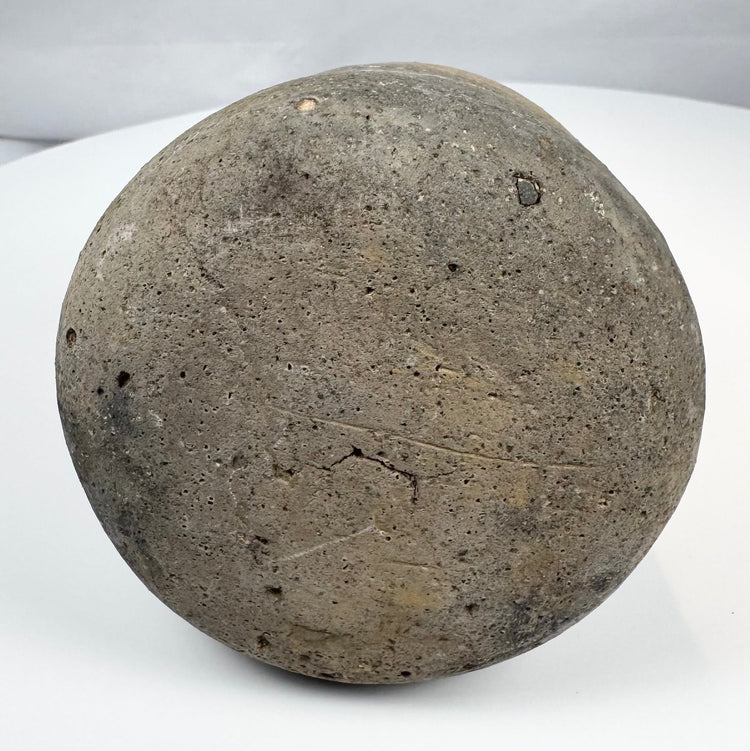
Ancient Canaanite Pottery Jug | Middle Bronze Age II | Circa 1780–1580 BCE
Description
More
Less
Historical Context & Origin
Region: Canaan / Ancient Levant
Culture: Canaanite
Material: Coarse buff-grey earthenware with visible mineral inclusions
Period: Middle Bronze Age II, circa 1780–1580 BCE
Description
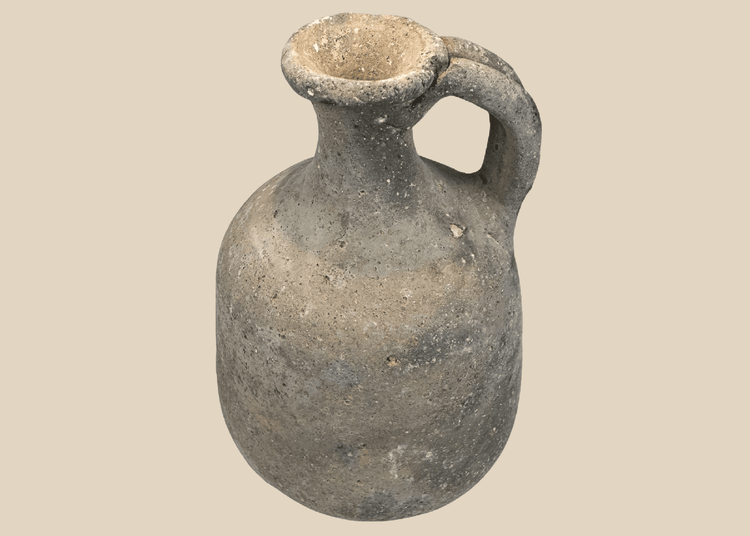
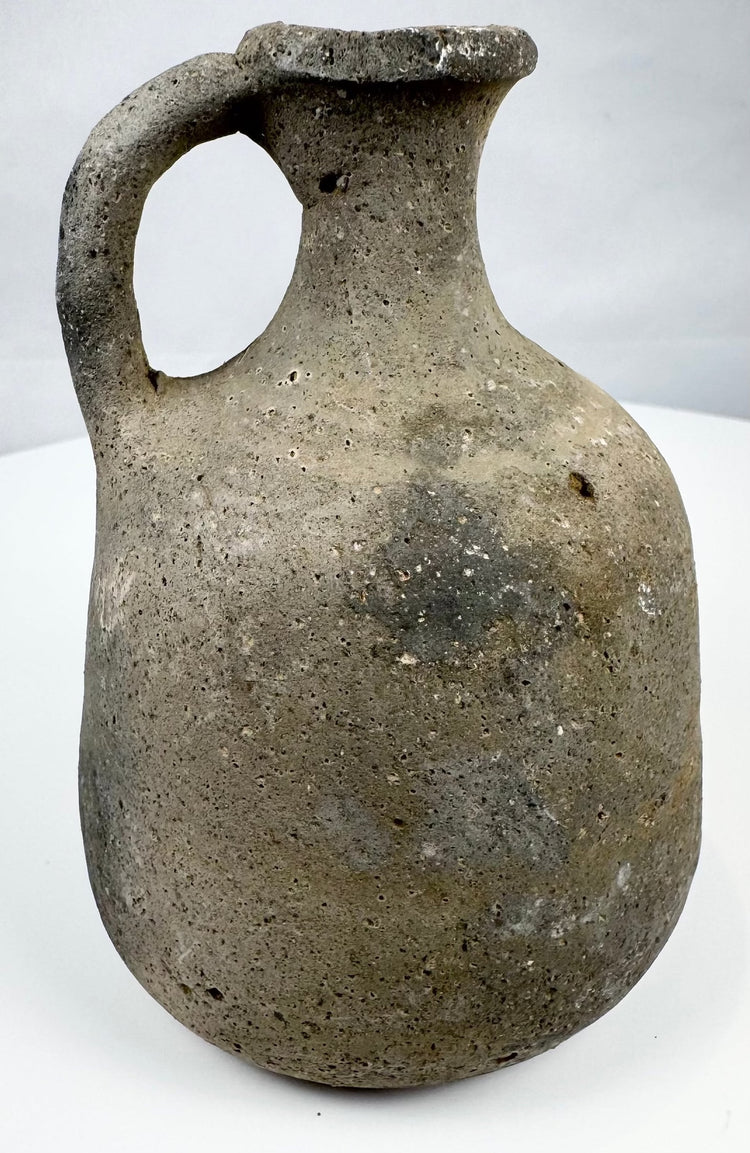
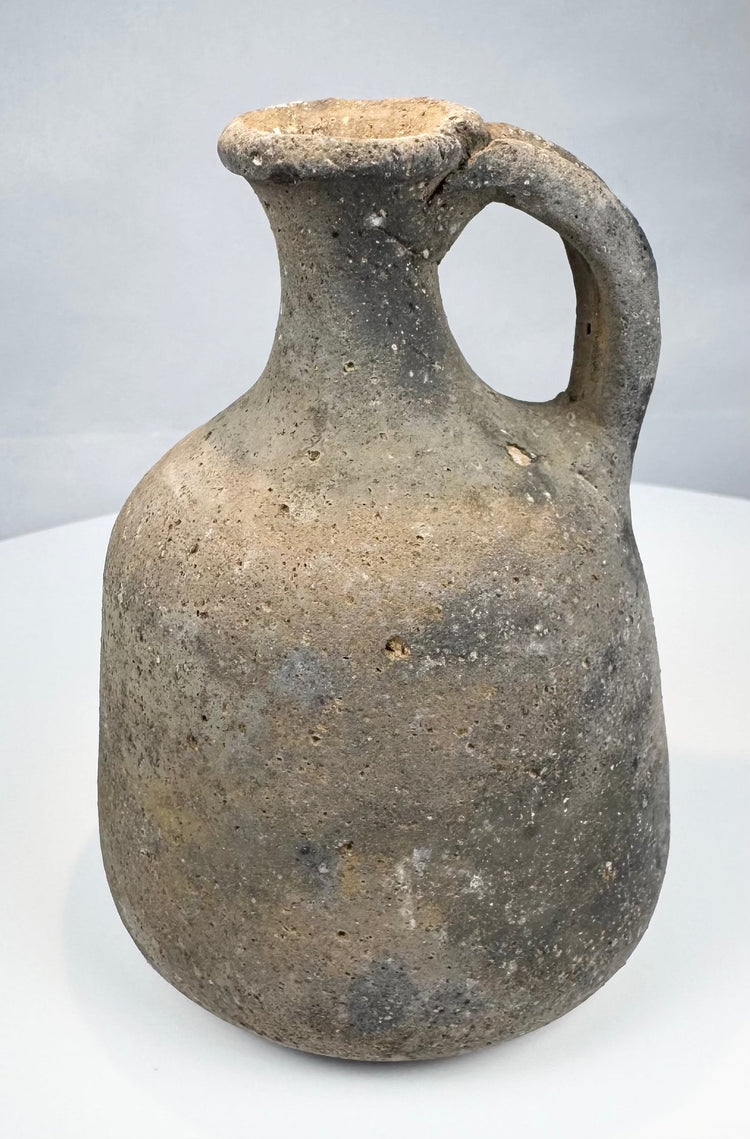
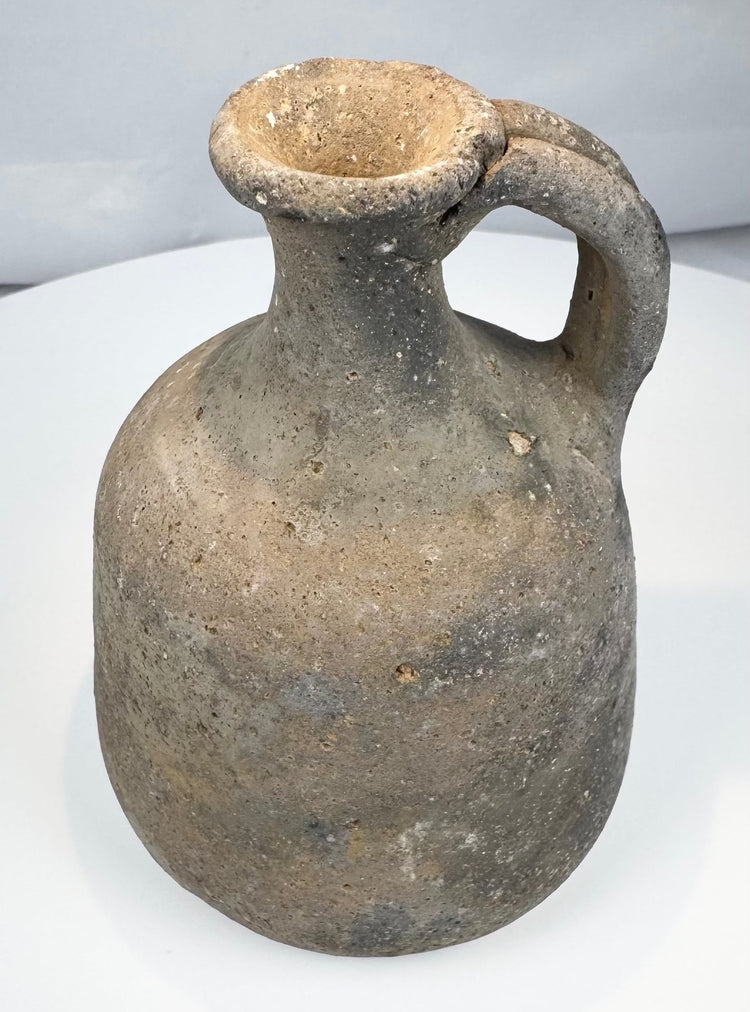
This ancient Canaanite pottery jug dates to the Middle Bronze Age II, circa 1780–1580 BCE.
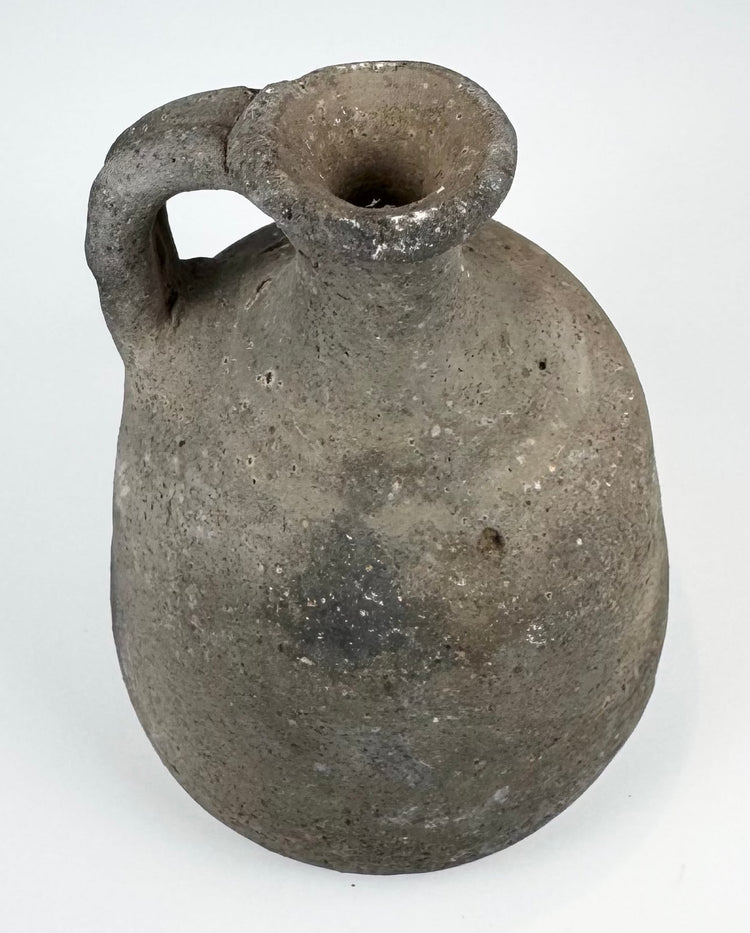
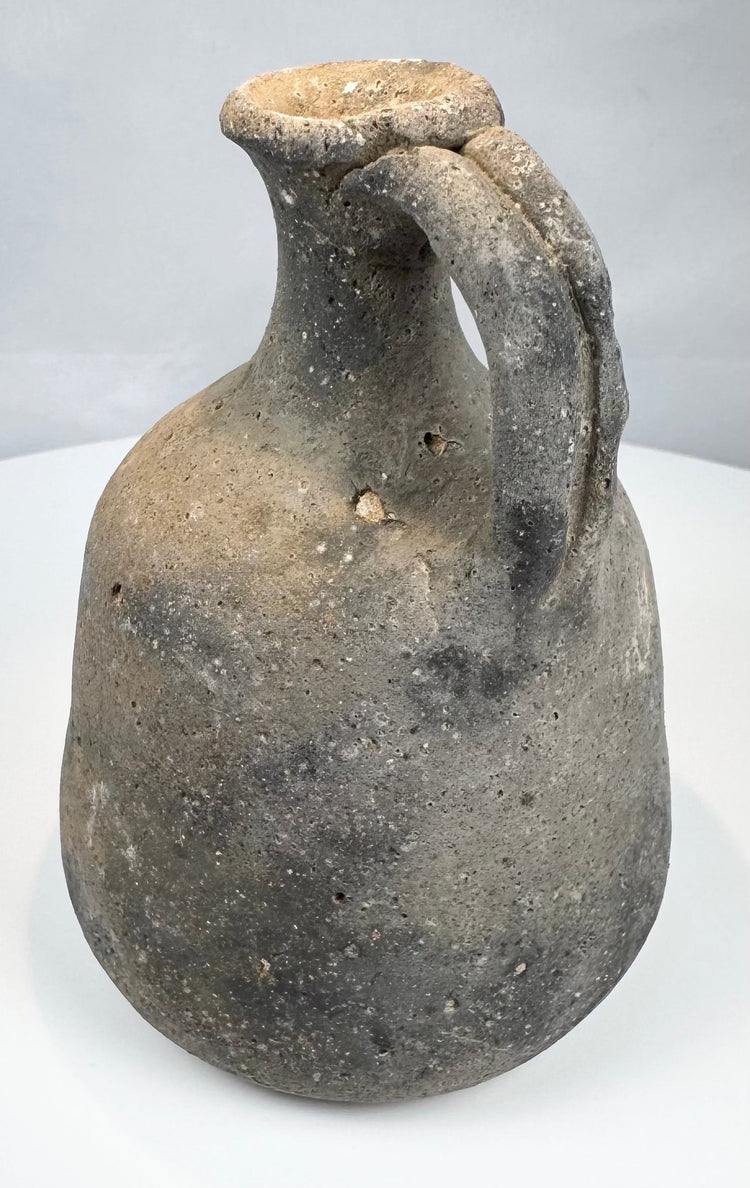
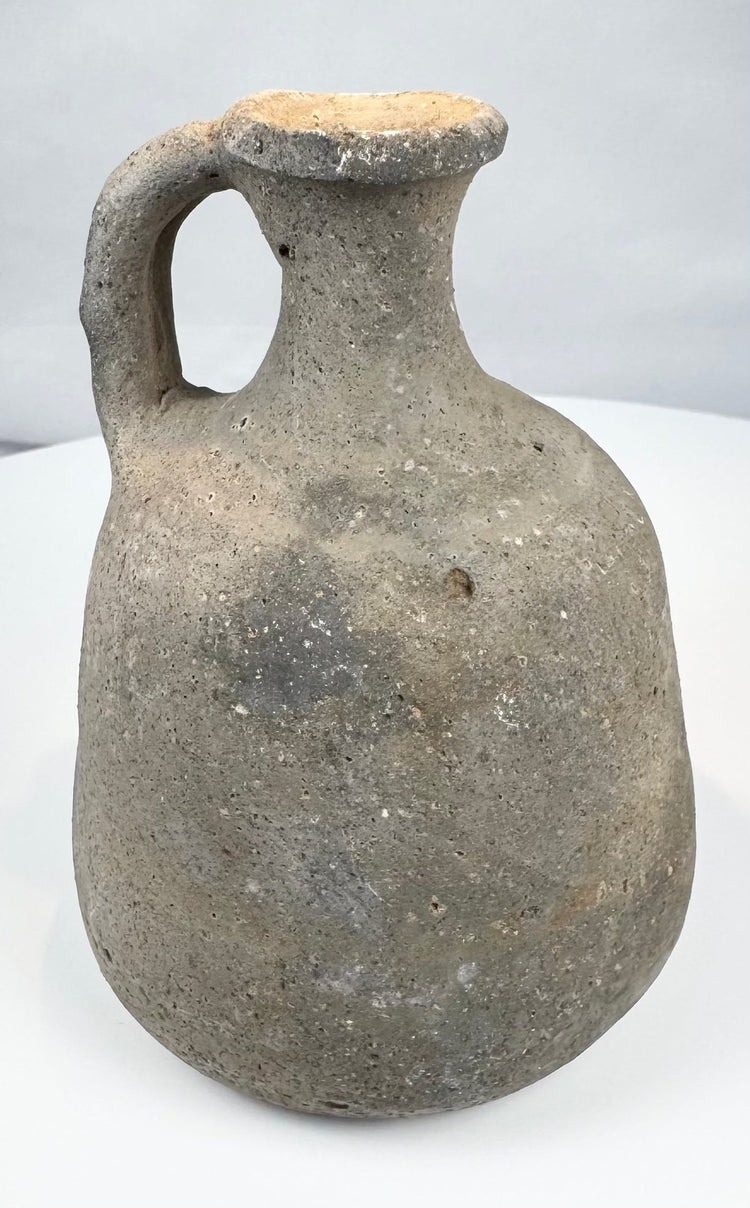
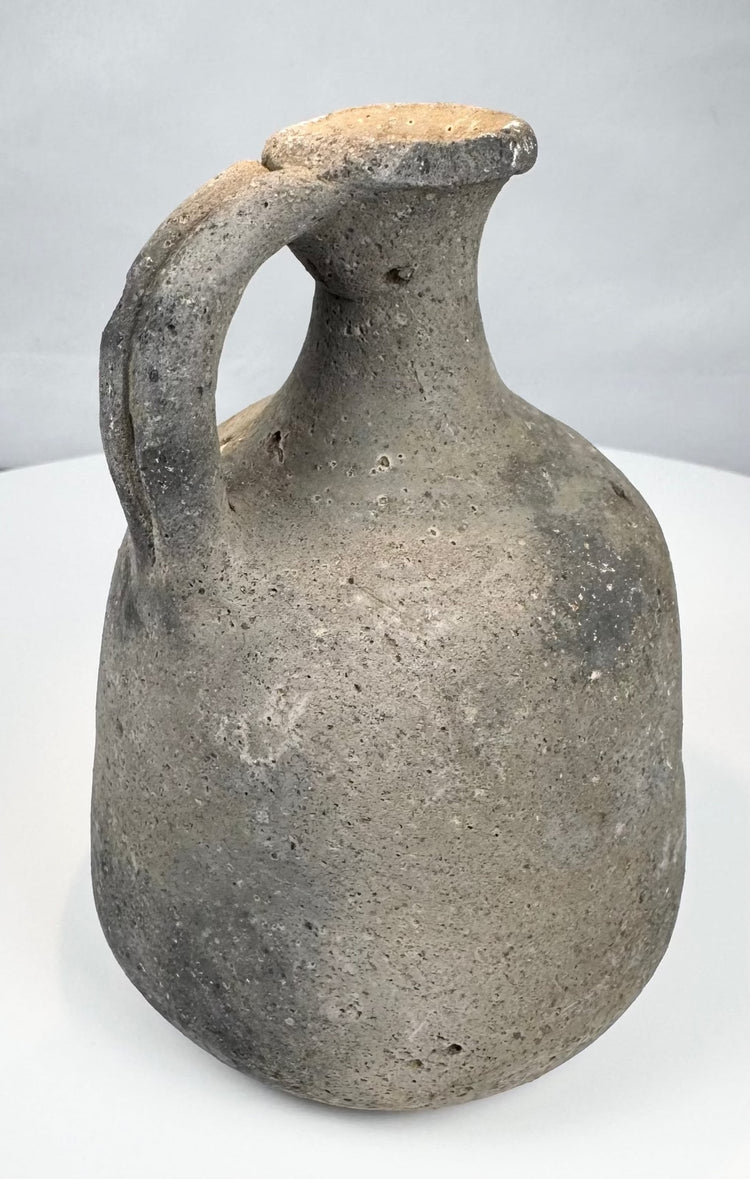
The vessel is formed as a compact single-handled jug with an ovoid body, narrow neck, thickened flaring rim, and broad loop handle extending from the rim to the shoulder. Its restrained undecorated form and coarse clay fabric are characteristic of practical ceramic vessels produced in the ancient Levant during the Middle Bronze Age.
The clay is buff-grey in tone and contains visible mineral inclusions, reflecting the utilitarian nature of its manufacture. Despite its considerable age, the vessel remains substantially intact and preserves its original overall form.
Features
- Ovoid body
- Narrow neck
- Thickened flaring rim
- Broad loop handle from rim to shoulder
- Coarse buff-grey clay
- Visible mineral inclusions
- Plain undecorated surface
- Substantially intact ancient form
Cultural Significance
Pottery jugs were an important part of everyday life in the Canaanite communities of the Bronze Age Levant. Their narrow necks and sturdy handles made them practical for storing, carrying, and pouring liquids.
The form of this example is consistent with Middle Bronze Age II Canaanite pottery traditions. A comparable jug from Lachish (Tell ed-Duweir) in the collection of The Metropolitan Museum of Art, New York, inventory no. 34.126.32, supporting the cultural and chronological attribution.
Condition
Substantially intact ancient condition. The rim is irregular and chipped, with areas of pitting and age-related surface wear throughout. A short firing fissure is visible beneath the base. Mineral inclusions, minor abrasions, and surface irregularities are consistent with ancient ceramic manufacture and archaeological preservation.
Dimensions (Approximate)
Height: 4.5 in
Diameter: 3 in
Age (Approximate)
3,600–3,800 years old
Provenance
Formerly part of a private Brooklyn, New York, USA collection of antiquities and archaeological objects, assembled over many years with a particular interest in ancient Mediterranean material culture.
The piece was later examined by Luca Salvaggio, an Italian archaeologist and specialist in ancient Mediterranean and Near Eastern material. He holds a Postgraduate Diploma from the Italian Archaeological School at Athens (IASA) and is accredited for preventive archaeology by the Italian Ministry of Culture (MiC). Salvaggio identified the vessel as a Canaanite single-handled jug dating to the Middle Bronze Age II, circa 1780–1580 BCE, based on its ovoid body, narrow neck, thickened flaring rim, broad loop handle, coarse buff-grey clay, and visible mineral inclusions.
Learn More
Discover the enduring traditions of Mediterranean pottery through the Mediterranean Pottery Museum
Browse our curated Collection of Ceramics, Pottery & Ancient Heritage Art
Description
Historical Context & Origin
Region: Canaan / Ancient Levant
Culture: Canaanite
Material: Coarse buff-grey earthenware with visible mineral inclusions
Period: Middle Bronze Age II, circa 1780–1580 BCE
Description
This ancient Canaanite pottery jug dates to the Middle Bronze Age II, circa 1780–1580 BCE.
The vessel is formed as a compact single-handled jug with an ovoid body, narrow neck, thickened flaring rim, and broad loop handle extending from the rim to the shoulder. Its restrained undecorated form and coarse clay fabric are characteristic of practical ceramic vessels produced in the ancient Levant during the Middle Bronze Age.
The clay is buff-grey in tone and contains visible mineral inclusions, reflecting the utilitarian nature of its manufacture. Despite its considerable age, the vessel remains substantially intact and preserves its original overall form.
Features
- Ovoid body
- Narrow neck
- Thickened flaring rim
- Broad loop handle from rim to shoulder
- Coarse buff-grey clay
- Visible mineral inclusions
- Plain undecorated surface
- Substantially intact ancient form
Cultural Significance
Pottery jugs were an important part of everyday life in the Canaanite communities of the Bronze Age Levant. Their narrow necks and sturdy handles made them practical for storing, carrying, and pouring liquids.
The form of this example is consistent with Middle Bronze Age II Canaanite pottery traditions. A comparable jug from Lachish (Tell ed-Duweir) in the collection of The Metropolitan Museum of Art, New York, inventory no. 34.126.32, supporting the cultural and chronological attribution.
Condition
Substantially intact ancient condition. The rim is irregular and chipped, with areas of pitting and age-related surface wear throughout. A short firing fissure is visible beneath the base. Mineral inclusions, minor abrasions, and surface irregularities are consistent with ancient ceramic manufacture and archaeological preservation.
Dimensions (Approximate)
Height: 4.5 in
Diameter: 3 in
Age (Approximate)
3,600–3,800 years old
Provenance
Formerly part of a private Brooklyn, New York, USA collection of antiquities and archaeological objects, assembled over many years with a particular interest in ancient Mediterranean material culture.
The piece was later examined by Luca Salvaggio, an Italian archaeologist and specialist in ancient Mediterranean and Near Eastern material. He holds a Postgraduate Diploma from the Italian Archaeological School at Athens (IASA) and is accredited for preventive archaeology by the Italian Ministry of Culture (MiC). Salvaggio identified the vessel as a Canaanite single-handled jug dating to the Middle Bronze Age II, circa 1780–1580 BCE, based on its ovoid body, narrow neck, thickened flaring rim, broad loop handle, coarse buff-grey clay, and visible mineral inclusions.
Learn More
Discover the enduring traditions of Mediterranean pottery through the Mediterranean Pottery Museum
Browse our curated Collection of Ceramics, Pottery & Ancient Heritage Art
You May Also Like
