


Ancient Chinese Han Dynasty Terracotta Attendant Tomb Figure | Seated Attendant | Circa 206 BCE–220 CE
Couldn't load pickup availability




Ancient Chinese Han Dynasty Terracotta Attendant Tomb Figure | Seated Attendant | Circa 206 BCE–220 CE
Description
More
Less
Historical Context & Origin
Region: China
Material: Terracotta (Unglazed Earthenware)
Period: Han Dynasty, Circa 206 BCE–220 CE
Description
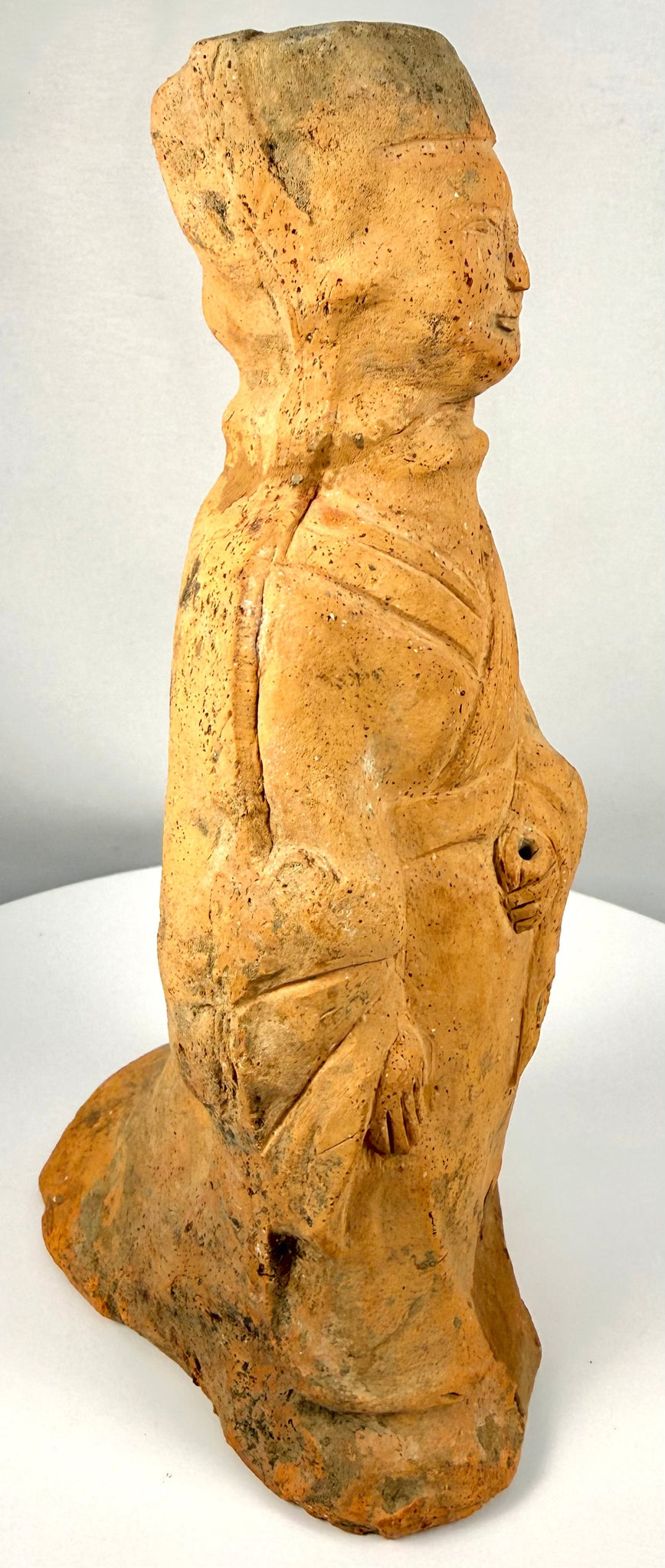
An ancient Chinese terracotta funerary figure depicting a seated or kneeling attendant or servant, attributed to the Han Dynasty (206 BCE–220 CE), one of the most influential periods in Chinese imperial history. This finely modelled earthenware sculpture represents the longstanding tradition of producing miniature attendants and household figures intended to accompany the deceased into the afterlife.
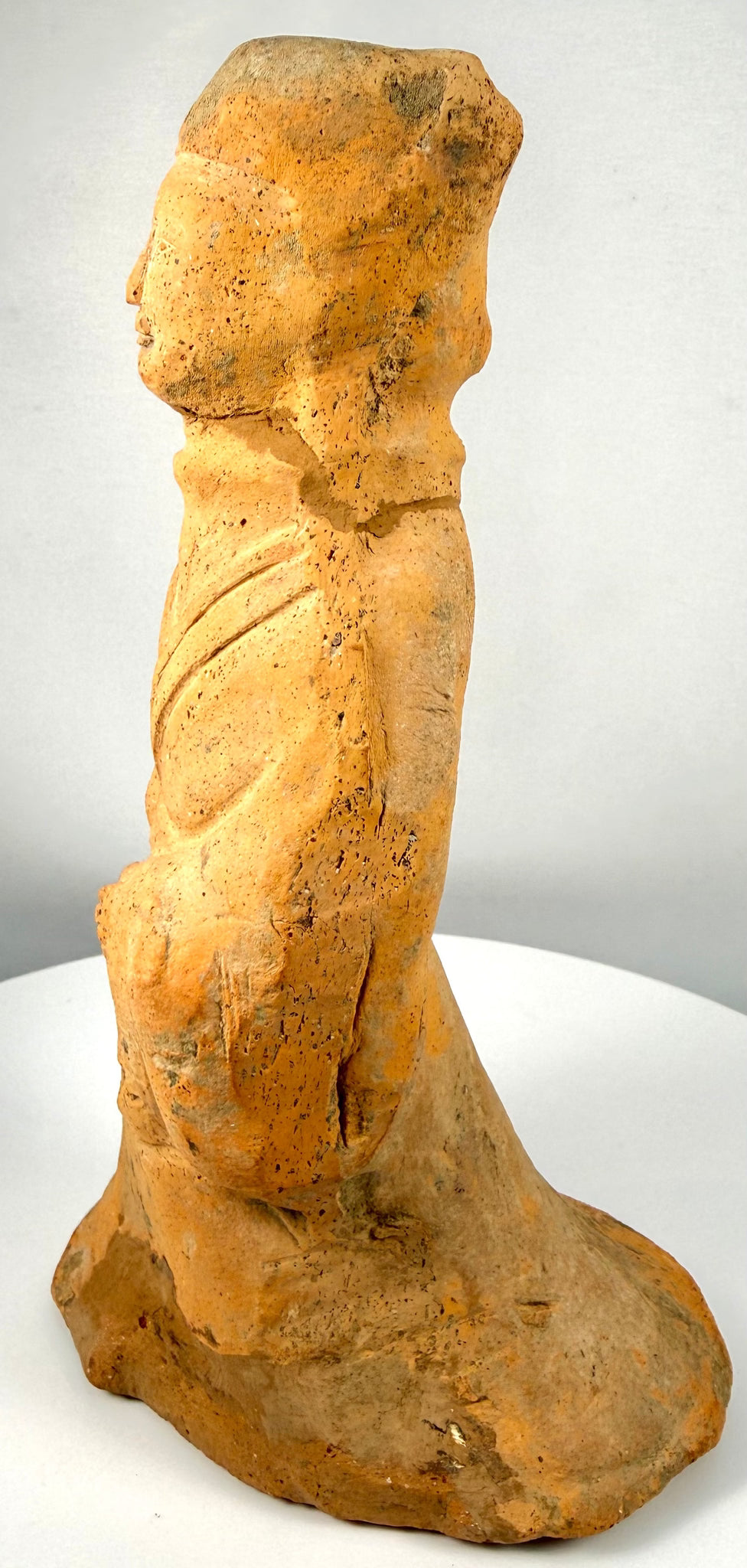
The figure is portrayed wearing a distinctive tall, flat-topped headdress and an elegantly draped robe with a crossed collar and broad sleeves. Its carefully defined facial features include narrow eyes, a prominent nose, gently formed lips, and a composed expression, reflecting the restrained artistic conventions associated with early Chinese funerary sculpture.
Both hands are positioned before the body, with individually delineated fingers and a small circular perforation visible in one hand. The layered folds of the garment extend across the chest and down toward the seated lower body, providing depth and dimension to the sculpture.
Fashioned from warm ochre-coloured earthenware, the figure displays a weathered surface with scattered dark inclusions, earthy deposits, and areas of greyish discolouration. The underside remains hollow, revealing the interior construction of the pottery figure.
Such sculptures are associated with the Chinese funerary tradition of mingqi, or spirit objects, which symbolically reproduced the servants, possessions, animals, and surroundings of the deceased.
Features
- Seated or kneeling posture
- Distinctive tall, flat-topped headdress
- Cross-collared robe with detailed folds
- Carefully modelled facial features with a composed expression
- Individually defined hands and fingers
- Small circular perforation in one hand
- Warm ochre earthenware with aged surface deposits
- Hollow underside and integral pottery base
Cultural Significance
The Han Dynasty marked a transformative era in Chinese history, characterized by political consolidation, advancements in art and technology, and the establishment of cultural traditions that influenced subsequent dynasties for centuries. During this period, elaborate burial practices reflected social standing, ancestral reverence, and beliefs concerning the afterlife.
Within this funerary tradition, pottery attendant figures symbolized the continuation of household service and established social relationships beyond death. Their clothing, hairstyles, postures, and facial expressions also provide valuable archaeological evidence concerning dress and social customs during the Han period.
Condition
The figure displays notable surface wear consistent with its weathered appearance, including scattered abrasions, minor chips, areas of discolouration, surface pitting, and accumulated earthy deposits.
Areas of roughness and material loss are visible around the headdress, shoulders, and lower base. Linear fissures or seams are present along portions of the sides, with an area of differing surface texture on the lower front that may indicate an earlier repair or restoration. This has not been independently confirmed.
The facial features, headdress, draped clothing, and principal sculptural details remain clearly identifiable. The underside is open and shows additional surface deposits and irregularities.
Dimensions (Approximate)
Height: 9 in.
Base Length: 5 in.
Base Width: 3.25 in.
Age (Approximate)
1,800–2,250 years old
Provenance
Previously held by a private collection from Selborne, United Kingdom.
Learn More
Explore a comparable Han Dynasty terracotta kneeling attendant and its role in ancient Chinese funerary traditions through the Princeton University Art Museum
Discover more ancient ceramic sculptures and historical pottery in our Ceramics & Pottery Collection
Description
Historical Context & Origin
Region: China
Material: Terracotta (Unglazed Earthenware)
Period: Han Dynasty, Circa 206 BCE–220 CE
Description
An ancient Chinese terracotta funerary figure depicting a seated or kneeling attendant or servant, attributed to the Han Dynasty (206 BCE–220 CE), one of the most influential periods in Chinese imperial history. This finely modelled earthenware sculpture represents the longstanding tradition of producing miniature attendants and household figures intended to accompany the deceased into the afterlife.
The figure is portrayed wearing a distinctive tall, flat-topped headdress and an elegantly draped robe with a crossed collar and broad sleeves. Its carefully defined facial features include narrow eyes, a prominent nose, gently formed lips, and a composed expression, reflecting the restrained artistic conventions associated with early Chinese funerary sculpture.
Both hands are positioned before the body, with individually delineated fingers and a small circular perforation visible in one hand. The layered folds of the garment extend across the chest and down toward the seated lower body, providing depth and dimension to the sculpture.
Fashioned from warm ochre-coloured earthenware, the figure displays a weathered surface with scattered dark inclusions, earthy deposits, and areas of greyish discolouration. The underside remains hollow, revealing the interior construction of the pottery figure.
Such sculptures are associated with the Chinese funerary tradition of mingqi, or spirit objects, which symbolically reproduced the servants, possessions, animals, and surroundings of the deceased.
Features
- Seated or kneeling posture
- Distinctive tall, flat-topped headdress
- Cross-collared robe with detailed folds
- Carefully modelled facial features with a composed expression
- Individually defined hands and fingers
- Small circular perforation in one hand
- Warm ochre earthenware with aged surface deposits
- Hollow underside and integral pottery base
Cultural Significance
The Han Dynasty marked a transformative era in Chinese history, characterized by political consolidation, advancements in art and technology, and the establishment of cultural traditions that influenced subsequent dynasties for centuries. During this period, elaborate burial practices reflected social standing, ancestral reverence, and beliefs concerning the afterlife.
Within this funerary tradition, pottery attendant figures symbolized the continuation of household service and established social relationships beyond death. Their clothing, hairstyles, postures, and facial expressions also provide valuable archaeological evidence concerning dress and social customs during the Han period.
Condition
The figure displays notable surface wear consistent with its weathered appearance, including scattered abrasions, minor chips, areas of discolouration, surface pitting, and accumulated earthy deposits.
Areas of roughness and material loss are visible around the headdress, shoulders, and lower base. Linear fissures or seams are present along portions of the sides, with an area of differing surface texture on the lower front that may indicate an earlier repair or restoration. This has not been independently confirmed.
The facial features, headdress, draped clothing, and principal sculptural details remain clearly identifiable. The underside is open and shows additional surface deposits and irregularities.
Dimensions (Approximate)
Height: 9 in.
Base Length: 5 in.
Base Width: 3.25 in.
Age (Approximate)
1,800–2,250 years old
Provenance
Previously held by a private collection from Selborne, United Kingdom.
Learn More
Explore a comparable Han Dynasty terracotta kneeling attendant and its role in ancient Chinese funerary traditions through the Princeton University Art Museum
Discover more ancient ceramic sculptures and historical pottery in our Ceramics & Pottery Collection
You May Also Like
