



Ancient Eastern Mediterranean Greyware Pottery Jug | Iron Age | Circa 8th – 5th Century BCE
Couldn't load pickup availability


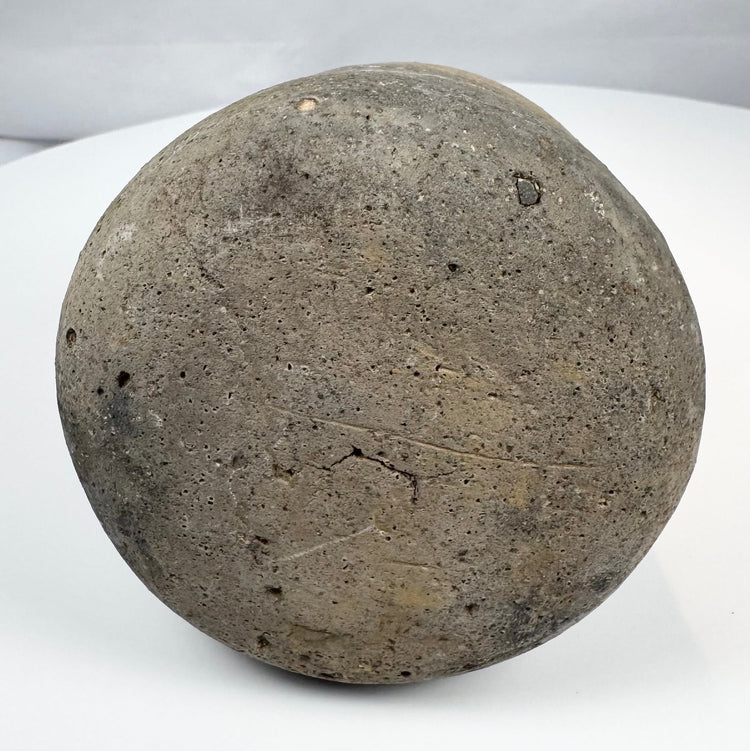
Ancient Eastern Mediterranean Greyware Pottery Jug | Iron Age | Circa 8th – 5th Century BCE
Description
More
Less
Historical Context & Origin
Region: Eastern Mediterranean or Levant
Material: Coarse grey-fired earthenware
Period: Possibly Iron Age, circa 8th–5th Century BCE
Description
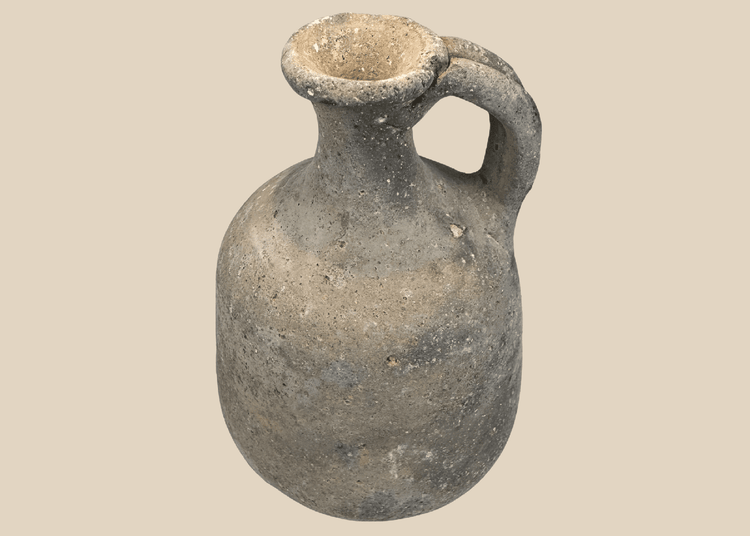
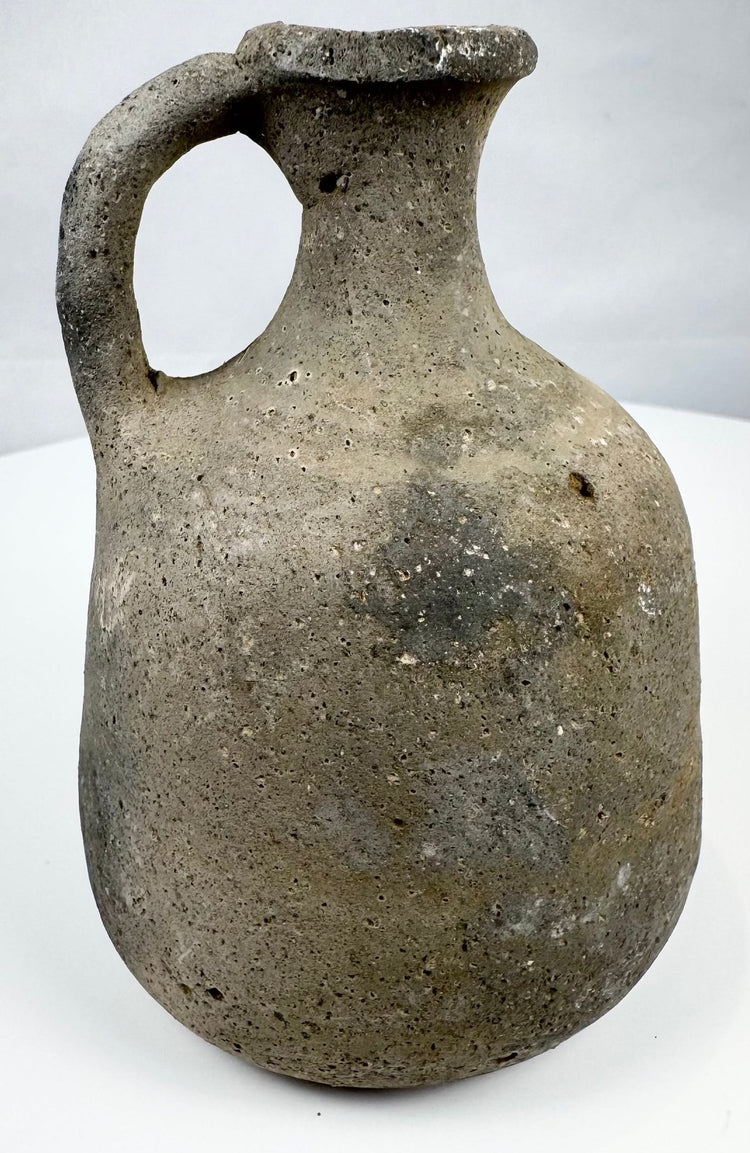
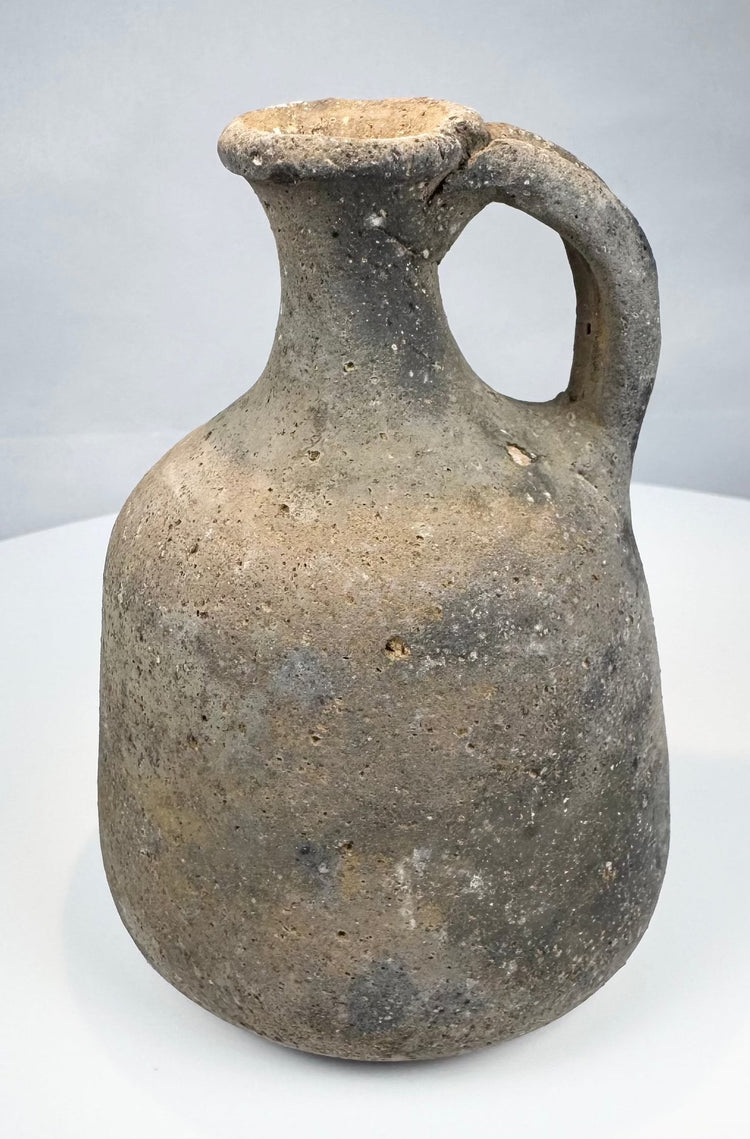
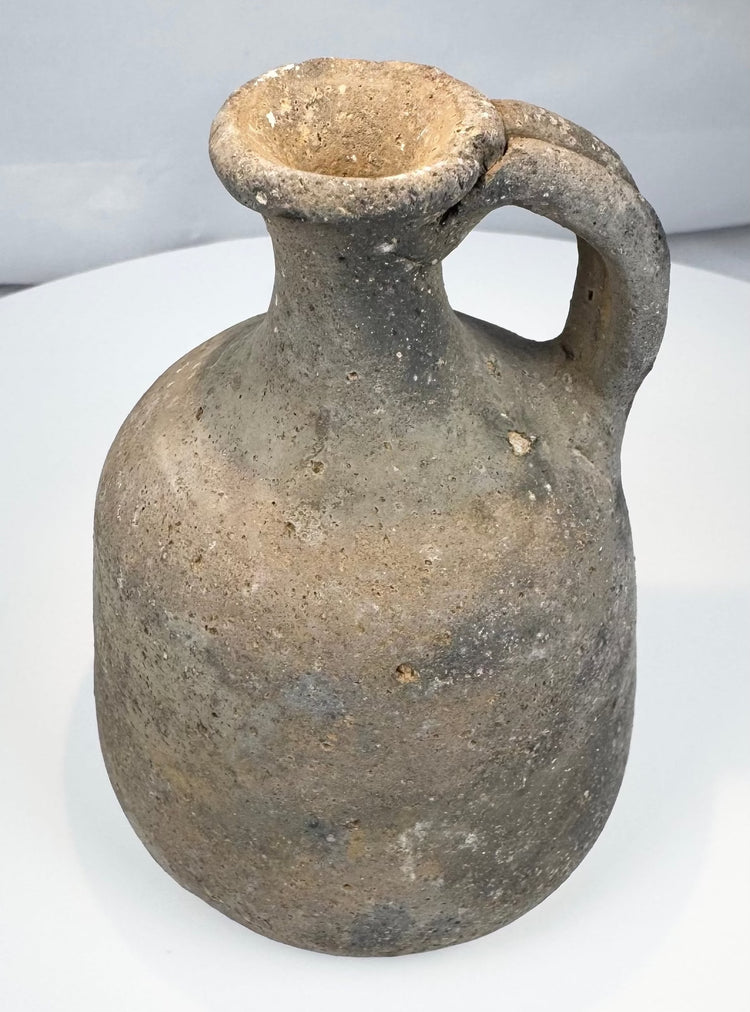
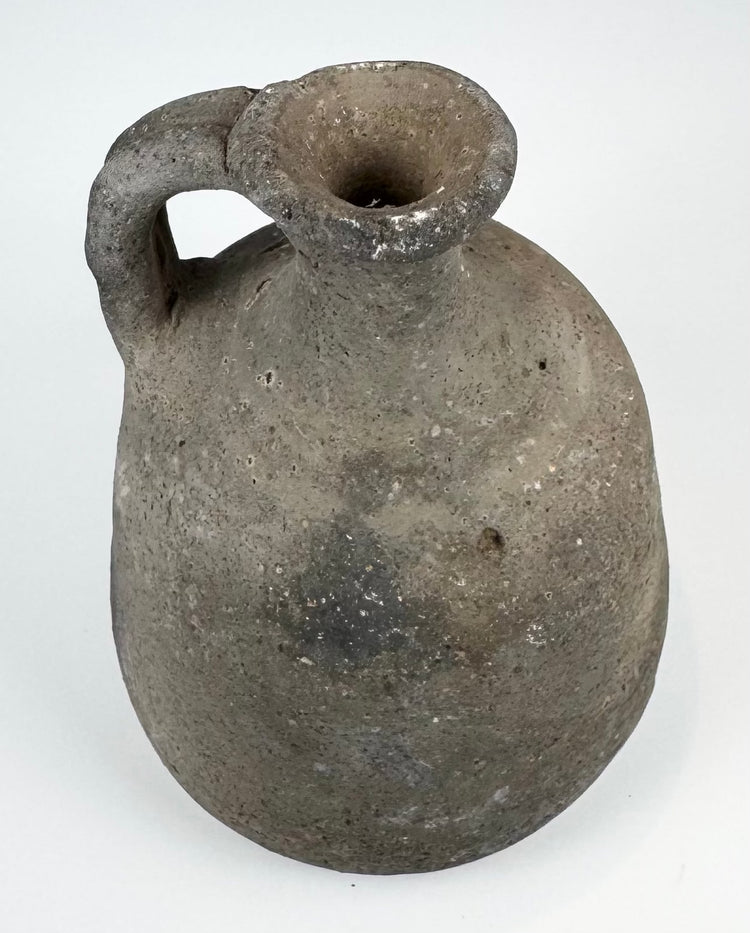
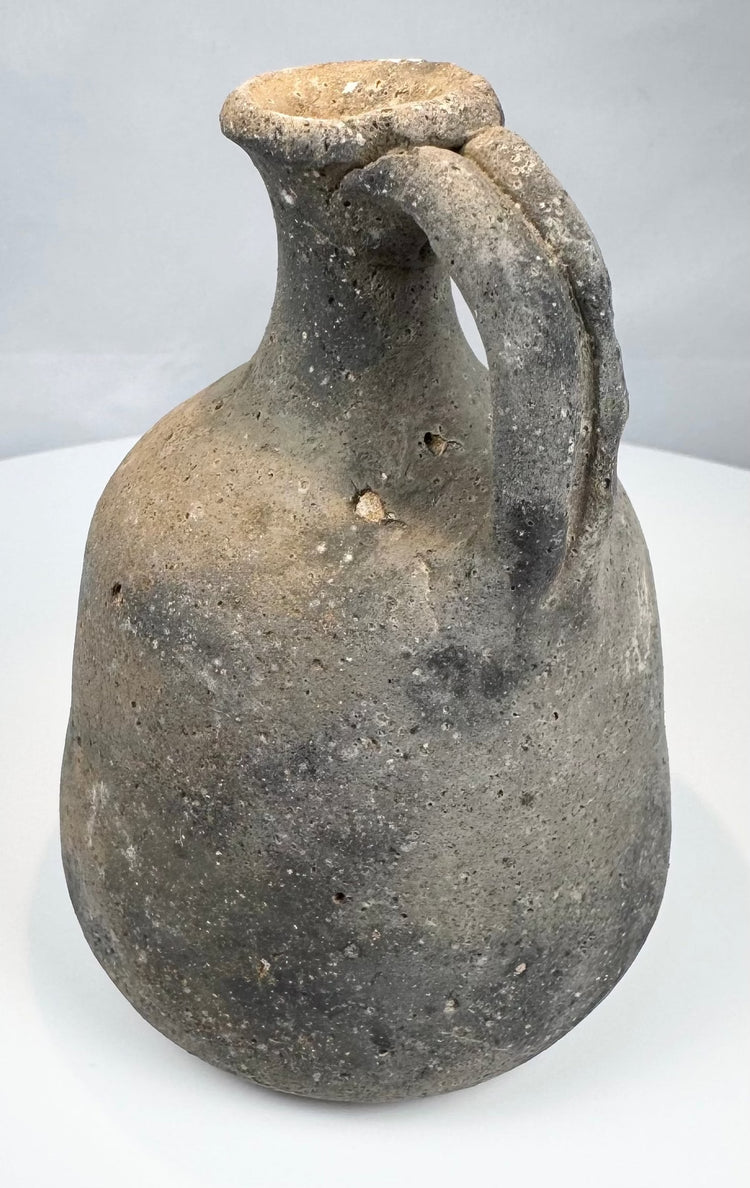
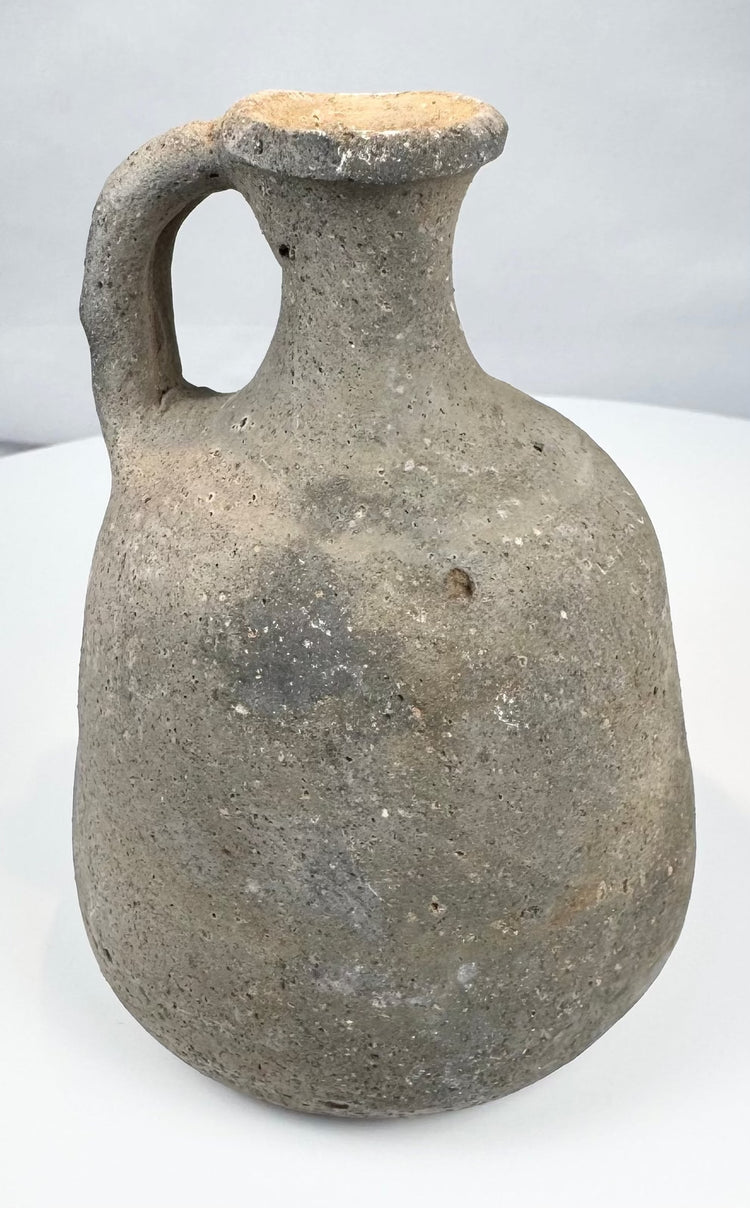
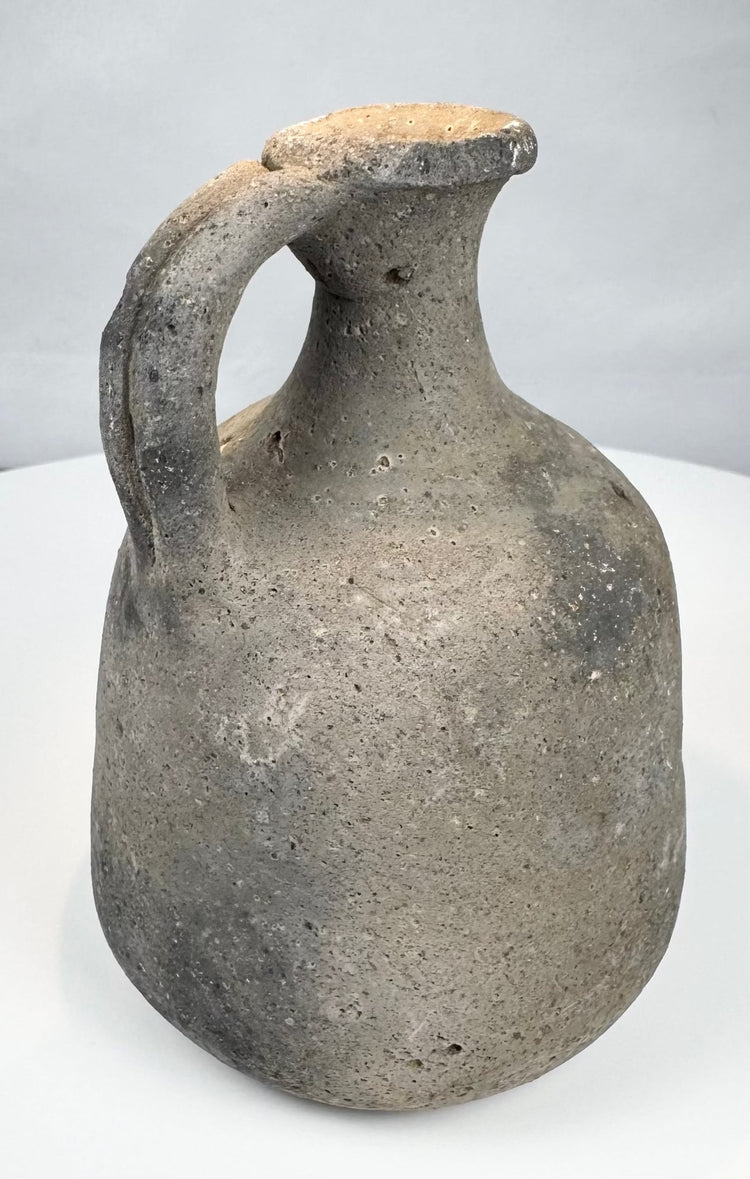
This substantial ancient pottery vessel is formed as a compact, single-handled jug with a rounded ovoid body, narrow cylindrical neck, thick flared rim, and a broad loop handle extending from the upper neck to the shoulder. The vessel was likely intended for storing, serving, or pouring a modest quantity of liquid such as water, wine, oil, or another household commodity.
The body is constructed from a coarse, heavily tempered clay that has fired to a dark grey and grey-brown coloration. Numerous small mineral inclusions, firing pits, and irregularities remain visible throughout the surface, reflecting the utilitarian nature of its manufacture. The thick walls, sturdy handle, and restrained undecorated form suggest that it was created primarily as a functional vessel rather than as luxury tableware.
The general form is compatible with pottery traditions known across the ancient Levant and Eastern Mediterranean during the Iron Age, where small handled jugs were common components of domestic, storage, and funerary assemblages. Comparable Iron Age ceramic jugs are documented from sites in the Levant, although a precise regional attribution and date would require direct examination of the clay fabric and archaeological context.
Features
- Ancient single-handled pottery jug
- Possibly dating to the Iron Age
- Substantial loop handle joining the neck and shoulder
- Coarse grey-fired earthenware construction
- Visible mineral inclusions and firing irregularities
- Undecorated utilitarian form
- Remains freestanding without a separate display mount
Cultural Significance
Handled pottery jugs were among the most widely used vessel forms throughout the ancient Eastern Mediterranean. Their compact bodies and narrow necks made them suitable for controlling the flow of liquids, while the loop handle allowed the vessel to be carried and poured securely.
During the Iron Age, pottery vessels of this general type were used in domestic households, agricultural settings, trade, and burial contexts. Their forms frequently varied by region, workshop, and intended use, providing archaeologists with valuable evidence concerning food preparation, storage practices, local production, and exchange networks.
Condition
The vessel remains substantially intact and structurally stable, with expected age-related surface wear throughout. The rim is irregular and displays minor chipping and abrasion. Scattered surface pits, mineral inclusions, small losses, scratches, and areas of discoloration are visible across the body. A short stabilized-looking fissure or firing-related line is visible on the underside.
Dimensions (Approximate)
Height: 4.5 in
Diameter: 3 in
Age (Approximate)
2,425–2,825 years old
Provenance
Formerly part of a private Brooklyn, New York, USA collection of antiquities and archaeological objects, assembled over many years with a particular interest in ancient Mediterranean material culture.
Learn More
Discover the enduring traditions of Mediterranean pottery through the Mediterranean Pottery Museum
Browse our curated Collection of Ceramics, Pottery & Ancient Heritage Art
Description
Historical Context & Origin
Region: Eastern Mediterranean or Levant
Material: Coarse grey-fired earthenware
Period: Possibly Iron Age, circa 8th–5th Century BCE
Description
This substantial ancient pottery vessel is formed as a compact, single-handled jug with a rounded ovoid body, narrow cylindrical neck, thick flared rim, and a broad loop handle extending from the upper neck to the shoulder. The vessel was likely intended for storing, serving, or pouring a modest quantity of liquid such as water, wine, oil, or another household commodity.
The body is constructed from a coarse, heavily tempered clay that has fired to a dark grey and grey-brown coloration. Numerous small mineral inclusions, firing pits, and irregularities remain visible throughout the surface, reflecting the utilitarian nature of its manufacture. The thick walls, sturdy handle, and restrained undecorated form suggest that it was created primarily as a functional vessel rather than as luxury tableware.
The general form is compatible with pottery traditions known across the ancient Levant and Eastern Mediterranean during the Iron Age, where small handled jugs were common components of domestic, storage, and funerary assemblages. Comparable Iron Age ceramic jugs are documented from sites in the Levant, although a precise regional attribution and date would require direct examination of the clay fabric and archaeological context.
Features
- Ancient single-handled pottery jug
- Possibly dating to the Iron Age
- Substantial loop handle joining the neck and shoulder
- Coarse grey-fired earthenware construction
- Visible mineral inclusions and firing irregularities
- Undecorated utilitarian form
- Remains freestanding without a separate display mount
Cultural Significance
Handled pottery jugs were among the most widely used vessel forms throughout the ancient Eastern Mediterranean. Their compact bodies and narrow necks made them suitable for controlling the flow of liquids, while the loop handle allowed the vessel to be carried and poured securely.
During the Iron Age, pottery vessels of this general type were used in domestic households, agricultural settings, trade, and burial contexts. Their forms frequently varied by region, workshop, and intended use, providing archaeologists with valuable evidence concerning food preparation, storage practices, local production, and exchange networks.
Condition
The vessel remains substantially intact and structurally stable, with expected age-related surface wear throughout. The rim is irregular and displays minor chipping and abrasion. Scattered surface pits, mineral inclusions, small losses, scratches, and areas of discoloration are visible across the body. A short stabilized-looking fissure or firing-related line is visible on the underside.
Dimensions (Approximate)
Height: 4.5 in
Diameter: 3 in
Age (Approximate)
2,425–2,825 years old
Provenance
Formerly part of a private Brooklyn, New York, USA collection of antiquities and archaeological objects, assembled over many years with a particular interest in ancient Mediterranean material culture.
Learn More
Discover the enduring traditions of Mediterranean pottery through the Mediterranean Pottery Museum
Browse our curated Collection of Ceramics, Pottery & Ancient Heritage Art
You May Also Like
